
Recusant Book Reviews Continued
Alan Morrison on
Larry Beckett
Paul Bunyan
(Smokestack Books, 2015)
96pp
Includes free CD of a complete live performance by Larry Beckett of Paul Bunyan
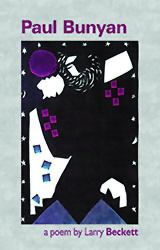 Long blank verse narrative poems seem to be resurgent in recent years, which is something to be celebrated and appreciated, especially since decades of postmodernist poetics have seen in the main a reductionism not only in terms of meaning but also in terms of form which has meant –with, of course, some exceptions– that the pared down shorter –or supplemental– poem form has predominated. But larger themes and longer narratives demand a longer poetic form and, in many cases, the entire length of a book. And it’s not simply the scope of themes or the length of narrative that demands a longer form, it’s also demanded if there’s to be a relatively unrestricted and ambitious exploration of poetic language.
The eponymous hero of the poem is a giant lumberjack from American folklore whose origins are in the oral traditions of North American loggers; Bunyan was later popularized by writer William B. Laughead in a 1916 promotional pamphlet for the Red River Lumber Company. Or, as the blurb on the back of the book explains: ‘Paul Bunyan re-tells the legend of the giant lumberjack for the twenty-first century. Drawing on logger folklore, James Stevens’ stories and the Davy Crockett almanacs, Larry Beckett’s poem is a modern epic in ‘long-winded’ blank verse’.
The rangy sprung rhythm lines, muscular music and verbal exuberance of Larry Beckett’s Paul Bunyan calls to mind, at once, the lively narrative verse of John Greenleaf Whittier, Henry Wadsworth Longfellow’s blank verse Evangeline, A Tale of Acadie, and the life-affirming lyrical transcendentalism of Walt Whitman and Ralph Waldo Emerson; American antecedents apart, one also gets the sense, to some extent, of the rapturous singsong style of Dylan Thomas, particularly passages of Under Milk Wood, and ‘Fern Hill’. Beckett’s buoyant blank verse bounces along with a joie de vivre which is instantly infectious on the ear and eye, catapulting itself off the page with sprung rhythm, comprising spondees (two long syllables) and trochees (a long then short syllable):
Out of the wild North woods, in the thick of the timber
And through the twirling of the winter of the blue snow,
Within an inch of sunup, with the dream shift ending,
A man mountain, all hustle, all muscle and bull bones,
An easy winner, full of swagger, a walking earthquake,
A skyscraper, looking over the tallest American tree,
A smart apple, a wonder inventor, the sun’s historian,
A cock-a-doodle hero, a hobo, loud, shrewd, brawling,
Rowdy, brash as the earth, stomping, big-hearted, raw,
Paul Bunyan lumbered and belly-laughed back at the stars.
Some of the Americanisms present from the outset, such as ‘sunup’ and ‘smart apple’, lend a sumptuousness to the language and imagery which is immediately appetising. There’s no doubt in my mind that on the basis of its ebullient beginning alone, Paul Bunyan has an instant place in the canon of the American epic poem. The painterly descriptiveness of the following lines is exceptional, while the deluge of images become the more tangible for serendipitous euphonies, assonances and alliterations:
He was rigged out in a slouch hat, a red work shirt
Under his faithful mackinaw with its hickory buttons,
Suspenders and high-water stag pants, which were tucked
Into his brass-hooked and buckskin-laced black boots,
And this foot-loose blue ox was sashaying at his side:
Babe, who was combed with a garden rake, who measured
Exactly forty-two ax handles and a plug of Star tobacco
Just look at the amount of k- and b-alliterations in those seven lines: ‘mackinaw’, ‘hickory’, ‘hooked’, ‘buckskin’, ‘black’, ‘ox’, ‘rake’, ‘exactly’, ‘ax’, ‘tobacco’; ‘brass’, ‘buckskin’, ‘black boots’, ‘blue’, ‘Babe’, ‘tobacco’; and the wonderful assonances: ‘slouch’, ‘hooked’, ‘boots’, ‘foot-loose blue ox’, ‘tobacco’ etc. This is very physical poetic language that cracks and crunches its way across the page and is absolutely intoxicating. Beckett plays much with colouristic imagery:
Out of the scud covering up the dusty morning stars,
The baby-blue snowflakes of the first blue snowfall
Were scurrying down sky-blue, all over, like butterflies,
In flurries, blue as Monday, blue as the moon, as heaven,
Decorating the pines, blue as a ribbon, blue as bluegrass,
As blue songs and blue laws, and glittering on the boughs
Like jays and berries: it was icing up the evergreens,
Sticking to itself, and stacking up in balls and drifts
Like fury, and the seconds were as tight as the icicles;
It was quiet like it’s quiet before the sour beginning
Of the redbreast’s la-de-dah…
Then, a bit later, we get ‘white pine’ to add to the wide spectrum of colours: blue, evergreen, redbreast, white pine. Beckett’s alliteration is in full throttle throughout and yet never seems to be obtrusive to itself or to the flow of the lines –while the colouristic imagery continues:
When the big stick was whittled on down to a whistle,
It crackled, it swished, it got the shivers in its limbs,
And when it snapped, it tilted, timber splintered, twigs
All tore off, and it rip-roared down in green confusion.
The phrase ‘green confusion’ is delightful. After building and pioneering the iconic North American log cabin, Bunyan is joined by a hullabaloo of fellow lumberjacks from a gallimaufry of ethnic backgrounds –Beckett beckons them in and the nicknames tumble forth in a poetic eruption on the page:
On the roofs and welded the timber as tight as anything.
Now all the burly, joking, gallivanting lumberjacks
Showed up and rolled in, sailing, thumbing, and hiking,
Foreigners out of the old countries, and talking funny,
Like Limeys, Micks, Frogs, Canucks, and Scandihoovians,
And Yankee Doodle boys hailing from the four corners
Of the United States, Fly-up-the-creeks from Florida,
Evergreen men from Washington, Pine tree men from Maine,
California Golden Bears, with Corn Crackers, Knickerbockers,
Granite Boys, Green Mountain Boys, Old Liners, Old Colonials,
Buckeyes, Muskrats, Panhandlers, Mudcats, Yellowhammers,
Hardheads, Sandhillers, Tarheels, from down East and Dixie,
An all-star team, and the ruggedest crew ever crowed:
Wrestlers, wreckers, boozers, barnstormers, roustabouts,
Breadwinners, ramblers, fiddlers, roughnecks, runaways,
Penpushers, windjammers, daredevils, and crackhunters,
And no galoot in the whole gang under eight feet tall,
Come in with a caterwaul to join Paul Bunyan’s camp
On the river and kick off the original lumber drive.
A ‘galoot’, incidentally, is ‘an awkward, eccentric or foolish person’; what’s undeniable is Beckett’s unbound vocabulary. Some passages read almost as an American melange of Dylan Thomas and Gerard Manley Hopkins:
Where the strawberry bushes, where the raspberry trees
All ran wild on the slopes with berries as big as plums
By the plash and swizzle of the rock-and-rye springs,
Under the gillygaloo, which brooded up on the steep
Of Pyramid Forty, with its stand of one million pines,
…
And way over behind beyond, the whangdoodle whistled.
Delicious images abound, such as ‘soil/ Smooth as butter’, and gustatory sense-impressions proliferate through the alliteratively bristling lines:
Where the red clover cows gave milk that didn’t sour
And the devil grass cows gave straight cough medicine,
Where the green vegetables were rooted so god-awful deep
It took an inventor to pick them, and where a redneck
One day chanced to see sparrowgrass sprout up so hard
It went roots and all into the air, and lived on nothing
But the climate, and he saw vines dragging punkins along,
And when he got tangled up, he went for his jackknife
And found a big cowcumber that had ripened in his pocket.
When Pea Soup Shorty clattered the triangle for breakfast,
The boys stampeded for the cookshack and grabbed up forks
At a pine table so long a story started up at one end
Was so tall at the other end they had to hire a flunky
To shovel it out the door. Now first off, and for starters,
There was oatmeal mush, logging berries, hasty pudding,
Eggs fried over easy, over hard, sourdough biscuits,
Klondike spuds, pilgrim marbles, apple grunt, sowbelly,
With all the trimmings…
The term ‘punkins’ is American slang for pumpkins while ‘cowcumber’ means cucumber; ‘pilgrim marbles’ might possibly allude to Marble cakes, ‘apple grunt’ is a dish made of apples and pie-crust, and ‘sowbelly’ is salted pork. Such colourful and sumptuous terms are a gift to a poet. Colouristic images continue to populate the poem: ‘red clover’, ‘green vegetables’, ‘redneck’. It’s gustatory imagery galore in the following passage, pockmarked with o- and a-assonances –we’re reminded of the famously gargantuan American appetite:
When they rolled sugar cookies down the table the boys
At the foot got gypped, and so Big Ole the blacksmith
Dreamed up the hole and toted the doughnuts on a stick.
All this was only horse ovaries before the main dish:
Hotcakes! They had a choice between pancakes, flatcakes,
Slapjacks, griddlecakes, stovelids, battercakes, flapjacks,
In piles, topped with skid grease, floating in maple slick.
Then the eponymous lumberjack hero readies himself to speak: ‘And Paul Bunyan standing out on American mud, ready/ To big-talk to his bunch of drifters, and brag up logging’. In a way, the dialogues in the poem are the least interesting things about it, at least, in linguistic terms, although even these narrative-propelling speeches couch occasionally colourful phrases, such as ‘stick to it/ Like it was old whiskey’, and
Two, there’s no brawling and no boozing in the woods:
I might see a little back-of-the-shanty roughhousing,
Or a short nip on a cold Sunday…
I love the o-assonance in ‘no boozing in the woods’. Bunyan’s rallying call to his fellow lumberjacks gives a real sense of the lumberjack-lingo which sounds almost like old seafaring language:
I need upwards of half of you as sawyers, to fall
The trees, whirling an axe sharp as sunlight around you
Till you steam, and ache all over, till your veins bulge;
I need plenty of swampers, to bust up the scenery,
And slash and rut the trails, and to lop off the limbs
From the down pine, which calls for backbone and stay;
And I need ox-strong skidders, to tug the logs to sleighs
And snake the load across the ice, over the toteroad
On down to the rollway, on the slopes of the branch;
And at the spring breakup I need the top lumberjacks
As the water rats, who’ll ride the logs down the river
Into the snags and jams, just for the glory of it.
Now take a breath of this almighty Appalachian air,
Grin like an old pioneer, and pitch into the timber!’
One is almost reminded of the sunny and blustery animism of Dylan Thomas’s landscape in ‘Fern Hill’ here:
Winter broke out in the up country with a big bang
And a big wind, blowing all morning without a letup,
Wheezing like a harmonium, whooping through the boughs
Of the stiff pines, squabbling with itself, puffing so hard
It tossed rocks like kisses…
Bunyan doesn’t adapt well to paperwork, he’d much prefer being outside swinging his axe –here we get again colouristic images:
This foolishness was foxing Paul Bunyan,
Who was up to here in his ledgers, logging the logging,
Who, with such-and-such receivables, so-and-so payables,
His red invoices, his black bills, his ice cream payroll, was
Writing his chronicles, and book-balancing like an acrobat.
And a little later, mention of his ‘green fountain pen’; colours clearly have much symbolism for Beckett. Frustrated by being kept indoors on the accounts, Bunyan exclaims with wonderful assonance: ‘I’m missing the whole hoot owl morning!’. Just when you think the language can’t get any more colourful we are introduced to foreman Shot Gunderson:
The original push Paul signed on was Shot Gunderson,
The iron eater, the bear tamer, the all-creation hunter,
The rip-snorting snuff chewer, who could knock a cougar
Spang out of a bull pine with one good tobacco squirt.
Beckett’s delight in language is tangible as alliteratively relays the back story to Shot Gunderson:
He was a big noise on account of his mouth thunder,
And he was a slam-down jack-up bawl-out old bastard
Who might reel it off for days, like a one-man riot,
And it’s said he could cuss the quills off a porcupine.
One time all his curses were written down in a book
Called The Ox-Skinner’s Dictionary, but it burned up,
And the story goes it was by spontaneous combustion.
Shot Gunderson was breaking in his highball system
On the Tadpole River, up in the Bullfrog Lake country,
And he was croaking so loud into this absurd wind
His voice cracked up into nothing, into a squeak,
And without his old thunder it was goodbye job, but
Shot’s back talk had caught on real glorious with the boys,
And from that day on lumberjacks used flowery lingo.
What I particularly admire about Beckett’s blank verse is its approximate precision on the page in terms of line lengths and syllables –most lines count as either 13 or 14 syllables; this discipline helps give the sense of the verse almost bursting its banks as it bumps up against anything but arbitrary line breaks and enjambments. Next up we have the new replacement foreman:
The new foreman was punch-drunk Chris Crosshaul, who
Was a white water maniac and loved to ride the logs
With a hundred-damn-verse song, and a fanatic smile,
And who hustled the timber down White River, rolling
By the unreal badlands…
Then we are introduced to a ‘Swedish mountain man’ (and I’m reminded that there were many Swedish immigrants to turn-of-the-century America, one of whom was legendary labour activist Joe Hill, real name Joseph Hillström (1879–1915), who worked as an itinerant labourer):
Big Swede, the bull of the woods, was swaggering up
Out of nowhere, sure as Shenandoah, yellow-haired,
Sky-tall and red-faced, grinning his great buck teeth,
His eyes blue fight, and his big paws jammed in his pockets.
Beckett’s lines bounce along sing-song-like buoyed on never-obtrusive assonance and alliteration: ‘Up there the springs are burbling, and the phillyloo bird,/ With a big beak like a stork and no feathers to spare,/ Sails with its belly up to the sun to ward off colds’. As the dialogue becomes more prevalent one feels as if, in some respects, Paul Bunyan is not so much a verse-narrative as a novel-in-verse, even if it’s relatively uneventful and the real energy and verve is in the verse itself rather than the narrative. The eponymous giant is given giant lungs by Beckett:
Old Paul spit and reddened, stamped on his heel and roared.
Now he had three voices: first, his snort, inside a room,
Was gracious, like a sea breeze, just a curl in the air;
Second, in the great outdoors, his yell was a living gale;
And third, his roar was so loud it would light a fire
In the woods and snuff it, like he boomed this morning:
A passage relaying a series of colourful insults exchanged between Bunyan and Big Swede is the first point in the poem for me that one begins to sense the narrative overtaking the verse somewhat and one is sensitive at this point to the perennial challenge of sustaining narratives in verse over long distances, which, for instance, demonstrates just how titanic John Milton’s talent was. Then, in the following passage, one senses for the first time that Beckett is at risk of tripping over himself in the thickets of his verbiage:
And now it was Bunyan on top of the bucking Swede,
Walloping him pow! in the kisser with a hard right!
It was real dusty up there, and the two fist fighters,
Trading argument settlers, were wrapped up in a cloud,
It was bad, it was blue murder, the blood was flying,
The absolute booms of the jawbreaking, haymaking,
Heart-busting punches had all the bunkhouses wobbling
In the lumber camp, and the whole territory rocked.
It was a knock-down drag-out by Dakota rules:
Nevertheless, this is still highly effective, kinetic verse. The fight over, the two pugilistic lumberjacks make peace again and Bunyan, impressed by Big Swede’s use of his fists and the ‘blue fight’ in his eyes, makes him his ‘straw boss’. Bunyan is brought up short by the sudden blotting of his log books:
They saw the mountains go boom in the awful shock wave
From the big fight between Paul Bunyan and Big Swede,
And the lumberjack shanties shake till they were timber,
And looking through the sticks and damage, old Paul yelped:
The ink barrels in his head office had split their ribs
And spilled ink all over his day journals and log books;
The tallies were splashed, and the characters were smeared,
The rigmarole was illegible, everything was blackened
Up to volume ten thousand…
It occurs to Bunyan that this is some sort of punishment for his having wasted too much time fist-fighting with his foreman: ‘While I brawl and I feather
My cap I catastrophe what I love; I’m all the mayhem
I need, I banged up these shanties, these innocent books
With my own fist! Look: my bouncing chronicles are spoiled,
Bunyan blames himself squarely then resolves to rewrite his histories:
And I don’t care how many god-damn dollars I pile up
Or prayers I squawk to the sky, I can’t buy them back.
Okay, the boys and I are in a pinch, it’s time to light
Into a whiz-bang and history-making job, and quick;
Oh my crazy lumberjacks…
That’s some lip-smacking c- and k-alliteration! Then the lumberjack has an epiphany:
He was still stymied a couple of pots of coffee later,
When, popping his knuckles, he sauntered to the window
And sprawled back: it was hard to swallow, but he saw
What looked like a pine forest out there, out of nowhere,
With a chance of trees, and all of them big and bare,
Buckskin and topless, like a logger’s kingdom come,
It was better than a kick in the head by a blue ox!
And again there’s a verbal singsong flourish worthy of Dylan Thomas:
…and he dilly-
Dallied awhile on the way back to his pencil shoving.
Highballing like fire through the amazing orchard,
Shearing the trees into big blue butts, the timber beasts,
Appleknockers, animals and punks, floaters and palookas,
Broke into the green timber: the double drive was led
On the left Side-by-Side by the bull moose, Big Swede,
On the right by the ramrod, Soupbone Tom, log-hungry
And money-mad, who was so skinny he had to stand
In the sun ten lousy minutes to throw a shadow,
An ‘Appleknocker’ is an American nickname for a country bumpkin. In such a vast work it’s inevitable there will be some relatively flatter, more prosaic passages here and there, and maybe that’s a blessing in a way as it gives the reader a pause for breath amid the denser parts, but when Beckett cranks up the language again to fever pitch –one might almost term his verse style as verbally obsessive– it’s a blessed reverberation:
…the bible pounders, with their nerve
And their noise, on the punks and whittlers, who whipped
All morning without any muscle, and the sightseers
And witnesses, out gawking instead of pitching in, and
On the buckwheaters, who were all thumbs, hopeless, slow
As grandmas, and didn’t know a broadax from a banjo.
The listing of the different types of trees is evocative:
…tackling the barber poles, crooked
As ram’s horns, hollow trees, redtops dying of beetles,
Wolf trees, on a perhaps, fat pines and bastard firs,
Rampikes, blowdowns, and the clear long-bodied saw timber,
And falling the ice-broken bayonet tops, stagheads, cripples,
Timber with stubs, burls, swells, crowfeet, spike knots,
Scars, and pitch pockets…
All these trees observed ‘out in the windshake woods’ –a phrase which strongly recalls Dylan Thomas. Beckett has a real taste for gustatory and tactile images: ‘…bite off a chaw of fancy dynamite/ Eating tobacco, grab hold of his ax by the blister end,/ Whistle something while planting his bergman calked shoes’. Beckett is, simply, a master of description:
…with a high forehead full of logic wrinkles,
And with sky-pale blue eyes behind his golden spectacles,
Which perched on his long snout, and who bit on his lips
And fiddled with his necktie, as he scraped a jackknife
Beckett’s poetry is as ‘bouncing’ as Bunyan’s chronicles, courtesy of alliteration, in this trope, the b-sounds that almost buzz from the page: ‘And scribbled on the bluff, making numbers, up and down,/ And all oblivious to Paul Bunyan, which is no breeze./ Paul waved his burly arms’. Beckett also manages to grease his dialogue with near-tangible images: ‘I think I’ll just help myself to a chaw of this here/ Peerless spit-or-puke tobacco: you’re welcome to it/ If you like, it tastes ferocious’. The character Bunyan is chatting to is depicted –rather ironically given the verbally dense style of the poem in which he’s set– as boasting a big vocabulary:
Why hell, you know since all of you hillbillies are hooked
On chewing tobacco, I ought to market an out west brand;
Ads, billboards, sandwich boys, listen to the campaign:
Dazzle the boss, and wow all the gals with just one nip
Of this champion funky all-American plug tobacco!
I’d have to scalp it, you see, knock it down dirt-cheap
To cut under the boys back east; I could branch out
And pocket a cool million, oh and I mean clean up!
It sure beats melting in these god-forsaken boondocks.’
This dialogue, which hardly stands out as particularly verbose, is followed by the line: ‘Old Paul was thinking this bird swallowed a dictionary’. Beckett himself might be accused of such, but I for one applaud his hearty appetite for language (indeed, Beckett actually lists the Concise Oxford Dictionary and Roget’s Thesaurus in his bibliography for the book –shouldn’t all poets do this though?– as well as, among numerous other books, Woods Words: A Comprehensive Dictionary of Loggers’ Terms, The Folk Songs of North America and American Thesaurus of Slang). Next, a rather verbose land surveyor joins Bunyan’s lumberjack outfit:
‘Hi ya, Mister Bunyan. I’m John Rodgers Inkslinger,
Answer man, math whiz, ballyhoo man, land surveyor,
Country doctor, local comic, and back street philosopher.
I’m actually working on a rough geography problem.’
Impressed by Bunyan’s undiscovered grasp of surveying,
Inkslinger squinted with surprise, and started jabbering,
‘Well, I’ll be hornswoggled! You’d make a hot surveyor;
Why you’re no country egg, or frontier rowdy! Look,
Why don’t you hook up with me and be a mud chicken?
With your latitude and my longitude, there’s no limit;
Suddenly Inkslinger realises Bunyan’s ox has trampled his tools –both the surveyor and Bunyan are similarly bereft:
Your dumb stinking ox trampled on my instruments!
My charts, my scopes, my pencils, my lines, my tables,
My cheating sticks, they’re all stomped on by the blue beast,
It’s all over! Ah, I might as well just kiss it off!’
‘Hang on, Johnny. I apologize for the blue ox, honest,
But don’t you act like a nincompoop and start bawling!
Okay, two-fisted calamity’s knocked you for a loop:
What do you do, caterwaul like a kid, or bang back
Like a cowboy? I say why dive, on a random punch?
I all but wiped out my tall chronicles in a fight,
But damn if I was whipped: I just spit and jolted on.
Now, don’t boohoo: come on, let’s tromp over to the camp.
No sweat, you’ll get your share of sun circles,
Beckett’s turns of phrase are always striking: ‘Nothing this side of sunlight can lick a lumberjack’. The p-alliteration piles up hypnotically in the following trope: ‘Inkslinger spluttered, stretched out his arms, wobbled/ And said oh-oh like a moo cow, doubled up like a sack/ Of Idaho potatoes, and slumped into a mud puddle’. Again, Beckett’s lines jostle and bristle with alliteration, assonance and sibilance:
Oh, say a gyascutus: it’s big as a buck in winter,
And with blue lightning in its eyes, jack rabbit ears,
Mountain lion jaws, and a yowl like a southeast blow,
It’s no wonder you can’t see it till after a snake bite,
Sloping across the foothills, up on its telescope legs,
Hanging on tight with its rainbow tail, and eating rocks.
If your pleasure’s fire water, I can bring you a fat jug
Of my wild juniper moonshine: it’s righteous, cutthroat,
And with beer back, look out! It’s a true antifogmatic,
It’ll whoopee you up in no time, as sure as preaching.
Would you go for the complete works of Bigmouth Bill,
In forty volumes, with woodcuts, a forward, backward,
Index, glossary, concordance, gazetteer, and almanac?’
The wonderful term ‘antifogmatic’ refers to ‘a drink of liquor taken to counteract the effect of fog or dampness’. A character called Johnny devotedly salvages Bunyan’s ink-blotted chronicles:
Johnny came back out with book one of the chronicles:
He’d traced over the goose feather scratches in the paper
In white ink, religiously, bringing back the alphabet,
And he’d salvaged all of the ten thousand volumes.
Old Paul stared, and he said with a catch in his voice,
‘I’m proud to know you, Johnny; but why’d you do all this?’
‘I’m in love with you, high pockets, what do you think?
No, really: sulking gets to be duller than Wisconsin
After a while, and patching up the chronicles was fun.’
‘Oh Johnny Inkslinger, you’re in! Shake hands, partner.’
The chiming of ‘Wisconsin’ with ‘chronicles’ works particularly nicely here. Beckett’s constantly inventive turns of phrase keep the verse alive and kicking:
Kicking out the jams, tangling with the skookumchuck:
Waterfalls, whirlpools, narrows, tiderips, neverstills.
The slough pigs at the tail end of the misty parade,
Whirling swingdogs, yawping, laid back, sacking the rear,
Rolling the draggers and strays in the almighty water,
…
One old strong-arm logger fought free of the varmints
And slooped straight out of the blue, falling so far
The dang bluebirds built a nest on his windy head
And hatched their daughters and sons before he hit home.
Old Paul saw the whole gallinipper sneak attack,
And he shuttled Brimstone Bill the bullwhacker south
On a hot pony and at full pay for the Pecos River
To round up fighting Texas bumblebees, big and pronto.
The lines are bursting with alliteration and assonance:
But after a dogfight, the insect mobs fixed it up
And went in cahoots, cranking out a bunch of crossbreeds:
The moskittos, with stingers at both the front and back,
And just a monstropolous fancy for hooktenders’ oxen.
The word ‘monstropolous’ is eye-catching: it means ‘An increasing forgetfullness, that expands in proportion and dimensions, much like that a monster’. It’s no mean feat that Beckett keeps up the poetic momentum whilst also sustaining a narrative that needs to catch the attention as much as it can –personally, I’ve been reading this long poem for the poetry as opposed to attempting to follow the narrative too closely. It’s interesting to have insight into lumberjack folklore, inclusive of its own mythical forest monsters:
Old Paul shouldered his pine-butt straight-barrel flintlock
And hiked on out to hunt in the freezing Michigan woods.
Just a spit and a holler out of camp, he got a flash
Of an actual gumberoo, looking for burned-out woods,
With a pumpkin head and a potbelly like a stove,
Ape arms and crazy legs sticking out round its waist;
It’d heave itself off a slope and roll down sideways,
Squeaking like a pulley, and scared of nothing but fire,
Because if it ever rubbed up against a flame, kerblam.
At times one can almost imagine a tobacco-spitting old timer from a 50s Western chewing on these colourful anecdotal lines:
It minded him of when he sighted a whirling whimpus,
Which was a scraggly bastard, as big as a rain barrel,
With its plow horse legs all grown together at the fetlock
Into one hoof, and skinny arms which were so long
It steadied itself by propping on its palms. If a man
Was dumb enough to sidle up next to a whimpus,
It would cakewalk and whirligig like a wino on ice:
A crack from the whirling fists would cream the guy,
And the whirling whimpus would lick him up like pudding.
And then there are the ‘huggags’:
He thought of his staring contest with a flock of huggags,
Which stood thirteen feet high and weighed in at three tons,
With mud balls instead of heads and warts on their snouts,
Gunny sacks for ears, pine needle coats, and big flat feet.
The huggags go grazing in herds, on pitch and sweat,
And when it’s time for shut-eye, since they have no knees
And can’t flop down, the herd faces northwest by the moon
And sags against the trees, which, under three-ton pressure,
Begin to slant after a couple of nights;
One can’t help thinking of Mark Twain and his river-hobo at times in this text:
The long grasses hang on and mob out of the mud
Under the green snarl of wild holly and huckleberry,
And up with the looting bluejays and whiskey jacks,
In the tight bark whose calligraphy nobody can read,
The old evergreen timber muscles toward the light.
Beckett is often partial to the neologism, as in, for example, ‘circumbustification’, and ‘gully-whumping’: ‘I feel so gully-whumping good when I look out/ On a Northern morning and see the pine cones bulge/ On the branches, and the daylight lean against the trees’. I caught myself imagining the following colourful insult being spoken by a Western old timer followed by the ting of his tobacco as its spat into a tin: ‘You jerkwater slow-poke wishy-washy deadhead/ Flat-beer pussyfooting lollygagging drag-ass punks!’. One almost expects the hackneyed American cowboy term ‘two-bit…’ to come up at some point. Bunyan’s hearty insults continue:
You bunch of whittlers are useful as a one-legged man
At a kicking match! I want to see Swedish steam
Spout out of your temples; get dirty, give her snoose!
I catch a man boondoggling and I’ll eat him for lunch!
Beckett opts for the phonetic spelling ‘snoose’, which is actually spelt ‘snus’: Swedish for snuff. I’m grateful for learning that ‘lollygagging’ (wasteful idling) and ‘boondoggling’ (wasting time or money on something which gives the impression of having value) actually are real words and not Lewis Carroll-esque portmanteaus as in his Jabberwocky, for example; though some terms are what might be termed Beckettian portmanteaus, such as ‘diddlewhacky’. ‘Double-bit’ does turn up: ‘and let them swing their double-bit heads/ Like sodbusters in August out mowing the south forty’ –‘sodbuster’ is a person or thing which ‘breaks the sod’ i.e. soil.
Bunyan and the lumberjacks then get caught up in a log-jam:
Old Paul rounded up the river rats and the boom pokes
And started the drive, yelling tips from the book of snags;
But as soon as the wood was wet they hit a log jam,
With a big pole stuck and a whole stack-up behind it,
And if a monkey were to shin up the jackpot to free it,
He’d be sure to be crunched before he could say scat.
There comes, as is common in most of this epic poem, some bravura alliteration and assonance:
Old Paul fired off his shotgun, aiming to tickle Babe’s ass
With buckshot till his tail twirled like a screw in the water,
Which washed it backwards, and untangled the rack heap.
Bunyan and his river hogs, with their peaveys in their fists,
Steadied out on the timber, and barreled down the flood
On the backs of the logs, heading for a far-off sawmill.
…
Old Paul yanked his slouch hat down to his boiling ears
And took a bite of his squirting tobacco, spiked his log
And snarled at the white water as they all coasted by
The tingling spruce groves, on the lookout for boulders.
Beckett’s powers of description and simile are everywhere in evidence: ‘When they burbled round a long crescent in the river/ Paul stiffened up like a scarecrow in a frost and shouted’. Beckett’s phrases are also brilliantly alliterative, such as ‘cook and the woodpeckers’ and ‘lollapaloozing drive’. At times, however, the expressions can get a little bit over the top, as in the following Cassius Clay-like proclamation:
‘Whoopee! I’m long-legged, I’m rambunctious, I’m ripe!
I’m all bouncy, I’m the spotted horse nobody can ride!
Yeah, I waddle like an ox and I crow like a cyclone,
I punch like a landslide and I fuck like a hummingbird!
There’s a wonderful flourish of gustatory images when the group’s cook is introduced:
The pot wrestler, known to the boys as the belly robber,
Was named Pea Soup Shorty, and was so dead-in-the-bone
And let-it-slide lazy, he’d railroaded his flunkies
Into sniffing the green slop in the kettle for him
Because, he said, it tuckered him out to breathe that deep.
He ruled out groceries one by one: first, porcupine stew,
And then slumgullion, bubble and squeak, and mystery pie,
Till he’d cut all the meals back to nothing but pea soup,
Pea soup today and forever, with a taste like fog.
The imagery here is mainly green –‘green shirt’, ‘greenhorn’ etc. –in-keeping with the pea soup:
…Pea Soup Shorty strolled out there
With a half a hog and three crates of Arkansas chicken,
Which is long for salt pork, dumped it in with black pepper,
Bloomed up a fire under the lake and made pea soup.
When he was running low, he sliced each pea in two
And boiled up a barrel of the world’s first split pea soup;
And when they gave out, the bum salted a green shirt
And dunked it in the kettle, and nobody noticed. After
That, Brimstone Bill the bullwhacker walked up to Paul
To squawk for the boys, and blared till he was blue:
‘Oh, for crying out loud in the clatterwhacking morning!
I love Beckett’s phrase ‘Bloomed up a fire’. If sometimes one has the sense of a slip into prose here and there, it’s still beautifully phrased poetic prose: ‘Blowhard Ike stooped a little under the tools and lingo,/ And sidled out the door while Johnny covered up a smile’. And the names of the characters are always striking, as in ‘Jerusalem Slim’, ‘Pumphandle Joe’, ‘Brimstone Bill’ etc. The physicality of the descriptive anecdotes throughout are always engrossing:
I hid my pinto and bunked in a squatter’s shack,
And he said to go sling the gab with his kin in Ragtown.
Well, by sunup I was three hours on the road east,
Raking my gooseneck spurs and no sign of the outlaws,
And my huddle in Ragtown sent me out to Shinbone Peak,
Far south: the sun sat in the crotch of the two summits,
Just like the old jackass prospector had whispered to me,
There are times when Beckett risks tripping himself up by his own verbal thickets:
Johnny Inkslinger was a skinflint with his ink, since
By rigging up a hose from the ink barrel to his ink stick
And saving seventeen minutes a page by not dunking it,
It’s like he went through a barrel in a couple of squirts,
But such moments are, impressively, the exception. Beckett’s linguistic inventiveness is amazingly sustained throughout –here’s another brilliantly acrobatic passage:
Kerblooey! All of the rib-splintering barrels exploded
To blue heaven with a whoosh of bamblustercation,
Flooring Ike, jolting Sam to the top of a black ridge
Of ink and sourdough, spouting across the ice fields!
The blowup plowed under a green mile of oak saplings
And when it cracked a fence close to the blacksmith’s shed,
Big Ole broke out wonder-struck, still holding his hammer,
And gawking up at Sourdough Sam, riding the flood
Just like a broncobuster high-rolling with the bucks
On top of a hot sunfishing and jackknifing horse,
But he was waving a stump, and bawling at his blood.
Note the delightful neologism ‘bamblustercation’, while ‘broncobuster’ is in fact an actual word for a cowboy who breaks in wild or untamed horses (broncos). Beckett’s descriptions just sing on the page: ‘Say a whirl on a sternwheeler down the Muddysippi,/ With those tall drifting days full of old jokes and whiskey,/ The sky all mare’s-tail clouds, the haymaking sun high/ In the sticky air’. Sometimes it’s almost like reading a cowboy equivalent of Dylan Thomas:
Into the poker midnights where the stakes are fat
And your luck’s holding, shoot! and the peacocking gals
Tugging on your arms, slow-talking and sleepy-eyed,
The stars outside rocking to a skinny harmonica,
And day breaking with the whippoorwills streaking home,
As you roll into New Orleans so all-fired husky
The wonderful ‘whippoorwill’ is a North American nightjar (bird). Sometimes Beckett gets a little bit surreal (not entirely unlike his famous Irish namesake): ‘Hot Biscuit Slim as the new greaseball, a red-eyed man/ Who just pined away, and only spoke on cloudy Thursdays’. We get some more Beckettian portmanteaus in ‘spitnew’ and ‘spanglorious’. Beckett’s epic is picaresque –indeed, many of the lumberjack’s nicknames are piratical– and often quite comical, as in the following passage:
Slim sniffed out the polecat in back of the explosion,
And he straightened up, tugged at his cap, squinted at Ike,
Shook his head, shook it, nodded, spit an arc of tobacco,
Coiled into his windup, slanted his arm with his elbow high,
Ripped out a pitch, and knocked him out with an old doughnut.
Double-Jawed Phalen, who once went scrounging for cheese
And ate a grindstone by mistake, was the only man
Who had the tusks to bite into one of Slim’s doughnuts.
When Ike woke up and hauled his headache to the door
He saw the whole cuckoo outfit loafing around Red Lake
And lumber jammed in the lake as black as a crow’s eye.
Sourdough Sam was leaning on a crutch up a sugarloaf hill,
…
Slim’s kitchen smells turned out so scrumdiddliumptious,
When the noon gabriel blew the boys didn’t finish a stroke,
But all roared straight in, leaving their axes in mid-air.
The delightfully evocative and ludicrous portmanteau ‘scrumdiddliumptious’ is of course the name of one of the Wonka bars in Roald Dahl’s Charlie and the Chocolate Factory. We learn that Johnny Inkslinger drinking stamina is peerless: ‘his stomach was immortal; he could/ Down a brush whiskey still without so much as a hiccup’. ‘It’s got me as puzzled as a squeal pig in a washtub’ is one of legion ebullient similes of Beckett’s, as is ‘cavorted like a two-gun tornado’. I love the bouncing b-alliteration in the trope: ‘Shivering on his hoofs, swimming, with his ribs rawboned,/ His bellow sour, and the hump on his back ballooning’. We learn that Big Swede is ‘the North Sea all-star milking champ’ (as in milking cows). There’s a very poetic phrase in ‘all dripping with risk, like icicles in April’. Just look at the way the o-assonance powers through the following passage:
He spouted it like an old song, and it wore his voice down
To a wheeze, but a swig of whiskey would fix him up,
And he whisked out a crate of Inkslinger’s white lightning,
Oiled his tonsils on the half hour, and went on droning
At the blue ox. He was on his thirteenth bottle, when
He flared up, with his eyes popping, and fire alarms
In his ears, drunk as a rainbow trout, and he hooted,
And the wonderful -ck-alliteration in this passage:
The tall clouds cracked and it rained like all hickory,
Babe hobbling nowhere in the black mud, and the spray
Spitting off his tail was building into the Rogue River,
Till up on a mistletoe hill, the weather unwinding,
That Beckett never lets up being as descriptively inventive as possible in each and every line is nothing short of astounding: ‘It was so awful chilly, talk froze in the crackling air,/
And the lumberjacks walked around bumping into words’. Beckett’s alliterative technique is remarkable because it never seems obtrusive: ‘Which was sticking up through a hole in the calico sky,/ With falling axes and a great stack of crosscut saws/ Brazed into one, chewing up bark’. Again, Beckett channels Dylan Thomas:
It squiggled and galumphed to the rub-a-dub ocean,
Slap into Puget Sound, the grave old Paul had dug
For the blue ox, wide open for all the whopping logs
Booming over the cockeyed river, and the cockeyed roads,
Again, the alliteration in this passage manages to be near-tangible yet unobtrusively so:
Manage it, and so a wrangler, name of Old Lightheart,
Dragged a bunch of scissorbills off the farms to the east,
And changed them from hay shakers into buffalo boys:
He lit into his saddle tramp pitch and sold them all,
Stripped off their sheep-stinking laundry, dressed them up
In buckskin duds, bandannas, and buzzard wing chaps,
And set his boys to circle herding, lasso looping, guitar
Picking, and buffalo milking out in the pine-rail corral.
And here:
Of this here hair-curling and bare-chested buffalo milk
Would give the lumberjacks the go for all-out logging.
There wasn’t a glass of milk or a doughnut but was spiked
With it, and Jersey lightning was branch water next to it.
More Beckettian portmanteaus crop up: ‘rantankerous’, apparently a conscious corruption of cantankerous, and ‘conflabberation’. Sometimes the very descriptive, physical, simile-rich narrations and expositions of Raymond Chandler’s Philip Marlow spring to mind:
…a whingding of rain
Was coming up from China, and when he whipped back
His big bearskin rug, the water spindled into the air.
Slabwood was cackling to himself, hoisting the bottle,
When Inkslinger dropped in for a powwow, and old Paul
Handed him a cup of java and a question mark.
‘I’ll tell you, old scout: the lowdown is, the camp’s hurting.’
Johnny poured a streak of moo into the bellywash,
Sugared it up to kill the taste, and tried explaterating:
One can hear Humphrey Bogart lackadaisically mumbling, ‘He slumped down by Johnny and rippled through a wish book’. Beckett can even make a list of items from a mail-order catalogue sound poetic: ‘Quilts, rockers, silverware, trombones, tubs, umbrellas!’. There’s so much to pick up from Beckett’s cowboy-vocabulary, such as ‘caboose’ which is a railroad carriage. As Inkslinger remarks, almost meta-textually:
‘There’s times when I could swear I was in a dime novel,
But then I shine up my memory, and I snap out of it:
Like now, ask me who in the whole showboating country
Can walk out and flimflam a rainstorm, and I’ll say
Oh, a lumberjack, tall as the Sierras, and heading east.’
Beckett really gets the language doing the work, the heavy-lifting of the narrative; there’s more poetic muscle, more colour and image in one line of Beckett’s blank verse than there is in an entire poem in a typical supplement of today. Indeed, Beckett’s impasto poetry is the complete opposite of the contemporary understated, pared-down postmodernist columnated prose that’s so popular among, well, primarily, its exponents –because Beckett’s is poetry that delights in language (as opposed to most contemporary poetry, which is suspicious of it):
The heifer storm jumped out into the daylight and lit up
On Paul’s shoulder, where it sat, looking pale and grouchy;
And with a rainy word and the directions home, old Paul
Slapped it on its rump, and it floated out of the pines
And puffed away towards Iowa, shooting off rainbows.
Sometimes the narrative is truly witty:
Inkslinger was rummaging around the big kitchen
On the lookout for cookies, and saw Sour Face Murphy
Up on a stool, peeling spuds into a bucket of water,
And Sour Face was so ugly the water was fermenting.
Beckett’s seemingly boundless arsenal of images never ceases to strike the eye and ear:
The Galloping Kid, behind a team of ponies, shook
The reins and drove the salt and pepper wagon across
The table, hauling fruit pits, coffee grounds, and eggshells
Out to toss to the tigermonks, who got so strong on
This trash, they took to wrestling blond wolves for fun.
Beckett channels Raymond Chandler again with this description of a character called ‘Slow Mus\ic’:
He was good-looking as an actor, almost always broke,
And famous for hooking imaginary fish all by himself,
Like the goofang, swimming backwards to keep the water
Out of its eyes,…
More b-alliteration makes the lines bounce:
When he was money-raising at the ballyhoo lectures
He talked dimensions that’d amaze all the gum chewers,
And when he was bankrolled, wham! he was out on the job,
Baldheaded, full of salt, and bawling for the impossible.
The way the following lines stack up on top of one another and with the rhythmic crank of the repeated ‘And’s is reminiscent of the mesmerism of nursery rhymes like ‘The House That Jack Built’:
The journal box was famous, the air brakes wonderful,
The cowcatcher would handle a day herd of longhorns,
And the whistle could sing I’ve Been Working on the Railroad.
Now when the mud chickens were all done drawing pictures,
And the powder monkeys had holes in all of the mountains,
And the iron men dropped the rails, and the section gangs
Had hooked them up, and the lever jerkers set the switches,
And the train delayers stacked up tickets and schedules,
And the tent stake drivers had no more nails to nail,
And the carnival crew banged all of the cars together,
And the car inspectors were smiling, and the yard masters
Were snoozing, and the paperweights had full ink barrels,
And the last handrail was shined up by the last porter,
And all the throttle pullers, fire eaters, ticket snatchers
And air givers said okay, the god-damn railway officials
Showed up in thousands and held a banquet in the firebox.
You can hear the pistons and smell the steam in the following descriptive passage:
There she was in the daylight, the Eagle and her coaches,
Her boxcars, her flatcars, her tank cars, and her caboose:
The engineer and fireman couldn’t climb up the gangway
Without carrying bedrolls, so they rode in a balloon
Up where the mules hauled coal out of the tender in cars
And unloaded it in front of the two-ton scoop shovel
By the fire door, with black coal flying into a white fire;
And pretty soon, when the safety valve showed a feather,
The engineer spit, tugged on his hat, and then cranked up
The four-barrel push-pull motor which drove the throttle.
And, again, one of countless examples of Beckett’s absolute mastery of alliterative effect:
Nobody had opened the throttle beyond the third notch.
The train boomed by the one-horse towns, mixing up
The slickers, by the fat farms, stacking hay, shucking corn,
The language in dialogue and monologue limbers up towards a life-affirming fever pitch in the final passages:
The blowups, the jokes and bellyaches, the slams, the scuffles
And the beautiful fistfights, where we became pals backwards,
I can name the years for history by the insane weather
And the scrapes with animals and greenhorns, oh my land,
We’ve charged all over the American map like a railroad,
Finally, Bunyan finds himself with the poem come full circle:
‘Out of the wild North woods, in the thick of the timber
And through the twirling of the winter of the blue snow,
Within an inch of sunup, with the dream shift ending,
A man mountain, all hustle, all muscle and bull bones,
An easy winner, full of swagger, a walking earthquake,
A skyscraper, looking over the tallest American tree,
A smart apple, a wonder inventor, the sun’s historian,
A cock-a-doodle hero, a hobo, loud, shrewd, brawling,
Rowdy, brash as the earth, stomping, big-hearted, raw,
Paul Bunyan lumbered and belly-laughed back at the stars.’
This circularity is fitting since the narrative of this novel-in-verse doesn’t really have a destination but is more a patchwork of highly colourful and vivid anecdotes, almost like a thread of spun yarns from the mouths of a motley collection of lumberjacks. Epic, folkloric, peripatetic, breathtakingly poetic, Larry Beckett’s Paul Bunyan is a rich feast for the senses with some of the meatiest poetry you’re likely to read anywhere today.
My only slight criticism is that it is perhaps a bit too epic in length for the patchy narrative it conveys, while the thick lashings of language with dizzying array of images, colloquialisms, similes and sense-impressions heaping themselves up line after line for 90-odd pages can become a little bit overbearing and one is forced to pause many times throughout to metaphorically ‘come up for air’ from the copious lexicon –and to that purpose the splitting up of the poem into 9 sections, or chapters, provides helpful stopping-off points.
But Paul Bunyan is a barnstormer of a poem, and Larry Beckett is a formidable talent. Highly recommended, with recourse to the audio recording.
Clare Saponia – The Oranges of Revolution (2015)
John Berger – Collected Poems (2015)
Jo Colley – Bones of Birds (2015)
Gordon Hodgeon – Talking to the Dead (2015)
Due to the sheer volume of collections sent me from Smokestack that have literally stacked up on my desk these past several months during which time I was unable to find time to review, I’m necessarily going to be as compendious as possible in discussing each title and unfortunately cannot expend the usual vast space I had hitherto on other collections. Hence this bulk review (although reviews will still vary in length). But I hope this will at least prove that word count isn’t everything in criticism.
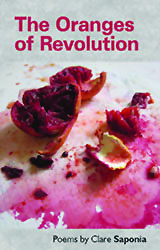
Clare Saponia is a spirited and unapologetically political poet whose poetry I have come to know fairly well over the past few years, having previously read and reviewed her debut collection Copyrighting War and Other Business Sins (Olympia) on The Recusant; I’ve also become familiar with her very poised and serious-minded reading of her poems, her having been a committed contributor to the Caparison anti-austerity anthologies and their various public readings. I was delighted when I discovered that Saponia had found a fitting home for her second volume of poetry, under Andy Croft’s radical imprint, and The Oranges of Revolution certainly complements Smokestack’s ever-expanding list, not least in its brilliantly metaphorical title.
Saponia is one of the most polemically direct contemporary poets, but this feisty confrontational flavour to her oeuvre is never over-cooked, and her prosodic skilfulness supports the political points well. The Oranges of Revolution is split into five sections, each titled by a part of the orange –Skin, Pith, Flesh, Pips, Juice– thus structuring the book through synecdoche. Although this reviewer relishes Saponian polemic, he is most impressed by those poems in the collection which place more emphasis on metaphorical use of language.
‘Constructive Thinking’ is one such image-rich figurative poem displaying Saponia’s poetic confidence with descriptive tropes –here’s an excerpt:
There’s men now drinking tea
where the house stood yesterday
toasting to their very own fallen Acropolis
that snaps the Hackney skyline
clean as a chicken’s wishbone.
And with nothing to wish on
except a faint carcass of scaffolding
loosely strapped to the neighbouring terraces
like a braid of NHS dentures.
At the foot of the skeleton lies a confetti
of fish ‘n’ chip boxes
from the kebab house
across the road…
The trope, ‘that snaps the Hackney skyline/ clean as a chicken’s wishbone’, is particularly striking alliteratively, and is also one of many examples of Saponia’s use of gustatory metaphors.
Saponia has a rumbustious vocabulary that verbally bounds from the page with excitable alliterativeness, and, narratively speaking, an acidic, blackly comic touch, as in ‘Flatlag’:
…In its place is a cowpat of purpose-built,
self-contained pride: brown brick, brown shit. An offshoot
of Strangeways. Three teenagers hang out each afternoon
after school hours in mufti pretending they haven’t been
to school, peeved they have no Monday night party
to go to. Not here.
On the other side, lies an orgy of lifeless Victorian terraces
belonging to a colony of ex-hippies and failed artists we never see
beyond the spew of cockeyed, fluorescent drapes
they use to block out the sunlight…
There’s much anger in this poetry, fitting for its polemical purpose, and Saponia expresses it effectively, and manipulates it imaginatively, even if some might prefer a little less expletives (though these aren’t too frequent). ‘Tony’s Do-it-yourself Guide to the Joy of Revenge’ (Saponia’s poem titles never fail to surprise) again displays an assuredness at darkly satirical narrative verse:
Revenge has silent paws.
he leaves his spots on the bathroom cabinet
of a morning so as not to weigh him down
Like his appetite. He buys fresh flesh
every Friday from the local warmonger
after pretending not to listen to Woman’s Hour.
He follows a rigid regime: accountability for breakfast.
Blame for lunch. And a hearty portion of denial for dinner –
as part of a well-balanced diet. He wanks off
whenever Murray’s voice dives an octave.
The alliteration of that last line is particularly effective. Saponia’s poetry certainly has cojones; with a no-holds-barred vocabulary, satirical left-hook and propensity at thumping tubs (in the best sense), her polemical poems are pretty formidable. ‘Junk food for Jaws’ also packs a punch:
With dollars stamped all over you.
Shekels shackling you. Ballots buggered
and bent and bound for Barack, what are
the chances you’ll avoid the daggers in
Sharm el’ Shark?
Again, as one will observe, Saponia doesn’t shrink from employing the full gamut of Anglo-Saxon verbiage at its bluest. ‘Ironing out Iran’ is one of many examples of Saponia employing more forensically poetic language to make her point:
Like a lava of commandments
set down in invisible ink, casting
in stone
the felonious rules of bestiality
that fail to trace beyond
the thought…
…
carved into syncopated spine
with half-wits choosing the gaps
according to gossip and level of
gain.
This clipped poetic precision and honing of tone is impressive, as is the alliteration. Likewise, ‘Geneva Conventionalism’ starts off in fine polemical spirit, supported well by the image-based trajectory of the language:
When it’s a toss-up between
your minaret and mine, a cone
or a cross or a moon that hacks into the sky
of unlimited fears…
‘Illegal Illness’ effectively tackles the thorny topic –or near taboo– of the Tories’ remorseless administrative manslaughter of the sick and disabled via the notorious DWP-Atos-facilitated work capability assessments (which have seen over 91,000 claimants die in just four years!).
The intriguingly titled ‘Daisy Chain called History’ is one of the most polemically successful of Saponia’s poems, tackling ‘muscularly (neo-)liberal’ Western foreign interventionism, and contains some striking phrases:
Silenced personalities
trimmed into cornflower blue cloths,
then white, then sealed and mummified…
…
They’ve stamped their feet in
whilst only their voices are silenced,
bungled by outright contradiction:
terror on their front porch.
The polemic of the poem certainly packs a punch:
every secret is torn between rounds of Chinese whispers
and waterboard-aquatics:
privatising death just makes it all
that little bit more personal
from one day to another.
Another exceptional poem in this collection is ‘What we swallow’ (gustatory, again), which displays Saponia’s poetic assuredness through some highly impressive lyrical flourishes bristling with alliteration and sibilance:
I watched a building melt to the ground
in time to The Thin Ice
from the comfort of my sofa,
its outer glass garments
drizzling from wick to ramekin
like unwanted advent accessories.
Since when did this become
standard teatime viewing –
…
He leaves sinewy stains
about the inner-rim, the beaker
flaunting its ill-carved mindset;
a chlorinated, off-key Watusi
of bad salty waters
lost in screening
to egg-shell fine slithers
of kettle-lining.
This poem also demonstrates Saponia’s very visceral lyricism, which has, to some extent, a faintly Plathian quality in terms of its stripped-down imagery and symbolism. One can’t emphasize too much just how passionate and gutsy (or ‘ballsy’) Saponia’s uncompromisingly polemical poetry actually is. One might hope that, in time, this most un-introspective of poets may employ her considerable poetic equipment in a more personalised direction, since one senses Saponia has much in her persona and experiences which readers would appreciate exploring every bit as much as her macrocosmic polemics. The Oranges of Revolution is a step up from her still impressive debut volume: it displays in abundance a rapidly maturing confidence in poetic form and control of tone, and certainly bodes much promise for future accomplishments.
 John Berger is universally known for his prolific career in literature, criticism and filmmaking, and has been the recipient of such notable prizes as the Booker and James Tait Black Memorial. The publishing of his Collected Poems is therefore quite a coup for Smokestack. Berger, who currently lives in the French Alps, has produced a deeply figurative and lyrical oeuvre very clearly influenced by European poetics; indeed, what strikes one while reading his poetry is just how distinctly un-English it is in terms of style, tone and subject –much is composed in response to wars and holocausts, and it’s difficult to find so much as one poem in this 145-paged book which isn’t, in some sense, polemical. Nevertheless, the surface style and tone of most of the poems in this Collected is lyrical, and in many cases, in an imagistic/symbolist Lorcan sense –again, the potent Europeanism of Berger’s verse.
Berger’s poetry is simply dripping with aphorisms. Take such a verse as the following from the first poem in the book, ‘Words I’: ‘Her child sucks the long/ white thread/ of words to come’. This Collected is arranged out of chronological order, with varying dates italicised under the poems. ‘A Dream Which I Inscribed Verbatim’ is dated 1960 –here’s an alliterative, aphorismic excerpt: ‘O bite the lobe of his ear, they said/ and draw the bolt of his life’. ‘Orchard’ has a beautifully gauged and phrased descriptive flourish towards its close:
In the tangled shadows daisies
made me imagine
how a grain of sand might open
and white petals radiate
from the open yellowed grain
the late blossom on a tree
at the orchard’s edge
was the colour of my brain
white rose with flecks of light and blood
thoughts in a brain
stay invisible
hence words to reveal.
I thought:
every day this orchard
is part of
a gale.
At once I’m reminded here of ee cummings, William Carlos Williams and García Lorca. Mortality, and, in particular, its premature-meeting –whether through death in war, or suicide– adumbrates most of Berger’s poetry. The close of ‘The Unsaid’ is particularly blunt in this regard:
Now both are dead
their last letters
lost in a pile:
both killed themselves
one with a gun
one in a canal.
Berger frequently tackles brutal subjects, and it is a testament to his great poetic skill that he can treat such grim themes with such lyrical grace. Indeed, there’s a real sense of redemption in Berger’s poems: the triumph of spirit and beauty over the atrocities of matter. ‘Viva Voce’ calls to mind Roman poetry, which was often highly polemical, not only the Stoic school, such as Horace, but even the Epicureans, such as Propertius or Catullus, and love poets (e.g. Ovid) of that ancient culture had a political propensity. Like the Roman poets, Berger couches his polemics in aphorisms –the first stanza here having something of Cicero’s rhetoric:
One who dreams deeply
of mountains
speaks next day
with the voice of a bureaucrat
Another whom nobody dares disturb
sleeping like a tank
parked in a square
will plead with the voice of a child
that he has never been disobedient
A third to overcome insomnia
imagines himself a beaver
and barks at meetings
in the name of necessity
He whose nightmares
are of history being unchangeable
will explain like a teacher
precisely what is needed
in order to progress
Into the ear of a poem
I write these riddles
never spoken
viva voce
One notes at this point some of the fundaments of Berger’s prosodic aesthetic: only the first word of each verse is capitalised, and there is a notable absence of commas, the enjambments marking the breath/pause in-between the lines. The absence of commas, together with pared-down, sometimes sparsely phrased lines, seems to emphasise an almost prayer-like truth-seeking; a spiritual whittling down. Berger’s aphorismic gifts are everywhere in evidence –here is another example, from ‘Story Tellers’: ‘Writing/ crouched beside death/ we are his secretaries’. Here the distinctly thanatotic quality to writing, and to poetry in particular, is quite chillingly expressed. ‘Leavings’, one of Berger’s earlier poems (dated 1956/7), shows how the poet started out capitalising his lines (and using commas) –this is a beautifully judged poem and warrants excerpting in full:
Brightest guests have gone
Green furnishings are down,
Shadeless light condones
Black frost on window panes.
Where lovers and grasses
Spent their seeds
Over iron crevices
Ice now makes the beds.
Yet indulge no regret.
Mouse eye of robin,
Creeping silence,
These cautious lines,
Bear witness still
In their circumvention
To the constant
Tenancy of man.
It seems almost superficial to point out the wonderful use of alliteration, assonance and sibilance throughout this poem –but then many such techniques are serendipitous rather than calculated in poetry. Again I’m reminded of the Roman verse-missive style in ‘Requiem’:
Green
unlike silver or red
I say to you Nella
is never still
green who waited
mineral ages
for the leaf
is the colour of their souls
and comes as gift.
Here Berger’s sparing phrasal style works wonders with images –again, a whittling down to rudiments. ‘Self-portrait 1914-18’ (dated 1970) is one of Berger’s less typical poems technically, in terms of its setting into three-lined verses (bar the final solitary line), and some slightly longer lines, quite a contrast to his more typical vers libre. At first sight it appears to be a semi-autobiographical poem, but chronologically-speaking it can’t be, since Berger was born in 1926, while the poem concludes in 1918. Berger was a post-World War I baby, too young to be one of the Thirties generation of writers and poets who were wracked by a sense of guilt at having not been mortally tested as their trench-veteran fathers (though many would of course find similar tests by the mid-Thirties, as volunteers in the non-conscripted Spanish Civil War, and then the Second World War). Yet Berger appears to depict his birth as if it had effectively happened during that last war. Perhaps the metaphorical conceit here is, indeed, related to the trench-spared ‘guilt’ of the Thirties generation, inclusive of those who were still children during that decade, such as Berger:
It seems now that I was so near to that war.
I was born eight years after it ended
When the General Strike had been defeated.
Yet I was born by Very Light and shrapnel
On duck boards
Among limbs without bodies.
I was born of the look of the dead
Swaddled in mustard gas
And fed in a dugout.
I was the groundless hope of survival
With mud between finger and thumb
Born near Abbeville.
I lived the first year of my life
Between the leaves of a pocket bible
Stuffed in a khaki haversack.
I lived the second year of my life
With three photos of a woman
Kept in a standard issue army paybook.
In the third year of my life
At 11am on November 11th 1918
I became all that was conceivable.
Before I could see
Before I could cry out
Before I could go hungry
I was the world fit for heroes to live in.
‘Trilling’ is an intriguing aphorismic poem:
The canary sings inside the eagle
and is mad.
The canary sings inside the cage
of the eagle’s breast.
The slow beat of the eagle’s wings
accelerated
flows like an incessant giggle
musically
from the canary’s quivering beak.
The canary trills highest
when the eagle kills.
‘Mostar’ contains some extremely effective description and alliteration –here’s an excerpt:
…she had fourteen pairs or more
on the balcony on the fifth floor
my finger wrapped in a scrap of rag
circling the tin of polish
balanced on the balustrade
I applied the black
to the little sides
the snub toe
the slender heel
whose tip was no longer than a dice…
So many of Berger’s tropes are exceptional in their spare lyricism –this, from ‘For Howe 1909-1985’:
know you
by the half smile of your reticence
and the space
of a pride
you hid in patched sleeves
‘Ypres’ almost recalls David Jones –though it is, presumably, depicting the Belgian location as a haunted scarred landscape in the modern day (much of which was shelled during the First World War). Here the use of alliteration and sense-impression is pitch perfect:
Base: fields whose mud is waterlogged
Perpendicular: thin larches
planted in rows
with broken
branches
Horizontal: brick walls the colour of
dead horses
Sinking: lower
and lower
houses with dark windows
Sometimes a wall is white-washed
A rectangle of dead lime
under the indifferent clouds
Chickens should have webbed feet here
At dusk drowned soldiers cross the fields to steal them
Through base
perpendicular
and horizontal
there is order:
the order of split wood
broken branches
walls the colour of dead horses
and roofs fallen in
There is no way out except across
Nothing reaches any heaven from here
Between earth and sky there is
a transparent canopy
plaited from cock crows
and the cries of soldiers
It’s a poem deeply evocative of the Great War. Most poets have their pet-words which crop up ever so often throughout their oeuvres –Berger’s are mostly oral-based, regarding language and the organs of language, thus, ‘mouths’ and ‘tongues’ (while ‘wagons’ also appears a fair few times); there’s a poetic focus on human communication, and, no less, the catastrophic consequences when this breaks down. ‘Expulsion’ is a potent poem apparently depicting that mighty Miltonian subject of ‘The Fall’ –here’s an excerpt:
Before,
when the two of them did not count
did they feel
a prickling behind the eyes
a thirst in the throat
for something other than
the perfume of infinite flowers
and the breath of immortal animals?
In their untrembling sleep
did the tips of their tongues
seek the bud of another taste
which was mortal and sweating?
‘Born 5/11/26’, titled by Berger’s own date of birth, contains perhaps my favourite of Berger’s aphorismic tropes: ‘no more thoughts of suicide/ than is normal in November’. It’s a piece strongly reminiscent of the work of García Lorca in its emphasis on symbol and image:
Redder every day
the leaves of the pear trees.
Tell me what is bleeding.
Not summer
for summer left early.
Not the village
for the village though drunk on its road
has not fallen.
Not my heart
for my heart bleeds no more
than the arnica flower.
Nobody has died this month
or been fortunate enough
to receive a foreign work-permit.
We fed with soup
let sleep in the barn
no more thoughts of suicide
than is normal in November.
Tell me what is bleeding
you who see in the dark.
Hands of the world
amputated by profit
bleed in
streets of bloodsheds.
That final masterful trope is almost as if John Pilger had suddenly taken to composing poems. Such a sparsely phrased aphorism is worthy of Alun Lewis. Indeed, ‘Jura Mountains’ also has a Lewisian feel to it, particularly in the following tropes:
…a blue he can never touch
if he lays a finger on the skin of this blue
he will touch the moment of his own conception…
and: ‘here words ricochet off the snow/ as off gun metal’. ‘Rembrandt Self-Portrait’ is a brilliantly restrained poetic tribute to the almost supernaturally gifted Dutch painter:
The eyes from the face
two nights looking at the day
the universe of his mind
doubled by pity
nothing else can suffice.
Before a mirror
silent as a horseless road
he envisaged us
deaf dumb
returning overland
to look at him
in the dark.
The line ‘silent as a horseless road’ is particularly evocative. A tribute poem to Orlando Letelier, the socialist Chilean politician who was tragically assassinated by the agents of fascist upstart Pinochet, contains some wonderful lyrical flourishes:
what his assassins whisper to themselves
his voice could never have said
afraid of his belief
in history
they chose the day of his murder.
He has come
as the season turns
at the moment of the blood red rowanberry
This poem is dated 24 September 1976, so composed only three days after Letelier’s assassination; this demonstrates that Berger’s poetic antennae have ever been alert to current affairs, and lends some of his poems the quality of poetic social document (something that Jack Lindsay, and even W.H. Auden, shared). The Lorcan influence comes through again in ‘Twentieth Century Storm’, which has some arresting tropes, some of which again evoke the First World War:
Lightning the scythe
is cutting down the rain.
Swathes of water
fall like the clothes
– o the great coats for parting
the great great coats
that never returned!
fall like the clothes
of the far away
on the sky’s empty field.
…
Each flower began
in the palm of a hand,
each petal
in origin
a gesture an action
a touching.
Put your garden to my cheek
your five fingered garden
in another city
to my cheek.
And then comes a striking haiku to close this effective piece:
The haycart
loaded with thunder
is trundling across the sky.
There is indeed, too, a deeply Oriental quality to some of Berger’s poems: rhetorically and aphoristically they recall the Chinese, and in seasonal and natural imagery, the Japanese. ‘Alpine Spring’ displays such aspects:
…the topmost branches of the plum trees
all are missing
are points of needles’ eyes
acupunctures of blossom…
…
towns besieged
tiny as the darling fingernails
of a baby whose mother has been raped then shot
acupunctures of white blossom
and the wooden planks of the barn
where the swallows nest
and the same wood as the cross
I’m scything the spring grass
on which Christ dies
amidst sunlit blossoms agape
at the blue sky.
Berger plays deftly with personification in ‘Rural Emigration’:
Mornings are mothers
bringing up their pastures
drying invisible sheets
across the orchard
and teasing the steaming rocks
with tales of sun and bed
…
Day after day
morning and evening coupled
grass and leaves grew up
and the drenched green catkins
fell from our walnut tree
like dead caterpillars
‘Memory of a Village Church’ begins with an imaginative gustatory image:
How to explain the world
with a rounded arch
cut like a melon
whose sweetness was a welcome?
Berger’s poems abound with highly memorable tropes and aphorisms. In ‘Their Railways’, we have ‘The blood of good-byes’. In ‘Far Away’, a lyric worthy of Alun Lewis:
Is the hand
that strikes the match
historic?
In the sequence ‘Eight Poems of Emigration’ we get ‘we eat off coffin lids’. Here is ‘II Earth’ in full:
the purple scalp of the earth
combed in autumn
and times of famine
the metal bones of the earth
extracted by hand
the church above the earth
arms of our clock crucified
all is taken
In ‘V Factory’ there is a striking figurative flourish:
there we built the night
as we lit the fire
lay down in it
pulled up the dark as blanket
‘VI Waterfront’ treats to us a bit of Bergerian surrealism:
my country
is a hide nailed to wood
the wind of my soul rushes
out of horizons
I make a hammock
in sleep
I suck birth village
touch my river’s curve
two black mackerel
pilot in
daybreak
gaff them sky gaff them
There’s some hypnotic poetic description in ‘VII Absence’, which also reminds one of T.S. Eliot in its slightly abstracted lyricism –here it is in full:
when the sun was no higher than the grass
jewels hung in the trees
and the terraces turned rose
between fluorescent lights along the ringroad
apartments hung their pietas
they are frying potatoes
a factory discharges its hands in woollen gloves
there is a hole in my thumb
the vines are not green
the vines are not here
the jewels
crushed in high voltage wires
will be worn by the dead
DANGER DE MORT
‘Troy’ is another faintly Eliot-esque lyrical piece with some memorable aphorisms:
The last day of the year
all cities have the right
to wear disguise….
…
This city invents for itself
a sky
unwinds it like a bale of cloth.
In a dream I found
a bird’s egg the blue of the sky.
Where the blue joins the roofs of the street
it rattles inaudibly.
My eyes see the sound.
Needless to say the alliteration and sibilance at work here is striking. ‘Separation’ is one of Berger’s longest poems –a fine lyrical piece, again, dripping with aphorisms, one of which is vaguely repeated throughout. It begins:
We with our vagrant language
we with our incorrigible accents
and another word for milk
we who come by train
and embrace on platforms
we and our wagons
we whose voice in our absence…
Alliteration is at play throughout, exceptionally:
We are experts in the presents
both wrapped ones
and the others left surreptitiously.
We are experts too in taking.
We take with us anniversaries
the shape of a fingernail
the silence of the child asleep
the taste of your celery
and your word for milk.
What in our single beds
do we know of poetry?
The latter trope is repeated throughout the poem, as is the ‘milk’ allusion. There’s something of early –pseudo-surrealist– Auden in these refrains:
We with our bad foreign news
and another word for milk
what in our single beds
do we know of poetry?
And:
we know as well as the scholars
what makes a language quiver.
Our freight.
The bringing together of what has been parted
makes a language quiver.
Across millennia and the village street
through tundra and forests
by farewells and bridges
towards the city of our child
everything must be carried.
We carry poetry
as the cattle trucks of the world
carry cattle.
Soon in the sidings
they will sluice them down.
This brilliant poem is dated 1984/5. In ‘At Remaurian’ there’s a play on the theory of cause and effect (e.g. that a butterfly flapping its wings in one part of the world could cause certain rippling vibrations that might result in, say, a monsoon on some other part of the planet):
A butterfly disturbs a grain
The grain another
Till there is such friction in the dust
The sky spills its blue milk
On the stones that have conceived
A day is born
Down the precipitous gaze of its opened eyes
The trees are led.
Berger’s very precise and spare lyricism, his sheer phrasal confidence, is breathtaking:
Seen naked the day rises
Till its eyes can probe
Beyond the walls on which lizards tattooed
Beat the rate of my pulse
Through groves so ancient
No desire of mine
Can be separate from its origin
In the glance of a man
A millennium ago
Down erogenous slopes
Where poised boulders await
The staring
Behind a cataract of pleasure
Over hills as patient as the unconceived
To that horizon
Which miles moisten in their welcome
And sight divides.
And:
Cover me cover me
That I am spread as the whiteness of rock
And no ignorance remains in the light
When every organ
With its workings is displayed
Letting spermatozoa and egg
Be as evident to sight
As pairing butterflies
The glance of whose wings
It will then be too late
For this gazing sun
Ever to misinterpret.
And:
Since from my bough
My leaves then unfolded
And I pursued
With my tongue
The lineage of your wood.
All these excerpts from separate numeralled parts of the same poem-sequence –exceptional lyricism. ‘Ladder’, from the 1980s, shows the influence of Ted Hughes in its violent depiction of ‘a dead ewe’:
legs in the air
thin as the legs
of a kitchen chair
she strayed yesterday
ate too much lucerne
which fermenting
burst her stomach
the first snow
falls on her grey wool
a vole in the dark
systematically
eats the ear on the ground
at daybreak two crows
haphazardly peck
the gums of the teeth
her frosted eyes are open
But such Hughesian macabre is brought up short with some lyrical flourishes and transcendent imagery: ‘and two butterflies white/ like the notes of an accordion’. ‘Death of La Nan M.’ (subtitled ‘In Memory of Lauren Malgrand’) has something of Scandinavian poetry about it, specifically its quality of ‘Nordic gloom’ –it’s a wintry, funereal poem, and in its strong use of images and fairly sparse stanzas is reminiscent of –among other Swedish poets– Harry Martinson. Here are some choicest excerpts:
When she could no longer
prepare mash for the chickens
or peel potatoes
for the soup
she lost her appetite
even for bread
and scarcely ate
He was painting himself
black on the branches
to watch the crows
…
At night he reclined on each side
of the black fire
burning her bed
what she asked him was his opposite?
Milk he answered with appetite
This fine poem closes on a simply stunning image:
At her funeral
the village saw the soft snow
bury her
before the gravedigger
‘They Are The Last’ is rich with poetic tropes, as well as scientific aphorisms:
Put your ear to her flank
and you will hear
the tide of her four stomachs.
Her second, like a net,
has the name of a constellation:
Reticulum. Her third,
the Psalterium, is like
the pages of a book.
When she falls sick
and lacks the will to chew
her four stomachs fall
silent as a hive in winter.
…
‘I believe it’s completely feasible,’
said Bob Rust
of Iowa State University,
‘to specifically design
an animal for hamburger.’
Elsewhere
the animals of the poor
die with the poor
from protein insufficiency.
When fetched from the pastures
the cattle bring into the cool stable
the heat of the orchard
and the hot breath of wild garlic.
…
Yet the ewe
had already lambed
her permanence.
‘Snow’ includes the lovely verse which is in all senses –nature imagery, syllables– a haiku:
His white wings lie
discarded
on the green sky
whose stars are crocuses.
‘Bakar’ is a sharp miniature, closing on one of Berger’s less typical rangy lines:
The village which told stories
during the night of centuries
above the bay of the tuna
has fallen silent
astounded
by the news of the refinery
and its refrain
flaming continually
against the hills even on the days of funerals
The ‘f’-alliterative chiming of ‘fallen’, ‘refinery’, ‘refrain’, ‘flaming’ and ‘funerals’ is wonderfully done. ‘My Coney’, dated 1952, suggests Berger started out writing poetry with an almost fully-formed tone and voice –it’s an exquisitely phrased, gorgeously alliterative and sibilant lyric. Here are its closing lines:
Bird of whose folded wings
no normal ornithologist
can gauge the span,
Soothsayer whose fingerprints
chart an arabia
irredeemable as the phoenix,
Do not submit
to any corollary
but, my love, elude me still.
The short imagistic piece, ‘Hendrickye by Rembrandt’, deserves excerpting in full:
A necklace hangs loose across her breasts,
And between them lingers –
yet is it a lingering
and not an incessant arrival? –
the perfume of forever.
A perfume as old as sleep,
as familiar to the living as to the dead.
As in many cases in Berger’s poems, the alliteration hinges on ‘f’ and ‘g’ sounds. ‘My Honey’ has a surrealist charm:
The apple trees are barking
the beestings on my scalp
mark the rage of the swarm
hold, my honey, your sweetness.
While ‘The Leather of Love’ plays alliteratively on ‘g’, ‘p’ and ‘h’ sounds to an almost hypnotic effect:
Weathered as gate posts
by departures
and the white ghosts
of the gone,
wrapped in tarpaulins,
we talk of passion.
Our passion’s the saline
in which hides are hung
to make from a hinge of skin
the leather of love.
Quite simply, John Berger’s Collected Poems comprises some of the most exceptional figurative lyrical poems this reviewer has read by any poet currently writing. This book is not so much a coup for Smokestack for the reputation of its author as a coup for the exceptional quality of the poems themselves. But if one must mention reputations, Berger is a refreshing and very rare –if not even singular– example of a famous name whose reputation might precede him but whose poems more properly should. This reviewer confesses he has not previously read any of Berger’s writing, so has come to this volume with a completely fresh eye, one which has not, therefore, been tainted by reputational expectations. This book is highly recommended, especially for admirers of European poetry, and, for once, a publication more than lives up to a reputation…
 Jo Colley’s Bones of Birds is a slim disarming volume, and although –to this reviewer’s mind– is an example of Smokestack’s slightly more ‘mainstream’-leaning range, as opposed to its more typical leftfield fare, there is certainly much poetic skill and craft to admire here. ‘Crows’ is a spare and clipped aphorismic lyric which employs some sharp alliteration and sibilance:
Slow circle the beech,
a séance,
a synchronised return
to matchstick cities where
they perch and preen,
replete with scraps.
Sky pirates, poised
for aerial display
or sudden flight.
Boot polished heads,
slick feathers,
the scalloped fan of outstretched wings.
In courtly trios
you flaunt your risky glamour.
I would ride you if I could.
One detects a certain Hughesian sensibility at work here with the rather stark natural descriptions, and it seems to be mostly an exercise in description, which is well done, nicely phrased, with a good alliterative sense. ‘Heiress’ has some nice phrases and, again, a wonderful assonantal and alliterative patina:
Her little finger trapped in the car door
when she was three years old,
stained the beige suede
of the customised Bentley,
evoking her father’s disgust.
The mangled digit, preserved in formaldehyde
became her loyal companion, one step up
from an imaginary friend.
Its messages were indirect: ask it a question
and it would turn slowly
revolving in its pickle jar like a mutant fish
until it settled in a particular direction.
…
When more intricate advice was called for
she’d remove the lid, insert one perfect hand,
grasp the squirming thing like a flesh pencil,
dip it in ink…
There’s a quirkiness at work here –and in many of Colley’s poems– which calls to mind, to some extent, Stevie Smith, and, more latterly, poets such as Pauline Suett Barbieri and the late, faintly surrealist, Beryl Fenton (both Waterloo poets). Although anecdotal poetry doesn’t tend to be this reviewer’s particular bag, Colley at least furnishes her offerings with affecting phrases and imaginative use of language. But Colley is perhaps at her most effective when composing mini-portraits, such as ‘Lady Drummond-Hay: From Lakehurst to Friedrichshaven’:
Invited to dance as the ragtime plays,
the whole world elevated from mud
and up, up in the air. She grabs
the proffered hand of fate, lifts off
in a cathedral, its filigree arches
supporting straining silk, like
a generous woman in a corset,
Dangled in a gondola, her eyes devour
the Zeppelin’s shadow, a giant cigar
drifting over the surface of the earth…
Even if one doesn’t fully feel that some such poems –excuse the aeronautic pun– ‘take off’. Continuing on the certainly unconventional theme of women air pilots (or ‘aviatrixes’), ‘Final Flight’ is a very effectively written short poem –with some pantoumish aspects in its repeated lines and phrases– displaying Colley’s tangible love of language:
She wanders the gardens of Palma, earthbound
without the compass of her mother’s presence,
the skies, her former playground, no longer blue.
She begins her laborious descent,
sees Rotorura in the rain swept view.
Wings clipped, her eyes on the ground
she wanders the gardens of palma, earthbound
until disguised as a dog, opportunity bites.
She prepares herself for her final flight.
The gardens recede. No longer earthbound.
Colley’s collection, incidentally, is structured into six sections, some with very arresting titles, such as ‘Garbo of the Skies’, and the very specifically themed ‘The Night Witches: Russian fliers 1942-1946’. ‘Marina Raskova Disciplines Lylia’ has some brilliant alliterative touches throughout, such as the phrase, ‘Her fox face peaked out cheekily’ –and:
She was a creature from a fairy tale,
cutting and stitching, an elf intent
on transforming the dull cloth to preserve
her femininity, outshine the other girls…
Colley’s well-honed descriptive prowess reaches a peak towards the close of ‘Lilya Looks Back’:
But here I sit, a grandma in a tidy German garden,
my white hair carefully arranged, cheeks like wrinkled apples.
The broken bones mended, though they feel cold.
I had to seal the jar to my past
with a good thick layer of wax…
On a superficial level, Colley’s poetry ‘doesn’t put a foot wrong’ (though one might occasionally wish it did, just to give a bit more edge): it’s painstakingly crafted, precisely honed, unobtrusively descriptive, and has a light-touch poetic richness –‘Stanley Crescent 1969’ being a fine example of this:
You rise up like Persephone, blinking
from the dark basement, sit on the steps
of the wedding cake house to read the letter.
It’s slim, crisp as a new note, trimmed
with promise. An unknown president
regards you from its stamp.
You sit, beatific as Buddha, the letter
in your lap, blue and white London light
swirling like a day at the beach.
All week you have waited, standing
in the ominous hallway, ears straining
for the postman’s steps.
Your fingers tear along the dotted line,
release a sigh of longing from the slanting script,
the curling down strokes.
Passing pigeons circle as your heart
war dances round the fire, smoke rising
like an exhaled breath spells ‘yes’.
The Molly Bloom-esque close of this poem is quite nice. ‘Stanley Crescent 1969’ is a pristinely composed supplemental poem of the type which one suspects most mainstream poetry journal editors would immediately lap up. Such poems have their place, or, indeed, places. But though such poems can’t be faulted technically, a certain amount of poetic spontaneity and derring-do is guillotined in the process. ‘Lamb’ has some striking descriptions, albeit punctuated with occasional lapses into prosaic phrases which, if nothing else, provide pausing spaces amid the denser imagery:
I emerge from the sweaty heaving underground
like a slippery newborn spilled into life,
stop to call you in the exhaled breath of coffee….
…
Out on Lower Marsh the rain begins to fall:
I think about going back to buy an umbrella,
then I remember I have never had
a long-term relationship with an umbrella
only infrequent, desperate one night stands
with no commitment on either side.
Near Waterloo the railway legacy
leaves scattered viaducts, lost cathedrals.
sheltered here, waiting for the rain to pause,
where mutant pigeons drink from rainbowed puddles,
the city reveals a secret: Blake’s Songs,
transposed to mosaic, each tiny piece of coloured clay
arranged to make a perfect copy of the book
you gave me when innocence outweighed experience.
Some might feel the last line, by way of Blakean allusion, is slightly trite. Regards the occasional prosaic lapses, the line ‘Then I remember I have never had’ is rather moribund poetically-speaking and one can’t help thinking that surely a poet of Colley’s calibre can avoid such linguistically flat lines. The trouble with narrative-driven anecdotal poems is it can be very difficult to avoid ruptures of prose –however, these can be avoided, if the will is there. And after all, if a poem is much more about the narrative or anecdote than the engagement of language, one begins to question whether it should simply be written as a piece of prose and not a poem at all. Having said this, however, Colley’s keen poetic sense of language generally weighs the balance towards poetic justification. ‘Night Vision’ is also nicely phrased throughout –here’s the last of three stanzas:
Stay down as long as you can manage:
listen to the echo of your breath
deduce the origins of objects
barnacled in failure and regret.
But in the end your cylinder begins
the apprehensive cough of nearing empty.
You kick out for the light.
The trouble this reviewer has with this type of poem, however, is not so much that it’s anecdotal, but that it’s anecdotal about a somewhat inconsequential subject, in this case, swimming. Of course there is poetry to be found in some of the simplest of moments or activities, and while Colley certainly pushes the theme out as far as she can in poetic terms –the final pseudo-epiphanic phrase working quite well– one feels that here is one of a handful of examples in this book of a poem in search of a subject. ‘Almouth, October’ is one of the most successful descriptive poems in this collection, bristling with alliteration, colour and image, a distinctly painterly poem:
Under a big soft sky as a pigeon’s wing,
the colours of Northumberland merge:
pearl grey, oyster, sand,
the blue black rippled sea
run together like water spilled on a child’s painting,
a perfect marbled sheet, enfolding us like a gift wrap.
My body chooses baptism
emerges from the water
in obedience to moon and tide.
A seismic planetary shift
has exhumed all lost days
resurrected from a black hole.
They erupt onto the beach, reborn
like corpses in a Stanley Spencer churchyard,
scattered offerings brought into the light.
However, this reviewer would prefer more metaphorical emphasis and less overt simile: the repeated use of ‘like’ feels too frequent for comfort, and the ekphrastic phrase ‘Stanley Spencer churchyard’ relies on the reader instantly picturing such a painting when some might not be so intimately familiar with that painter’s work, or, even if they are, one feels part of the poet’s duty, to evoke and not simply reference works of art, is being neglected in favour of a kind of vicarious descriptiveness. This reviewer has encountered this sort of description-by-proxy technique in other contemporary poetry –somewhere else by another poet he read of a ‘Turner sky’, for instance.
The next stanza feels like a rather trite metaphor: ‘I stand before you in the sweet, salt air/ a message in a bottle/ you must break open to read’. Having said that, however, the phrase ‘You must break open to read’ does manage to justify the image with its slightly sinister implications. The final stanza is very effective in tone, mood and language:
The dark line or rocks rises into cormorant
as gulls cast wave shaped shadows on sand
carved by the retreating tide.
My hand hides in your hand,
our Siamese skin stitched together
like a boy and his shadow.
The last image is particularly resonant. ‘Salvage’, subtitled ‘Items commemorating the wreck of SS Stanley on 23 November 1864 on the Black Middens at Tynemouth, Tyne and Wear’, comprises a triptych of imagistic, ekphrastic lyrics, and is largely effective:
I Cutlery
The cutlery, displayed on white, is a chorus line
the bowl of each tarnished spoon glinting
like a face turning to the light.
The knives are mini scimitars, embossed with rolls
and curls, homage to the sea they were fished from
all those years ago
the girls were found in Mussell Scarp
their linen swaddled bodies
laid out in the morgue, side by side.
The language is well-honed here, though one wonders where all the hyphens have gone!? And, to be picky, the line ‘all those years ago’ is, again, linguistically moribund. But it’s still a fine piece. The second and third lyrics are more aphorismic:
II John Sopwith’s dictionary
Words and there definitions can’t be erased.
no storm can silence such a store
so carefully compiled.
The sea added salt. The printed pages
washed up on the beach survived.
choose. Write your epitaphs.
III Wallace Gravestone
Salt and wind eat stone
eradicate the message
meant to last forever.
Underneath, the bones
settle in their bed of soil
knowing who they are.
Overall, Jo Colley’s Bones of Birds is a collection of deftly composed poems which can hardly be faulted in terms of craft. What lacks from some of the poems, however, is a sense of poetic urgency or overpowering purpose; such precise craftsmanship and, to some extent, lack of risk-taking, can often come at the price of spontaneity or edge. Nevertheless, there is no doubting Colley’s poetic skill and eye for an arresting image, and in these respects, her poetry is certainly a pleasure to read.
I reviewed Gordon Hodgeon’s remarkable debut Smokestack volume, Still Life, some time ago, and was, as the review will testify, struck by its exceptional poeticism, not least since the poet, paralysed in a hospital bed, has composed his poems using Dragon voice-recognition software. Without wishing to place too much emphasis on Hodgeon’s chronic physical incapacity, it is nothing short of astounding that a poet so near-completely impaired bodily is still inspired to produce such supremely composed poems –or, indeed, perhaps this very purgatorial infirmity is precisely what spurs this poet on to keep producing such captivating verbal music.
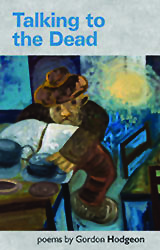
The very slim but beauty-brimming Talking to the Dead (only 47 pages) –adorned with a striking painting of a man in a café, ‘Mr W’ by David Watson (also the title/subject of one of the poems in the book)– is every bit as astonishing a poetic accomplishment as Still Life. The first poem in this collection, the wistful ‘I Walked out This Morning’, is a compelling and deeply moving ‘out-of-the-body’ lyrical vignette with an almost Fairy Tale quality (which faintly recalls some of Stevie Smith’s sketchier parable-poems). Here it is in full:
I walked out this morning
from the jigsaw jumble of
dreams and memories
and found a man in my bed
with a fly on his nose.
only his weeping eyes could move.
I asked if I could help him
but could not understand his reply.
Oh dearie me, oh dearie him.
so I turned away to go and saw
him in the mirror standing
about to leave the room, and me
supine in the bed with a fly on my nose
and only my weeping eyes could move.
The eponymous ‘Talking to the Dead’ is another exceptionally compelling poem, brimming with subtle alliteration. Again, I excerpt it in full:
I am talking to the dead,
who are sullen, not responding.
I try their silent language, fail
over and over. Who can teach me,
guide me through their dark palaces,
their ungrowing fields? Sometimes
one seems to speak to me, but there is
no air to carry the utterance. Faces
are blank zeros, sighs, unfathomable.
This might be a welcome, a warning.
Should I tell them what it is
I need to know or turn my back on them,
talk to the living while I can? These
seem just as incommunicado,
standing off, not wasting breath.
The sunlit living, they witness how I slide,
though they will follow me down.
I must talk with the inarticulate dead
again, learn to be one with them,
wear the common habit, nameless, and innumerable.
‘Thunderflies’ finds Hodgeon in a nostalgic reverie for distant times when he could interact with nature; its mournful final stanza is particularly effective:
No thunder in this quiet garden,
just the flies. Time to get out of the sun,
creak up the wheelchair ramp.
Those days are lost,
most of their people dead.
Inside, free of those harbingers,
wait for the god to strike.
‘Totentanz’ is one of Hodgeon’s slightly more polemical poems –again, beautifully phrased with an almost effortless-seeming light poetic touch. I excerpt it in full:
Never a star shining
down in the cold of earth.
There they are scattered,
flesh-flakes in the soil’s stir,
the worm-whirls,
do they still dance it,
that thick dark winter?
Do yellowing bones still clutch
traces of DNA like an old tune
round and round in the head?
Do these spiral up in me?
If so, my connection’s made
with register and census glimpses,
a few papers, family Bible,
some of their heart in there.
Infants who waltzed away
before they knew their names.
But this is not the book of the dead,
no gold leaf, no spices, no precious stones,
no feasting. Their after-life
a deep ditch, not Dante’s,
paupers’ graves in a crowded churchyard
in the slums they were born to.
I can only dig so far: field labourers,
mill hands, servants, colliers.
Down below that they fade
into no names, invisibility
of toil, of famine, of poverty.
They were serfs, peasants, wage slaves.
Who owned the land they lie in?
Those who made the chronicles,
history books, T.V. documentaries?
Barons, queens, factory owners, all the rest,
these in their tombs and sepulchres
with the same orchestra,
the same Okey-Cokey.
My plan is to join with
the anonymous dead,
forgotten soon enough,
no memorial stones,
I’ve seen too many.
I will hold hands with death
and all of you, my folk,
in the glorious dance of the earth.
Nothing but earth.
As this poem demonstrates, Hodgeon’s clipped aphorismic style is wonderfully underscored with deep feeling and humanity –his is a fundamental talent. ‘I, Said the Fly’ is perhaps one of the most exceptional poems in an exceptional collection, containing some sublime tropes:
There is the white plain of your linen.
There is the outcrop of your head…
…
All one, all angels, sculptors in flesh
remove the tyranny of pain,
discovering the blank ideal,
the anatomy of bone.
This is our daily bread,
our artistry and sustenance.
Now I taste your sweaty pores,
harvest the flakes of skin
among your head’s sparse hairs.
I feel you thinking how the days diminish,
the rustling leaves spell autumn,
the end of our dominion…
There’s something of a Yeatsian sensibility in such aphorismic lyricism. We get some depictions of Hodgeon’s working-class upbringing in Leigh in the nostalgic ‘George’, which has Lowryesque qualities:
You fed the children from that grid of streets
when their dads were on strike or had no work;
you lent money, thinking it would come back,
it didn’t. You ran the Sunday school, you
made a gift to me of well-thumbed books,
Sir Walter Scott, Dickens, George Eliot.
You let me learn your sense of serious fun.
How you tormented the old ladies
reading their teacups, winking at me.
At times I’m reminded to some extent of the similarly poetically succinct verse-vignettes of the likes of Tom Kelly, Ian Parks and David Swann. ‘Late Lament’ recalls Larkin in its prosodic restraint, abundances of images and descriptions packed into its excellently sustained eleven six-lined half-rhyming stanzas employing an a/b/a/b/c/c scheme. It’s a poem simply brimming with nostalgia. ‘Solstice’ is an exquisitely phrased miniature, again, faintly Larkinesque in its wintry wistfulness:
It is midsummer, the evening overcast,
grey as chapels, grey as sorrow.
All the house is children’s laughter,
their footsteps rattling the corridor.
From here we all go down
to the darkest day, so slow.
It is hard to imagine these children older
dropping with the once-green, autumnal…
Not wishing to over-use ‘Larkinesque’, but ‘Wed’ has distinct Larkinian qualities in its philosophical depth and poetic control, and reminds me a little of the latter’s masterful thanatophobic ode, ‘Aubade’:
Looking back, it’s what we mostly do
as life draws near to its close
and what i see, though slightly out of focus,
is now we have us to ourselves
more than we ever had those lengthy days
we crammed with too much work, with lovely children.
I wish we had found more time together
but then my sceptic self says best to wait
and watch conclusions leap to their various deaths.
Comparisons with ‘Aubade’ become more pronounced in the closing stanzas of this exceptional poem, and to my mind there’s something of Larkin’s atheistic lament, ‘Religion used to try, / That vast moth-eaten musical brocade / Created to pretend we never die’:
What’s next? We’ll never know or
hardly. When it arrives, we will not be
prepared. Die Soldaten kommen,
die Soldaten kommen. No, not Germans,
three words drumming in my head,
an army of little deaths. Whoever,
they can take us and let the young ones go.
…
Or maybe not. Life is never so disciplined,
in stories awkward bits are shovelled
into silence through arbitrary devices
leaving life alone, let out like us
for rough grazing. We will muddle through
weeds, long grasses, nettles, our common pasture.
And share our laughter.
The slaughterhouse is always open.
‘A Paltry Thing’ finds the poet empathising with the plight of Turkish miners struck by a pit implosion, via a meditation on his coal-mining ancestry, and name-checks Yeats with a poetic humility unsurprising in such a humanely anchored talent as Hodgeon’s:
…then find my mind sticking
on the now, refusing to let go
its grip on the immediate
which roots disturbance
into what I’d thought
protected in my memory…
I never saw me following
Yeats, sailing to Byzantium
or perching on a golden bough
to sing prophetically.
But miles away in Soma
I am all ears to grief and anger
for bodies dragged into the light
or lost in dark, to the damp
which stopped their breath.
That hit me hard. I had forgotten
the coalfields of my youth
and long before me when
ancestors bent to this work,
the darkness dangerous,
the air foul. Now I recall
a line of those disasters
that punctuated miners’ lives with death…
The picture depicted here is indeed sublime: that so many miners throughout history should end up prematurely cold in the pursuit of the source of others’ warmth. ‘Boris’ has schoolboy ebullience and some marvellous cartoonish descriptions, though it’s a teacher’s reminiscence, which is of course its jocular point:
Nicknames cling to teachers like stickybobs.
Mine was Greenmould, it was my suit, it was
the only suit I had, could afford. You were Boris,
you looked like Karloff in the horror films.
your pebbled glasses, your bent back,
wild and thinning hair, all made you our target…
‘After Your Visit’ is a genuinely heartbreaking poem which captures the poet in self-mourning mood, imagining himself gone from life as he already pictures in his head his prolonged absence from home life:
My room’s reflected on the glass.
the bookcase behind me, the lamp
in the corner, the lit corridor, my daughter
moving up and down in there…
But I’m not there, am gone with the sun,
paled to invisible, my place is in
the company of dark shades, curtains
that frame the dusky room.
my absence fills my eyes,
erases lump of body
in this wheelchair, only the blanket left.
Sleight of the magician’s palm
prefiguring that long shadow,
which leaves those books, that lamp,
even this wheelchair, solid as flesh…
This will come, it’s little wonder
we did not speak of its coming,
are come too close to it to mention.
For now we are agreed, you will send
the first email, give me an update,
I will wait impatient for summer.
Already the blossom trees are waking,
the narcissi you brought me
in full flower on the windowsill.
‘Garden Pond’ is a breathtakingly sublime figurative lyric brimming with subtle alliteration and sibilance, and warrants excerpting in full:
The little pond is thick with duck weed,
frog spawn. A tight fit, I hug the murky bottom,
peer up at the obscured glass.
Someone appears, the breeze
shivers the surface, we both tremble
then become still. The trees are opening
their first flags around me and say
welcome to you. I think you are
the high clouds, the haze of sunlight.
What do you spy? Torn fragments
of a crazed plane drowning? Troops
massed at the border? All I see from here
is beyond me, mazy weed,
the small spawn thickening, preparing
their next stage, they know nothing.
Will you come to this earth, water?
Will you observe my dead weight,
my mouthings? Not even a raised hand
summons you, but spring is about us
urgent for something we might have given.
Me in my little pond, me looking for myself
down here. It is without malice
I let you go, see to my own end,
the year’s giving, taking.
‘Psalm’ is a wistful and beautifully phrased self-threnody, which relinquishes its commas, its punctuated breaths, so we have caesuras instead, which lend a faintly stream-of-consciousness quality to the verses:
Our loving we thought all our lives
gone in some storm some silent morning
where are bog and stone
ogre of fell wind whisper of snowfall.
Where are you which mountain crest
which valley chiselled into rock
which plain with its despairing cities
its unknown gods its abandoned books?
The only term really fitting such a deeply poetic flourish is ‘inspired’. ‘Physician’, again, has Larkinesque qualities, reminding me particularly of ‘The Old Fools’; it’s a searing depiction of hospitalised incapacity punctuated by occasional home visits, this particular autumnal one, metaphorically captured in anticipation of death (‘winter’); but this poem is defiant in its tone and exceptional poetically, displaying Hodgeon’s mastery of form and language, and has to be one of the standouts in an outstanding collection –here it is in full:
Fifteen days away, now I am back
from that den of healing and see:
that thieving autumn has sneaked
into the empty garden, left its calling card
colouring the avenues of trees,
September sun, first warning of winter.
It was a dream with no escape,
I cried nurse but they swept by.
Devils only answer their proper names,
I try from my poor stock, Belial,
Moloch, Beelzebub, Meph…
But they are passed already, easy
does it. Or they are angels,
remote, indifferent. This is
no garden, no Eden, no
bower of bliss. They have
their uniforms, we all have
our uniform, our grades.
We poor patients lie
or sit or wander, all
in our surgical gowns,
bare arsed, our life incurable.
I stare into the blanked-off
squares of ceiling heaven, a prisoner
aching for home, for death in its own good time,
some human requiem.
But no, the smiling crimsoned doctors
shake wise young heads, I must abide
their bloods, their protocols, must find delightful
the symphony of insane sirens.
Those fifteen days and nights had seem
eternity, but here I am, the remnant
of a dream, in this ageing garden.
I welcome this late autumn, this approach
of winter. I will see them out and they
will bury me. I shall look forward
to the next spring, hope to admire its first flowers.
But keep me safe from those cure-alls,
from their blessed rituals. It is too late
for this well meant and monstering regime.
You will find me squat amongst
our motley perennials, waiting on my last day.
Let me lie there, one with our local earth,
let me root in, lost my name,
all manacled identities.
The phrase ‘monstering regime’ is particularly striking; ‘monstering’ is and example of Hodgeon’s occasional neologisms (another example, in the next poem, is ‘clumsied’). ‘The Words Man’ manages to almost rejoice in its death-anticipation, and is skilfully composed in four-line stanzas of a rudimentary a/b/a/b scheme with some nifty half-rhymes:
Another month and two more old friends gone,
so two more empty places in my head
that won’t be filled in any later season,
if any comes before I join the dead.
My brain is ageing, shrinks and gapes,
it loses systems, names, so many words
that won’t leap to my clumsied lips
as they once did like young cats after birds.
This way the hole behind the eyes
gets more profound, a dizzying drop
into a last and lingering demise,
the end of all I am, have been. Full stop.
So many words, they made my voice,
but here I count the last of them,
the final drips of my rejoicing
from broken gutters of the brain.
A plenitude of rain, they filled
my seventy years with blessing,
made my soil rich and fertile,
the voice I thought unceasing.
They grew my life, from the familial
first stumblings to what I understood
was me, student, scholar,
reader, teacher, reader, poet,
made me spill volumes from my store of words
in pulpit, classroom, on the stage,
in love, in poetry. But now the clouds
have emptied, emptied most of Hodge.
The final croaks drip like a dodgy tap:
the washer is at last worn out,
syllables drown in spouts of sputum,
sputtering, secretions.
The words man. So they said,
but now, would not take the chance.
My words gone sullen, lumps of lead
misshapen gobbets of utterance.
Their ghosts stay quiet in my skull,
I’ll work them secretly, bequeath
these death’s head poems, rush them all
out to the deaf world, in one last breath.
Once again there is some supreme use of alliteration throughout this buoyant poem. And ‘The Good Eye’ captures Hodgeon in more clipped, imagistic lyrical vein, and the effect is nothing short of startling, the first stanza’s sibilance and ‘c’-alliteration almost have an acidic effect on the tongue, while the short staccato lines lend a sense of diminishing breath:
The good eye
Acid, ice needles.
Squeeze it shut.
A tear easy
skis down the razored cheek
into the stubbly trees.
I shall soon cease
to keep this
living, this
barely evident
hard to identify
sign of a life
almost lived.
…
Perhaps the time
to die, I can’t say.
When we arrive,
realise the place, stumble
into a new grave.
The wormy soil heap by
and bought for shovels.
In we go, down we go a little way.
Everything goes down, down the hill,
where the trees receive us, welcome
the final scores, the stubs of saints,
fag ends, bones of chicken, children,
what is left of you, her, him and me,
all that falls easy as palls burn,
easy as tears slighter into the thorns,
freeze on the bloodied snow.
‘An die Musick’ is another outstanding lyrical poem, so richly poetic in its apparent simplicity –if that’s not contradictory:
I play his songs on this sad stereo,
the light and dark I find it hard to bear
as mind alone makes its Schubertiade.
Relentless years gone by since we
made pilgrimage to the real thing,
music in the clear air.
…
For me more poems, scratches at the itch
of my decay…
…
The sum of all our days? Perhaps not much
if we compare with his so short,
so rudely shortened life, in which
he wandered through the groves
of music’s hopes and deep despairs.
…
Now Billie sings her mortal blues
and on the unread shelves the metaphysical
George Herbert sits in contemplation.
Yes we know, dear parson poet, music shows
we have our closes, all must die.
But while we live the small remainder
let’s anchor in our mutual joys and griefs
and what transforms these into music
played long before and sun long after
we are returned to stardust, brief notes
in earthsong’s cycle, dying, undying.
‘Wild Westerly’ is one of Hodgeon’s more ferociously poetic pieces, bristling with spirited defiance, a quite tumultuous, Whitmanesque poem which almost seems to shout off the page:
Your Atlantic-laden, shrouded skies
make the chimney groan
behind my poetry books
and at our blasted backs
that winged chariot hurtles
from the deep wreck-throated
cable-strained sea, from the hurl
of air, of sucked-up wet.
What do you sing to me
stumbling like love from those high fells
down nearby Tees, down far off Humber?
…
I have a poet’s answer to this storm
for all assembled here,
these silent legislators.
I can’t read their verses now
but know their truth.
Blake, Brecht, Marlowe, Donne, Marvell,
Coleridge, Lawrence, Neruda, Keats et al.
Yes, we understand that you’re preoccupied
with worms and what they’ll try, it’s natural.
Your sense our brevity, the frittering of our breath,
we gutter out before we’ve scarce begun.
So what I’d bellow at you if I could
would go like this; we wonder, love, cry freedom, rage.
The living talk to the living in singing words,
which outlive their makers.
If you touch us, yes we will bleed.
You know I can’t. But I implore you,
open any page while you have breath.
What you discover, life. Read it, devour.
‘Stumm’ is an extremely effective lyric expressing the essential inertia of physical being, specifically when one’s body has almost ceased functioning –again, alliteration buttresses the lines:
Stumm
is what I have become
is who I am
dumbfounded in my brain.
The din of its foundry
resounds and finds
there’s no way out of
the confines of my skull.
No sound of rationality,
only the gurgling
of throaty sewers.
Otherwise stumm stumm stumm
is who I am, is what I have become.
I beat this muffled drum,
no-one has yet to come to hear
my brain’s impatient thrum.
Do not, oh do not blame them,
we would do the same.
That sort of said, my dear,
this dull December day
we have a little left to say.
By contrast, ‘Enough’ is a more of a verbal explosion on the page:
Him and me, the two of us
On the brink, on the double white lines.
Not a pretty sight, me stuffed in the wheelchair,
Him with his empty sockets, their bloody eyes
Two hard-boiled eggs squelched in the briny grass
Into tarmacadam. No wonder the TV moguls said no
When we offered them a head-to-head. They said,
‘not likely, imagine such awful visuals,
And you with your mouth agape, your dropped jaw,
Saying nothing. And him just repeating his lines,
Nothing we haven’t heard before’. Fair point,
Shall we jump? Shall we cross? In either case
He will have to push. The birds peck our bare heads,
The cars nudge our toes. Is it a sheer drop? Is there a gap?
Horns blare, birds screech, we will make a mad dash,
Rush for the exit, for the free air. Wait for the crash.
Collateral, some startled sunbathers, a six-car shunt.
We have no need of friends, other fantasticals, their horns,
Their many noses, their loony eyes. Or angels.
We’ll cling here on the rim to human care, to human love
Until our weary flesh cries out, enough, enough.
Closing this astonishing collection is the beautifully figurative ‘January Twilight’, which, as an exquisite piece of high poetic lyricism, more than rewards the reader with its defiantly wistful brushing of the page:
Sun wants off
quitting this grey, raggedy,
old overcoat, the garden.
Too cold out there for me,
shrivelled flowerbed,
brittle birds.
I retreat under my blanket,
again read Lawrence’s
impassioned plea,
a new spring
bluebell-singing
primrose-shouting.
My dark night, I still see
flashes of our love
the bright colours
our meld of ancestors
field hands, weavers
foundrymen, colliers.
Even here, even now,
out in the garden
you can read helpless signs,
the firstblind shoots,
snowdrops, a miniature iris.
A new world. Always.
Talking to the Dead might be a modestly sized volume, effectively a perfect-bound chapbook, but the sheer poetic quality of its contents makes this collection an unmissable buy at only £4.95 –a genuine bargain amid numberless more expensive collections by so many far less powerful poets as Hodgeon (Don Paterson’s latest slim Faber volume, 40 Sonnets, is the same length as Hodgeon’s, only £10.04 more expensive, at a whopping £14.99!! showing once again how hyped reputations reap the big prices –and prizes).
Talking to the Dead is verse-in-adversity at its highest level and these are genuinely poems which move the reader deeply and profoundly. Hodgeon is living testament to the ability of poetry, true poetry, to transcend the most daunting and uncompromising of human circumstances. This reviewer cannot recommend Talking to the Dead –or, indeed, Hodgeon’s poetry altogether– highly enough, and if any slim volume today deserves prize-winning recognition (for what that’s actually worth), it’s this one –which is precisely why it won’t get that, much like the best poetry being written today.
Alan Morrison on
Barry Tebb
Cut Flowers – Selected Poems 1964-2015
Sixties Press (2015)
Tebb’s Trembling Blooms
For an antidote to today’s sadomasochistic materialistic –or ‘Thatcheritic’– austerity culture, saturated in inauthentic traditions, empty patriotism and myopic monarchism, one can’t do much better than reading the poetry of Barry Tebb, which transports us back to reassuringly earthier days of corduroyed flares, smoky trains, draughty political meetings and typed pamphlets. Tebb is an unstinting stalwart of those long-lost times of imperfect but idea-fired and optimistic social democracy, particularly the last two decades of the –albeit steadily fraying– ‘post-war consensus’, the Sixties and the Seventies. Indeed, so nostalgic is Tebb towards the Sixties in particular that he named his own press after that hugely influential and experimental decade (this writer himself was fortunate to have had two of his early poetry chapbooks published through Sixties Press).
Tebb’s introduction to the world of poetry came through encountering the Gregory Fellows while at the University of Leeds: Martin Bell, Peter Redgrove, Jon Silkin and David Wright (and he edited an anthology of their poetry some decades later). He was included in Michael Horovitz’ countercultural Children of Albion (Penguin, 1969), and as one of three upcoming poets in Three Regional Voices, alongside Michael Longley and Ian Crichton-Smith. His debut collection, the brilliantly titled The Quarrel with Ourselves, was praised by John Carey in The New Statesman. He then went on to edit Five Quiet Shouters, which introduced a readership to the poetry of one Angela Carter who would of course go on to become a highly respected novelist and short story writer (‘The Company of Wolves’ et al). Throughout this period, and beyond, Tebb was mentored by James Kirkup.
But in spite of an auspicious start, Tebb took something of a twenty-odd-year sabbatical from poetry, focusing instead on a career in mental health and academic pursuits. On his return to poetry, during the Nineties, Tebb was naturally dumbstruck to discover a much more streamlined poetry scene amid which his new emotionalist poetic outpourings stood out like proverbial ‘sore thumbs’. And perhaps this is why he determined to cut to the chase and simply publish himself through his Sixties Press imprint, rather than attempt to circumnavigate the seemingly impregnable postmodernist poetry hegemonies.
Never one to dance to anyone’s tune, least of all the ‘fashionistas’ of the postmodernist poetry mainstream, Tebb has preferred in the main to publish his prolific poetry and prose through his own imprint (with the exception of his earliest publications, and The Lights of Leeds, which was published by Redbeck Press in 2001), rather than attempt to navigate the seemingly impregnable postmodern poetry hegemonies, Tebb, like many poets of authentic character, circumnavigated them instead. Tebb is a long-standing outspoken critic of the poetry mainstream, particularly over the last two decades (arguably the most ‘stylistically policed’ of any period in British poetry), and is as comfortable infusing his poems with oppositional polemics in contradistinction to received memes and fetishes of the poetry establishments and their highest profile apparatchiks, as he is the more fundamental protest against the social iniquities of philistine capitalist society.
He is perhaps the most outspoken poet on the thorny matter of ‘poetry politics’ of his generation, and, indeed, most others. And this outspokenness, poetic ‘tub-thumping’, or ‘literary militancy’ if you like, is in part what imbues the poetry of Barry Tebb with perhaps its’ most distinctive and attractive quality: personality. At the fag-end of the postmodernist age of often highly formulaic poetics, where the contents of so many leading poetry journals read almost indistinguishably from author to author, ‘poetic personality’ is a rarity indeed. But not only has Tebb an instantly recognisable ‘poetic persona’ –it is also an authentic one, exceptionally free of pretention or pose. Tebb’s oeuvre, however, is by no means purely polemical: amongst the thorns of the more antagonistic verses there are many flowers of love poems, friendship poems and nostalgic elegies.
It’s this compendious gathering together of thorns and flowers that make Tebb’s latest offering, Cut Flowers – Selected Poems 1964-2015, so enthralling and captivating, and such a refreshingly humanised read amid so much ‘rationalised’ contemporary output. Tebb is a poet who never shies away from emotions and feelings, from the gentlest to the angriest; and this quality of ‘emotionalism’ is in many ways –and in this writer’s view– a long-neglected essential component to true poetry. There is indeed something of the Romantic about Tebb, an aspect to his poetic personality that calls back to the likes of George Barker, or the autumnally tamed, post-surrealist David Gascoyne.
The collection starts with the title poem, ‘Cut Flowers’, dedicated to Tebb’s former wife, the poet Brenda Williams. This richly descriptive and evocative poem kicks off the Selected Poems in fairly typical nostalgic vein:
I remember the bungalow at Rawdon
Where we met, burning coals could never warm it,
Living there alone was like wearing a hair shirt.
I had reached the end of childhood, the part
With jelly, Ludo and Rupert Bear. You came
With a friend who announced, ‘There’s no one here
Who’s not neurotic’.
This title poem is a stand-alone one, a new poem composed only in January 2015, so very much a freshly cut flower. The Selected structure proper begins with the next poem, ‘School Smell’, excerpted from The Quarrel with Ourselves (1966) –it, too, starts evocatively, the first verse, practically a haiku:
Composed of chalk dust,
Pencil shavings and
The sharp odour
Of stale urine;
It meets me now and then
Creeping down a creosoted corridor
Or waiting to be banged
With the dust from piles of books
On top of a cupboard…
Tebb is deft at unobtrusive alliteration, not to mention sense-impression –and here smell certainly serves as perhaps the most evocative sense-impression of all, particularly with regards to school memories.
‘Vincent van Gogh’ is a touching miniature which gives us a refreshingly stripped-down, almost caustic depiction of the painter, with a skilful and subtle use of alliteration throughout –here’s an excerpt:
Taking a street woman off the streets
To save her, was cursed for it:
‘You are a vicious character’,
An art dealer said.
Gauguin, whom he tried to help,
Could not stand his naivete
Ironically declared, ‘Corporal
You are right,’ then fled
From the provincial’s hurt –
‘I wish I could die now’,
Were his last words, the works
Scattered round his tousled bed,
Still misunderstood, and said,
In a last letter to a friend,
‘What’s the use?’
‘The Quarrel with Ourselves’ is quite an outstanding piece of imagistic lyricism and shows us that Tebb’s early poetic style echoed more modernist influences than his later, rangier and more emotionalist oeuvre – this exceptional poem deserves quoting in full:
Baronial junketings
Flash red and purple vestments
Shields clash and swords
But the essential blazonings
Are in the heart.
Platonic dialogues were really
Solo performances – from the wall’s shelter
To the underlying form lay in intricate
Network of pathways – crossroads
Within a single mind.
The rampant lion netted by the mouse
Produced only a temporary liaison –
Each fable’s a cardboard house
An analogue for externals only, the central truth
The quarrel with ourselves.
To my mind this poem deserves anthologising in any gathering of significant late-twentieth century verse; there is a detectable influence of particularly Forties and Fifties modernist lyricism here, such poets as Alun Lewis (at his more abstract), Clifford Dyment, Bernard Spencer and, again, George Barker, spring to mind.
‘Everything in its Place’, from Three Regional Voices (1968), employs some highly evocative personification in its depiction of a schoolroom –it bristles with alliteration and a certain Dylan Thomas-esque sing-song synecdoche. Again, this poem really needs excerpting in full:
Desks are straining on all fours, flanks
Heaving to hurl the hunched riders
Down crack and cranny, buck
Finger-snapping lids, consume
Scrap and scribble between tongue and teeth.
The blackboard is cleaning itself behind me,
Making my neck prick as it scatters dust
Like seed, empties its clogged pores of clichй,
Anoints its carved channels and cavities
With infinite black ooze and sap.
And I don’t trust that corner cupboard!
Opening its dark doors like the jaws of
Cerberus, shelving its stacks to heave
At my head, ready to snap its quick lock
Round my wrist like a crab.
I watch the windows wink and blink,
Tug at their catches, tempt my fingers
With their openings, crack flying cords
To noose my neck; they eye the bulging roof
Beams, bent like a bow above me.
This whole room has rushed to the world’s edge,
My fingers tip its tottering walls
Braced to hold definition, floorboards
Knotted tight against infinity’s axe, doors
Bolted to contain time and place in time and place together.
I cry ‘help’ as my world whirls,
Is loosed at the single eye of heaven.
The final trope is worthy of Alun Lewis. Excellent stuff. ‘Together’ from Cross-Currents (1970) is a wonderfully melancholy haiku which makes one think of a van Gogh still life:
Your blue dressing-gown
Lying on the chair back
Like a tired arm.
This almost haiku-like lyric has echoes of Alun Lewis’ more figurative final stanza to ‘Raiders’ Dawn’:
Blue necklace left
On a charred chair
Tells that Beauty
Was startled there.
While ‘Vocation’, a near haiku, is painterly and gorgeously ‘g’-alliterative:
I would with firm but delicate hand
Draw the snowscape, Japanese white,
Take from Hiroshige the grey birds
Held in a winter sky.
‘Letter to Michael Horovitz’ from The Lights of Leeds (Redbeck, 2001) is one of Tebb’s many verse-missives to his poet contemporaries – the final three lines are a haiku in themselves:
The ghost of Walt Whitman
Grey-bearded, in lonely anguish
Walk with us.
Tebb is brilliant at poetically depicting his native Yorkshire –as in ‘The First Month of the Year’, which begins:
A page of the ‘Kelmscott’ Chaucer
Seen through out cottage window
When the Pennines were blind with snow
Flurrying round the stones.
The fire was low when I began to blow
That single flicker to a flame,
Was I too late, I wondered, the ‘poet in name’
Whose mind runs endlessly
As fingers through an old man’s hair?
(Either way I thought of you and your being there)
‘Our Son’, from Tranquillity Street (2004), is perhaps one of Tebb’s most powerful, moving and tormented poems, charting as it does his son Isaiah’s descent into schizophrenia –here Tebb is unflinching in his very emotive and visceral depiction of the ravages of this psychiatric affliction and the devastating effects it has on close relatives:
Quarter to three: I wake again at the hour of his birth
Thirty years ago and now he paces corridors of dark
In nightmares of self-condemnation where random thoughts
Besiege his fevered imagination – England’s
Imminent destruction, his own, the world’s…
Sixty to eighty cigarettes a day, unavailing depot injections,
Failed abscondings, failed everything: Eton and Balliol
Hold no sway on ward one, nor even being
‘A six language master,’ on PICU madness is the only qualification.
There was the ‘shaving incident’ at school, which
Made him ready to walk out at fifteen, the alcohol
Defences at Oxford which shut us out then petered out
During the six years in India, studying Bengali at Shantiniketan.
He tottered from the plane, penniless and unshaven,
To hide away in the seediest bedsit Beeston could boast
Where night turned to day and vaguely he applied
For jobs as clerk and court usher and drank in pubs with yobs.
Tebb’s exceptional deployment of alliteration and assonance powers the poem’s remorseless momentum. Exceptional. ‘The Philosophers’ is one of the most descriptively rich and evocative of Tebb’s poems, and in its depiction of cat-inhabited boho-homeliness, is in some ways reminiscent of Harold Monro:
Lavender musk rose from the volume I was reading through,
The college crest impressed in gold, tooled gold lettering on the spine.
It was not mine but my son’s, jammed in the corner of a cardboard box
With dozens more; just one box of a score, stored in a heap
Across my ex-wife’s floor, our son gone far, as far as Samarkand and Ind
To where his strange imaginings had led, to heat and dust, some lust
To know Bengali, to translate Tagore, or just, for all we know,
Stroll round those sordid alleys and bazaars and ask for toddy
If it’s still the same and say it in a tongue they know.
The Classics books lay everywhere around the flat, so many that my mind
Grew numb. Heavy, dusty dictionaries of Mandarin and Greek,
Crumbling Victorian commentaries where every men and de was weighed
And weighed again, and then, through a scholar’s gloss on Aristotle,
That single sentence glowed, ‘And thus we see nobility of soul
Comes only with the conquering of loss’; meaning shimmered in that empty space
Where we believed there was no way to resurrect two sons we’d watched grow up,
One lost to oriental heat and dust, the other to a fate of wards.
It seemed that rainy April Sunday in the musty book-lined rooms
Of Brenda’s flat, mourning the death of Beethoven, her favourite cat,
Watching Mozart’s ginger fur, his plaintive tone of loss, whether
Some miscreant albatross was laid across our deck, or bound around
The ship, or tangled about whatever destiny we moved towards
Across that frozen sea of dark extremity; fatigued as if our barque
Had hardly stirred for all those years of strife…
‘The Road to Haworth Moor’ has to be one of Tebb’s most well-known poems, and is certainly evocative of Brontë country, though its central narrative is of the poet and his then-poet wife Brenda Williams setting up threadbare house/poetic retreat in a remote moorland cottage:
The dawn cracked with ice, with fire grumbling in the grate,
With ire in the homes we had left, but still somehow
We made a nook in the crooked corner of Hall Ings,
A Wordsworthian dream with sheep nibbling by every crumbling
Dry-stone wall, smoke inching from the chimney pot beside the
Turning lane, the packhorse road with every stone intact that bound
The corner tight then up and off to Thurstonland, past the weathered
Walls of the abandoned quarry, beyond Ings Farm where Rover ran
His furious challenge to our call.
We had little, so little it might have been nothing at all
The few hundred books we’d brought and furniture bought
At auction in the town, left-overs knocked down to the few pounds
We had between us, dumped outside the red front door by the
Carrier’s cart; stared at by neighbours constantly grimacing
Though the grimy nets of the weavers’ cottage windows, baffled
As to who we were and how and why we’d come there.
It’s one of Tebb’s mini-epic poems, one of the longest –if not the longest– in the collection. Tebb is particularly adept at sustaining longer poems by varying his styles of verse throughout –so, much further into the poem, we come across an exceptional lyrical flourish which is –again– reminiscent of Alun Lewis:
And of it all and of what I cannot speak?
The silence in Gethsemane
The breaking of bread
The communion when the wine I drink
Made your cradle Catholic soul
Fret at my insouciance.
Tebb’s use of assonance in these lines is extremely effective. This poem is succeeded, appropriately, by ‘In memory of Emily Brontë’, the eponymous middle-sister to Anne and Charlotte surely being the most fascinating and poetic of the three, her novel Wuthering Heights practically a narrative prose-poem in many respects, so deserved of verse-tribute.
The hagiographical ‘A Hope for Poetry: Remembering the Sixties’ reminds us of Tebb’s pet-decade, which of course informed his choice of imprint name. This is a quite fascinating anecdotal insight into the literary energies of the time, yet also manages to contain some of the poet’s most striking lines and images. Here we are reminded of the almost naïve-idealism of that decade in the following Lawrentian trope:
I read aloud The Rainbow and the children drew
The waterfall with Gudrun bathing, I showed
Them Gauguin and Fra Angelico in gold and a film
On painting from life, and the nude girls
Bothered no-one.
A favourite of this reviewer’s is the following, not particularly for its rather candid anecdote, but for its brilliant images and almost stream-of-consciousness rapture:
… I was more lucky and had the brightest
Children – Sheila Pritchard my genius child-poet with
Her roguish eye and high bright voice, drawing skulls
In Avernus and burning white chrysanthemums,
teasing me
With her long legs and gold salmon-flecked eyes…
‘For James Simmons’ is one of Tebb’s most candid and no-holds-barred polemics on the thorny subject of ‘poetry politics’, the fractiousness of poetic factions, cliques and the subsequent shrapnel of reputations, something rarely if ever addressed in any contemporary verse, but something at which Tebb has a particular poetic expertise. The poem begins deceptively, in a subdued mood, before edging into thornier territories, albeit punctuated throughout with hagiographical digressions. It really needs to be excerpted in full here to be appreciated:
Sitting in outpatients
With my own minor ills
Dawn’s depression lifts
To the lilt of amitryptilene,
A double dose for a day’s journey
To a distant ward.
The word was out that Simmons
Had died eighteen months after
An aneurism at sixty seven.
The meeting he proposed in his second letter
Could never happen: a few days later
A Christmas card in Gaelic – Nollaig Shona –
Then silence, an unbearable chasm
Of wondering if I’d inadvertently offended.
A year later a second card explained the silence:
I joined the queue of mourners:
It was August when I saw the Guardian obituary
Behind glass in the Poetry Library.
How astonishing the colour photo,
The mane of white hair,
The proud mien, the wry smile,
Perfect for a bust by Epstein
Or Gaudier Brjeska a century earlier.
I stood by the shelves
Leafing through your books
With their worn covers,
Remarking the paucity
Of recent borrowings
And the omissions
From the anthologies.
“I’m a bit out of fashion
But still bringing out books
Armitage didn’t put me in at all
The egregarious Silkin
Tried to get off with my wife –
May he rest in peace.
I can’t remember what angered me
About Geoffrey Hill, quite funny
In a nervous, melancholic way,
A mask you wouldn’t get behind.
Harrison and I were close for years
But it sort of faded when he wrote
He wanted to hear no more
Of my personal life.
I went to his reading in Galway
Where he walked in his cosy regalia
Crossed the length of the bar
To embrace me, manic about the necessity
Of doing big shows in the Balkans.
I taught him all he knows, says aging poet!
And he’s forgotten the best bits,
He knows my work, how quickly
vanity will undo a man.
Tom Blackburn was Gregory Fellow
In my day, a bit mad
But a good and kind poet.”
I read your last book
The Company of Children,
You sent me to review –
Your best by so far
It seemed an angel
Had stolen your pen –
The solitary aging singer
Whispering his last song.
‘Memories of the Fifties’ is one of Tebb’s most richly descriptive and period-evocative of poems, dripping richly with sense-impression and nostalgic rapture:
Eggshell and Wedgwood Blue were just two
Of the range on the colour cards Dulux
Tailored to our taste in the fifties,
Brentford nylons, Formica table tops and
Fablon shelf-covering in original oak or
Spruce under neon tubes and Dayglo shades.
Wartime brown and green went out, along with
The Yorkist Range, the wire-mesh food safe
In the cellar, the scrubbed board bath lid
And marbled glass bowl over the light bulb
With its hidden hoard of dead flies and
Rusting three-tier chain.
We moved to the new estate, Airey semis
With their pebble-dash prefabricated slats,
Built-in kitchen units and made-to-measure gardens.
Every Saturday I went back to the streets,
Dinner at Auntie Nellie’s, Yorkies, mash and gravy,
Then the matinee at the Princess with Margaret,
The queen of my ten-year old heart.
It’s one of many poems that display Tebb’s very painterly poeticism. ‘The Fabulous Fifties’ is also richly evocative of period and deploys some sumptuous alliteration:
Fablon, formica and melamime
Those most lovely fabrics, first seen
When I was in my teens, green,
Yellow and orange of an aubergine
Unstainable, unbreakable and now unseen
Apart from in the windows of the retro shops…
Perhaps this reviewer’s favourite poem in the book, which comes very near to its close, is ‘Old Books’, which really is an excellent example of sense-impression-rich depiction:
With sewn spines and dusty boards
Covers in cerise or saffron, backlists
Of poets, Roughton, Iremonger, Reed,
Thirties and Forties pamphleteers
Who made it to Apocalypse anthologies
On war economy paper, print chafing
At font size confines, page limitations
And short runs relegated to dealers’ basements
With spiders, soot and illustrated histories
Of World War One, naval almanacs
And Thirties pacifist pamphlets, Gollancz
Left Book Club editions and the novels
Of Ethel M Dell.
Now the dealers have gone the way
Of all flesh, left as old flowers, lost hours
In the memories of attics and pavement
Boxes priced in shillings with pages missing
And names on corners, college bookplates,
Bede, Durham, Balliol in violet ink.
The poet describes rare, fugitive and forgotten old books and chapbooks as if they are variations of pinned butterflies:
I secrete them in the loft up creaking ladders
With Dawson reprints of The Journal of Psychoanalysis
Titles tooled in silver on spines, tattered Folio editions
Of Proust, Hand and Flower Press Selecteds of Blackburn,
Grey Wall Tennysons, Poet & Printer Redgroves.
The gold of old books relegated to inaccessible places,
Corners of minds as odd as mine.
This beautifully descriptive poem then concludes with a perennial meditation on literary posterity and authorial mortality which is faintly Larkinesque:
How long have we, or they?
Decades with luck but not many
Between bouts of surgery, memorial services
As enemies, friends and vague acquaintances
Go into the ground or as smoke drift into
Cloud banks while early snowdrops huddle
In half-frozen new year soil.
To conclude on Cut Flowers – Selected Poems, this reviewer can only really say that, having read most of Tebb’s prolific output and his many previous variations on Collected and Selected Poems, this modestly-sized chapbook Selected is perhaps the author’s crowning achievement as a compendious but apposite clipping together of some of his most powerful and beautifully written poems –a prime cut, if you’ll excuse the pun– which really does serve the purpose of providing a Selected crop of poetic cuttings supremely well. For anyone who wants to read a truly heartfelt and authentic collection of deftly composed and emotionally stirring poetry then Barry Tebb’s Cut Flowers will more than suffice such seldom-sated cravings.
One of the eternal open questions in late twentieth/early twenty-first century verse has to be, Why isn’t the poetry of Barry Tebb better known? But we can deduce that much of the reason for this is simply down to the fact that Tebb –sometimes nicknamed ‘the dreaded Tebb’– has always been outspoken against predominating poetry pecking orders and those apparatchiks who have sought to police British poetics to the point of impoverishing it of much of its essentials: emotionalism, musicality, joy of language, and personality –qualities that Tebb’s poetry, even at its rawest, has never lacked. ‘Unfashionable’ both by dint of style and undaunted propensity to speak out against what he feel cheapens or offends the art of poetry, the posterity of Tebb’s poetry will to some degree depend on the simpatico of a certain type of poet-curators, but there are enough of these, and in future, I’m sure, they’ll be plenty.
Alan Morrison
Between Stations
Andrew Willoughby
(Smokestack, 2016)
57pp
 Andrew Willoughby’s Between Stations is a bravura book-length poem spanning 48 pages and, geographically speaking, from Teesside to Siberia via Helsinki, Finland, and, more symbolically, the historically significant Finland Station (which famously gave the title to Edmund Wilson’s To The Finland Station (1940)), accompanied by ‘a raggle-taggle bunch of Finnish travelling poets’. One is immediately swept up on this dialectical train journey-cum-pilgrimage of the left-wing Muse by the poetic thrust of Willoughby’s blank verse that powers forwards at full linguistic throttle:
From Middlesbrough to Saltburn past Coatham Marshes
as early winter comes sweeping in today from Siberia.
Restless snow flurries start to obscure looming shapes –
the final historical remains of ironworks, steel mills,
stranded black locomotives that pulled the smelt in pigs
from weary morning to never-dark childhood night,
to be converted into steel that still spans the globe.
There’s a deft use of alliteration that bristles through some striking descriptions:
Abandoned buildings, that still spew out smoke
in my attic-stored adolescent sketch books,
haunt the eye like shells of bombed cathedrals.
This was all marshland once; hidden slag-heaps
lie under grass covered bumps lining the sides
of trickling inlets of the Tees with its metal cranes:
intricate insect totems poke their heads at the North Sea.
Willoughby dishes up some marvellous imagery:
no resistance then could stop the North’s razing
and now no entreaty too could save the Salamander
in the lone blast furnace: the fiery heart – last survivor
of the hundreds that lined the river banks an age ago,
making this the land of dragons with satsuma skies
welcoming the Welshmen who came to Eston mines,
There’s a stream-of-consciousness sense to Willoughby’s breathlessly peripatetic poetry as it puts up Baltic and Russian images to startle the eye like pine trees or signal posts speeding by:
conjured up the masses transported past those trees,
and compromised poets punished for incorrect lines
looking over the steppes to the edge of the forest,
looking for the Baba Yaga’s chicken legged house –
oh to be caught in it running away into the pines!
Hungry skinny witches preferred to slow gulags.
The assonantal effects of the following passage are particularly striking:
In Turku I ate karhunliha, the flesh of my familiar:
bumbled and stumbled like a half mad circus bruin
sleeping down in the cellar of my old friend’s house,
drank through panic attacks, began to meet the cast
of the northbound trip, that endless locomotive hurtling.
As are the alliterative effects in the trope: ‘the ice broke on the/ Aurajoki that Easter morning and the black icy lump/ broke inside me, but the healing was incomplete’. This poetry is no less explosive when providing necessary exposition:
a lost poet with flowing hair offered to take me to Siberia
for Fenn-Ugrian congress of course I growled an affirmative.
In this little hometown train carriage I ponder my choices
wonder if it was random chance or some norn-woven web
that always said solid blonde Kalle and wild wanderer Esa
were meant to be the poles at the extremes of my journey
Willoughby’s absolute immersion in the tectonics of poetic language never lets up in its finger-licking alliterative feast: ‘the drinkers of fire and milk, salt sucker truth seekers/ suspended but still moving in the eye of Blake’s eternity/ in the land of strong vodka’. The sceneries and settings shift almost dreamlike giving the disorienting timeless sense of travel, and there are some captivating passages on the poet’s native Teesside and surrounds:
We are all proud of the Dorman Long signs on tracks,
girders and bridges studied on travels, that confirm for us
that these towns have made their mark though we know
too well that blood and sacrifice paid for our identity tags:
legends of fallen lads pushed down into the furnace smelt
by their own grim fathers to end their molten sufferings,
400 men and boys crushed and broken in our mines,
with their cathedral height shafts and heavy rock falls.
Who are we now without our steel? Nationalist graffiti
sprayed on house walls and the distant flag of St George
planted at the top of the iron drained hills…
There’s also some fascinating historical back-story to England’s North-East as signposted by the Viking-originated place names: ‘…from Odin’s Berg
to Roseberry Topping, sacrificial mound to summer idyll,
the ferric seam magnetised them: haphazard pilgrims
Celts and Saxons, Welsh, Cornish, Irish, Scots and Geordies
Yorkshire folk, Norfolk exiles, Christian, Sikh, Jew and Muslim.
Willoughby maps a polemical landscape, not simply picturesque –of his Thatcherism-gutted native industrial heartlands: ‘…we dolefully mourn work’s gradual withdrawal here,/ count the cost in benefits and workless agony of dead fires’ –the word ‘dolefully’ would seem to be a deliberate choice of wording for ‘dole’. The poet is episodically preoccupied by the still sore wound of a removed tumour on his neck, and the image of the wound resurfaces every so often as a marker for mortality (maybe thanatophobia –fear of death– is a more common symptom of the disorientation of travel than I’d previously thought!):
I don’t want to think of the sinister totem birds of Den Haag
that haunted me horrendously after the death of my mother,
and flapped towards me again as I waited for the removal
of the ominous neck lump I sensed must be a malignancy,
and spread its wings over our marriage bed as seas raged
That passage almost seems to hinge on the g-alliterations –‘Haag’, ‘malignancy’, ‘wings’, ‘marriage’, ‘raged’. Much of this poem is a kind of internal monologue –here, the poet asks himself questions as to whether all is chance or somehow predestined, including those he has met on his travels, and also ponders on the possibility of a predetermination in names:
That night you threw dice that came up Khanty Mansisk
You’d been drinking away the days with Esa Hirvonen,
pondering the significance of his name: why would
Jesus of the Elk have been sent to you as a compadre
if you weren’t meant to see something in the wilds?
Why had you met Kalle the storyteller outside the Alko
that time if you weren’t meant to need his rocky strength
and his absurd wit to temper your wild flights of fancy?
The k-alliteration, serendipitous or not, is particularly striking: ‘Khanty Mansisk’, ‘drinking’, ‘Elk’, ‘Kalle’, ‘Alko’, ‘rocky’. The poet concludes that ‘predestination is not a belief I can easily sign up to./ There is only the present’; contemplating his wound and how he ‘got the diagnosis of three death spots,/ dark multiple headed dragon I foresaw and faced down’, he contemplates free will and chance as opposed to predestination, that he could have chosen to have ‘ignored my wife’s concerns and let the lump further ripen’. This passage concludes on a striking affirmation of what used to be rather patronisingly termed ‘self-improvement’ from this poet’s point of view as an autodidact from a working-class Northern background:
I could have been Billy Liar and stayed unsafe at home;
(That film made as many choices as On the Road for me
I’d never be the one to turn down the trip with Julie Christie.)
My heads packed full of this stuff: on a red brick estate
it’s all you can build your eventual escape routes from;
the lucky detritus of art and culture fallen from the table,
just enough inspiration to keep going, to see it through –
the loneliness of the long distance poet, Sisu in Finnish
tempered by poetry, comedy, punk, flashy shards of rock’n’roll.
Willoughby’s travelling verse than swerves into the sinuous Ginsbergesque as he describes Esa, one of his Finnish companions:
The kind of man who’d invite you to go to Siberia
in a post festival downtown downbeat shady green bar
after three days of binging on black underworld potions,
caught in the surging ebb and flow of his runo days
with malt whisky and beer chasers beginning to kick in
with the growling literary conversation never diminished;
your slowed down Boro gabble, his ponderous deep drawl:
One almost gets the feel of Eugene O’Neill’s The Iceman Cometh sort of scenario:
…as we sink into the sea green
light of another day in the shady bar world discussing
the necessary relationship of ugliness to beauty
the hidden tenderness in the works of Charles Bukowski
I particularly like the close to this passage with its parochial touch back to the poet’s home and its local phrases and sayings:
Once it’s said there’s no going back: the Teesside iron
in the backbone will sustain you far away from home:
chant now – the smoke in the lungs and the fire in the bones,
the smoke in the lungs and the fire in the bones
the smoke in the lungs and the fire in the bones.
Before describing the rest of his Finnish fellow-travellers, Willoughby itemises his cultural companions, books and a cassette tape:
I selected my companions from our new home randomly –
light travelling was desirable so only a slim volume of
Songs of Innocence and Experience (unillustrated)
a basic (useless) Russian Guide and Thubron’s In Siberia
made it in my back pack with a tape of Blonde on Blonde
and my ancient battered walkman…
…
Finally, stuffed in my back pocket a crumpled print out
of Ob-Ugrian folk songs in poorly rhymed translations
The alliterative effect heightens kinetically with the locomotion:
day and night in clanking train heading through the Urals
on the platzenkartz upper bunk I doze on, killing time,
as the steppes take over from suburban settlements
while William Blake sings ‘weep ‘weep in my back pocket,
There then follows a comparison to the Hammer film set on a train to Hell, and Peter Cushing morphs into Osip Mandelstam on the page. The alliterations and rhythms of the lines are infectious: ‘with Kyril the curly haired convivial soft pornographer/breaking out his private stash of black label vodka’. The gushing language delights in itself, pouring forth image after image:
Ash clung to Esa’s Christ beard, making him a grey Pompeii
figure whilst we guffawed and snorted beer from our lout-snouts
he sat still and bewildered with man of constant sorrow eyes
hanging on to his lace thin dignity, as we pulled into Moscow
the waitress handing him a napkin with no hint of a smile;
a Russian Veronica clothed in the palest hue of the sky
offering him only stern succour as I contemplate Vlad Lenin,
avoid Kalle’s eye, attempt to wipe off my conspirator’s grin.
Willoughby is deft at description and the use of sense-impression, as in this passage:
In the Moscow station in the new free market Russia
in the gaze of the marble eyes of Vladimir Ilyich Ulyanov
an old, old man slowly dropped his wooden stick
in the neon room looking over at the newly ironic statue,
how it clattered harshly on the cold marble cafeteria floor
as we drank hot watery coffee on arrival from Petersburg!
Willoughby occasionally surprises us with internal and end-line rhymes which contribute to the melodic almost singsong sense of the poem as a whole: ‘…my thumb and finger/ caressed the St Christopher mother gave me long ago/ as we passed the heroes’ murals of the Moscow Metro’. Willoughby was brought up Roman Catholic, something he evokes with the nostalgia of an agnostic –or perhaps a ‘lapsed’ Catholic:
I remembered the Sunday candles and those stations
of the cross carried out in Lent, how the depths of her in prayer
silently threading the rosary beads through work worn hands
The poet sums up Catholicism for him as ‘the religion that still haunts me’. One assumes, with mentions of ‘meditation’ and ‘satori’ the poet has since experimented with some form of Buddhism. Sense impressions permeate this poem –particularly olfactory ones, and smell is arguably the most memory-inducing:
At South Bank I get the smell of incense in my nostrils
instead of the pungent sulphur stench of brimstone
from the shut-down, silent coke ovens so familiar here.
The thickets of description pile on hypnotically as alliteration bristles on the tongue:
on the Smith’s Dock Road, looking for clues in the overgrowth
from the wild undergrowth bursting through broken fences,
in the graffiti on the junkyard wall, in a discarded worker’s glove,
a red tall poppy, swirls of barbed wire and an old circus poster
…
contemplate the wabi-sabi Buddha orange of worker’s glove
I photographed against the dusty path where wildflowers
poked through the fence from the old steelworks’ verge
dangling over the five fingers that have no need for hands
Baudelaire’s Terrain Vague reversed; industry receding
the opposite of mineral and gas rich Siberian hinterlands.
Willoughby has a very filmic eye and this is played on impressively in the following phantasmagorical passage when scenes from the 1925 film Battleship Potemkin merge into Abba circa ’76 and then back to contemporary Russia:
Ville our reluctant leader calls us all to the Uralic train
as Sergei Eisenstein whispers in my ear: check out this montage –
of the steps from Potemkin to the old, old man’s bleary eyes
opening to Agnetha and Anni-Frid still Top of the Pops
provoking from him a long heartfelt sigh, cut to them
singing the volga boat song and segueing into a chorus
of Money Money Money as next cut screens frozen homeless,
with their beards of frost and their winter hearts stopped,
getting zipped into bags in morgues in a few months’ time
now the state has stopped cradling them in unwieldy paws,
next the attendants discuss the exploding Chechen widows:
End-rhymes become more frequent:
the topic of today lingering in the near future day-mare feature
as we move sharply between the metallic tracks and lines
I try to show Sergei my forefathers in the trip’s foundations
looking at the sleepers for the tell tale Dorman Long signs
before we are transported by this otherworldly locomotive
over the distant mountains to where the golden lady shines.
I particularly like the p-alliteration in the following trope: ‘Ville tells us of a recent spate of deaths of drinkers/ who imbibed a concoction of paint thinner and cheap perfume,/ and to beware of accepting any random stranger’s hip flask,/ lest it turn us all bad potato blind…’ –‘paint’, ‘cheap’, ‘perfume’, ‘accepting’, ‘hip’, ‘potato’. But if that’s infectious, the more culturally acclimatised k-alliterations of the following lines are positively intoxicating: ‘The track and train’s rattle sounds just like balalaika music,/ Kalle and Esa start singing Kalinka, Kalinka, Kalinka Moloko!’ and the ks continue stalk through the lines with ‘walkman’, ‘Siberski Korona’, ‘flasks’ and the strikingly Dylan Thomas-esque phrase ‘all kalinking day’. With ‘Korona’ and the later image ‘milk guzzlers’ I’m –no doubt irrelevantly– reminded of the Korova Milk Bar in Anthony Burgess’s A Clockwork Orange, and the fact that the Droogs’ idiolect, ‘Nadsat’, is basically Russian-corrupted English.
Some passages are absolutely hypnotic in terms of description, images, sense impressions –particularly olfactory and gustatory– rhythm, alliteration, and serendipitous internal and sometimes end-of-line rhymes (to my mind blank verse with occasional accidental rhymes as and when they turn up naturally is the most effective form for long narrative poems):
Through my half-cut pupils the carriage matron’s Brezhnev’s wife
beetle browed, sitting stern and lumpen by the hot water boiler,
that sacred fountain of the long distance economy carriage.
Her pungent coffee masks the smell of ripe feet dangling,
protruding from the rows of public bunks that line aisles
of the carriage all down both sides in clusters of eight.
One travelling group, of an unidentifiable ethnicity,
exudes strangely the sweet sharp smell of Spanish lemons,
And there’s a real sense of humanity and earthiness, replete with the stream-of-consciousness style, quite Joycean in juxtapositions of the scatological with the high cultural:
filling my mind with black Goya visions as I clutch my cock
and try to piss straight into the stinking toilet’s hole
misquoting: the dream of reason brings forth monsters
as though the mantra will protect my threatened soul;
I’m worried about the silent man who breathes smoke
from out of the cancer hole in his prison tattooed neck
who stands between the carriages in a nicotine cloud
with the stare of one with absolutely nothing left to lose,
I’m glad I don’t know the meaning of his jailhouse tattoos
We switch back ‘Towards Redcar’ where ‘a skipped heartbeat makes you fear the fear’, and that ‘fear’, I sense, is the fear of death which for some of us, especially poets, is ever-present in mind; there’s a sense that here the poet is trying to calm his beating heart and beating mind, as if trying to abate a panic attack by meditative techniques of focusing: ‘employ breathing strategies, empty the dark spots/ out through the palms of your hands’. This experience reminds the poet of his brush with a near-fatal cancer some time before, and how back then he learnt to focus on the moment:
deal with the now, carve out a little non-thinking time, focus
your eyes away from lines of pine after shrinking pine, realise
the train full of poets is one of the memories used to survive
when your head swam with the implications of part of you
already being dead inside, that eternity was there in every journey
if you used imagination’s key to open up one of the spots in time,
There then comes a wonderful flourish of ghostly nostalgia for the poet’s native derelict industrial home:
Outside the window the dead forms of the steelworks’ buildings,
that haunt you because they are more vivid in your mind’s eye,
play their own music made of many layers of voices of forgotten men
who worked hard shifts inside to keep their children fed and alive,
but you cannot pick out any word to help a single voice survive.
The panic is corroborated:
You didn’t know how to keep the fear beast from his feast
on the fast skips of the life pump in the days of the diner,
chess was not your game as you got another vodka down
on top of some fried eggs hoping the panic would subside
Then the ghost of Mayakovsky distracts Willoughby ‘from atop a dainty doily dressed table’. Willoughby lands back with a bump in his native Redcar, on a train terrorised by well-lubricated football supporters whose team has just lost a match:
Redcar: a bunch of rowdy auld lads stumble off singing,
bring me back to the now with a sudden whiff of danger
as they start to terrorise all my fellow passengers,
full of bitter and cheap shots stirred up by football failure
Willoughby notes how the shared supporting of a football team ‘doesn’t always lead to solidarity but bloodshed,/ still carry terrace rhythms in my head: a bass-line armoury’. There then ensues a beautifully judged passage hinged with g- and c-alliterations and filled with brilliantly observed descriptions:
A Middlesbrough granny talks soft to her grandchild
trying to pull her frightened eyes off the ageing man-boys
from the fading frontline gang, she’s too long in the tooth
to tell them to mind their ps and qs and the conductor’s
staying well away to live to collect tickets on another day.
when they’re gone she visibly relaxes, her stiff shoulders
lose the weight and the little girl talks about snowmen
while I remember the long years that passed by before
my daughter and I got to build one, when my weekend
and a snowfall at last coincided: will we use old coal Dad?
Yes we’ll use coal love, carrots for a nose and carbon for eyes.
I recall my other protection on the platzencartz plunge:
the little blue photo album with precious pieces of frozen time
when my magical gift and me would Saturday adventure
along the shores and up the hills to rock pools and bilberries.
Here the ‘frozen time’ of old photographs and memories nicely echoes the poet’s previous attempt to palliate a panic attack by meditatively focusing on ‘spots in time’. Between Stations is, at times, highly didactic, very much verse-travelogue; this didacticism is never overbearing but always fascinating and much of it is, after all, verbalised by Willoughby’s travelling companions:
On the bunk below me a white haired babushka lies in bed
her little granddaughter sleeping opposite. Above, Kalle says
be careful getting down now don’t dangle your balls man
over the narrow, hard bunk’s raised edge, we are like
strange trolls living above this innocent little family.
It’s interesting the fearsome figures of Russian mythology
and old folk tales may well be of Fenn-Ugric ethnicity
have you noticed how my classic Finnish upturned nose
is like a troll or elfs? And it’s not difficult to see with his
long blonde hair hanging free how my mate’s daughter
awoke once with two Finn bards in her house and told me
she thought the king of the elves and the king of the fairies
were crashing on their Middlesbrough living room floor.
There’s a lusciously alliterative trope in ‘stopping by on the way to fitful sleep notices the little one/ carefully hides his pocket bottle and speaks softly’. Willoughby’s reveries, however, often have a harder edge of social realism, as in the following:
Reading songs of innocence I hear William singing gaily
about the joy of the frolicking lamb and am carried off
into a dream world where the children aren’t shoved down
mines and up chimneys and shot in school gymnasiums
or beaten at checkpoints…
Some startling alliterative effect in the following flourish:
I see the bruise darkening on the babushka’s battered brow
as she inspects my wee attempts at human credentials
the little girl feeding ducks, the little girl in daddy’s arms
amongst the grandiose gothic ruins of Whitby Abbey,
In the next passage Willoughby goes full tilt into contemporary polemic on the parlous state of British society and how after years of remorseless Tory austerity the poorer communities are returning to pre-welfare state Thirties-style ghettoes with all the social diseases associated with the slums of that period (and the recent shocking blaze that engulfed Grenfell Tower, a council tower block housing 600 of the poorest residents in the richest borough of Kensington, West London, was hugely symbolic of structural urban neglect in those areas not yet ‘gentrified’ –ironically, the recent refurbishing involving zinc cladding on the outside of the tower actually caught light and carried the flames higher and all over the edifice):
how we once made so much wealth but have health rates
like some parts of the third world, how malnutrition and rickets
are returning, TB’s not dead and homelessness is growing
This is not hyperbole, it is indeed true that tuberculosis is coming back significantly in poorer communities due to too many people being packed in close proximity in properties partitioned into ‘rabbit hutch’ flats and bedsits in our cities where the tubercule bacilli bacteria can germinate and thrive. There is again some effective use of naturally falling rhyme:
They are driving the workers out of the city with house prices.
William Blake said that brothels are built of bricks of religion
and that all the prisons are constructed with bricks of law
and now this is what we have all been working for
Willoughby’s polemic cranks up to a steepening pitch of justifiable fury –a poetically controlled tirade against Tory-driven austerity cuts and social cleansing –or ‘gentrification’ as some euphemise it– and it’s particularly heartening to read another poet specifically calling out the fiscal and rhetorical attacks on the unemployed, sick and disabled (which I have written about at length in my latest Smokestack collection Tan Raptures):
clearing out the capitals driving the suffering out of sight
with invisible bricks of economy, deaf to the howls of the sick,
disabled and dying stripped of benefits by sanctimonious pricks
pontificating on shirkers, scroungers and hard working families
and tossing thousands more on the rigged market’s scrapheap.
Is this deep rage within me what gripped Lenin’s gut the day he
jumped out of the moving Tampere train to stay free? How can it
serve our small city with its existential motto Erimus: we shall be?
The narrative swerves back to historical and post-industrial Teesside in another of the poet’s masterfully alliterative and assonantal displays dripping with polemic:
I begin to reflect again how some of those who lost their lives
to the iron from our own haunted hills that line this short route
held hopes once that Bolshevik ideals could free them too,
from their meagre existence in this boomtown hinterland;
near-slaves to the devouring Victorian furnace fires,
always kept in debt to the mine-owner’s company stores,
their iron masters expanded into gross giants on profits
made from the world’s desire for hard but malleable metal.
They walked up and out to listen to radicals like Shepard,
defied bosses’ orders and sticks of the company guards while
long lines, many made like these below me from Teesside steel,
were laid into wilderness across the steppes and the great plains
opening for cheap whisky, smallpox and free enterprise –
The polemic then departs for America and its disenfranchised native inhabitants many of whom are still, unbelievably, hemmed in reservations:
swathes cut through peoples with suspect theologies:
Lakota, Dakota, Cheyenne, Kiowa, Apache, Crow,
Manifest Destiny on its iron horse brought death to buffalo.
And it is here that industry, something missed for its gutting by Thatcherism in the Eighties which resulted in destroying mining and manufacturing communities in the poet’s native Teesside and heaping unemployment on its population, is here, in the context of Russia and America seen as something oppositely exploitative and destructive in itself:
In Siberia, our exported steel made alliance with slaughter
on a high speed locomotive named Historical Necessity –
ideology hid the relentless reaping of modernisation,
futurists praised machine, speed and sleek locomotion
as shamanic bones grew stark in the hidden graves,
steppe roamers were ‘encouraged’ into mines and factories,
Cossacks were commanded to swap horses for shining tractors,
roads and tracks advanced to the circle of the Arctic,
Khanty and Mansi seers joined Sitting Bull and Crazy Horse
in the broken circles of the ghost dancers’ hoop,
those lost caretakers, not owners, of the precious land
where nature’s spirit groans now beneath the whip hand
of all those who only believe in ever-growing production,
don’t know Blake’s wisdom of a world that can’t be measured.
The v- and k-alliterations in the following passage give the lines a real kick:
Esa Hirvonen starts twitching in nocturnal vodka withdrawal
he has fallen through a holy lovi again and become a bat
shapeshifter flittering and skittering through inky night air
serenaded by monk spirit with matching wild man beard
he turned himself into back on the outskirts of Yekaterinburg
and became, in the dining car, half jokingly…
Willougby’s soundtrack of the mind has now moved on from 1976 to ’78:
with a clutch of formidable Fenn-Ugrian/Ruski mammas
shaking his let-down tumbling prophet’s hair apocalyptically
to the unlikely flashing disco’s unrequested Boney M track
blaring out ‘Ra Ra Rasputin lover of the Russian Queen’
On a liquid diet of ‘shots and bottles’, Esa is alcoholic with delirium tremens:
in Udmurtia he heard the voices of the Fenn Ugrian dead
before he met his fox familiar in a mushroom style vision,
…
last night I saw his limbs twitching under bunk blankets
and swear he started drinking again in his sleep to stop it
his pocket vodka medicine response…
A game of chess is played as the scenery grows vaster, described beautifully: ‘as the vast steppes roll by in visions of endless grass/ and the incredible shrinking Northern birches glow silver/ in the sluggish rising sun’s autumnal morning light’. Once more, Willoughby’s guiding ghosts from the writing-desk in the sky join him: ‘I hear poor Osip applauding and/ Mayakovsky snort approval/ as he brings down my helpless king to the level of a pawn/
Old Blakie refuses advice…’. Willoughby again reminisces on his native Teesside:
…all Teessiders know that their worst fears
are realised as the spaces in between are now black not tangerine
from the furnace and the flare stacks, the shade that had faded to pale
since fiery childhood nights…
The closing paragraph of this passage is a particularly striking example of the many prosodic and linguistic ingredients that mingle to make the winning Willoughby goulash of language: heightened alliteration, assonance and sibilance, rhythmic impetus (often sprung rhythm), rangy lines, strong images:
Now from this little train’s window I note inky blackness, see spaces
between the stars and try not to calculate the distance from birth
to death thinking instead of Jesus of the Elk suffering on the tracks
when we disembarked at stops to stretch our legs and purchase sausage
from women of indeterminate age with each hard year etched on them.
Not to mention an occasional, serendipitous use of subtle internal rhyme: note the chiming of ‘sausage’ and ‘age’ –even, partially, ‘purchase’ and ‘sausage’– and the ‘women’ and ‘them’ of the last line. The poem as a whole begins to reach its peak awareness or epiphany around this point –the i-assonance is striking in the first line of the following excerpt, while the more blatant end-rhymes of the third and fourth lines is notable:
Slicing the salami with a Swiss army knife to take with watery tea
brewed up with the carriage matron’s rationed slow trickle
we talk about things that haunt us: the things we cannot change
the soldiers dead from his army service, the lovers out of range;
We now learn that ‘Esa has done his national service, hard to imagine him in uniform,’ and that there are ‘things he’d seen but had never been able to write a poem about.
Esa sometimes carries a weight upon him that can’t be shared
that disappears in his flaring electric glow when he hits the stage,
the aspect of the poet that cannot be seen in words on the page.
Again, the end-rhymes are notable, all the more so because they happen so seldom. Willoughby now begins to meditate on the posterity of the poet that is in the ink in the print on the page of his books –assuming he is a published poet!– and his name inscribed on the spine as a clothbound headstone, as it were, the creative itch to somehow outlast oneself, but this posterity, even fantasised immortality, comes as well through one’s words living on in the minds of other men afterwards:
The page is all that’s left of you whispers Osip Mandelstam
even if you left them only in the heads of others to be saved,
I think I have left and lost far too many in the recesses of my head
whilst working in thankless jobs or pissing it all up the wall
but the moment of the poet in the poem is eternal says Blake
Osip Mandelstam’s optimistic aphorism omits only the unthinkable problem of all humankind’s possible eventual extinction, which would of course preclude even the long-term –but not infinite– consolation for the mortal that his poetry or other writing might somehow last forever through the minds of future humans; this impossible projection jettisons the possibility that ultimately what has been passed on can no more be passed on once the last human passes on. Perhaps Blake’s more transcendental, spiritualistic aphorism is more hopeful in its Swedenborgian flexibility of hinted afterlives, even if it risks a slip into solipsism which Osip Mandelstam almost avoids in his: Mandelstam’s glimpse of posterity is dependent on other people, Blake’s is self-dependent.
Willoughby’s ruminations tilt into the misty realms of Robert Graves’ The White Goddess, as he contemplates the possibility that creative talent, poetic talent, inspiration, something divined in the imagination, is not necessarily the unique product of an individual’s mind (or soul), but is something channelled through them, perhaps from spirit guides, meaning the poet, writer, artist, musician, creative –is not so much an inventive genius as an amanuensis or medium; this is something numerous creative minds, especially poets, have speculated on in various periods, perhaps less so in our more secular age, but it’s certainly something I’ve often contemplated much myself, and have expressed in some of my own poetry, and share with Willoughby a very strong inner-sense that there is some truth in it (interestingly, like Willoughby, I’m was also raised a Roman Catholic, am also, as an adult, a ‘lapsed Catholic’ socialist, and also have Scandinavian affinities –in my case, in relation to Sweden). After all, the original meaning of the term inspiration is to inspirit, to put the spirit into something; it’s only because we live in a more secular age that this underlying definition is neglected. This tilt into mysticism implies a plurality of meanings in the poem’s title: the stations the poet is between while writing it can be interpreted metaphysically as Birth and Death or Heaven and Hell as much as literally/geographically Helsinki and Novosibirsk; suddenly we’re travelling light on the Swedenborgian Express.
From the mystical to the chthonic, the earthy, the physical, in another brilliantly descriptive, alliteratively bristling passage:
a spine-jarring bus from Pityak to Khanty Mansisk –
take a piss stop on rough roads, empty tins of tasteless beer
purchased at a station cafe by brave comrades Kalle and Aki,
look out over devastated cut down Taiga, and endless steppes at
the vast dark space lit by myriad oil, furnace and gas fires,
those familiar orange skies in a science fiction landscape
that also feel homely only to those of us from Middlesbrough,
as men transform open plains to get at buried, revered remnants:
prehistoric fauna is alchemical black gold and coal paid for in blood.
Esa reaches down and casually hands you a fossil from the floor;
quartz, shale and fragments of old bones scattered round our boots:
wonder how far you’d have to wander off this pockmarked road
The poet’s associations flit from Siberia to industrially derelict Saltburn –where he reminisces on ‘The last shift …witnessed’– and to Finland, apparently itself fairly rich in iron and steel as the poet’s native Teesside:
But I know it’s still iron and steel that somehow connects me to words:
in Finland the first time with a group of poets Kalle invited us to stay
at the site of an iron age fort at Voipaala; when I first opened Kalevala,
it was at Runo 10: the origin of iron, where the shaman Vainamoinen
must find the spell to stop the blood flowing fast from close to the bone,
the wound an axe has made, seeks the roots of the problem in the stone.
Remember the realisation as you got off the first Siberia train and Kalle
pointed out the Dorman Long sign on the railway sleeper? Recognition
that the tracks that bore you here really were from your hometown…
The poet and his fellow Finnish verse-revellers spend some time ‘in the nearby dance hall the DJ puts on Bony M and Jesus of the Elk/ is really transformed into my dream of disco Rasputin’; the ‘raggy-arsed poets’ are then ‘…joined by Mikhael –/ the translator kodiak bear man with black beard who looks/ like he should be carrying a machine gun in a violin case’. Willoughby’s philosophical ruminations abound: ‘I ponder all the secrets
I can never know, the truths or lies of past broken relationships,
the family matters taken to the grave with grandparents schooled
in the sudden shift of subject and the use of the tight pursed lip,
The poet notes ‘unsteady weather has torn/ the roof off the building just around the corner and the rumble grows/ ominously for yet another bombing, yet another war on terror’. This passage grows more phantasmagorical as the magical becomes the grimly imaginable rigged with reminders of mortality:
every minute of the one journey will get emptied of the sacred joy
of old Blakie’s imagination, every grain of sand a suspect device
not the tiny gate way to the infinite, the touchstone of eternity,
But the poet remains defiantly poetic, spiritualistic:
…the eternal rocking of the raging white horse winter sea,
I begin to rethink the meaning of the motto we shall be, we shall be
remember the day I looked out over ten thousand miles of steppes
into the taiga on the horizon and felt Blake’s Tyger looking back at me.
As if in a dreamlike trance the poet contemplates the destination of his trip:
The whole conference feels like a dream I had on the Siberian train:
I wonder if all of everything since is still part of the fantasia arising
from the rattle of the tracks outside Pityak, it’s time soon to hold a stone
in the palm of the hand gathered from Saltburn’s old smuggler’s shore
so its heft can outweigh memory…
Then he recalls details:
…I remember meeting Riina Katajavuori again
in the elevator on the morning of Fenn Ugric conference, me and her,
after the toasts of the night before, missing our children with her baby
only recently born, we measured our distances in the same non-language
and that they ‘talked about the natural etymology of our names/ how hers translates as juniper mountain and mine by the willows’. A badly hungover Willoughby attempts to deliver his talk at the conference:
At the packed lecture theatre everybody’s mood went giddy but mine –
I had a new name: Willaboo Andy, Chairman of the British Delegation.
There was a Union Jack on the stage, I was a panel member
representing the whole nation: the Finns laughed in the audience
till they fell off their chairs, as I sat there, hungover-dishevelled-desperate
for a morning beer, trying to not draw attention to myself, bluffing it
I thought as I hit the panel’s translation button…
Saltburn again:
as the tiny diesel train slowly moves towards the off-white Pease bricks
of Saltburn’s Victorian railway arches, a town built on industrial profit
by one of the sons of the first masters of rail, steam, iron and coal,
The poet returns to the image of the ‘The Golden Woman’ depicted by the shaman of the Khanty, a reindeer-herding people of Western Siberia, and this leitmotif manifests very much as Willoughby’s own White Goddess Muse; we then get a surreal trope: Under ‘the memorial to her power we pose and cavort, find some craic/ about flying saucers and desire for Amazonian goddesses from outer space’ (note the Irish term ‘craic’ which means a bit of gossip or enjoyable conversation and is also commonly used in Northumberland, particularly Newcastle, as well as, presumably, Teesside). Willoughby’s reverie then swerves through female icons of Catholicism and Christianity through to the secular, proletarian women of Soviet-era poster art who, in their hard-working sinuous depictions, are Amazonian:
but secretly I looked at the serenity the artist put in the image of her face
remembered Fatima, Bernadette and Lourdes and revolved old thoughts
about the female power of the universe, remember how it’s easier to pray
to or via a woman’s image, think about the sensitive eyes of Jesus Christ
in renaissance paintings and tacky memes and the masculinity of Soviet
propaganda where strong worker women bulge with muscle and purpose
equipped with biceps and iron will, drive tractors and smash fascism,
Willoughby then muses on the creative, moon-driven femininity in himself as a poet in an almost Romantic lyrical flourish:
She’s still on my mind the golden woman, the idea she’s in all women,
all the women I have known and failed, the woman I love now back home
and in me too if I learn to listen, in the forests and by the running streams.
I particularly like the following trope with its wonderful deployment of alliteration and o-assonance: ‘small wooden dwellings for the workers and the people of the Steppes/ no longer roaming nomads: houses contain and sanitise, homogenise/ the cultures, bring small comforts…’. Next, ‘a drive to the hill where the Ob and Irtisch rivers meet far below, making one mighty stream to flow into the circle of the Arctic’ yet a sense that, in spite of the vast distance from his native North-East England, the Siberian landscape has geological similarities: ‘so far from home but on another iron leyline,/ this was ferric country, the mines below my feet like the ones from home’.
Willoughby brilliantly communicates the sense of vertiginous disorientation and existential angst of the sensitive mind while travelling:
Stalin gave the native people ‘productive’ lives beneath us in vast caverns
and the monument is a grotesque tribute to their former nomadic lives.
There’s a glass lift in it, we ride it to the top like an inverted miners’ cage,
at the top I look out, not to the inviting North Sea of child memory,
not to the seven sisters of local legend or the purple heather tint of moors,
but to the endless flat plains of bogland and steppes, ten thousand miles
and a million years of something stretched to nothing understood,
to the point of insanity by sheer vastness of the plains, endless horizons.
Infinity is as incomprehensible and terrifying a concept as is oblivion, and the splintering effect of the mind in travel can heighten the death-sense to a vertigo (I know, I’ve always experienced this myself when travelling abroad). And this is a Kierkegaardian vertigo, the Danish philosopher’s ‘dizziness of freedom’ –anxiety. The poet mentally returns to his native Cleveland for some historical commentary:
At Marske with its ancient Viking name you can see from the train to the sea;
I have looked for hours at the waves, it’s a Cleveland boy’s common dream
to glean ideas of adventure, James Cook grew up here, before the iron seam
was uncovered…
Willoughby then turns his historical eye back to Siberia:
In Siberia I thought how men below had not so long ago roamed the wild
what a soul cage they entered to keep up with the plan for a new world!
I knew as I looked across the plains too the foolishness of Napoleon
and of Hitler, here in Eurasia a thousand battalions could die in winter
west of the Urals they empty the cities and hide in this vast unknown
waiting for their allies: the ice and snow giants, to deal a devastating blow.
The poet’s episodic thanatophobia rumbles towards full-blown panic again:
I felt the panic rising and breathed deep to get myself under some control,
a man could disappear here, brushed out of time like Blake’s little fly
in a space like this it’s easy to see how millions of humans could die:
But then Willoughby reminds himself:
fear is overcome with love and common feeling, connection with
Russia, with Siberia, with the teachers and the myriad dead below
this moment, where terror became an ecstasy I cannot describe,
I stored away and used to fight for life on the sandy winter beach,
And the poet resolves:
Eternity is in a million blades of grass, heaven in a chunk of ironstone
in our hands, not utopian, there are none so blind who will not see
we do not own the land, we cannot claim it as private or public property
we are made of it and return to it and all that’s left is infinite energy,
There is an inner-silence which the poet takes with him back from the vast, ego-shrinking wilderness of the Siberian steppes:
and the silence is the treasure that I brought down and took back home
to be examined without language in the precious moments of being alone
to be carried carefully, returned to in the minutes before words form
in emergencies of health and faith, in moments of overflow of facts,
retreated to when confronted with Brecht’s wrongly named Bestial Acts.
One’s reminded here of the concept of an ‘oceanic consciousness’, something of which many thinkers and writers have written, coined by Romain Rolland as ‘oceanic feeling’ to mean the fragmentation of the individual ego and its immersion in a universal awareness, a religious or meditative state, something which the writer Arthur Koestler alluded with a sense of peace as he planned his calm suicide. As the poet returns to his native Teesside he reminisces once more on its haunting industrial past:
It’s quiet here on the coast now with no notes in our Teesside Requiem
no roar from the fire’s furnace, no steady note of a steelworks hum,
we all mumble our mantra the smoke in the lungs the fire in the bones:
we used to build ships, we used to make steel, we worked the blue stone,
There then comes an inspirited, uplifting and defiant spiritualistic-cum-socialistic train of thought, nicely complemented by naturally falling end-rhymes:
want to tell the people everywhere; consider this word: bountiful
it doesn’t mean you should start counting and hoarding what can’t be kept
its meaning is all encompassing, can only be brought about by sharing all,
dream of a new international thinking, cause the corporations to fall.
As the ‘voices rant and babble online, in parliaments, on television’, the poet’s thoughts are elevated far above the everyday murmurings of consumer capitalism, and as they often do, drift onto a stream of thought punctuated by Catholicism:
I have no intention of joining any party that seeks to control me
and will not start to let form or decorum make me watch my words.
I dismount the shabby Teesside train recalling Advent and Lent:
old rituals observed in a childhood shifted out of synch with time,
While the Protestant denominations were ever more pragmatic and practical in their applications of Christian teaching to industrial purpose:
industrialists funded temperance and Methodist churches
on our expanding ferric frontier to keep the workers sober,
washed and so called civilised for the rigours of the daily grind.
Then comes a beautifully observed depiction of a Catholic childhood in the North-East of England and a bittersweet meditation on the doubt-filled and guilt-ridden residues left in lapsed Catholic adulthood:
Hungry Irish held onto Catholicism to suffer beautifully in,
left redemption urges in the weave and weft of my words,
left echoes of a rapidly ageing moral world in my time line.
We all know, began Father Brennan’s shut-eyed Easter sermon,
that men and boys unlike women do not cry, no, they do not cry.
Candles dripped wax tears onto fingernails to be peeled off:
counting the tedious minutes as Christ was led to crucifixion.
Reflect how the church was still full then back in the early seventies
benches lined with shipbuilders, process workers, factory girls and wives.
Again, in the following passage, brilliant uses of alliteration, assonance and sense-impression really bring the scenes to life:
On the way back from Siberia as winter’s first bite gripped the bones
I saw a holy moment of my own that will always give me hope
in Pityak Market we wandered, ate shazlik more rat than chicken,
laughed at Finn Rock star image in the ramshackle men’s toilets
wondering if whoever put it up could see the homo-erotic allure
in the bare chest stance of Ville Valo…
The haunted, mystical, dipsomaniac poet Esa is here depicted through the eyes of some children almost like a kind of clowning magician or Pied Piper:
…his pocket bottle’s lit him up
his hair is matted like Rasputin’s though he’s off stage the blue lights on
he wanders off up a dim path to the outer stalls where he seeks a gift
for a lady he may have a chance with back in Moscow, a mob of urchins
in his wake, we worry he won’t return, lose sight of him, as the tension
hits its height he reappears with children leading him by the sleeve,
he mimes, they laugh, he goofs around with his purple poet’s hat
they are are all lit up by his inner radiance. For the first time I believe
that its possible that love might save this glowing suffering man.
Esa is certainly one of the most colourful characters I’ve come across in a narrative poem. Perhaps inevitably, a spot of sickness ensues towards the last lap of the return journey: ‘Rita’s bad water gives Kalle and me a type/ of evil dysentery on the last limping leg back to the Finland Station/ while Esa and Aki get robbed by bad policemen in St Petersburg’.
Finally we come to the closing passage of this immersive, impressive and accomplished long poem, a fitting final flourish –philosophical, polemical, spiritual, mournful, hopeful– which really needs to be excerpted in full to appreciate:
I sit until the last passenger disembarks onto the concrete platform,
only minutes have passed on the mobile phone’s luminous face
but we are stretched and torn in a chasm between past and present
round here too – between the age of steel and ships receding,
and an Empire falling, the advent of microchips and hypermarkets.
Cyberspace, Worldwide Web, Social Networks whirl a maelstrom,
full of claim and counterclaim, truth, lies, hate and propaganda;
the shock of my own fifty years spanning such a shift in epochs!
Shocking that this information age and cheap budget airline travel,
that sets you free from time to time, year on year, to write and wander,
has done nothing much for those people still eking out their lives
in this sprawling post-industrial landscape, despite its weird wonders.
All the money made here has left us is its lingering remnants:
in the eerie moonscape of the last smouldering slag-heap
thin shades of pale smoke trace lines in a star-filled sky,
the dead blast furnace no longer dyes the night faint amber,
meanwhile out on the salt marshes a dirty winged swan
dips his curved neck in cold water to scrape for survival;
whilst out in Siberia one of the last tigers makes a slow kill.
I soft finger the scar on my neck, contemplate life and radiation
then take a long slow sip from a hip flask; between stations.
Andy Willoughby’s Between Stations really is a delight to read, a heartfelt and deep-thinking work taking in not only Blake, Mayakovsky, Eisenstein and Mandelstam, but also echoing the likes of Nordic thinkers Kierkegaard and Swedenborg; an extraordinary verse-travelogue of the soul, which takes us vast distances of landscape and thought, and tackles the vaster themes of life, friendship, love, anxiety and death with great poetic technique and courage.
Alan Morrison on
Bob Beagrie
Leásungspell
(Smokestack Books, 2016)
124pp
www.leasungspell.com
 Bob Beagrie’s Leásungspell has to be one of the most linguistically ambitious long poems published in quite some time, being composed in what its author describes as ‘a heteroglossic hybrid of Old English, Modern English and Northumbrian, Yorkshire and Cleveland Dialects’. A guide to the pronunciation of the ten vowel-sounds used and five extra consonants is studiously provided to help the reader navigate the strange text, which calls to mind Anglo-Saxon tinged with Chaucerian English; as well as a compendious Glossary of names and terms; and an audio link at www.leasungspell.com usefully provides an aural sense of the pronunciations – all at the back of the book.
Such historically rooted, demotic-esoteric, linguistic-hybrid verse seems at the moment to be carving out its own niche in contemporary English poetry, and Smokestack Books has been quick to champion it, both in Beagrie, and also Steve Ely whose Oswald’s Book of Hours, Englaland and, most recently, Incendium Amoris, delve the Anglo-Saxon demotic, something that seems to be cementing itself almost as his style-signature. But Beagrie’s Leásungspell, unapologetically, takes this type of linguistic experiment to its nth degree.
Not being sufficiently qualified in Old English –or North-Eastern dialect– it’s almost impossible for me to critically review the main body of the text of Leásungspell, mainly because my grasp of the text is significantly limited by its linguistic abstruseness –at least, on first and second glances, that is; and though I did appreciate at least the hinted-at sounds of the poem’s singing lines, my comprehension of it, in the main, is too vague to be able to analyse it (which is a bit of a pity: an approach whereby the text could have been written and published both in its pseudo-Old English and in modern English would, I’d have thought, have made a bit more sense). To illustrate this problem, here is the opening to the main body of the poem:
Huisht, lads, haad ya gobs
the lǽgens namd this Dunum Sinus
touh this fayer dai tar beo sliht segn
o’ thor mihtig stone burg wid the byh scimerian
gelic a sylfur scutel, blinden the eye
as God’s awn leoht, te sceaw me the gan
fram the Horne o’ Heortness stician streahtan
te the wafe-swell lic a beald hope fore firmnesse.
’touh in triewd I fele alyhtnys
te be ootsyde its fritgeard; an’ the festeran
stenc o’ mislice spellion widin
the flocc o’ God’s giefan scipo.
Mi arende beo hard ’touh nadinc ofermicel,
fram sculdor te lyfted fingors in faerness,
but thri dais trec at most, ’touh frecendlic –
la so ficol, fyl o’ hydden pliht,
beset wid demon an’ haden
But what I can comment on are the modern English Prologue and Epilogue of the main poem. The ‘Prologue: Hallowed Ground’, subtitled ‘A walk with Andy Willoughby to Anish Kapoor’s Temenos’, is a page’s worth of muscularly rhythmic rhyming verse in long rangy lines dripping with gorgeous images and infectious alliteration:
We are two grown-up-lost-boys gone awandering over the border
To mooch about the claggy bones of this town’s birth and boom
Trudging the cold, bleak wasteland of post-industrial disorder,
Under weatherworn stone faces staring stoically as from a tomb.
Industry’s bustle has ebbed to a trickle of warehouses, scrap yard
Desolate wharfs, gantries, rotting remains of the first coal staithes.
And here, again, the alliteration and assonance work brilliantly:
The Captain Cook, The Glass Barrel, The Lord Byron, The Ship –
(The town’s oldest pub where sea captains sat in the cabin out back
handing sailors their pay packets). Though there’s not one drip
From a working pump today. …
Beagrie displays a painterly talent for description:
Piles of coal hemmed in by sleepers stacked in khaki uniforms
(dreaming of Carboniferous forests). No one lives here anymore.
Vulcan Street, past the ground chosen by Bolkow and Vaughan
For the first iron works and their salt well, Middlesbrough pottery;
We ask how many corpses have washed up on these tidal banks
And reach the spirit cage, worm hole, a piece of divine jewellery,
The sense of place here is impeccable, the descriptions pile up hypnotically, and alliteration and assonance continue to do their work tantalising teeth and tongue:
I’m swamped by the impression that it has always been there,
Pre-dating these empty docks, the railway lines and the site
Of the farmstead before the sprawl, even the muttered prayer
Of Hilda’s monk crossing the Tees to Streonshalh, and the hills
It holds in its lens; as if the negative space of its organic form –
(An airborne specimen of phytoplankton) applied its patient will
To be caught in the net, pegged into being by a crown of thorns,
Staking out a sacred space where gods, ghosts and monsters dwell.
The ‘Epilogue: Transported’ comprises 15 non-rhyming quatrains, but even though there are no end-rhymes here, the meter and sprung rhythm lend a cadence which feels a little like near-rhyme on the ear –here are the first three stanzas:
Reaching the top you grip upon a metal rail
Knees atremble on the Shimmering Way
Eyes fixed, resist the glance down at the drop,
The cross hatch shadow over slate grey water.
This bridge is a moment spanning a century
Suspending cloud from each blue girder
And a yellow gondola strung on steel sinews
Running the stream of traffic from bank to bank.
Ride the spine of the diplodocus skeleton
Frozen mid-munch on the weeds and sludge
Of muddy flats, silvered by sunshine at low tide;
On one side the marshes, wetlands to Seal Sands,
Beagrie’s intimate descriptions of the place in question are nicely couched, while the end-of-stanza enjambments lend a continuous fluidic quality to the poem as a whole, rather like the running water of the river depicted:
The tangle of chemical plants, then on to Seaton.
On the other the urban sprawl of terraced houses
Town centre, church spires, looming tower blocks
And the distant, hooked peak of Odinsberg –
So maybe today this bridge has become Bifrost
Connecting us to the mead hall of a one eyed
Pagan god, a raven perched on each shoulder,
Watching a longboat glide up the steel river
To plunder the hamlets of Norton and Sockburn
To nail a Saxon skin to the door of their kirk,
Hack off a Christian head or two for goblets,
And you, as ripe for picking as a Bramble
The ‘Pagan god, a raven perched on each shoulder’ is an explicit reference to the Nordic leading god Odin (Woden in Anglo-Saxon), as, of course, previously cited in the place name ‘Odinsberg’. There is the occasional internal rhyme which adds to the poem’s cadences:
In mid-September; who once pricked a finger,
Who stubbed a bare toe and swore, who fell
Off a wall or out of a tree, who let a secret slip,
Who tossed a smooth pebble into the sea,
Beagrie intriguingly juxtaposes modern remembrances and associations with the ancient:
Who declared, ‘I’ll love you forever!’ and meant it,
Who remembers the childish fear of the dark,
Who was once lost in a supermarket, who once
Spat ‘Who the hell cares?’ and refused to try,
Who over-did it at a party, threw up on the carpet,
Who once refused to admit ‘I’m sorry’ and then
Cried yourself to sleep; now stand wondering
If all this feeling is real, or just the blue-print
There then comes some poignant, deeply moving social comment on those working-class lives turned self-destructive:
On threads that catch their belly roars, that churn
Your guts, and bring to mind the suicides
Who’ve faced the drop without a hope
Of bouncing back, and workmen who’d haul
Heavy bikes up the steep flights of steps
On bitter mornings to save a precious penny,
While industry’s flames set the sky ablaze,
Rumbling like a war machine through dreams
In that last verse the short and long ‘i’ assonances really do power the lines, as do the long ‘a’ assonances, which continue into the next verse, as do short ‘a’ assonances, one supposing that, this being a Northern poet and not a Southern poet, ‘past’ and ‘Blast’ are probably to be pronounced with the short rather than longer ‘a’-sound and so echoing ‘lads’, ‘lasses’ and ‘flash’:
Of local lads and lasses. Today the sleepless
River takes your thoughts away, past the mothballed
Blast furnace and out to sea, with the white flash
Of a gull’s wings as it banks in an effortless arc
The closing lines of the ‘Epilogue’ have a wonderfully haunted, wistful quality:
Beneath your uncertain feet, as if it is the Herald
And you the Witness to this expanding moment –
Caught mid-point upon the Rainbow Bridge,
Listening with pricked ears to the tell-tale creak
Of tectonics; of terrains – of histories, scraping
Against one another, and holding your breath,
Like you did climbing the stairs, late at night,
Hours after the time you’d promised to be home.
This is probably the shortest poetry review I’ve written yet, but the reason is, as aforementioned, the linguistic near-impenetrability of the main text which precludes close critical analysis, in part due to my own shortcomings in comprehending its Old English. For those who have read and grasped much of the 14th century English of William Langland’s Piers Plowman, or, better still, the works of Chaucer, perhaps, with close and patient application, and with the assistance of Beagrie’s Grants for the Arts-funded audio accompaniment, all may be illumined, and appreciated for its author’s palpable and extraordinary linguistic application.
Alan Morrison on
Slave Songs and Symphonies
Poems by David Betteridge
Drawings by Bob Stewart
Edited by Mike Quille
(Culture Matters / Manifesto Press, 2016)
This new series of poetry pamphlets under the Culture Matters imprint of Manifesto Press are glossily produced and complemented by specially commissioned illustrations throughout, all of which is to emphasize CM’s mission to spread progressive and accessible literature to a wide class-crossing readership (funding from the Unite union puts a stamp to that). This is a bold and brave cultural mission, especially in such reactionary times, not unlike that of Pelican back in the 1930s; the superbly eclectic and engaging CM website (one can almost picture the ghost of Christopher Caudwell personally endorsing it) has already proven an enormous success attracting a significant readership but above all a broad and hugely varied contributor base. Founding editor of CM and its imprint, Mike Quille, is to be congratulated for such a noble and imaginative progressive enterprise, though his Communist humility, intrinsic to everything he does, would preclude accepting too much personal credit, and he’d only emphasize, admirably, a collective endeavour.
Slave Songs and Symphonies by Glaswegian poet David Betteridge is a consummate and immediately engaging introduction to this new series of poetry pamphlets, a passionate, intelligent but still highly accessible collection of poems that serves as an accomplished primer of contemporary political poetry. Akin to the very Blakeian ethos of Culture Matters the emphasis here is very much on poems as ‘songs’ and Betteridge’s verse has some key aspects in common with the Blake of Songs of Innocence and Experience, and not simply in its associative title. Like Blake, Betteridge composes cadent polemical poems that are ostensibly accessible while offering figurative depth for those readers looking beneath the surface narratives, allusions and dialectics.
The first poem in the chapbook, ‘So Long’, opens with a quote from Italian Marxist writer and political thinker, Antonio Gramsci, a statement of allegiance starting: ‘I am a partisan, I am alive’. This dialectical narrative poem charts the development of historical human consciousness and to its close launches into a kind of Hegelian thesis asserting –in italics– a profound Marxian conception of ‘the Fall’ as humanity’s lapse into feudalism and capitalism:
namely the class divide that brought such woe
into the world, out of a Bronze Age melting pot.
Elites took power to own and rule,
against the interests of the rest,
whose role it was to labour, die, and rot.
the class divide: it is our Original
(and continuing) Sin, to be redeemed, if ever,
only in a Commonweal.
‘In Brecht’s Bar’ starts with a brilliant quote from the eponymous groundbreaking German dramaturg: ‘Who built the seven gates of Thebes?/ The books are filled with the names of kings./ Was it kings who hauled the craggy blocks of stone?’ This is a short dialogue poem, a verse vignette set in a pub in which one punter speaks to another about the absence of written working-class history:
‘I overheard you talking.
Seems History’s your thing: mine, too,
though all the dates and names
that interest me
are never put in any books at all.’
‘Fighting Back’ is in similar vein, a charming vignette of an elderly veteran protestor who salutes goodbye to a fellow traveller with a ‘thumbs-up, then clenched fist’ –Betteridge is an often very witty poet. ‘Giving Back Riches’ is juxtaposed with a striking photographic collage picture by collaborative artist Bob Stewart featuring the impressive black actor, singer, Communist, political activist and icon of the Harlem Renaissance, Paul Robeson. Betteridge pays emotive tribute to Robeson:
Carrying a deep wound, his and the world’s,
dreaming a generous dream,
following the rainbow and the dove,
he was a giant, serving the people.
He personifies him as many mighty rivers, and other geographical features: ‘He was Clyde and Volga,/ Mississippi, Ganges, Amazon and Nile./ He was Vesuvius’. Robeson was truly a force of nature in many respects, artistically and politically, and an especially courageous man considering the more racially prejudiced times he lived and worked in. As an outspoken Communist, he was also included on the McCarthy blacklist. Betteridge’s eulogy rings directly: ‘His echo lingers, loud/ for those with souls to hear’.
The longest poem in the pamphlet is ‘Showing a Way’ and depicts the Upper Clyde Shipyard Work-in of 1971-2, previously commemorated in the Betteridge-edited A Rose Loupt Oot (Smokestack Books, 2012), and reviewed on The Recusant. The poem begins fittingly with an aphorism from Work-in leader Jimmy Reid: ‘We are witnessing an eruption not of lava but of labour’. The Vesuvius of the previous poem and the lava quoted at the top of the following one gives a volcanic quality to the imageries of this selection.
‘Showing a Way’ begins with a passionate assertion that is all the more striking because of its simplicity of expression:
Once upon a time – here,
in the real world, for this is not a fairy tale –
a bold idea changed If to That.
Imagine, acted on by many,
took on the force of hard material fact.
There’s a consciously naïve quality which arguably makes its point more succinctly and potently than anything more poetically oblique could:
This happened many years ago:
the place, the shipyards of the Upper Clyde.
The wonder is, given the world’s wounds since,
the bold idea has not yet died.
This ‘bold idea’ we might conclude is Socialism or Communism. Betteridge’s most sublime poetic moments stand out strikingly amidst his more accessible and direct phrasing and diction –again we have something of a threading leitmotiv in the image of ‘rivers’:
All rivers have their storied past,
in part the same, in part unique.
more than a few have known the pride
of ships well made and safely launched;
and also known, when fortunes ebb,
a shadow-side; but here, at UCS,
a Labour victory was ours,
and Capital, out-classed, endured reversal,
and a loosening of its powers.
From the leitmotiv of ‘rivers’ to the volcanic leitmotiv, reiterating Jimmy Reid’s quote from the top of the poem:
Big on any scale, a volcano, not of lava
but of Labour, burst into flame.
The action that eight thousand workers took
filled the bright skies of politics.
Betteridge venerates the UCS Work-in as a significant victory in the history of class struggle, something groundbreaking even for the more politically restive and radicalised Seventies: ‘Briefly, social order’s deep assumptions shook./ That is the core of Clyde’s especial claim’. The forces of Capital marked out the shipyard as a ‘Lame duck’ of declining industry. ‘Never mind the lives invested there,/ the teeming skill, the order book!’ Betteridge rightly protests. Then, more defiantly: ‘Dead duck was what it wished to see,/ little knowing that our bird would fly’. There’s then a note of triumph in the following pithily expressed, part-rhyming stanza:
Unite and fight!
In tandem, and in full,
heeding the maxim’s dual elements,
not from the dole outwith the shipyards’ gates,
but working from within:
there lay the workers’ stratagem,
that helped us win.
[The term ‘outwith’ is Scottish and means ‘outside; beyond’]. For this was the unique strategy of this particular strike, a strike which, ingeniously, involved not a downing of tools and a walking off the premises but oppositely a continuation of production as part of a Work-in, or labour lock-in if you like. Like the striking miners of the mid-Eighties, the UCS working strikers were sustained by donations of money, provisions and, just as importantly, messages of moral support, to help keep their bodies and minds together:
This shipyards’ mail bag,
like a farmer’s sack of seed,
spilled out its daily bulge of contents:
news received of rallies, demonstrations, strikes;
well-wishers’ words, and sometimes flowers;
and cash, from corner shops,
from churches, children, unions,
and the whole wide listening world,
sums both large and widows’ generous mites,
sent in comradeship, to keep
the struggle’s fire alight.
But next Betteridge turns his attention to the state of play today:
The yards were saved: the bold idea,
in act, had proved its worth.
But now, several decades on, what’s left?
In place of gain, a creeping dearth.
It is indeed a bleak prospect: ‘Not only ships have sunk, or gone for scrap,/ but yards as well, and jobs, and skills,/ and with them, hope’. Capitalism has long laid waste to much of British society, not just industry but communities, solidarity, the hope of socialism. The Thatcherite Tories put paid to such aspirations of fellowship, community and equality, having learnt many strategic lessons from such rare proletarian triumphs as the UCS Work-in (e.g. such as when the Thatcher Government stocked up on coal prior to bringing in its toxic policy to shut down most of the country’s coal mines, having anticipated the immediate effects of miners striking). Thus Betteridge laments:
For Capital, the battle that it lost
was clarion-call and school;
it learned far more than we.
It learned to hone its tools of shock,
displace, lay off, and rule.
Betteridge continues pessimistically using brutalised language to express the brutalisation of the industrial proletariat:
Ganging up and doing down,
it made too many of us settle, first for slices
of the loaf we made, then beggars’ crusts,
then bugger all; ruthlessly,
it grabbed again its habitual crown.
Betteridge perfectly expresses the despair of the Left at the atomisation of the working classes, the chronic decline in social solidarity, and their political alienation from globalisation, all of which has made ripe pickings for the duplicitous populism of Ukip and the embroilment of Brexit:
For us, a tragedy ensued,
its playing-out still under way;
comrades at loggerheads and each others’ throats;
lost sense of purpose and common cause,
parties pulled apart, offering least, not best, resistance
in a losing war.
Betteridge then reflects on the UCS Work-in: ‘how might we have built on it/ and built afresh; how might we, even now,/ still launch upon our carrying stream of deepest need’. So to a defiant historical materialist rallying-cry, a concrete crescendo of class determination in the face of only apparently triumphant capitalism –bolstered by ecological and geological imagery, tectonics, volcanic etc.:
This world shifts restlessly;
a rising flood of tremors agitates beneath;
fresh rifts in what we thought was solid mass
appear.
Deep energy demands release.
Eruptions can’t be far: the forest’s clear.
Present struggle cries to know
the complex story of its past.
Take it, save it from erasure,
or revision’s grasp!
What happened here in ’71 and ‘2
can be no Terra Nullius of the mind, open
for errors to invade: it’s where,
ablaze and wise, we entered history,
and showed a way whereby a future
might be made.
Perhaps my favourite poem in this chapbook is ‘A Fish Rising’, which employs a beautiful metaphor of the carp for the seemingly slow even glacial emergence of socialism from the muddy depths of capitalist pond, of socialism’s dormancy, that even at times when it seems to be absent, it is still with us albeit invisibly beneath the surface of vicissitudes, and that it can take a long time for it to slowly float up and break through that historical surface. But socialism is always there as long as there is oppression; it is the ineffaceable shadow of just outrage cast by planted colossus of capitalism –its anathema and ultimate nemesis.
Betteridge begins with a profound quote from revolutionary figure Rosa Luxemburg: ‘The revolution will raise itself up again…/ it will proclaim: I was, I am, I shall be…’. ‘A Fish Rising’ is perhaps an example of what William Empson defined as ‘covert pastoral’ in his book Some Versions of Pastoral (1935): that is to say poetry which appears on the surface as pastoral or bucolic in terms of imagery but which is actually polemical, even politically subversive, in its underlying messages. Betteridge presents us with natural imagery and metaphor to evoke the sometimes dormant but ever-restless spirit of socialism:
From the bottom of an ancient pool,
said to be bottomless,
up to the film of its meeting with the still air,
hungry, in search of fly or grub,
a fat carp rises.
The use of natural imagery here is reminiscent of Seamus Heaney and, at times, the darker twists of Ted Hughes –the following is a beautifully wrought trope:
With a barbed kiss,
it breaks the surface and the silence
of this summer’s day, and eats;
then, glidingly, it noses
back to the cool of its brown deep,
a world away.
The striking phrase ‘brown deep’ is distinctly Hughesian; the enjambment after ‘deep’, partitioning off the trope ‘A world away’, is particularly powerful in expressing the sharp separation between idealism and reality. Betteridge then casts an eye back through history as he contemplates this deep ancient pond:
Romans in their heyday were the first
to stock this pool; thereafter, monks
hymning their dead
and risen god, tended the fish,
until in turn
their fortunes, like the Romans’,
fell.
There then ensues a beautifully phrased, profound trope which is at once rueful as it is hopeful:
Now, at another epoch’s ruined end,
the world in flames,
I pace the foot-worn path around the pool;
heavy with thought,
I count the failed resurgences
that history has seen, brief flowerings
of the people’s will.
they grew wild, their early promise
of a new-style beauty, unremembered now,
or else despised.
The phrase ‘brief flowerings/ of the people’s will’ is particularly emotive of the struggle of socialism and its only periodic surfacing. Betteridge again defiantly appropriates lost battles in the cause of socialism as instructive vicissitudes: ‘succeeding Calvaries along the way may serve/ as school and seed of future victory’. The poem’s momentum becomes almost visionary:
Eurydice sang, a women’s choir.
I had heard them at a May Day years before.
Now, at the fish-pool’s side, in my mind’s replay,
they sang again, ballads in praise
of two dead giants of our foundering cause.
Then there’s a flourish of Glaswegian idiolect:
Forward tae Glesga Green we’ll march in guid order…
aye there, man, that’s johnnie noo –
that’s him there, the bonnie fechter.
Lenin’s his fiere, an’ Leibknecht his mate…
Betteridge then depicts two past figureheads of the historic Left, Scots Bolshevik and founder of the Scottish Workers Republican Party, who died at just 44 after his health had been destroyed through forced feeding while imprisoned, John Maclean, here a spectre ‘pale-faced, hoarse-voiced’, and the aforementioned Rosa Luxemburg, a socialist martyr, who died at the hands of German soldiers in the aftermath of the failed Spartacist uprising of 1919 –she’s invoked by Betteridge thus:
The other: passionate, an optimist,
convinced that everyone can contribute a mite,
or more, to all our hope’s refashioning,
until a soldier’s rifle butt abruptly put a stop
to all her eloquence, cracking her proud head
like a coconut.
Maclean and Luxemburg:
their lives’ example burns,
sticking in our consciences,
reproachfully,
like sulphur flames.
Betteridge brings this brilliant poem to its defiant end in an almost incantatory tone which stirs the spirit:
I see a movement in the pool,
a glimpse of mottle, a sun-reflecting curve,
a twist of tail and fin.
One speck of dirt, or gold,
can tip the heaviest-laden balance
from the straight.
(Taking hope, I count some auguries
of hope.)
One fact, discrepant with the dogma
of the orthodox, can breach its errors’ edifice,
admitting light.
One wound, one cry, one song,
one name can travel faster than a Caesar’s hate.
We are – or might become –
a force more powerful than earthquakes,
cyclones, lava-flows, or a river’s wearing-down
of mountains to peneplain.
Slowly rising, the carp begins once more
to stir, to swim.
It’s interesting to see again the leitmotivs of ‘lava’ and ‘rivers’. The restraint of the final trope abruptly arrests the onward rush of the verses leading up to it but tantalises by ending on infinitives, which indicate continuation, action: in this case, socialism is in the process of resurfacing again as a causal force.
‘Pulling the Plug’ is a poem-polemic expressing opposition to the reprehensible and remorseless welfare reforms of the past six years although this is not explicit in the poem itself (the Notes at the back of the pamphlet elucidate this). Betteridge captures well the sense of outrage and moral disgust at the apparent insouciance of ministers who have seemingly with impunity salami-sliced hundreds of thousands of the unemployed, sick and disabled out of existence. Betteridge’s invective pulls no punches in its directness:
The killer nods, pretends to listen,
curves his mouth in a lean grin.
I see a shark, in his element,
sure of his next and every win.
The killer manages a judicious tear.
(‘I empathise; I go to church; I care…’)
I see an obvious reptile here.
The killer laughs.
I see an ape, exulting in his dominance.
Betteridge’s explains in the Note to this poem that this is a ‘composite’ of various ministers, but it’s almost impossible to read this particular stanza without picturing the chief culprit of the benefit cuts and so-called ‘welfare reforms’, the egregious and pathologically arrogant Iain Duncan Smith who is certainly reptilian in manner and is a self-proclaimed Roman Catholic and church-goer.
No doubt IDS is a particular figure of hate in Betteridge’s native Glasgow, since, it was in the deprived Easterhouse –which is, I believe, part of the larger impoverished area of the Gorbals– that the future Work and Pensions Secretary apparently had his ‘Damascene moment’ on first witnessing abject poverty there. IDS apparently shed a tear on that occasion, and also later shed ‘a judicious tear’ when being interviewed by Ian Hislop in a documentary about the history of British welfare provision when talking about a young destitute single mother he’d met.
IDS’s answer to such cases: strip state support from the third child up! Duncan Smith certainly is a reptile in the sense he cries crocodile tears. The poem’s title is a double play: it’s the incensed Glaswegian TV viewer pulling the plug of the TV set after having enough of watching Tory ministers justify the unjustifiable while also summoning to mind the what the Government has administratively been doing to countless incapacitated and seriously ill claimants over six years.
‘The Tug of It’ remembers the countless past half-forgotten proletarian lives that once gave shape and spirit to various streets, houses, objects and tools of trade. After an aphorism on the sempiternal nature of history by the late John Berger, this partly ekphrastic poem begins with a meditation on static written history, on less-remembered and under-recorded working-class lives and histories, and conjures the ghosts of these proletarian pasts:
Sitting among books, listening inwardly,
we sense each writer importune:
free me from the limbo of the printed past.
Let me join you; let me hear, through you,
my silenced tongue at last.
There is then what might be termed a class-Dendrochronology:
Looking at the tools we have,
thinking as we work with them,
we meet the many hands before us
that have altered, useably, their make
and fit: a chain of rafts runs back,
and back, and we can feel the tug of it.
On a prosodic note, the use of internal rhyme here is a deft touch, and one is almost reminded at times in Betteridge’s more metrical passages of Martin Bell, Tony Harrison and Andy Croft. Betteridge pays tribute to numberless shadowy working-class lives as he is happily haunted by class-ancestors:
Standing in a field of stooks,
or wandering the streets of any town,
we see at every turn
the trace and monument of many folk.
That latter phrase is particularly striking [‘stooks’ is a term for a clutch of sheaves set upright in a field to dry]. The stanza continues evocatively:
That path across the well-worked rigs –
those whose feet first trod it,
those who came each year to plough
and sow and harvest, and maintain the ditch,
while empires grew, then died…
that house or factory or school or shop –
those who gave to it their given time,
in living there and work…
Betteridge concludes the poem on a note of eternal remembrance: ‘They are all accessible through memory/ to us, and in memory persist’. ‘Essential Gifts’ is a glorious song for socialism primed on a simple but profound aphorism from Scottish mill worker and socialist activist, Mary Brooksbank, which invokes the socialist aspiration of a material heaven on earth: ‘This surely was what you were created for,/ to make this here a hereafter’. The poem is a part-lament for a historically maltreated Scotland:
Generations left this land.
Emptied glens, and mills and mines
grassed-over now, and hard-built hopes
knocked flat by the frequent wrecking ball
bear witness to a long ebb
of clearance, exile, and decline.
Driven by hunger and the loaded gun,
seeing no future here worth dying for,
wave upon living waves, our forebears travelled
far, no continent unmarked by the ill
or good of their setting there;
but this plot of earth to which we cling,
can feast us all, and others too, who join us now,
if only tended with a lover’s care.
It’s an almost hymn-like paean to proletarian Scotland but one which, in Betteridge’s signature tone, rises to a defiantly optimistic close:
There are riches heaped around,
ready for our harvesting, essential gifts
of sea and air and common ground.
We, by hand and brain, can labour them,
creating goods, enough to share.
Our class has made a start.
Things change; we make them change,
as we, like fortune, like the seasons,
like the seas’ tides, turn; and, having turned,
we see in full the great worth
of our now and future land.
The collection closes on ‘Only in a Commonweal’. The poem is preceded by another aphorism of Rosa Luxemburg’s: ‘Where the chains of Capitalism are forged,/ there they must be broken…’. This poem is again a kind of proletarian hymn that reminds how it is the common citizens of capitalist societies that keep it functioning and producing and manufacturing, the same ‘proles’ or ‘plebs’ who are, of course, called up to be sacrificed for said societies in times of conflict. This is the only poem –perhaps because it is the closing one– which is centre-justified:
We are the nothings you walk past.
Your lowest and least,
we live in the margins of your power.
Expendable, we fight your many wars.
Your triumphs we pay for, but have none.
This is a fiercely defiant anthem for the unsung working- or ‘maintenance’-class of capitalist society, its’ operators, producers, carriers, pallbearers:
Unheeded and unnamed,
we make your schemes come true.
Every sweated brick and girder, every milligram and tonne
of every building you command is ours.
Every furrow ploughed and filled with seed is ours.
Your wealth-producing factories, your cities – ours!
Day in, day out, we do your work and will.
We pipe the water that you need
from reservoir to tap; we stitch the clothes
that cover up your nakedness,
we bake the bread (and cake) you eat.
Then we come to the crescendo of the closing poem and of this deeply affecting and accomplished collection as a whole with the invocation of its collective title:
We are your numerous and essential kin.
Suffering most, we learn most.
Our slave-songs make symphonies;
our longings, creeds.
And finally, to earth with a thud in a phrase which reverberates like a spade hitting stone: ‘We dig your graves’.
David Betteridge’s Slave Songs and Symphonies deserves and demands re-reading and the directness and accessibility of its poetic language and political message combined with the musical song-like tone of the poems themselves makes it more mnemonic in quality than most poetry collections. Glossily produced, and brilliantly illustrated by Bob Starrett, it is almost a secular hymn-book for the proletariat and in that sense is authentically Blakeian and an exemplary introduction to the poetic mission of Culture Matters.
As mentioned at the start of this review, the indefatigable founding editor of CM and its imprint, Mike Quille, who is also poetry editor for the Communist Review and a regular contributor to the Morning Star, is to be congratulated for bringing this all together so professionally and with such polish. This heart-warming and highly accomplished chapbook is heartily recommended to all classes, strata, and, particularly, culture-thirsty autodidacts.
Alan Morrison on
Barry Tebb – Collected Poems 1964-2016
Sixties Press (2016)

The Collected Tebb
First of all it’s necessary to declare an interest here: Tebb has included my review of his last publication Cut Flowers Selected Poems 1964-2015 (Sixties Press, 2015), inclusive of my overview of his oeuvre and its considerable contribution to British poetry, as this book’s Foreword. This is very gratifying but will of course indicate from the outset my admiration for Tebb’s poetry and his long-standing courage in being an outspoken critic of the Teflon-coated British postmodernist poetry mainstream.
These facets to Tebb are really inextricable since he is a poet of personality and that personality –defiant, passionate, gritty, romantic, idealistic, righteously angry– spills through every pore of his poetry. Warts and all, Tebb is every bit the poet in his personality as his personality is in every bit of his poetry. This means his poetry is highly distinctive in style and tone and so any poem of his is almost always instantly identifiable as a ‘Tebb’ poem with his unmistakable signature singed into it. Such a poetic characteristic is rare today in the more streamlined aesthetics of British poetry, those which shocked Tebb into counter-poetics and polemic on his return to poetry in the early 1990s after a twenty year gap.
Barry Tebb – Collected Poems 1964-2016 is a classily produced volume by Sixties Press, the poet’s own imprint: the poet’s name and the book’s title in white Times New Roman aligned left against a plain orange-brown cover gives the production a simple but elegant classic look courtesy of Tebb’s partner writer Daisy Abey’s keen eye. This unfussy but classy design makes an instant statement: that this is a poet of some standing and longevity, prolific, important, and one who really shouldn’t need any introduction. This isn’t Tebb’s first Collected, he published one back in 2007, The Nostalgia Bus, and has also published one or two Selected Poems previously too. But this book is certainly the definitive and, of course, most up to date edition.
In just over 280 pages is collected together pretty much Tebb’s entire oeuvre inclusive of Translations, and while that page count might not sound like a massive amount for output spanning approximately 30 years –that is, deducting Tebb’s 20 year ‘poetry gap’ or what we might term the ‘great Tebb sabbatical’ of 1970-90– but then one is take into account the fairly small font size used throughout (possibly 10pt TNR) and the trademark Sixties Press bleed-through of poem texts page to page (a la many older poetry anthologies) as opposed to starting each poem on a new page (a la the modern production style).
As well as bringing together all Tebb’s poetry collections, including his very first, The Quarrel With Ourselves (1966), and his poems included in the triple-authored Three Regional Voices alongside Michael Longley and Iain Crichton Smith (1968), both published by Alan Tarling’s Poet & Printer Press, readers will also delight at the ‘Easter egg’ of Tebb’s most recent ‘Uncollected’ poems at the back of the book (and after that there is a full alphabetical Index of the poems).
We are also treated to an autobiographical Postface which, among other fascinating details, elucidates Tebb’s primary poetic influences, perhaps most notably and particularly, James Kirkup, James Simmons, Martin Bell and the still relatively obscure Thomas Blackburn (whose posthumous reputation has yet to pick up the full praise his work deserves but is in the process through some handsome publications from Greville Press Pamphlets and a Selected Poems published by Carcanet and edited by his daughter Julia) who were all among the Gregory Fellows at Leeds University and whom the young ‘Loiner’ (nickname for people from Leeds) Tebb went to listen read there during the Sixties.
Since I only recently wrote an extensive review of Tebb’s Cut Flowers – Selected Poems 1964-2015 covering most of the poet’s oeuvre, the same as mentioned at the start of this review that appears as the Foreword to this Collected Tebb, I’ll concentrate here on some of Tebb’s earliest poems and on those more recent Uncollected poems exclusive to this particular book. These start with a small selection of poems at the beginning of the Collected commemorating Tebb’s recently departed former wife and lifelong soul mate, poet and protestor Brenda Williams. ‘Journey Into the Next Room’ is a deeply moving, beautifully wrought, truly heartfelt poem that starts at the dreamlike remembrance of the recently passed-on loved one which comes with initial bereavement:
I thought to find within the very rooms of life
That other room whose door you’ll open
Yet still be as I have always known you.
This poem contains some beautiful phrases and reads almost hypnotically as one’s soul is touched by the poet’s spiritual search for the recently departed through ‘Crevices in walls, cracks in boards’ and how, eerily, ‘Scarlet, yellow and white blooms/ Spring through a strange season’. Sense-impressions and metaphors are deployed beautifully as Tebb pictures Williams sailing through the lines of her customary sonnets as if steering a boat, ‘the very sea lanes…/ …your own hands/ Fashioned over the years, the barque whose creaking masts/ Your nimble fingers tugged to pull/ The thread through all the canvas sheets/ Gathered in that very room I sought in vain’. As always Tebb’s use of alliteration is effortlessly evocative. The sailing imagery continues throughout this poem to powerful effect: ‘the rowing after God/ On rivers that have ceased to run,/ Water courses long gone, charts smudged/ Beyond recall, signs rusted and unread/ Unfathomed depths, unpeopled shores whose breath/ Has blown across the glass/ Where the shadow of our glance remains’.
Tebb subtly touches on Williams’ lifelong psychological condition of depression which is so often a curious kind of arrested death-projection or self-mourning:
Beyond the vision of the cataracts which dim
Our sight or make it over to a symphony
Where notes fade into silence or rise, then
Fade again upon a seamless shore.
For fifty years you have awaited death
As some relief from grief etched in your very soul.
Your eyes always on a blind horizon fixed.
There is a spiritualistic tone to this poem which is deeply affecting and which contemplates a ‘spirit realm’. Included after this poem is Brenda Williams’ last composed sonnet which really deserves to be excerpted here in full since it is a particularly astonishing piece, especially since it was written only days before death in July 2015 –it exemplifies Williams’ mastery of meter and tone:
This is a road I never thought to know
Where memory is mimicking the end,
The future descends on the faculty
Of my soul, my mind struggling for a foothold in
Existence, always the poem, always
The unheard, there is nothing in my hands,
I leave with nothing this world understands.
Unimaginable those early days
The spirit conjuring its poetry,
Forgiveness he cannot borrow or lend
Words unfinished as the first light of day,
Lost as they are, forever on the way
The flickering candle he cannot trim
The undeciphered script of tomorrow.
Returning to Tebb, it’s really instructive to be able to read the entirety of his debut collection The Quarrel With Ourselves (1966) which brought praise from The New Statesman’s John Carey and brought him to the attention of Michael Horovitz who included Tebb in his groundbreaking anthology of the British Poetry Revival, Children of Albion (Penguin, 1969), alongside such names as Adrian Mitchell and Edwin Morgan.
But Tebb’s early poetry is perhaps best contextualised within the framework of influences from the tail-end of the Forties’ New Apocalyptics and New Romantics, particularly Dylan Thomas, George Barker, Vernon Watkins and Norman MacCaig who, rebelling against the openly political-realist poetry of the Thirties, sought to reassert the Lawrentian poetic qualities such as myth, expressionism and some aspects of surrealism (it was from D.H. Lawrence’s Apocalypse published in 1931 that they drew their collective name). There is also something of the surrealist poet David Gascoyne in Tebb’s earliest poetry, not to say of early W.H. Auden who himself flirted with surrealism before finding his more famous polemical form for his mid to late Thirties verse. Perhaps imagistic as opposed to surrealistic is more accurate for categorizing Tebb’s early output but what is notable is the tightness of form, the short lines, the packing-in of images and symbolism couched in lyricism, the highly figurative quality especially in terms of self-expression and personification.
Here is the poem ‘Change’ excerpted in full, which is instantly arresting for its tonal confidence and use of personification:
As milled silver I was welcome
In every gutter, tinkling over cobbles
I rang the truth loudly on solid-oak counters
And tills tolled for me clear as bells.
Boldly I gave myself to many,
Slipped from moist palm to pocket,
Pirouetting without points, jingling
With dull coppers and important keys.
First I was lost in a hundred
Children’s essays, found myself
With pearls in secret pockets,
Counterfeit and shiny.
Then I discovered in a deed-box,
Frowned over as I beamed a dusty smile
Of centuries, polished till I pierced the fondness
Nastily, with a sickly yellow glare.
My smooth face made the end easy;
I piled up with the rest, counted and
Columned, exchanging memories
In a sudden hot flood of death.
There’s a rhythmical clarity and air of poetic purpose unusual for a poet in his twenties. These qualities crystallise more as one reads on through this highly distinctive first selection. ‘Disorderly Conduct’ shows precision of tone, rhythm and image and the sharply enjambed short lines, almost staccato –here it is in full:
The poet, alone at snowfall
Must be insane
To feel the cold
Hand of God.
Neurotic, of course, to consider
His breathing might shatter
The flakes’ fluid pattern
Frosting the glass.
Hurrying from the house
To be caught disturbing
The orderly procession of weathers
His disorderly mind endeavours
To unify the falling fragments
And make lucid the chaos
Of his mind’s kingdom.
If the Zulu believe rain
Is a god weeping
For dead birds,
Our easy acceptance
Of its frozen flood –
At worst a background for comic cards,
At best a poet’s trope –
Rainbows no starry promise
For the spirit’s darker skies.
The natural imagery and brooding tone convey a deep vein of Romanticism in Tebb, something which has sustained itself in his post-1990 output. There’s also at work some typically exacting alliterative technique, as in ‘Neurotic, of course, to consider’. There’s almost something of William Carlos Williams in the ekphrastic lyric ‘Miro’s The Rays of the Sun Wound the Lingering Star’:
A child could gather
Every part in a morning’s
Play and similarly spiral
Stars across a canvas.
A child’s pillow could hold
The grimacing golliwog
Cloaked in a rainbow
That is the artist’s dream.
The acid sophistication
Of his scrawl
Enacts a clockwork
Nightmare.
In a toy universe
The red moon leers,
Illuminates the mad
Airscape’s moment.
Only the necklace
Of black sunspot’s
Clustering could not
Be a child’s.
Surrealistic qualities and occasional Dylan Thomas-esque turn of phrase mark out ‘A Kind of Distraction’:
You always disrupt me;
When I ring you for comfort
You wing me, send my
Pudding of a mind
A-splatter on the wall.
You chase me to bed even,
Passionately, not-yourself-at-all,
You bawl your lewd reminders
Down aching avenues of dreams
To shudder me awake.
And then at last you’ll fake
Your promises and take
Some simpler way, battening
On the eggs you’ll hatch
Warmly some tea-cosy day.
All this, you’ll say, was
Merely adolescence, not
The real unpoked you,
Tittupping in high heels
And cellophaned to view.
There’s something of Thomas in the phrase ‘tea-cosy day’ as there is in the use of the very physical-sounding term ‘Tittupping’ –which means to move in a capering or prancing manner– and the linguistic confidence to take liberties with grammar i.e. ‘unpoked’, ‘cellophaned’. ‘The Children’ is rich with distinctive and imaginative description:
Autumn to them means
Most of all leaves
Twirling russet skeletons
Underfoot for crunching,
Boughs spangled silver-grey
Or red with squirrels on them.
(Really their unbecoming dark
Crawls with damp white fungi,
Less than half have seen
A squirrel and I cannot disturb
One’s innocent vision of ‘squirrel’
On the canal bank, the slinking
Rat among weeks and corpses).
One wonders whether ‘weeks’ is a mistype as was meant to be ‘weeds’ –if so it’s serendipitous in its curiosity value not to say alliterative effect. ‘For an Infants’ Poem Book’ has some interesting turns of phrase, such as ‘where a million dots dancing like weirds/ Tiered the wall’ –the internal near-rhyme of ‘weirds’ and ‘Tiered’ works particularly well (the curious term ‘weirds’ must presumably be a slang term of the Sixties). This poem nicely captures the poet’s school days –unhappy, of course, as they are for almost all poets– through colour and fruit images from ‘Starched Miss Smith barked and brayed in tweedy green’ to
And always in the playground rotting apple cores,
Orange skins bleached like bones in the sun,
Weeds springing in crevices as I run
From the terrifying cries of children
Falling like blows.
That final trope is particularly effective not to say sublime in implied subversion of the hoary adage ‘sticks and stones may break my bones but words will never hurt me’. ‘Ibsen at Seventy’ is a curious miniature on the Norwegian playwright, rich in sense-impression and brooding with Nordic gloom:
The room exhales its odours,
Musk rose and powdered lavender
Haunt his nostrils, one side of him
Breathes awareness of them.
He is trying to write something,
His name; the pen refuses him,
Ink dries out his mind.
‘Expectancy’ is a simmering meditation on poetic creativity, its agonies and ecstasies, and its essential neuroticism –here it is in full:
Lodged in some deep recess of the soul
Poems are waiting for me to write them;
They are growing in me like a cancer,
Each one a nub of pain, weaving untidily
Between the unsound organs of sense.
Whenever I breathe I exhale the odd
Unwritten, unspoken as yet even unthought
Half-line. What swells between stomach and head
May be the stanza I thought was lost, exploring
The labyrinthine coils of blood and gut.
The deft movement of my hand on paper (stabler
Than the shaking inner wrist of doubt) makes
Me wonder who or what guides the pen, makes me
Tremble at what I may unwittingly leave out.
Re-write? I can hardly make a fair copy…
And yet they come; maybe trailing along,
An urchin gang sobbing and snotty-nosed,
But getting somewhere, however late, arriving
Unnoticed on the dusty blank page
Of an unread book none bothers to cast out.
‘A Gathering of Fugitives’, dedicated to one of the Gregory Fellows, the respected poet Peter Porter, re-enters more surrealistic territory:
There are lice in Santa Claus’ beard,
He is wearing black jack boots proofed
Against fall-out, his sledge is gilded
With swastikas, pulled by Jewish deer.
He will die of exposure on rooftops
His going mourned in plastic churches
And tears will be specially sent from Rome.
Interestingly images of staleness, dust and decay often cluster when Tebb writes of poets and poetry –we have the ‘dusty blank page’ and the expectant poems ‘like cancer’ in ‘Expectancy’, and in ‘A Gathering of Fugitives’ we get this third and final stanza ending on a similar image:
The poet dare not discuss himself,
Instead slinks round the ‘objective world’
Of his peers, observing that it only seems
To exist, that he is hovering like a fly
Round the specious grin of ‘the real’,
That ‘deep inside him’ vacancy hangs
Like dust on an airless day.
Early Tebb’s sharply cut imagistic lyricism –sometimes reminiscent of Clifford Dyment– is once more exemplified in the brilliantly titled ‘Absent Enemies’:
They all ghost by
Etching in the air
Their dream-selves
Backwards and forwards
On strings and wheels
Behind glass.
Slumped in action
A matrix of motion
Blurs direction;
Left and right
Gathers them in, sucking
Gently round blind corners.
Whooshed away whoever’s left
Watches blank air, no easy
Thoroughfare for ghosts
To be fleshed from the thin
Columns of steel, to sign with blood
Their signatures in fear.
Eerie stuff. Of a similarly ethereal, autumnal quality is the beautiful lyric ‘Morning Walk’, which has an almost stream-of-consciousness form:
I step off the pavement like a precipice
Engage the darting sunshafts in a duel
In the wall’s shadow I web my prints to pattern
The moist stone virgins.
The lawns are white-coated their throats red
With berries and bird-song; in petrified gardens
Hyacinth tongues lip the wall.
Leaf mould muffles my heel-taps the enormous trees
Totter in the hyaline air; I hear the Sunday strollers in their
Mist-making walks, pressing through them
Like some voiceless ghost.
Tebb’s surrealistic sensibilities are perhaps best demonstrated in the first stanza of ‘The Quarrel with Ourselves’:
Baronial junketings
Flash red and purple vestments
Shields clash and swords
But the essential blazonings
Are in the heart.
Lastly I will focus on a choicest snatch of excerpts from the ‘Uncollected’ poems at the rear of this volume; some of the poems appeared in Tebb’s previous chapbook Selected, Cut Flowers, but are –excuse the pun– offcuts that haven’t actually been part of any collection. ‘December’, which addresses Tebb’s partner, writer Daisy Abey, is a brilliantly talkative poem, almost like a poetic diary entry inclusive of some of Tebb’s trademark literary commentaries and quips and swipes on the contemporary poetry scene towards its close. The first short alliterative verse is the least characteristic of the poem as a whole having a more meditate quality as Tebb contemplates his lifelong poetic restlessness in a manner not dissimilar to Keats’ ‘When I have fears that I may cease to be/ Before my pen has glean’d my teeming brain,/ Before high pil`d books, in charact’ry,/ Hold like rich garners the full-ripen’d grain’ etc.:
For you words aren’t enough
For me they are too numerous to read
In ten lifetimes. Thought at sixty-eight
Late is it is, I try, I try.
There are Dylan Thomasesque portmanteaus amidst a wash of nostalgic images and some stunning period descriptions:
The whiteroaded silence beyond the windows
Of the Londonward leap of the train
Stirs memories of Nineteen Forty-Six
When drifts stood higher than your head
And made us dream eternities of snow,
Of Scott’s Antarctica, of the glow
Of coals in my mother’s black-leaded grate,
Platoons of POW’s hefting shovels
To clear the snow-skirted roads.
Tebb remembers a relatively idyllic childhood in post-war Leeds:
An ivory tower, my childhood, no beatings,
No neglect, Meccano and Biggles, Marks and Spencer’s
Angel cake, Boots book department in its Briggate basement,
Keats mock-Morocco bound, titled in silver…
Things take a sour turn into Tebb’s teenage years, however, while he only part name-checks one particularly famous alumni of his Leeds school, Alan Bennett, a few years his senior:
The prison hall of secondary school, all boys
With Bennett about to go to Oxford
And become a national treasure
With his tawdry plays, the Rattigan of our days
I doubt, however much come out, he’s no
Tennessee, as even blind Tiresias can see.
That’s quite a critical swipe Tebb takes at Bennett but one with which I’d probably agree, he does seem to be somewhat over-celebrated as a playwright, though arguably some of his output is comparable to Rattigan; ‘blind Tiersias’ is the transsexual prophet from Greek myth whose mention immediately calls to mind Ovid’s Metamorphosis but also T.S. Eliot’s ‘III. The Fire Sermon’ from The Waste Land. Tebb continues his quite withering incidental critical commentaries on certain high profile literati he came into contact with in the Leeds of his youth and whose continuing and growing reputations are more than a little pruned by the poet’s acerbic observations –but that’s fine, their reputations can support it:
So much is chance as Goethe noted,
Missing Blackburn’s turn as Gregory Fellow
Cost me a decade of dead ends
The lacklustre publicity of Redgrove and his ilk
A booming voice but poetry as weak as water
Sixty before I fell into Hockney’s pool
Of Proust and Mallarmé, Appolinaire and Reverdy.
But Tebb is just as keen to cite those poets he’s admired throughout his life and they’re impeccable choices:
Wystan, your iconic voice survived it all
Your Oxford American drawl enthralled my twenties
And the call of you, Hugh McDiarmid
Constructing the Lallans lingo while the masses
Flock to Corrie and to Bingo.
Joe Corrie (1898-1968) was an autodidactic coal miner turned poet and radical working-class playwright –comparing him to Bingo in terms of popularity among the working classes is certainly an enormous compliment. After citing a couple of other influencers, ‘There were bright starts but few/ Blackburn and Moraes to name but two’, Tebb then brings this enthralling poem to a more damning critical close with regards to the more high profile poets of the postmodernist mainstream:
Mostly the ghastly Armitage and his grosser lineage
I cannot name: they should construct
A statue to their shame.
Muse poets we must want and wait
The passing of this post-modern trash
Where Duffy and Jackie Kay still rule,
The naked empress and her royal fool.
Yes, Tebb pulls no punches when writing about the contemporary poetry scene and its pecking orders, and this can make for slightly uncomfortable reading for some no doubt, but one cannot help respecting such poetic outspokenness in a scene otherwise rinsed in insincere mutual flatteries and sycophancies; and the phrases ‘ghastly Armitage’ and ‘grosser lineage’ are brilliantly alliterative. As to the validity of Tebb’s critical take on ‘this post-modern trash’, well, there are many simpatico poets today who, while they might only voice it privately, would share this viewpoint.
In ‘No Pasaran!’ (Spanish for ‘They shall not pass!’) Tebb recounts his being the pupil selected to be present at the farewell gathering of one of his school teachers, Mr Holmes, who was a Spanish Civil War volunteer veteran. This is an evocative vignette which draws the reader in straight away:
The farewell gathering was undistinguished,
The current head and one retired
With a dangling deaf-aid, a councillor
From the sub-committee, surreptitiously eyeing
His watch, the children, grateful for missed lessons
Myself the only old pupil.
Holmes wore the same worn suit and the tremor
In his left arm shook in the same spasm
That for decades had marked him out
With his limp. He had just returned from
The final re-union of the comrades of the
International Brigade. That was the beginning
Of his Spanish, which we all began at nine.
As well as teaching Spanish, Holmes also taught Art:
Art was his other subject, the older boys
Had seen his Andalusian sunsets
“It was like the desert come alive,
The sound went up till it met the sky”
The merger made the man and broke the body
But the spirit went on.
This teacher clearly left a strong impression on the boy Tebb as this poem has great empathetic effect:
He’d always taken the boys’ leavers,
His reputation for discipline second to none.
The cane held up the door curtain,
With a voice that had carried to the opposing
Trenches, raising it a few decibels was enough
To keep those fifteen year old heads down
When he wanted silence but usually he preferred
A low murmuring, he said it reminded him
Of comrades giving each other courage
Before a big push.
The conversational tone of these reflective verses give them a sense of intimacy and a real vividness while the well-poised prose is reminiscent of Stephen Spender or even George Barker:
Missing the big one didn’t bother him, after all.
He said: “They were mostly conscripts. We had a
Choice and there were damned few took it.”
As it was his last day he wore his medals,
Sitting awkwardly on the podium. The present head
Had known him only a year and he’d
Been off sick most of it while they tried a final but failed
Operation to calm the tremor in his arm.
One is almost reminded of the 1975 television series Nightingale’s Boys, about a Spanish Civil War veteran teacher reuniting six of his ex-pupils. Tebb was clearly a star pupil of Holmes’s:
“It’s a scar I’m proud to wear. One hand Charlie Holmes
Should have been my birth-name.”
When my turn came, the last voice, for once
I had little to say and muttered ‘Gracias’
From the year’s Spanish that stayed like a shell’s splinter
I could have mentioned Lorca’s Duende
Or ‘The House of Bernarda Alba’ but I kept my learning
To myself. Instead, I talked about the Festival of Britain
And how old Holmes had got us to do a mural
Which ended up like Picasso’s ‘Guernica’
With Holmes’ additions of helmeted troops,
Bayonets and machine gun nests.
The final stanza neatly depicts at once the obscurity of British volunteers’ involvement in the Spanish Civil War and the sense of hushed respect for those young left-wing Englishmen who took up arms to defend the besieged Spanish socialist Republic:
On Open Night the parents shuffled past,
A bit unsure of what it was all about,
“Spain 1937”, one whispered, “Ee fought there”.
They bowed their heads in silence at the sight
Of the defeated, many wounded, shuffling
Along a troop train to France
While Franco’s pompaded militia shouted
“Viva El Caudillo, Sieg Heil!”
I’m not certain but it’s possible ‘pompaded’ is a typo and that it was meant to read ‘pomaded’, which would mean greased or waxed as in, presumably either the shiny three-cornered hats of some of the Fascist Spanish soldiers or alternately a reference to their slicked black hair. After the rather surreal dream-narrative of ‘Counter-inspired by Jacko’s Send-off’ comes ‘A Surrealist Vision’, and the poem certainly lives up to its title. This is a magical dream-verse with a rocking back and forth locomotive rhythm moving irresistibly to its breathless, gasping crescendo –it’s like a merging of Auden’s Night Mail with Thomas’s Under Milk Wood:
There was a larger than life plastic cow
Tethered to a tree outside Hampstead Thameslink
Black and white bloated with full udders and a plot
Of imitation grass beneath her feet and
I wondered how she had arrived and why
A character from Cider with Rosie had strayed
So far that particular wet Saturday and the effect
Was nothing short of miraculous and incongruous
Yet immensely attractive like Magritte’s
Toy train emerging from a suburban hearth
And I was suddenly transported on a cloud
White with wonder to a field in what was once
England with scarecrows decked in overcoats
Their pockets stuffed with windfall apples
Who would break into speech and croak
“My name is Wurzel Gummidge” and I remembered
Puffins with their pastel covers at half a crown
And then the sky cleared and a wind blew
Small and keen and the dappled cow began to moo
As cows do and fifty years fell away and the train
Bore us through the darkening September night
The lights glowing in a mix of scarlet and pink
Like a Miro where cows graze on roof tiles and
Reverdy writes the script while Réda records it all
For me to translate and the railway company
Prints the poem on posters in violet ink
Always the favourite of René Crevelle
Mounted on every station platform
And the early stars twinkled and the full moon
Glowed and we were back in the cottage in Honley
Listening to milk churns loading and trains
Getting up steam and the night and the lights
Were one with the stars and the moon and the memories.
‘Cancer Clinic’, dedicated to Dr Sanjay Popat at the Royal Marsden depicts the poet in the clinic waiting room contemplating the fine art prints on the wall:
I looked at the print on the wall,
Was it I wondered Claude Lorraine
Or Poussin in a lighter vein?
I asked the Lecturer in Art History
Sitting next in line but he stared ahead
As if frozen in time and I remembered
Your silent protest on the English lawn
And the snow falling on your hair
Until it covered you wholly and a student there
Enquired earnestly whether you were a
Living statue in snow and I answered ‘no’
And that you had been excluded by David
Bishop-of-Durham-to-be for having
An illegitimate child, not that you had failed
Mature Matric, that was just a trick to make you go
The professorial veto was not on the Statute Book.
Writing on behalf of the Queen, the Official Visitor,
The courtier was sad but there was nothing he could do
But the letter waiting at home on your mat was from
Iris Murdoch urging you on and you sat again outside
Magdalen near the bridge at the bottom of the High
And that time you were arrested but the court found
In your favour.
After the as ever fascinating digressive literary vignette Tebb returns to the chill reality of his lifelong kindred spirits’ terminal illness:
Here there is no jury, only fate or time or perhaps
A benevolent deity behind the folding screens
Who can tell us what life means and I noticed another
Print, it was Michelangelo’s ‘Moses’ and next to it
Rodin’s ‘The Thinker’ and the timeless marble said
All or nothing, the roll of a dice or Mallarmé’s
‘Coup de dés’ was an even more appealing metaphor
And I, too, stared ahead, as if frozen in time
Before it was your turn to be called.
‘Endless Dream’ is a heart-tugging dream lyric, one of the many bereavement verses that make up most of the ‘Uncollected’ section:
Was it for you I waited
With my suitcase packed
The travelling and hotel booked
Yet something lacked, the certainty
That you would in fact arrive
And keep our pact.
The tickets seemed in order
And the dates correct
Sealed in an envelope marked ‘Collect’
Yet still suspicion lurked that something
Lacked, some doubt that our ‘understanding’
Remained intact.
I have a certain conflict of interest here since the short poem ‘From the Durham County Advertiser Friday 8 February 1935’ is dedicated to myself –here it is in full:
Swathed in white my grandmother stands in the second row
‘Rough Lea Methodists Guild: A Pageant of Bible Women’
The caption says but my eye strays to ‘Unemployment Rates
Auckland Urban and Rural Council protest the Standstill Order
Under the new Unemployment Board. A letter to Mr Baldwin
Against the breaking up of the homes of our people
Reducing them to beggary.’
Cameron and Baldwin, standstill order or sanction,
Needs Test to Means Test, everything changes, nothing changes.
Tebb’s pairing of ‘Cameron and Baldwin’ is absolutely spot on since both Tory prime ministers imposed elective austerity/economic Depression on our nation and both punished the poorest but particularly the unemployed arguably more severely and remorselessly than any other British governments before or since (in much of my polemic for the anti-cuts anthologies and to some extent in my poetry I have argued that the Tory-led Government of 2010-15 tacitly modelled itself on the Tory-led National Government of the mid-Thirties, both in policy and rhetoric, so Tebb makes a very astute political point in this short poem). ‘Intensive Care’ is dedicated to Brenda Williams and is another emotive verse made all the more vivid for its almost forensic physical descriptions:
How long shall I stay?
Are there words to say?
The pain makes you mute,
Morphine has no song.
Forty- five years is a long
Time to be together and apart,
Husband and ex-husband, now
Carer for your cats who met
Me this morning bewildered
By your absence as I changed
And filled bowls and watched
Their bent heads lapping.
The short lines give a gasping staccato quality that gives an appropriate sense of time and stamina pacing away, the quick-time of dying:
Sat by your bed, the drip,
The battery of instruments
Measuring input and output,
Flow charts, cannulas and clips,
The hands of the nurse move
With the precision of a pianist
From point to point, pressing,
Adjusting, constantly checking.
He waves the sister away when
His break is due, “I’ll let you know
I’ve things to do.”
I listen but your words are few
And drop to silence before
A sentence is half way through.
Your eyes close. I moisten
Your lips. The odds were against
But for a second time you survive
And when woke your question
“Are my cats alive?”
Two calls, twenty-two hours
Waiting for a diagnosis and you
At the point of death.
Three weeks on wards, IT3, IT4, DW7,
Numbers burned into my brain
With the memory of your pain,
The creases on your brow,
The steel clips, the ward rounds
I always missed, your terror
On discharge, your arms like sticks,
Your face swathed in death’s pallor
You could just lift a cup,
The continuous nightmares,
The cats at the door,
The letters on the floor.
For weeks you waited
For me to come and count
The tablets, one by one,
Heat up food continue
With the cats.
Slowly, how so slowly,
The cuts began to heal,
You moved more steadily,
The weeks passing,
A new month beginning.
Characteristically Tebb lets rhyme happen of its own accord as and when it chances, and when it does happen it serves its purpose of feeding the poem’s rhythm:
February half through
You said you could get through
When my own op was due.
Nothing we were told
Was clinically true
The unmentionable pain,
The nightmares, the absolute
Lack of aftercare,
These we knew.
And so, like Lawrence, I may say,
“Look, we have come through”.
The last line’s literary allusion has a soul-scouring irony about it. ‘Last Song’ has an almost Whitmanesque quality in its long song-like rangy lines and has a compelling rhythm:
I shall follow you down the years, o my beleaguered heart,
The place where I was born levelled beneath time’s storm.
The stars began to guide, where to I could not find but followed
All the same with vanity and pride till I learned in my
seventieth year
That few friends are true, some upped and died, others disappeared
To hide. Between the living and the dead there is a lonely land
Where the mad decide, amid storm-filled meadows where herons
Hunt and dive, these mad become our masters and we the slaves
Beside our fellows pulling the oars in the hold of a trireme
Hurled by a crazy tide of talk and visions beside a tapestry
Where victims stride, though they have long since died, corpses
Propping up corpses in monuments so wide we cannot see the end
Of their incoming tide.
War’s aftermath was a decade in which I learned to ride the storm
That words provide, laying side by side with a muse
that would provide
The harvest of my heart, the passion but not the bride on the plume
Of a soaring tide, finger touching finger, eye meeting eye,
The tremulous harebell’s sigh as we learned to love and die.
Tebb’s is an essentially expressive poetic sensibility and the impulsiveness of some of his verse can be very appealing and effective in its unvarnished vitality; Tebb has the poetic courage to let imperfections and serendipities be rather than spoil expressive spontaneities with too much polish of redrafting. In short, while Tebb is a poetic craftsman he is not particularly a draftsman –at least nowhere near as much as most contemporary poets are either pressured or pressure themselves to be through the commonplace ‘workshopping’ process of poem-shaping. It’s this raw, earthy flavour and spontaneity of expression which for me makes Tebb’s poetry so effective and affecting and somehow more real than most polished, pared-down antiseptic contemporary verse.
‘Leaving Leeds’ is one of Tebb’s most effective lyrical pieces, a beautifully-wrought tribute to his native city dripping with brilliant descriptions and aphorisms. It’s a lilting, sing-song magical poem lit with a Dylan Thomasesque verbal vibrancy:
City of grief, city of dreams,
I am leaving you for the second time
For the last time, city of back-to-backs,
Kingdom of my heart, Kirkgate Market’s
Domes and stalls, spiralling fruit and flowers,
Unable anymore to walk along your avenues
Of leather goods and gee-gaws bright as stars.
Sweet Aire sing softly while I spin my dreams
The deeper I dive into your Lethean streams
The higher I fly and like a hawk hunting I hurtle
Over cloudbanks hovering beyond the lost townships
Of Beeston and Armley, the mills gone with the trams
And throngs of my childhood companions,
How many, how many?
I have counted the bridges where I watched
The barges of my childhood glide, the streets where I played,
The ginnels tunnelled under sidings, hollows decked with flowers,
The silent bells of Crossgreen.
[‘ginnels’ is an urban term, presumably Yorkshire in origin, for the walkways between houses connecting streets together]. This delightful eulogy to Leeds ends as it begins on the same refrain:
City of grief, city of dreams, I cannot laugh or cry
As you crumble and disappear like mercury on my palm
Between the cracks of memory, lines of disused tracks,
Brocaded banks of graves under arches,
Sweet Aire, sing softly while I spin my dreams.
‘Lines for Jeremy Reed’ is addressed to the super-prolific poet of the title but the poem itself is another descriptive piece rooted in place, Leeds, and in time, Tebb’s formative years of education and poetic apprenticeship:
Gas lamps on corners tied with metal bows
Blue lights flickering in serried rows
Drays pulled by horses, sacks of coal
Cascading as the cellar’s toll.
A kaleidoscope world shaken like the strobe lights
Of fifties dance halls and I was stricken
With the whirl of words, an infection
Uncured for seventy years.
There’s something reminiscent of fellow working-class ‘Loiner’ poet Tony Harrison’s (his first collection in 1970 was actually titled The Loiners) From the School of Eloquence and Other Poems (1978), particularly ‘The Rhubarbarians’ which brilliantly captures the autodidact’s awestruck introduction to aspects of Classical education. There are some similarities between the two poets both biographically and poetically: both come from working-class backgrounds in Leeds, are of the same generation, are largely self-educated in the Classics and French, have narrative drives to much of their verse, and are both besotted with language (e.g. Tebb’s being ‘stricken/ With the whirl of words, an infection/ Uncured…’):
The drone of Latin verbs, the inflexions of Greek,
Monotonous as static, sterile and bleak
Bars I could neither break nor live inside
But something called me, something deep inside
And poetry was my love, my pride
When I first translated Mallarmé
Who took my breath away and like Claudel
I thought how well I’d do in Rimbaud’s hell.
But the similarities are balanced by the differences between the two poets: Harrison’s talent is above all dramatic as demonstrated in his many celebrated verse-dramas over the decades, he is also a poetic formalist, and rhymes in trademark Northern-inflected vowels; Tebb’s talent on the other hand is much more expressive, personalised and temperamental, and his prosodic tendencies more towards free verse and blank verse but often with broken rhymes or internal rhymes. To use a rather dated paradigm, Harrison’s oeuvre shows most influence from the verse of the Thirties, while Tebb’s shows most influence from the poetry of the Forties and Fifties.
Tebb has much more in common with one of the poets he most admired, Martin Bell, and with the former’s allusion to Arthur Rimbaud’s A Season in Hell against the backdrop of Leeds, one is also reminded of Bell’s poem title-cum-epithet for his adopted city, ‘The City of Dreadful Something’ (a titular pastiche of Scots poet James “B.V.” Thomson’s lugubrious epic poem of the 1870s, ‘The City of Dreadful Night’, actually about his adopted London) in which he famously wrote ‘Leeds is Hell’. But returning the Tebb poem, worth mention is also an italicised rhyming couplet which punctuates the denser semi-rhyming stanzas around it in a not dissimilar way to Eliot’s ‘In the room the women come and go/ Talking of Michelangelo’ which interrupts passages in ‘The Love Song of J. Alfred Prufrock’ (1920):
Heaven was Liberace at sixteen,
Smoking gold-tipped black Sobranies in between.
I’m flattered again to come upon a poem dedicated to myself and to Emergency Verse for having inspired Tebb out of his writer’s block: ‘My First Poem in Three Years’ is a nicely alliterative and descriptive piece and biographical sketch of the poet’s late mother:
Mother in the mirror of another I saw you,
Bespactacled, bent, burrowing into a book
Like a mole snouting grubs in the churned marl
Your stick by your side, the twinkling in your eye
Always ready with a sly fiver to slip in my palm
And your dogged pride, a Durham miner’s daughter
Bequeathing to me the ghosted template
Of Methodist Sundays, Hunwick the hamlet
You grew up in, seven siblings to share, speaking
A tongue I could never master except “Haway, man”
Your teetotal Bible-punching father, turned Quaker
In old age, taking me for walks down hidden tracks
Shades of Dylan Thomas swoop in once more in a brilliantly lilting passage bringing the poem to a close:
To lost villages where the stones spoke syllables
To the doomed skies and Museless I cried
With the wheeling rooks in their spring tide.
I learned your canny ways years after you died,
Lonely in London and exiled, when I saw your face
In the mirror of another I cried and cried.
The next two poems, ‘Old Books’ and ‘The Fabulous Fifties’ I’ve praised to the hilt in my review of Tebb’s 2015 Selected so will not comment on them again except to reiterate their brilliantly descriptive evocations of Britain’s better times and better literatures. The wonderfully titled ‘Ode on a Distant Prospect of The Hollows’ is another image-rich nostalgia poem as the elder poet revisits the old stomping ground of the younger, which naturally has altered in that time:
There were streets there till the thirties
Then a fantasy playground for us all
Mounds of broken bricks, foxgloves,
Dandelions, cobbled roads leading to the
Land of Oz, runways and secret tracks,
Where our parents never ventured.
The alliteration and assonance of ‘broken bricks, foxgloves’ and ‘cobbled’ etc. are beautifully done. But it’s the final verse of this short poem that really demonstrates Tebb’s complete control of tone and form and expression when he chooses to compose that way, the nicely poised phrasings, the alternating between short and longer lines depending on the length of the phrase in each:
We had our last fire there, November fifth, 1954,
Obbo’s dad climbed fifteen feet to light,
The guy tied to a chair.
I sat on a broken settee reading early Superman comics
Worth a fortune if only I’d known it.
Margaret Gardiner was with me, our last year
Together; we carried chumps from
Falmouth Terrace, star maps on our backs,
Eden if only we’d known it.
Once more Tebb’s alliterative technique is particularly striking –‘I sat on a broken settee’, ‘chumps from/ Falmouth Terrace, star maps on our backs’ etc. And what a striking phrase ‘star maps on our backs’ is. When Tebb is in short-form descriptive and anecdotal mode I’m reminded of the similarly nostalgic urban poetry of other contemporary Northern poets, such as Tom Kelly. ‘The Green Triangle’ is subtitled ‘In Memory of Brian Haw’ the indefatigable anti-war protestor who with his array of placards occupied Parliament Square during 2001. This poem is Tebb at his most vitriolic as he launches a short but blistering tirade against the Metropolitan Establishment using a pulsing rap-like rhythm to unleash a menagerie of imagery antagonistic to the London elites:
London’s mafia monster Boris and Grinsta his fella gorilla
With Barrow from Westminster, Blair and Cameron
All dancing the conga, feeding children to Moloch,
Blake’s tyger should trigger a seething volcano
Of civic disorder to free our green country
From Cameron the strangler, unjust Johnson,
Their placemen and planners, royalty’s toadies,
Tourism’s lackeys.
WE NEED A BURNING
Like the prophets of old Justice should descend
From the clouds and burn the Sodom and Gomorrah
Where a rodent-ridden traffic island, grubby, polluted,
Steel-fenced from freedom, shattered by sirens,
Accessible as Everest, targeted by every gung-ho politico
“For aesthetic reasons”- you’ve got to be joking
It’s the fucking royal wedding with Sun readers waving
Their union jacks, tanked up on Tetley’s, spitting and screaming,
Due process in hiding, justice abandoned to Johnson’s gorillas
To Barrow from Westminster, the Royal Courts of Justice
Curtained in silence
When planning means banning
WE NEED A BURNING
The uncompromising capitalised refrain WE NEED A BURNING is absolute Tebb – at moments like this he’s the latter day Wat Tyler of the Poets’ Revolt. By some contrast, in the next more lyrical poem Tebb with some justification frames himself as ‘The Last Romantic’ in a short mostly rhyming poem on revisiting the Brontës’ Haworth, which at 15 lines is just one line over a sonnet:
O to be in Haworth now the heather’s there
Purple and in clusters singing in the air
Winding tracks are urging, “Come and join us here”
Hills soar up in rapture, willing us to stare,
Here the Brontës wandered in the hyaline air
Winds are always sighing “Why do you despair?
We will all enfold you through your darkest year.”
Up the cobbled High Street, where the tourists stroll,
Along the graveyard pathway through the rusted gate
Past the hens in houses, horses in their pens,
Up the crooked pathway to where the cobbles end
Where the vistas beckon, hills, paths, a distant reservoir,
This is my nirvana, where God has sown the heather
And I will paint the rest, long gone muses gather
By the singing stream, the dreamers in my dream.
It’s interesting to see Tebb use the term ‘hyaline’ again, which means ‘glassy’ or ‘pellucid’. ‘The Servant’ is a semi-stream-of-consciousness reflective vignette that begins with a Yorkshireman’s confession couching a fond dismissal of George Orwell’s legacies:
I was raised to despise the forlorn aspidistras of
Wigan pier and Lancashire generally
Till early in manhood I found the queen of my heart
A Lancashire lass none the less who still at a distance
I embrace at the pace she commands, the space between is
Her diktat, certainly not my own as I champ like a dog with
A bone I can neither eat nor own.
The child I eternally am I cannot disown
The crown you wear I cannot tear down
My clumsy hands grow worse with the years
And the tears, seeking still to please with verse
Or prose the diamond petals of an alabaster rose
Or the pose of Beriosova in Swan Lake, the diva
Burning the boards of Bradford’s Alhambra where
I found in dance a passion until poetry struck
Like the doom and boom of a gong
Song, song, where do I belong?
‘Apocalypse’ is a poem with a Romantic atmosphere that turns more surrealistic towards its close:
Like you, Delius, I was born on the cusp
Of Bradford and Leeds, the roaring roller-coaster
Of cities that breed poets and murderers
As only excess will do, encompassing constellations
Of far-off stars and walkabout whores,
The unmentionable realities of love and death,
The treadmills of Behemoth that moles have
Tunnelled to funnels among the gangling fennel
Making the marvellous meadows beckon with
Their bracken blackberry-laden invitations, deformed
And defamed to make my southern sojourn yearn
To return to the hearth and heart of home
Marooned in the sour South like a polar bear
In a desert or laid in a ditch where pitch and tone
Itch equally for the measured third of a sonata
Whose cycles stay silent until the blast of the past
Opens visionary tunnels to dreams of pavements
With yearning for you, Margaret, my first girl,
Oh my beloved do you still twirl like a top?
Or have you, too, passed into the beyond of the earth
Where heard songs are the mirth of the mad dead,
And the libidinous lyre of uplift to the summer zeniths?
Some striking alliteration again with ‘bracken blackberry-laden’. The final piece in this extensive volume is aptly titled ‘EPILOGUE’ and is a real departure for Tebb: it is a fully justified square of poetic prose, a form becoming more and more common in contemporary poetry to the extent that some poetry imprints partly specialise in it (one such being Black Lawrence Press in the States). This is an interesting formalistic statement for Tebb to make at the end of his Collected Poems and might point towards an unanticipated stylistic twist in the poet’s oeuvre. Tebb handles the form excellently and in a pseudo-Joycean stream-of-consciousness (though not without punctuation!) with a fluid onrush of dream-like imageries and a sense of poetic spontaneity, not to say some almost surreal turns of phrase:
Waking suddenly I searched for Reverdy and Baudelaire and
having dipped briefly into their sweet bitterness I solaced
myself with swallowing a lozenge of honey and memory I
keep by my side for such awakenings. It was you Jeannie and
Ali too, a meeting in a pub after half a century of separation
and we were laughing and taking turns to sample smiles left
by a passing angel. We mingled with a crowd losing and
refinding each other and every encounter began with a caress
and yes we all had loyalties to other loves but after all it was a
dream and the summation was when we set to clear a
mountain of washing-up, chasing plates with buckets of foam,
bubbles falling and floating, mingling with a forever of hugs
and smiles strewn on a hazed grass bank which made us all
slightly drunk as we rummaged for lost threads. There were
no memories as time had never happened and the slight
change to our appearance was put down to forgetfulness and
the refound affection in rainbows children reach to in a neutral
sky and we sighed as the dream was put by and held each
other before the lid was sealed by an angel in exile.
What I find of particular interest is the final trope of this prose-poem which seems to suggest that this is a dream or vision of an afterlife and having read some alleged accounts of the afterlife communicated through scribe mediums, inclusive of Emanuel Swedenborg’s Heaven and Hell (1758) – he having claimed to have visited the afterlife while still alive and then wrote said book describing it – Tebb’s touching on the altered appearances but still-recognisable vibes or auras of souls certainly has the flavour of much spirit-literature.
What is particularly striking in this ‘Uncollected’ section of most recent poems is Tebb’s moving more into the realms of imagination than perhaps he has done for some time, a kind of memory and dream-induced Romanticism of sensibility which at times has an almost spiritualistic taint to it, to be expected to some extent for a poet finding his way through the mists of a recent bereavement. Brenda Williams was not simply Tebb’s ex-wife and the mother of his son, she was also his poetic kindred spirit and so it is hardly surprising her absence should haunt his most recent poetic output so exceptionally.
With the inclusion of The Quarrel with Ourselves at the front and the surprise orphaned poems to the back of this handsome volume –not to mention the couple of hundred pages of frequently startling always affecting poetry in-between – Collected Poems 1964-2016 is not only a book of remembrance but also of new beginnings and long may Barry Tebb continue to compose his poems of irrepressible personality, grit and passion for many more volumes to come. Of all Tebb’s books –and there are many– I would single this Collected out as the absolute must-acquisition of his prolific career. It is also, as previously mentioned, beautifully produced with a timeless classic look. Highly recommended.
On a final note, I am heartened to notice in recent times ever more frequent, complimentary and lengthier reviews of Tebb publications appearing not only in poetry journals and webzines but also in newspapers, so it seems that there is underway already a critical renaissance in what one might term ‘Tebbabilia’ –something I predicted at the end of my last Tebb review– and long may it continue.
Alan Morrison on
Roma
by Bernard Saint
(Smokestack Books, 2016)
First Fleet
by Michael Crowley
(Smokestack Books, 2016)
Under review are two historically themed poetry collections from Smokestack Books; one being an ingenious polemical comment on contemporary narcissism and celebrity anti-culture through the prism of Roman philosophy; the other, an unashamedly didactic and uncannily authentic evocation of the trials, tribulations, thoughts and fates of a convict crew bound for Australia in the 1780s.
Bernard Saint’s Roma demonstrates something that I noted for myself when studying Ancient History at university: how much more spiritually and intellectually advanced and cultivated the ancient sophisticates were in many respects that lack a millennia later in our more philistine modern age. In the main, Saint resuscitates the 1st century BC ethical sagaciousness of philosopher-emperor Marcus Aurelius, author of the sublime Meditations -a kind of ancient self-help philosophy journal ripe with aphorism- as a template from which to deconstruct the materialistic sham of twenty-first century Western society.
Sixties film buffs of historical epics will recall Alec Guinness’s Sphinxian take on this most philosophical of Roman emperors -known posthumously as the last of the “Five Good Emperors”, after Nerva, Trajan, Hadrian and Antonius Pius- opposite a dyed-blond Stephen Boyd, and an oily, incestuous Christopher Plummer as his psychopathic son and successor, Commodus, in the first half of The Fall of the Roman Empire (1964). To which, there are some filmic moments in this collection: ‘We are making a happy picture/ A happy family picture/ With Rome our glamour backdrop/ And furthermore our budget overdue’ (‘Quiet on the Set’).
By something of a coincidence I read the Meditations quite recently and was struck by how authentic the revenant Aurelius sounds channelled through Saint’s poetic mediumship. Saint has perfectly captured the equanimity of Aurelius, his sound reasoning, soft-edged stoicism, harmonious tone, and emphasis on the futility of fame in light of mortality and, most painfully for poets perhaps more than any others (and no doubt a preoccupation of Saint’s), the projected delusion of personal posterity. In these respects there is something of Seneca in Aurelius’ thought.
But there are other voices in Saint’s immaculate collection, though not all specified by name, one detects the almost gossipy and often quotidian tone and subject of neoteric poetry of the likes of Catullus and Cato, but also of the elegiac school of Roman love poetry of the likes of Ovid and Propertius. The flavour of Propertius in particular comes through in the accomplished polish of ‘Bella Figura’:
Search me what women see
In well-honed hunks
Their trunks too tight and torsos strained
To requisite charcuterie
For gladiatorial games –
Perhaps some dames incline by their desire
To be soft-centre of a rugby scrum
But I am just an old and decadent poet
I murmur one ‘bon mot’
Then salon to salon the same
Boredom of abandoned luxury offends me –
…
Who else might tolerate you ask
My languid and emaciated frame?
My desiccated and ironic diction?
Those who persist to retain
A broken but lyrical valour
Well this is the price you pay
When the muses secretly smile
While bestowing toxic laurel
On one who was a boy – and fully unprepared
For their long game of hazard
If there’s a chance you hear beyond the Shade
Now isn’t this so my beauties?
‘Transformer’ has an almost Audenic delicacy of touch:
Olive arms and faces
Long-faded from your frescoes
Enjoy the grace and silence of my shade –
Poets scribble half a dozen lines
The future will insist are but a fragment
Of epics dispersed and lost
To sandstorms of antiquity –
Then dine on honeyed dormice
At the court of Vespasian
Even, once might say, a Betjeman urbanity and a Larkinesque precision:
Mindful a man declines
Merchants’ lonely daughters
Sweetmeats sold inside the public circus
Political office and loaded dice
He may live to see his fortieth winter –
When Fate may try to fit him up again
In the role of an Uxbridge solicitor –
For he has lost his concentration
Growing tired of antiquity –
It’s unclear who exactly the speaker is here and to whom he is speaking, but I’m supposing it’s the 20th century under discussion, and an antediluvian orator with an edge:
You modernists may keep your century –
We’ll mingle with you on a weekend break
You’ll greet us at the baths or in the gym
The pizza parlour festival and wine-bar –
Inheriting our pastimes and our pleasures
You’ll scandalise our brief amoral lives –
You cannot see you are immersed in them
I was also struck by Saint’s unfashionable use of capitalised first letters for each line -something I practice myself- which perhaps in part befits the antiquated mystique of his theme; when combined with short aphoristic lines, it calls to mind T.S. Eliot:
I notice now
Early frost and chill
Herbs and flowers struggling
Clinging to existence –
Another patch of sun
Apollo if you please
Let them remember forest birds
Gathering green stalks
The music of the bees
Amid their cornucopia of seed
Curiously, however, Saint only uses em dashes by way of punctuation, and omits commas and full stops altogether, as if to counterbalance the more traditional -and unfashionable- capitalised first letters, which serve to, one supposes, mark out the clauses. He also tends to use blank spaces between words within lines to act as caesuras. Stylistically I think this works very well, particularly for the theme of the book.
The marvellously titled ‘A Roman in Umbria’ catches Saint at his most lyrical:
I notice now
Early frost and chill
Herbs and flowers struggling
Clinging to existence –
Another patch of sun
Apollo if you please
Let them remember forest birds
Gathering green stalks
The music of the bees
Amid their cornucopia of seed
‘Tribute to Marcus Aurelius’ seems more a paean to the perennially impecunious poet than anything fathomably relatable to the philosopher emperor:
Long ago it seemed
The city did not circulate by money –
You occupied poor quarters nonetheless
Jobs and bed-sits few would countenance
With poetry your permanent companion –
So a boy of seventeen might estimate
Hope and inspiration
Sacredly above the prudent mind
Regarding sober stoics who maintained
There is one trusted guardian at best
Dwells within your house when all grows dark
You lacked both chronic need and inclination
You craved the muses’ food of mere seduction
A storm-fly pressed against their windowpane
You turned aside from knowledge to those passions
Whose false-reflected pleasures twitched your wings
‘Bust of Marcus Aurelius as a Boy’ has the posthumous philosopher emperor, in a fit of rhetoric, disapproving of a sculptor’s depiction of him in his youth :
Who is this modernist?
His beardless face
His curls too artfully trimmed
By Sassoon on via Veneto?
I hardly recognise myself –
He seems a kind of youth
Impelled to pretty writing
One who can’t abstain from poetry
We then have a depiction of modernists as Mods, their sartorial and attitudinal equivalent in popular culture:
Appearances are wonderful
Misleaders of sound reason
All modernists knew this –
The girl-boys on Lambrettas
Their boy-girls lolling stylishly at pillion
And this is a juxtaposition which Saint repeats later on. The poem closes on a disarming aphorism: ‘Death smiles at us all –/ All you may do is smile back’.
Saint’s turn-of-phrase is frequently simple but sublime, as in, for example, ‘A young man it is imagined/ Still has straw in his hair’ from ‘Julian’s Dilemma’. At first I assumed this Julian was the much later Roman emperor (361-3 AD), also a philosopher and man of letters, who was nicknamed ‘the Apostate’ for rejecting Christianity -the last ‘pagan’ emperor, and the first since Constantine ‘converted’ Rome to Christianity via his own deathbed-conversion to the faith in 337 AD. However, chronologically speaking it can’t be him, since we have mention of his having had ‘A role in sunlit processions/ Orating his startling verse in Nero’s presence’, dating this Julian to the latter notorious emperor’s reign of 54-68 AD. So who is this Julian? who was
…exposed to jealousies
Of jackals who draw unscrupulous pay
Denouncing all that’s new as insurrection
Implicating unprotected citizens as spies…
I can’t find the answer (at least, not on Wikipedia!). Unless the allusion to ‘Nero’s presence’ is meant in the sense of an historically-tinctured daydream of a youthful Julian fancying himself fitting in more with the spectacular ‘artistic’ decadence of Nero’s court than that of his own lifetime. Whatever, the theme is resonant for all poets, writers, artists, musicians, creators, as captured in the aphorism:
Literature is not an easy passage
It fuels neurotic ache for recognition
And at this most dangerous time
The Empire a paranoid beehive
Note the excellent assonance and alliteration of the second line of the above excerpt. Starting with the wonderfully rhythmic ‘Every vice of our delusion/ Amplified by an actor’s mask’, ‘Marcus Aurelius at the Theatre’ sees the highly cultured post-emperor, presumably from the vantage point of some Swedenborgian afterlife where past, present and future merge into a matter of moments, take an aphoristic swipe at modern celebrity fetishism:
I’d sooner stay at home
Sipping espresso e aqua
In my corner pavement café
Though this is not a bolt-hole
From the theatre
These passers-by
Surely they are extras
From sword and sandal epics –
Always clad in Armani
They stroll about in a bubble
Of self-dramatising soap
When did the world
Become like this
A playground
For the narcissist?
Self-publicists
Outweigh good sense
Preening on the internet
Then from a corner of your home
Reality T.V.
Distracts you from reality
The rhetorical juxtaposition of a ‘corner pavement cafe’ where to meditate and the TV in the ‘corner of your home’ where to be absorbed by banal babble and mesmerised by ultraviolet rays is particularly effective. Aurelius’ defiant closing statement gifts us an insight into this most singular, enlightened and, above all, grounded of Roman emperors:
If they should make me Caesar
I will not become ‘a Caesar’
But elude the dipping in purple dye
…
I’ll keep my rough Greek cloak
And reject the duck-down pallet
When I choose to sleep on the floor
It sounds as if in many respects Aurelius was to the laurel wreath what Pope Francis is to the papacy: austere, humble and self-abnegating. The nicely alliterative ‘dipping in purple dye’ phrase alludes to the broad strips of purple that ran vertically from hem to hem on the togas of emperors. The first verse of ‘Amphorae’ is notable for its highly effective alliteration:
Take these terracotta flasks
Their stoppers gone
But narrow necks intact
Found beneath Etruscan tiles –
The floor of an ancient villa
Turned up in our tenuous search
For further tube-train routes –
The poem has posthumous Romans musing on the excavated remains of their ancient civilisation:
Who deliberate pronouncing our containers
Amphorae pertaining
To unguents and perfumes
Requisites for a Roman bath
Brought onto the mezzanine when needed
This being so we gave them fitting names –
‘L’Atrine’ ‘Eau de Toilet’
‘Gorillas in a Mist’
Just take a whiff of this –
We speculate the later Howard Hughes
Was not the first magnate
To develop obsessive traits
Urophiliac in nature –
While wealth and power expressed themselves in cultivated gardens
Which even those in debt might build beyond the city gates
Hoarding from his Fate our ancient miser
Stored waste product of his corporate body
In ritual to Croesus –a Netherworld of wealth
Croesus was a legendarily wealthy King of Lydia (560 to 546 BC). It’s not clear who the unnamed subject of this poem is but it’s an intriguing enigma. The rather hilariously titled ‘Marcus Aurelius on the Catwalk’ has an anonymous orator denouncing fame, celebrity and fashion, warning us, ‘And safety pins of platinum will have you max. your plastic’; the orator then reflects on his youth and one of its ironic paradoxes:
When we were young we had the uniform
Some called bohemian –
It was a uniform for non-conformists
Unquestioning we rigidly conformed
Else we might never
Recognise each other
Holding as we did diverse ideas
Maturity then ripened into seeds expelled from pods
Our separate ways to sow and walk alone
He then returns to the future and all-too-familiar aspects of ageing:
Then little did we know
Nor should we guess
Our future days –
Of sensible supportive footwear
Ergonomic chairs
Our regimens of pills and
The elasticated waistband…
There’s a bit of droll wordplay with Latinate terms as Roman monikers, worthy of René Goscinny of Astérix fame:
But I digress – it was the Roman hedonist
Gave birth to our most venerated models –
Anorexia Nervosa and her twin
Bulimia I see
Haunting constantly the vomitorium
There follows a beautifully alliterative trope: ‘Their perpetual cigarettes/ Preserving pearl-like European pallor’. The final verse addresses Aurelius directly:
Aurelius – though you profess
Not the slightest interest in fashion –
Surely there had come a day you found
Your rough Greek cloak of wool
An affectation?
Put aside the tweeds and corduroys
We might advise the modern thinker
Seek out those master tailors
Peppino Scarapazzi
Giorgio Battistoni –
Creators of ‘the simple and the good’ Italian suit –
A future time may come to call it Mod –
Though men forget its elegance
Entirely stems from Roman Stoic values
Interesting to see, again, the mention of ‘Mod’, and the Mods did indeed start out wearing Italianate suits, while rooting their fashion in Stoic values makes sense given a mutual austereness. An unnamed poet orator in ‘Sailing for Lindos’ laments the philistinism and superficiality of celebrity culture:
I am tired of this modern religion
Lolling around in pools surrounded by starlets
Selling us lotions and serums
Comparing our hair-weaves and face-lifts
With senators and actors
Sponsoring aphrodisiac vascular enhancers –
I find it too frivolous too desperate
And Destiny has told me
This is no occupation for a Roman poet
I hate their temples serving lamb and veal
Perpetually feasting –
To sacrifice the young of any species
Weighs me with remorse
Old carnivorous men should not recline on cushions
Their recreational stimulants and sherbets
Get right up my nose
Complacently our culture is unravelling –
Orators perform their wares
Only to the comic muse
You ask them for the classics
Their lips become a trout’s
Eyes dilate and dart about
Their repertoire dumbed-down beyond recalling
Why should I like the Games
Their chariot wheels contrived
To make a steak tartare of every rival?
We see enough barbarity
Simply setting foot outside our homes
When macho-men make hells of weekend revels
And women by skilled flatterers descend to turpitude
Saint then produces a wonderfully simplistic yet profound iambic semi-couplet: ‘Only poetry is where -/ You never hope to find her’. This is then capped by a final brutal realism: ‘Transacting business in that land/ Between myth and dream and mathematics’ -and here the use of the term ‘transacting’ is particularly potent in terms of Marxist reductionism of humanity’s purely commercial interrelationships under capitalism. ‘Campagna’ is a succinct Aurelian gnomic poem which I excerpt in full:
Traveller what you are seeking
Is so often to be found
Not ten yards from your home
Though you circle the world to find it
All shall be waiting here
For your return –
Unremarkable soil
It hardly yields a thing
Except desire to leave
But someday you may treasure
Its lack of misleading promises
Its distance from the dissolute great cities
‘Song of the Bees’, which I also quote in full below, is the first in a series of gnomic meditations on man’s illusions of immortality of the personal soul and delusions of posterity -and in these senses are markedly Aurelian in theme:
They say the proud
Are reborn as bees
‘I am an important painter’
‘I am a superlative chef ’
‘I am an eminent senator’
‘Just so’ the proud man says
Then since he will not turn to prayer
Believing no brief illness
To be entirely final
He joins the ones reborn as bees
Murmuring over and over
‘I am’ ‘I am’ ‘I am’
But it is in ‘Marcus Aurelius & the Cult of Celebrity’ that Saint most effectively and explicitly tackles the metaphysical cul-de-sac of artistic self-transcendence and futile deferment of gratification beyond life itself. And here Saint deploys some powerful images by example to reinforce his rhetoric to humility:
Observe the kind of mind that chases fame –
A ship cannot rely on one small sail
A life cannot sustain by one ambition –
Self-serving man sustains a little while
Until his sea of arrogance subsumes him
The cynical psychologists who claim
‘Everything is what you think it is’
Carving up the words of Epictetus
To suit their busy bromides
Reducing to banality
His vision of the unity of all things
Epictetus was a Greek-born ex-slave turned Stoic philosopher of Rome. Saint’s imitations of Aurelius’s sagacious aphoristic advices is uncanny at times:
Your life is but a moment
Do not set your happiness to waver
On flattery or censure of some other –
Only seek the company of those
With whom your capabilities expand
This narrow ledge we walk some call ‘alive’ –
Enticed with promises of pleasure
Constrained by alternating thoughts of pain –
How cheap and how corruptible –
Whose judgements and opinions
Confer renown on a harried rock?
But it is with the following stanza that Saint’s channelling of Aurelius reaches its crescendo as he touches on a chain of thought which almost inevitably mutates in the minds of solitary creators:
One who sets his sights on fame
And while obscure endures the dream
Of posthumous recognition –
The praise of all the world
Means nothing to the dead
The living who remember him
One by one resume oblivion
The inescapable fact that one’s creative output cannot attain a perpetuity through posterity outside of oneself since all who come after and made aware of that art are also mortal and will in turn ‘forget’ all they have known and admired. Saint’s use of ‘resume’ before ‘oblivion’ is instructive of our lives only being brief intervals of awareness surrounded in a sleep, to paraphrase Prospero from Shakespeare’s The Tempest – and this is captured perfectly in the closing trope: ‘Memory and fame are this/ A rock-pool between tides/ While ceaselessly the river meets the sea’. Note the masterful sibilance of that last line. As a poet himself, Saint is clearly writing from the heart on such poetic anxieties, and to my mind ‘Marcus Aurelius & the Cult of Celebrity’ is among the strongest poems in this collection.
‘Photo-Shoot’ appears to depict self-destructing celebrities hounded to early deaths by Paparazzi, who ride on Lambrettas in another reference to Mods, something of a leitmotiv. The language Saint’s uses in this poem is particularly kinetic: ‘Assuring all is surface with a style/ Only stars possess in such abundance/ Cameras whirr and purr and click and skirl’. This could be the late and atrociously treated Amy Winehouse:
Her jangling hangover
Stumbling on the parquet
Spills bilious opinion into print
Then fuming at your gate
A pack of them pursuing on Lambrettas
Go stake your first long paycheck
On a souped-up mini cooper
Darken all the windows –
Tutored by a diamond-heist technician
Drive for all you’re worth
Upon their rooftops autograph ‘faint praise’ in grey exhaust
The line ‘On a souped-up mini cooper’ is beautifully alliterative, though I’m not sure why Saint drops the capital letters. Saint’s alliterative effects reach a crescendo in ‘Sunbathing Pope’:
And contemplate a city that emerges
Continuous as Venus from the sea
Today He comes to bless
The shining orchard of retired
Sunbathing Cinecitta stars
Toasting on their terraces
And: ‘…figured cloth of gold// ‘You may wear it monsignor –/ The carnival is over’. ‘Orpheus – Son of Apollo’ is an exquisitely written poem, rhythmic, cadent, lyrical and luscious alliteration and sibilance:
To frolic with the nightingales and fishes
Concordant yet transcending nature’s power
Your simple tunic boasts
No purple trim – authority
Lives only in the grace-notes of your lyre
One naked foot is pierced
By time’s narcotic thorn
But your eyes see all too clear –
And so the ikon-makers shall suggest
Your candid poet’s face
A pattern of harmonic countenance
Beneath the un-recorded face of Christ –
…
Where hides that wounded fawn Eurydice
Your shy Byzantine princess?
‘Don’t look back’ – she has become
In semblance of her bridal fresco
The numinous white flame of the Holy Virgin –
The absence of commas can be slightly strange when Saint chooses not to have longer gaps between words which would normally be separated by commas, but it lends a kind of stream-of-consciousness sense: ‘South of Tiber’s sage-green trailing ribbon/ Fountains groves of olives lemon gardens/ Are her veil’. In ‘Strolling through Rome with Marcus Aurelius’ the posthumous philosopher-emperor critiques the tendency of sculptors to always depict him bearded:
Why do all statues fit me with a beard?
Reduce me to an ideal cast in bronze?
‘Aurelius: he’s always on campaign
Philosopher and Guardian of Rome –
Therefore he never shaves’ – they might well say
‘He never bathes’
Give me a break!
Don’t take me for a Pict!
Forget my highbrow youth –
A little prig
Immersed in esoteric Grecian thought
Might then try out a pipe and train his stubble
This rather casualised tone in the second stanza isn’t so distantly removed from translations of poetry by the likes of Propertius or Catullus. To the extent that I sometimes think postmodernist poetry of the late 20th and early 21st centuries has more in common with Roman poetry than it does with the poetries of the centuries in between. This poem closes on a truly stoical aphorism: ‘Life will have its use of us/ When we give up connoisseurship/ For simplicity’. Profound aphorisms seep through these poems -this one from ‘Chet Baker in Bologna’:
The groove above our upper lip
A fingertip impresses before birth
Advises silence on our true abode –
‘Hush this is the world
Which shall pass
Though music last’ –
The elusively-named ‘grooved above our upper lip’ is a philtrum, incidentally. Again, one can only admire the euphony of his consonance:
To contemplate at lowered microphone
A whispered existential question mark
That bends his reputation to a stance
There are also instances of internal rhymes:
Of spretzatura understated cool –
Articulation of the difficult
Without personal bravura
And instances of anaphora, the repetition of a phrase in order to reinforce the rhetoric, as in ‘The Messenger’ which I excerpt in full:
Let me tell you about the gods –
They keep honey where you keep salt
And salt where you keep honey
That is why
There is nowhere on earth to hide from them
They prefer the prayers of children –
That if anyone abuse them
So then they cease to pray
A messenger is sent to hear their silence
Investigate the vortex
Of impacted threnody
Let me tell you about the gods –
Their slow implacable justice
Not only the revenant of Aurelius he spends his afterlife haunting Italian locations trying not to be recognised -but also the ghost of legendary Italian film maker Frederico Fellini who, in ‘Surveillance in Full View’, heeds advice to ‘Sip a cappuccino now the sun is on the roof/ That way you’re sure to pass here for a tourist’. There’s reprimand for creators who, rather like the gods, toy with human emotions to make artistic statements:
His subterfuge is deeper one suspects –
A Jungian analyst warned him
We the archetypes
Are not some petty Tinkerbells to mess with –
There’s a rallying call to the revolutionary potential in poetry:
Suppose our sacred vehicle
Poetry – impounded here in time –
Fell to the hands of anarchists?
They’d filter its fuel into fountains
Mountain springs maligned immodest Nero
Pipelined into Roma city centre –
Then all the world might sing and run amuck
Freed of time’s immobilising tyranny –
For now they think they are
Units of production chained
As slaves to their factory clock
What’s curious here is Saint’s choice to use the less common term ‘amuck’ instead of ‘amok’, which would also have rhymed with ‘clock’ at the end of the stanza. A rather cryptic question is posed: ‘Do you suppose they are ready for/ Free Time?’ This is one of the more oblique poems in this collection -it closes enigmatically:
‘Fellini’ meanwhile shadows each de-briefing
Noonday in the Black Bull bar-café
Here behind the Trevi
Half-hidden by its atomising spray
He dreams nocturnal dancers
Timeless sensualities of water
Two who dance immortal – unrestrained
As we are two –
We also have our dreams
Is there perhaps a hint of reference to Alec Guinness’s portrayal of Aurelius from the 1964 film The Fall of the Roman Empire in ‘Marcus Aurelius: Sixties Icon’? We appear to be present at a Woodstock-style concert or hippy love in as in this alliteratively bristling stanza:
The band inject their overdose of watts –
Black-clad panel-beaters out of Brum
Immune to their behemoth decibels
One poet in a man-dress bottled off
For not contributing to tinnitus
But Saint, and Aurelius, are critical of the temporal pretentiousness of the so-called summer of love depicting it as little more than mass-hedonism dressed up as spiritual transcendence:
The sixties caravan just lumbered on –
Quite harmless impure psychotropic drugs
Effecting curt lobotomies of sex from love
And other narcissistic executions
So this poem is rather like the equivalent of John Lennon’s biting send-up of the Maharishi in The Beatles’ ‘Sexy Sadie’. This Stoic offensive against Epicureanism continues:
Meanwhile above a pint of London Pride
Serge Gainsbourg and Jane Birkin
Studying the Chelsea Potter crowd
Begged if I might intercede a line
Of stoic rectitude
Embellishing their tape-looped heavy breathing
I brush aside a credit overdue
For ‘Je t’aime – moi non plus’ –
But still you might recall a piquant line
Delivered in that Franglais redolent
Of Gainsbourg’s double-meanings –
‘Physical love is a cul-de-sack
Mere sex a one-way street’
You do? Me neither
‘European Tour’ is equally despondent, condemnatory and almost misanthropic:
His was the ‘voice of a generation’ –
And passing time accordingly displaced him –
A troubadour lauded as poet
By the twang of his sardonic lyre
At midnight his conversation
Veers from vision into thought-disorder
Why can’t the poor man sleep?
What further expectation comes to haunt him?
The sibilance and alliteration makes for some luscious lines:
A never-ending tour of far-flung theatres
Stadiums Arenas –
To sing for his fanatics likewise ageing
Darkly smitten by misplaced nostalgia
This poem closes on a true aphoristic crescendo, in my view, the most striking and sublime image in this entire collection, and that’s saying something:
For if ever there was a poet
Who might deliver continuous truth
My old gnarled tree in the garden
Has lived on unregarded
This image lingers long after reading and is a brilliant tribute to the obscurity which so often afflicts the truest poets; it almost calls to mind some of the sublimity of Thomas Gray’s magisterial ‘Elegy Written in a Country Churchyard’. Also of note is the nice consonantal and assonantal chiming of ‘garden’ and ‘unregarded’. In some ways this meditative poem with its tree metaphor reminds me of the poem that the elderly man Nonno is composing in Tennessee Williams’ The Night of the Iguana (1959).
‘Marcus Aurelius Rehab’ is a kind of ‘Just Say No!’ moment, a cautionary poem about the dangers of artificial highs via various recreational opiates: ‘Acolytes of Bacchus/ Morpheus and crew/ Flirt with a perpetual adolescence’. Those lusciously alliterative three lines could be carved out to make a striking haiku in its own right. But in this poem Saint channelling Aurelian wisdom is also attacking fundamental human selfishness, which can also be spiritual selfishness as well as physical or sensation-based selfishness, promoting a sort of Buddhist metaphysical view, something approaching ego-death and what Arthur Koestler called ‘oceanic consciousness’, a loss of self and a sense of oneness with all things:
You just might be a man
Beginning to turn inward –
But if you try and try
You tie yourself to habits
That sabotage the spirit
Lose control by all means –
Lose yourself
Though not by any chemical nor potion
Esoteric practice nor technique –
But take a sacred attitude to life
That means you’re not the centre
What harms the hive
Is no good for the bee
‘Marcus Aurelius and the Chinese Trade Delegation’ -which almost sounds like a surreal Asteríx book title- takes potshots at financial speculation:
Paper yen inspire my speculation –
…
Rice to make risotto toilet rolls meanwhile
A bristle toothbrush toyed with between meals
Mannequins and automatons
Soybeans and tuned bells
Chopsticks for ceramics
Cups and teapots conjured in transparent porcelain
Puppet theatres and the pontoon bridge
The kite and revolving bookcase
Let’s celebrate in fortified rice wine –
Though there’s another side I must examine
This undeniable delicacy
Has a darker application –
…
With bellows mustard-smoke and lime
Would you blow upon and blind my honest legions?
Let me give you in return
A Roman Wall that’s wide as half the world
Please stay behind it –
At least until you’re civilized
Sometimes, as in ‘Rest & Recreation’, Saint can enter the spirit of opera buffa and give Gilbert & Sullivan a run for their money:
Frivolities as these might hardly cause distress
Would you not insist in sinister speculation
Of tactical reconnaissance preceding an invasion
Accepting these assurances
Please release my men whose sensitivity
Waxes temperamental when confined
Accomplishing a duty of escape
Without regard to property or lives
Saint’s is a highly versatile voice and thus well-suited to what is essential satirical verse. It is also didactic poetry, but in the best and least obtrusive sense:
Centurions while confiscating Switzerland
Built their citadel beside this spa –
Nostalgically impressed no doubt
By Nero’s chic aquatic palaces –
The poolside bell has rung
And we must keep pace with its clock –
Moving from one muscle-toning jet
Into the next – strategically
Massaged by their warm salt-minerals
A thermal spring uniting opposites –
To bathe outdoors when snow descends the pines
Is quaint delight surreal as Baked Alaska –
Saint’s attack on the super rich is masterfully expressed:
We are that latest Lazarus –
Ex-pats decayed by taxes
Our camels having stretched the Needle’s Eye
Of keyhole laser treatment…
We take the air of floral chocolate
Strolling by our Alpine bovine meadow
Of Interlaken Elysium –
And raising eyes to spiritual peaks
We calculate no loss at the casino
Those last line almost make one think of Thomas Mann’s The Magic Mountain set in a sanatorium in the Swiss Alps where society’s consumptives take their rest cure at high altitudes and low temperatures where tuburcule bacili might cease to germinate. ‘Roman Leave’ is a caustic take on the poetry scene -here it is in full:
Soldiers back in barracks are constrained
From open talk of politics
Not to mention merits of their gods
What do they discuss?
Poetry of course –
Being code for both of the above
They do not take restraint in verse
To signify conservative opinion
Nor Celtic wildness to denote
Anti-establishment freedom
But when on leave
They sample drinking dens
Then salons of those invitation-only
Bashes for promotion of new books
Hardship and attendant disappointment
Prepare them for bohemia’s striptease –
That over-rated sideshow of civilian avoidance
Those skirmishes where only egos bleed
Here Saint’s rhythmic dexterity is matched with satisfying half-rhymes making for more formalist prosody. I’ve often thought privately that the collective noun for poets should be ‘a disappointment’. Saint then returns to his running theme of the futility of aspiration for poetic posterity, its impossibility, which perfectly captures at its beginning the young hurry for publication, the older hunger-strike for recognition, and the poet’s permanent terror of obscurity -here is the superlative ‘Marcus Aurelius: Mentor’ in full, to my mind, one of the standout poems in this deceptively slim volume:
Young poet whom no publisher
Has deigned yet to publish
Do not be distressed
You might be blessed
Blocked from racking your soul
With arrant egocentricity
For in that endless sea
Of those who are now published
Fathomless infinite libraries rise and fall
Must you see their slender volumes
So many doors excluding your new voice?
You imagine they have glory –
But how many have you met?
Anxious in renown they fear a fall
Once more to obscurity – the forest floor
Where bashful nature’s creatures
Have but one ambition –
Not to be noticed at all
For the swivelling eye of the predator
Welcomes silly fledglings to his larder
And they are dead
Who once could feel
The centre of their galaxy
As images ideas and rhythms swirled
It was only a foaming wave
Brilliantly basting a pebble
White for a while in the winter sun
Of a grey sea shelf
The contrast between man’s yearning for fame and recognition and fear of obscurity and oblivion with the opposite desire for concealment and invisibility in the natural world is a profound one. Aurelius as channelled through Saint ends with emphasis on how much more difficult it is to accept one’s mortality and the inevitability of having to leave the world eventually the more stakes one has within it smacks not only of Stoicism but also of Christianity which, along with Platonism, shares a common ancestry with Stoicism in many respects, particularly in terms of austereness, anti-materialism/distrust of matter and the earthly, simplicity, virtue through poverty, and even pain. And so this fine poem closes on two more sublime aphorisms:
The gaudier their flag
The greater death’s denial
You have no cause to envy this condition
Turn your metal-detector along the shore
You will stumble on such trash
As questions every man who called it treasure
A tendency towards more metrical verse and occasional rhymes resurfaces in ‘The Games’:
With vineyards and estates
The pension of an actor –
One who serves the State
As diplomat and orator
I’ll not enumerate his mass
Of grievous wounds and lesions
Vox populi accordingly
May call my verse ‘effete’
‘Marcus Aurelius at the Cenotaph’ sees the eponymous posthumous philosopher-emperor speak out against war:
I have no use for grandiose procession
Victors in a war are unimpressed
By anything save universal sadness
While that an eager populace expects
May differ by degree – intoxicants
Such as the siege and slaughter of a foe
Make only a non-combatant trip out
On patriotic fervour
Our nausea we swallow back until
Safely back in barracks we can spew
Indignation that the landless poor
Courageous young –and untried soldier
Suffer on all sides in times of war
Aurelius doesn’t relish visiting the Cenotaph but if he has to he will ‘wear a black armband/ As going to the funeral of a friend’. In ‘Marcus Aurelius: A Long Campaign’, Saint serves up an authentically Aurelian aphorism:
Enemies are predictable
Beware those who
Overwhelmingly
Admire you
They have a greater need
To set you underfoot –
Of all they once esteemed
To make a doormat
They style it ‘progress’ –
But when
Did disdain
Contempt
Ambition
Amount to anything
But poison?
How they avoid your path
Now you are of the past
Then come into that citadel
Where only the ancients speak
Who earned their salt experience
By self-examination
‘Gregory’s Corso’, subtitled ‘Caffe Vineria, Campo de’ Fiori’, critiques academia and the Roman Catholic Church, both establishment bodies or systems -it’s not totally clear what is Saint’s exact target in the initial stanzas but one detects it might relate to English Literature as an academic subject, literary criticism, or even university creative writing courses:
Academics Gregory
Chop out lines to suit their pedantry
Sustain dishonest industry
Vying for outlandish variation
Their critical gimmicks
Ever more lucrative
I sense they dislike the lyric
From which they chew their bread
While lyrical poets living
Simply blunt their way
To sharper practice –
…
None of them can claim
A poet from their ancestry
Rather they’d one eye upon a tenure
The moment their milk teeth sank into a steak
Saint rightly chastises religious hypocrisy:
Now here come the priests
How very sleek –
In days preceding Holy Week
They line up in the barber’s on this street
One whose radio bawls perpetual opera
He cuts their hair most carefully for free
Why? They appear on Vatican T. V.
Evidence of his pious handiwork –
He thinks it worth a fortnight of novenas
Then comes another of Saint’s killer Aurelian aphorisms which will touch a raw nerve for all those poets of the present day who still nurse illusions of widespread popularity or that getting published means, as it once did, significant circulation of one’s work: ‘We poets are as poignantly deluded –/ Giving to the Gatekeepers our final sheaf of wheat/ Believing they’d distribute to the street’. ‘Idioms of March’ is another Aurelian warning against vanity, superficiality, falling for appearances and sycophancies, but also, on the other hand, other trappings of fame such as paranoia:
It ill becomes a man of my estate
To have no vices –
You need not be so proud
Concerning a mere accident of birth
If you were born to vices of this city
Where nothing’s ever quite as it appears –
You are served a delicious peach
Which upon examination
Becomes a coloured marzipan
Sculpted to a ball
Surely this is worth the tasting
Where can be the harm?
But artifice becomes a habit
Then an expectation
This can lead to downfall
Suspecting those sincere
Of insincerity
A pat upon the shoulder
Does not mean
A dagger in the back
‘Have a nice day’ on the other hand –
Whatever can they mean?
Is this day to be my last?
‘The Spanish Steps’ bucks the trend of depictions of Keats as a fragile, frail waif at the mercy of critics, as somehow virginal, unearthly and uncorrupted, a predestined consumptive, and asserts his less mythologized contradictory qualities of physical outdoors stamina and stubborn determination:
John Keats was not ‘himself ’ that day
Ambling out to Highgate on the Heath
His little rifle only fit for larking
Braced in one bunched shoulder
Knocked cock-robin off a branch red-breasted
‘I think I’ll pack in the medical game’
To end up renting rooms
So near The Spanish Steps
Each pilgrim footfall fired
Mood-swings to his T.B. raddled nerves
Idealised portraiture
Toned down his tough exterior
Unrequited ardour
Gave an early death romantic glamour
‘Written on water’? Nothing more?
Came Forensics on the scene
‘Take his DNA and have the lab-boys run it down’
The final stanza tries to show how Keats was little different to the likes of Coleridge, Shelley or Byron in partaking of narcotics, however, this doesn’t really tell us anything that different or revelatory about him, given that he was an apothecary’s apprentice and so would have had easy access to pretty much any opiate of the period since all then were legal medicines:
A kink in his museum locket-hair
Discloses tincture of cannabis
Opium laudanum cocaine-tonic
All legally acquired (historically of course)
From Haverstock Hill’s dispensing late-night chemist
The alliteration, assonance and consonance of that final -somewhat tongue-in-cheek- stanza are particularly notable. ‘Marcus Aurelius: Historian’ is another aphoristic statement on not only mortality but the mortality of memory and the futile quest for posterity:
Sand dunes drift across Sahara
Covering sand dunes formed before
Concealing the past in sand we assume
Constitutes permanent landscape and form
This way history fails to give warning
To blinkered men mired in their time –
For whom compassion to those departed
A mere year ago is a footnote too far –
Are they departed? Are we so sure
We walk with the living and touch what is real?
Or conjured from sand is this but a dream
We put on our work-clothes vainly pursuing?
Ours is the mirage rising from dust –
Cast modest eyes on the ghost of the world
Its shifting pattern of border and rule
Of herds and of armies masses and markets
For there’s no such thing as a good-natured camel
His neck is contrived to turn on the rider
Rending and tearing just as the mood takes him –
The past we forget will return to devour
‘Marcus Aurelius is from Mars’ a tribute to Rome’s might and majesty:
Have you seen my legions dance
Ecstatically in full regalia?
Have you seen them
Seamlessly
Raise their wall of shields
Into a blinding river
Formed of silver fish-scales?
The shawms and bagpipes
Of our foes grow silent
Today it is
The festival of Mars
A ‘shawm’ for those who don’t know -and I didn’t until I looked it up- a conical bore, double-reed woodwind instrument apparently invented in the 12th century, so I’m not sure of its placement in the context of ancient Rome. ‘Conquest’ is another aphoristic take on impatient ambition:
Having subdued the natives
Quite to his satisfaction
And dreaming of an imminent promotion
He mistook a sleeping lion for a sand dune
Delivering one quick kick
So hard his sandal sailed into the air
This prevented running very far
An obstacle placed squarely on the path
As picaresque displacement to a journey
Is better accepted surely
Than to elevate one’s status prematurely
Above its guiding providence
From those who try to achieve fame prematurely to those who never achieve it at all in their lifetimes, no matter how talented they might have been, in one of my favourite poems in this collection, ‘One Small Room’ -the first four lines are particularly poignant:
He came to this poor quarter of the city
Seeking one small room at meagre rent
Now a plaque is placed above the door –
A poet of these streets once ill-esteemed
The poem becomes more poignant as it continues:
Obituaries all praised his well-made verse
But could not see beyond the one small room
‘Sordid and squalid’ they called it
Imputing his search for love the same
They live in rooms far smaller –
Their offices of prurient assumption
The undivided world of imagination
That was where he lived and worked
And they cannot contain him
Reduce him to one small room
Who has entered that vast embrace
A poet sings towards across a lifetime
‘Spiritus’ employs the metaphor of snowflakes to represent the infinite variation of individual human souls:
That snowflakes fall
By myriad design
Suggests they have a destiny
Though meltingly temporal
Beyond desire to simply co-inhere –
As if creation were in love
With diverse individuation
This poem closes on a curiously tongue-in-cheek note:
The gods are gathering and throwing gravel
Up to your shuttered bedroom window
The gods who awake to incite uncertain journeys
Neither angels demons nor your friends
They are rather agency nurses
Tasked with assertive outreach on your soul
‘Excavation’ picks up where ‘One Small Room’ left off, meditating on the perennial sour irony of posthumous praise after lifetime’s damnation:
On dreamtime’s licensed premises
They praised their poets dead
When lacking this condition
Were seen to tolerate
Scars from dislocation
Of the spirit and the mind
Invisible flaws became
Acceptable stigmata
…
Their long dark bars in aftermath
Of sick regret and callous disregard
Sanctified bohemian adherence
Where fortune only bloomed
To haunt a sad decline
There’s almost a Shakespearean quality to the closing verse:
And did they love each other?
Carnally the evidence is clear –
Each presumed the lead role in a play
All others dimly lit upon their stage –
Often in a wine-lodge matinee
Struggling with a few allotted lines
Mood-swings used a wrecking ball
To improvise
‘Marcus Aurelius: On Love’ links back to ‘Spiritus’ in its imagery: ‘This world will dissolve like snow/ Your personal world/ Ever more swiftly passes –’. Aurelius asserts that in the time of the Stoic romantic love hadn’t yet been invented:
Love was not invented in my time
There were so many words for this
None took it quite as seriously
Instead we searched for Truth –
Our ethical symposiums
Accompanied by much wine
Often ended in debauchery
There then comes a sublime semi-rhyming quatrain:
You only save someone
You have not first exposed to terror –
Love without ambivalence might be
Beyond your animal nature
And then the riddling aphoristic tickle:
How unprepared you are
For the ultimate pertinent question –
Let me suggest an antidote
In a world of change and chance
Metaphysics play the minor part
‘A Foreign Country’ is a very effective anti-austerity poem:
We disembark
To Britain’s bracing climate –
Cashconverters Poundshops
Scored discarded Scratchcards
Foodbank fodder Charity couture
Theme Park for a working poor
Bacchus is un-worshipped in binge-drinking
Lads and Ladettes shout
Then piss about the market square –
Banished gods return as new diseases
Health Services hit targets
But meanwhile miss the point –
That which can be measured
So often counts for nothing
When that which counts immeasurably
Is held of no account
The anecdotal tone of ‘Drusilla’ recalls Catullus and Propertius, it is a poem worthy of mention for its domestic erudition and delicious consonance:
‘They keep coal in the bath
Not that they bathe
But go all year in goose-grease undergowns’
…
But I might say
It beats the brutal sunstroke
Handed out by Carthage
Or dodging Goth atrocities
All along the Danube into Linz –
…
And my cousin Rocco breeds the best
Black olives in Emilia-Romagna
‘Patrol’ is notable for its similar erudition and alliterative language:
You never know on whom the gods may smile
Tribes that trouble Rome
Attribute occult power
To hacked-off heads
They hoist them by the hair
And so to charm our border guard
Post them on their poles of holy juju
Imagining we’d lose our rag
Rampage through their forest
Blunder stupefied by grief
Soberly the truth is this
We wait
We wait until there is no time
‘Policy Application’, as its title presages, uses a cold procedural tone in relation to Christian martyrdom following Christ’s crucifixion:
While they have their private joke
Refining a straightforward crucifixion
Nailing scrotum sacs and ears unnecessarily
It might not take much measure of persuasion
Should one condemned insist
They nail him upside down
That he should not appear to
Approach in form of punishment
The despatch of his late master
A pretender to Judea’s throne
For which in purple duster
Briar crown and brushwood sceptre
He learned firsthand those jocular
Conceptions I have outlined
To which as yet no policy pertains
It’s not clear, to me at least, precisely who the ‘She’ is -Mary Magdalene, Herodias?- in ‘The Temple at Jerusalem’ nor whether it is related to the trial, Passion and Resurrection of Christ, or to John the Baptist’s fate prior to that -nonetheless, it is a thought-provoking poem on the nature of spirituality and the human mind and the gulf between reason and faith:
The cosmos bore a human outline
And when they brought the prisoner in
He seemed as present yet removed
All the while her consort searched the truth
By philosophical dialogue –
But the prisoner would have none of it
Refusing abstract thought
She had lingered in this city far too long
Absorbing antiquated superstition –
The ark that lived unseen inside its unrecorded room
The hidden circuits of the inner temple
The want of transparent truth
A constant source of unrest with Roman rule
Her dreams had passed their crisis now
And should one prisoner go free
Might history subside to spare
More hapless martyrs in its endless sphere?
The sphere of light containing time and space
Its hideous powers and movements
Too numerous for any human mind?
‘Marcus Aurelius: Astronomer’ once more uses natural phenomena as a contrast to much of humankind’s egoistic, introspective, even sometimes solipsistic consciousness:
The stars do not speak our language
And cannot reason with themselves –
Volatile mineral gases
Hotheads and burnt-out creatives
Who consider their birth and passing
Of inflated importance to human affairs
In another apparent tribute to Chet Baker, ‘Chet: Summer Sketch’, Saint depicts the obscure American jazz trumpeter as a ‘Self-sabotaging angel/ Sleepwalking fame’s absurd fast-burning tightrope’. ‘Maggiore’, again touching on the futile vanity of worldly success, is one of Saint’s more formalistic poems, metrical to the point of being almost iambic pentameter, and employing a quite unusual irregular semi-rhyme scheme of A/B/B/C, C/D/D/A, C/E/E/F, G/H/H/I, J/C/C/A:
Silent walls surround our ancient family –
Absence of pronouncement in the press
Our safely irreproachable dark dress –
Such lives avoid the taint of ostentation
Abjuring webs of monetary transgression
(The lake is placid where a sail expires)
We’ve tacked beyond the breeze of all desire
Nor give occasion to the world for envy –
A facile sense that some have found a haven
Without responsibility or fault
(Our family crypt contains a secret vault)
Old money has humility of purpose
Meetings shall of course be kept to time
Your quiet tie suggests you have the gist
Regrettably the Rolex tags your wrist
As someone yet removed from subtle battle
True samurai need hardly show the sword
To indicate all status is distraction
We hope we have begun your education
We trust your stay remains a mystery
‘Marcus Aurelius: On Impiety’ contains some striking lyricism, evocative, bucolic, consonantal:
Those concrete-thinkers having won the day
Have filled your every day with concrete
You have been conned
You cannot hear the corncrake
Rising from the wildflower meadow
Do you think they are Romans?
You have been conned –
Apollo source of light
Has their celestial measurement
He circumscribes their stars
And stares into their lack of feeling
‘The Animals Preach to St. Francis’ is a critique of the perceived anthropocentrism of Christianity:
Prelates of your Church
Dissemble and decline
To say that we possess eternal souls
Birds of the air and Lilies of the field
Were good enough to serve as metaphor
When you renounced your father’s fashion-house
To be a teenage hippy in these hills
Let us reconsider who it was
Carried his fruits of labour
Transported to foreign parts
Those bales of rag-trade schmutter
You gracelessly abandoned
To form a Brotherhood
…
This can lead (at last) to sacred love
An impulse of compassion
Your own eccentric species seems to lack toward its brother
‘Fontana’ is a short exquisite lyric which is reminiscent of Alun Lewis in its precision and cadences:
A fountain throws itself away
Water is theology
Its spray
Erodes the world’s
Psychopathic sanity
As through the rainbow
Falls the rain
On you as on your enemy
Water falls
Through law and book
Rivers leap
Before they look
And fish have reached
The Vatican
Proposing new
Jerusalem
The Eliotic ‘Duchessa’ has something of ‘The Love-Song of J. Alfred Prufrock’, and also of ‘Burnt Norton’ and ‘The Dry Salvages’ from Four Quartets (i.e. the ‘strong brown god’ of a river):
Her mind is in another room
There you may not follow
Never should you quite attain
Its long-established climate
You are unborn untutored here
Where privilege subsumes itself
Fortune means you no offence
Do not deny your nervousness
But let us speak of timeless themes
Anodyne voluptuous
Present time suspends its truth
Her humour has that modest deprecation –
But put away all greater expectation
Collect yourself with coffee – recollect
A river brown with finance flows between you
Your rooms are rented from the circumspect
The wonderfully entitled ‘Paper Dagger’ is a paper-sharp poem on the caprice of close acquaintances, the tendency in some to betray those they claim to befriend, and gives a snippet of Machiavellian advice on how to lure those who would betray you into betraying themselves and their ulterior motives:
Machiavelli advised the Prince
‘Hand to your associates
A secret paper dagger –
Choose a fictional failing
Have it known
Such a theme of weakness or remorse
Hurls you helplessly
Into intemperate mood –
That you no longer function
Fight nor reason
But are a malleable person
See who will
Draw from his sleeve
This paper-soft stiletto
Wielding its imagined slight
As if to find the slight
Might you call him ‘friend’?
Many a friend of princes
Conceals such seed of enmity –
Then furnish them all
With harmless paper daggers
That point towards their own hearts
When unsheathed’
‘Marcus Aurelius is Not Proud’ begins with a thumping aphorism:
The world is simple
Only man
Maddened by his appetites
Prefers a hell of endless disappointment –
What might satisfy?
He feeds on everything as if in famine?
A pageant a farce a new romance
All novelties –
What selfish impulse sets his course
Ajar like wooden puppetry?
Until his thoughts are anchored in regret
He tramples flowers before him unreflecting –
For flowers now interpose his fellow man –
Not put here for his usury
Nor animals designed
As walking delicatessen
But he must have rule over them
And so his outlook grows mechanical
Pursuing new obsession
To companion his conceit –
Pride that prides itself
On being free from pride –
Isn’t this the more sinister?
Politicians crawl into that pot-hole
Dragging their retinue with them
Then cripple the whole population
Overtaxing the poorest poor –
‘Such briars are good for you
Instilling a Spartan spirit’
Say those whose pious practice is
The vice of self-flagellation
‘Prolific’ is another nugget of Aurelian wisdom touching on the notion that the creative act, in this case writing, is an unconscious attempt to somehow delay the inevitability of death -it starts off almost in the style of a Danny Kaye tongue-twister or a Comden and Green lyric a la ‘Moses supposes his toeses are roses’ from Singin’ in the Rain:
As long as you are composing
You are not decomposing
You suppose
That must be the reason
– 32 books and counting –
Continuously you bare your soul
Attempting the longest chain letter
From any one man to his maker
I simply sent a love-note
– What’s the hurry? –
On mule by second-class mail
Trusting the courts of heaven
Remain un-swayed by ceaseless chanting
‘Bay of Lindos’ is a short pithy plea for freedom from religious belief:
There are so many gods
To help you kneel
To help you squat or sit
To tie yourself in knots
To task yourself
With duties and devotions
gods you love to fear
and gods you fear to love –
Where is the god
To say ‘Stand up’
‘Stand up and walk away
From this ungodly enervating sickness’?
‘A Provincial Assizes’ depicts Aurelius’s lenience of judgement of a Roman soldier converted to the early Christian cult and contains fascinating insights into how the philosopher-emperor might well have done so whilst at the same time belittling the fledgling religion:
‘Please go home and reason with yourself ’ –
The presiding magistrate resisting undue haste
‘Take a fortnight to resume
Your tribute to the gods of Rome
Your oath to Caesar crowned a living god
From whom your service-discharge bread and wine
Commends your past allegiance bearing arms’
Why sanction execution of a soldier
Drawn into that slaves’ pernicious cult
Deemed to stem from one dead Nazarene?
Make precedent of liberal jurisprudence –
Marcus Aurelius counselled as much
Finding something yet to admire
In youthful alienation
Scrawling chalk graffiti of small fish
On pavements by the Apian Gate –
‘A puerile imitation of the stoics’
He summarised their interesting creed
Rome of course was harder pressed
Its jails were jammed with martyrs –
‘Why not loop a rope around your neck
And step out from a precipice?’
One judiciary advised them –
An exasperating problem!
He blamed the schismatic Gnostics
For insisting that their Jeshu never suffered
Nor died nor lived again –
It was all to be perceived symbolically you see –
But only by trained adepts such as they!
The poem closes on as abrupt and flippant a tone as Philip Larkin’s ‘Aubade’:
Result? – a disturbed minority
Volunteer to be free lunch
In the Coliseum’s – hideously expensive –
Abyssinian lions’ jaws
‘Cinecitta’ in both theme and style recalls to my mind Thirties filmic poetry of the likes of Auden, Spender, Day Lewis, MacNiece, and Joseph MacLeod:
The film plays to an empty theatre
Time elapses –
Now the audience enters
They try to ascertain the plot –
Vineyards seas and cities
Fact and dream collide and intermingle –
Unlikely heroes raise applause
Also bears and horses –
Comedy misfortune interlude for kisses
The beginning still unseen –
So pivotal to the plot
…
Absorbed by the film
They forget a former existence
Beyond the cinema door
Then one by one they leave
The film still runs
They never see its ending
The film plays to an empty theatre
Time elapses –
Now the audience enters
‘Marcus Aurelius Offers Solace’ tries to offer consolation for regret and failure in death and oblivion but at least does so with Saint’s usual eloquence and wit:
In a very little while
You will be scattered ashes
Or a skeleton
Having fed the worms
Then be of good cheer –
Whatever hardship
Turn of fortune
Failure in worldly success
Accompanies this –
Your superannuated corpse –
Surely it is not
So difficult to bear
Some follow funerals
Some obituaries
Then tell themselves
How glad they are to be alive –
The poem closes on an almost impossibly upbeat note:
When you throw a peck of earth
As it were on your own coffin
Take my hand –
Your friend Marcus Aurelius –
History does not know
For never would I tell
But between you and me
Add a Roman pinch of elegiac poet
Closing the collection is the witty ‘Marcus Aurelius: Webpage’:
From Elysian groves I Google myself
In coffee shops of the garrulous dead
Who enjoy supernatural sight
Light-years beyond your wi-fi bounty
Accompanying an unpaid mid-day break’s
Cinnamon-sprinkled low-fat skinny latte
How these specious scholars of the web
Have simplicated me –
Another ancient sanitised celeb.
Consigned to wicked-pedia
(Read my Meditations for the juice
And never trust a hippy)
I continue virtually at least
In bluffed and sweated schoolboy cribs
Their multi-trillion hits assuring me
Mathematical immortality
That when disordered government
Plants its citizen-chip
In every new-born brain
Fusing mini PC screens
To pairs of non-negotiable Gucci glasses
And so closes this erudite, exquisitely crafted satirical poetry collection by Bernard Saint.
Michael Crowley‘s First Fleet is an historical outing in poetry attempting to fill in the gaps -where there is an absence of first hand accounts- of a particular episode at the tail-end of the eighteenth century relating to the epic voyage of the first British ship bound for the new penal colony of Botany Bay in Australia. Crowley’s compendious Foreword is excerpted below:
In May 1787 eleven ships left Portsmouth bound for Botany Bay on the south eastern coast of what was then called New Holland.
Their cargo was eight hundred convicts and a year’s worth of supplies. They had little knowledge of the land they were attempting to settle or its inhabitants. The ambitious endeavour of the First Fleet was led by Captain Arthur Phillip with around two hundred marines under his command. That all eleven ships got there at all, and all within days of each other, is remarkable. An extraordinary feat of seamanship and navigation. A journey of fifteen thousand miles through stretches of under-explored ocean in eight months and one week. The experience of the ships’ crews is an epic story in itself.
For the first few years the existence of the settlement was precarious. The thousand or so new inhabitants were faced with crop failure, drought, diminishing rations in a strange and uncharted land where the seasons were in reverse. They had little to go on to begin with. Cook’s charts were sketchy and the reports of his naturalist Joseph Banks erroneous in some respects. Of course the British had the experience of colonisation elsewhere, yet this had limited currency with the people with whom they struggled to build relations.
The events have come to us through eleven journals and letters, mainly by the marine officers. There are no convict journals and there are no records from Aboriginal people. Though plainly told, the journals are extraordinary reading for they concern, often rather casually, events of great historical significance. They remind us how our present was once balanced on the edge of individual endeavour. The very survival of the settlement at Sydney Cove depended upon the rescue mission of the Sirius circumnavigating the globe at below forty degrees to purchase supplies from Cape Hope; to a lesser degree the efforts of convict farmer James Ruse. Events that are terrible and fascinating: the execution of Thomas Barret; Arthur Phillip’s relationship with Bennelong. Necessarily they are viewed through the screen of a colonisation that led to a disaster for the Aboriginal people, its opening chapter the smallpox epidemic in the spring of 1789.
It’s at the close of this informative Foreword that Crowley explains his poetic approach to the subject matter that so fascinates him, and it’s a singular one of what one might term the poetry of period-empathy, or even of psychic witness/ poetic clairaudience (psychical hearing):
What is absent from many primary sources are the private, intimate voices we long to hear; those of the marines, of the convicts and Aboriginal people. These I have occupied with poetry. Both people about whom there is memoir and biography as well as those about whom we only know name and sentence. What follows will not add to the history of the First Fleet. I would dearly love to do that but poetry can’t help. The sequence was borne from an impossible desire to enter history, to get closer to the dead and the silent to whom we are indebted, whether we know it or whether we like it, or not.
Clairaudience or not, there is something uncanny in the felt authenticity of Crowley’s depictions of the period and setting throughout this accomplished collection; indeed, at times while reading this collection I was reminded of an atmospheric Boulting Brothers film, Thunder Rock (1942), in which a solitary lighthouse keeper in the late 1930s is visited by the revenants of a shipwrecked crew from the 19th century and becomes their witness and unwitting chronicler. Particularly striking is Crowley’s ability to bring individuals to life on the page, often through physical descriptions, images, objects, belongings, as in the first poem, ‘Condemned’, subtitled Susannah Ruse, Bodmin Assizes, 29 July 1782, though more in relation to an incidental figure: ‘James Ruse, face like Growan clay,/ will pull a plough in his burgling clothes’.
Similarly, Crowley encapsulates one character in ‘Chimney Sweep’, subtitled ‘John Hudson on the prison hulk Dunkirk, the Thames 1785’, in the trope: ‘He swills rum like a tinker, tells me it tastes like rag water’. Perhaps it is a fairly standard technique of contemporary mainstream poetry but Crowley’s focus on objects and the habits that circulate around their uses as idiosyncratic indicators of individual personalities is an intriguing way of letting us into the shadow-worlds these obscuritans inhabit, as in ‘Charlotte Medal’, subtitled ‘Thomas Barrett on board the Charlotte, October 1787’:
A catch poll nabbed my father.
A maker of tools and crippled bob pieces
he learned me a fob is best done on the sly.
I struck out on my own still young,
working sneaks on Clerkenwell Road,
up to High Holborn;…
…
bids me engrave an image of the Charlotte,
on his silver kidney dish…
I might be somehow biased in this, in that I’m the son of an ex-Royal Marine, but given the marines were specifically in place on ships to keep discipline among the sailors, the gossip-snippet in ‘Badlands’, ‘I have my rations/ without the pleasure of marines. They are ill-tempered’ doesn’t entirely ring true to me. ‘First Up the Fig Tree’, subtitled ‘Surgeon White at the execution of Thomas Barrett, February 1788’, is a poignant and deeply moving depiction of the antipodean gallows awaiting some of these convicts, presumably for ‘crimes’ committed en route, no matter how petty: ‘They stole property/ of the Crown: beef and pease’. Surgeon White seems to have exploited a certain industry in one of the felons:
Barrett, a convict of guile and craft,
coined quarter dollars out of buckles,
pewter spoons, on the passage from Santa Cruz.
I had him brought to my cabin,
gave the boy a dish of plated silver.
He fashioned a medallion in the dimness of the hold.
For the most part Crowley employs a pithy, almost staccato poetic technique which is often effective, especially in terms of the descriptions and striking images couched within each sentence -as here, from ‘Reflections on a Recent Expedition’, subtitled ‘Arthur Phillip, First Governor of New South Wales, about his ablutions, March 1788’: ‘Natives upon the rocks, arms like raised oars’ and ‘Faces painted with pipe clay,/ walls with red ochre. Tench beckons me withdraw’, and the wonderfully phrased ‘Our ragged settlement. This hungry, ashen, tent’.
In ‘Making Mortar’, subtitled ‘Jane Fitzgerald, Rushcutters Bay, April 1788’, Crowley’s sense-impressing descriptions of convicts harvesting oysters is particularly evocative:
All day I pick up oyster shells.
Nothing divides us from the sun,
no wind or cloud, or shade.
There are no pearls,
just the pummelled milk white ears
listening to their own rattle in our sacks.
…
Men are folded to the ground,
stooped like horses nibbling the earth.
Unconscious or not, the o-assonance in one stanza is particularly effective in terms of communicating a huge labour:
Bloodworth gives the orders.
He stands straight, chest out,
works men hard to have brick houses built.
The Governor imagines a town,
fine houses like Bristol.
The poem ends on a telling trope particularly pertinent to prisoners: ‘A shell is also a blade’. Crowley often employs poetic couplets or tercets to encapsulate his succinct poetic images and I’m often reminded of the similarly succinct style of David Swann, who also, ironically, penned a penal-themed poetry collection, The Privilege of Rain: Time Among the Sherwood Outlaws (Waterloo Press, 2014). In ‘Damned’, subtitled ‘James Daley fears for survival, June 1788’, Crowley’s application of sibilance, assonance and alliteration is extremely effective:
The Governor talks of a city. He has drawings under his bed.
Lies stricken with sickness, a landed fish in another world.
He won’t keep Christmas here….
The Sirius gone for grain to bring back flour for bones.
I’d say the crew will whip ashore, hide in the port.
Poor Barrett turned off up the ladder,
tail flapping for a handful of pork.
A storm the same day washed him out his grave.
If I’ve any criticism of such clipped, precise poetry, it’s a certain formulaic quality which does become a bit too predictable. But in spite of that, the poems are almost-always accomplished technically-speaking. Take the wonderful k-alliteration at the start of ‘Crop Failure’, subtitled ‘James Ruse to Governor Arthur Phillip, July 1788’:
Six months louster on eight acres
grubbing up roots, hacking at gums, felling trees
twenty five feet about the trunk.
No plough or beasts, all hack and peck hoe.
Men break and die. One I know a lead miner,
laid down arms folded on his breast,
the yellow ground his tomb. I shut his eyes for him.
There’s a real cadence in these descriptive lines, a toing and froing sing-song quality which has a maritime quality, although these particular scenes are set inland. Louster, incidentally, means to ‘work actively’. And the sheer quality of Crowley’s descriptive ability and turn-of-phrase is beyond dispute: ‘Famished soil, mean as Cornish clay,/ washes off the rock, air thick with lightning’ -as is his capacity for aphorism: ‘dreaming of English Aprils and September apples./ They have worked and died only for more seed./ They have tasted this earth and spit out my name with it’.
‘Sermon’, subtitled ‘Reverend Richard Johnson, chaplain to the Colonies, July 1788′, is moving poem meditating on the obscurity of the convicts’ antipodean sentence, which Crowley atmospherically evokes through natural and seasonal images of nostalgia:
We shall perish with the crop or the harvest,
become the juice that sweetens the earth
without the witness of a church, only the marvel
of the gospels in my hand.
The poem closes on what might possibly be a poignant agnostic metaphor for religious faith: ‘An eagle above us bathes in the spa of the air./ His vexed eye hunts for game that isn’t there’. ‘Flogging Duty’, subtitled ‘Surgeon White oversees the punishment of James Daley, August 1788’, is a gorgeously imagistic poem, albeit on a grisly scene of execution by hanging, and here Crowley employs the poetic device of anaphora (Greek: ἀναφορά, “carrying back”) and epiphora, which are basically the repetitions of certain sequences of words and phrases and the beginning and ends of neighbouring clauses -it’s necessary to excerpt the poem in full to appreciate the effect of this technique:
Flesh hardened, skull thickened, eyes deepened,
led again to the triangle or the tree.
The drummer boy’s roll, a sentence mumbled,
black strap in the mouth, whip shook out,
hands tied high, heels off the ground,
skin pulled tight. Not much of a crowd.
A ludicrous man, claimed he’d found a goldmine.
Hundred lashes this time, shoulder to buttock
the cat collects his flesh, throws it back in our faces.
Pieces loop over heads like sea spray, thinning
in the wind. Cockroaches carry portions away.
Barangaroo the native woman, wails from the woods,
runs about naked, waves a branch at the major.
The bone’s exposed. White as cockatoo feathers.
Bathe with salt water, cover the mess with leaves.
This is what a New Holland surgeon does with his day.
This is what a New Holland surgeon does with his day.
Bathe with salt water, cover the mess with leaves.
Barangaroo naked, shoulder to buttock.
Not much of a crowd. To the triangle or the tree,
black strap in the mouth, hands tied, heels off the ground,
skin pulled tight. Wails from the woods.
Flesh hardened, skull thickened, eyes deepened.
A ludicrous man, thinning in the wind.
‘The bone’s exposed. White as cockatoo feathers’ is a particularly striking image. ‘Illustrating a Journal’ subtitled ‘Surgeon White paints the crested cockatoo, September 1788’ is as painterly as its subject, loaded with strong images and deploying a deft use of half-rhyme:
The gamekeeper brings me birds he has slain,
a kingfisher without its head to match.
I sought out its colours up-river and found
a crest that glows gaily against its back,
like the silver darlings that shone about
our ships all the days of the doldrums,
until with the grampus we drifted south
carried by the spawn of the ocean.
Scurvy taints the convicts’ skin sallow white.
Faces are clouds, mouths are parrot tails;
a runaway was found blackened by lightning.
The sky is bruised, it will bring more hail.
My cockatoo prances along the chair,
his black eyes in the mirror keep him there.
A universe of maritime literature from Moby-Dick to Conrad is evoked in such tropes as ‘This man can navigate. Stars are like words to him./ He can catch a handful of wind’, from ‘A Convict Can Sail’, subtitled ‘Samuel Bird on the prospects of escape, January 1789’. For the most part, these are essentially verse-vignettes, which admittedly justifies their succinct, staccato quality -‘Healing’, subtitled ‘Jane Fitzgerald receives twenty five lashes for disobedience, March 1789’, is a case in point:
His narrow fingers, soft as water make me sleep.
I dread the flies that’s all. Footsteps along my wounds,
the shiver of their eggs.
William is no soldier. His uniform hangs off his shoulders,
he is young, taunted and ordered by all others.
But he brings me the healing leaves,
sets down his musket, reaches for me.
I will sew his torn sleeves.
Once again it contains some wonderful alliterations. Meanwhile, ‘Landed’, subtitled ‘Arabanoo of the Gayimai People fails to escape captivity, March 1789’, is an excellent example of Crowley’s most gnomic moments:
They ask about living with white men,
their eyes are always the same,
I close them, bury or burn them
at a place where the captain says.
They are lizards in the flames.
The phrase ‘butterfly children about my feet’ is particularly effective in conveying that particular scene of a white colonial interloper in a native village being surrounded by frenetically curious native children. In ‘Calgalla’, subtitled ‘Surgeon White on the death of Arabanoo through smallpox, April 1789’, begins with another of Crowley’s evocative stanzas:
We have brought our blood here and it sickens.
Centuries of malady flows within us.
A plague once asleep now stirs and quickens,
hunts among the natives laying blisters
While exploring uncharted territories Down Under in ‘Discovery’, Captain Tench ends up daydreaming of distant England: ‘I think on the Thames at Putney’ while native ‘Ducks hear gunfire for the first time and flee’. Crowley’s occasional rhyming is nothing if not imaginative, as in ‘They have weapons I can steal,/ hatchets to fight the Cameraigal’ from ‘Desecration’, subtitled ‘Bennelong of the Eora People is taken prisoner, November 1789’.
There’s no denying that the clipped quality of these poems perfectly complements their purposes, as in these precisely sculpted p-alliterative lines from ‘The World Dried’, subtitled ‘Jane Fitzgerald on the death of her infant son James, January 1790’:
The chaplain brought over grapes,
I rubbed the juice on James’s lips.
A pip trembled there,
I wiped it away and he sucked my finger.
The chaplain laid him near his house,
he says a church will be built by the graveyard.
‘Home’, subtitled ‘James Ruse to Susannah Ruse, Rose Hill, February 1790’, opens somewhat disorientatingly: ‘Susannah, have you expected to see me/ walking through Launceston on market day?’ It closes on a slope of staccato aphorism: ‘You would like the land. But not the company/ or the conversation. Work is my only master/ and the fields don’t have an end’. Similarly, in ‘Proposal’, subtitled ‘James Hudson to Jane Fitzgerald, April 1790’, we get:
No one cries for her that jumped from the cliffs today.
She couldn’t bear the island, gave in to the ocean.
She was alone. I find this no harder
than my life in London. My mind is grown,
I have spirit to give away.
I see through you to the bottom of the well.
When we walk in the woods, amongst trees like castles,
our loneliness leaves in the quiet.
Just the wind on our clothes,
a scream from the ghost of a bird.
‘Second Fleet’, subtitled ‘Norfolk Island, August 1790’, is one of Crowley’s trademark vignettes, engorged with assonance and consonance:
His father pulled him towards the bloodstained light.
A gentleman felon, a chancer who claims
his line from Ireland’s earls. Darcy.
I come from peasants and rogues, they wait
in ditches, on roads for the gallows or the voyage,
still it was me that Darcy chose on the lag-ship.
In ‘Prayer’, subtitled ‘Reverend Richard Johnson, Sydney Cove, August 1790’, Crowley’s technique of half-rhyme line endings is extremely effective and lends a melodic quality like a sea shanty:
We are a wicked people, truly. Blind
to the commands of government and God.
I watch men think on the end of their time
who would trade their souls for a cup of grog.
Descriptively Crowley is particularly adept -these lines from ‘Payback’, subtitled ‘Lieutenant Henry Waterhouse on the spearing of Governor Phillip, Manly Beach, September 1790’: ‘We came to humour Bennelong/ dancing in his red kersey jacket,/ besmeared in pipe clay and blood./ A whale beached a week since, putrid yet devoured’. ‘We Give Thanks’, subtitled ‘Reverend Johnson decides he must build a church, February 1793’, is a profound poem with the power of allegory and closes on a sublime aphorism:
Milbah my new child thrives. Her hands open
and close, I stroke the folds, and Araboo
the native girl, her fingers pick ripening
fruit, pulp oats and pease. Cucumbers
I have a thousand, a wheat field and even
an orchard where my boy, stillborn lies.
…
…
I shall dig up, lay out
the mud bricks myself, hew down the palm trees.
Man must have walls, an end to what he believes.
‘Bennelong in London’, subtitled ‘Bennelong after the death of his friend Yemmerawanne, Eltham, May 1794’, shows Crowley’s empathetic gifts in voicing an aphoristic inner-monologue of one of the antipodean natives brought back to England:
I am invisible now, lazy as the moon.
There are men under bridges who cannot read the stars.
Some will come home on ships, some strangled where they are.
Once we were like long ago, when all
had been made, yet all was in darkness.
I shall be home when the Emu is in the sky.
Then I will leave my English clothes for good,
keep a handkerchief.
Closing the First Fleet section of the book is ‘Departure’, subtitled ‘Arthur Phillip at home in the town of Bath, Somerset, July 1796’, which reveals Bennelong’s inauguration as an English gentleman, though there’s the implication that he will eventually become a faded novelty little different to a zoo exhibit:
When Bennelong sang Edward Jones wrote down his songs.
We went to Sadlers Wells, St Pauls,
he listened with me to Haydn.
Handel is not for us. Was not to our taste.
We caused a stir at Covent Garden,
…
He has written to me, asking for handkerchiefs,
stockings and shoes. Of ‘muzzy doings’
…
Each evening people pay a shilling
to see a kangaroo at the Lyceum.
It’s worth noting that Crowley has previously written for radio and theatre, and this is apparent throughout First Fleet, these poems being essentially dramatic monologues in verse, and one could easily imagine them being broadcast as a sequenced play for voices on radio.
The second supplemental section of this collection, Time Signature, is a selection of other verse. The title poem is accomplished enough with some pleasant phrasing: ‘each of us picking up its refrain/ softening in the heat of darkness,/ playing on the roof tiles under the rain’. These poems also share an antipodean setting with First Fleet, since Crowley has visited Australia as part of his family has emigrated there, which perhaps sparked his interest in the story of First Fleet. These kinetic lines from ‘The Passenger Bird’:
All the way back the off-side wiper nudges it;
it hangs on, wing a torn flag, a pitiful hand-signal.
At night eyes muster beyond the porch.
In the morning the bird has gone.
A smear on the windscreen, cleaned by the wiper-blade.
In ‘Ten Pound Alan’ Crowley recollects adumbrations of Australia since his childhood when a schoolfriend was about to emigrate to ‘That country in the corner of the map on the wall,/ spread out like orange peel’. To my mind this is one of the most exquisitely descriptive poems in the book:
We went to his house before they left.
I sat on the floor by the fire pulling threads
from the carpet, a varnished boomerang
above me on the wall. His mother, poised
in front of net curtains, a silhouette inside silver
cigarette smoke, talked about the wages out there.
It was June, we stood in assembly
holding blue hymn books,
too much sun in the hall. The teacher,
her long dress yellow with flowers,
asks us all to wave to Alan…
In ‘The Fatal Shore’, subtitled ‘After Robert Hughes’, which takes on a looser, more discursive form on the page, I assume a relative of the author’s is trying to persuade him, while visiting, to emigrate to Australia, and interspersing this dialogue are lines from, presumably, an account of the fates of one of the First Fleet convicts:
exhausting bonhomie
Seven years transportation
a torpor of contentment
for a pair of stockings.
and I’d never make the journey.
Spewed out of London,
swallowed by the passage.
The poem closes mysteriously:
She squats to the shells, sifts one for me,
blows the sand out for a wish.
Take this back across the world.
A photo frame away her mother
stares into the terrifying perfection.
In ‘No-Man’s-Land’, subtitled ‘Portadown, Co. Armagh 1973’, a vignette set in Troubles-era Northern Ireland, there’s a brilliantly consonantal image: ‘a boy in saggy camouflage surfaces,/ holds his rifle casually like luggage’. ‘Too Late’ is a powerful and well-crafted short poem relates the tragic suicide of a young prison inmate:
In the governor’s office, I have no questions.
I’ve slept well since I got the news –
no more phone calls from custody sergeants,
people he owed money to barking at the door.
He checks his notes, Shall we go over?
Never ending lawns, well-kept flower beds,
two prisoners throwing grass at each other.
A pack of seagulls fighting outside the wing.
One swoops down, its beak open; I can see
its tongue. They hand me his clothes bagged and sealed.
The cell like his bedroom the day I turfed him out.
He’d leaned forward, the sheet around his neck.
A boy collecting laundry stares in on me,
edges his cart forward another door.
Beyond the window, conifers and hills,
one of those early winter sunsets, raging.
That final image is particularly poignant in conveying feelings barely expressible. It’s not completely clear in what capacity Crowley is speaking here, or whether he is giving voice to anonymous narrator, though with the line ‘The cell like his bedroom the day I turfed him out’, one might almost assume this is a father relating the suicide of a son while in custody. However, I note from Crowley’s biographical extract that he was once writer in residence at HM Lancaster Farms, a Youth Offenders’ Institution (once no doubt one of those brutal-sounding ‘borstals’), though the narrator of the poem comes across as if he is a staff member such as a warden. So this poem is a bit of a mystery, all the more tantalising for it also being one of the most lingering.
Crowley’s descriptive powers are everywhere in evidence in ‘Field’: ‘Gusts surf the grass – the wind deep./ I hack at ground crammed with rainfall,/ each spade-full heaving a drunk to his feet’. The poems ends on a wonderfully imaginative image: ‘A stoat leaps, rain moves off the hill –/ a wedding dress blown across a field’. ‘Sky’ is a painterly eight-line poem -here it is in full:
Behind us the field’s reach to horizon.
Sky charged and moving, clouds group then merge
banking north. We watch one bleed through another,
its centre deepens, the edges glow.
Some days, the evenly grey, we close the blinds.
On others we stand on chairs for the heavens’
ploughed field. Or walk to the top of the hill,
look up from the bottom of a well.
As mentioned, Crowley is highly imaginative in his descriptions, and in ‘North Gower Triptych’ he verges on the surreal: ‘The loud-mouthed wind/ splits us like a child scheming’. In the similarly pastoral ‘South Gower Triptych’ we get some almost Dylan Thomas-esque lines: ‘Cart after horse, after goats, after a hawk on a glove/ after wolves, all before the walks for Whitsun-ale./ A tree arches into the moss zone. Light squints off water spilling down the gutter of the gulley’, and the somewhat less rhapsodic ‘the asphodel flower, reddening now, poisons the sheep’, and the haunting ‘I go in against the wind, the shingle, your cold advice,/ swim out far enough to see you smalled at the arc of the bay’. I’m also reminded here of the moody and atmospheric pastoral poetry of contemporary shepherd-poet Tim Beech.
‘Leaves’ has an unsettling nursery-rhyme quality to it -here it is in full:
They come in a rush like children out of school.
The willow sprinting, the birch behind,
bright-lined creases looking up to the light –
an infant’s hand unfolded in mine last year.
Between my fingers a blackcurrant leaf –
a colander full, air thick with wine in my mother’s kitchen.
Come Christmas I’ll heap dead leaves to feed the buds,
my finger in Rosa’s palm, round and round the garden.
In ‘Mid Wales Triptych’ the poet is ‘elbows clenched/ through wind-slapping darkness’. ‘Hill of Faith’, subtitled ‘John Wesley in Heptonstall, May 1747’, is a quirky historical vignette which closes:
one gave me rose-syrup when I was dry.
We will a chapel build when I come back,
with eight strong sides, a door never locked
so the wind will turn away, but never the flock.
‘The Reckoning’, subtitled ‘Padraig Pearse, Good Friday 1916’, is a haunting meditation on war, faith and sacrifice -here it is in full:
My letters are written, debts acknowledged,
some verses unfinished. I took communion
this evening, settled my disputes with God.
There remains one last play, one stark, true action.
My uniform is too tight in the trousers,
a little loose in the shoulders. My sword,
my revolver. History is a shroud
I offer to share at Liberty Hall
from under a portrait of Tone. War is loved
by people; the boy at the barricade,
his mother at the grave. Birth comes with blood.
A century has passed since last it was staged.
The fallen, the risen body of Christ
reminds us what our tongues are for at last.
Concluding this accomplished collection is a poem appropriately entitled ‘The Last Room’, and this is to my mind perhaps the most powerful poem in the entire book, so a well-chosen colophon for an exemplary run of poems. It appears to be the poet remembering his wife in their early years of marriage in stark contrast to her apparent decline into some form of dementia as he visits her daily in a the nursing home; in all these aspects, the poem strikes a particular chord with me since my father was for years in the same depleting and despondent situation visiting my mother daily in her final years when she was in a nursing home suffering from Huntington’s Disease, which gradually erodes cognitive and motor functions and includes all the dreadful effects of dementia-like illnesses. This is a beautifully observed piece:
He takes the hair oil from the cabinet,
the razor, the long serving aftershave,
wipes the sandwich-board face he has worn
across forty years of the shop floor.
He turns both shoulders
buttons the blazer, his back a lawn of blue,
bordered by a chequered cravat
an ocean away from the sailing shoes.
Cleans out his pipe, walks out
searching for a garden rich with roses,
the low race of house martins, a piano,
someone half-singing Vera Lynn.
For a pier bombed into the sea,
the Capstan cigarette lit hours
behind khaki doors, for the laughter
as he carried her case into the room.
In the pub on the promenade she smiled
leg swinging from the bar stool.
Those sudden years before the kids came,
drinking, dancing in Streatham ballroom.
The following stanza is unnervingly resonant in its depiction of a typical nursing home where a TV seems to be on perpetually more for the seeming benefit of the ‘care workers’ than the inmates:
Beside her now in the dayroom
she remembers a song,
the nurse breaks her round to listen.
He talks to her above the television, always on.
There’s a Larkinesque quality to Crowley’s pithy and uncomplicated phrasing. The penultimate stanza could have been a description of my own father when half-living in a similar limbo, particularly his habit of reading the newspaper despairing at the parlous state of politics:
He finds himself between the co-op
and the kitchen, flexing his newspaper,
clearing his throat, swallowing
his disappointment with the government.
That’s such a straightforwardly written stanza, almost prose, and yet packing an emotional punch through its use of common images that are almost mythic in their universality. Sometimes the commonplace bursts with symbolism. So closes as consummate a collection of poems as you’re likely to read anywhere today.
Smokestack is to be commended for its increasingly protean interpretation of what constitutes contemporary left field political poetry by publishing two unobtrusively erudite, historically-rooted but still deeply polemical collections by two poets whose work should be much better known that it probably is. Both Roma and First Fleet, in their very distinctive, individual ways, vitally remind us just how little about human nature, its concerns and priorities, actually alters through the centuries -or even, as in the case of Roma, millennia. Both collections demonstrate, then, the timeless relevance of the core themes of life, thought and feeling of the human animal, but an animal, crucially, lit with an inimitable spark of spirit. Highly recommended.
Alan Morrison on
John Seed
Brandon Pithouse –
Recollections of the Durham Coalfield
(Smokestack Books, 2016)
120pp
Poetry as social document is something often integral to many of the collections and long poems published by Smokestack, but John Seed’s Brandon Pithouse, subtitled Recollections of the Durham Coalfield is one of the most explicit poetic montages-cum-social document of the Smokestack canon. It is a very visual, filmic work, having something in common with the filmic poetry of W.H Auden (Coal Face; Night Mail et al), Joseph MacLeod (Script from Norway), and Tony Harrison (Gaze of the Gorgon; Prometheus et al), as well as with the more montage radio ballad form of broadcast oral history pioneered and exemplified by Ewan MacColl, Peggy Seeger and Charles Parker, particularly The Big Hewer (1961), which was about the miners of the Northumberland, Durham, South Wales and East Midlands coalfields. The cover is also worthy of note, which is a reproduction of a photographic cover of a magazine called COAL, priced 4D, June 1947 issue –what’s striking to the eye is when looking at the Smokestack cover with Brandon Pithouse written at the top, the first thing that strikes the eye is the word COAL writ in large capitals as the logo of the magazine inset.
It may or may not have been helpful, depending on one’s opinion, for Seed’s elucidation of the book’s purpose and conscious architecture to have appeared as a Foreword at the beginning of the book rather than as a Postscript at the back. That said, I read through and reviewed the book before reading the Postscript, hence my architectonic take on its literary form mutates and alternates throughout my review (I discuss his Postscript at the end of this review).
Brandon Pithouse is split into 25 sections. There is a scriptural feel to the spare pared-down opening to what one presumes to be a long poem:
Crunch of icy tyre-tracks underfoot
Daylight already old
Looking beyond the visible beyond
Brandon Pithouse
Ragpath Drift
This continues onto a second page, this time the text is right-justified:
in short breeches
low shoes and
cotton skull-cap
swinging his
5 lb pick while
sweat runs white
down black cheeks
always in peril
of gas or
fall of stone
or sudden flood or
whoever he is
An absence of punctuation means caesuras do the breath-work in this stripped-down but imagistically evocative triplet of tercets:
grandmother sent me a good door-string
six farthing candles for bait
some of her best currant bread
bait poke over my shoulder
candle-box in my pocket through darkness
along the black wagon-way up
past the pit-pond by the pick shop to the pit-heap
clanking of engines creaking pulleys overhead
hoarse voices of men calling answering
The use of alliteration in those lines is particularly striking. The rather breathless unpunctuated lines almost mimic the laboured breathing of being down the pits, while the omission of the definitive article in the first line reinforces this:
at the pit’s-mouth banksman calling down the shaft
hewers coming up two by two or three by six or
anyhow as the rope brought them
men emptying corves
boys wailing rough coals
discarding stones and slates
long line of sheds the screens
Seed deftly employs various poetic forms and sometimes ruptures into poetic prose in a manner reminiscent of David Jones (see In Parenthesis):
Low Main seam (coal 20 inches thick) – 57ft. from the surface
Hutton seam (coal 32 inches thick) – 157ft. from the surface
Harvey seam (coal 24 inches thick) – 312ft. from the surface
Busty seam (coal 48 inches thick) – 418ft. from the surface
Brockwell seam (coal 34 inches thick) – 522ft. from the surface
one minute to descend by cage
five hundred and thirty seven concrete steps to the Busty
ten minutes carrying an eight-pound electric lamp tokens shot
powder sharp picks
Describing the physical reality of the pit shaft and mine Seed speaks as plainly as possible but yet there is something poetic in his phrases: ‘strong pillars of coal to support the roof’ and ‘an immense number of dark passages’. This is proletarian poetry in the truest sense; its language is sinuous, industrial, utilitarian, as is its plentiful nomenclature:
Miners are hewers
stone-sinkers putters enginemen timber-drawers shot-firers
waste-men horse-keepers and drivers underground …
And banksmen masons fitters joiners sawyers blacksmiths
boilersmiths horse-shoers plumbers saddlers painters
electricians lamp-repairers platelayers smiths’ strikers winding
enginemen engine drivers hauliers ostlers carters…
Then there are little poetic eruptions as in this pictorial aside:
You walk into any pit house ten o’ clock at night
find the same thing
red hot fire
a tired-looking woman
heavy damp clothes hanging up
all over the place
With its irregular lines, tilt towards prose, unpunctuated lines and industrial imagery, one is instantly reminded of the rustbelt poetry of American blue collar poet Fred Voss. There’s a sense of poetry as Notes:
Bromdun Bramdom Brampdon Brandon
1871: 1926 inhabitants 10 streets 281 houses
‘miserable huts’ for families one small room
ladder to the unceiled attic
The next stanza is basically a haiku:
floors of square quarls
iron boiler one side of the fireplace
round oven the other
Then we get some social history:
still collecting water from rain barrels from springs in the fields
scores of bee-hive coke ovens south of the pit
Irish housed in Railway and South Streets ‘Little Ireland’
For those who like their poetry pared-down, spare and to the point, John Seed’s almost staccato
two‐up two‐down cottages
each brick stamped with the name of the colliery company
cold water tap in the pantry
backyard the tin bath
wood back gate the goal
and next to the coalhouse the ash-pit
lav ash-midden netty
whitewashed walls and tied with string
squares of newspaper or occasionally
soft paper wrappings from oranges
Seed is excellent at using sense impressions, domestic images and unobtrusive alliteration to build up effects:
Wash day the devil’s birthday
living room reeking with steam
dodging damp vests drawers shirts sheets pillow-cases
drying pegged out across the
front of the fire place
dim light of an oil-lamp or candle
Brandon Pithouse is littered with potted social histories:
sinkers at Blackhall in 1909
for their wives and families
built huts out of
packing cases on the beach banks
at Blackhall Rocks there were still
families of pitmen in the 1930s
Irish immigrants tin miners
from Cornwall among them
Sometimes one wishes incidental vignettes weren’t quite so pithily expressed:
Going in-bye to his work
some men in front of him
got into a refuge hole to
let a set of tubs pass
but he went on
mind elsewhere
hit
and died the same day
We get some facts and figures:
Coalminers as % of occupied males in County Durham
1841 16.1
1851 21.1
1861 20.8
1871 17.1
1881 24.3
1891 25.0
1901 26.0
1911 33.4
Next we get what appear to be anecdotes from various miners emphasizing that Seed’s work is very much oral history as poetry. One Dick Morris talks of how fathers took their sons down the pits as kids to get them ‘acclimatised/ the inevitable way of life’. Another called William Cowburn confesses ‘but then I’m not frightened to admit/ I was terrified when I went down the pit’. These appear to be transcripts sculpted into poems:
I asked to go into the pit
to get away from school
I would go to school now
if I could be allowed
The constant shift in poetic form helps to keep up the momentum of the poem and avoid it stalling, and the shifts from lyrical poetry to prose is strongly reminiscent of David Jones’ In Parenthesis. There’s much bittersweet wit and irony in the trope: ‘In winter time the hours are harder and when we/ come home we are fit enough to go to bed’. The narrator, who may or may not be Seed himself (?), or a relative of Seed’s (?), mentions, ominously, how he escaped the coal pit: ‘I left to join the/ army goodbye to Wingate pit’. This narrator is a knowledge-hungry miner, perhaps an autodidact: ‘15 hours out of the house every day I go to school at night/ we’re in school two hours I hurt myself very sore to get/ scholarship’.
A miner in parentheses called James Agee explains how only objects, the tangible, things you can touch, taste and smell sum up the mining life far better than any writing:
If I could do it I’d do no writing at all here. It would be
photographs; the rest would be fragments of cloth, bits of
cotton, lumps of earth, records of speech, pieces of wood and
iron, phials of odors, plates of food and excrement.
(James Agee)
This poem is almost like a kind of séance with the ghosts of miners as the time seems to shift:
First task when he reports for work at midnight
collect a token he strings round his neck
identification in case of accident every day
three miners are killed (1939)
every day he collects his safety lamp his token
There’s a fascinating description of the mineshaft: ‘The shaft is a perpendicular drift, sometimes made semielliptical/ at the mouth by means of boards’. Coal mining vernacular is quite fascinating:
Three raps: man riding
Two raps: start
One rap: stop.
When the chummens had taken the place of the fullens and the cage
had been rapped away the winderman would lift the cage off the keps
I’ve no idea what ‘chummens’, ‘fullens’, ‘winderman’ or ‘keps’ mean –perhaps Durham dialect?– but they all sound wonderful. The coal mine is clearly a place of considerable risk:
Nobody puts his helmet light on
in the cage you’d
blind each other you
drop down in the dark
————–
The only means of ascending or descending the shaft was in a kibble
or loop
He came out of the workings to the shaft bottom and shouted
‘Bend away to bank’
Swinging up the shaft the spring hook at the end of the rope caught
an iron bunton which broke the hook and the loop and he dropped
486 feet to the bottom
At times the depictions of the perils of the pit are truly gruesome: ‘going down/ a hook of another rope caught him by the hough/ ripped off the skin of his leg like a stocking’. We then read of one Isaac Rickerby who ‘was crushed between the/ cage and the shaft timbers’ at Broomside Colliery, and another at Thornley Colliery. The names of some of the coal miner casualties are redacted with Xs. And at Haswell
…The crab, a
sort of huge drum revolving horizontally, to which a rope was
attached, moved by a horse, was a very slow method of traction.
Some obstruction took place, and the corf, full of men, hung in the
shaft for an hour-and-a-half, exposed to a strong downward
current of air
it was 3 on a dark winter morning and nothing could be seen
Tak had!
Presumably ‘Tak had’ is Durham pronunciation for ‘Take heed’? I think ‘corf’ is here meant as a metal container. At times there is a real Joycean stream-of-consciousness in full flow:
and blue stone soft like when we were kids we used to write with
at school
when it got wet it buried you like the houses on the Isle of White
are sliding into the sea
in this band of stone are the fossils of the dinosaur we called it
blos stone or mall
And perhaps more explicitly in the following flourish which seems to almost lapse into word association:
sandstone strata sequence of Westphalian coal measures bands
of shale
steam coal house coal chinley coal gas coal claggy coal manufact –
uring coal sea coal bunker coal pan coal crow coal sooty coal
roondy coal coking coal cannel coal brown coal shaly coal parrot
coal beany coal
The alliteration in the following passage is very effective:
Old workings and air-ways where nobody was working so
quiet you could hear your own heart beating in the strata the
forms of a leaf or a fish in the stone the iron quartz pyrites
sparkling like gold
The following trope is rather puzzling geographically speaking: ‘some coalfaces were 6 miles out/ under the North Sea Bohemia’s coast’. Seed depicts the darkness all year round for the miner:
The darkness never changes. Seasons make no difference. Spring
and summer, autumn and winter, morning, noon, and night, are
all the same.
Coal and stone, stone and coal – above, around, beneath.
Seed then quotes from the Book of Job:
There is a path which no fowl knoweth, and which the vulture’s
eye hath not seen: The lion’s whelps have not trodden it, nor the
fierce lion passed by it.
(Job 28: 3, 7-8)
Indeed, this is a life lived in darkness: ‘they rarely saw daylight for six months of the year/ apart from Sundays the whole night’s rest lasting till daylight/ the one family dinner of the week’. And as for the climate, it’s always extremes, as Seed puts it most economically:
You do get
All sorts of temperatures
Down the mine sometimes
It’s cold as winter sometimes
Hot as hell
There is a sense of timelessness as time and dates shift –a macrocosmic oral history: ‘Winter of 1844 we had neither, food, shoes, nor light in our first/ shift’. Here, then, the term ‘shift’ takes on more than just one meaning. Are we eavesdropping on the memories of revenant coal miners?
The wagon-man, Tommy Dixon, visited me, and cheered me on
through the gloomy night; and when I wept for my mother, he
sang that nice little hymn,
‘In darkest shades if / Thou appear my dawning has begun’.
He also brought me some cake, and stuck a candle beside me.
We are left to imagine the grisly fate of a lad who hid some gunpowder ‘in a piece of gas piping which he had thrust down his/ trouser leg to hide it xxxx xxxx, when a spark from the lamp/ hanging on his belt fell into the open end of the pipe/ when a spark from the lamp/ hanging on his belt fell into the open end of the pipe’. Seed is deft at alliterative effects, as in the following trope:
Midges sometimes put out the candle.
The pit is choke full of black clocks creeping all about.
Nasty things they never bit me.
Some of the pastimes of miners down the pit seem distinctly macabre:
I often caught mice.
I took a stick and split it and fixed the mouse’s tail in it.
If I caught two or three I made them fight. They pull one
another’s noses off.
Sometimes I hung them with a horse’s hair.
The mice are numerous in the pit. They get at your bait-bags
and they get at the horse’s corn.
Cats breed sometimes in the pit and the young ones grow up
healthy.
Black clocks breed in the pit. I never meddled with them except
I could put my foot on them.
A great many midges came about when I had a candle.
‘Black clocks’ are a type of beetle. One of the miner-revenants appears to be a boy:
when the pits were idle I wandered
Houghton-le-Spring Hetton Lambton
Newbottle Shiney Row
Philadelphia Fence Houses Colliery Row Warden Haw
Copthill
every wood dene pond and whin-cover
was known to us in our search for
blackberries mushrooms cat-haws crab-apples nuts
not a bird’s nest in wall hedge or tree for miles around
escaped our vigilance
Remains of what some trapped miners had subsisted on were discovered:
many who escaped to the higher workings
must have subsisted for some time on
candles horse-flesh and horse-beans
part of a dead horse was found near…
The pits were sufficiently damp in some parts for fungus to sprout:
Mushrooms
grow in the pits
at the bottom of the props
and where the muck’s fallen
100 yards or more from the shaft
There are numerous tragic and often grisly accounts of the fates of miners:
Burnhope Colliery he
finished his shift
ravelling out-bye
along a new travelling way
passing the upcast shaft
there was a door he opened
and stepped into the shaft
and fell
to the bottom
Occasionally there are redactions and it’s not clear what they are concealing or protecting from public consumption, since in the following example the name of the killed miner is mentioned at the end:
xxxxxx xxxx xxxx xxxx xxxxx carried away down by the rush of
coals. Xxx xxxxxx xxxxx xxx xxxxxxxxxxx xxx xxx xxxxx, xxx
xxx xxxxxxxx, William Robinson, was beyond hope
Seed uses deliberate repetitions of the manner of many miners’ demises to emphasize the terrible uniformity in the causes of death:
Crushed by tubs on engine plane Struck on head by horse
Crushed between wagons and wall Fall of stone Crushed by
tubs on engine plane Crushed by tubs on engine plane
Crushed by the cage starting as he was getting into it
Explosion of a shot Run over by four tubs of stone Head
crushed between tub and timbers Fall of stone Fall of coal
and stone Crushed on pulley wheel…
The anonymity of the casualties makes it all the more chilling. There’s a fascinating quote from one W. Stanley Jevons on the hazards of the Davy lamp:
‘It was supposed that George Stephenson and Sir H. Davy had
discovered a true safety lamp. But, in truth, this very ingenious
invention is like the compass that Sir Thomas More describes in
his Utopia as given to a distant people. It gave them such
confidence in navigation that they were ‘farther from care than
danger.’ No lamp has been made, or, perhaps, can be made, that
will prevent accidents when a feeder of gas is tapped, or a careless
miner opens his lamp, or a drop of water cracks a heated glass, or
a boy stumbles and breaks his lamp.’
It’s not entirely clear how much of Seed’s book is drawn from coal miner transcripts but the considerable employment of prose throughout suggests much of the work is drawn from such sources, though I might be wrong; it then occurs to me to skip to the back of the book and there sure enough is a Postscript by Seed which details his extensive use of transcripts and other sources throughout. In these senses, then, much of Brandon Pithouse can be classified as ‘found poetry’. Whether transcript prose or transcript poetry, it still makes for intriguing reading:
putting is sore work dragging the coal corves or tubs
using a harness called the ‘soames’
a chain passed between the legs hooked to an iron ring
attached to a
leather belt blisters as big as shillings and half-crown pieces
blisters of one day broken the next and the
girdle stuck to the wound crawling on hands and knees
dragging the coal through the tunnels from the workings to
the passages where pony putters could be used
dis thoo think we deserve to toil awl day in livin’ tombs?
That last line in dialect is a nicely evocative touch. We get a taste of Durham wit in some anecdotes and jokes included throughout –the following one is priceless:
Hangman to a murderer on the scaffold at Durham Gaol:
‘You can have a reprieve if you start work, putting at the drift.’
Condemned man: ‘Pull that lever.’
‘Putting at the drift’ obviously means to go down the pit –there’s a sense of synecdoche in the imagery of a lever used both for dropping the hatch for a hanging and for lowering the cage of miners into the pit. One George Hancock tells us:
I was 15 year old and nine month
when I started to hand-putt
and that is the worst job God ever created
shoving it behind a tub
And, ‘for Ralph Hawkins’:
Smash me heart marra
me puttin’s a’ done after his
first day down the pit
head in his hands
he told his mother he
wished he was 65
Gas is one of the perils of pit-life –the repetitions of ‘damp’ in the following passage is accumulatively effective:
Carbon monoxide is colourless odourless tasteless lighter than air
damps or foul airs kill insensibly
they are most in hot weather
infallible trial is by a dog and candles show it
in south winds colliers suffer from carbonic acid gas
white damp black damp and fire damp heavy sulphurous air not
fit for breath
black damp or stink could knock a man down
Some tropes are mini-poems, almost haiku:
Traces of gas in the dark
tiny little sparks in mid-air
or bubbling on the wet
black surfaces
In many respects Brandon Pithouse would work particularly well for radio as a work for voices very much along the lines of Ewan MacColl’s The Big Hewer (1961) as cited in my opening paragraph. The scriptural layout of parts of the text almost suggest this:
Jim Green
I’ve seen fellas who were deaf
stone deaf underground
and they would
tap
sound of knuckles tapping a surface
the roof
and they would tell you
if
it’s
safe
and if they said it wasn’t safe you better take notice of them
because them seem to know something you didn’t
We come upon what appears to be part of an 18th century transcript about a pit disaster:
and heard the blow, and see what it threw out of the pit, and
shatter’d about the Gins: There was one thing very strange in it,
as I was told, That a Youth of 15 or 16 Years of Age, was blown
up the Pit and Shaft, and carried by the blast about 40 Yards from
the shaft, the Corps was found all intire, save the back part of his
head, which was cut off, though the Shaft is sixty Fathoms deep,
which is an Argument of the mighty Force this Blast is of.
1705
This is actually a trail of 18th century transcripts reporting various pit disasters. We come upon another from 1708, one from ‘Lampton Colliery near Chester-le-Street, 1766’, a pit fire and explosion in 1806 and so on. On occasion Seed’s descriptions of these tragedies is more poetically engaged in terms of language and image:
Heworth morning of the 25th May 1812 about half past eleven
darkness like early twilight
inverted cone of black dust carried away on a strong west wind
falling a continued shower a mile and a half around
covered the roads so thickly
footsteps of passengers were strongly imprinted in it
clothes, tobacco-boxes, shoes, the only indexes by which they
could be recognised
Such descriptions are not for the faint-hearted and that Seed can wring poetry out of them is a tribute to his craftsmanship:
bodies in ghastly confusion: some like mummies, scorched dry
baked. One wanted its head, another an arm. The power of
the fire was visible upon them all; but its effects were
extremely various: some were almost torn to pieces, others
as if they had sunk down overpowered with sleep. Some
much burnt, but not much mangled. Others buried amongst
a confused wreck of broken brattices, trapdoors, trams, and
corves, with their legs broken, or their bodies otherwise
miserably scorched and lacerated.
The trope ‘as if they had sunk down overpowered with sleep’ is particularly powerful; as is the following lyrical passage, which, in its sparseness, is all the more potent:
From the position in which he was found
as if he’d been asleep
when the explosion happened
and never after
opened his eyes
That the tone and form of each anecdote varies goes in the work’s favour:
William Bell working in the pit morning of the disaster
Hebburn 1849 he was knocked down and rendered deaf and
while he was making his way to the shaft he
fell and knew nothing until he found himself at home
The pits, it seems, are littered with bones and corpses of miners or ghoulish memories of their grim witnessing –and not only of miners, but pit-ponies and horses as well:
…a horse lying dead directly in
the passage his head turned over his
shoulders as if in the falling he
had made a last effort to escape
Some accounts are composed more prosaically: ‘It came like a heavy wind it blew all the candles out and small/ coal about and it blew Richard Cooper down and the door upon/ him’. And the homes of so many miners’ families often reduced to funeral parlours:
As I knew many of the pitmen there at Haswell, I walked over
to see their families.
In the Long Row every house save one had its dead.
In one house five coffins – two on the bed, two on the dresser,
and one on the floor.
Latticed throughout this work are almost stream-of-consciousness passages:
collieries idle or working short
time the foundry gone the township
one little part of the wreckage
hard times together
criss-crossing of kinship and friendship networks
little to do and nowhere to go
gas-lit main street
bare bones of existence abject poverty multitude of meanings
exploited sweated underpaid health ruined maimed
It’s also important to note that Brandon Pithouse is not only a very oral but also visual work in terms of its layout on the page: many of the lines are double-spaced as if to give pause for breath between the lines or simply emphases to them; some passages are presented as poems, others as blocks of prose; it is a restless work which constantly shifts in shape on the page. Seed includes a striking quote from writer Sid Chaplin (OBE; 1916-86) who was himself from a Durham mining family and worked down the pit as a teenager before educating himself and then embarking on a fruitful literary career:
‘I have to guard myself against waxing poetic on the theme of this
great galaxy of villages each with the pit as its focal point, and each
nurturing a sort of semi-tribal community which in the light of
present-day urban society, seems almost a dream of paradise – a
sort of pitman’s Paradiso, safely set in the remote past. The
corrective is to remember the harshness, the filth, the disease,
above all the smells. At the same time, their achievements cry out
for celebration. Against all the odds, they and the folk who
inhabited them built up communities prepared for every
contingency, little societies of great strength and resilience and full
of vigour and humour.’
Chaplin’s literary gifts are tangibly in evidence in such glorious phrases as ‘galaxy of villages’ and ‘pitman’s Paradiso’. Some of Seed’s anecdotal histories are quite sublime vignettes:
6th December 1934 I met a man
trudging under the rain along a
muddy road a mirror the
omniscient narrator he was
small sturdy perhaps forty-five his
unprotected clothes were wet
an empty pipe in his mouth
out of habit he said
no tobacco in his pocket aye
and no prospect of affording any
Similarly to MacColl’s works Seed’s organises each topic associated with coal mining and so we move methodically through themes: from pit disasters to horse-keeping etc. The transcripts headed by the italicised name of the speaking miner as a script would be set out suggest verbatim transcription and it’s interesting to see how Seed uses line breaks and enjambments as if, presumably, emphasizing where the speaker pauses for breath between tropes, and this also gives the strong impression of the pithier and shorter verbal sentences more typical of the North of England:
Dennis Fisher
first job I ever had
I was placed into the stables to work
I could have been a horse-keeper if I
wanted to I liked the ponies
liked working with the ponies
and without those ponies
and we had two hundred of them in Chilton colliery
there wouldn’t have been
any coal production whatsoever
without the pit ponies
they were the ones that did all the work
taking the empty tubs in
to the coal-face for the coal-hewers
and bringing the full ones out
and it’s not
it’s not on the level
when you go down the mine it’s not level
you’re going up steep hills
and going down steep banks
it wasn’t very easy work for the
pit ponies
You can almost hear Fisher pause for breath abruptly at each line-break. The deceptive simplicity of some of the poems camouflage fine craftsmanship:
Some people have a feast every pay-day
and some have spiced cakes and having spent
their money will live poor towards the end
of the fortnight for three or four days
or more until payday come again perhaps
they’ve only potatoes and salt for some days
Seed’s unshowy prosodic craftsmanship places much oral emphasis in line breaks and spacing of lines to give greater emphases, as in ‘for Edmund Hardy’:
Occasionally the pit ponies
were brought out of the pit
and ran loose in two fields
again and again they ran
from one end to the other
And here:
I have seen men working in the pit all day
with only a bottle of water
and oatmeal in it
Everything down to toileting is detailed: ‘no flush toilets them days/ a fire hose/ to wash all the excrement down a pipe/ onto the Pit Dene’. There’s a poignant juxtaposition of the young men lost down the pit with those lost simultaneously in WWI:
in 1914
a miner was severely injured every two hours
and killed every six hours
like a soldier remembering a campaign he said
the lads in the ‘C’ drift where I was
in there
there’s only one left alive
all of them died young
Hank and all them
Hank collapsed and died
Wally Purvis Clemensey
all big hitters all gone
them’s the empty chair in the club
and they all worked in the same flat
One miner is found dead in a surprising manner but in a scene otherwise undisrupted:
the deceased fell out from between two props
there was no timber displaced
tub was on the way
pony standing quietly
Some moments in the book are quite oblique:
flaming place that’s safe in the pit?
Let the coal
Stay
There
One transcript, shaped into a poem on the page, relates the sad story of a pit boy killed on his first day:
the Friday night
there was a little laddie standing
at the pit gates
he asked a dark night he asked me
could he accompany me to Birtley
afraid of the dark you see
& I asked him who he was he says
I’ve left school today
Catholic school at Birtley
I’ve been to the colliery office
to get a job
he says me mother’s a widow
and I can get a job at the pit
so the manager’s told uz that I can
start on Monday
I says come on sonnie I says
you can go half way when I go
up Eighton Banks you can
go along to the huts where he was living in Birtley
canny little lad he was
so anyway I was chairman of the Lodge
and on the Tuesday following
never thought anymore about it
a man came from the pit to tell uz
that I had to go straight to the pit
there’d been a fatal accident
didn’t know who it was
so off I went I
left me breakfast
and went to Bewick Main Pit
it’s about a mile and a half or
two mile
here’s this little lad
lying in the ambulance house
head off
top
been caught with the girder
he was killed outright
second day down the pit
at the Catholic school on Friday afternoon
and got his leaving certificate at fourteen
killed eh
nice state of affairs
and a widow to start with
from the first world war
Another transcript, presumably from an audio interview, includes some phonetically emphasized Durham pronunciation and idiolect:
When it did come away me and Jimmy were sitting in the tail
end getting wa bait. And Bob R. and Tommy C. was the
officials.
Could hear this bloody noise. Looked alang the face. And there’s
coming alang …
Within half an hour the whole Mullergit five hundred metres in
was flooded completely. Reet alang the face, reet alang the
tailgate.
And it took six weeks to pump down they found an under –
ground lake and also stone archways which wasn’t on the plans
at all and they hadn’t a clue where these archways came from.
There was a swally in one of the gates. And you had to jump on
the boat to get through the water.
We get a depiction of the physical handicaps caused by years working in the pits, bow legs (or rickets), rheumatism etc.:
bent double into the wind sometimes
they could hardly walk
shadowy figures in the twilight
they’d be soaking wet by the time they got to work
and it was a wet pit
soaking wet still when they got home
not a bit of wonder they’re all
rheumatic bent old men now
for all their strange appearance you knew
no harm would come to you
The constant wetness of clothes and bodies, an occupational dampness, continues as a theme:
soaked knee-pads rubbing into the bones
wet straps cutting into skin
he used to come home soaking wet
this is before the baths were built
and we were always drying clothes in front of the
fire soaking wet they’d be
as if he’d been out in the rain
And, presumably in Durham idiolect again:
Yell watta
day watta
red cankery poison watta
And a distinctly wet funeral for one deceased miner:
Geordie used to hate wet workin.
And the day of his funeral, it was during the Strike. It was chuckin
it down. We were at the gates of the cemetery, all wor badges on.
And an aad couple came along. ‘Huh. They’re picketin the
cimitiry noo, yer knaa. We cannot bury wor dead’.
And we followed the hearse up and Geordie’s coffin was. Water
actually came awer the top. It’s a wonder he didn’t wake up and
yell. He hated water. He wouldn’t get a wet note off Wilfy A.
There’s some deft alliteration and build up of images in the following poem:
In the Buddle Pit when the rope
broke or the cage left the conductors
all hands in the pit had to
seek their way to bank by an
old pit near Broomside we had to
travel and crawl through abandoned workings
broken-down roads blocked with old timber
falls of stone pools of water
puddles ankle deep and then ascend
on chain ladders amidst a stinking
stifling atmosphere of black damp
reaching Rainton bare-headed bruised and cut
The constant breathing in of coal dust inescapably produced black mucus:
We used to always have a saying
the lads at the end of the shift
you used to give a bit of a cough
and they used to say
gan on
get the blackuns up
mind it used to
be black phlegm it was
just dust man
One George Taylor relays:
I learnt a lot off old miners
these old miners
they were old men
at forty-two years old
aa’ve had to gan with the owd bugger
and they were the nicest fellas in the world
and that’s where I learnt the pit work
Seed serves up oral history as anecdote-cum-prose poem impeccably:
It’s a terrible thing, emphysema. When they give him stuff all
coal dust came up.
Well he died of it, and my father died of that as well and he was
first Bevin Boy in South Shields to say I’ll not go down the
pits. And they put him in Durham prison for six solid weeks
for being defiant. It was in the Gazette. He was just eighteen
years old.
And on the headlines it said ‘YOUTH. I WILL NOT GO
DOWN THE PITS’. Even his doctor who he was under, for
bronchial, he wouldn’t sign the certificate to give him to the
man – what do you know, the judge or whatever.
All me mother knew – the policeman knocked at the door and
he said: ‘Can I have a toothbrush and a change of clothing’.
She says: ‘What for?’
He says: ‘Ralph’s going straight up’.
He went to prison rather than go down the pit and when he’d
finished his six weeks he was a changed young lad. And the
day that he came out the feller knocked at me mother’s door
and said: ‘Your Ralph has to report to Whitburn Colliery and
start on Monday’. He made him go.
And again the Durham vernacular: ‘Ah man but aa was bad aa/ nearly smelt brimstone that time’. There’s a prose passage which details the horrendous physical scars on so many miners’ bodies, particularly their hands and ankles, areas exposed to the toxicity of coal dust for long periods of time, or symptoms of bacterial infections peculiar to mining:
History the history of bodies in pain impossible to button his
clothes lace his boots use a knife and fork hands are often
knocked skin abraded local throbbing or ‘beating’ pus will
track along the tendon sheaths most often to the back of the
hand inflammation considerable swelling in the centre of the
hand the skin will be hot and glazed inflammation of the
synovial membrane of the wrist joint and of the tendon sheaths
swelling and thickening around the affected wrist-joint
stiffness of the joint pain on movement and crepitations the
lesion may be erythematous or may consist of boils the lower
part of the legs and the forearms round the ankles at the upper
level of the clog or boot and also round the waist at the level of
the waist-belt coal dust is infected with staphylococci
We come upon a six line poem-vignette spoken by one Tom Lamb mid-sentence:
and me back was catching the roof
making scabs down yer back
called pitman’s buttons
it would heal over the weekend
and you would go in and
knock them off on the Monday
The term ‘pitman’s buttons’ shows how poetry crops up in the most unlikely of places. The defiant wit of the miners is everywhere in evidence as in a prose anecdote in Durham dialect from the Sixties in which some of them are discussing the closures of pits, which leads onto a punning punchline:
We were in the top deck. Well the top deck has a bar runs across
it, and you can sort of lean on it, well S. was leaning on it. And
our Len says: ‘Aye, aa knaa two bliddy mair they should shut’.
S says: ‘Aye what’s that?’
‘Thy bliddy ARM pits.’
Miner Dennis Fisher recounts through one of Seed’s poem forms how ‘each colliery was allotted a target/ for tonnage/ a tonnage target/ and we were all patriotic’ and how the miners always met their targets and looked ‘up at the pulley wheels/ to see if the flag was flying’ and how ‘we’d reach the target/ we reached the target every week/ till that flag/ was flying in tatters’. Then there is a particularly poignant trope:
and then we got a new flag
in 1947 when the collieries was nationalised
and at last the pits belonged to us
so we thought
And:
New Year’s Day was Vesting Day
miners paraded the streets behind the lodge banner and colliery
band
to Brandon ‘C’ pit head
before a large crowd the blue flag was hoisted
N.C.B. in white in the centre
and a board fixed to the winding engine house:
‘This colliery is now managed
by the National Coal Board
on behalf of the people.’
Some miners are less than nostalgic for their lifelong service to keep the nation heated:
Geordie Ord
if this pit were to close
I’d accept me redundancy tomorrow
nearly 44 years down the pit
it’s a fair good length of time
I haven’t got the figures but
I know the people in Craghead
I would think about two or
three years after they’re finished
retired at 65
nine out of every ten dies
simple reason is
their engine’s finished
they’ve worked
that hard
all their lives
There are many miners understandably embittered after lifetimes of hard graft:
just fancy
a man working 50 years down the mine
and he gets a piece of paper
a certificate (from the National Coal Board)
I’d have given ’em all a hundred pound
in fact some chaps doesn’t come and even accept it
& I’m damn sure I wouldn’t
and some hangs it up and put them in a frame
and some just throws it in the fire
and that’s where mine would go
Another verbal contribution by Geordie Ord is particularly poignant in its prophesying future unemployment and lack of comradeship for redundant miners and is beautifully sculpted into a poem by Seed:
Geordie Ord
everybody’s brothers when they’re down the pit
and that’s the sort of thing I many a time sit
what’s going to happen when the pits is finished
redundant
you haven’t got that sort of comradeship
you just sort of
automatic drift apart
Another anecdote relays something of the machismo of mining culture, not only at work but in leisure:
I saw a woman in there one day in the bar
at Kelloe Club it was Robert Shutt’s mother
and Harold Wilson jumps up straight on his feet
he shouts Mr. Secretary
there’s a woman in the bar here mind
It’s difficult to imagine the erudite and rather cat-like Harold Wilson expressing such manly proprietorship in a pub but then he was from a fairly lower-middle-class Yorkshire background prior to his grammar school scholarship and Oxford. Another anecdote gives a fascinating insight into social attitudes and one-upmanship among the mining class:
There’s too many working people think they’re middle class noo.
I can remember Jacky H. Can you remember Jacky H? At Westa.
I remember him. He used to flee all awer.
I used to say to him: ‘Jacky why do you flee all awer? You’re no
better thought of, man’.
He says: ‘I’m going to be colliery overman at this colliery and’,
he says, ‘I don’t care whose toes I stand on till I get there’.
Once he got the colliery overman’s job that was a joke gan’ round
the pit. His lass went to the shop and asked for a pair of
colliery overman’s pit socks.
One Bill McKie recounts how miners collected their wages in coins and how they ‘just put the money in the pocket/ when they got down the pit/ they hung their coat up/ and I never heard of anybody losing one penny’.
For me, perhaps the most striking example of Seed’s technique in sculpting poems from transcripts is the following –just look at how the poet makes music with the names of various medical conditions and symptoms by cramming them together for rhythmic effect in the second and third stanzas:
black crepe
hung on the pit banner at Durham Big Meeting
pitman’s stoop
making your way in‐bye on foot
breathing through dust
coming off like a black fog
driving the drift from the low seam
cutting coal with a windy pick
pneumoconiosis dermatitis nystagmus
bronchitis and emphysema
breathless wheezing and coughing
beat knee beat elbow torn or damaged knee cartilage
rheumatism hernias arthritis crutches empty jacket sleeves
his twisted frame in old age
The rhythm of the line ‘rheumatism hernias arthritis crutches empty jacket sleeves’ is particularly effective. Then in the fourth stanza there is great use of colour, image and alliteration:
black circles of coal dust round his eyes
small blue veins and blue-black
scars of coal dust cuts on his face
The crippling neurological degenerations engendered by the body-eroding onus of decades down the pits is graphically rendered:
You’d see them
in the village struggling to
walk they
lost weight quickly
gaunt and thin
the club I drank in
used to call it ‘Death Row’
ten miners sitting in a line
you saw it go from ten to nine
to eight to seven you can see
who were lucky
to be alive mind
but they can’t get the words out
can’t breathe properly
bent at right angles
Another retired emphysema-ridden miner relays how his wheeze is so loud it can heard from upstairs. Back in the early 19th century we hear of one winter when the pits were stopped:
Winter of 1810
every pit was stopped
without organisation or halls to meet in or strike pay or
savings
suffering from cold and hunger
delegates’ meetings were hunted out by the owners and
magistrates
mass meetings on the moors dispersed by troops
many arrests the Old Gaol and House of Correction at Durham
were so overcrowded some were held under armed guard in the
stables of the Bishop of Durham a Christian gentleman
families were evicted from their cottages and turned adrift in the
snow after seven weeks the terrible and savage pitmen starved
into submission
One poem-vignette details how the pitmen signed their names:
signing the bond
indicating their assent and signature
by stretching their hands
over the shoulder of the agent
touching the top of his pen
while he was affixing the cross to their names
In the following passage Seed brilliantly puts in some of God’s words to Adam post-Fall from Genesis as biblical interlocution punctuating a covetous voice in Durham dialect admitting to having broken in to the home of an official at the colliery, possibly his employer as hinted in the first interlocutory line which is possibly the opening of a sermon framed to keep miners in their place:
I was at your hoose last neet
You are resisting not the oppression of your employers
And myed meself very comfortable
but the Will of your Maker
Ye hey nee family and yor just one man on the colliery I see ye’ve
a great lot of rooms and big cellars and plenty wine and beer in
them which I got me share on
the ordinance of that God who has said
Noo I naw some at wor colliery that has three or fower lads and
lasses and they live in one room not half as good as your cellar
that in the sweat of his face shall man eat bread
I don’t pretend to naw very much but I naw there shudn’t be that
much difference
But the miner is of course right about his personal judgement of such disparities, even if his act of breaking in is more questionable. The rhyming of ‘said’ and ‘bread’ makes for a cadence to the last two italicised interlocutions which contrasts nicely against the more sinuous tongue of the miner. Seed is rightly damning in his depiction of the oppression of miners and their families after pit closures, in the 19th century:
workhouse closed to miners the terrible and savage pitmen village
after pit village thousands of families evicted their dwellings taken
by strangers families and furniture handed to their door
camped out on the moors on the roadside in ditches beneath
hedges and in fields under the open sky of the wet fag-end of
summer 1844 children the bedridden at Pelton Fell a blind
woman of 88 evicted out into the rain
throwing their household goods out into the road colliery carts
loaded with furniture moved away into the lanes formed the walls
of new dwellings tops covered with canvas or bedclothes
dozens prosecuted for trespass bound hand and foot forced onto
treadmills to work off their fines
everywhere yeomanry militia dragoons regiments of foot troops
of cavalry marines a strong force of London police
bright glitter of the huzzar’s sabre point of the fusilier’s bayonet
Such utterly merciless militaristic suppression of the oppressed classes has uncanny echoes of the Peterloo Massacre of 1819 –famously commemorated in Percy Shelley’s The Mask of Anarchy– yet this is over twenty years later! I confess to finding the marked absence of commas particularly in the last line here puzzling; perhaps Seed has again here sculpted a poem out of a verbatim source, yet even so, one would think it would still be punctuated in parts –but it doesn’t really matter, it just means a lot of caesuras. Seed puts the local class divide in graphic perspective in the following slab of prose:
1st August 1844. Two days ago the foundation stone of a
monument was laid on Pensher Hill to the late Earl of Durham
in the presence of 30,000 persons the cost exclusive of the stone
which was given by the Marquis of Londonderry being £3,000.
If the Marquis thought this noble deed should be recorded in
history let it also be recorded that Henry Barrass was a working
man and had worked in his pits for 30 years and that he is in his
80th year with his wife in her 75th and they have been turned
out of their house.
Or were what I assumed the repercussions of pit closures actually those of strikes? It’s not entirely clear, but the following slab of prose suggest a strike has happened:
RESOLUTION: ‘Seeing the present state of things and being
compelled to retreat from the field through the overbearing
cruelty of our employers, the suffering and misery of our
families, and the treachery of those who have been their tools
during the strike, we, at the present time, deem it advisable
to make the best terms with our employers we can.’
There is a stark warning of the poverties and resentments that inevitably foment into violent revolution from the transcript of the Durham Coal Trade Arbitration, 1876:
‘If the workman is to be ‘rudely handled’ by natural laws, and
stripped naked by the laws of political economy, he may some day
be forced to seek for his protection outside of law altogether, and
this is what all thoughtful men should seek to prevent. And let not
the Owners forget themselves, history can repeat itself. Not hungry,
but hungered men know no law, or are amenable to no reason,
seeing that their famished state proclaims they have already past
the boundary, where neither reason or humanity govern the affairs
of life.’
Hunger, indeed, though a sapper of energies, can often, in a very primal sense, energise great aggression; after all, revolutions are normally fought on empty stomachs, at least, by the insurgents. The revolutionary sentiment continues:
Everybody followed Billy he used to call himself
a militant moderate
and to Billy it was a test of endurance
something we had to see through
like the Blitz
he wasn’t going to go back
nobody was going back as far as Billy was concerned
we’re gonna beat the bastards we’ll
endure
Seed intersperses much social document with shards of lyricism:
after dark Dawdon women
crept near their pitheap
when your children are
cold they swarmed over the
coal even the bairns’
sand-buckets were filled
We get a triptych of numbered prose poems recounting how the striking miners were intimidated by police and tempted with bribes by blacklegs and colliery officials:
1
The miner demanded to know what law gave anybody the right
to stop him going home he pointed at his blue uniform and
said this law there were no photographers present
2
I used to have a drawing pin in my glove and I used to poke
them in the chest
that’s enough from you you’d better behave
and the drawing pin used to stick in their chests and
they used to wonder what it was we can do all sorts of things
legality can be sorted out later
3
As you were driving past the pickets were shown fivers
and tenners at the windows brochures were waved at them there
were no photographers present
yeah there were them that waved fivers and tenners through the
window
Many police went undercover, pretending to be miners, possibly as agents provocateur:
I never thought I’d see scenes like this in Britain I never thought I’d
see what I’ve seen on the streets of Easington
we’re occupied we’ve been occupied by the police
police some of them
wearing black
uniforms with no markings
Seed includes this slightly ambiguous, beautifully phrased testament to what one assumes is the accumulative production of the coal pits over generations by prolific novelist, playwright and social commentator J.B. Priestley, writing in 1934:
‘I stared at the monster, my head tilted back, and thought of all
the fine things that had been conjured out of it in its time: the
country houses and town houses, the drawing rooms and dining
rooms, the carriages and pairs, the trips to Paris, the silks and the
jewels, the peaches and iced puddings, the cigars and old brandies,
I thought I saw them all tumbling and streaming out…’
Next we get some cold hard facts and figures in terms of those who profited from the sweat of the coal miners:
Annual royalties accruing to landlords in the Northern Coal –
fields:
Ecclesiastical Commissioners £370,000
Marquis of Bute (6 years average) £155,772
Duke of Hamilton (10 years average) £133,793
Lord Tredegar (6 years average) £83,827
Duke of Northumberland (6 years average) £82,450
Lord Dunravin (for 1918) £64,370
Earl Ellesmere £43,497
Earl Durham £40,522
Evidence to the Coal Industry Commission, 1919.
This is social document writ large. Then there is a fine lyrical miniature in Durham dialect which closes with something of a Balekian trope:
from Thornley Pit
low main best went to all the big houses in
London to the Palace
and Sandringham
I’ve seen tickets for the Palace
A’ the hardship toils and tears
it gies to warm the shins o’ London
Seed brings us almost up to date with the post-Thatcherite hinterlands that are what remains of the collieries and their associated communities:
When Ellington closed in 1994 the world’s press turned out to
witness four ponies brought to bank for the last time and put
out to pasture. Cameras and crews came from everywhere to
present the event for television. Colin P., one of the pony
handlers, was interviewed leading the last pony from the cage.
The day before five hundred men were made redundant in one
of Europe’s worst unemployment black spots and nobody else
noticed.
Seed gifts us an intriguing and touching vignette in succinct prose which is worth excerpting in full:
I have a copy of Proletarian Literature of the United States,
published by Martin Lawrence in London in 1935. It was given
to me by an old Communist in Durham in January or February
1972. I think we met in the back seat of a car on the way to
deliver hot soup and propaganda to a miner’s picket line at a
power station somewhere in the Team Valley. I think it was
snowing. I’m sad and guilty that I no longer remember his name
but I remember his strong lined face under his cap. He must
have been over 70 years old. (I was 21 years old, an unemployed
recent graduate). And I remember the story he told. Of waiting
in the fields at night by the London to Edinburgh railway line
during the 1926 General Strike. Bundles of the Daily Worker
were thrown out of a passing express and spirited away by him
and his comrades to be distributed among the striking lockedout
pitmen in the area. I knew the spot: a triangle of ground
between Low Flatts Road, the main railway line and another line
that crossed over taking Swedish iron ore from Tyne Dock up
to the steel works at Consett. I’d sometimes played there as a
child when there were still pitmen on the windy fells west of
Chester-le-Street. There are none now. But I don’t know how the
book came into my hands. I’m not sure I ever met him again. I
think it got to me via somebody else, with a message. There is
nothing written inside the book. But I think I still know what
the message was. I don’t know the words, though I imagine I do,
across those gaps of time. Forty years; and eighty-seven years,
since the great lock-out of 1926. The book’s cover is faded green,
the spine is frayed and hanging off. Its 384 pages include the
writing of none of the leftist American poets active in the 1930s
whose work was then inspiring me – George Oppen, Charles
Reznikoff, Lorine Neidecker, Louis Zukofsky. And looking again
through its yellowing pages on a grey autumn afternoon in 2013,
there are few of its contributors I have ever read with any great
interest –Kenneth Fearing yes, and perhaps Kenneth Patchen
and Muriel Rukeyser. But I have taken this book with me to
every place I have lived since 1972 – seven addresses, which
doesn’t seem very many, and the last three in London, a long
way from the Lambton Worm and Low Flatts Road and the little
bridge over the railway line that still heads from King’s Cross
This chillingly clinical memo to, presumably, property speculators (there is, incidentally, a compendious bibliography and Notes at the back of the book which will elucidate sources):
Category D: Those from which a considerable loss of population
may be expected. In these cases it is felt that there should be no
further investment of capital on any considerable scale, and that
any proposal to invest capital should be carefully examined. This
generally means that when the existing houses become
uninhabitable they should be replaced elsewhere, and that any
expenditure on facilities and services in these communities which
would involve public money should be limited to conform to what
appears to be the possible future life of existing property in the
community.
The following vignette is clearly a verbatim transcript as its broken grammar indicates –it’s fascinating but distressing to see that dispossessed mining communities characterised their dispossession by compulsory purchase orders and subsequent decanting to other areas to live as being moved out to ‘the reservation’:
the house where I was born
number 21 Lower King Street
early 60’s we realised
something was going to happen
which was the
knocking down of the Lower Street houses
so we decided to
look for higher ground
we found a house up in High Thompson Street
not only had it the luxury of gas it also
had the luxury of electricity
which we’d never ever had
chance to get a television
in 1969
we got the compulsory purchase order
that we had to go the inevitable
to ‘the reservation’
had happened
Seed evidently trawled through old photographs in his research as well as having some shown to him from private albums of interviewees, as the following piece illustrates:
Ivy Gardner’s photographs
All these things
are my life
this one
was when they took the colliery down
that was me gran’s street
that’s the school
that was when me gran’s house was knocked down
The pit villages are depicted as ancient settlements: ‘This little village here/ it was a thriving Roman village when London was a/ grazing ground for Roman donkeys’. Yet there is a change of tack with the following quote from Sid Chaplin:
‘The villages were built overnight – the Americans are much
more realistic about mining than we are. They know it’s a
short-lived thing, relatively speaking. Even if there is fifty years
of coal – what’s fifty years? So they talk about mining camps,
we talk about villages, which is one of the oldest words in the
language. It means a permanent settlement. But most of the
Durham villages were, in fact, camps, and they were put down
as camps.’
This verbatim description of pit-village ruins: ‘Very strange seeing the remaining walls wall-paper sometimes/ peeling off to be able to see the allotments through the gaps all/ the rubble lying about it looked like a scene from the war’. Seed deals in fragments like a literary archaeologist: ‘Men would put their lamps face down in the dust and say, ‘I mind once …’/ And you’d get a story’. This fascinating, mildly hilarious extract from a middle-class visitor to the Durham pit-town, possibly a social historian or Mass Observation scout (?):
If they had little time, they had less inclination to be examined,
and still less to answer the questions of a total stranger; and
even when their attention was obtained, the barriers to our
intercourse were formidable. In fact, their numerous mining
technicalities, northern provincialisms, peculiar intonations
and accents, and rapid and indistinct utterances, rendered it
essential for me, an interpreter being inadmissible, to devote
myself to the study of these peculiarities ere I could translate
and write … Even where evidence could at last be elicited from
them, it was so intermingled with extraneous remarks,
explanatory of their opinions upon politics and public and
private affairs, foreign to the question addressed to them, that
it was essential that a large portion of it should be ‘laid out’ by
a process analogous to their own ‘separation’.
Here someone suggests a collating and organising of the recollections of still-living coal miners in the area for recording an oral history, something to last for posterity; possibly the prompt for Seed’s project:
Get those miners who can tell the brilliant stories and sit them
down and get them to tell the stories from the stories you make
something to house the stories something that’s right now that
will be able to be listened to and appreciated well beyond their
lifetime something like a vocal archive that could be listened to
people and appreciated time after might be another way to do a
commemoration plenty of miners still live here
Or, put another way, as an elliptical poem:
To record them and make a record
as a monument
is more of a monument
instead of a sculpture
the stories themselves
all those stories you heard
when you were young
go there’s no record
The following is a profound epitaph to the countless miners who perished in the pits:
In Durham Cathedral a miner’s lamp is kept lit each day a page
is turned in the book of remembrance colliery by colliery the
names of men and boys who died underground with their ages
and dates of their death marks of identity about which no man
had any say and each man has no say.
Next we have an imagistic lyrical poem by Seed:
From Ric Caddel’s Back Kitchen Window
Mile after mile the wet roads the weak light
Empty streets
In plenitude of nature
Windswept
In freezing rain in silence that
Familiar place
Dark hills huge clouds blank
Stone on these slopes the same
End from any source
A thousand stratagems
Vanishing into the air
Ego
Scriptor
[1981]
This is, unusually, followed by the poet’s contextualisation of the poem:
Ric was uneasy about the title of this poem I remember. He
wouldn’t come out and say so directly, of course. But I could
sense some reserve. The fact was, that from the back of Cross
View Terrace you could see a mile or so across to Langley Moor,
a pit village where my grandfather was a pitman for most of his
life and where I spent a good deal of time as a child. Ric and I
walked down that long steep hill a couple of times but we never
got as far as Langley Moor. A pub always intervened. By 1981,
when I drafted this poem, Ralph Seed had been dead for a
decade. And the world of my childhood seemed long gone. So
it was a poem about death and about the disappearance of the
past (and of the poet). And it was evoked by that particular
wintry landscape on an actual January day when I looked out of
that particular window. I also liked the several connotations of
the name ‘Cross View’. Now the death of Ric, who I knew for 30
years, forces me to read this poem in a different way. The words
on the page are the same. But it is now a different poem.
London 23 April 2003
Seed inter-textually introduces his next short poem:
This is to remember Ric Caddel – and now Bill Griffiths too:
Byker Hill and Walker shore
Collier lads for evermore!
Pit-laddie keel-laddie
Cold salt
Waters of the Tyne
Autumn waters of the
Tyne golden
Shadows in the last rays smoking
Till howdy-maw
What is particularly noticeable about the Seed has shaped these transcripts into verses on the page are the numerous enjambments that are all the more marked by the absence of punctuation/commas and the implicit caesuras where sentence clauses stop and start; Seed’s technique gives a –presumably deliberate– disjointedness to the lines:
forgotten spaces organized amnesia the activity of coal mining
erased beneath the surface of the visible rising mine-waters
entrail acidic salts they saturate voids
Romans left more traces in Durham County than the collieries
by the end of the twentieth century few traces of their
existence nothing commemorates places where several
generations thousands worked
and dozens sometimes hundreds died the sense of emptiness
experienced in a place which is losing its memory how to
know a place or represent something you can’t see that isn’t
there everything I don’t remember
we treat what is
as inevitable we stand on the ground of accomplished fact
everything that is but
how did the accomplished fact become one become ‘is’
Following this rather fragmentary poem is this plaintive aside: ‘That’s all over County Durham though, isn’t it./ There’s not many winding gears left./ They’re all planted into little hills all over Durham’. Seed is accomplished at such spare and haunting lyrics:
coal dust it
settled on everything
between the smallest cracks
wedges that
pried apart the world
One of Seed’s most evocative and beautiful poetic flourishes is the following:
Place rather than dates events rolling upland low ridges valleys
with a strong east-west grain. Memories of others ancestral
beings gently rounded ridges occasional steeper bluffs. Frozen
for ever at a particular moment they sat down and became a
part of the place for ever they turned into the place.
Not for ever for as long as
as anyone remembers then
drift off without leaving
any residue
‘We’ like smoke over the fields like rain
Fragments of heathland survive on infertile acidic soils.
In the beginning they went onto the spoil heaps picking out
the coal until there was no coal left then down in Bloemfontein
woods they cleared the soil away and they started working this
seam so we had fires during the 1926 lockout.
Ancient oak woods in steep-sided denes on the banks of rivers
and streams an asymmetry the landscape a waxing gibbous
moon high in the east at sunset the owl of Minerva
takes flight only as night falls
Seed continues in this wistful lyrical mode:
Everything that was lived
experience has
moved away
into
heritage reclamation landscape
blocked drift-mouths ramps collapsed tunnels disused railway
lines viaducts old coke
ovens spoil heaps slurry lagoons
new grassy fields smooth green slopes not quite
real among rolling upland ridges and valleys
dry stone walls thorn hedge
straight enclosure roads
immediacies of an ordinary afternoon where
something happened
times of the southern dynasties where strikes and closures it
was
always ganna gan
The alliterations and assonances in the following lines works extremely well making the lines almost tangible:
oscillate on a semi-tone hear both notes at once a chord
unresolved or archaeology the notion of strata lines edges
blurring edges discontinuity where/when one layer becomes
another each residual layer containing information
fragments left from human occupation left in a midden
sludge dregs the lees
That Seed can excavate poetic turns of phrase from geological data is something to commend:
The true coal formation consists principally of extensive parallel
strata of coal, covered by strata of shale, containing impressions
of vegetables, and not unfrequently remains of freshwater shell
fish and animals.
The strata are frequently intersected by cracks or breaks, which
are filled with gravel or sandstone, and sometimes with a sink
or bending, locally denominated troubles.
There’s a verse made entirely of place names, presumably pits, which is arranged in an almost sing-song manner (I’m unable to format the text as it appears on the page):
Kimblesworth Waterhouses Witton Wham
Pelaw Pelton Stargate Plain
Toronto Hobson Phoenix Drift
Lambton Waldridge Tudhoe Mill
Quaking Houses Langley Moor
Randolph Hutton Tanfield Lea
Brancepeth Cragheed Clara Vale
Lumley Harraton Chester Moor
Chopwell Cornsay No.1
Wingate Ushaw Herrington Esh
Shildon Beamish Sacriston Lintz
Blackhall Edmondsley Framwellgate
Handen Hold Trimdon Grange Wheatley Hill
Dragonville Hamsteels Dean and Chapter
Eden Brandon Pity Me
The final poetic flourish of this long and amorphous work, which is difficult to categorise, closes on a hauntingly nostalgic note:
‘Nana and grandad’s at Langley Moor’
the place was called
from Chester the 42 for Crook
off at the Boyne up Front Street
on the left past Brandon Lane
can’t remember the number
listening you
cannot see how it was
pictures photographs shadows
changing on the wall
tangle of time frames unpainted
sunlight and it’s still there yes
a Saturday morning
a few thousand Saturdays ago
Seed’s polished and succinctly written Postscript serves in itself as a slice of social document and is a fascinating read. Here he contextualises his own familial and ancestral associations with mining in Durham:
I’ve never been down the pit. My grandfather Ralph Seed – pronounced Rarf – worked down the pit around Brandon and Langley Moor for most of his life. So did his eldest son, uncle Jim. I remember him telling me how he left school on the Friday afternoon and some pit manager said to his dad, ‘your lad’ll be starting on Monday?’ And he did. My father was marched off to Germany at the end of the war and avoided the pit. His mother, my grandmother, Evelyn Nolan, was from several generations of mining stock too. I found her brother, Cornelius (Con) Nolan, listed as an accident victim at Bowburn colliery in 1940. I think I remember Uncle Con’s amazing curly eyebrows and his wiry frame and deep voice (some 20 years later) – or was that Uncle Henry? My other grandfather, my mother’s father, was too damaged by his experiences in the First World War trenches, which got him the Military Medal and chronic bronchitis, to work down the pit. But his father John Carroll was a pitman. So was his father in turn, also called John Carroll, who had escaped from Ireland as a child in the 1840s. He was a pitman around Wigan in the 1860s and 1870s and later around Durham. My last sighting of him is in the 1901 census, listed as a retired hewer and widower, living with his daughter Margaret (Moore) and her husband in the little pit village of Kimblesworth. I do not remember his son, my great-grandfather John Carroll. I was two when he died, in his early 90s, but my mother told me several times how he’d held my hands to help me to walk as a stubborn impatient toddler. I think it was through him that I was called John.
So for what it’s worth, I can claim several generations of Durham coal-mining stock on both my father’s and my mother’s side, as of course can hundreds of thousands of others today, scattered around the globe. And coalmining was a major part of the environment in which I was brought up in the 1950s and 60s around Chester-le-Street. Fathers of school-friends were pitmen, including Jock Purdon and Joe Donnelly. And my wife’s father, John McTaff, was a Durham pitman too. But all this is by-theby. You don’t need to be of coal-mining stock or to have worked down the pit or live in Durham County to write about Durham and coalmining. These do not necessarily qualify you; nor does their absence necessarily disqualify you.
We then get Seed’s own description of the conscious architecture of Brandon Pithouse, which reveals the painstaking process:
And this isn’t biography, auto- or otherwise. What I have done in this piece of writing is to trawl through hundreds and maybe thousands of pages of printed sources – books, parliamentary reports, newspapers, magazines. I’ve also worked on source materials via many websites. I’ve been particularly keen to listen to the voices of miners – and their families – and so I’ve transcribed bits of recorded interviews for radio and television, some going back as far as the 1960s. From all this material, a tiny fraction of what is available about the Durham coalfield and its workforce, I have selected bits and pieces that attracted my attention. I had no plan, no idea of what I was looking for, though obviously my selections were partly determined by preconceptions – some conscious, some unconscious. I then cut, rewrote and spliced this material together in various forms – prose, verse of various kinds, with punctuation, without punctuation, arranged on the page in various ways. And with no outline or narrative or theme in my mind I shuffled and reshuffled this material: ellipsis, juxtaposition, disjunction, parataxis, fragmentation…
Seed then explains how he added his own poetic interpretations and interpolations throughout the text:
I was conscious that my pursuit of material here was not the same as a historian’s. I was reading in a more haphazard (and un-disciplined) manner. My focus was wider. My attention was different. A more striking difference was that I sometimes rewrote my sources and interjected material of my own. This is a mortal sin for the disciplined historian who has to treat sources as sacrosanct. It’s like doctoring evidence in a court of law or lying in the witness box. In my case, I was not revising my sources to fit a thesis since I had no thesis. I was merely interested in making the writing sharper, crisper, more precise, or at least more interesting. Or perhaps I was just enjoying cutting and pasting, like a child sitting on the floor brandishing shiny scissors surrounded by scraps of bright paper. Having said that, I did treat my sources with respect and I have invented nothing. (Note to librarian: please do not shelve in the ‘Fiction’ section.) I was particularly keen to respect the language of my oral sources and in places the writing follows exactly, or as exactly as I can hear, the pauses and incoherence of the speaking voice –though sometimes it doesn’t. And where I could I have usually identified the speaker, as found in the source I’d used. Serious works of history provide a bibliography precisely so that other historians can examine these sources, check for misuse or selective use of evidence. There was no scholarly rationale for doing this here, but I have listed below a few sources I have used.
Oral history, or history altogether, and its presentations, are things that Seed has thought a great deal about:
It is almost half a century since Hayden White criticised historians for turning their backs on the literary innovations of modernism.
‘There have been no significant attempts at surrealistic, expressionistic, or existentialist historiography in this century (except by novelists and poets themselves) … It is almost as if historians believed that the sole possible form of historical narration was that used in the English novel as it had developed by the late nineteenth century.’ (‘The Burden of History’ (1966), in Hayden White, Tropics of Discourse: Essays in Cultural Criticism, (Johns Hopkins University Press, Baltimore, 1978), pp. 43-4.)
Despite one or two exceptions in recent decades, the charge is still probably fair. One major exception is provided by Walter Benjamin and if there is one historical work that Brandon Pithouse has some elective affinity to, it is his Arcades Project, his massive unfinished historical assemblage of materials from nineteenth-century Paris.
‘The first stage in this undertaking will be to carry the principle of montage into history. That is, to assemble large-scale constructions out of the smallest and most precisely cut components. Indeed, to discover in the analysis of the small individual moment the crystal of the total event.’ (Walter Benjamin, The Arcades Project, translated by H. Eiland and K. McLaughlin, (Cambridge, Mass., 1999), p.931.)
Had I world enough and time I would write at greater length about Benjamin’s work, about its resistance to the conventional historian’s strategy of scholarly inventory and interpretation, about its use of montage – and about the powerful creative matrix out of which it emerged in the 1920s, a matrix that included Cubism and Surrealism, the film theory and practice of Eisenstein and Vertov, Kafka and Proust, James Joyce’s Ulysses, and Georg Lukacs’s History and Class Consciousness.
The modernist influence in Seed’s experimental montage approach to social document is palpable throughout Brandon Pithouse. Though Seed’s description of his book-length work is loose and ambiguous he seems more definite about what it is not:
Brandon Pithouse doesn’t claim the status of ‘History’. But nor, on the other hand, does it aspire to ‘Poetry’ – the territory of other great and jealous powers. It is not a long poem nor is it a collection of poems. It is an investigation of what can be done with source materials. It asks questions of the reader. Some sections have punctuation, some don’t. Some are clear and straightforward pieces of prose broken up into lines or fairly conventional free-verse forms. There is much use of oral testimony which is represented in lines. Others are different in style. I wanted to keep moving, challenging myself and the reader to ask — what are these patterns on this white surface, how do I make sense of them? And yet the content is generally clear and made up of contemporary eye-witness accounts and real events. The formal presentation is meant to draw attention to itself as words on paper – but at the same time it is not trying to ‘aestheticise’ painful realities, nor distort for trivial literary purposes the voices and the experiences of real people. Something of the cold light of the real, of specificity and contingency, of the pain of physical labour and the suffering of real people, – ‘the cruel radiance of what is’, James Agee called it – filters through these texts I hope. When I trim down some testimony and then break it up into lines I see (and hear) things I hadn’t seen (or heard) before. Maybe an open-minded reader can too? I discussed some of these questions in the ‘Afterword’ to John Seed, Manchester: August 16th & 17th 1819, (Intercapillary Editions, London 2013).
So perhaps we might say in some senses Brandon Pithouse is a work of ‘found poetry’ –that is, poetry found in, and formed from the various voices and written sources painstakingly pieced together and then fragmented to make the work as a whole. Seed seems to say as much here:
Despite exalted notions of the author, writers work with the materials they find around them and try to hammer out some kind of new thing with bits of discursive wood lying around and rusty nails and old string and glue. …
As for the filmic quality to the text, Seed does indeed use the analogy of the visual documentary:
What I am doing here might even be compared to a film-maker creating a documentary out of other people’s bits of film and sound recordings, interspersed with some slight commentary. Editing as creative act! And this makes me think of another great unfinished project: Eisenstein’s film of Marx’s Capital, a project stimulated by his reading of Joyce’s Ulysses at the end of the 1920s. See also Alexander Kluge’s monumental 9-hour film: News from Ideological Antiquity: Marx/Eisenstein/Capital (2008). So perhaps Brandon Pithouse is really a set of notes for a film that can never be made – and a footnote to Chapter
10 of Volume 1 of Marx’s Capital.
That’s certainly a very compelling way of putting this book into some kind of broader literary and polemical framework –though if just the equivalent of a footnote, it is a very finely fashioned and poetically expressive footnote. Seed continues to speculate to the close of his accomplishedly composed prose Postscript:
History? Poetry? Film script even? In the end these questions don’t matter very much, though they could take us along interesting detours on a dull afternoon. Perhaps I could just say that when Ezra Pound’s Cantos, William Carlos Williams’ Paterson, Charles Olson’s Maximus Poems and Charles Reznikoff ’s Testimony collided with Walter Benjamin’s Arcades Project and the first volume of Marx’s Capital and the newly published History and Class Consciousness of Georg Lukacs, in pubs and CIU clubs around Durham in the early 1970s this was what resulted – though it took another forty years to gather up some of the pieces and try to put them together.
Those forty years have been worth the wait for this fascinating poetic social document-cum-oral history to finally hit daylight. It certainly deserves its place in the modernist canon of mixed-genre poetics alongside the recently critically-disinterred works of, for example, Marxist poet and broadcaster Joseph Macleod (1903-84), particularly his film script-cum-long poem, Script from Norway (1953).
But Brandon Pithouse also belongs to the canon of British proletarian literature and in that and other senses discussed bears comparisons with the works of Ewan MacColl. I think that this book would work even more effectively on audio with different voices –ideally authentic Durham ones– threading throughout, like a play for voices or oral poem-cum-documentary, again, in the MacColl tradition of the radio ballad. But it is, as touched on, also a very visual work, and so its many and varied techniques are to be appreciated on the page; a complementary recording of the book would aurally seal the already evident importance and accomplishment of Brandon Pithouse.
Alan Morrison on
Citizens
by Ian Parks
Smokestack Books, 2017
75pp
Soul Mining
In Citizens veteran ‘love’ poet Ian Parks focuses on English social and political proletarian history, and being the son of a Mexborough miner, these are themes no doubt wired into his DNA. Such influential socialist movements as the 17th century Levellers and the 19th century Chartists jostle for our attention and admiration while emotive place names such as Cable Street and Wootton Bassett strike chords of our collective consciousness in a commemoration of the nostalgic radical.
In the consummate and assured composition of Parks’ poems I’m reminded of among other poets the late and highly gifted Gordon Hodgeon (who was also a Smokestack poet). Parks has formidable acknowledgements for this slim volume, to many of the leading journals, and looking through this collection it’s not difficult to see why, since many of the poems are not only accomplishedly composed but also tend to be short to medium in length so eminently suitable as supplemental poems.
Parks skilfully employs many stylistic effects and techniques of contemporary mainstream poetry but, refreshingly here, at least, to tackle more specialised polemical themes. This combination of fashionable poetic style and unfashionable poetic topic marks Parks out among most other poet-frequenters of high profile supplements.
Calling to mind the work of other regular journal poets such as Nick Burbridge and Dan Wyke, Parks’ short poem ‘Towpath’ is a perfect example of mainstream poetry at its best, at least, that strand of it that inherits much from the Fifties Movement poets, particularly a clipped phrasing and tendency to prose –albeit a rhythmic, musical prose– that might be called Larkinesque, and the late Fifties/early Sixties ‘Group’ poets such as Peter Porter. I excerpt the poem in full:
Another time I’ll take you to the pub
where old men spend all day over one pint.
For now we have the towpath laced with frost –
the things I won’t admit to in my heart,
the ritual dying of the winter sun.
You’d never think the hill across the way
was once a slagheap – useless, overgrown
where three untethered horses graze,
cropping the shallow-rooted grass –
just as I’d never venture to explain
the wide canal that cuts under it all,
the things it once displaced.
So claim this morning as your own.
Choose your moment. Time it well.
Unleash the dogs and watch them run.
The clipped sentences, the direct descriptions, the cropped metaphors, the anticipated almost-grasped epiphany of its end, all shaped in unrhymed tercets in sentence case (as opposed to more classical capitalised first letters to each line): these are fairly typical stylistic and prosodic aspects to much contemporary mainstream poetry. And while ‘Towpath’ is a pleasant enough poem, it takes a more polemical theme to give the same rather safe form a little bit more edge, as in ‘Wootton Bassett’:
There are no theories to explain
what happens when a country goes to war.
Poppies hide behind their crimson screen –
hedgerows falter, disappear,
horses stir, turned out to grass
and everything that England means
or might mean to a stranger standing here
is contained and diminished
to a row of shining cars,
streets lined and silent, flowers thrown;
the flag-draped coffins as they pass
through Wootton Basset in the rain.
Still the impression of the poem feels quite muted and pastel in spite of the weightiness of the theme. Nevertheless, the automobile metaphor in the middle of the poem is its lodestone and touches by association on the petrol and oil spoils of the wars in Afghanistan and Iraq. ‘The Thread’ is a deft poem meditation, wistful and touching:
I sit beside the fire and watch you knit –
the click of needles as the embers burn,
the silent counting underneath the breath –
and find myself absorbed in it.
More than anything that might be done or said
between the acts of going and return
to this old building that I’ve come to love
the ravelling of purple, black, and red
as you pause and slip and purl inside the loop.
So weave a hair from your inclining head
into the fabric where you sit
to bind me closer to where I go.
Through the long months of rain and ice
and floods and falling snow
the narrative of us and what we did:
all your lost generations in the thread.
For me the aural sense-impression in its second line really stands out. The first line of the third verse is a lovely example of alliteration and assonance. ‘Oracle’ is a more penetrating poem and contains more descriptive language and some wonderful assonance throughout:
I had a question for her so I went
through convoluted alleys to the place:
no sacred grove of olives but a mill
abandoned when the textiles died.
…
Each city has an underside –
A burnt-out region to avoid
where streets are unlit and no one goes.
And there I found her,
cold and drugged and shivering
on the mattress where she dozed.
Not as old as you’d expect
for someone so acquainted with the world,
when she reached her hand out
and the moonlight fell on it
there were no wrinkles puckering the skin…
‘Registry of Births and Deaths’ is another effective and affecting poem about the high mortality rate among Mexborough miners; it gathers some evocative images such as ‘women in grey shawls’ and ‘ink and scraping pen’ and has an almost mythological gravity in how it describes local children ‘born to coal and dust’. The poem closes in a resonant, rather haunting tone:
At night I blink back darkness from my bed,
lie sleepless listening to the timeless air.
The town itself is riddled and subsides,
the barefoot shuffling of their feet
a tremor running through the downstairs rooms.
The figurative ‘The Bowl’ is an almost Buddhist poem-meditation, and closes on a sublime aphorism: ‘If the cradling hands/ are the will to life/ the bruised fruit is the soul’. I’m normally completely put off by sports-related poems but ‘Snooker’ does contain some nice images and sense-impressions: ‘the gentle thud of ivory on green baize/ the blue chalk powdering our clothes’. ‘Allotments’ is nicely descriptive with its ‘tarpaulin flaps’, ‘faded rugs’, ‘horsehair chairs’, ‘tang of paraffin’, ‘yellow pile of The South Yorkshire Times’ and ‘white enamel mug’ –it includes some poignant images: ‘And so the men who used to work the pits/ take on these narrow strips’. It closes on a trope which perhaps typifies the working class, at least, of Parks’ generation:
…Sunset is their hour:
it’s then you’ll find them on the far side of the hill,
talking sports and politics, scanning the rooftops, whistling
and waiting for their pigeons to come home.
The curious poem ‘Gladstone’s Axe’ is the first time in this collection that we glimpse political anger:
On rain-dark mornings such as these
when all I hear are misused words
like freedom, trust, austerity
I want to break the intervening glass…
It’s unclear from the first and eponymous poem in this collection, ‘Citizens’, how Parks stands on the EU Referendum, but my impression is that he is probably Euro-sceptic from the socialist point of view:
Night found us parked up on some empty beach
to watch the moon come clear and fade.
The European flag was everywhere – twelve stars
encircling nothing on a ground of midnight blue.
The cities had no feature and the landscape had no soul.
The rather curious ordering of the poems in this volume produces some strange juxtapositions: for example, the anecdotal poem ‘Spa’ is followed on the adjacent page by the historically evocative ‘The Levellers’, which is also one of the stronger poems in the book:
More radical than Cromwell, more extreme,
he had them lined against the wall and shot
in Burford where he tracked them down.
If there were any final words
those words have not survived.
Silence commemorates a state of mind,
an instinct born sharp-edged in civil war.
Once started, where does revolution stop?
You kill the king but who picks up the crown?
They wanted a changed world
where everything was equalled, levelled out –
debated what it meant and died for it.
Although this is a rather sketchy and uncomplicated summation of a deeply complicated movement and period, Parks’ questions are well put, the first perhaps in part answered by Trotsky’s ‘permanent revolution’ while the second is historically rhetorical in that we know Cromwell effectively ended up a surrogate ‘king’ of a new familial dynasty under the euphemism of ‘Lord Protector’. The Levellers acquired their name by association with earlier radical groups who ‘levelled’ the hedges of the new patchwork landscape during the enclosure riots of the 16th and early 17th centuries. The Levellers did indeed campaign and petition for male suffrage and greater equality; however, they were not as radical as the Diggers who argued for the outright abolition of private property and therefore a true levelling; and, indeed, those under Gerard Winstanley’s leadership called themselves “True’ Levellers’. These minor gripes aside, Parks nicely evokes the period in his descriptions and there are some nice alliterative and assonantal touches:
The axe is at the root of everything,
the articles are nailed upon the door.
In cramped, oak-panelled rooms
down tangled alleys, up twisting stairs
they spread their map of freedom out,
hung lamps from beams and leaned into
their dangerous words, their hushed conspiracies.
Each year, around the churchyard
where they fell, we come to celebrate:
beer-tents, loud music, four-by-fours,
the trappings of our new-found affluence;
the clamouring of children wanting more.
That final ironic juxtaposition is particularly effective. The serendipitous chiming of ‘tents’ with ‘affluence’ is worthy of note. Parks’ coal mining heritage looms large, as in ‘Strike Breakers’:
Look at them now. Who’d think that once
they braved the picket line?
Sitting at the far end of the bar,
ignored by those who went on strike
they spend all afternoon over one pint
or stare down at the carpet’s threadbare swirls.
in this pit village memory is long –
as long as shadows that extend
the full length of the valley
from the miner’s welfare to the cenotaph.
Memory is long indeed and Parks is something of a curator of collective reflection on the vicissitudes of a mining village:
While others scraped the slag-heap
for a bucket full of coal
or held the line at Orgreave
when the mounted men broke through…
Parks permits unforced half-rhymes to fall by happenstance:
They weren’t there when the brass bands played
and banners were unfurled,
when the men marched to the pit gate
as if they’d won the day.
They weren’t there when the promise were made.
The closing stanza is particularly resonant and makes perfect use of a coal mining metaphor to emphasise the sense of betrayal felt by this community towards those once called ‘blacklegs’ and ‘scabs’:
Remembered for one thing they pass the time.
They want to be forgiven but we can’t forgive.
The seam runs deep and deeper than you’d think.
These are the cards that are dealt to us
and this is the life we live.
‘Paragon’ is another seamlessly composed poem with some subtle alliteration, difficult to fault:
The longest platform in the world.
We walked its length together in the rain
impervious to the masses gathered there.
Each plate-glass window trapped a thin-lipped ghost
suspended high above us where we stood
among the rafters open to the night.
Their warnings went unheard.
We brushed the scarves and overcoats
of huddled immigrants, their eyes
fixed on the promise of a distant continent.
All the generations, everything they owned
strapped tight inside a worn suitcase.
Not the silent waiting but the journey back:
the steam-flanked train accelerating,
your lips a flash of scarlet and your face
reflected in the glass. The estuary exuding milky light.
The relative plainness of much of the diction here, the clipped prose, makes the final image ‘milky light’ all the more striking, as if everything before is leading up to that poetic ‘hit’. There is plenty of imagery in the poem but as with many others in this book it’s metaphor-light and, apart from alliterative and rhythmic devices, Parks’ tendency towards straight descriptions and narratives is arguably more characteristic of prose than poetry.
It’s perhaps not entirely surprising then that there is a substantial prose piece marking a kind of halfway point in the middle of this collection; a beautifully written vignette, incidentally, which in terms of themes calls to mind Dennis Potter’s Stand-Up, Nigel Barton. This mixed-medium approach is becoming more common in contemporary poetry books; David Swann’s accomplished The Privilege of Rain springs to mind as one such more implicit poetry-prose collection of recent years, as well as Colin Hambrook’s Knitting Time (both under the Waterloo Press imprint which also published Parks’ The Exile’s House). To try and illustrate my points about prose and poetry, I’ve taken a passage from Parks’ prose piece ‘Ella’, a nice descriptive passage, and dissembled it by enjambments and line breaks to visibly resemble a poem:
I’m the youngest person in the room.
The smoke encloses me and closes in.
There’s a murmur, a ripple, then a hush.
Even my dad’s cigarettes stand out:
he smokes Capstain’s Full Strength
while the others are puffing on Camels,
making a gesture out of every draw and blow.
Nothing passes between my dad and me
although I feel him there more powerfully
than ever before, an acute awareness
of his otherness as he plays with his
wedding ring and taps the table top.
Personally, I think it makes a strong poem. Now I do the reverse, taking a stanza from Parks’ poem ‘Harlech and Beyond’ and present it as prose:
And so I took a risk, trusting to luck and circumstance to guide me to the place where I should be. Of course I took the right one as if the future and the past had entered into some unwritten bond, leaving on the platform a life lived differently as the train with all the unsaid words rattled through the night between the mountains and the sea to Harlech and beyond.
Is there that much difference in terms of composition and use of language between these two pieces of writing? Are their forms, then, interchangeable? There are prosodic purists out there who would argue that it shouldn’t be possible to ask of a poem ‘Why is it a poem –as opposed to prose…?’
It’s for these reasons that I remain personally suspicious of the sentence case (i.e. the dropping of capitalised first letters) presentation of most contemporary poetry: it seems to me that chipping away at the appearance of poems on the page so that the lines more visibly resemble prose sentences can lead to an actual compositional seeping-in of prose – and isn’t a common criticism of contemporary poetry that it often resembles ‘columned prose’?
None of this detracts from the fundamental fact that Parks is a highly accomplished writer; only that in terms of composition –and this is not just about Parks’ poetry but contemporary poetry in general– it’s sometimes not completely clear whether or not some of the poetry is really prose in disguise. But this preference for prose-inflected poems –after all, the mainstream style of our time– is just that, a preference: Parks is perfectly capable of producing more figurative poetry, as evidenced in ‘The Land of Green Ginger’:
And only through this green
and stamp-sized frame
that didn’t shatter in the blitz
can you expect to see
things as they really are…
…
Put your eye to the window,
see how England goes;
its coalitions and its wars
the steady consolation
of the rain, the failure
to respond to change
its constitutions or its laws.
Once I drank bitter
from a clouded glass
among the city’s dissident
and peered out later
on the green-tinged street…
There’s something of the English strangeness of Harold Monro about this poem. Given Monro-favourite ‘Milk for the Cat’, it’s slightly ironic that the next poem is called ‘Cat and Man’: it tells the curious tale of a knight returning from the Crusades who is ambushed by a wildcat which claws him to death as he crushes it, and they’re buried together. The poem has some interesting moments:
I edged in from the sunlight as a child.
Scaffolding was holding up the spire.
Six hundred years had passed and still
The bloodstains deepened on the flags.
‘The Stormbringer’ is a deft lyric which closes on a trope striking for its alliteration and assonance: ‘the wide-eyed dead sprawled awkward in its wake’. ‘Burne-Jones Window’ is an elegiac piece of ekphrasis which links back nicely to window as time portal in ‘Land of Green Ginger’. Windows seem to be a leitmotiv: the next poem, ‘A Bricked-Up Window on the Great North Road’, is an eight line epigram:
She drives too fast but always slows to see
a bricked up window on the Great North Road.
She says it used to make her think of me
and now it makes her think of politics –
of how a government can stretch its arm
as far as air and sunlight which are free.
I think it has no meaning: except that bricks
and mortar fill a space where choices used to be.
Most of Parks’ poems have their moments: of a policeman on a roadblock during the Miners’ Strike: ‘Rain drips from his helmet as he waits for our reply’; the ‘purple smudge’ of the ‘Mainland’ and news ‘fast as a gasping horse’.
The window theme returns with ‘A Tree Grows Through the Ruins of a House’ which contains some arresting tropes: ‘its roots disrupt foundations,/ bring them down; its branches/ intersect the summer sky’, ‘completely overtaken by the green’, and ‘The tree puts out its shoots./ Invisible, unseen,/ the will to life persisting/ in among the fallen stone’. The next poem is about another type of aperture: ‘The Arrow Slit’, which appears to depict the poet partaking in archery:
Our movements are identical:
we wipe our foreheads, blink back sweat,
take in the birdsong
and the fleshed-out trees
which sudden death failed to displace
then duck back swiftly in the shade.
A view from a window-seat features in ‘Chantry Bridge’. ‘Harlech and Beyond’ is a Larkinesque rural outing. ‘The Tango’ is a nice figurative piece, slightly tongue-in-cheek but leads up to an unexpectedly dark close:
I’ll march you up and down the parquet floor,
the band blindfolded in a room of potted palms.
Surrender to a passion you know can’t be denied
and dance the tango – it takes two –
the dance of love, the dance of suicide.
In ‘Shakespeare’s Lover’s’ the dawn sun ‘takes purchase on the windowsills/ and throws a woven pattern on the bed./ His villains linger in the shade –// the dark recesses of the mind/ where nothing is the way it seems’. It’s a tale of two nations in ‘New Year’: ‘in small encampments everywhere/ people reclaim and occupy./ Downstairs the unwashed glassed cloud/ while bankers… // …toast the new year in with chilled champagne’. ‘Metro’ is another accomplishedly composed poem containing some nice descriptions and sense-impressions:
Hungry in Paris at eighteen
I searched my pockets, scrounged the fare
and took the Metro to Montmartre.
My first time on the underground:
a rush of hot escaping air,
posters peeling from the green-tiled walls,
the faces strained, anonymous,
a platform clock repeating its loud tick…
Parks then tilts into filmic mode:
into an open, floodlit square
where street girls selling roses danced,
the word republic whispered everywhere –
a tracking shot I moved through silently.
Last night I turned a corner, found
myself still waiting there
among the lovers and arcades
with empty pockets, empty hands…
‘Iron Hague’ is a tribute poem to a Mexborough boxer and First World War veteran who ‘found a pub in Mexborough’ and ‘grew soft and fat and in the windowseat/ watched trams and straw hats and parasols,/ an innocence that ended on the Somme:/ The killing fields of Ypres and Bapaume.’ There’s a familial link for Parks:
Collier’s kiss-curl, shaven head, bare knuckles
on a Friday night, fighting for coppers thrown.
His daughters knew my grandfather,
threw him out at closing time –
wore caps and braces, out-drank all the men.
We looked in through the glass to stare at them.
The town forgets its only claim to fame.
A green plaque fades against the whitewashed wall.
I walk down shuttered Main Street in the rain.
A last drunk shadow-boxes his way
from lamp-post to lamp-post to home.
‘Cable Street’ is a monologue of someone who helped defend the eponymous street which was populated by many Jewish shops from the antagonistic march of Oswald Mosley’s Blackshirts on Sunday 4th October 1936:
And this, my friend, is Cable Street.
Not much to look at I confess.
But this is where we took a final smoke
before we went to beat the Blackshirts down;
and this is where we drank a tepid pint
before we went to stop them in their tracks.
Why did I do it? I don’t know.
something to do with what the others did –
a thing to be lived not understood.
Parks has an acute historic sense of his native Yorkshire as notable in ‘Chantry Bridge’, ‘Queen’s Square’ which includes mention of the Black Prince, while the wonderfully titled ‘Bloody Meadows’ describes the site of a medieval battlefield.
The final poem in this collection is its longest, ‘Elegy for the Chartist Poets’ comprises six sections made up of non-rhyming couplets. It is not only the most thematically important but also the strongest poem in the book. Chartism was a working-class protest movement active in the Midlands, the North of England, and South Wales between 1838 and 1857, which campaigned for male suffrage, the abolition of rotten boroughs (corruptly bought-off constituencies), and more representative democracy.
The Chartists are rightly remembered and venerated as pioneering petitioners for progressive constitutional reform. But a lesser known fact about the movement is that it was populated perhaps more than any other by practicing poets, both already published and/or semi-established and those inspired to compose poems in response specifically to the Chartist cause, many of whom were subsequently published, though just as many of whom were forgotten.
Parks proudly pitches his long poem firmly in Yorkshire soil from the outset –this rousing commemoration from section 2:
This is the sharp edge of the north – the place
to which the quivering needle points, the root
And source of our resistance and dissent.
The wind has taken everything away:
the pamphlet and the broadsheet and the poem,
snatched them down from the windowsills and walls
and sent them in a spiral through the air –
charred fragments carried upwards to ignite
then come to rest under our waiting feet.
They flare there for a moment then subside.
I saw a vision on the Sabbath Day:
a huge avenging angel with red wings
alighted on the top of Blackstone Edge
and, like the sentinel he was, looked round
on towns and cities spread out on the plain,
the cursed, devoted landscape shuddering.
…
…great crowds gathered on the plains below.
They came barefooted and in need of bread;
They came under the banners arm in arm,
leaving the workshops empty in the dawn,
the rich mill owners turning on their beds.
They paid a penny for The Northern Star,
hunched round a single candle in the gloom
and read it to each other with wide eyes.
Indeed, never before or arguably since was poetry such an implicit part of political protest as in the case of the Chartists:
The poets printed liberty on each
and every page, on each and every eye.
Outside the world of commerce chimed and whirred,
the factories hummed and ticked, the coins fell ripe
and golden in the hands of guilty men
while children hauled the coal-tubs underground.
Parks then takes on a declamatory Shelleyean tone –and never more than now in early twenty-first century England do we need that past Chartist spirit:
I call them out of darkness with their words:
the incantations of the working poor –
the language of the lost and dispossessed:
the mill-hands, miners, labourers in the field,
the muffled voices straining to be heard.
the incremental stirrings in the dust.
In the third section Parks makes a poignant juxtaposition of the complementary pestilences of the 19th century labouring classes: ‘at Newport where the redcoats shot them down/ or Sheffield where the chimneys and the soot/ had crammed them into tenements to die’. The focus then shifts to radical Chartist and martyr to the cause, Samuel Holberry, who died of consumption shortly after being imprisoned:
Holberry picking hemp inside York gaol,
his fingers bleeding as he prised it free,
unravelling his past with every thread.
Ten thousand mourners when his funeral
twisted through the tangled alleyways
finding no resolution and no rest.
From Hull and Halifax and Hell good Lord
deliver me. The infant at the breast.
Section 4 is slightly phantasmagorical as Parks tilts into a trance of nostalgia, reverie, an industrial –almost Soviet– vision of yore:
I must have caught the dying breath of it
when I was still a child: the furnace doors
wide open and the sleek, bare-chested men
pouring the liquid metal into moulds.
I saw it from the window of a train;
heard loud insistent hammers beating out
a rhythm as they forged the man-made chains.
And there, over the dark horizon’s rim
the steel city’s furnaces puthering:
a column of tall dust throughout the day,
a pillar of fire glowing in the night.
Hymns swelling from the chapel on the hill,
torches, marches, gatherings, illicit
meetings under the beams of hidden pubs.
The descriptions and evocations here are very effective. The term ‘puthering’ is interesting, presumably from the same Yorkshire dialect from which Emily Brontë plucked ‘wuthering’ for her timeless novel. This is Parks’ Yorkshire industrial heritage, the remains and artefacts of which furnished the environment of his upbringing, and one senses his passion in each line:
It’s in the faded photograph I saw
of two old Chartists posing with their pikes,
their faces weathered and their wrinkled eyes
fixed on the future, resolute, despite
the years of trampling and the failing cries.
This part of the poem is punctuated with some biographical snippets from the lives of two prominent Chartist poets:
or go to Darfield churchyard in a mist
and find out where the Corn-Law Rhymer lies –
his gravestone overlooking fields of corn,
the railings round his tombstone flaking rust.
How Byron snubbed him, turned his lordly back
on Elliott and his kind, refused to speak
or recognise a man whose hands had toiled.
Ebenezer Elliott, the so-called ‘Corn-Law Rhymer’, was one of the most prolific and successful of the Chartist poets; he’d been born into poverty, the son of an ironmonger (who also had ten other children); an autodidact who read Milton, James Thomson, Barrow, Sowerby while working in his father’s iron foundry, Elliott later gained the patronages of Thomson and Southey, and published some poetry volumes, including Corn Law Rhymes (1831), which no doubt inspired his moniker. He famously quipped at Byron’s snobbery with the lines: ‘Go, and at Bloomfield, Nature’s Artist, sneer,/ Since chance, that makes a cobbler, makes a peer’, while the line, ‘Lordly Lara, haply, would have cried/ Matches and thread, from Holborn to Cheapside’ demonstrates Elliott’s figurative gifts. Parks then turns his attention to the other most remembered Chartist poet:
Or Ernest Jones inside his threadbare cell,
scratching his poems in blood across the page
because the living ink had been denied.
I hold his fragile papers to the light,
feel his stained fingers on the nib
and hear the secret scratching of his pen.
Lift me up and put me down, set me free
on some high, open point where I can see
the whole of the broke past entire, the stunned
and ravaged landscape spread out under me.
Ernest Jones was every bit as remarkable a figure as Elliott: he hailed from perhaps the most auspicious and untypical background of all the Chartist poets, his father being equerry to the Duke of Cumberland, but Jones endured much strife and privation while imprisoned for political agitation and, denied ink, did actually compose some of an epic poem, The New World, with his own blood, though completed it by ‘secreting stolen ink inside a cake of soap’. The reverie continues into section 5:
Mad Shelley dreamt it and the dream survived.
A flicker in the corner of his eye
burned through his death and went on to ignite
a hungry generation with its spark.
Parks then writes ‘The Chartist poets whisper in my ear’, and the rest of this section is in italics to indicate the whisperers:
The gagged and muted people found a voice;
it rose up from the cuttings and the seams
and gathered its momentum from the crowd.
What remains? The dignity of labour
is a lie. We sweated for our children
and they died. We met and marched together
on parliament, were turned away ignored –
our petitions, our grievances, unread.
Where can we turn to now for our redress?
Then Parks touches on the political doctoring of history to suppress the proletarian strain, and so the ghosts of Chartists are now agitating from the spirit-realm:
They want to keep you ignorant of us;
they want our voices buried underneath
a layer of history so we can’t be heard.
We rise up from our tombs and agitate.
We knock here now until you let us in.
Parks then intones that these Chartist spirits are those of our ‘lost progenitors’ and then closes the section on a ‘covert pastoral’ trope: ‘Smoke drifts across the furrows and the fields;/ the moon already has a reddish cast’.
Then the poem closes on its sixth section, which is descriptively one of its strongest, and, for me, is the point, appropriately, at which Parks’ poetic gifts reach their peak:
Snow falling from God’s heaven black with soot,
the Calder Valley thick with it, the ice
sheeting the hillsides where they pulled and climbed.
A few flakes dance and settle on my tongue.
In Manchester, in Sheffield, and in Leeds –
in all the places where their mark was left
the statues of the undeserving rich
gaze down impervious from their stone-hewn plinths.
The traffic slides and judders to a halt
where shopping centres interrupt the flow
of what we were or are or might still be.
Your songs preserve the bite and spleen of it
and when you sing them without compromise
the voices of the dead who sang before
join into swell the chorus of your song.
Now rain comes on, in huge successive waves.
It washed guiltless blood from cobblestones.
It rinses teardrops from the chiselled eye.
It runs unhindered down the workhouse walls.
The doors are barred, the candles have gone out,
the presses fallen silent. A cold ghost
repeats their spare, hard verses where they trod.
Out where the moors are brittle, blackened, burned
and silence levels everything with night;
out there under the grey indifferent sky
the Chartist poets lie in unmarked graves.
That resonant ending echoes George Elliot’s ‘unvisited tombs’ trope which closes her masterpiece Middlemarch. This is a fitting elegy –and, indeed, eulogy– to the mostly forgotten Chartist poets; its title is particularly fitting too, recalling Thomas Gray’s ‘Elegy Written in a Country Churchyard’ which is a ‘covert pastoral’ poem (see William Empson’s Some Versions of Pastoral, in which said poem is deconstructed thus) in part touching on the wasted talents of those who lived and died unrecognised due to their humble origins and lack of connections, factors which of course hampered most of the Chartist poets:
Perhaps in this neglected spot is laid
Some heart once pregnant with celestial fire;
But Knowledge to their eyes her ample page
Rich with the spoils of time did ne’er unroll;
Chill Penury repress’d their noble rage,
And froze the genial current of the soul.
Full many a flow’r is born to blush unseen,
And waste its sweetness on the desert air’…
(Gray)
This is a slim volume handsomely produced with a striking cover reproducing the colourful painting ‘A Chartist Meeting at Basin Stone’ by A.W. Bayes. But the slimness of the book belies the centuries of industrial working-class struggle represented within its thin bind. In many ways these economically composed poems serve as poetic postcards of events on the map of past peaks and impasses in the ongoing English class struggle. And Parks signposts these sempiternal places with some strikingly allusive titles – Bloody Meadows, Chantry Bridge, Stormbringer etc. – to whet the poetic appetite. This is another consummately composed collection from a poet who demonstrates humility to his subjects.
Alan Morrison on
Andy Croft
Letters to Randall Swingler
(Shoestring Press, 2017)
52pp
Last of the Gentlemen-Rankers
No one has done more than Andy Croft to salvage the long-neglected reputation of Communist poet, playwright, critic and librettist Randall Swingler (1909-67). Judging by the poem quoted at the beginning of this volume, it isn’t difficult to see why Croft has felt compelled to dedicate so much time and energy over years to excavating the literary legacy of Swingler. ‘The Cave Artist’s Prayer’ immediately snatches one’s attention in its lyrical assuredness and mesmerising depiction of primal superstition:
Keep mine enemy before mine eyes
That I may know my fear!
Map me his image on the ice-driven skies
Of winter waiting; in whatever guise
He may appear,
Aurochs or tufted bison or bellowing deer,
Keep me mine enemy beneath my hand!
Having him ever near
May tighter twist the double strand
Of mind and nature, somehow to expand
This ritual sphere
Where worship is but to kill, love only to devour.
But there was so much more to Randall Swingler than poems: his was a hugely eventful, artistically productive and deeply political life during which he was always a protagonist every bit as much as a witness and thinker, and in such respects draws comparisons with the likes of Jack Lindsay, Robert Graves and George Orwell. In a compendious Introduction, Croft packs in a biography of Swingler in three pages of sharp, economical prose.
Croft judiciously omits details of his subject’s auspicious family background and this is fair enough since Swingler was someone who challenged himself on his own terms and in a sense sabotaged the trajectory of his propitious origins. Suffice it to say his uncle and namesake Randall Davidson was Archbishop of Canterbury (1903-28) and cousin of Sir Walter Scott, and Swingler was educated at top public school, Winchester College, and then New College, Oxford.
But Swingler was an empirical Communist and set himself targets more befitting a proletarian, mentally throwing off his social advantages. This was most explicit in his gesture to refuse a commission and enter the army in the Second World War as a common private –one of Kipling’s ‘Gentlemen-Rankers’– just as Ralph Vaughan Williams had done at the outbreak of the First. No doubt in spite of himself, Swingler rose to the rank of Corporal, and distinguished himself in the Italian campaign, receiving the Military Medal for bravery.
The obscurity into which Swingler’s posthumous reputation has been thrown is all the more perplexing given his prolific contribution to the arts and letters of his times. Some of his verses were set to music by prominent composers; he wrote several plays for the Unity Theatre, including the Mass Declamation Spain; he was founder of radical imprint Fore Publications; one-time editor of New Left Review where he helped edit Nancy Cunard’s famous Authors Take Sides on the Spanish War; collaborated with composer Alan Bush on a song-cycle in honour of the 1934 Hunger March; edited, again with Bush, The Left Song Book (Left Book Club); co-wrote with W.H. Auden the libretto for Benjamin Britten’s Ballad of Heroes, marking the return of the International Brigades to London; re-launched eminent magazine Poetry and the People as Our Time; had poems performed by film star Paul Robeson in the Albert Hall; was literary editor of the Daily Worker; and published three collections of poetry, Difficult Morning (1933), The Years of Anger (1946) and The God in the Cave (1950)… amongst many other things.
But why is the striking name of Randall Swingler not better remembered? Posterity has been generous –and deservedly so– to the memories and poetries of Keith Douglas and Alun Lewis, and to a slightly lesser degree Oxford-graduates Drummond Allison and Sidney Keyes –all poet-fatalities of the Second World War. Yet why has it not extended the same to one of that war’s poet-survivors? There is an unmistakable mystique that surrounds poets who die prematurely in their primes, the tantalisation of cheated future achievements, a hagiographical reverence, a mythologizing element –whereas survival and endurance gather dust and a sense of staleness. Some reputations are revived after the perverse reenergising of a body of writing triggered by a writer’s death: a renewed curiosity value towards the ‘limited edition’ of death’s imprint, akin to the antique dealer’s excitement at the extinct makers’ mark and signs of age and ‘distress’ on the object under inspection for authentication.
However, no such cultural disinterring of Swingler was forthcoming, that is, until Croft took it upon himself to do the digging. And Croft has no doubts about the importance of Swingler’s poetry: ‘His collections The Years of Anger (1946) and The God in the Cave (1950) contain arguably some of the greatest poems of the Italian campaign’. He makes no bones about the probable reasons for Swingler’s obscured legacy: his explicit Communism:
After the War, Swingler was blacklisted by the BBC. Orwell attacked him in Polemic and included him in the list of names he offered the security services in 1949. Stephen Spender vilified him in The God that Failed. Swingler’s work was central to his times, and his life and writings should be central to any history of the period that is not disfigured by either carelessness or dishonesty.
And:
When, a few years ago, MI5 released some of their (heavily redacted) files on Swingler I realised that I was not, after all, the only person interested in his life and writings.
So it seems that Swingler was the victim of Establishment blacklisting, alongside his one-time collaborator, Communist composer Alan Bush. That he was seemingly singled out among his Oxford poet-contemporaries W.H. Auden, Stephen Spender, Cecil Day-Lewis for a more damaging length of time by the State must be to do with a more emphatic and enduring commitment to Communism as opposed to the briefer flirtations of the aforementioned poets. (This might also explain in part the similarly obscured legacies of Communist poets Edgell Rickword (survivor of the First World War, later a friend of Swingler’s), Jack Lindsay, Christopher Caudwell and John Cornford –the latter two fatalities of the Spanish Civil War).
But now to move on from the biography to the hagiographical sequence of IV verse letters addressed directly to the ghost of Swingler, composed, of course, in ottava rima, the A/B/A/B/A/B/C/C rhyme scheme employed by W.H. Auden in his famous ‘Letter to Lord Byron’.
Croft starts in self-deprecating tone when marking out the reasons he identifies so closely with Swingler –he too is a poet and Communist, and, at the time of writing his ‘Letter I’ in the 1999 of New Labour’s ‘Third Way’ heyday, he might well have felt then that his politics –if not, too, his increasingly specialised medium for expressing them– had become pretty much obsolete:
Your disappointed English commonweal
Remaindered like your books upon my shelf,
The only place it can be really said
We co-exist – because we’re never read.
There’s more poetic self-deprecation in Letter II: ‘I’m used to corresponding with the dead/ Since most of what I write remains unread’. The contemporary perception that poetry (‘spoken word’ not included) has become pretty much irrelevant to 21st century culture and is in some senses an obsolete art form (debatably supplanted by the popular lyric since the mid-Sixties) and at best niche is touched on in the following stanza in which Croft examines the up-and-down posthumous reputations of Swingler’s poet-peers:
These days Old Grigson’s bite has lost its savour,
And Eliot’s reputation’s been revised,
And Cecil’s down but Louis’s back in favour,
And Laurie Lee has now been televised,
While Wystan’s now regarded as a raver,
And bloody Orwell has been canonised.
Though critics’ blessings come and go the news is
Somehow still bad for those blessed by the Muses.
Croft’s candour in feeling his own work neglected during his lifetime just as Swingler’s is neglected posthumously gives this work a self-deprecating tone that paradoxically stands out amidst the solipsistic ‘personality cults’ of much contemporary poetry. Apart from an excoriating wit, there is nothing of the irony-posturing of postmodernist poetics about Croft.
Croft is one of the few outspoken critics of the contemporary poetry scene and pulls no punches in his updates for Swingler:
The poetry scene, you’ll find’s full of surprises
It’s popular (or so they like to claim),
And London’s now awash with bloody prizes,
And poets these days have to make their name
In sassy, smart, ironical disguises
(And yet somehow so many sound the same).
Accountants celebrate the verse revival
While publishers still struggle for survival.
This is a poem-polemic not only on the hopeless political state of the world but also on a postmodernist poetry mainstream’s impotent response to it. This is a period when most high profile poets aren’t so much ‘unacknowledged legislators of the world’ (Shelley) as a species of ‘shopkeepers’ (Napoleon).
And from ‘Letter II’, dated 2002:
If you’ve got nought to say, it’s not important,
As long as you can stand up or deejay it,
The lifelessness of poetry’s a portent,
It isn’t what you say, it’s how you say it;
So bold new books from Picador and Faber
Hold up a gorgeous mirror to New Labour.
In ‘Letter III’, dated 2008, Croft takes issue with armchair satire for inadvertently sanitising us –‘Thus comedy’s employed to render affable/ A politics that isn’t really laughable’– to such terrible realities as
The secret torture camps which they pretend
To justify with all the usual garble
About defending Freedom, will not end
Until, as Khrushchov put it, shrimps can whistle.
And thus: ‘You see we’ve learned to live our daily lives/ As though these daily slaughters don’t deplete us’. This sense of cultural desensitisation is picked up on again later in ‘Letter III’:
You’d really think by now we would have learned.
This global warming’s caught us on the hop,
Of course the poor have got their fingers burned,
But no-one cares, as long as we can shop…
In prosodic terms, Croft once more, in this volume, asserts his mastery of rhyme and iambic pentameter, and, combined with Northern-accented phonetic rhymes (some ingenious: ‘alas is/ classes’, ‘says/ maze’, ‘affable/ laughable’ etc.) and an occasional preoccupation with Latin and the Classics, draws obvious comparisons with Tony Harrison; though its pedigree, of course, is Audenesque. Much of the symbolism in this work is drawn from Greek mythology. Croft personifies Forties Fascism as a ‘minotaur’, which is certainly apt in the cases of occupied Greece and Francoist Spain in particular; and he juxtaposes Swingler, a khaki slayer of many fascists, with Theseus:
But having killed the monster you returned
Beneath the blackened, perjured sails of peace
To find that what you hoped the world had learned
Had been already sacrificed in Greece,…
Croft then depicts Swingler’s metaphorical tomb as being guarded by ‘painted minotaurs’, which also echoes the painted ‘Aurochs’ and ‘tufted bison’ of ‘The Cave Artist’s Prayer’ excerpted at the front of this book. Later, in ‘Letter II’, Croft’s Swingler is transmogrified from Theseus into Odysseus:
And then the wandering years of guilt and shame –
The Scylla and Charybdis of despair,
You heard the tempting Siren-song of fame,
And drank with Lotus-eaters in the bar,
A beggar in disguise who hid the name
Of anger underneath the rags of war;
If this was peace, you saw no reason why
You shouldn’t drink the wine-dark ocean dry.
The trope ‘The xenophobic dogs with many heads,/ The stone-faced gods of poverty and cold’ of course references Cerberus, while the juxtaposition of ‘dogs’ and ‘gods’, anagrams of one another, resonates. Later, in ‘Letter IV’, Croft echoes back to the imagery of cave paintings:
We crawl out of the womb toward the grave
And warm ourselves at night by hungry fires
Inside the strange and amniotic cave
Of sleep, and paint our primitive desires
Upon its walls;…
For Croft the task of exhuming the works of Swingler has indeed been a kind of poetic archaeology, and this labour of love is depicted as such again towards the end of ‘Letter IV’, dated 2016:
I’m older now than you were when you died –
Which is a somewhat bleak and chilling notion.
I was still in my thirties when I tried
To excavate your tomb…
Croft’s tendency towards verbally playful humour (e.g. ‘I only want to rearrange your ashes/ And talk to you before this lap-to…’ [-p crashes]), even punning, and contemporary and sometimes casual dialect has a softening effect on aspects of austereness and didacticism in his verses. This makes his more plaintive and ‘poetic’ moments particularly affecting –as does the ballast of the ottava rima structure:
The empty bottles and the failing heart,
This lock of long-dead hair from Geraldine,
The sense of failure you made into art…
And in the following tropes from ‘Letter IV’, dated 2016:
…The sleeping earth awakes
Beneath the sky’s restrained and muffled violence.
The dumbstruck world is suffering in silence.
And:
So long as some sharp-suited Maecenas
Had barrowfuls of prizes to dish out.
But now the sand is slipping through the glass
For those who line the songbird’s gilded cage
With celebrations of an empty page.
And:
But now the sand is slipping through the glass
For those who line the songbird’s gilded cage
With celebrations of an empty page.
There are many powerful couplets throughout, some of them forming accomplished aphorisms –here are some of my favourites:
And reason’s overthrown and human hopes
Rest now in shopping, prayers and horoscopes.
[And Post-diluvian economic laws]
Post-date the cheques for things we thought we owned –
And yes, the revolution’s been postponed.
The book-trade’s like the Army, more or less,
And they don’t want Lance-Corporals in the mess.
And how we cannot find the labyrinth’s gate
Unless we face the monsters we create.
The never-finished manuscript that says
That death’s the only exit from this maze.
Each morning brings more news of life’s defeats
Sewn-up in smutty-fingered winding-sheets.
They’ll need to find some tortures more discerning,
Because, you see, this lady’s not for burning.
And reproduce themselves till they surpass
The beauty of Narcissus in the glass.
It’s not my job to air-brush out your flaws
And anyway, your life’s no longer yours.
But if you hate your Life you’ll have to lump it;
We’ll talk about it at the final trumpet.
There’s intertextuality to Croft’s ruminations on the critical anticlimax to his biography of the poet, Comrade Heart: A Life of Randall Swingler (2003) –this from ‘Letter III’, dated 2008:
In short, our sales could not have been more sickly
If we’d been published first in Volapuk.
(I’m sorry if this sounds unduly prickly,
But worse than any critic’s casual violence
Is when a book’s received in chilling silence.)
And on the painstaking quest to find a publisher for it after countless rejections of the manuscript by the big imprints:
‘We don’t do minor poets,’ they explain,
If you’re neglected, you’re a minor figure,
So minor poets like you should not complain
If you’re forgot while ‘major’ poets get bigger.
You ought to see the door-stop lives that strain
Our book-shelves with their documentary rigour,
And Croft closes the stanza on a hilarious quip: ‘Of those who, when alive were barely read,/ Have somehow put on weight now they are dead’. That last line is echoed later in ‘Letter II’: ‘You see the poetry scene’s already heaving/ With writers who it seems are scarcely breathing’. Fortunately for all of us the book was eventually published by Manchester University Press. There is something truly surreal about verse missives lamenting publisher indifference to the biography of their deceased addressee, and certainly brings a fresh take to the spiritualist notion of ‘cross correspondence’.
I hope your death is going pretty well,
That you are thriving on the other side;
Are you knee-deep in fields of asphodel?
And have you written much since you last died?
The insertion of ‘last’ before ‘died’, presumably to keep up the pentameter, adds an amusing angle to the question asked and to Nietzsche’s theory of eternal recurrence. According to much spiritualist literature, specifically that which describes the afterlife –from a spirit communicating through a medium-amanuensis– deceased artists, musicians and writers do indeed continue to produce work or what might be called posthumous canons. Croft can’t resist milking some rhyming humour out of such a prospect in a stanza that’s almost like Sartre’s Hui Clos (No Exit) presented as metaphysical Music Hall:
Does Death contain a long-dead-poets’ corner?
Do writers have to hang out when they’re dead?
Is Hell like being locked inside a sauna
With all the writers whom you’ve never read?
Eternity must be a bloody yawner
And Death acquire a special kind of dread
If you’re obliged to share eternal splendour
Cooped up with Eric Blair and Stephen Spender.
Croft is unfailingly frank about his thwarted pragmatism:
I really thought the buggers would have bitten
At least the wild Fitzrovian drinking scenes,
If not the stuff you wrote with Auden/Britten,
Those war-time CEMA tours of Geraldine’s,
Your opera for the Festival of Britain,
The witchunt at the Beeb, your magazines –
Although I’m not surprised, it makes me furious
To know our literary culture’s so incurious.
The Croft-edited Selected Poems of Randall Swingler published in 2001 fared significantly better in critical terms, though not in the mind of Croft, who is unduly self-flagellating:
To date, you see, you’ve had just seven reviews,
Too few when you consider how much strife
Your life has caused us both. Though most enthused,
They said I should have used a sharper knife
When quoting from your verse. I stand accused
Of being too long-winded in your life
As well as mine! If only I’d condensed it –
That’s bollocks. We were always up against it.
One of those ‘seven reviews’ was part of a substantial feature in the London Review of Books by the late Arnold Rattenbury, a distinguished poet and critic and one-time acquaintance of Swingler’s through his work on the Communist arts monthly Our Time. Croft criticises the disproportionately thick girths of some literary post-mortems compared to the relative slenderness of their subjects’ output and uneventfulness of their lives (at least, compared to those of Swingler, prolific in both respects):
These bloody great breeze-block biographies
Are massive as the lives they hold are slender,
…
Three portly Cyril Connolly’s a scandal
When there’s no room for even one slim Randall.
The rule is certain weightless poets survive
While others sink as though they’re set in lead;
After a stanza telling Swingler of the U.F.O. religion of Raëlism which teaches that humanity is a genetic experiment by ancient aliens and aims to create the first human clones, Croft then draws the following comparison:
Biography’s like cloning, you might say,
No doubt I’ve given you some bits of me,
Perhaps I’ve made too much of your dismay,
Perhaps I’ve overdone the late ennui,
Or else perhaps it works the other way
(Where else should I learn words like peccavi?)
This stanza closes on another self-deprecating couplet: ‘It’s difficult sometimes to see the line/ That separates your failures from mine’. And, again later, in ‘Letter III’:
A bulging file of intercepted post,
Remaindered like a book that no-one’s read;
The patterns of defeat we learn by heart,
Then practice, first in living, then in art.
Croft takes a covert pot shot at Swingler’s enduringly lionised contemporary, Eric Blair aka George Orwell (a parody of whom was the ghostly protagonist of Croft’s satirical long poem 1948):
You should have gone to China or to Spain,
Been photographed in Berlin, young and tanned,
Or clenched your fists in Hyde Park in the rain,
Sung Russian songs you didn’t understand
Then ripped your Party card up to complain
When History turned out not the way you planned,
To make your fortune as a renegade
Because your Revolution was betrayed.
Sometimes it seems as if allusions to Orwell are coincidental or even unconscious: ‘If you can’t write, please use the old planchette/ To let me know what’s new inside the whale’, a reference to the biblical Jonah, could also be one to Orwell’s 1940 collection of essays and criticism, Inside the Whale. Croft ingeniously juxtaposes Tony Blair’s ‘dodgy dossier’ with the equally dubious ‘dossier’ of notable writers and cultural figures deemed ‘unsuitable’ for anti-Communist propaganda compiled by his part-namesake Eric Blair (Orwell) for the Information Research Department of the Foreign Office, in 1949. In ‘Letter III’, dated 2008, Croft’s polemic on neoliberal ‘muscular interventionism’ is as muscular to match its target, and engorged with Greek mythological imagery:
Like sleepless Argus with his peacock-eyes,
Or Cerberus, the watch-dog of the Dead,
This hundred-headed Hydra never dies;
Try cutting off a head and in its stead
More poisonous heads sprout forth, like bigger lies,
And so the monstrous tongues of falsehood spread,
What Bakhtin might have called a pseudo-glossia,
Until they constitute – a dodgy dossier.
The rhyming of ‘pseudo-glossia’ with ‘dossier’ is ingenious. The succeeding stanza is continues the onslaught:
Dishonesty is now its own discourse.
By ‘pain-acquired intelligence’ they mean
Confessions under torture, which of course
Then justifies their right to ‘intervene’
With what the White House calls ‘the greatest force
For liberty the world has ever seen’.
It’s hard to say if this mendacious burble’s
More suited to Pinocchio or Goebbels.
Croft then speculates on how these new governmental powers might be strategically abused in the near-future:
No doubt the State will find that these new powers
(Six weeks’ detention without being charged)
Will come in handy fighting girls in burkas
Or striking low-paid public sector workers.
The Romans knew how well this trick succeeds.
The prospect of barbarians at the gate
Convinces the res publica it needs
The sly protection of the wolfish State,
Croft also reminds us that even before the toxic ‘Coalition’ of austerity and its raft of punishing welfare ‘reforms’ and associated poisonous rhetoric against the unemployed, the fag-end of New Labour’s reign under ‘Tumbledown’ Brown was already sowing the seeds that the Tories would reap to a pathological excess for eight years and counting:
These days it seems our government’s at war
With those whose cause it used to once profess,
Re-branded as the undeserving poor,
A drain upon the hard-pressed NHS;
Little did Croft know back in 2008 just how much more entrenched the new Eton generation of MPs would become only two years later:
In such an age of salivating snobbery,
Democracy now wears an Eton boater
And Freedom’s code for economic robbery.
The delicacies offered to the voter
Are either bare-arsed sleaze or bare-faced jobbery.
Equality’s a dream that gets remoter.
When talking of the have-nots and the haves
The working-class is now known as the Chavs.
It has to be one of the symptoms most indicative of New Labour’s abject failure to rid our society of social prejudices that during their time in office the revolting acronym ‘Chav’ came into common use, not only amongst the chattering metropolitan classes –even Guardianistas– but also amongst those sections of the working class that used the term too towards what might be termed the ‘non-working class’. Croft commendably has short shrift for such stigmatising:
That’s ‘Council House and Violent’ in the slang
Of columnists who earn a lot of dosh
By writing Jeremiads which harangue
All those they think require a decent wash,
Especially if they’re in a feral gang
And:
This struggle at the international level
Is best expressed where Chav becomes Chavista,
A movement of the poor that’s put the revel
In revolución popularista
Swingler himself did not end up on the official version of this notorious list, however, his name had been recorded at a preliminary stage, among several others, in Orwell’s notebook. This from ‘Letter III’, dated 2008:
We now know Eric Blair was naming names,
Providing lists of Reds (including you),
An act that every would-be Squealer claims
Was justified because the lists were true.
It seems far from being a ‘minor poet’ of small consequence Swingler was during his lifetime perceived as sufficiently significant a cultural figure as to warrant monitoring by the State:
The Public Record Office down in Kew
Is opening up old files from MI5,
Including those they kept on Reds like you.
Although it seems not all your files survive,
They watched you like a monkey in a zoo
From 1938–55.
Croft still manages to milk the larky out of the State’s dark arts: ‘I half expect to find some British Stasi/ Reporting on your movements in the Khazi’. Croft can be brilliantly sardonic:
Although your pre-War files were so hush-hush
That somebody ensured they were ‘destroyed’,
The reason they developed such a crush
On you is that your betters were annoyed
Because you wrote that song with Alan Bush
About the hunger of the unemployed.
And in the succeeding stanza:
There’s several hundred entries in your file,
(Including some so secret they’re still blank).
It’s one part Keystone Cops, one part The Trial:
There’s stolen letters, statements from your bank,
The contents of your suitcases, your style
Of dress (‘unkempt’!), the pubs in which you drank,
Verbatim transcripts of your private calls,
The friends you met, the pictures on your walls.
It seems Swingler’s overseas service during the Second World War frustrated the British State as it tried to keep track of his whereabouts: ‘By Autumn ’43, they were complaining/ That they’d lost track of you, demanding bitterly/ To know what were you up to out in Italy’. The irony of such counterproductive espionage speaks for itself –but Croft scoops it up into another killer-couplet: ‘While your lot opened up the road to Rome/ They opened up new files on you back home’.
Then the ringing ingratitude and betrayal of Swingler once demobbed back home:
In post-war London (as I’m sure you guessed)
They exercised their influence to ensure
You lost that staff-job at the BBC.
Such were the costs of keeping Britain free.
When Croft’s biography of Swingler finally surfaces it’s cause for a double celebration:
I’m sure you will be gratified to know
Our book came out in time for the centenary
Of bloody Eric Bair (see more below).
His monumental Lives obscured the scenery
So thoroughly that nothing else could grow.
Like one who takes possession of a deanery
He brought with him the sanctimonious air
Precisely suited to the Age of Blair.
Coincidence of the same surname apart, the Eric-Tony ‘Blair’ juxtapositions are uncannily appropriate at times:
…This gang preserves
Their power by spinning, lies and double-think,
Requiring us to spy on one another.
This truly is the era of Big Brother.
The irony of the distinctly un-ironic reality show Big Brother reaching its peak popularity during the New Labour years is not lost on Croft:
Perhaps in such an epoch, it’s in keeping
That people now prefer the TV version,
In which some folk are filmed while they are sleeping
(Their cloistered life approaches the Cistercian).
It’s harmless fun for those who think that peeping
Is nothing but a passable diversion
From living their own lives, but it creates
A world of Peeping Toms and Keyhole Kates.
On a matter of trivia –wholly appropriate for the ultimately trivial in TV programmes– the man who responsible for Big Brother in the UK, Peter Bazalgette, is the great-great-grandson of Victorian engineer Sir Joseph Bazalgette who oversaw the construction of central London’s sewer network. Sir Joseph would undoubtedly be proud to know one of his great-great-grandchildren was responsible for the television equivalent of sewerage.
There’s sometimes a surreal element to Croft’s satirical humour:
For all I know, today’s red-top furore
Before you get to hear of it in Dis
Is wrapping chips on Proxima Centauri.
Voicing a common problem for socialism and religion, the perceived boringness of ‘goodness’, Croft writes in a hagiographical trope: ‘We’re nervous in the presence of a saint;/ Utopian dreamers simply makes us snore’. (It’s churlish to point out that the last line is one of very few in which the pentameter slips up slightly, especially since Croft has put himself so slavishly through dozens on dozens of stanzas in ottava rima).
In ‘Letter II’, dated 2002, Croft depicts a fringe Left to Jeremiahs:
The left’s now down to small, confessing sects
Who still believe we’re in the Final Days;
Their chiliastic confidence reflects
Impatience with derailments and delays,
A sympathetic reflex which protects
Their fading hopes from History’s iron gaze;
So fans of Trotsky, Lenin, Mao and Blanqui
Ride backwards into History on a donkey.
‘Letter IV’ really gets into its stride when poetically impeaching the catastrophic outcome of the EU referendum (Croft being a Communist ‘Remainer’), though not without much comic effect through use of double entendre and innuendo:
What started as a comic operetta
About the ins and outs of Out and In
Has turned into a poisonous vendetta
Which only the most venomous can win.
I cannot be the only one who’s weary
Of trying to conjugate the verb brexire.
There’s a Harrisonian tilt in Croft’s grammatical and Latinate play:
Brexeo, brexis, brexit may sound cheerful,
But seems to be derived from britimere
Which means to be both British-born and fearful,
Or else brodire – hating those who vary
From low-browed Brits, who thus deserve an earful
Of tabloid-Latin cockney-scarecrow scary –
Or else the evil liberal élite.
Bramo, bramas, bramat is obsolete.
Croft’s assault on the UKIP culprits is appositely put:
It really isn’t hard to get the hang
Of what you might call basic Ukipese:
A kind of ugly patois bar-stool slang
That’s eloquent with hate for refugees,
Resentful and self-pitying harangue
Part Mr Toad and one part Thersites,
Afraid and full of hate! Who gives a toss?
And who dare say, brerubescamus nos?
Thersites is an interesting choice of reference here: inserted by Homer into The Illiad as a figure of ridicule in spite of the character actually voicing legitimate views as to the jingoism of the Greeks’ campaign against Troy – so Thersites is a counter-rhetorical device. Croft’s own rhetoric against the resurfacing of the Far Right in the Western world of 2016 is extremely effective:
To smash the world and then complain it’s broken;
The old palingenetic virus spreads,
A plague of raw stupidity and malice
From Washington to the Élyseé Palace.
Croft focuses on the politics of hate, of xenophobia, and the Right’s scapegoating of refugees and those living on the margins of society:
Perhaps there’s other ways we should describe
This atavistic fear of those in need,
The hatred of all those outside the tribe
That looks uncommonly like common greed:
There’s a Shelleyean tone (e.g. The Mask of Anarchy) to the following stanza:
Arise ye starvelings, eat your fill of hate,
The age of cant and superstition’s here,
The half-baked promises that fill your plate
With others’ crumbs will quickly disappear;
Croft expertly vituperates the right-wing red top press – by implication, specifically the Daily Express, possibly the nastiest of them all in its remorseless campaign to stigmatise the unemployed – for its perennial duping of its mostly working-class readers, spoon-feeding them a political soup noxious with prejudice, and hypnotising them to vote against their own class interests:
In case you think I overstate the threat,
I’m writing this from Richard Desmond’s Britain,
In which The People’s Will’s a household pet
(A cross between a Pit bull and a kitten)
That wants to do its worst, videlicet,
Let off the leash when someone must be bitten;
A dog who doesn’t know his master’s tricked him,
A bully who believes that he’s the victim.
Croft’s olfactory evocation of a resurgent extreme Right, basically, of Fascism, is particularly effective:
From Golden Dawn and Jobbik to Svoboda,
Alternative für Deutschland, all the way
To Dacre’s acres there’s a noisome odour
Of something dead, the perfume of decay
And atrophy, a repetitious coda
Of ancient music that won’t go away,
Such ideological vicissitudes certainly contain their own black comedy, though laughter is difficult, and is mostly bitter:
From Wilders to Farage they’ve fouled the age
With ignorance and bigotry and bile,
And yet there’s something of the panto-stage
About the neo-fascist reptile smile:
Trump is poetically impeached: ‘The Donald may be madder than a hatter/ (This man would make Caligula look sane)’ –perhaps a bit hyperbolic but the point is taken. Croft looks to France with a pun: ‘And nobody dare say if, how, or when/ The pen will prove more mighty than Le Pen’. Croft employs the metaphor of an ancient writing method where lines alternated from right to left and then left to right to illustrate the cyclical political shifts:
And try to understand how History ploughs
Boustrophedon, from left to right, once more,
And what’s left of your anti-Fascist war.
Croft’s recapitulation of the parlous state of post-austerity capitalist society and the copout of New Labour neoliberalism –or the later ‘One Nation’ centrism of Ed Miliband’s ‘Blue’ Labour– seems to hint that Croft, a lifelong Communist, is not yet convinced of the significant leftward shift under Jeremy Corbyn, or perhaps suspects he will eventually be supplanted by another pinstripe career politician:
It’s fifty years next Summer since you copped it,
Five decades now of spiralling dismay;
What’s left of what was left has been co-opted
To manage change (and increase bankers’ pay)
What is certainly true is that sadly a large number of Labour MPs do still harbour a return to the moribund neoliberal Labour of pre-Corbyn. But Croft’s summation of the state of our nation in 2016 –and still now in 2018– is pretty much spot on, his polemic perfectly melting the complementary societal menaces of capitalist philistinism, populism, junk culture and empty prize culture:
I’m sending this from Y2K16,
A UK of know-nothing and no taste,
A twitching, brain-dead, necrotising scene
Of greed and famine, glut and pointless waste,
In which the flags of ’45 have been
Forgot so long that they have been replaced
By gauds and baubles, trinkets, tinsel, trash,
The world’s one hope reduced to dust and ash.
Croft closes in plaintive tone, albeit punctuated with an apathetic ‘Whatever’:
On which depressing note I’ll say good day;
I’m tired of this ridiculous endeavour,
I’ve other things to do, and anyway
You’ve put up with this long enough. Whatever.
Some day the freezing snows must melt away,
And Winter’s darkness cannot last forever.
But how long till the morning that will bring
The lenitive, warm promises of Spring?
So closes this accomplished book-length poem on a faintly optimistic note. Craftsmanship is the hallmark of Croft’s work, and it has been and remains his particular poetic task to communicate a Communist aesthetic in both political and literary terms in a mostly un-listening postmodernist capitalist anti-culture (quite the most dismal and spirit-defeating combination of aesthetics imaginable bar outright plutocracy and fascism). That Croft continues in this poetic crusade in spite of all the obstacles and with a defiant albeit bitter wit is remarkable and commendable.
One of the most important aspects to Croft’s poetry and his criticism too is that he grasps as Christopher Caudwell and Alan Bold did before him that the Socialist or Communist poet must encompass in their polemical scope every aspect of capitalist society, especially their own cultural sphere, which does not exist in a vacuum and is inescapably corrupted as every other sphere by corporate forces of commodification.
What Croft attacks in Letters is basically capitalist poetry: the corporately sponsored and prize-pelted poetry of the big metropolitan imprints, an approved and sanitised literary commodity deemed to pose no threat to the Establishment but to nevertheless sometimes pretend that it does and give the impression of mainstreamed alternatives when they’re anything but. Is it really credible to believe that the literary establishment of our hyper-capitalist culture would openly endorse the alternative literature of authentic dissent?
Ever-proliferating competitions are symptoms of this continuing corporatisation of poetry; and, forged in the image of the misnomer of a ‘free market’, they are not true competitions but mere PR promotions for publishing monopolies. There’s also something incredibly cheapening about pinning prizes on books of poetry, especially when, implausibly, those titles selected come from the lists of only about six or seven pass-the-parcelling presses. A poetry collection published by one of the ‘top’ two or three imprints is a passport to a poetry prize of one sort or another, and often a multiple of them. Monopolies again.
It is also highly likely that just as Communist cultural figures as Randall Swingler were occupationally blacklisted and put under covert surveillance in their day, the same is still happening today. Indeed, judging by the seemingly inexplicable neglect of so many highly accomplished contemporary left-wing political poets –too many to list but a good many of whom are on Croft’s Smokestack list – it doesn’t seem unreasonable to suspect that to some degree there is a kind of attitudinal blacklisting at work in certain darker corners of the cultural establishment and the murkier columns of its supplements. And no political term has ever incited greater Establishment alarm than ‘Communist’; therefore, any cultural figures who openly identify themselves as Communists are more likely than most to be covertly monitored or blacklisted.
The Establishment and its associated outlets and imprints have ever wielded one supreme weapon over the outspoken poet radical: the publishers’ elliptically phrased rejection letter, which mostly attempts to justify its refusal on the basis of literary merit or ‘suitability’ as a subterfuge for political censorship. For these reasons, of course, an entire species of small to medium left-wing poetry imprints have sprung up over the past couple of decades in particular specifically to address this imbalance in representation by publishing poetry openly critical of capitalism, and Croft’s Smokestack Books is prime among them. The most recent addition is Culture Matters/Manifesto Press, which via its online webzine is doing sterling work providing a platform for active contemporary Marxist cultural analysis, polemic, criticism and debate.
Such radical cultural initiatives combined with the Corbyn momentum in the Labour movement and a newly emerging 21st century English socialism, particularly among the younger generation, may in time ripen into a climate in which the oeuvres of veteran Communist poets such as Croft will be read more widely and properly appreciated much in the way that the Thirties Auden circle was. Perhaps one day someone will compose a ‘Letter to Andy Croft’ in ottava rima? Let’s hope whoever does has more promising news for him fifty years hence.
Alan Morrison on
Mike Jenkins
Sofa Surfin
(Gwasg Carreg Gwalch, 2017, 76pp)
Down and Out in Merthyr Tydfil
Sofa Surfin by veteran Welsh poet Mike Jenkins couldn’t have come at a more pertinent time given the current national epidemic in homelessness as a result of eight years of relentless Tory-driven austerity and psychopathically draconian cuts to benefits. Industry-gutted towns such as Jenkins’ native Merthyr Tydfil in South Wales have been particularly badly hit.
I first came across the phrase that makes the title of this book, ‘sofa surfing’, back in 2000 when I was working at a homeless shelter in Brighton & Hove; the falsely insouciant sound of the phrase seemed bitterly befitting for a seaside city; and, indeed, I used the phrase in the nautically-flavoured verse play I wrote about my experiences at the shelter, Picaresque. The term means those who are homeless but who manage to find shelter at night by sleeping on the sofas of friends or relatives.
How pitiful it is that eighteen years later homelessness –in all its many stripes– has increased at least fourfold, where there are presently just under 5,000 recorded individuals sleeping rough on the nation’s streets, and only this week (the second in February) a young Portuguese homeless man was found dead in his sleeping bag at the entrance to Westminster Portcullis House tube station, while a homeless woman almost developed hypothermia after a bucket of water was tipped over her in freezing temperatures.
Jenkins has been justifiably fired up by this appalling state of affairs to dedicate much of this poetry collection to the theme of homelessness, as well as the catastrophic effects of the welfare reforms and benefit cuts, with a local focus on the place he knows the most intimately.
As with his 2014 collection Barkin’ (previously reviewed on The Recusant), Jenkins once again composes his poems in ‘Valleys’ vernacular’ –something I’ve also encountered in Welsh expatriate poet Gwilym Williams– and they are basically idiomatic monologues spoken by working-class casualties of austerity. This is a very effective poetic device through which to ventriloquize polemic and it’s left to the reader to wonder whether or not these are invented voices, empathetic pieces based on local individuals the poet knows or has encountered, or if they are even verbatim anecdotes of real individuals.
These almost phonetic poems are infectious to the inner-ear and are perhaps most effective when spoken out loud –here are some excerpts from the first in the book, ‘Ewsed T Be Ooverville’:
Em’tiness. Them factree sheds.
the las shift leaves
an ev’ry machine stops.
We ewsed t be Ooverville,
ower washin-machines
sent all over
like rails an cannons
from them ol ironworks.
…
Now, we drive away
f r the las time
with nowhere t go:
the toy factree’s gone
an we ardly make nothin.
It’s all retail an ousin
in this once great town:
but oo cun spend
an nobuddy’s building.
All them years, all them skills
wasted like my son
with is degree, signing on.
There are poems lamenting the death of the town’s coal industry, the still raw scars on the landscape that once were coal mines, as in ‘Rose from Rubble’ and ‘I Put It There’. While ‘On’y When I Sing’ depicts the mental scars of trauma of a war veteran. There’s much to be said for Jenkins’ oeuvre being very much the Welsh equivalent of much of the oeuvre of Northumbrian poet Tom Kelly who also produces whole collections of poems with a local focus, almost poetic social document, and both poets share a similarly economic style with mostly short free verses.
In ‘A Lej’ (i.e. ‘A Legend’), a faintly bohemian English teacher known as ‘Tommy Doc’ is reminisced on by one of his former school pupils:
Scripts an films, stories n poems,
oo needed borin comprehensions?
On is wall ee painted a Muriel
o Dylan Thomas, fag n all.
Ee melted away, jest left,
is walls wuz painted pavement grey.
Some of Jenkins’ poems contain end-rhymes to the lines, as in ‘Ol School’ which quite a colourful depiction of a quirky French teacher who ‘wore a red beret/ an always green wellies’ and had a ‘strawberry face, ooked nose’; there’s some excellent alliterative effect in the final stanza: ‘orderin wine, lost in Paris,/ in a market tastin cheese:/ kept er distance, on look-out f disease’.
Some poems are blackly comical, such as ‘No Offence!’, which is the monologue of a passive-aggressive character dishing out friendly insults signalled by the titular phrase (and contains the slang term ‘mingin’ [-g]), and the equally scatological ‘Dogs Wanna Be’. The slightly surreal ‘A Pijin in Greggs’ is the monologue of a pigeon who wants ‘to do a college course/ t learn ow t be a seagull/ an yeard this is where yew enrol’; he’s a nostalgic pigeon who describes the local high street by citing where the old more characterful shops once were: where ‘Anne’s Pantree’ and ‘Woolies’ and ‘Dew’urst’s ewsed t be’. And this atmosphere of a ghost town is echoed in ‘Ower Town’:
An ev’ryone talkin in
ewsed-t-bes an I remembers
an tha’s-where-it-wozs.
Austerity-hit Merthyr is a town in continual decline:
Ower town is slowly closin down,
one arfta another the shops,
the ouse’old names an local ones,
like old people dyin off
in a neglected Care Ome.
‘Excape of a Sand-Dog’ depicts a street sand sculptor ‘from Rewmania or summin’: ‘Ee makes a sand-dog down town/ outside of-a Pound Store,/ buskin with no sound’. Then the ironic fate of his sculpture: ‘A mangy stray bites off one of its legs’, and so
Vlad the sand-sculptor catches up with it,
scoopin is creation into a bag;
losin its dogginess till-a nex town.
In ‘Flip Flops in Winter’ an old lady points out the peculiar sight of a man in ‘Shorts, t-shirt, flip flops,/ tattoos on both arms’. Islamophobia is tackled in ‘Muslims Up Yer!’ and ‘It’s Tha Muhammad Ali’. ‘Pound Shop Politics’ is satirical by juxtaposition when a Merthyr charity-and pound shop crawler enters a shop with a large purple pound sign outside and is surprised as ‘a man showed im two pamphlets: ‘No to EU’ an ‘Cutting Immigration’’ and is then enlightened, or not as the case may be: “This is the UKIP shop, my friend,/ not another Pound store.’/ Pissed off, ee visited the Polish shop nex door’.
A youthful voice in ‘Punished F Bein Young’ talks of how the jobcentre ‘send us t Charitee shops/ an Pound shops t work f nothin’. ‘Starin At-A Rain’ depicts a partly incapacitated household, the mother periodically depressed (‘My mam’s jest lyin/ on-a- sofa:/ some days it its er’), the narrator being a young girl stuck in her wheelchair, her ‘dad, my carer/ elped me there’, who spends her days just staring at the rain through the window:
Tampin outside my ome,
no way cun I risk
damp like venom,
like smoke fillin my lungs…
The disabled daughter closes by plaintively informing us:
I do get benefits,
yet I’m yer sittin
starin at-a rain.
‘Tha Room, A Punishment’ is a powerful indictment of the despicable bedroom tax:
Tha room
slike a dungeon,
a cell, a threat,
a debtors’ prison.
…
Some dayz we go without –
my usban struggling
arfta surgree, pills is food.
Tha room
suddenly a punishment –
gonna stand up to-a Government,
they’ll yer me shout!
The eponymous ‘Sofa Surfin’ is perhaps fittingly one of the longer poems in the book (most are one page in length), and its narrator relays her descent into homelessness after being thrown out by her husband:
Ee’ve kicked me out
without even a key
t get all I owned,
a sleepin-bag; my phone
woz dead as my life become.
Ee wuz the final one.
ever tried it mum?
Ever tried balancin
on a fuckin sofa
when yewer ands shake
like it’s always winter?
Jenkins makes strong use of nautical metaphors and synecdoche playing on the titular phrase:
Ever tried ridin the waves
of forms and offices,
find an answer in impossible paper?
ever tried goin under,
I mean drownin alive
below all yewer memrees?
Coz I’m talking ‘bout the breakers
ewger than the sea’s –
divorce an booze, gettin sacked an speed.
Ow I stood on-board
f moments bein dragged down
t the subway, like an underwater tunnel
where I could ardly breathe.
The succeeding poem follows similar themes: ‘Fren or Pimp?’ is the vignette of a homeless young man manipulated into prostitution by his older drinker pal apparently in return for the shelter he’s provided him in his home. The narrator concludes inconclusively –almost like Jim Hawkins trying to make a character judgement of the amoral and ambiguous Long John Silver in Treasure Island. Again Jenkins uses the image of a room or a home as a prison. The hilariously punning ‘Viagra Falls’ reveals that Merthyr was the town that ‘discovered Viagra’, ‘invented Viagra’ and/or was ‘the accidental birthplace o Viagra’ –something to bear in mind when everything else about the place seems impotent:
when the on’y fags yew cun get
look like long, thin compewters
an there’s no gold left
in-a attic f’r-a pawnbrokers
One of the most powerful poems in the book is ‘The Assessment’ in which an incapacitated narrator talks of her predicament during and after one of the notorious work capability assessments:
I crawled inta the Assessment
arfta my ESA,
I ad a walkin stick
my ands gnarled
my ips killin me,
an the Depression tabs
playin ell with my ead
makin me a zombie.
The poem closes on a resonant and poignant point:
Waitin f the appeal,
waitin on death row
f money t save me
or fuckall t finish me –
volts through my body.
‘Casualties’ is one of the more poetic narratives with some arresting images –it appears to recount a drug-induced accident or suicide pact of two local youths:
They jumped from the footpath under,
place where the druggies go
t pump theirselves full
b’fore they lose ev’rythin.
Most problee they woz outa
theyer skulls when they decided
t fly t’gether without wings;
craze canaries in-a daylight.
The narrator then recalls having known one of them, a girl, at school, whom he recalls as ‘bright in class’ but, like so many countless intelligent young working-class kids, educationally neglected –ending up in a pitiful state of addiction:
Them yers I woz learnin a trade
she lost er feathers one by one;
the week b’fore i seen er in town:
she woz skinny as a skellington.
‘Inta the Black’ is very much a vignette of the age of Daniel Blake:
i dropped off of yewer system,
don’ afto sign on,
i int no statistic
an yew carn stop my benefit
coz my missis got a job
an I’m sick of disappointment.
There’s over a million
jest like me,
fallen off the edge
of compewter cliffs
an inta the black,
landed on a ledge.
The narrator defiantly boasts to the DWP that ‘Yew carn see me now/ or send snoopers down’. ‘Sleepin in a Subway’ does what it says on the tin effectively:
Down inta the subway
call it ell, call it Ades
I take my place
with the rollin cans
an piles o waste.
If on’y I ad rats
f companee or mangy strays;
ee’ve flung me out, no key…
…
I keep expectin visitors,
some gang o piss-eads
ewsin me as a target.
…
I curle into a foetus,
wish I woz a baby.
‘Fly Man’ presents himself as a surreptitious superhero who dresses all in black so he’s not spotted by ‘the cops’ as he puts up unsponsored posters promoting certain political causes:
Ev’ry cause I put up
over the yers from anti-poll tax
t calls f’r a Welsh Republic.
In ‘Sabotage’ the narrator who used to work happily in a video machine factory vents his sense of conflict at being forced by the jobcentre to take a job in a new factory opened making armoured cars for warzones:
I marched the streets b’fore
‘gainst Iraq, Afghanistan an Gaza.
I don’ take it, my benefit disappears.
But he plots his revenge:
Orready I’m plannin t scheme:
a wire yer, a loose connection.
Sabotage, s nobuddy knows.
In ‘Rubbish Sculpture’ the narrator describes an anthropomorphic sculpture he’s making out of various bits and bobs including ‘a fisherman’s float,/ collar off a dog,/ a rusty door-knob/ an two CND yer-rings’ –this is his means of self-expression, but also a creative statement on behalf of his austerity-gutted home town and he hopes will be a transformative act: ‘all a-waste/ suddenly matterin agen’. ‘Crawlin on Em’tee’ is a powerful portrait of familial malnutrition brilliantly told:
Now I know wha-a Big Society is really,
It’s like a ewge ole in-a stomachs
Of my small famlee.
…
My mam as t work, my dad’s on sick;
Las thing I want is charitee,
But the Food Bank ave saved me.
Jenkins’ makes effective use of alliteration:
‘Mam, I’m starving! Wha’s f’ tea?’
Beans, beans an more beans;
All yew yer on telly’s ‘bout obesity.
‘They Stopped My Benefit’ is the bitter vignette of an aging man on the unemployment scrapheap:
They stopped my benefit
an what ave i got
left in-a flat?
two boggin tea-bags
an a tin o sardines
outa date!
The narrator asserts that he is a striver:
I always woz a worker
ever since sixteen:
in factrees
I ad skills
an now i’m a nothin,
too ol f’r ev’ry job.
The narrator is a talented cartoonist but can’t find any work:
They stopped my benefit
but carn stop my life:
gimme a pencil an a pint,
juke-box playin Neil Young,
jest gimme a book
an my ead’ll be buzzin!
This perennial tale of wasted working-class artistic talent calls to mind Nigel Barton’s vignette about his coalmining father’s neglected gift at drawing hands in perfect detail in Denis Potter’s Wednesday Play, Stand Up, Nigel Barton (1965). Domestic violence is tackled in ‘Bruise On Er Face’. ‘Tha Driver!’ is about a bus driver –‘Im with-a graveyard teeth/ an a bloody cackle/ like-a witches off of Shakespeare’– who mocks his elderly passengers by taking them to a local nursing home called ‘t Daffodils’. In ‘Local Celeb’ the narrator vents his resentment towards an old schoolmate who’s ended up a ‘celebritee’:
We both done Drama in school
so ow come I’m the one
signin up on the dole,
while ee’s in tha Soap?
Amid the austerity narratives and general miseries depicted there are many comical poems throughout and a pervading sense of the defiant Welsh humour against all odds: in ‘Las Bus Ome’ it seems as if a bus-full of passengers are on an accidental trip in both senses of the word brought on by a ‘Strong smell from a-back,/ a cloud o perfumed smoke/ driftin down the aisle/ an the driver starts t larf/ all on is own accord’ with a ‘grin/ like an Allowe’en mask,/ is mind’s a candle flick’rin’.
Jenkins makes it his speciality to depict the souls lost in daily consumerist purgatories and manages to make something significant, even sublime, from the utterly mundane, as in ‘Dress-Up Dave Is Back Agen’ where the eponymous quirky character walks about in different costume hats and is spotted
In-a Works lookin at cheapo books;
not jest any ol crown
but a tide We Three Kings one,
though ee ad is sewt on.
There’s some great alliteration in the following stanza:
Not even a placard sayin
‘Balthazar Dave’ angin,
but with all the glam an glitz
on his fancy ead-gear.
I seen im, Dress-up Dave,
ordin’ree up to is fore’ead,
an then, a nest o jewels.
All ail King o the Presink!
The expletive-ridden ‘The Fightin Season’ starts: ‘Black Friday, Black Saturday, the fightin season./ An always comin inta Merthyr Vale station’. In ‘Bard Memree’ the narrator recalls a local pugilist imprisoned for ‘GBH’ and ‘f settin fire to-a Union Jack in-a Den’ and who is last spotted ‘On-a platform, surrounded by cops; bard memree, as we left im be’ind’. ‘One Way Ticket’ begins in sing-song style as a lady with a ‘loud smile’ says:
‘Know yew always wan’ed t travel,’ she sayz,
‘an ow yew always d’say
we on’y ever go t Tenby,
an if we’re lucky Cardigan Bay’.
‘Int Got No Balls’ takes a jab at male chauvinism:
Women in rock
is like chess in pubs,
or rugby without goin
on-a piss before’and.
Women do b’long in a crowd
or angin ‘bout backstage…
Entertainment and escape chemically stimulated is part and parcel of the recreation of Merthyr’s inhabitants, as depicted in ‘Outta the Undergrowth’:
Outta the undergrowth by B and Q’s they come
off of theyer eads on cheapo rocket fuel.
It’s a glorious Mediterranean day in Merthyr,
ev’ryone’s wearin socks ‘n’ shorts ‘n’ trainers.
Towards the church, clutchin plastic bottles
they’re screamin an yellin, larfin and barkin.
A woman crosses over an I slow down;
seen em before but I’m still on pins.
…
They ewse fewnral cones as loud-ailers,
callin on-a dead t answer.
‘THIEVES STEAL BRIDGE!’ is an amusing vignette:
Outside-a newsagents I seen the eadlines
‘THIEVES STEAL BRIDGE!!!’
sif this town wuz livin up
to its repewtation.
I thought o the Missis
on the way ome down-a A470
an would she disappear
inta a chasm by Pentrebach?
…
For once I bought the ‘Merthyr’
an they adn stole the whool thing,
jest loadsa iron bars!
still, it got me thinkin.
Anti-immigration sentiments are voiced by a woman waiting at the bus-stop in ‘No Weather’ –here it is in full:
We aven ad no weather this summer,
it’s bin rain, rain an more rain.
Where’s the bus? I complained
t the Council, they said it woz on’y me.
Bin t Marks yet? Food All’s brilliant,
but the whool town’s run down.
What appened in Paris wuz beyond!
It’s all them refugees, see …
It’s bound t be, they come over yer
but arf o them are gee-addies.
An tha woman welcomin them in Germany,
yew think they’d won the war!
Personally, I carn stand the Germans.
No sign of-a bus. There’s snow on the way.
Unexpectedly a majority in Labour-run Wales voted Leave in the ill-fated EU Referendum in 2016 –but here is one Welsh resident who thinks it’ll spell catastrophe for the region:
We’re too bloody weak –
all tha money
come from Brussels an now London.
…
We don’ produce nothin
on’y wind, food and poetree
an oo cun live off these?
Slike we’re buskin, see,
playin the same ol tewns,
desperate f a few coins.
They see us an pass by –
‘Well they are doing something,
but it’s not proper really!’
The collection closes on one of its strongest poems which leaves its mark as a final poetic statement from a Merthyr citizen –I excerpt it in full:
Where I grew up, Plane Grove.
when i woz a kid
i thought it woz great,
all them other streets
named arfta trees an plants –
Marigold, Acacia an Oak,
but owers an aeroplane.
None of us seen many trees
or bushes or flowers –
no gardens ardly
jest loadsa grass
f r-a dogs t shit on.
Where I come from, the Gurnos,
course we all take drugs,
get pissed all-a time,
think we’re fuckin ard,
we all do time, get fat
an moan ‘bout immigrants
takin work we don’ want –
‘cept i got out
wen t college, got a tidee job.
It’s better now f definite,
murals an not graffiti,
glass an not bricked up –
an the plane’s a tree
growin rapid t shelter and shield,
standin ewge n proud
like my parents ewsed t be.
And so on that moving last trope ends this gritty but amusing and compassionate testament to our austere times. Sofa Surfin came out around the same time as my own poetic testament to eight years of austerity and welfare cuts, Tan Raptures (Smokestack, 2017). While the themes of both books are very similar the styles and approaches are markedly different. Jenkins’ collection has gone full tilt into what we might term polemical ventriloquism by which he makes his many points about the state of the nation through the mouths of Merthyr’s impoverished.
There has ever been much poetry to mine from the seam of working-class language which has a tendency to be more visceral, sense-impressing and earthily descriptive than abstracted middle-class locution. Henry Mayhew’s London Labour and the London Poor (1851) pays testament to such linguistic colour and expressiveness of proletarian patois with its verbatim transcripts from interviews conducted with different types of impoverished city folk describing their particular occupational specialisations.
The poetry of ‘proletarian witness’, whether empathetic or more empirical, is significantly on the increase, which is a sign of our times, and it’s a medium Jenkins shares with other contemporary poets such as Tom Kelly, Peter Street, Victoria Bean (Caught), David Swann (The Privilege of Rain), Keith Armstrong, Angela Readman, Alistair Findlay (Dancing with Big Eunice), Andrew Jordan (Bonehead’s Utopia), Andrew Willoughby & Bob Beagrie (Kids), Paul Summers, Sean Burn, to name just a few.
This collection is a perfect antidote to the more corporate poetry of the big metropolitan imprints. This is also a handsomely produced volume from Welsh imprint Gwasg Carreg Gwalch, and has an exceptional bespoke colour painting by Eleri Owen for its cover.
Alan Morrison
There Will Be No Miracles Here
by Stephen Sawyer
(Smokestack, 2018)
84pp
Roses grow in skips on Penistone Road
I was instantly struck by the arresting cover image of this debut poetry collection by Sheffield-based Stephen Sawyer: a black and white photograph of a young boy whose haircut and sweater suggest either the late Seventies or Eighties, perched atop a metal pole structure forming an almost crucificial shape completed by his torso against a misty backdrop of council flats with boarded-up windows. This pictorial combination with Sawyer’s strikingly pessimistic title packs a real punch in its depiction of defiance mixed with despondency; indeed, Jez Coulson’s highly evocative photograph has something of Ken Loach’s Kes (1969) about it.
Sawyer’s poetry emerges from such brutalism with scrubbed-up brusqueness, like a pumice stone. The first poem, ‘Orgreave Mass Picnic’, is, as the title suggests, set during the 1984-5 Miner’s Strike; it’s quite brave to start a collection with a fairly long sequenced poem but Sawyer pulls it off well, the poem seeming to move quickly on the currents of its accumulative images, and there’s a certain Harrisonian quality in its linguistic agility, not to say, Classical literary allusions – in this case, Shakespeare:
cast as the turnspit ‘jailer’
of Antonio, wearing sackcloth
in the service of Shylock;
a metallic silver-painted sword
for a part without a word.
There’s a great use of consonance and assonance there too. There’s a wonderful aural allusion to the 1964 film Zulu: ‘You could confuse Zulu drum /– beats of truncheons on shields’. And the ‘bearded man/ in a red t-shirt: Keep Calm/ and Read Marx’ almost reminds one of Jeremy Corbyn. Sawyer’s gritty lyricism is impressive:
Sitting with miners in Beighton Welfare
waiting for the picket call
then hands are braced
against van roofs as we hurtle
in convoy across barrens
that look like a mace-dented breastplate
under a faint rind of moon.
A light floats to the surface – blinks,
a string-vested man sings
at a frosted bathroom window:
I left my heart in San Francisco.
But Sawyer’s real gift is with imagery:
A nacreous arc bisects our route,
down to third, a bandaged tree,
second, Laundry Works,
missing letters & Sons,
Butchers Entrance, time
out of joint, back up to third –
and a backward glance:
child ghosts, a grim reaper,
painted on boarded up windows;
a cooker lit by its own irony
on forecourt ruins
and we’re flying again
in the lung-dust darkness.
The phrase ‘nacreous arc bisects’ is beautifully alliterative. ‘The colliery’s beaming eyes clock/ you like a head wound’ is striking, as is this imaginatively descriptive trope: ‘a single scorpion shadow/ in the marsh window light/ of a colliery bus as it crosses the line’. There’s almost a documentary, filmic quality to some of Sawyer’s jump-cuts in depictions, the present tense lending them a timeless urgency: ‘This is a reconstruction:// A cattle baron refused the free run/ of ploughed land, hires a gunfighter/ as mean as a scabbard…’. It’s interesting, this filmic sensibility, since here Sawyer uses the imagery of a Western to depict this episode in the Miners’ Strike, just as he earlier used imagery from Zulu. Some scenes have an almost vertiginous, surreal quality:
A shirtless kid leaps over flowers
in neighbourhood gardens,
mounted police galloping full-tilt
tearing them up, behead the sun.
Sawyer, obviously a boy during the Strike, writes: ‘Women of the communal kitchen/ insist I eat a free dinner/ though I’m not a miner on strike’. The following trope is poetically evocative:
Pensioners legless on elderflower
falling over sequestered pews
along the candlelit terraces
at the anti-Princess Di festivities.
Can you hear the pit yard sing?
And did those feet in ancient times…
These are understandably moments and memories which left a lasting impression on the poet and which he revisits with a bittersweet nostalgia:
Three hours baby-sitting
for a sack of beetroot. Eight pints
of homebrew for fixing an engine.
Sheer weight of numbers
beating off bailiffs. Can you hear
the pit yard sing: the miners united,
will never be defeated?
Laughter in the cage ascending
at 25 feet per second, stomachs
leaping as the sun sets fire
to the tongues of those who harvest
the hard fruit of the deep earth,
inseparable from saltpetre, water,
and forebears, who are themselves.
This almost stream-of-consciousness rapture of nostalgia builds to a breathtaking bloom of imagery:
That way of hanging out, power
of the untamed thought
between chimney pots, chinks
of curtain light, bits of motor bike,
a mother’s valium lips, thinking
without banister rails. A first love,
a mirage’s sister, receding
as I approach her Bacall-glam eyes,
and braced front teeth, who
always got a speaking part.
Her mind I knew like the Sea
of Tranquillity, tried to find
one Sunday, amidst verandas
of blue hydrangeas; the absences
of abstract sculptures, a Pekinese
cradled in arms, garden walls
of slab-cut lumber; a union jack;
the Spion kop chanting of a train,
calling me back, calling me back.
Sawyer’s poetry is infused with tactile and gustatory sense-impressions:
Children release balloons
in front of the main stage.
All the time of light
and a hiss of anger remain
in the green apple I bite into.
Pit-boot flush in stirrup-cup…
True beauty in the grit of circumstance. This is an exceptional lyrical opening to the collection, at times sublime, it immediately detonates any preconceptions based upon the despondent Loachian cover image.
‘Picasso’s Bull’ is a quite surreal poem, its actual subject not entirely clear to my reading, either Sawyer is depicting a boy playing blind man’s buff like a bull, or the other way round -no matter, it has some excellent images: ‘a winged minotaur of immolation’. It might be ekphrasis, describing Picasso’s painting. It’s followed by another similarly themed poem, ‘Draft for the Contemporary Love Poem’, which uses equine imagery. In ‘Time Served’ Sawyer imaginatively depicts the processes of his father’s carpentry as an almost sacramental alchemy, the evocative terms for various techniques and tools tripping off the page:
I wanted to rag-dab
on the knotting, stem the flow of resin, seal;
sand the wood, prime – with milk-thin paint.
You barely had time to mortise and tenon
crossbar and upright before I was a brother
of the brush and the cat, a silhouette,
on the corrugated roof of the motorbike shed…
References to listening to a bulletin about ‘the Bay of Pigs’ interspersed with Petula Clark’s ‘Down Town’ on the radio suggests this is the early Sixties. ‘Central Leading’ is a cascade of animalistic descriptions again, this time set in the computer pool of a library, and again it has a faintly surreal quality to it:
I look around the table, see a young woman
the colour of rosewood, tears of barley pearl,
her cheeks diffusing the light of hot flesh.
Users of the computer suite are staring at her
and one another, as if she were flailing her limbs
like ocean-rich kelp or conjuring a marmoset
from her tunic sleeve…
…
Strangely, I anticipate it; need it more
than I need a Patagonian llama to shamble
through this library door en route for Music and Film.
The people round the table stare at me now
as well as her, as if she and I were one.
Vowels drift like dandelion seeds to fade
between Poetry and Adventure. I go to her:
scalded eyes like mineral springs,…
‘Niobe of Gaza’ is a hard-hitting depiction of the indiscriminate massacre of Palestinian innocents on the Gaza Strip, wrought with fine Lorcan images that jar against more brutal ones:
She sees her children in the open pores
of sunset as bluish purple flowers
on a high-rise balcony washing-line full,
as swaying blue jeans, a table of crayons,
a girl’s blouse concealing an alarm clock
that faintly rings in a world where truth
is a bundle of wet kindling.
She sees her children
in the blown ash
of a side board, a neck tie,
a brittle white school shirt,
a row of empty desks.
Should she write:
Please Help children missing, last seen
in classrooms, chalk dust, making fun
of the mad village poet, selling courgettes
in the souk. A poster for every clinic,
village square and yard of separation wall,
written in the unsubmissive spirit of the olive.
That last-excerpted trope, ‘written in the unsubmissive spirit of the olive’ is quite stunning on many levels: sibilantly, alliteratively, and symbolically. This poem is a triumph of lyricism amidst righteous indignation and angry compassion; it is a masterclass in expressive and poetic discipline in terms of how Sawyer resists overt expression of outrage but instead encapsulates everything in meticulous description of the abandoned objects of a bombed-out Palestinian home – it’s a chilling still life:
Where is this street
they have hidden from her?
the House of Waiting Bowls: 48 pieces
of fine china and a haunted kettle.
The smell of cooking stew, stronger
than the power of revolutionary phrases.
Dolls made of soft leaves, branches
and paper, a carton of caterpillars
under the dining room table.
The poem is pockmarked with exceptional aphorisms, such as ‘The smell of cooking stew, stronger/ than the power of revolutionary phrases’, and ‘Her enemy gods haunted and cursed/
bang on the night’s ceiling with a cane’. This tour de force closes with haunting questions:
Do they know her. Is she, she –
with broken spectacles,
they have not watched her hair turn grey.
Does she remember the spreading fig tree
that fed the generations, 49 widows,
then left to litter the square with fruit.
Does she know they cut it down?
‘The Wedding Song of Whirlow Park’ is a cascade scintillating imagery:
the chrome grilles
and cream tail-fins of the stretch-limousines
oozed-up the gravel drive like hammerhead sharks.
Then, from the side of the house, the men
in frockcoats, swallows drinking in flight;
women, hand-signing for a draw
on a shared cigarette: low v-line necks
and butterscotch calves, dresses of gold
and lavender, sleeveless and purple, ruby
and strapless. One: ivory, mermaid tight,
thighs of nude pink in the sunshine.
this whirlpool of tree ferns
and caspia, pink candles and lumps of butter,
soft, wide-brimmed black hats at 26 degrees.
Why don’t they just ask me to leave?
I’m not one of them; I’m older and younger,
louder when vulgar; mostly, say nothing
at all. Photographs! Caught – writing my
escape, a dog bowl of stagnant water
at my feet. The serrated skyline
of marching pines with associating blues,
greens and variegated shading, bordering
the lawns. Ponds that teem with water fowl,
reflect yellow fleeces of laburnum that break up…
There’s something in common with Tony Harrison’s oeuvre in a focus on class, accents and vernaculars: ‘I feel I know these guests/ I haven’t met: iron-bridge direct, vowels/ hammer-bounced flat for a tang’ -Harrison’s ‘Rhubarbarians’ comes immediately to mind. Sawyer’s depictions of the strained formalities and sartorial showiness of a wedding are highly imaginative and incisive in their constant penetration through the superficialities of such a scene:
I stare into the baize-green, mid-distance,
the little helpers, holding the bridal train
above rolling lawns, the married couple
ascending flights of steps, thumbs-up
to applause; one woman – I return
to this one woman – cropped, dark hair;
a pink-mauve gown, with halter neck,
a pulse of sadness in her chanting eyes,
her smoker’s husky laughter, scratched
and dry, buffed up to a fine sheen
on a roll, mellowing out at the tail end
like a sea-bell wrapped in harbour mist.
Her mouth disappears in sunshine.
Words bluster, whisper; a kissed cheek,
a top hat, then she’s smaller, diminished
by distance…
…How close you can get
to see-through pink ears, still feel alone
and related. She will see them again
in Spanish cathedrals, night train-windows.
In a rather Larkinesque way, the poem tapers off into the melancholy shadows towards its close, as the poet picks his way through ‘gloves/ of white lightening, envelopes, marmalade’ and focuses his attention on an ‘elderly man in a plush weave of cloth’ and observes, again, in Harrisonian mode, ‘a river of words/ without language, that softens as he walks/ in freckled light among the pines’. ‘Eyewitness’ is a rather cryptic miniature:
Here they are in dramatis personae:
slack-jaw, blank-stare, pensive as cattle; one,
a bespectacled historian, dictaphone live,
pencil-in-hand, foredoomed to record
the sound of a sailor, wielding a lighter
to knock out a tooth souvenir.
‘The Iron Woman’ is a fine narrative piece reminiscing on a stalwart elderly woman activist during the Miner’s Strike:
Waiting for the phone to ring in the Miner’s Welfare –
the men told last moment of the night’s mass-picket:
grabbing coats, thrown about on cratered roads, hands
pressed against the roof as we swerved past haulage yards,
treatment plants, the anthracite air leaking darkness
…
…I saw her cycle towards us
in the early hours to picket the night shift going in.
Her silhouette softening under fence lights – Women
Against Pit Closures, clapping – to dismount at the gates,
embrace her comrades on the line, time backed into a corner.
She must have been in her eighties. Front row, third left.
Same seat, row, teacher, slate; a spire she can no longer see.
Orchestras, chapel choirs, dance nights at the Greystones.
Her husband’s lungs ripping themselves inside-out
on summer nights. Elvis in the Closed Shop taproom…
The poet reflects on his route out from this gritted background through education: ‘She’s as live to me as the guilt/ I feel for trying to escape – not the people – the mining life,/ through the promise-lie of education, to stumble upon myself/ in a stranger on Collegiate Crescent, speaking a language/ that wasn’t my own…’ There’s more than a hint here of Tony Harrison, and also of Dennis Potter’s Nigel Barton. The spectre of the militant octogenarian looms large in Sawyer’s memory and remains with him:
…I carry her
in coffee spoons, sleeplessness, a love of nocturnal beasts
that run against the odds. I see her in the childhood of stars,
a spinal canal of grassed-over spoils, words I mine.
Cycling past the pithead baths the miners built themselves…
‘The Six Goodbyes of the Eightfold Path’ abounds with bristling alliteration:
There is a big-bottomed Bluebottle
on Bob Brighton’s paint-soaked blocks
of raw hessian and flax, here,
in the first floor computer suite where we
are welcome to weep and flirt, suffocate
on rags of time, imitate a cockatoo
but are forbidden to shout…
…
As I walk through the glass doors of swing
to the entrance hall, children’s poetry
on the wall, a tiptoe over discarded chips,
down yellow-trimmed steps
onto the Surrey Street thoroughfare…
…Sunflowers,
contorted willow in the scornful florists.
Sawyer has a playful turn in juxtapositions of the profound, philosophical and spectacular with the urban, grim and mundane, carpet factories jostling with images of ancient mystique:
ask myself if this is the sound of the Higgs
Boson particle. Feel the primordial urge
to invoke passengers to relax the muscles
on either side of the spinal column. Chant
the Six Goodbyes of the Eightfold Path
…
…power reaching its epiphany
at Eric Gilbert Domestic and Commercial
Carpets and Flooring when the top deck
is moving like the pottery and egg
decorators of ancient Machu Picchu.
The brilliantly titled ‘Nostalgia for the Light’ transports us to the Atacama Desert in Chile, where ‘ni pena ni miedo, written in the sand/ with earthmoving equipment’. It is the time of Pinochet. In contrast to the desert there is ‘Baptismal snow on the observatory dome’. Sawyer meditates on philosophical quandaries:
Astronomers tell us we live behind time;
search beyond the light for our origins
in a sack of atoms in a halo of winter.
In the Atacama’s absolute desert, not a blade
of grass or weightless god…
…
…the women of Calama
search below sand for a scintilla of bone
with a hand-held plastic shovel. Husbands,
sons, brothers – a splinter of guitar finger –
the same calcium galaxies are made of;…
The poem dissipates into Lorcan aphorism:
you smell the white cap snowmelt, hear
the desert breathe lightly, the Milky Way
read softly. As for the poet?
I could say: Raul Zurita.
I could say: the dead that change places
with the living.
You would need to study dust.
‘Ithaca’ tackles the devastating austerity imposed by the Troika on Greece over the past decade -it veers from mythological, almost surreal imagery, to the bleakly desperate and futile:
…Barbarians are preparing
to buy the slow tempo of the morning;
disused gods are eating cliff eggs
and walnuts in abandoned ice-cream vans.
You’ve seen a well-dressed, elegant man
asking tourists if they could spare the biscuits
on their saucers and Cassandra with staff
and hurricane hair-do, wandering
between soup halls and a shrine that bubbles
in a tree-lined courtyard – foretelling
of a military coup. People stare at her, buy
postcards as the mad pomegranate tree burns
in the garden of tumultuous poses.
Sawyer relays some traumatic tales of those Greeks pushed over the edge by utterly relentless recession and decline:
…the eighty year old woman
who, bathed in petrol, paid for the flames
with a smile of Piaf – refused to be a burden
to her children. Praise the fortitude of suicides:
Dimitris Christoulas, a retired pharmacist,
preferred a bullet in Syntagma Square
to delving deep into garbage heaps for food
after a life-time’s work…
The ‘barbarians’, then, would seem to be the drivers of austerity, the technocrats and monetarists of the Troika. This poem is awash with arresting descriptions and images: ‘a sister/ who plays the concertina with light brown arms’, ‘father, purple chiton clasped at the shoulder,/ striding across a vineyard’ and ‘wild-eyed lions/ staring under the dead echo of a cloudless sky’. There is again a filmic element with direct reference to cinema:
…A numinous orange glow
above the neo-classical picture house
that once featured Charlton Heston in Ben Hur;
now, it’s ash drifts like burnt celluloid; closer,
an open-air kitchen: nurses, teachers, clowns
on stilts waving at you by a clouded samovar,
graduates serving tea to graduates, who serve tea.
In an austerity-ransacked country where the currency is so devalued, Sawyer notes that ‘Later, we will pay/ for a cinema seat with a blonde onion’. There’s some evocative consonance in ‘Afterlife’: ‘curing bacon,/ translating black smoke rising in circles’, and: ‘After my life I find myself ascending on the assisted chin-dip to a bass line/ that mangles the brain endings, a blurr/ of birdseed lyrics…’. We then enter the surreal again: ‘silence in the buildings, sobbing/ of the man inside the burning woman/ as if we’re never, merely, who we are./ What do you think of that, Mr Death?’ Sawyer’s imagining of an afterlife as a kind of dreamlike rush of associations lends itself nicely to a stream-of-consciousness awash with striking images and phrases:
Is the one who was once me
The Singing Molecatcher of Pig Island?
I’m spending my death in Large Print
Romance: spines of silent talking books,
the click of a purse clasp, a faint scent
of urine, laughter and voices
that must have a source. This, the room
where souls seek the bodies they crave:
a librarian’s gypsum fingers, shelving
Love in Stormcrow Castle; Mrs Green
of Fishamble Street, retaining water
and an albino vampire on a vinyl sofa.
Don’t take me completely: don’t leave me!
After my life I returned to the woman
who used to serve but now she drinks
in the Sheaf View Inn; lives with a cocker
spaniel, a bichon frise and a man.
I find myself noticing small details:
the earth accelerates, passes onions, oranges,
scaffolding; meets oncoming streaks
of pale-blue gold in the surface water…
‘Chute’ is a nicely descriptive set in a rubbish tip:
Coins and fingers
in a sofa, dumped
for a ‘corner’
with chrome feet
and pouffe.
Greedy doors
are angled steep
to raise skip sides
take more in.
Wobbly bubbly glass,
a set of sash windows,
a flash wind
from Graves Park,
cathode-ray lit curtains,
The Maltese Falcon.
The first time ever I saw your skip
I lean inside, a hand appears,
we dance with a third eye
and a chair that likes poetry
when its legs are in the air.
…
I don’t want to be cremated…
just scattered between greedy doors
angled steep
a Christmas tree
in monsoon rain,
an errant eye lash
on a damp mattress
‘I told you’:
‘You told me –
I told you!’
There’s a dreamlike stream-of-consciousness aspect and an almost Joycean juxtaposition of the mythical and the mundane:
I read of Hephaestus, beater
of the cuirass and greaves.
His mother threw him out of heaven
for making plastic windows.
They still sell tripe on London Road;
I dream awake in the barbers
of pigs turning back into people.
In ‘Dark Matter’ there are aspects of Tony Harrison again, the focus on linguistics mingled with Classical allusions:
The front door’s glottal stop off-beat
like my neighbour’s hammer glancing
headless nails. He’s taken to prising
bricks into the gaps, throwing the debris
on my side. As the earth mis-shapes
under the weight of shoppers and skips,
we seem, more than ever divided
and alone. Insurrections of branches
ring voices from the birdless dark, wind
tugging at the moorings of the house;
rain tapping like a vintage Olivetti
on the window sill. I open the door
offer to help the man who loves a fence,
blowback pressing on the cheeks
of my face; he’s falling out of his windtricked
shadow like Ajax on the down
swing slicing through a solitary eye,
lopping off a monstrous tail, lying
in the glassy slag of blood and skin
that was his herd. I wake in the belly
of a dream: bust up fence float, aside
clothes pegs and Seneca’s Tragedies…
Like Joyce, Sawyer constructs myth from the urban and at times climbs the sublime:
In Our Time radio talk
of Xerxes, vibrating with anger:
men beheaded, the Hellespont lashed
and branded, redress for his stormwrecked
bridges as the blown mist
recovers its laughter at the water’s edge.
I make peace with rotten wood
bearing traces of age-old knots;
white bed sheets and hands fly from
a plastic basket. Hear knives of rain
from gutters stab as I put the squeeze
on a teabag in a leaking cup. Compose:
Help – Shed wanted. Ten by
Eight (or slightly larger).
Must be tongue-in-groove
for scattergun apple tree orchard.
‘Litany’ is another cascade of rapid images:
…Because you were
the rain that dreams of larkspur
and woodruff, the smell of loam and bubblegum
laughter as the pub door opened.
Because we felt the same way about the city
of leaves and the miners’ strike, string-vests
and washing lines in back yards.
There are some wonderful olfactory sense-impressions: ‘It’s true,/ when we first met my senses were alert/ to amber clouds radiant like hives, the smell/ of the bread bin, burl in the bark, iron/ in the dew…’. There’s frequent mention of Neruda, the Chilean poet and Nobel laureate, which links back to the earlier poem set in Pinochet’s Chile. I confess at times in this particular poem I started to find the constant and almost staccato associations a little tiring, even repetitive, whilst still admiring Sawyer’s evident linguistic gifts:
…here,
at this table under the caped silhouette
of the Porto Sandeman, as folk musicians
played button accordion. Remember, we
didn’t know what a euphonium was, so we
bought another round of drinks, quoted
Marx from The Class Struggles in France,
asked whose side Christ was on…
Whilst this stream-of-consciousness versifying is often compelling and certainly Joycean, I’m not sure it’s always a technique which should be used across so many poems. Nevertheless, the piling up of imagery is always arresting in its imaginativeness:
That night your chrome yellow Mini-cooper
went missing outside the Star and Garter;
remember, we walked in donkey jackets
by the burnt-out boathouse, a glycerine lake
under the alopecia moon. I called you three
birds that teach three birds to sing.
I called you’re Burning blue breaks
of the sea. Your navel was an ear
to the shore – the bark of silence. Now,
I throw you a bone…
Having said that, some parts of this poem begin to slightly grate: ‘How could I forget/ your cold-war tantrums and bonfire eyes/ Niagara could not quench. How could I forget/ Your six quavers of silence to the apocalypse/ smile and when we talked of Plato’s cave…’. By the time it gets to ‘Tell me everything/ you know about Medusa, Cruella De Vil,/ Ivor Cutler. Because you were a tyrannicide/ hiding behind another tyrannicide, disguised/ as a florist’, I found myself zoning out a little. But really this is nitpicking an otherwise exceptional poetics. ‘Flood’ is immediately more engaging because it feels that it has a clearer purpose of evocation:
Rain in Sheffield falls on Jazz
at the Lescar
on the anarchist tree surgeons
of Heeley Green
on the Abbeydale Picture House
car-booted into perpetual revival,
in baths for sale up to the brink
on London Road.
There’s a surreal element again here:
Rain falls on the self-pouring tea pot
of 1866. Rain falls
on outsourcing and cheap imports,
on a long dance hall –
a salsa class at the workers club
on Mulehouse Road.
But the tonal and compositional confidence and the ever-imaginative evocations keep me engaged:
A woman sitting on the top deck
listening to the rain’s church Latin
rinsed with Anglo-Saxon, verse
of Nether Edge, Manor Park,
Heeley Green, Walkey library…
Again Sawyer makes surreal play: ‘Sheffield rose/ from the water, magnified by a rain/ drop rocked-still on plate glass’. This is rain of biblical proportions, a second Flood that submerges shops and malls:
You could hear it breathing, behind
barricades, gathering itself to fall
elsewhere, then everywhere else,
without tears, a clock ticking, water
lapping in Mrs Bouquets –
In these longer, discursive poems Sawyer has a habit of striking aphoristic gold: ‘roses grow in skips on Penistone Road’ -a beautifully alliterative and assonantal line worthy of greater exposure, it’s like Betjeman at his descriptive best. We get a nicely alliterative ‘retail Atlantis’ and ‘flagstoned patio’. ‘Host Rufus Regardless Addresses the Artists at Dr Sketchy’s’ is a nicely descriptive study of the poet sketching a nude female: ‘Is that an artist’s shadow/ on your picture plane or a someone/ keeping the pencil moving?’ There are some nice turns of phrase: ‘Draw from the laughter of cells/ in each nerve to the ache/ of her smile’. Other phrases border on the pretentious: ‘Skin is an open border to the epoch/ inside’. There’s one lyrical flourish which I’m undecided on:
Listen to the swish of charcoal,
the squeak and crack of the unsayable.
Is that a train overhead or acoustics
on a loop for effect? Remember,
the marks we don’t make
are our spaces, unparalysed by fact.
But really this is nitpicking again as of course in a collection there are bound to be some poems on doesn’t particularly warm to. ‘Classically Trained’ sees Sawyer going in for long rangy lines which almost give the piece the look of a prose poem, and the usual deluge of images arguably comes a cropper on a rather clumsily made polemical point:
‘Blueberry’, the depressed ballerina
from the New York Met. That Thai masseuse they found dead
in the Paris Hilton: his private number like stigmata on her tan.
Oh, he has the people’s blood on his sundial, for sure.
Those intelligence dossiers in western sideboards,
next to crosswords and jigsaws. He’s as guilty as old Salah.
After all, there’s no smoke without ballistic-missile-systems.
I’ve no idea which particular despot or dictator is being depicted in this poem, perhaps he is a product of the poet’s imagination -whatever, Sawyer produces another plethora of aphorism:
In the beginning he tackled the shortfall in camels and dreams.
kissed ten babies and put out the sun. Restored the fish supper
and typewriter. No end of fun was to be had in the tearooms.
Then his ideas began to explode in the high streets and tramcars.
People bled in the barbers. Surgeons ran out of arms and legs.
Horses lay like broken saddles on the edge of smoking cities.
No one could find the weapons of mass amnesia.
I’m the same with theatre tickets when the play is weeks away.
He forgot where he’d left them. Remember the days of triumph?
He wore the People’s thin cotton black pyjama garb.
His moustache was a panther’s silence. His stallion, a silhouette.
He said politics is the minted breath of a patron saint,
a hand that holds a fountain pen. Walmart in Madagascar,
star-spangled hunger…
‘Permit’ seems to be a polemical poem on the Palestinian plight, and is one of the most formalist of the poems in this collection, set out in quatrains of fairly even lengths – here it is in full:
Do the eggs in the fridge need a permit? Where
neither the dead die nor the living live,
without passing three road blocks and five checkpoints
between Tulkarm and Ramallah.
What questions do those who return ask strangers,
to whom they themselves are strangers?
Is the small woman who lived next door smaller still?
Does the centuries-old fig tree still stammer at odd times?
Where the fruit in a bowl forms a parliament
when elders return from weddings and mortuaries.
Does the barber still dance tango with a matador’s countenance
in the tea house when business is slow?
Where kids kick a ball between crater and curfew,
argue over a goal and the girl with the mango-sad eyes,
who wanted to play. Do rivers surrounded by poems
and lips need a permit to reflect Red Gazelles?
Where the girl who wanted to play, cycled
by the checkpoint and a soldier chased her and a dog
chased the soldier. The dog’s face is on the wall too.
Does the orange-tufted sunbird need a permit?
[Note: the ‘sunbird’ is a symbol of Palestine]. This lyricism is reminiscent of Forties poets such as Bernard Spencer and Clifford Dyment. The questions that close four of the five stanzas gives a resonant rhetorical quality. ‘In Search of Yellow House Lane’ is another impressive descriptive workout with some highly imaginative images in what seems to be the depiction of an ageing couple – I excerpt it in full:
They remind themselves that life is short. A Spanish voice –
sounding like a full ashtray at 3am – on a loop
in the lounge. Lips on skin earn their skin. Fireworks –
ten days from Fright Night. That’s how it begins. His collar bone,
her weightlessness, shadows bigger than their own bigness
on the wall, an eyebrow for a cheek bone, ribs like sandbars
working Southport’s shoreline. She is Joan of Arc ablaze,
headlights – a waterless wave returning them
breathless to spines of books, underwear, an open drawer.
When they face each other, for they do face each other,
she can hear the coastal breakers detonate in his kneecap;
nets of darkness disturb her breasts in a hollowed-out whelk shell
of pelvis and hips. She laughs at laughter: a sea within a sea,
his fragile head, an unfired pot. She circles the Weetabix.
Marmalade and metaphysics, a funhouse face underside
of a teaspoon. How will they live in separate exiles
of multi-storey fibreglass with piebald trees in parking lots
after this? He asks her about the prostate gland. She talks of Tao:
the Watercourse Way. They walk the bouncing planks, pass
lifebelts, the Model Railway, the narratives of the Heritage Cafe,
to that place where what has happened hasn’t happened yet.
‘Do I Still Exist If You Don’t See Me?’ is more typical of Sawyer’s style, a clipped and perfectly shaped descriptive poem with some sublime aphoristic flourishes:
She slips inside her skin
behind the flowered paper
her grey silhouette window-lit.
How the sun must warm her back.
She takes a finger-grip
rips-off the head at the chin,
disembowels herself with light
Who was the first to erase
the other? That just-breath summer,
when she faded ghost-like
into bare walls and floorboards,
as if the lens’s long exposure
could return her to wood and stone,
resist even death as her ceiling
dripped monochrome celluloid.
…She can’t recall
his face, her stolen cycle, hesitates
above the neon veins of Manhattan,
clothes-lines on hot asphalt roofs,
a foot poised, stepping through her
own motion. Smudged
by a nape of salt rain, a sill of cats.
On both sides of the camera now
undressing in one winding spiral
like she used to peel an orange
so she can furl herself together later
around him as he sleeps
knowing that if he wakes
before she becomes whole, she dies,
the sun-fried window,
white on white.
‘Oak’ is a sublime personification of the eponymous tree dripping with gorgeous images:
Outreaching the strangled light, bound
for the island of roots that are wings,
my main limb like a whole tree
hovering above creatures on their road
to where? A blur of fowl detonates
the surface silence, my beard tremulous
in the pond’s sky-dream.
I am Jehovah of the acorn, host of lace lice,
star moult, hairy-legged shuddering.
I milk the sun of centuries,
process gases by personal chemistry.
Separate from the earth, I marvel
their movement…
Slowdown – I want to say – you host
your own ghosts? I love, I drink
my strangeness in all-year-round words.
That crackclick’s my arthritic neck,
but enough of me, they’re young clouds
with no final shape. Fake sadness,
real sadness, knuckle jointed, bottlebutted,
hollowed out underneath.
Taproots tug at my crown. …
…Palate of new-born blue,
coffee, cask and leather brown,
chlorophyll, bleached grey under
a wooden bench in loving memory.
A child’s boot, my shadow on a face,
I’m falling from the page.
Midges loop back on themselves, write
on their writing. Rhododendron
flowers, upside down at island’s edge,
undulating faces – brothers, sisters
of truculent gods. Red plastic hearts
on Rustlings Road, dragonflies batting
on a pediment. Words from my canopy.
‘Memoir’ is similarly rich with description:
At my parents, Christmas, I looked
for that boy where I no longer exist.
Key, still in the yellow backdoor,
smell of wet dog by the fridge…
Man-o-war masts of smog – gilded
by sodium, torn on aerials – unfurling
the ship’s prow figure-head
of Brenda Scoefield, pedalling into low
definition silhouette, her grimace
set in millstone…
Surreal, dreamlike elements resurface: ‘I escaped, died, went to Fazakerely,/ leaving behind elbows of mist,/ foreheads of salt, spaces for others/ to inhabit’. The phantasmagorical looms large in Sawyer’s oeuvre. At times the heaping of images and aural associations are tangible:
…a gate stump, a cheeky nutmeg
by the coal truck, a rolling barrel
of scuffs, charges, kicks and curses
several feet from disturbing the peace
in every directionless riot of travel.
A kettle boils, the acousmatic voice
of the apocalypse, Big Dora, boomclang-
squeaking like a boxcar axle
pledging an imminent reckoning
for the price of bacon bones, five
Woodbine and the Wembley ball’s
thunder-clap on her window pane.
…
One, of oak-moss smeared denim,
white milk below the bough’s skin,
swinging on a fraying rope, shaking
stiffness out of branches. One,
of the swishy hips-first walk
and take-the-piss upper-crust drawl
and lisp. One, lying in hiding
on the washhouse, staring
at celestial insect-bites of light.
One, is my brother needing help
with his reading and writing.
My penance is a house of books.
There’s tributes paid to televisual ‘cathode glow’ nostalgias, Till Death Us Do Part, and cinema, with another reference to Zulu. Then the poet appears to speculate on the nature of an afterlife: ‘Do they live in another street/ after this one. Who calls them in/ at night. Do they return as people/ who see themselves as absent?’ There are some disarming tropes throughout: ‘Under a lamppost a couple armin-/ arm, the girl’s smile-inside/ or is it a runnel of vapour, a tear?’
Mrs Livesley, harmless enough
swinging her cotton-string mop
cleaning her lamp-post out front
all she is into the act, declaiming
into the gums of the wind:
Don’t think ah don’t bloody know
what yah sayin’ ‘t’ other side
of curtains ’cause ah bloody do.
Then the poet meditates on the fates of many in the community and there is a kind of recapitulation to the previous musings on the spirit world:
One, threw herself under a train,
smiled as she put out the empties.
Some of cancer, of drink, of time
which is a fog-bound street from
another point of view. Actually,
all that was an hour ago.
Can’t see them now for shadows
that self-divide and re-converge,
gaps between the living and dead
we pour through, finding our own
shape, guided by sibilant echoes,
distances, the glimmer of a cheek.
Like lungs of air we cannot hold
on to them for long.
The poem closes on a haunting, lingering ending:
Outnumbered by their own ghosts,
inseparable from sea smoke
out running the wind, oblivious
to the murmured vespers
of other roads, not caring
which side-street of knock-about
they are born or die on, too busy
twisting blood on the ball,
setting fire to their lives
to heed the rat run’s engines
as the centuries begin.
The alliteration of ‘engines’ and ‘centuries begin’ is beautifully judged. ‘This Lightening Never Ends’ is a brilliant elegy to Republican Spanish autodidact poet Miguel Hernandez who died of tuberculosis at just 31 in 1942 whilst in captivity under Franco’s victorious regime -he had been spared the death penalty by the intervention of poet-diplomat Neruda, then Chilean ambassador to Spain -I excerpt this exceptional poem in full:
How you couldn’t write for the people unless you were with them.
Mouthfuls of sun from the raw-knuckled foothills; ballads of milk
you learned with your ear to the she-goat. How for you – work,
love and water, were a fig tree in a field.
Blood rose like a hood to darken the wind: rhythms of heart’s fists,
angry balls and lightening teeth of the gored bull’s soliloquy,
volcanically snorted for the low-lamp houses, gangrenous trenches
and in damp columns of prison air, you tried to dream with rats
in your hair. Bring poetry to me in the blood of onions. Defender
of laughter and wounds that spill like inkwells on hushed trains.
Show me how to lower roots that seek the heart with no master
in the shipwrecked flower beds and widowed balconies of Spain;
climb two trees and whistle two nightingales for Miguel Hernandez.
‘Meeting Karl Marx in the Sheaf View’ finds Sawyer imagining bumping into the seminal figure in his local pub:
I see you walk through the door
Jehovah bearded
minutes before pumps-off,
an Airedale scuffling
from under a table
to snap at your boot lace
as you march past the Tory rags
on the paper stand.
Pints, shorts, shouts: dices
clatter, rocket laughter
…
your frockcoat buttons
in the wrong eyelets
as you order a drink at the bar.
I want to ask you about being alone,
besieged in your study
by bills from the butchers,
the apothecary, a table
covered with oil cloth, manuscripts,
cups with chipped rims,
two volumed door stoppers
and three legged chairs,
the one with four for visitors.
The title poem is a long drip of imagery and descriptions of the poet’s local Sheffield haunts:
The city is dripping
cameras, my pocket
is damp with ink,
I taste it on my mouth.
Trees smeared
with October’s blood
in the gardens
on Princess Street.
…
Words wear a blue dress
swing an axe, poison
an innocent girl, stagger
naked along Rose Street
past the Kenilworth Inn
barrell into Milnes Bar,
the ‘Little Kremlin’
looking for Stella… up
Midlothian Road finding
neon lips and thighs,
hollows of collar bones,
describe desire
and the voice
of a broken axle
at the crossroads:
…
an unmade hammock
of a man, swaying
before oncoming traffic
inviting drivers to cross
themselves, levitate,
plough into the Cameo
where they’re showing
I Daniel Blake
The Girl on the Train
Eight Days a Week
and on the Meadows
a new poem is born
purple and trembling
at busker’s junction.
Then suddenly we descend into the outright surreal:
A pigeon lands bearing
the soul of Queen Mary.
Shoeless singing, candle-
lit in a Spanish accent:
Leonard’s Hallelujah,
under pointillist canopy
of pancake leaves from
chestnut trees
falling on a hard curve
of forehead, as if cures
to an excess of knowing.
On the next page
the Codfather Chip shop
and Summerhouse minus
its horse sculpture facade
that resembled
a classroom drifting
in a most peculiar way.
It’s now the b-side
of a vinyl record
the balanced off-balance
of the unmarked day.
In Blackett Lane
that lone cat sits
like a cold flame,
offering no explanations,
knowing the limits
of her necessity.
Perhaps this is the poet’s phantasmagorical Under Milk Wood. The final poem, ‘Untitled’, is an ekphrastic poem in response to a painting by Keith Piper:
His cheeks are the furrowed earth
and his lips are the patience of endless rain
and his soldier’s face is a mother’s heart
and his bones are everywhere you dig
and his hair is lush grass rising like incense
and his street smells of pomegranate, bread
…
and his leaves are bitter, his roots are sweet
and his pulse is the beat of pagoda bells
one thousand thoughts in the banana groves
It’s astonishing to find that this is Stephen Sawyer’s debut collection since his poetic expertise throughout bespeaks a more experienced pen. To my mind this must be one of the most accomplished debut collections from any poet in quite some time and deserves to be read and relished for its beauty of phrase and aphorism, and sheer linguistic gusto.
There Will Be No Miracles Here is above all a triumph of imagination over circumstance, a veritable tapestry of intricate depiction of Northern working-class life, which echoes the work of Ken Loach and Keith Waterhouse. It is yet another collection which emphasises the vital importance of Smokestack Books as prime champion of contemporary poetry as social document. Highly recommended.
Alan Morrison
Velvet Devastations –
An Appreciation of the Works of Fran Lock
Dogtooth, Outspoken-Press, 2017, 120pp
Contains Mild Peril, Outspoken-Press, 2019, 90pp
I’m on catch up with the prolific work of Fran Lock, a poet whom I’ve come to hugely admire and respect on so many levels in recent years, and am going to have to take in stages my critical appreciation of her highly distinctive oeuvre which manages at once to be visceral and numinous, mysterious and confessional, intimate and political.
I begin this odyssey with two of Lock’s earlier collections (though not her earliest), both published by the excellent Outspoken-Press, two beautifully produced books with great attention to design detail, each with similarly geometric black and white cover designs, typeset in what appears to be 8pt or 9pt Baskerville, unfashionably small if not tiny print which symbiotically suits Lock’s intricately constructed, psychically meticulous, stream-of-consciousness style; it also, of course, helps to cram in as much material as possible within still relatively slim spines—and this is necessary as Lock is an unusually prolific poet, the words pour out from her in a Proustian sense.
Lock’s style is difficult to pin down as it is I think pretty unique in many ways, and it has mutated over the course of these two books alone from a Plathian free verse form to what is now her more recognisable and recognised tendency towards prose poetry (I mean here purely in terms of presentation on the page: Lock’s use of language is certainly not remotely prosaic, it is accutely poetic!) and what feels to be an almost anarchic renunciation of the capitalised line so that each new sentence starts with a lower case letter—I get the impression this is a symbolic and even political semiotic statement against literary and typographical convention; to the eye it gives a slightly spikey, punkish patina to the words on the page. I asked Lock about this and she elucidated further:
…it started as a way to encode intimacy and to signal immediacy; it’s that compressed continuous overwhelm, everything coming at you at once, undifferentiated, that I’m trying to get down. Capitalisation can be about status, but it’s also (I think) to do with creating these discrete parcels of objective time. It’s a form of managing, mastery. The punctuation I mainly keep, because it isn’t just a pause, but a glitch, an arrest. It’s a hiccup in the smooth continuum of experience…
There is a definite pop or punk or post-punk sensibility at work in Lock’s poetry, which immediately makes one think of the more cthonic cult bands such as Joy Division (Ian Curtis is a spectre in Lock’s work, as are other cultic suicides such as Sylvia Plath and Tony Hancock), Siouxsie and the Banshees, and, in terms of dreamlike, neologismic poem titles (cue the first poem in Dogtooth: ‘Uplinked real-time nonversation’), gothic/ethereal ‘shoegazing’ groups such as Cocteau Twins, Lush and Stereo Lab.
The neologismic elements to Lock’s highly inventive ‘word salad’ chimes well with such contemporary projects as John Koenig’s Dictionary of Obscure Sorrows (suggested neologisms for myriad thoughts and feelings we don’t have words for; itself drawing on the lineage of Derrida’s Of Grammatology, 1967), while an ethereal, spectral quality to much of Lock’s imageries, symbolisms and leitmotifs seem to creep into a semiotic space only recently vacated by cultural theorist Mark Fisher (another tragic suicide) and his further development and critical application of postmodernist philosopher Jacques Derrida’s concept of Hauntology (a portmanteau of haunting and ontology) as first expressed in his Specters of Marx: The State of the Debt, the Work of Mourning and the New International (1993)—I am at once conscious of the fact that I am myself here, in a way, deconstructing, a la Derrida, Lock’s work, which I suppose is partly my aim, as I am trying to understand it. A cascade of other adjectives accost me as I read Lock’s poetry: obsessive, vital, haunted, sepulchral, gothic, morbid, uncanny, ghostly, confessional, lacerating, disturbing.
Lock’s use of language is scrupulously poetic, there are no ‘flat’ or prosaic phrases anywhere, indeed, her poetic phrases, her figurative tropes, are almost impossibly constant and fluid to the point that her poems are in effect seams of aphorism; Lock is a poet who never allows herself the luxury of an occasional dull moment—her writing is as restless and constantly seeking as it is intense and torrid. Her images, descriptions, metaphors and turns of phrase seem in constant competition with one another for that ultimate Grail of originality in language that by definition is, for any poet, even one as gifted and original as Lock, ungraspable—since that very grasping after the ungraspable in language is the fundament of poetry in its attempt, and its attempt is everything, poetry is to attempt. Lock is a supreme attempter—just as Plath was, and Dickinson, and Sexton. The sheer warp and weft, curl and slap, fork and wind of Lock’s poetry gives it a tangibility on the page, a ripeness and sharpness and bittersweetness like a grapefruit stinging the tongue.
Mixed into this are the pungent spices of a Catholic part-Irish part-traveller background—what Lock terms herself ‘IrishTraveller/ Pavee heritage’—along with all the stigmas and prejudices that entails (some related pejorative terms which Lock reclaims, such as pikey).
Given Lock’s eye and ear for startlingly original images, portmanteaus and gymnastic leaps of language, it’s not entirely surprising that one of her poetic inspirators is the Victorian poet (and Jesuit priest) Gerard Manley Hopkins, pioneer of ‘sprung rhythm’—certainly there are many instances of sprung rhythm in Lock’s own prosodic equipment, her propulsive suprasegmentals. There’s also a Hughesian and Plathian sensibility in Lock’s use of therianthropic leitmotifs—in Lock’s case these tend to be of the canine and canis varieties: dogs, jackals, wolves, hyenas.
Couched in her proem is one phrase with which Lock crystallises the spirit of Dogtooth: ‘It’s about ghosts’. A large part of Lock’s linguistic genius (and I don’t use the latter word lightly) is in so seamlessly merging contemporary and popular-culture images, memes, slang, neologisms and textspeak with an historically literate, nostalgic, hauntological awareness. Take this beautifully wrought passage from the first poem ‘Uplinked real-time nonversation’ and also note its keen assonance (particularly the o-sounds) and alliteration:
Old Men getting glassy, wonked
on shots. Prominent rascals catching-up
on commie goss. And cousins bronzed in
Monodon daylight, pissed-up in Primark
on second-hand sofas. Goddaughters
glitching like microbes, cybertising Brides
of Christ, textperts savvying word blobs
with swasticky fingers.
This is a perfect example of Lock’s image-packed compact poetry—all the key features are here: striking images (‘glassy’) and symbols, buoyant assonance (‘Old’, ‘on shots’, ‘on commie goss’, ‘Monodon’), unobtrusive alliteration, portmanteau (‘swastiky’). There’s also a treat for Beatles officianados with the Lennonism ‘textperts’ from the sublime ‘I Am The Walrus’: ‘expert textpert choking smokers’—this might also be a hermeneutic micro-quip of Lock’s as the seeming nonsense lyric of Lennon’s ‘Walrus’ was intended to elicit myriad interpretations from fans who hung on his every word, just as he later recapitulated in ‘Glass Onion’. Here are some other excerpts from the same poem which particularly struck me: ‘Here comes the bride: billows brace/ in mainsail rococo; an adlibbed bulge/ that gathers the air under it’; ‘Dose of medicinal/ defib and you’re getting nasty: Marble-/ mouthed bitch’, and:
He’s coming through, though, in patches
like rubbed brass. He’s coming through.
It hurts. This vivisected kinship. Not
being there, being there, and all
the capslocking slanguage in the world
won’t bring me home.
Note the double neologism of ‘capslocking slanguage’; while ‘vivisected kinship’ is distinctly Plathian. This passage from ‘The view from here’ is particularly effective in its use of sense impression: ‘Go outside: an odour/ of growth in green spaces, pungent suds of bittercress/ and wild chevril, a smell like mildewed body heat’.
In ‘Saturday, South of the River’ Lock hits on a serendipitous homophonic complement: ‘Night is best, far/ from football’s ritual milieu; Millwall, wilting gloom of cafés, foodbank faces turned to pique.’ There’s a bravura burst of b-alliteration: ‘To city walls, sabretooth with scaffold; to/ brace against a storm of noise, vibrate in/ basements to vintage din’; and a striking image: ‘daylight drilled into council/ tenancies, migraine slicing our brains/ like limes.’
‘Rise and Shine’ contains some strikingly original aural sense-impression: ‘The taps weep rust; the bins, unrepentant/ with mixed plastics’ and ‘We sit side/ by side with our relative rasping. We huff air/ through blue inhalers.’ This poem closes on a potent trope: ‘tangently mobile. Gentrified.’ ‘Postcode Lottery’ has a Joycean mythopoeic aspect: ‘Cheam is a rich white man behind a wheel, bobble-/ headed, like an incubated baby. Old. He looms and he/ spindles. Odysseus, utterly voyaged, spent in a camel coat, mocked by fate.’ At times I’m reminded of the aphorismic prose of Iain Sinclair, particularly in his Hackney, that Rose-red Empire (2009).
‘Border Country’ gives us a cascade of striking images, sense impressions and wonderful mostly o-assonantal play:
…Long before I saw I
smelled the mildew, ditches, burning rubber –
your own impoverished pheromone, love. I breathed
it in. I found a place to wash, watched over by old
men, slumped at their insolvent leisure. I watched
them, astute to dominoes, and full of bellyaching
acumen. They tot the score, and cheat with slurred
compunction. I breathe it in and go, out into the fly
tipped half-light; the rim of the world is glowing
like a muted television.
Particularly resonant are phrases such as ‘insolvent leisure’ which perfectly encapsulate the paradox of capitalist society where the spare time of millions is compromised by poverty, whether working poor or unemployed; and in the built-in obsolescence of consumer culture is there any better image for impotence, inertia and acedia than ‘muted television’? Lock is a poet incapable of a dull line, her every description is in some sense compelling, as in ‘Narrow streets, cottages encumbered by an unenticing quaintness’, or the startlingly alliterative ‘Women whisper like slow punctures, hiss with all the nosey pageantries of powerlessness’, and ‘He has terrible teeth, the snide panache of small town disgrace,/ a tattoo of Christ’s wounds with roses’.
‘On small towns’, possibly about Lock’s native Ireland, closes enigmatically: ‘Everything blue/ and a green that gives no comfort. I remember/ an argumentative beauty. A desert of fences:/ You don’t belong.’ ‘Bucolic’ gifts us some stunning tropes: ‘the glistening finite guile that vodka gives’, ‘the starveling and the culprit,/ spooning in the camera’s shallow lens’, and ‘The landlord come, with a fat arithmetic of fingers, gastric/ juggernaut bearing down.’ ‘The street where you live’ closes on the assonantally striking line: ‘We blow/ our hair about in exhaust from the weed strewn forecourt.’ These are pungent images of urban decay. ‘In the biopic of your life’ proffers the a-assonantal ‘the singling/ arithmetic of fists; sad ballads at/ a parched standstill in music halls’ and the wonderfully dark, Stevie Smith-esque ‘All the while/ the whatchamacallit mountain/ lowers its shadow like a coffin.’ Lock’s world is intense, seething, beautiful but hostile: ‘He breathes out, catches the morning on/ the back of his neck like a blade’ (‘In Louth’).
The Plathian ‘Carrickmines’ contains some astonishing images, alliteration and assonance, and also includes another Lockian neologism:
…Girl in the mongrel boast
of her body melts into morsel and melts
into remnant, is white, transmits as static,
the shoppingy hype of snow. White as
a rind of bacon, girl. Birdly girl migrates
a sigh. Whose ghosts are these?
This poem is at once Plathian and Smithian in its bewitching fairy tale images: ‘An aunt who/ carries her eyes in her apron. The man/ with one forensic inch of English.’ Then another striking passage employing highly effective o-assonance: ‘Here comes your/ lolloping, fogbound God who blows on/ his idiot slanders like glass’, and a little later, ‘Boys, barged in the glottal stop. Stop.’ Sometimes Lock’s poems read almost like spells or incantations. Not only are there resonances of Sylvia Plath and Stevie Smith in Lock’s oeuvre, but also Anne Sexton, and Angela Carter (with whom Lock shares a therianthropic affinity—cue Carter’s Wolves and Lock’s Hyenas of later collections I’ll tackle in due course).
‘Beloved Monsters’ hurtles forth with a Rimbaudian cascade of imageries:
To the East End, our elbows out. The streets exhale
their phlegms and sulphurs; styrofoams and botulisms.
Boutiques are union bunting, collective dread, pink
cubes of meat. A market crush, a cargo cult: a wooden
Christ, a scrimshawed skull, an orange bowl
abandoning its broken marbles one by one. The flat
damp day breaks into sherds, our fragments crack –
to the crock pot or the clay pipe, the brooch without
a back. The Thames and her tidal detritus. Lean boys
eating curried treyf; the girl we both half want to kiss
on her red, too red, and lacqueredly lips.
A ‘sherd’ is a ceramic fragment found in the earth (anyone who has seen John Griffith Bowen’s disturbing folk horror Play for Today, Robin Redbreast (1970), will shudder at the archaic term as uttered by Bernard Hepton’s intrusive Mr. Fisher). A reference to I Corinthians 15: 54-57 via John Donne’s ‘Sonnet 10’ is followed by a rejoinder worthy of Stevie Smith: ‘I think of Death, where is thy sting?/ And it’s spitty tea with a chaser of grease.’ ‘Superpowers’ similarly impresses with its painterly images:
…There’s
a street we are always approaching through rain
where girls with the bright, flat look of tattoos go
by. The scurvy brickwork weeps, and if you walk
through the Jewellery Quarter you might meet
a man: miraculously hunched, with a loupe in
his eye. He is bent double; he is going about
the truculent astronomy of diamonds.
I’m assuming ‘scurvy brickwork’ is an allusion to ‘sailor course’ where bricks are laid vertically with the wide edge facing outward. Lock’s poetry is rich in all manner of cultural allusions, ancient, historical and contemporary, religious and mythological: ‘We are much as we were: pecked/ at by the Neighbourhood Eumenides, burnt in/ effigy, day-jobbed to death’ (‘Welcome home’)—again there’s Lock’s mythopoeic approach to poetry and the contemporary. There is also often a spiritualistic seam running through Lock’s work, as in ‘Ghost Fancier’s Ball’:
Our minds on silent vibrate,
we drink to what it is ghosts know: atomic
weight of tenderness, and how to stand
the working week, its insults to the soul.
Here is the sense, as in much of Lock’s poems, of earthly existence as essentially Purgatory. Ghosts and memories haunt this imperfect and anguished present which Lock expresses with sublime lyiricism:
Home to faded photographs,
the faces white and smooth as blisters
now. Home to neck the dark and hungry
hour when panic comes alone.
In ‘Poem in which there’s a ghost in the snow’ there’s the beautifully eerie line: ‘The house is all closed up. She has hung in/ its tary detachment for days’. ‘Panpipes’ is a slightly narrower-lined poem which contains some startling imageries: ‘the wailing, scallop-/ faces of the poor’, and:
…A stall
wafts greased steam, paper bags of
bleachy sweets, and the trundling
manoeuvres of community support,
nodding like sodding daffodils.
Candles cough a scented breath and wag
their black tongues like starlings.
…
…Noise
like a wound being bathed; like a child
forcing a carsick sob on its birthday.
Once more Lock’s mostly o-assonantal and b-consonantal phrases lend a buoyant sing-song quality to the sound of the lines, not to say some internal rhymes (‘nodding’, ‘sodding’)—the phrase ‘sodding daffodils’, with its striking o-assonance and alliterative ds, manages to sound poetic even if at the same time its slanginess recalls the gruff East Midlands Poet Board inspector who’s come to ‘read’ the Wordsworth in the understairs cupboard in the Monty Python sketch ‘A Poet in Every Home’:
Inspector Morning, madam, I’ve come to read your poet.
She Oh yes, he’s in the cupboard under the stairs.
Inspector What is it, a Swinburne? Shelley?
She No, it’s a Wordsworth.
Inspector Oh, bloody daffodils.
There is more imagery and imaginative description in one single Lock poem than in most other poets’ entire collections—‘Achieving zero’ is awash with images:
Today your case worker comes to
count the calcites you’re deficient in; she’s a bitch,
an incremental killjoy. Your skin has the give
of a drawstring velvet purse, the pills they give
you weigh like coin. You’ll spit them up, you’ll
walk another mile; bristle with a pink, unfriendly
music. You are a conch, a rack on which the sea
is stretched to hollow screaming. Today the sun
in its saffron trumpery, blinding; registered nurse
with her acid-casualty smile. …. Your spine is a coloured twist of glass
inside a marble; your limbs locked into unlucky
alignments, bent under a maverick gravity. …Your pelvic
floor is a paper moon; you walk these corridors
like a nineteen-forties movie star. Screw them!
Those doctors, their limp shtick, their cult
of wounds. At night you tilt the long skulls
of ex-lovers to your lips, like a woman drinking
champagne from a shoe.
The simile of that last line is particularly surprising and striking—what we might call a Lockian simile. The av- and ev- assonance/alliteration of ‘maverick gravity’ and ‘pelvic’ revs up the verse. The image of the ‘spine’ as ‘a coloured twist of glass inside marble’ is particularly striking. ‘On being still so young at heart’ seems to be a eulogy to a friend or perhaps ex-lover who died through drug overdose:
A grief we cannot measure, merely record.
And there you are, and M, and M, and boys
I barely remember. Their small-town rural
graves immense with nettles. Don Juannabes
with signet rings. Tadgh, his mangled laugh,
and long arms a pristine acre of needles. No
real difference between clean and empty.
I particularly like the image of the ‘graves immense with nettles’, and a-assonances and g-alliterations of ‘Tadgh, his mangled laugh, and long arms’. We also get another Lockian neologism in ‘Don Juannabes’. This is a relatively short poem and yet is still jam-packed with arresting images and turns of phrase: ‘And God, the girls you left behind, the bloom/ and funk of us, abstemious and legion.’
The next poem taps in to a contemporary tech-anxiety for many of us: ‘My social media presence’. There’s some stunning o-assonance and g-consonance in the line: ‘I like the hellbent/ hiccupping flight of pigeons, the rag/ and bone genetics of mongrel dogs.’ There’s a wonderfully haunting passage which plays uncannily on the perpetual present-ness of social media:
I live between archive and chronical,
with old men decaying in greatcoats;
with unpopular children whose sense
of shame is a skipping rhyme.
Lock emphasizes how she is always with the poor, who are, of course, ‘always with us’ (Matthew 26:11):
…I am with you,
whose week is a free school meal
and a kick to your coveting guts.
I am with hobbledeboys, dressed
for shit, their pinkish graffiti on
underwhelmed shutters. And the bear
trap braces of the National Health.
And puberty’s unsigned plaster casts.
The first line of ‘The ghost in you’ is simply beautiful in its phraseology: ‘Half asleep my spilling fancy drifts, and thoughts/ of you are clothed in primrose smoke.’ This poem also proffers the striking line: ‘…the numbing decorum of hospitals,/ bovine with fever, the slow bromide of psychosis.’
The title poem of this collection is one of the narrower-lined variety. Here we gain some insights into Lock’s feelings for her Irish Catholic background delivered as ever in lyrically breathtaking turns of phrase:
…I need you now
for how we both possessed the tousled
guilt of children. High Mass as
pyromaniacal bliss, the whooping
awe of boys. The church and its long,
recriminating torch song. I need you
now, sad as the crop-failed folk ballads
of our youth…
Once again Lock produces some wonderful o-assonance and b-consonance:
…You live a warm besotting
of the blood, by blood’s own softly
growling banjax. You are singing,
smudging a lullaby. Slight bliss.
And again in the superlative imagery of the following line: ‘your chipped tooth whistling/ like bottles on allotments, your body/ making music out of emptiness –/ as the wind does.’ In ‘Your presence, dear’ Lock’s descriptive powers reach a peak:
Hawley, the squat, the dense and trafficking
air, ripe grease, the whiff of doorways.
Camden has its palsies and its trench foot still,
its drunk and hobbled rhetoric. But it goes on.
The sentiment is painfully beautiful: ‘I love you. I love/ the rent shape your absence makes in air.’ ‘Cohort’ is the longest and densest of the poems in Dogtooth—unsurprisingly, then, it is packed with sublime images and phrases:
There will be no poetry. I will not rise in light the colour
of medical waste, with blood’s black cartridge low on ink,
to sing the aggrotastic wassail of working-class catchment;
to sing the asymmetric faces of all those truant youth who
dined on fire. There will be no poetry, or only for those
petrol-headed prodigies of somnolence, boys on gaunt
corners, solanine and gobshite, gasping in alleyways, their
hands sweating currency at three a.m. when blue light
bathes the deviated streets like Tiger Balm.
Note again the prominence of a- and o-assonances here; and the portmanteau ‘aggrotastic’. I love the sporadic repetition of the phrase ‘There will be no poetry’ throughout this poem. There are so many striking imageries: ‘shop-lifted nerve trembles with a desperate jetlag’ and ‘folding in their locust limbs in doorways’. Again I really do feel a strong Rimbaudian quality to Lock’s piercingly poetic prose, especially when it takes on a declamatory tone:
Friends I have lost to the maledicted mufti of unemployment
blackspots. Boys, whose stooped regalia gave them away,
dressed in poverty’s erring fashion: ashy face and earring;
friends, whose desolated smiles disgorge a hardboiled fist
of stars, an anti-English spit embracing broken teeth. These
are the boys with numb lips bending local cant like spoons,
swept up in grief’s swooning pheromone, horny and crooning,
a little in love with violence, fizzing with an aggravated
lambency, forsaking clinics for Brixton, the lairy aquarium
light of bars, of clubs. Boys, whose sooty humour groomed
itself in station toilets
That last alliterative line is pungently evocative. The assonantal echoing in ‘lairy aquarium’ is magical. The lines ‘swooning pheromone, horny and crooning’ and ‘sooty humour groomed’ are beautiful examples of o-assonance. To my mind, or rather, to my eye and ear, this is supreme poetry, whose almost prose-shape on the page is almost an impudent irony given the exceptionally heightened language—I’m also reminded very much of Allen Ginsburg’s Howl. ‘Cohort’ is I think the most highly accomplished poem of Dogtooth—and that says something given the high quality of every poem in this collection; this polemical poem is an Aladdin’s Cave of highly memorable and astonishing poetic flourishes:
…His arms are ink and inhibited
uptake. The suits recoil from pasty slang, the bravado
of hard time pulled like teeth from a busted mouth
that slurs its larcenous melancholy; his lips wear white
blisters, baccy burns like seed pearls, semi-preciously
encrusted, a treasury of eczemas. This is his song, who
makes vocation of his cravings, climbing panic like
a ladder to Benzedrine epiphany… in an opiated Arcady; swirling a drunk
shadow like a matador; a listless Icarus whose thin
wings rustle into fire between nicotine fingers. What
clocks will stop for him? For any of these refugees,
our symptomatic heartland banging gavels in our sleep.
There’s some acidic sibilance in the line: ‘his wrists in the philistine slings of self-/ harm, sickly and grimacing.’ The imagery in this poem is of suffering and pain in privation:
…Martyn, in a disowned
ambiance of damp plaster, scutty linen, excuses worn
with sheets and soles, and scaling peaks of spiking
fever while his kidneys cease to function.
This is seemingly another eulogy for a deceased friend, possibly a suicide:
…Depression curls us in on ourselves
like trigger fingers; balled on the floor like dead wasps,
like – like nothing I can throw a motor-mouthed metaphor
at. Instead I hollow out a place to fold your name in
orange flowers and paper. Martyn, yes. And all the rest.
The Rimbaudian declaiming begins to ring more despairingly, the perennial frustration at the ultimate limitations of words to express so many nuances of feeling and thought:
…I do
not sing, I cannot, for those who gave up life to boneless
vertigo, fritzing in the pristine light of hospitals, retching
black emetic against memory…
—and:
Haggard, clamant, knowing only what we
ran from: priests, phone-tapping bogeys, the God-
bothered prerogatives of home. Which is only broken.
Dogtooth is a masterwork of urban lyricism—if Lock wrote nothing else she’d have already, in this one slim book alone, contributed enough to British poetry to secure her reputation. But it’s clear from the sheer expressive power, imaginative vision and linguistic propulsion of this collection that this is a poet with much, much more to say…
So along comes the wonderfully titled Contains Mild Peril, two years later… The collection kicks off with ‘Last exit to Luton’, about a teenage Lock on a joy ride with her boyfriend, we find her ‘wearing white denim, spotless as a chorister, and we are sculling the druggy gale between the tyre shop and the roundabout’. She describes an awkward episode of teenage sex as ‘pliant writhing in a narrow bed that howls like a chimney’. Her phrase ‘spousal apathy’ sounds perennial in terms of its meaning yet I’m not sure I’ve heard it before. There’s palpable alliteration and assonance: ‘I’m lipping limoncello, lisping citronella, reeling round my handbag like a wasp around a bin.’ Her boyfriend’s back is ‘baroque with spots’.
‘A rough guide to modern witchcraft’ starts off in typically rich image-dripped Lockian style as she instructs the recipe of her spell:
To begin with, an incision in the blanched cerebellum of a cauliflower, a pale obol of hot fat. Open up the pomegranate’s ripe encrusted lung; wrap your amulets of garlic in the white chantilly crepe of tripe.
The anatomical descriptions of fruit and vegetable is particularly effective—I’ve often thought of the brain like a cauliflower, but the pomegranate/lung paring is particularly leftfield though no less effective. The description ‘the slippery white ganglion of a soft-boiled egg’ is also wonderful. While ‘reckless bite of bitter fruit’ is deliciously alliterative. ‘Precarity’ contains more sublime flourishes of imagery:
The needy span of claret in a flashlight, an aggravated purity,
something sore and hurt. How do I love you? Like Christ, his
upturned dumpling face afloat in the golden miso of his own
holiness. Young and born, sunblessed and remedial-exquisite.
There’s something of Dylan Thomas in the galvanizing opening of ‘The Rites of Spring’:
Long day awash with wheezing breath, sadsoft
mood of lesser nettles, heading home at five a.m.
Our mutant cohort treading weather, unkempt
earliness we walk, in transports, tribal blankets,
pixie-hooded, resolute. Come again to London:
affrighted sky, beleaguered wage, the rage we
bargain into grief. Count the ribs of half-starved
dogs while city women shriek like zips. This is
spring, the whole world running with green
scissors, a cockadoodle spite beneath their skin.
Note the portmanteau ‘sadsoft’. From the brighter start of the poem the imageries become darker and grimmer but no less energetic and striking for it: ‘Back, to days spent lying better-dead against the corkscrew guts of mattresses’ is an example of Lock’s animistic personification technique of describing inanimate objects and furniture as if they are animals or at least their carcases or fossils. The images flow thick and fast, it’s as if Lock’s pen is constantly trying to catch up with a stream of consciousness:
…And we will seek dark spaces,
fold our arms like pharaohs, close our eyes until
fury’s gold implosion finds us, sunshine after
cinema. Then we will rise, practise our pagan
ablutions: boys in stonewashed mood swings…
The poem closes on a Thomasian nocturnal note:
…Hush now, hush. The night
is the ambient temperature of a carsick sob,
and in the scrubby parkland the litter bins
are trying their very best to grow.
‘Devil’ gifts us the alliterative image ‘Fat white tonsils of mistletoe’, and the perhaps more generic but no less evocative ‘ice-cream headache’. ‘On weekends’ finds Lock in Plathian vein but as ever with her own curious tilt:
And now we are so used to blood we
miss the silly crimson pity of it. I dream of
hardmen, the torturer’s tweezers; of scholars
supplanting their teeth in basement gardens.
It’s there, but you miss it. I don’t miss
a thing. It’s always there, the aura before
a seizure, inside my expendable circuitry
This is a particularly dark poem, but deliciously so. Lock turns an adage on its head to fit out dystopian anarcho-capitalist times of grotesque inequalities: ‘The rich are always with us, their hexentanz and agonies.’ Lock switches from Plathian to Eliotic: ‘I dream of muti and suitcases; grown men/ stabbed in their Camden hamlets, eyes without/ faces, world without end.’ These are nightmarish imageries but no less beguiling for it.
How many contemporary poems begin as arrestingly and distinctively as ‘Dazzler’:
No, not a duchess, whose nature is a dance of iridescing,
but a pallid aspie with a smoker’s cough. I sit in the kitchen
for hours at a time, compete with the fruit in the fruit bowl
at withering…
Wonderful d-alliteration and u- and i-assonance apart, this one line immediately tells the reader so much about the poem’s speaker. The poem starts, as so many of Lock’s poems do, as if we’ve suddenly interrupted one of the poet’s internal monologues midway through, hence the candid openness and particularity. In some senses, then, many of Lock’s poems are essentially internal monologues, and often stream-of-consciousness ones punctuated with aphoristic serendipities: ‘Nighttime is a paregoric lozenge. I am stately.’ There is a painterly quality to Lock’s hues and nuances: ‘corrode and fold into souk blue shadow.’ Lock’s muse dabbles in the sublime more than seems plausible: ‘My legs don’t work, won’t run. Prognosis: mermaid.’
There are shades of Plath’s The Bell Jar in Lock’s ‘Some small beseeching’:
…I’ve come to hate the hospitals:
a nurse with lipstick on her teeth, the sucked in guts
of injured pride, discrete catastrophe. I cannot cry, I said.
I’m not afraid of death, hygienic adversary with the self-
effacing smile. His breath is arak, acetone, erodes
the stone I stand on. I am not afraid. He schleps my
splendored guilts in his sample case, all swatches
and bottles; his handshake an affected palsy. He’s
afraid of me. But come, darkness. My head is surrounded:
immoderate swallows whose sharpened beaks will seek
to break a vein. I am so tired, so sick of either ritual or
physic, anything you’d throw to dogs… I will not dream, to see him
rising like a phoenix out of seizure. I will apply myself
to blindness… I’ll spurn Atropos first, an
alkaloidal siren, shit-faced at a ribbon cutting. Bitch, put
down your scissors or you’re going to get hurt. Come
dark, no more of this. Or illness’ quotidian perfume,
the fevered sheets of invalids, the prematurely wept.
I cannot cry. I won’t. But I will be the broom with which
the beach is swept. The sea will cover everything. A salt
estate that makes a nonsense of denial.
Note the internal rhyme of ‘wept/swept’. Lock’s ingenuity of phrasing is constantly remarkable, she is a vocabular poet who also goes beyond vocabulary by regenerating the semantic gene pool with semi-neologisms, portmanteaus and gerunds (verbs turned to nouns with the suffix -ing). In the former poem we get ‘alkaloidal’, and in the next poem, ‘On insomnia’, we get ‘algacidal light’. Lock makes highly effective use of v- z- and k-consonance om the following passage:
… The voices. His voice,
broadcast on your remedial frequency, making its way
through a rubbishy dusk, the streetlamps beaming fizzy glow
like Lucozade. You will never be whole. Vomit o’clock
and the brain is Kraken, white and shaking…
And in: ‘A girl with high Yorick cheekbones drags a false nail down the scratchy surface of a bri-nylon sleeplessness.’ There’s a kind of dark Coleridgean Romanticism to this poem:
… And you are pining the rhinestone
shine of a lost narcotism. Now trauma’s your ergotamine.
Trauma, your ergot, your argot of rye. Awful thought
that treads the brain’s rank breath. Silence. Pray silence.
Pray the dark room away, the candles, the pious vibrations
of flame; the dim bulb with its gospel of moths, one
hundred pairs of gloved hands clasped to powder.
Marooned in your gooseflesh…
Lock’s coinage ‘a gospel of moths’ is certainly highly original though the actual collective noun for moths is the equally poetic ‘eclipse’, which presumably refers to their hovering round light sources. A familiar momentum of image-montage upon image-montage almost like a poetic collage keeps the eyes—excuse the pun—glued to the page:
… It’s three a.m. the mind’s alive
like frostbite, a cold burn that blackens things. Your
graphite smile could shatter. Thoughts of him have
poisoned you, rust in the blood. You have not eaten
for days, you mottle, run your own hands over your
oxidising thighs, watch the bruises ripen to a landmass,
a landmark, a brave new world, a here be dragons.
You listen to yourself, creaking like rope; your body, its
canned laughter repeating mean and low, throwing
out thought according to the malnourished algorithm
some devil has devised…
At this point, I’m reminded of the equally exceptional poetic prose of Andrew Jordan, particularly from his portmanteau-masterwork Hegemonick (2012). These passages are particularly Plathian in tone and imagery:
…the acetone-eroded
teeth of your disorder. He will not come again. Sleep will
not come, and make an amnesty of bandages, the white
ribbons rendering you prematurely maypole. It will not
wrap you. It will not keep you. It will not launder or
succour you. It will break into your ballerina box, will
chew the jewels from their semi-precious sockets, set
them pulsing in your frontal lobe. Your heart has
a headache. Drink raw egg. Or Dettol. It’s up to you.
The sky is pasteurised by thunder…
‘Giallo’ leaps off the page from its very start:
I was made for tantrum and for schnapps, for tenebrated
nakedness, libidinous guignol. You might not think so,
but it’s true. Pamper the hatchet, play for me those three
black keys in a scorpion chord. …
The first line of ‘Gentleman Caller’ gifts a simply stunning image: ‘The Cavan night aspires to knives; a dog with a prominent/ spine is moving among the empties like a broken plough.’ We are into Lockian therianthropic territory with the imageries in this poem:
I watch our starveling Tom steering
his long shadow between the table legs. I smile. I was
a young girl once and moved like a cat’s shadow.
And:
… They called me fox, for the teaseled
burlesque of my redbrown hair. They called him bear,
he carried a razorblade under his nail…
There’s also the beguiling line: ‘He was in my/ brain, my blood, like spring’s green treatment.’ ‘And I will consider the yellow dog’ is subtitled ‘After Christopher Smart’ referring to the 18th century poet who was for a time sent to a mental asylum for perceived ‘religious mania’ and who ended his days tragically in a debtors’ prison. It begins intriguingly:
And Smart saw God concentric in his cat.
Smart’s cat, artificing faith from cyclone
volition. There is no God in you, yellow
dog. Your breath is our daily quicksand
There’s a particularly beautiful poetic flourish about midway in the poem:
… And I will
consider your eyes, their hazel light
a gulp of fire, those firewater eyes,
holding now a numb depth down,
and milkier flickering monthly.
There are some curious phrasings throughout possibly evoking the period: ‘Our frank amaze at your hardy/ smarts!’ The poem closes on the resonant: ‘A yellow dog comes only/ once and is hisself: brilliant, final and entire.’
‘A ghost in our house’ is a hauntingly sublime meditation on poverty:
I don’t know why. But I do know this:
when you’ve been hungry then nothing
is ever enough.
Hunger remembers, hunger records,
like tape, like stone. In the dark our
hungers mushroom, become a fungus
in the lung.
The chiming of ‘hungers’, ‘fungus’ and ‘lung’ is particularly effective. This powerful poem closes on a lingering image:
At the upmost top of the stairs on
the landing, what’s left of you is standing
like a darker patch of dark.
I’ve often thought Lock’s poetry has much in common with Sylvia Plath’s in terms of mood, tone and imageries, so a Lockian nod to Plath is perhaps inevitable, certainly it is necessary, and comes in the form of “Daddy’, indeed’ subtitled ‘After Sylvia Plath’—and it certainly is consciously composed in Plathian style with disturbingly visceral images:
A male muse should remain buried.
You rise like a red velvet curtain. You
rise to thread that fat part of your smile
through a curved hook. Your smile, most
unmentionable worm. Brocade of skin.
Your mouth has been a shrine I fringe
with fire, or feed with coal. There’s smoke
enough to swell a chimney. You are not
dead. The wardrobe isn’t closed, and no
cold shirts yearn for you. I am milking
my long fingers. I take off my gloves
with my teeth…
It’s difficult to think of many other, or even any other, contemporary female poets who can pull this kind of Plathian mood piece off so uncannily as Lock:
… A male muse should
remain among the inveterate-earthed
with mud under his tongue. You rise
to retrieve your fist from the wall.
Your body is soft. You sustained
your softness like an injury. You have
no discipline. You have pinned your
discipline to your children. To the Irish.
To your Irish child. To your Mormon Christ.
‘Dear Comrade’ is equally visceral as its immediate predecessor, and Plathian:
… Or
for coffee’s unprincipled liquorice spree. Our tongues
will turn the loamy earth like spades. We know where to
go: away from all the wet brains running their frictionless
mouths; the carbon-neutral haircuts, declaiming their cold
idea. Ours is an afternoon’s bruised republic: a creaking
stair, the crooning French, a semi-coherence of weather,
words. Where poems come, these cannibal colossi, eat
the flesh that falls from me. Art, in carnivorous mufti, puts
out a pristine polar light, as finite as a trial…
I love the phrase ‘bruised republic’. A little further on we get:
pure as a Medici pearl. We do not see the world the way they do,
want parables and tangerines; velvet lapels, the gold auratic
swell of holy things…
The poem closes on a coldly poetic note:
… God save us,
from the petty spiral of hindsight; from forgetting
under London skies, to count out each shivering,
ostracised star.
‘True Confessions of a Catholic Schoolgirl’ is composed in longer lines:
… Mine is a mood
you might take tweezers to; my mood resisting spring’s green peek-a-boo,
with cats alive in the redolent hedges. Despair’s a kind of clockwork lust.
In ‘The Miracle of the Rose’ there’s something almost Neoplatonist in the opening line: ‘I want you to buy me a rose so perfect/ it is a logo of a rose.’ ‘Happiness’ is sublimely lyrical with some more beautiful images: ‘the paschal stink of churches; is beauty as a Byzantine rite’, ‘a skyline bandaged with factories’, ‘love’s low wattage on a leafy day’, while the phrase ‘anxious gallop’ is less serene and in many ways describes Lock’s style.
‘Drink with friends’ gifts us some more beguiling images such as ‘tallowy arms’. There’s a Plathian tone in the acidy imagery:
God is sieved through drink,
her thoughts are chemical plankton, phosphorescing,
strobing, sifted, drifting, gone.
And the closing passage is particularly Plathian, wrought with glorious alliteration, assonance and sibilance:
Here is the gilded Papal slug
of Goldschläger, its slick cowlicks of fire
dancing in her head. Here is her face,
flat and grubby as a used nicotine patch.
And here is her stung knuckle, a reliquary,
gnawed white.
In ‘On trauma’ we get the following flourish:
… The scurried
burlesque of suburbia, preternatural nets atwitch for
the kid who kept to himself, his melon-head pranked
open: unpopular, ginger, and they didn’t mean it.
There are occasions when Lockian images are oblique: ‘Behold: the skull/ exhibits its cracked-spinel eye!’ Lock is particularly skilled with consonance which she uses whether consciously or not to frequent cutting, spikey effect, as at the start of ‘Rock bottom’:
He walked out over the estuary, like King
Cnut contradicting the tide. He walked until
the numb pearlescent light spread from his
waist like a grey soutane.
A ‘soutane’ for the uninitiated a type of cassock worn by Roman Catholic priests. It soon becomes clear that this is someone walking into the sea and about to drown themselves: ‘He walked with/ his hands at his sides, his white cuffs/ trailing like paper boats’, and:
… He stepped
into vanishing, knelt without solemnity
or fervour, was met by a velvety purring
dark. And this is how I picture him,
marbled, cosseted and drowsing, on a bed
of blue anemones. His smile a lustring
relic, eyes like sunken stars.
Lock’s choice of enjambments is interesting here, particularly ‘purring/ dark.’ In ‘On guillotines’ Lock has more aphorisms aplenty—this nicely alliterative one:
… What am I afraid of?
The woman next door, her Mersey perm; men
in general, ridicule and malnutrition.
There’s never an ounce of complacency in Lock’s poetry, but always the sense of a poet constantly in pursuit of surprising turns of phrase:
… He inflates himself
like a blood pressure cuff; he’s brown and bones
as a peat bog sacrifice. Make another cup of tea.
The Plathian aspects to Lock’s poetry are almost always counterbalanced with a wry sense of humour:
… His ee-i-ad-i-oh banging
a gong in my knotty gourd. I could lose the plot. But
mine is a sapling madness, bends and does not break.
This poem closes on a deft internal rhyme:
… Peers of the Realm,
their padlocked luck, their lack of a clue, their big
ideas: they’re coming for me. After that they’ll be
coming for you.
In ‘Children of the Night’ there’s a stunning musical trope: ‘I finger my playlist louder; bite down on a payload of miniature bliss,/ sugar steeped in sweet hibiscus ‘sinthe. Apéritif, I let it rock and fold/ me.’ There’s an equally striking passage which has all the painterly Grand Guignol of a Goya painting:
… Camden, a dithering grammar of knives; repertoire
of wounds and juices. I am at home here, my hunger is at home. I
chew my tongue. He’s looming again, blue gummed and smudgy-
goth, Grimaldi with emetic mouth, black lipstick on…
The g- and m-alliterations here—‘Camden’, ‘grammar’, ‘hunger’, ‘looming’, ‘gummed’, ‘smudgy-goth’, ‘Grimaldi’, ‘emetic mouth’—are palpable. And how true and yet seldom cited in poetry is the following contemporaneous trope: ‘Weekends are worst, the worst, a hotwire in the head, and eff all on the telly.’ This poem—excuse the pun—comes to a climax in a visceral and explicitly depicted sex scene laced with adolescent lust and Catholic guilt:
… I pick him up in clubland,
flaunted and scoring; beckon him back with a breath that smells
of wet cement; with a breath that smells of spent matches, ethanol
and atropine. He doesn’t notice, and I must feed, skimpily fetish
in leather and lace. Gorgeous short-changeling, up fer it. I can
taste hairspray, aftershave and high alarm. I run my tongue
across my teeth, and test his fine raised veins like braille. He falls
back, acutely climaxed, shipwrecked on a daybed, preened in his
own mildewed pearls. His eyes are wide, his skin is cold. I roll
him over, wipe my mouth along my sleeve. Blood’s red pheromone
loose in the room. My dress is Gideon Bible Black. I belong to this
place. Forever, amen.
The title poem, ‘Contains Mild Peril’, contains—to paraphrase Walt Whitman—multitudes in the form of various mainly female figures from mythology and history which serve as a series of leitmotivs—they include consumptive Pre-Raphaelite artist, poet and model Elizabeth ‘Lizzie’ Siddal (who died at 32, probably by suicide), the ‘bathtub Ophelia’ for Millais’ iconic Ophelia, Madonna, and Medusa, but also male figures such as Caliban, Minotaur, Lorca and Ian Curtis. I particularly like the second section:
ii
Wednesday’s Child is sputtering out her permafrosted consonants. Today I am thin Lizzy Siddal. I put on my Dama, and then I am stark and raving. This mask deals in absolutes. Pretentious moi is a red head, an orthodox whore with a starry crush of penetrative pronouns. Pretentious moi has ninety-nine names, is drenched in her own extrovert suppleness, pale and protein-free in party clothes. This is not poetry. Bitch is a bathtub Ophelia in her no frills wickedness, a thrift of flowers. Bitch is a bindweed bombshell, crass as a Poor Clare, utterly ignorant, porous with mercy. This mask is all things to all men. It weights the face like your heaviest thought.
In the third verse, the iconic Joy Division lead singer, lyricist and suicide, Ian Curtis, is described imaginatively as ‘an analogue Lorca’, while ‘my whole head is a sad Calaca stiff with marigolds’ calls to mind the intoxicated decadent imageries of Malcolm Lowry’s Under the Volcano, as do the subsequent lines:
Yes, my mask is a louche señora, bright with rude hauteur, ideal for when the jaw clamps shut like a music box and all speech is self-harm. My mask is a mask for when you are dead. My mask is a mask for when your fingers refuse the piano. My mask is hardnosed, mechanically explicit, absolutely tasteless. A mask to mean my short-lived lusts, sealing my face shut like an evidence bag.
The theme of masks is an interesting one—how many of them do we consciously or unconsciously don in our daily lives? It seeps into the fourth and final section:
I am Caliban and there is no mask just a life that I wear like a bag on my head. Minotaur, whose thoughts are jutting horns, whose long face is its own scold’s bridle. When I am Caliban spirits of the air surround me like wasps around a litter bin. Girl as a grimacing fakir, anorexic and pig-headed with penitence. When I am Caliban I am wider than flood defences with nobody loves me. I eat worms. I comb the crackbaby tangles from my beehive hair and pioneer new stress positions, squatting under bridges. When I am Caliban I am too ugly for even sunlight. My face should be shut up in an attic. My face is a speaking clock. My face is a fifteen certificate.
In ‘A tiny band of glittering stones’ Lock sums up her hand-to-mouth upbringing memorably thus: ‘the bitten lip, the free school meal, the dawning of a navy bruise.’ There’s similar imagery in ‘Valery in Zombieland’: ‘skin that lilac-blue beneath the same/ old battered platinum aura, a staticky snowblind blonde’—this is another Goyaesque urban Grand Guignol engorged with ghoulish images:
… I walk with you, into these dank, inoperable
streets where Hawley’s punters grunt their knuckle-sucking
music. It’s raining, shattered glasses curry incandescence
on the pavement, the whole of Camden buzzing with a lairy
electricity. The Marathon’s disbanded and staggered into
headlights, irregular and legless, they puke their rumbled guts.
Girls go by, tricked out for drunk dysphoric kabuki in
Islington clubs…
The k-alliterations are particularly effective here: ‘dank’, ‘knuckle-sucking’, ‘puke’, ‘tricked’, ‘kabuki’—and in the subsequent line:
… Dreadlocks selling one love lollies, preposterous
with THC. Anarcho-crust-patch vanguard on the bridge, old
friends we duck…
‘Gentry’ is laid out on the page a little more like a conventional poem, with shorter lines—but of course, this being Lock, it’s anything but, threaded as it is with strikingly imaginative similes:
… On my walk
to work are cars crushed into
walls like faces buried in pillows.
And:
… Here
is a cat with a hookah tail.
Here are tattoos and childbirth;
other people’s palsied photons
fastened to a screen.
This poem also gifts the image ‘alky dark’. In ‘Loneliness of the long distance runner’ (named after the iconic 1962 kitchen sink film written by Alan Sillitoe and starring Tom Courtenay) we’re treated to the phrase ‘prefab taboo’.
‘My dear Maurice’ is preceded by two quotes about T.S. Eliot’s first wife Vivienne Haigh Wood who has been historically characterised as mentally unstable, and who sadly ended her days in an asylum, but who was an unsung poetic collaborator of her husband’s particularly regarding certain passages in his Modernist tour de force The Waste Land. The first quote is rather typically judgemental and dismissive from Virginia Woolf, while the second is a much more compassionate summation by Vivienne’s brother Maurice. In this poem Lock ventriloquises a(n internal?) monologue by Vivienne, and one instantly gets an uncanny sense of period and atmosphere:
… April yet again; a season of caprice and pale
Jacquard is soon to be upon us. I shall not stir. I will remain
Immaculate—one must. Mother said that beauty is a white,
unyielding power that stiffens girls like frost… I froze when spoken to, a spider
stunned by torchlight. Now, I think of you, at eight years old,
a cruelly scrutinising god, you burnt the slow blue beetle up…
So uncanny is the verisimilitude of this speaker that one senses a kind of poetic mediumship. This poem is a sort of feminist deconstruction of the Eliotic mythology surrounding Vivienne, and is welcome for it since one senses she was harshly treated: ‘women whose sickness is militancy, who swing their arms/ like soldiers, whose lunacy is a uniform? Is this your love?’ This is a mesmerising poem seamed with aphorism:
… I seem to dream,
suspended in decorous torpor; casting these unvaried
shadows on the orange carpet. I seem to dream, amassing
my inertias like a sundial; lichens climb my embonpoint.
My apathy is eveningwear. And yet—the mind remains,
obstreperous and pure, a child’s fist curled tight inside.
Lock’s vocabulary is not so much commodious as sprawling and I’m grateful to her for introducing me to the wonderful word ‘embonpoint’ which means the plumpest part of one’s body. The poem closes on a lasting image of breakdown and disintegration which not only well evokes Vivienne’s sufferings and decline, but also at once summons to mind the misunderstood and tormented anti-heroines of Charlotte Perkins Gilman’s The Yellow Wallpaper, Jean Rhys’s Wide Sargasso Sea, and John Fowles’ The French Lieutenant’s Woman, and the hoary ‘hysteria’ and ‘madwoman in the attic’ motif deployed in a patriarchal psychiatric past with the indirect effect of further oppressing the female psyche and grossly misunderstanding premenstrual and menopausal pathologies: ‘… I don’t remember well; sometimes I see a river,/ blue and gold, the bright and tattered fabric I am remnant of’.
‘Sister Cathy’ is a meditation on the caprices of a Roman Catholic upbringing. It gifts the wonderful phrase ‘the chaperoned-real’. There’s a domestic play on Christ’s resurrected aura: ‘And Christ, on gas-mark seven, bluest flame,/ a terrible burn, a solipsistic only-child.’ Lock’s own very particular kind of belief is fascinatingly expressed:
… It’s not a blind
obedience I loved, it’s holding every doubt in turn up to
an inward jewellers’ loupe; it’s faith in faceted beholding,
The poem closes on a mental blossoming, a heartfelt expression of natural faith, which carries the cadence of subtly emplaced internal rhymes:
… And should I speak? And how to say? I did not do
enough. Until one day – – – the early spring has bunched
my upstart mouth with flowers. I entertain the ardent shoots;
the bowl I have become inviting rain.
The mysterious even opaque ‘Francis’ is a Plathian lyric piece with shades of Edvard Munch: ‘The immobilised mouth melts into/ its own scream. A scream without edges, my mouth.’ ‘Poem in which I attempt to explain my process’ is brilliantly alliterative tirade against faith sacrifices:
… Poem in which the old
cripple’s Bombyx fists are burst on the low corner
of a tea table, where funerals are manners, ramekins,
napkins, and a picture of the Late Pope. Poem in
which I cannot sleep, wear faith like a verdict, blacken
the blackest Friday in recorded history. Poem in which
Belfast beams her paranoid telemetry, in which there
is no past, only history. Poem in which my suicide-
cousin gave everything away to the stupid utopian
ponzis of God and his chronically bothered Christian
Science…
The phrases ‘ponzis of God’ is particularly potent. ‘Saint Hellier’ sports some of Lock’s most beautiful descriptions:
… the pastel drawings dragged
their skewed perspective over the eye; their colours mumbled:
weak coffee and commiseration, Styrofoam and dandruff.
A little further in we get ‘brow-beaten flowers’; and there’s a stunning image which recalls Eliot:
… Beyond the main reception,
figures, smoking, paced out against the grey and early
day like cockle-pickers.
While ‘Caffeine, like a finger in a hinge’ also stands out. ‘On incantation’ is an apt title since Lock’s poems are often like incantations; again there are arresting phrases aplenty: ‘cull my love like a captured flag’, ‘a rank lacquer of sweat’, ‘You belong to me, just me, just come, with olive branches,/ smoking roses’. Some tropes hit home contemporaneously: ‘… I fix grit-coffee, watch the news: riots, obesities,/ the ingrown godless poor who are always with us…’.
‘Citizen Pit Pull’ gifts the following memorable trope: ‘Here he comes, my Citizen Pit Bull,/ attacking the slow handclaps of Liberal Democrats’—wonderful assonance. In ‘Jonah’ Lock writes candidly: ‘… his mouth a spectacle/ of inkjet orchidity. He said I kissed as if/ I was licking an envelope’—and the following verses are particularly potent in terms of sense impressions and o- and e-assonance, m-alliteration and sibilance:
He sought me out. He sought me out
among my books and bed sheets, clamant
masturbator who always called at the wrong
moment; groaning, gaunt and grainy
as footage of Roswell, peevish and smutty
and smelling of hash, of wet cement.
I saw him last in the dank grotto
of his Blackrock squat, bent low
like blowing glass; one of seven
skellybone boys in dirt and shreds
of denim, delicate and fidgeting.
He hit me up for a tenner.
The incantatory quality comes into play in the Icelandic ‘Sailing from Jökulmær’:
… so I brought you gruff ancestors, wrapped like baby
teeth in paper napkins, packed between the flannelettes in thermal snug. I gathered
all the arrowheads, all trinkets, charms and thunderstones…
One assumes this is about the poet visiting Iceland judging by the Icelandic term in the title, which apparently means something like ‘young woman of the glacier’, and by the images such ‘ice and basalt’ and ‘black sand’:
… I have brought back to you: grim thimble of black sand, a photograph: these people were your people, lean and fearful pilgrims; upright dynasties that split their bows on slick green rock. … I offered you their wassail and their isinglass; their offal and their crochet lace. Their god, a cramped mistaking sworn to in the dark. You did not see yourself in them. I handed you their church instead, an off-white spire, a pallid tusk. I showed you stained glass, paschal musk. I had smuggled their Christ through customs as a splinter under my nail. … I told you of my husband’s hands, the headland’s feral gloom, and morning’s caustic coffee taste… impression cast in plaster of his every skittish kiss. You are unmoved. I fashioned you an amulet from Jólakötturinn’s teeth, and scooped the stars like mushrooms in my skirt… But you would not remember, corpsey green and violet lights astray, askew, and wandering. The thin black ice, salt cod with every single thing. … Out there beyond the car park, London harps her asphalt theme… You spit words like a sailor still. These fragments of perfected spleen.
This poem is presented on the page as a chunk of prose and Lock is a poet who can do this since her linguistic engagement is so heightened, so figurative and image-rich, the effect is still that of pure poetry (once again one is reminded of the aphorismic prose of Iain Sinclair). The opaqueness of Lock’s poetry often means I’m compelled more to focus on the poetic language and less so on the narratives or identities of any ventriloquised monologists, so for ‘Matthew in Heaven’ I don’t pretend to know whom exactly this poem addresses nor to speculate but look instead to the abundance of yet more arresting phrases, as in the opening trope: ‘I see him still: a cat creates itself anew from oblong/ shadows under cars’. For me, this line immediately calls to mind Harold Monro’s ‘Milk for the Cat’:
She nestles over the shining rim,
Buries her chin in the creamy sea;
Her tail hangs loose; each drowsy paw
Is doubled under each bending knee.
A long, dim ecstasy holds her life;
Her world is an infinite shapeless white,
Till her tongue has curled the last holy drop,
Then she sinks back into the night,
Draws and dips her body to heap
Her sleepy nerves in the great arm-chair…
And also T.S. Eliot’s feline personification of the London fog near the start of ‘The Love Song of J. Alfred Prufrock’:
The yellow fog that rubs its back upon the window-panes,
The yellow smoke that rubs its muzzle on the window-panes
Licked its tongue into the corners of the evening,
Lingered upon the pools that stand in drains,
Let fall upon its back the soot that falls from chimneys,
Slipped by the terrace, made a sudden leap,
And seeing that it was a soft October night,
Curled once about the house, and fell asleep.
It then occurs to me that literary criticism, or at least my form of it, can often be a kind of stream-of-consciousness exercise where numerous associations, synchronicities, connections, serendipities and so on are drawn together from various sources—but I’d not call this stream-of-criticism for the obvious misinterpretations. I haven’t the foggiest, for instance, about the following image and what it alludes to, but can at least admire the image in itself: ‘His long white opera gloves are waving,/ wavering, silky seabed parasites’—and, again, I can simply applaud the following imaginative description:
… A fist will eclipse
a crooked tooth, the window brittle into
butterflies. Men will thunder down South
London streets like centaurs in Ben Sherman
shirts…
I often take this kind of Keatsian Negative Capability approach to poetry criticism since my main concern in this medium is the use of language, image, metaphor and so on, and much less so on narratives (indeed, if I was particularly interested in narratives I’d probably be reading and reviewing novels instead). ‘The accidental death of a plagiarist’ is a ventriloquised monologue which seems to take a hyper-empathic polemical tilt on the vexatious issue of alleged plagiarism:
I think you want me to suffer;
sit in, night after night, swigging
the caustic miso of my own
repentant tears; surviving on scraps
and surpassingly snubbed, I become
meagre and suave, in love
with my own vaulting contrition.
If anything one detects that Lock probably there are, essentially, much more important things to be harping on about these days than perceived literary infelicities and one is also reminded of T.S. Eliot’s controversial take on such issues in his essay ‘Philip Massinger’ (21920): ‘Immature poets imitate; mature poets steal; bad poets deface what they take, and good poets make it into something better, or at least something different.’ There’s also the more fundamental point that no writer or poet owns the words they use (unless they write in neologisms) and thus we are all to some extent borrowers of words (though this could be seen as philosophical hair-splitting). The tone of Lock’s poem is a teasing sarcasm which makes for witty reading:
… Ouch!
Subsisting on the charity of dolts,
jostled by the lukewarm cruelty
of Guardian readers, assistant eds.
Nonetheless, one senses that the issue of plagiarism is here being used as a metaphor for some broader existential point:
What more do you want? Should I
slash something to prove it? Should I cry
Wolf! Wolf! Wolf! or The sky is falling down!
Oh, please forgive me, I shall wither and die.
If ‘A backward dark’ is Lock’s pocket Bell Jar then it’s completely her own as one would expect from a poet of her powers, one senses it’s a first person recollection of mental health struggles—poets perhaps more than other artists are often afflicted thus—and possibly some time is spent under psychiatric supervision, whether as inpatient or outpatient:
They said they could not help me, professional obsessives in glum and underfunded rooms I crawled to and then back, by ugly alleyways and flats, breathing in an air of eager menace; psychotic riposte, urine and homicidal shoplift. Inside, a dead, dry plant with crispy bacon leaves, expired medication.
Typically, there’s some stunning imagery in this haunting poem: ‘My mirror is a study in malnourishment. I drop my untidy shadow by the bed like crumpled clothes’. True to her Catholic socialism Lock’s sympathies and empathies are always with the outcast: ‘Evicted, unemployable, people like me shouldn’t aim too high. It’s Friday and the blackly estimated self is slipping’. There’s a hint here that the poet might have received ECT: ‘I wish this pain electric, to exit via the fingertips in sparks. But it does not, it is a dull and stumbling blow, the cold slap of another wave’. Having once provided poetry workshops on an acute psychiatric ward, an experience which led me to write an epic poem on mental illness and psychiatric treatment, Captive Dragons, I can certainly relate, from conscientious witness, to the descriptions of that last excerpted line perfectly describing the blunted effect that ECT seemed to have on inpatients. The poem closes on a bitter image: ‘I grew like a twisted tooth, with dirt at the crown and rot at the root.’
In ‘What it is’ we get the striking tropes ‘ringtone pneumatics drilling the front of your skull like baroque and switchy birdsong’ and ‘permissive fizz of their white wine is a shuddering pulse in the sinuses’—the latter trope relating, I think, to some kind of stilted academic soirée. In ‘The difference between’ Lock deploys more imaginative turns of phrase to great effect, as in the following passage:
Yes, this is really happening. I mope my morning cup,
wallow in music: the mad glitching skirl of our breadline
braggadocio; feral euphorias, fanfare of aggro.
Note the equally great use of g-alliteration with ‘braggadocio’/’aggro’. There’s flavour of Lock’s Irish gypsy/traveller roots in the following trope:
But oh, there are jigs, love, and then there are reels.
And somewhere between the thumped gut of the bodhrán,
the twitterpated squeak of the fiddle…
A visit to a hospital is put under Lock’s poetic microscope in ‘Visiting Prometheus’. The poet isn’t sure how to get to it: ‘I ask the girls with salted earth complexions, the drizzle-/witted men outside of Wetherspoons’. It seems this may be a psychiatric hospital as the poet speaks of a ‘flightless spiral down into depression’s praline velvet dark’—displaying sumptuous p-alliteration; and: ‘Somebody said you lived without/ fear. But all your eerie pleasures curdled into vertigo’. Nuances in terminology provoke a possibly sardonic response from the poet: ‘Your doctors are true/ poets, finesse their fine distinctions: strength is not the same as health’. There’s a ghoulish passive-aggressive Plathian image: ‘I’ll lie, I’ll say it’s fine, and feed you fruit so soft it comes/ apart in your mouth like a child’s sigh’.
‘The seven habits of highly affective people’ is a meditation on otherness and neurodivergence. Early on it gifts a great aphorism: ‘And work, the self-inflicted ethic no one holds me to’—a glorious poke in the eye for our work-obsessed society. And, as ever, it’s aphorism aplenty:
… Poetry
helps less than coffee, truth be known. There’s pleasure in refusing
things: the crummy lusts of undergrads, a bowl of indiscriminate meat…
Lock’s self-perceived neurodivergence is alluded to in the following trope:
… I can see myself for my
remedial breed; I can see myself, recalcitrant and aspy, and striking
a match on my noseblown sleeve.
For the uninitiated, ‘aspy’ is an informal abbreviation for Asperger’s. There’s a great phrase for the arduousness of the pen: ‘the onion chopping work of writing down’—we get a similar gustatory and gastronomic image with ‘in some dim bar where they are slicing hemispheres of lime’. Lock has a deep sense of empathy with those who are othered in society, the outcast, the psychiatrically afflicted (something I can relate to strongly myself):
Those days I have the tryptamine affinities I build with bus stop loonies,
acid mascots, disappointed ponytails; a tribe of brush-sucking obsessives
spoiling for dystopia on locked wards in plastic sandals.
Near to the poem’s close Lock declares evocatively: ‘I am still me, despite the stale fertility of sink estates’. In the similarly themed ‘Special needs’ Lock expresses her otherness in gustatory images:
… Your nights are gorged on gulyás and pampushki; black bread in low
light on a low sofa, low fire on a low-moaning flame. This is home, the peasant
compulsion I rattle my pans with…
The long assonances of ‘low’, ‘sofa’, ‘moaning’, ‘home’ give a sense of slowness and torpor. The poem’s soporific closing lines
… A Bombay
Sapphire sort of moon, the inundated eye is sifting sparks. I go down like a lead
balloon. Your bossy kiss. Our pit bull barks.
continue this o-assonance: ‘sort’, ‘moon’, ‘down’, ‘balloon’, ‘bossy’.
‘The very last poem in the Book of Last Things’ contains some striking descriptive phrases such as ‘herringbone boys in porkpie hats’, ‘ashveloped in cigarette shelter’, ‘the bible is a catalogue of baby names’, ‘the mothers misfiring a nightmare into Catholic guilt and tinnitus’, ‘a decked wife is a shining lamp in the rare good giddy-up of the pub’, ‘spongiform forgetfulness’ etc. Note another Lockian portmanteau, ‘ashveloped’.
‘Us too’ is Lock’s counterpoint to the Me Too phenomenon. She caustically describes ‘women in acrylic skin and slit up skirts and circus stilts,/ preening their screams in a nightclub queue’ and a ‘young girl, sucking a hardboiled silence, cut right down to her tight pink passing-/sacred’. The poet sees herself ‘undoing my smile like the top button of a shantung blouse’. Aphorisms abound—‘Pain is our roseate intercourse’—and arresting turns of phrase—’a busted spring in my empty belly’.
There follows a scene which is particularly disturbing and seems to describe an experience of oral rape: ‘He grabs me by my sleeves;/ he drags me past the sagging wrecks of blackened bandstands, wind-distorted/ portacabins. I’m on my knees beneath the beer-gut of an old pavilion. The reek/ of fish and week old fat. He leaves my mouth a smashed mess of slang and teeth./ Woke up on the wrong side of the war: I’ll school you, you pikey caant’. This visceral scene is then contrasted with a reflective verse in which the poet appears to be remembering a long lost friend with such pet-names of ‘ba-lamb’ and ‘bestie’. The term ‘benediction’ surfaces; then a more specific reminiscence of Roman Catholic ritual:
… How we adored the Paschal musk and chorus
of Compline; the way the lady Saints inclined their heads, girding a devious grace in
groups like school-gate gossips, how they might blow a scented mercy you could
treasure like a kiss.
A little further on we are treated to a Plathian—or Sextonian—flourish of imagery:
… Four and twenty blackbirds baked
inside this grief, this keening extremis. No prestige grief we plump like pillows on
a sickbed, but something with yellowy incisors, stripping the meat from a glistered
phrase.
The word ‘glistered’, with its near homophonic chiming of ‘blistered’, is a fairly typical Lockian choice over more common and pedestrian words like ‘sparkle’ or ‘glitter’. The image of ‘yellowy incisors’ would seem to evoke the sharp yellow beaks of the ‘blackbirds’ mentioned earlier.
There is Lockian candour again about her psychical struggles, dosed as so many young people are today on the supplements of antidepressants: ‘My mouth was a glass/ house, gathering stones, stoned and phobic on Seroxat and Sertraline’ (I’ve been on exactly the same sequence of medication). School is a daily soul-purgatory, evoked here with olfactory sense impressions—the most potent and mnemonic of the senses: ‘I’d smell/ the lino, chalk dust, desks: dirty grey, and barnacled with chewing gum’. One of the teachers is sibilantly described in ghoulish detail: ‘Mr B is bad breath and soiled ambition. His face swims like a boiled shirt, his skin/ the white of unsigned plaster casts; he has the long front teeth of a talking horse’. A veritable miasmic Houyhnhnm. The line ‘Social worker measures out her well worn spite in meticulous inches’ could almost describe a character from a Ken Loach or Mike Leigh film; the description goes on, with a super-perceptiveness which sees the Lockian become the poetic-Sherlockian: ‘Her smile is frowsy industry, coastal erosion, and economic stalemate’.
‘X (mouth)’ is a curious puzzle box of a poem, almost slightly cryptic, it calls to mind the mystique of Jeremy Reed’s poems:
… You are
conjurework and hoodoo, a bestowing and a banishment.
Science fiction, fascist ballot; the error and the choice.
…
…Pornography or
Christogram. You magnify, you capture, you’re a sinister
fork in the cause. A blackmailer’s signature. …
… You are nexus and crisis,
the indication and the absence. Being both sanctum and any
racy fact…
The o-assonance is particularly marked here: ‘conjurework’, ‘hoodoo’, ‘bestowing’, ‘ballot’, ‘error’, ‘Pornography’, ‘fork’.
The final section of Contains Mild Peril is a long sequence of poems under the umbrella title ‘dead / sea’. There are some excellent phrases throughout the darkly titled ‘music for suicide’: ‘marbly seaside dark’, ‘a bed of velvet devastations’, and the strangely constructed ‘your dead slum the current trailing furs like film stars’. In ‘a brief history of the intoxicants industry in ireland and the americas’ we get the Sextonian phrase ‘white bird adrift in a damaged brain that cries to god’, and the following elusive trope: ‘… and i’ve no use for crows. mangan, dragging his iambic/ backwards through a hedge, slapping the dust from his genius’. Once again, quite cryptic. In ‘everything happens for a reason’ there are plenty of image-rich aphorisms: ‘… a hurt so thick that you could stand your teaspoons up in it. weekends of clammy pique, bowing from the waist behind the yellow curtains…’. We also get phrases like ‘grenfell graffiti’ and the wonderfully assonantal ‘gutless pubs’. But it’s as ever the aphorisms which really pack a punch, as in ‘your worst thought was a desert and you walked out like a mystic and were gone’ and ‘i am like london. cumaean, an unsuccessful suicide’. In ‘martyn / sybil’ there’s an Eliotic feel to ‘… the dead will take root anywhere, surging again through the curdled mortar of pre-war houses, out into our dingy gardens, our small, obstreperous palates of stone’. There’s a striking phrase in ‘when the day is a blue lingering’. A subtle and perhaps serendipitous use of internal semi-rhyme in the following: ‘… bittering your innards in off-licence vinegar, insisting on the stinging cider piss that kisses you goodnight forever…’. This poem is lit with similes but being Lockian they gift us highly imaginative if not even faintly surreal comparisons: ‘picking their scabs like delicate red and black brooches’, ‘opening an awkward scream like a wet umbrella’, and ‘the man who dragged an abject blanket like a baby brother, sucked the salt from flint to stave off hunger’. Lock’s images are always imaginative: ‘the whole world gold through penny-toffee cellophane’, the Eliotic ‘running amok in jesuit plimsolls’, and the strange ‘all alone in my in my flat ampulla’. This poem also contains what seems to be an allusion to the myth of Orpheus: ‘… they found his whistling head: large, and forced between two rocks. the head was singing like a kettle. the head was white and bloated, made from spit and paper. a nest, an egg, a lantern’.
The title ‘of marat, etc.’ appears to allude to the French Revolution radical and champion of the sans-culottes, Jean-Paul Marat, who was assassinated in his bathtub. The poem is oblique but grabs our attention with lines like ‘their glow agrees a milky grief that trails its sleeves through snow’, and images such as ‘obedient porcelain teacup bone’ and the assonantal ‘warped hormonal loom of you’.
‘micheál / osiris’ would seem to be a monody to a long lost friend or possibly ex-lover. It begins with a nod to the famous opening of T.S. Eliot’s The Waste Land, ‘April is the cruellest month’:
april conjures insult into symptom. i have often hated spring; this garden in its slow,
perishable dominion. mulo, there are stale raisins on your grave; the black canal has set your
bones like tar.
Eliot’s ‘strong brown god’, the river of ‘The Dry Salvages’ (Four Quartets) is replaced here by Lock’s ‘black canal’. The term ‘mulo’ is apparently Romani for ‘dead man’. The poem continues in figurative vein, the following passage closing on a typically unexpected Lockian simile: ‘your eyes have met their lustering fate in moonlight; decay coerces pallid iridescence from the fine curve of your jaw. rib bone, hip bone, shoulder blade, vertebrae like delicate cufflinks’. A poetic archaeology. Lock finds therianthropic imagery aplenty in Egyptian mythology:
i used to believe in the one true god, and with misguided gaze would offer my eyes to the stars. But you, my lover, are myth-mettled: osiris, bird masked for wran jag, adolescent demigod, all wingspan, antlers, and blasted sight. … i will wander the earth in tedious hysteria, while you go grinning in a jackal-headed graceland. a crocodile cohort follows you…
This process of poetic mourning leads to an explosion of imageries and memories all laced with a residue of Roman Catholicism:
lover, i had searched for you, among the juiceless tubers, bulbs like little shrunken heads. i sought you out within the cushiony lungs of churches; ransacked all the wet black earth with clumsy, panting greed. my need was such i rubbed the brasses smooth. on my knees in nightclubs, graveyards, supermarkets. … i did not find you sleeping in the long, clerical shadow of a sundial, where once we sucked the soft grey thumbs of mushrooms to see god.i did not find you in the gold tooth of that prison snitch, or the nicotine pinch of his thin fingers as he witlessly plucked the lapel of my lagerfeld suit. i did not find you, orchidaceous in the botanical garden…
There are some great Lockian phrases such as ‘listing in the shipwrecked kitchenettes of unplumbed houses’; and some striking herbaceous descriptions:
…pulled up those witchy fingers interlocked in secret charms to bring down chimneys: mandrake roots like sickly grasping infants. … tormentil and tansy, pennyroyal and yarrow. … my gender-swapped ophelia, the worse for weeds, a crown of gothic corals for your head, and i could weep. here’s violet pyrosoma for your pillow. … the black canal colluding in a sleep.
The imagery is a meticulous depiction of Millais’ Pre-Raphaelite masterpiece ‘Ophelia’ as modelled by the doomed Lizzie Siddal lying in a bathtub. The poem closes on the gently lyrical lines: ‘i would take you inside myself. and i would give birth to birds, my love. i would give birth to birds.’
One suspects that Lock lost this particular friend to suicide and this seems to resurface in the following poem ‘intoxicana’:
… he called to me. at zero hour in giddy
heaven, called, but left me with the looping blare of grubby
feedback. canned static, or he spoke of suicide in thread-
needle whispers until his bluff was called, until the salt
air could not brace him.
This is another Plathian poem of the psyche with some phantasmagorical imageries:
…enter
the brain’s vestral spaces: here are a heap of mildewed
ghosts. the crease in an embroidered sleeve is black with
them, all black, quite wrinkled through
—the ghoulish: ‘death is a grim, protracted mothering’; the paranoid: ‘the nurses are thieves and vampires, readers over her shoulder’; and the sinister: ‘torn/ waltz ending in a twisted ankle. and the mahjong click/ of women’s teeth’.
The opening of the long piece ‘cordelia at the home for the incurables / maestro’ has the poet relating to a fragile rose with some exquisitely microscopic descriptions:
it has been said that i suffer on purpose; there is an art to that, and in an ugly soapstone vase the yellow rose aspires to texas not to sweetness. … i swear i’m not in love with pain, but there is a splinter under my nail, and it is a piece of the one true cross. who has been bringing you flowers? and don’t they know you cannot siphon life enough by suction through a cut? the rose is trying to grow, trying to stand on a snapped green tendon. oh, how sad. i crush her petals out of spite. we are alike. … if love becomes an unrecorded weight, there’s joy in that, in going under, just the way some bodies melt like floes of ice. a rose that cannot feed can only float. and you, some luscious drug has caught you in its velvety fatigue. the rose has put its yellow on like armour. a paper boat with its paraffin seal.
I love the e-assonance of the phrase ‘machetes are fretting, all bets are off’ and the i- and p-alliterations in ‘as we speak some woman is typing up a prissy-fingered list’. It’s often in her highly distinctive and imaginative turns of phrase that Lock excels: ‘where sound curls into small convulsions’, ‘disfigured fury’, ‘bygone gargoyle’, and surprising similes: ‘rolling the moment end over end like a wet mattress’. Lock invokes the chimerical antagonist of The Tempest as a figure of metaphorical identification: ‘caliban, my back like the bottom of a capsized boat./caliban, rising, barnacled, from the shallow end of the gene pool’. Later in this poem, we have an allusion to the iconic and tragic Joy Division singer-songwriter Ian Curtis: ‘and you can see ian on stage, along/ with every other tatterdemalion suicide bid the biz sicked up’. The image of ‘a brakish pint’ almost makes one think of the old nautical trope that drinking seawater makes you go mad. There’s a platonic sexless quality to the following passage, a sense of detachment from the body:
…the forensics of undressing. there was a time i was raised from the bed like a peat bog body, a bronze age tool for cutting stone. an unkind archaeology, those hands. … you don’t like anybody touching you. alone in the dark, developing your fetishes like photographs. in this we are the same. you said the world does not belong to us. the world belongs to the cousins, those incorruptible pixelsmiths, perpetrators of precision. their iphones make adjustments for erasure…
Something like a dark nursery rhyme or riddle in ‘one to hunger, one to thirst. which is hardest? which is worst?’. Thirst, it would seem: ‘… it’s hot. I require coffee so black it sucks the colour from our surroundings. you’re like a legionnaire crawling for water, holding out your arms’. Suddenly the poet appears to be in hospital and the Lockian evocation comes in typically potent sense impressions: ‘…chicory piss, the man in the next bed who is so fucking yellow, spread dead-centre like the/ hardest heel of cheese in a trap…’. Outside, and the imageries grow more therianthropic and Goyaesque:
…unswappable wives with rocks sewn into their bellies like wolves; junkies conjuring dithery mischief from flailing sleeves, and a narrow dog, whining at a bus stop, enticed to shy allegiance by the crumbs in my jeans pocket. … the girl in impractical sandals, her pink feet cooked and trussed like meat on the bone…
One of the many things I love about Lock’s poetry is its sporadic habit of dropping in figures from history or fiction (or popular culture) to deploy as symbols or leitmotivs, as in ‘today you were wide-eyed and roundly abusive, ahab on adrenaline’. Even when the allusion is more general it still manages to stamp an image on the consciousness: ‘you have the profile of some roman general, embossed against the light. … immortalise your sneer in gold upon an obol’. I’m aware Lock has an interest in hagiography (the biographies of saints)—and this comes through in the following trope which is particularly evocative: ‘…i’m sitting in saint saviour’s, amateur catholic that i am. the evening lends itself to genuflections and to reveries. the saints all have the gridlocked middle-distance stares of drivers in rush hour traffic’.
Lock describes a barista serving her coffee thus: ‘her mouth is a blunt red pulse, wide and round with a new wound’s promising succulence’. There’s another Lockian aphorism: ‘there is no respite from the ethicless work of leaving, of being left’. This is a stream-of-conscience, something confessional: ‘and i said i don’t want tocatastrophise… but i do. i want the salty river’s lick, a sleek limb in a silver gauntlet’. Then into Jungian territory: ‘i know how it is to live by maladjusted tumult, black amusement six a.m., when you cannot confront the former self you’re shadow of’. And there’s the image of an androgynous Hamlet in ‘playing the dane in a dunce’s cap, a tricorne hat, half smiling. the moon is a tinfoil fascinator tonight’.
‘dead / sea/ remix’ starts out with immediately arresting images: ‘in all my sad dreaming, where the sky is excessively sapphire; butterflies are fickle hinges, joining the world to the world’, ‘my tears, at twelve, a long, silver brocade that runs from nose to wrist’, and ‘the hillside hugs the heather to her superstitious bosom’. The following image is almost like the description of a painting: ‘…a woman on a lichened bench coddles her pungent son, inhaling solvent gusts of him, showing him the broad and untranslated country: sudden drops, the sweet amoral promise of the spring’. More arresting phrases: ‘they said your face necessitated websites’, ‘like something you might whittle out of green wood’. There is much avian imagery in this poem—the following passage closes on a Senecan aphorismic flourish: ‘…out here i feel we might mistake flight for strong drink and swallow bluebirds, blackbirds, starlings, unmappable galaxy, augury, omen. our deaths await us like our unmade beds, fit to shame us’. I especially like the Joycean close: ‘… open my mouth pull the english out of me like silk scarves, an infected tooth, give me a word for when naming fails us, something to call you. glory o, glory o’.
And we’re back full circle to Koenig’s Dictionary of Obscure Sorrows. The shorter ‘substance’ contains phrasal multitudes: ‘london’s small brown dogs’, ‘old men rehearsing / their sooty mortalities’, ‘my cigaretteless leanings’, ‘omnivorously abject / in the blunt convulsing light’, ‘from the people who brought you weaponised malnourishment’, ‘who cringe in cells like white cresses’.
There’s an ambiguity in the final piece of text, by far the shortest in the book, ‘Outro’, as to whether this is a sort of potted afterword, a poem, or perhaps a combination of both—I excerpt it in full:
Yes, there’s something sentimental here, something over-the-top, silly even. In part it’s a poetry collection read by a white-faced Baby Jane Hudson, or by Norma Desmond flinging herself at a Victorian chaise longue. There’s violence in that, you know, a kind of weaponised hysteria, a mental self-indulgent flux that’s utterly destructive. Or that’s how it seems today. I change my mind about these poems often, except that it feels right, that they’re here like this, now, together. Excess as aesthetic? Mode and commentary out of melodrama? Somebody called them Gurlesque once. Maybe that’s true but not as we know it.
I appreciate the references to the two faded film star grotesques of Whatever Happened To Baby Jane? and Sunset Boulevard played by Bettie Davis and Gloria Swanson respectively.
So ends Contains Mild Peril, which in more ways than one fulfils the disclaimer of its wittily oxymoronic title.
These two exceptional volumes by Fran Lock could well in time ferment into the kind of critical reputation apportioned to such past triumphs as Sylvia Plath’s The Colossus and Anne Sexton’s The Awful Rowing Towards God. It’s the sheer intensity of Lock’s poetic tone which raises her work far above more complacent postmodernist experimental poetries.
Dogtooth and Contains Mild Peril are ringing testaments to Lock’s extraordinary, seemingly exhaustless gifts with imagery and phrase, boundless vocabulary, and singular grasp of angst and nostalgia, and an anti-zeitgeist, in the saturation-point (mis-) information age—in these senses Lock is the unwitting poetic delegate of her precariat generation.
Alan Morrison on
Amir Darwish
Dear Refugee
(Smokestack Books, 2019)
44pp
Fiona Sinclair
Slow Burner
(Smokestack Books, 2018)
36pp
A greasy house, laughter
Amir Darwish is a British Syrian poet of Kurdish origin who was born in Aleppo. Darwish has a growing international reputation, which is quite an accomplishment given he’s published just two poetry collections before. Due to limited time and resources as sole editor of The Recusant and pretty much now also its sole (occasional) reviewer, I’m forced to make fairly quick judgements on what to review and what not to review of the books I receive. In the case of Smokestack Books, which demonstrably The Recusant regards as the UK’s most important imprint (primarily but not entirely in terms of socially and politically engaged poetry), output is so prolific compared to most other poetry presses that I have to be very selective.
So I neglected to review Darwish’s first Smokestack collection because I was slightly put off by the flippancy of its title, Don’t Forget the Couscous. No such impression this time round with the very direct and empirical title Dear Refugee. With a continuing propensity towards reassertion of national identities and borders throughout a Europe swept by populist and Far Right anti-immigrant feeling, it is an imperative time to champion the hopes, experiences and sufferings of the world’s refugees, and to give them the voice they are so often denied.
Dear Refugee is a very slim volume at just 44 pages. Its poems are in the main fairly short and spare lyrics often resembling prayers or meditations. The first three poems, inclusive of the short opening title poem, are unremarkable but empathetic pleas on behalf of refugees. It’s only really with the fourth poem, ‘What I Left Behind’, that Darwish seems to start engaging with language to the extent necessary for effective poetry, descriptions and images that are adequate sacraments of dispossession:
I left that table with three books, a tea glass dirty
An ashtray
The TV remote still lost somewhere between cushions
A wall with a mixture of rotten green broken yellow light
…
A lonely white tissue blowing in a ruined alley
I left a pregnant apple tree
A sink full of pans from last night’s meal
My plate among them with a tulip
I left half a bottle of red wine near the bed
Money notes wrinkled
A belt with broken buckle
The painting in the corridor
The tearful man in it has his hand on his cheek
The forest behind him is as huge as the memory it left behind
I left a tape-recorder a lover once gave me
Playing the Kurdish singer Mohammed Sixo
Singing ‘Oh the land Oh the land’
I left my school desk engraved with my name
The teacher who lectured me every time I brought a poetry book
To school instead of my homework
I left the old corner shop
Containing a debt book
That has my name in it a pair of new shoes
The yellow laces I bought
To go with them
However, this is not, of course, the poet’s first language (Arabic is), and may well not even be his second, so it’s perhaps churlish to pick him up too much on specifics of description. The poem is resonant and powerful because of its depictions of the abandoned objects and rooms that mark the genesis of refugees and simplicity works in those respects. But one of the images is rather awkwardly constructed: ‘rotten green broken yellow light’ -while the absence of commas can make for slightly confusing syntax as with: ‘Containing a debt book/ That has my name in it a pair of new shoes…’. Breaking up clauses by enjambment works fine, but it can be disorienting when clauses lack commas to mark them out on the same line.’The news has just arrived’ is a verse-missive reporting the survival of a bottle of red wine in what is presumably a refugee’s bombed-out former home, and is an effective vignette:
Near it there is a broken window
An open door and a woman crying by the corner
The liquid inside the bottle rattles every time
A tear falls then it settles again
The dust of falling buildings
Has covered the full half.
‘I will write’ is another lyrical meditation which contains nice images and sentiments but doesn’t really come to much although the final line is curious:
I will write of birds, streams, trees and clouds
Of a husband who places a peck on his wife’s forehead
Of the dry rose in a book of love poems
Of the lover who writes habiby on a pine tree in a park
Of a girl who smells jasmine on her way to school
I will write of her as she runs barefoot
Then pops her blisters at night
I will write of the song she hears in her head when she wakes
Of the neighbour who calls in for coffee
And leaves secret love letters under her pillow
I will wrote of picnics, melons swimming in water,
I will write of solitude and its thirty-six children.
‘Fizzy Drink’ is again going for the spare epiphanic approach which recalls the techniques of Lorca, however, I’m undecided on its worthiness for that canon – it comes across as a little bit too simplistic:
Once near a Grocery store,
I bought a fizzy drink
Then shook it.
Twenty years later,
I gaze into that bottle
On a window sill
Here.
Afraid to
Lift the lid,
And acknowledge
The taste.
Come what may,
I will open
The bottle
One day.
‘I am an immigrant and I love life’, though well-meaning, is pretty inconsequential, and really just recapitulates the sentiments of the second poem in the collection, ‘We want to live’. ‘If I ever see love’ seems even more throwaway:
If I ever see love wondering alone,
I will take it in,
Make my heart its home
And my eyes its window to the world.
I will keep it there forever
And ever And ever.
The short love poem ‘Have I done enough to love you?’, for me, fails to leave much of a mark -its final line seems a bit lame: ‘I have left a pen near my gravestone,/ So write and tell me if I have done enough to love you’. I’m not sure if ‘This heart’ imparts anything particularly sublime though its tone aspires to such:
This heart is a house.
Love knocks at the door
Comes in
And sits on the floor
Looks out the window
And see lovers pass weeping.
‘Poetry and me’ is an improvement:
Deep in a forest
I see a stream,
Poetry sits
On the bank.
I sit down
And put a hand
Across its shoulder
And say:
Never have I felt at home
Like here…
But by this point I’m already a bit fed up with poems about poems and am impatient for poems with more of a point to them. Similarly, poems with ‘heart’ in the title are becoming too commonplace too quickly, and nothing much of import seems to be said in ‘Take my heart’ that Darwish hasn’t already said in a couple of other previous poems:
My dearest, take my heart,
Take it since it’s you who owns it
Nurture it as you go along,
Because it longer beats as it should.
Talk to it gently and cool its passion.
The finest moment, my darling, is when
My heart divides itself: half mine, half yours
Once more I take into account, as is only fair, that these poems are composed in the poet’s second or third language, and so it’s not fair to expect the same levels of poetic sophistication as one would expect in poets writing in their first language. However, a spirit of experiment, which might at least lift the poetry above the trite or banal, is lacking here; and in any case, there are occasional lines that jar due to absence of commas, or slightly confused syntax, so little harm would have come from more ambitious stretching of language even if it means more effort on behalf of the reader to process the meaning. I think really if writing poetry in a second or third language, the poet really needs to trust their linguistic instincts and go for broke. Not necessarily in every single poem, but certainly in some of them; peculiar opacity can often be more enchanting than prosaic simplicity.
The epigrammatic ‘Kurdistan’ starts out more promisingly with its van Gogh-esque image: ‘Uneven earth, roaring trees’ and imaginative ‘Childlike water and fashionably late thoughts’, but then seems to dip in poetic quality and intelligibility with the oddly constructed ‘Land of no-one open its arms and take the earth in’. We then get ‘Flatter the symptoms of joy’ and the needlessly generic phrase/iconic film title, ‘Gone with the wind’. The final two lines aspire to Lorcan symbolisms, somewhat undermined by the missing ‘e’ from ‘breathe’: ‘And push open the window/ To breath in the perfume of pomegranates, olives and love’.
‘The Shade’ is undoubtedly the most successful poem up to this point in the collection, and it’s taken over 20 pages -so half of the book!- to get here -the image of the second and third lines is particularly effective:
The shade is balm to my eyes
The blinding sun sends honeyed arrows of love
Like feathers illuminating the steps.
I walk on wine and sink into burns.
Scars decorate the entrance
To a stone heart and a door made of pearls.
Hairs fall on a bed the air is free.
You can give up the world
But the world never gives up on you.
On other occasions, Darwish’s hankering after effective images doesn’t work so well and can hit on the almost inane, as in ‘My place’: ‘As cold as it feels/ Your love is still inside me/ Boiling like lava in my arteries’. However, it seems clearer at this point that Darwish is emphasizing how the only places humans ever truly belong are in their hearts, minds and spirits, those unquantifiable ‘places’ they carry within -and this is a powerful and important point on behalf of refugees, those forced to flee the geographical, physical places of belonging. It is also a resonant spiritual leitmotiv which echoes the teachings of Christ and Buddha. In similar spirit comes ‘It’s a mistake to think love ends’, which is to my mind another more successful poem of Darwish’s, partly because it doesn’t overdo its message, but mostly because it engages more with language:
It’s a mistake to think love ends.
Love is the bud of the bud,
The rose of the rose,
The soul inside the soul of the clear sky.
There.
Right there.
During the day it is blinding like the sun
At night it’s a moon in the shadow of a mountain
And that old café in the corner of your eye…
Two chairs, a table, a glass, the two of us, one heart, one beat.
It’s a mistake to think love ends,
That it dies like the nerve-end of a finger trapped in a door.
It’s a mistake to think love ends.
A greasy house, laughter.
A leaf, a tree.
It is a mistake to think love ends.
A mistake. A mistake. A mistake.
7am.
A single bed.
One pillow (stuffed with wool).
A colourful sheet.
There’s an effective use of alliteration here with the ‘v’s of ‘Love’ and ‘nerve-end’, and the striking image, ‘A greasy house, laughter’. ‘Close love’ is a less trite romantic meditation:
Chemicals move
When lovers kiss
Hands find their way around the body
Eyes shut themselves slowly
Throats swallow love thoughts.
Love is always closer than you think.
But ‘Dear love’ veers again into the realms of pubescent poetics:
Were you drunk when you wrote this postcard?
Gone are the days when Mozart sent you to sleep in my arms.
Gone is the time you flew into my heart to shelter in winter,
Beside the warm fire of my thoughts.
‘I must look love in the eye’ continues this unabashed pubescence:
I must look love in the eye and tell it the story
Of two new lovers,
Their netted hands holding one another,
I see them walking under the crescent moon,
Swinging and jumping into an ocean of lilies.
They swim against the entire universe,
Change its behaviour
Habits,
Customs,
Cultures,
Religions.
They make humans more human
Become lovers forever.
‘I once loved a girl’ is verging on throwaway:
I once loved a girl
Who gave herself to me beneath a hill.
I laughed and asked:
Will you marry me?
Ask for my hand, said she.
Of whom? said I.
My parents, said she.
Where are they? said I.
Far away, said she.
Let’s go, said I.
Now? said she.
Yes, said I.
‘When my beloved appears’ continues to plough the same furrow, and apart from brief flourishes of imagery, ‘My beloved is hungry/ She invites herself to eat from a banquet/ Of trance-like devotion, passion and roses’, and ‘When a shadow enters a shadow, a lover appears in between,/ Walks with the moon and goes close to its heart’, slopes off into the more commonplace:
It is difficult to tell them apart.
When love appears on a mountain peak,
Near a lonely rose, it releases a sigh,
Blinks an eye to swallow the moon,
Relaxes deep into a trance.
When a lover appears suddenly in your life,
You can do nothing but surrender.
‘Words to a lover’ is subtly effective:
Lover…
Through the window comes a full moon.
In the middle there is a rose with five red petals.
The stars are clear.
The branch of a pine tree comes between us.
The shadow of a man crosses the pavement.
A lover comes close, so close,
Rests her chin on my shoulder,
Fastens her arms around my heart and silently sighs.
She takes my heart in exchange for the moon.
Its closing trope seems almost a non-sequitur: ‘The lemon you once gave me/ Is still here in my pocket’. ‘Star’ is a more meaningful and successful lyric:
A star shone on the path
We walked,
The path we walk and will always be walking.
The reflection of its shining eyes
Cracks Efrini’s walnut trees.
And the star’s gaze,
Oh it lit the way
Through a Kurdish olive grove
That changed our hearts from
Sense to senseless
In the land of dismay.
Today Shareen was born.
‘Daily Routine’ reads more like a doodle in a notebook than a fully formed poem:
I wake up everyday
Pair my thoughts together
Like I do when I put my black socks together aer a wash
They are all the same colour
But there have to be picked carefully.
Not all dark colours are the same.
Presumably the ‘there’ in the penultimate line is a typo and should be ‘they’. The four-liner ‘Just saw a moon’ is sparse but more effective:I just saw a moon, half shy, half out.
Its light is still in my eyes.
The figure zigzags away in front of me.
Oh, I am in trance, a trance.
Is there a missing ‘a’ before the first ‘trance’? In ‘I Speak of Teesside’ Darwish aspires to more figurative imagery to evoke his subject, and it’s largely successful, even if the image in the second line seems to be either missing an ‘a’ or should read ‘men’ as opposed to ‘man’, while the final line could have really been phrased more imaginatively:
Of the big giant chimneys that pump air, life, and laughter
Into the sky in the shape of big muscled steel man.
Of the sky and its birds as they fly high and low,
Making noise in circles while children watch, point and scream.
Of Osmotherley and the homemade honey
That found its way to my heart.
Of Teesside Park on Thursday nights,
Beautiful as a Middle Eastern bride
Waiting for her groom by the candle light.
I speak of Victoria Road as it feasts on Eid
And the students walking home from the library.
‘Morning of tulips’ just about acquits itself:
It is a morning of tulips.
Ones that open with your eyes
And stay awake forever.
My dear, every morning there are new tulips
Come alive at your awakening.
Good morning to my habiby,
I am coming to collect you soon.
‘Stone’ unfortunately cannot support its own weight:
I watched a rolling stone
Drop from the heights of a castle
Into the swimming pool of your eyes.
It’s the same stone
I kicked while surfing
The skin of your body
And watched closely
As it landed here, in my kidneys.
There it bounced up to reach
The unknown mountain
Whose peak we want to climb.
Sad and lonely,
It stayed there
Until you forced it into my mouth
Where it fell into my heart.
Now my heart is made of stone.
Much more effective is ‘Toilet’, which emphasizes lavatories as great levellers:
There is a tile on the right hand side
There is an exotic art picture on the wall
There is consistency in everything around here
There is nowhere like this
No other place where we are so equal.
But the two-liner that follows is banal to the point of impertinence: ‘Last night the moon shied away./ But the sun is out and waving today’. Second or third language aside, this couplet is so artless as to almost be insulting; less Stevie Smith, more Patience Strong. Though by no means anything exceptional, the more figurative ‘Hailstones’ immediately reminds the reader that Darwish is capable of so much better:
So white, circular
Identical to each other
In weight and temperature.
Perfectly shaped
They live for just a few minutes.
They speak the language of those they fall on,
Utter the sadness of every human they touch,
Sliding slowly down your face, leaving scars as souvenirs.
It seems Darwish has saved up his more poetic splashes and quota of imagery for the two final denser poems of the collection -but the quality and effectiveness of the images in ‘Tonight is the night’ are wildly variable:
When a blade will make its way across my veins
Like a toddler walking gingerly
When a rope will be tight around my neck like a lover saying goodbye
When the tablets will fill my stomach and rattle like two Middle
in its belly
When the train will scatter my body into a million pieces like a ton of
cherry tomatoes let loose from a mountain peak.
Where a fall from the tenth floor will turn my bones into salt
And a jump from a bridge will flush my body like a ten-year-old
intact kidney stone
When my head in the oven will burn, burn, burn, until nothing is left
but ashes, or until my brain becomes a tiny piece of charcoal
When a bullet will dig deep into my heart like an endless dark well.
The second and final stanza has a more triumphant tone but its point isn’t very clear:
Tonight is the night to give up everything that matters and that does
not matter
Tonight I will masturbate for the last time with you in mind
I will not think of all the fertile sperm I left behind
I will be free from everything and nothing
Free from agony, pain, embarrassment, funny memories
From the stain of all lovers on my body
Free from freedom itself
Free from the ifs and buts and dos and don’ts
Free like never before
When contemplation of you will end at long last
When my breath will stop
Tonight I will shout free at last, free at last,
Thanks to all those who know me I am free at last.
It’s perhaps fitting Dear Refugee comes to a close on a poem of defiance from the refugee/immigrant viewpoint, ‘If you are British I am British too’, and the message here is especially powerful given the egregious legacy of Theresa May’s “hostile environment” policy towards immigrants and refugees in the UK, and the increasingly poisonous discourse post-Referendum:
If you are British I am British too
I sleep every night just like you do
I find myself in situations I never knew
I sniff the same air as you
I travel by plane, train and car
And go to the loo
I bleed the same colour as you
I get sick just like you
I drink coffee and tea and I take milk too
If you are British I am British too
I walk the dog when he wants me to
I see the birds fly in the same sky as you.
If you took time to walk in my shoe
You will see that if I am British you are British too
I am American, Syrian, Bangladeshi, Colombian, Indian,
Pakistani, South African, Polish, Brazilian, Korean, Chinese,
I am white, black and pink
But above all I am human like you
If you are British I am British too.
The poetic approach is rudimentary and the points being made fairly simplistic but arguably more potent for that, and while one might reasonably categorise this poem more as Spoken Word than page poetry, it does what it says on the tin, and sometimes simplicity of presentation has its place. The only problem here is the truncation of ‘shoes’ to fit the rhyme with ‘too’, which isn’t even really necessary as it still would have been a near-rhyme in the plural -‘walk in my shoe’ just doesn’t sound right and almost gives an image of hopping. But ‘If you are British I am British too’ is a trope powerfully counter to the xenophobia and Little Englandism of immigrant and refugee-scapegoating Brextremists everywhere (and unfortunately it currently feels like they’re everywhere).
Overall, however, Dear Refugee feels unfinished, more like an early draft of a collection, or the germ of an idea, than a fully realised body of work, and I’m unconvinced by the ubiquity of ‘love’ poems in what from the title gives the impression of being primarily a book about the refugee experience from a poet who was a refugee himself. Perhaps some of the point being made by Darwish here is that, as I speculated earlier, we really only belong within ourselves, our own hearts and minds, that our only homes are our own souls, and in these senses the sentiments herein are defiant and life-affirming. Indeed, at almost every turn Darwish’s oeuvre is life-affirming, and, indeed, love-affirming, and that is to be admired.
But for me in poetic terms Dear Refugee doesn’t fully rise to the occasion of its highly important and timely theme, mainly because there is too little heightening of language to give weight to the egalitarian and humanitarian messages. I don’t intend this review to be entirely negative but recognise much of it might be perceived as such, but I can only give my genuine point of view; critical it may be, but, I trust, constructively critical. I believe Darwish will in time produce a more substantial and significant empirical testament to the experience of the refugee, and I look forward to reading it when it appears. Dear Refugee, for me at least, is more the beginning of this journey, the point of departure, but I feel we’ve yet to reach the actual destination.
The Profundity of Idle Gossip
 Fiona Sinclair‘s Slow Burner is an even slimmer volume at just 36 pages – effectively a perfect-bound pamphlet; but its poems are in the main denser and longer than Darwish’s. The collection’s main theme revolves around the poet’s numerous and ongoing hospital appointments in relation to a chronic balance disorder which necessitated her early retirement from English teaching.
What first strikes me in the energetic and image-abundant opening poem, ‘Time Travellers’ Picnic’, is the absence of much punctuation, particularly hyphens, and an even more puzzling lack of capitalised nouns and brand names -it’s confusing, since ‘Roman’ is alternately capitalised and in lower case ‘roman’, while ‘sports direct’ is un-apostrophised, un-italicised and in lower case. Some lines are also peculiarly constructed: ‘Spotting imperial chaise lounge fashioned in marble,/ awaiting cushions and reclining dignitary, giggle’.
In ‘Crashing with Buddy Holly’ Sinclair recounts the start of her debilitating chronic condition:
the ice snickering with slap stick intentions,
pavement’s punch awaking the disorder like a sleeping curse.
Your symptom’s alien language clumsily translated to GP as
Can’t walk, pins and needles, numbness,
after glockenspiel play on elbows and knees…
(‘Slap stick’ should be one word). There’s some imaginative descriptions with charged language and breathless lines:
In the library your trembling fingers slid down columns
in medical dictionaries stopping ominous as a Ouija board
at MS ME MND, your heart amplified to a stethoscope roar as
you scanned symptoms which on paper seemed a perfect match.
Sinclair’s occupational tenacity in spite of the illness is admirable:
Months on the symptoms slowly subdued leaving you
lacking the muscle now to queue for the Next sale
but managing to command a classroom perched on a table;
unaware that the fifth column affliction still sabotaged your body…
‘A Game of Hide and Seek’ is a clipped, well-sculpted poem:
Her last chip, this London hospital,
clinical records given the slip somewhere in Kent,
a scribbled note from her GP, she sat before this consultant
with a new-born’s medical history.
Lottery numbers excitement as he nodded at her narrative,
flourish of his fountain pen and she was entombed
in an MRI machine.
The present tense of recollections of her diagnosis are nicely paced in ‘Careless Talk’:
Student’s pen sprints across the pages of his notebook,
a sudden lift drop in your stomach,
exiting senior medic tosses over his shoulder
‘All in the Mind’ depicts a psychiatric screening:
Any family history of mental illness?
I can offer no great aunt teaming tweeds with straight jacket,
or uncle lurking in the lingerie section of M & S,
but shrugged mum was an alcoholic,
aunt’s depression keeps turning up like a bad penny…
A line of stick figures conga across the psychiatrist’s notepad.
After his questions empty the contents of my past like a dustbin,
He urges a leap of faith across my disbelief to his diagnosis.
Later I keep to myself internet research that somatic
was only recently divorced from its shady coupling with psycho.
Nevertheless explanation to friends
about a leaky mind contaminating its body
still met with a change of subject;
far easier to wear the fashionable label of bi-polar.
There’s a flippancy here, a caustic documenting of symptom, pathology and consultation. This almost deadpan tone continues in the equally well-phrased ‘Muscle Man’:
Her fears frozen with permafrost local anaesthetic,
she grinned as the specialist rolled up his sleeves,
plunged a medical cheese tester into her thigh,
then knee against bed for purchase, tugged.
No breath held for results, knowing this branch of medicine
calliper limped towards any kind of cure, instead she planned
to have purple tyres on her wheelchair and a compartment for gin.
It’s suggested her symptoms might be psychosomatic -a favourite cop out for countless Atos assessors when compiling their largely specious reports:
I can find no evidence of muscular disease. Destitute of next moves,
some relief when he suggested a colleague, but at neuro-psychiatrist,
she stared as if he had told an obscene joke, You think this is
psychosomatic?
He translated complex medical ideas into fact sheet simplicity,
overwhelmed brains could sometimes take it out on their own bodies.
Homeward it didn’t occur to her to cancel thoughts of stair lifts and
hospices…
‘Bedside Manners’ is a particularly well-phrased poem with much serendipitous alliteration:
Whilst he read a copy of The Lady, you hid your eyes from
a young woman toddler tottering to the loo,
the man whose disobedient hands spilt tea.
Well it’s good news from our point of view.
10 years of baffled shrugs, suddenly during a courtesy check up
a medic spotted something out of the corner of his eye.
But one trope is oddly phrased: ‘but each We don’t know revealed the specialist to be ignorant/ of your condition as an 18th century saw bones’. There’s an accomplished polish to the following stanzas:
At your whispered Will I end up in a wheelchair?
the consultant’s smirked Oh I think you are over-egging there,
unintelligible to you as Latin.
In the nearest pub, your friend gulped red wine
gabbling about stem cell technology,
you downed a large gin, examined the doctor’s words,
but finding only a few tight-lipped phrases,
unknown disease, no treatment,
you delivered your own dark prognosis.
‘The Loved One’ depicts an old car as a family heirloom and contains some nice images such as ‘the hood’s mossy pelt, the sunken tyres’. Sinclair’s poems have an anecdotal quality that is quite disarming and reminiscent, in a way, of monologues a la Alan Bennett’s Talking Heads, or even Victoria Wood:
When cancer began to feast on mother,
Triumph Spitfire needs attention in the local rag,
drew eager boy racers, mid-life crisis men,
who caressed the scarlet bodywork…
There’s a matter-of-factness even at the profoundest moments: ‘you found her watching from behind nets,/ the car towed away at cortege pace,/ the look on her face far worse than cancer’s gnaw’. Tercets seem to suit these vignettes -in ‘How to Mill a Snake’ I’m also reminded of the similar potted verse-narratives of Bernadette Cremin whose poetry, too, is populated by assorted bedsitter-style characters:
It was your grandmother played into uncle’s hands,
sending him down each evening to ‘do the garden’,
after cancer had consumed your dad.
Mum, knowing his catalogue model looks
had captured both your grandmother and aunts’ hearts,
forced to listen each evening to his obscene suit.
You became her body guard. Deadlock in the kitchen
as uncle must censor his speech…
‘The Reluctant Bride and Groom’ is to my mind the most effective and linguistically energised poem up to this point, it has some great descriptions throughout, particularly in its second verse:
Knocking for him, she negotiated the furniture thicket
that comprised the shop’s stock,
its lichen streaking her summer coat.
Gagging at fry-ups ossified on Georgian tables,
she declined father’s tipsy gesture towards stained tea pot,
tried to engage mother turned to stone by a gorgon disease,
whilst her date in peep toed socks
shamefully scooped out sandwich remains from a shoe…
The poem seems to be a musing on what sociologists would term the ‘immediate gratification’ culture of the working class:
But after too many Saturday evenings
listening to the light programme,
when he suggested ‘Dreamland’ the following week
she agreed with wallflower relief.
Soon weekends were football socials, cricket club tea rotas…
Friends catching marriage like measles…
This is almost what one might call gossip poetry, and that’s by no means a criticism. Working-class anecdote can contain much humour and wit, descriptiveness and colourful turn of phrase than more abstracted middle-class vernacular. For an historical example of the distinctive poeticism of the proletarian idiom I’d recommend Mayhew’s Characters, originally entitled, A Few Odd Characters Out of the London Streets: As Represented in Henry Mayhew’s Curious Conversazione, published in 1857 and beautifully illustrated. After all, one of the most poetically effective sequences in T.S. Eliot’s abstruse masterpiece The Waste Land is the “HURRY UP PLEASE IT’S TIME”- punctuated pub gossip of ‘II. A Game of Chess’: ‘But if Albert makes off, it won’t be for lack of telling./ You ought to be ashamed, I said, to look so antique./ (And her only thirty-one.)/ I can’t help it, she said, pulling a long face,/ It’s them pills I took, to bring it off, she said’ etc.). Sinclair’s narrative peters out from comedy to tragedy:
Finally his mumbled ‘I suppose we’d better get hitched’,
her mother’s counsel over cocoa,
You’re nearly 30; you’ll be left on the shelf.
So she accepted his proposal like a below reserve bid.
But every few months a tearful I don’t love him,
her mother reacting as if cancelling a wedding
was like recalling a launched invasion.
Until one May afternoon she found herself conveyed in a car
that seemed to fly at a whip-cracked pace to the church,
where she spotted her bridegroom’s panting arrival
after a cartoon sprint across fields,
chanted to herself the inverted vows I don’t, I don’t, I don’t.
That final trope has a horrified resonance, it reminds me of the darker poems of Stevie Smith, such as ‘Do Take Muriel Out’ which unexpectedly breaks its nursery rhymes and short rhythms on a last staggered image in unexpected iambic pentameter in its final line: ‘Do take Muriel out/ Although your name is Death/ She will not complain/ When you dance her over the blasted heath’.
‘The Visitor’ is another anecdotal poem about a day trip with a friend, it’s littered with arresting images -‘your mocha skin, black cherry eyes’, and some bravura alliterative tropes, ‘My eyelids shutters closing on the day, you take yourself off for a/ stroll round Canterbury, chat to a young barman over a nightcap’ and ‘We titter at adults sporting hop headgear but two lagers later, I wear a Titania chaplet, you a Bacchus crown’. Again, there’s a Stevie Smith sort of bittersweet twist in the tone at the end: ‘You leave. I do the washing up, change the bedding …/ feeling as if I have suffered a mini bereavement’. The next poem, ‘Women of a Certain Age’ is descriptively rich:
Her voice says late 40s, Louboutin heeled,
he giggles like a bashful girl, claims Little English.
But she has key phrases and gestures expressive as deaf alphabet,
so they manage a slow dance chat all the way into Side.
Two weeks sleeping in the sun all day like a cat,
evenings accessorised with scotch and Marlboro,
(Why ‘scotch’ isn’t capitalised is puzzling, while ‘Louboutin-heeled’ needs hyphenating). Again I’m reminded of Cremin, but also of the slightly seedy narratives of faded demimonde in the novels of Jean Rhys, particularly Good Morning, Midnight (1939), itself titled after a phrase from an Emily Dickinson poem (‘Good morning, Midnight!/ I’m coming home,/ Day got tired of me –/ How could I of him?// Sunshine was a sweet place,/ I liked to stay –/ But Morn didn’t want me – now –/ So good night, Day!’). It appears that the poet ends up teasing a male prostitute while holidaying in Italy:
takes my laughter behind hands as coy fan coquetry.
I lead him on with empty Yes’ half believing,
despite this town’s fake Rolex, Mulberrys…
his I will not charge because you are pretty.
But at his sudden What time shall I come to your hotel tonight?
I thrust 20 lira at him, escape with a savvy 50 year olds
bad cheque promise to call the number on his card later.
Scurry back to You should not be allowed out alone.
Not for the first time I’m confused as to the absence apostrophes. ‘Absent Friends’ could well have been a poem by Jean Rhys’s Sasha Jansen if she had lived today in the social media age:
Their embrace brings a friendship back from the dead,
then chaotic questioning as they sit with beaming emoticon faces.
A thickening in my throat as I remember:
the man whose weekly calls bi-polar swung between suicide strategy
and stomach cramping wit, who no longer phones me,
the woman whose getaway van I drove beyond
the reach of a husband’s fists who has Facebook defriended me,
because my slot machine life suddenly paid out the windfall of a husband…
These two women never quite trashed
youthful remembrance of hennaed hair and flares,
whereas I am an amnesiac memory that no prompts
of Dickens, handbags, Paris will revive.
So I wrestle with yawns as a screed of texts sent to a lover
are read to me once more by a rebound friend.
‘Drama Lesson’ is one of the most linguistically striking poems in this collection, it has great drive, rhythm and consonance -here it is in full:
Wrapt in the world she is writing,
the others have grabbed the glamour jobs,
temperaments are unleashed like fighting dogs
as they embark on an anarchy of improvisation.
Bursting through the barbican of her concentration
she delivers the script to girls whose thoughts
quicken with movement straight into the action
of a fairly-tale familiar as their own lives.
Catching their kinetic fever, she attempts to maintain
order, defending her work from eye-watering criticism.
Sudden as a spell, she casts herself back into
the stillness of a writer’s stone memorial,
leaving the rest of the class to disintegrate
into a chaos of egos until the bell goes.
She packs away Drama. Her chatter wiping
the surface of her mind, ready for Maths.
The alliterative and assonantal chiming of ‘egos’ with ‘bell goes’ is particularly striking. ‘Love Struck’ continues a tour of Italy’s sights and is laced with evocative descriptions:
Chronic illness commits marriage and Florence
into it will never happen box, then you bob up like a reprieve,
hand me lap top, credit card Book it.
Weeks between are tallied with teased
Do you believe you’re going yet?
But at the airport I anticipate freak weather,
in the plane I predict engine trouble,
on Pisa platform I expect rail strike.
(For clarity, ‘it will never happen box’ really needed to be hyphenated).
Merchant Ivory lead me to expect
my breath would be taken away on sight,
instead we drag cases over pedestrian crossing
plunge into thoroughfares that echo Rome, Milan.
Strict mini break schedule, we aim first for ‘David’
but find all streets usher us to the Duomo’s presence.
This is luscious poetic prose partly sent-up by a tonal flippancy:
Citizens, glamorous as their city, fashion police inspect us,
your Crombie, my fake fur coat passed with approving nods
until we strut the streets. Boldly by passing two hour queue at Uffizi
with tale of your ‘bad heart’. Ushered through entry rope like VIPs,
tourists straining to identify us behind our Ray Bans.
Inside, I snub Raphael, blank Titian in a room to room search
for the Botticelli Venus, 20 minutes audience
in her Rita Hayworth presence, and I develop a girl crush.
Ponte Vecchio, we anticipate Bridge of Sighs but get drab,
your Perhaps its better inside cancelled by rows of blingy jewellers.
Compensated by Best hot chocolate ever so thick we toddler giggle
as you stand your spoon up in it like a joke shop trick.
Outside the Medici palace, you are not to be fooled
by another plain Jane building, but I insist sensing treasure.
Your grumbles about more steps becoming Have a look at this,
two hours ogling emblazoned ceilings, walls, floors…
It appears our sight-seers are struck by a spell of hyperkulturemia or Stendhal Syndrome, a psychosomatic panic-like and sometimes hallucinatory aversion sickness after exposure to too much high art, hit upon by French writer Marie-Henri Beyle after his visit to the Basilica di Santa Croce in Florence, which is where this poem is set, the culturally rich city being personified here:
Late afternoons, wanting the city to myself,
I persuade you, with tryst palpitations,
to rest your sight-seeing strained back with
Won’t get lost, Over spend, Be long,
then pelt down pension stairs, into the streets’ embrace,
where I two time you with Florence.
Stendhal defined the temporarily disorienting condition in his book, Naples and Florence: A Journey from Milan to Reggio (1817):
I was in a sort of ecstasy, from the idea of being in Florence, close to the great men whose tombs I had seen. Absorbed in the contemplation of sublime beauty … I reached the point where one encounters celestial sensations … Everything spoke so vividly to my soul. Ah, if I could only forget. I had palpitations of the heart, what in Berlin they call ‘nerves’. Life was drained from me. I walked with the fear of falling…
In ‘Class of ’76’ Sinclair takes us back into Jean Rhys territory, particularly in one arresting trope: ‘my face and name met by many/ with blank expressions quickly masked by hug./ I too struggle with faces changed by cosmetic time,/ mostly just recognise a name’. The tone is again caustic and ripe with social commentary:
Biographies are started but soon hijacked
by questions, talking over, laughter…
We get the gist that most of us left qualification poor.
Careers advice, a head shake to college,
You’d make an excellent sales girl dear
so Top Shop, Miss Selfridge, Snob…
marking time until marriage.
There’s some wonderful use of alliteration:
Some lives took flight though;
naughtiest girl has a nursing degree,
prettiest girl has a wealthy husband,
boldest girl has a demolition business in Australia.
I stage fright forget half my trophy cupboard ‘s achievements
deliver 40 years in one rushed breath to wall, table, carpet,
avoid Q and A session by hasty You next to my neighbour.
…
Afterwards, scuttling down high street
head bowed as if still behind that face,
men outside restaurant suddenly shower compliments
I straighten up, sashay back to my car.
Such poems are highly engaging because they are linguistically engaging. ‘Three’s a Crowd…’ is very much a gossip poem about the phenomena of gossip itself and is similarly engaging and engorged with images, Sinclair has an interesting tendency to turn brands and trading names into verbs, but I still struggle to understand the reason for de-capitalising these and not setting them in italics either -at times Sinclair almost slips into stream-of-consciousness in her frenetic pace:
Snarl up has spin wheel landed him
directly outside their coffee shop.
Wife and friend sitting ducks in the front window,
for his ready Rabbit Rabbit gesture,
but clarinet toots become jazz trumpet blasts,
until he shrugs as the traffic propels him on.
Eve succumbed to coffee walnut cake and mocha,
the women lament between mouthfuls I’ve put on half a stone
place faith in the latest diet craze like a gambler’s new system.
Exchange bulletins; family, work, social.
Voices lowered, agony aunt each other’s ‘concerns’.
Then free-run between Tory cuts and sale bargains,
Hands to mouth No at top trumped gossip,
Laughter running through like Margate in sea side rock.
Sound of the kitchen door
he abandons Liverpool match,
to shoot into the kitchen as if baring urgent news,
she unpacks shopping whilst he comic skits the incident,
but back turned stacking tins her neck hair senses
something crouching behind his
You two lovers – only had eyes for each other.
The spirit of Jean Rhys’s Sasha Jansen inhabits ‘The Artful Craftsman’, another plush poem ripe with aphorism and descriptive image, and p-alliteration, though not with apostrophes:
Despite you upping the pace past siren stores,
I speed window shop. Spotting it, I tug your hand
like a strong dog on a lead, forcing you to backtrack.
A couture stationers, with elegantly dressed
window display; accessorised pens, paper, pencils
in gorgeous turquoise design, beckons me in
where I coo at paper carousal table decorations, though
we have no dining table, beam at books to note fine wines
though after years necking gin we are teetotal, searching
amongst these in breathe Ponte Vecchio proximity prices,
for an affordable item, whilst your hands are locked
in pockets against not value for money gewgaws.
Elderly proprietor, Italian charms us into ante room
for demonstration of paper design alchemy.
We firework Oh and Ah as paints are flourished
onto surface of porridge thick glue. Rapunzel combs
create peacock, Pollock, Missoni pattern. Thick paper
laid, then peeled to reveal perfect imprint.
You inspect racks of wrapping, confirm that despite
each designs familial DNA, hand casting is random element
that like human faces, makes no 2 sheets the same.
The owner watchers me with CCTV stealth
as I pace the shop, fighting urge to binge buy,
goes to work on me deftly as he paints,
gold and purple pattern I paw is Renaissance old,
then the Medici gambit For you an extra 10% off,
I scrabble in my bag, surrender my credit card…
The absences of apostrophes and hyphens gives the sense of spontaneous poetry, perhaps secreted in napkins under a dinner table and then hastily typed up later on. This one is strongly reminiscent of Bernadette Cremin’s oeuvre, she also prefers tercets. ‘Miss Nesbitt’ is another gorgeously image-rich vignette whose language is tangible albeit at times grammatically deregulated, punctuationally anarchic and syntactically fractured -Sinclair has a real flair with assonance and alliteration:
Often before play we must pay her a visit,
bearing stale cake, suspect meat, milk on the turn.
I dawdled behind, hoping we’d not find her den
which seemed to come and go like Brigadoon,
but Jo had internal sat nav that always
lead us to the dilapidated dormobile.
My mother, Daily Mail indoctrinated,
toted up Miss Nesbit’s men’s trousers string belted,
Millet’s tartan shirt, builders’ boots
and hinted darkly at something worse
than food poisoning lurking behind
her offers to little girls of mildew biscuits.
I’d have italicised Daily Mail and hyphenated it onto ‘indoctrinated’, but there we are. I also note that there’s a ‘t’ missing from ‘Nesbit’ in the poem itself. The third verse has one or two more awkward grammatical quirks:
But beckoning us to view another injured bird
pushed from nest by siblings with fratricide intensions,
she was Amazonian indifferent to the bare breasts
it nestled between. Afterwards we worked our way back
through the woods our giggles bubbling up through
hand clamped mouths, Did you see…?
Surely ‘fratricidal intentions’ is the proper phrasing? And ‘Amazonian indifferent’ is a bit awkward without a hyphen. But the next stanza is brilliantly judged in shape and phrase, it wrings everything out of its language oiled on energetic consonance and sibilance, and the shabby-genteel elegance of the lines and the place name-dropping remind me of John Betjeman at his descriptive best or the clipped precision of Larkin:
When she pitched up at Jo’s house
cadging tea, sugar, conversation,
her mother, who collected characters,
would welcome her in for coffee,
where in cut glass voice softened by Irish gentry lilt
she let slip: Sorbonne, multi-lingual, Bletchley.
…
Most evenings spent at the vicarage
with cleric chum who enjoyed a drink too,
talking divinity and racing tips into the early hours…
As in all of Sinclair’s poems, class commentary is never far away:
Fifty years on, estate’s new owners are many times
removed from original aristo family;
noblesse oblige not in their contract’s Ts and Cs,
they have fenced off the woodlands,
hammered in screaming signs;
No fly tipping, No trespassing, No eccentrics…
‘Miss Nesbitt’ is an excellent poem perfectly judged (but a couple of hyphens here and there wouldn’t have gone a miss!). ‘Last Respects’ has a halting quality largely due to a curious omission of definite articles and again there is an absence of hyphens:
The few lines We’ve let Highwood, winded her.
After fifty years a flit to another ‘Lodge’ in the Midlands,
central heating, double glazing, the girls to keep an eye on them.
The phraseology is almost like note-taking -presumably ‘prospects’ means ‘prospective’ buyers:
Now building’s ivy beard trimmed, cottage garden de-tangled,
the house was already becoming a stranger,
Help yourself, permission from estate agent showing prospects around.
But as ever Sinclair’s use of language is energetic and descriptive:
Habit pulled her through naked rooms to kitchen.
Formica cupboards, enough to make retro dealers salivate,
removed, but trelliswork where family photos bloomed,
left on walls, the pictures plucked though.
In here, ordeal of raucous family suppers for the little girl,
their mother her minder against family’s verbal rough and tumble.
The tumble of images moves the poem forward compulsively:
Two steps to the sitting room voided now of
wood burning stove, travel memorabilia on walls,
coffee tables littered with correspondence.
An adult friendship with the parents; tea in dainty cups,
wrapt by mother’s tall tales of gothic coincidence and slapstick mishaps
contradicted by husband in rich Lawrence Olivier voice.
Ducking under the back door into the garden reclaimed from
near neighbour wood. She and Jo hours in their virtual world
where giant pampass grass was a monstrous spider.
Double back down badger burrowed passages to room
previously clad with father’s 1,000 books. She beamed
when trusted with a Hemingway because I know you will return.
Not wishing to nitpick but Oliver was Laurence with a ‘u’ not a ‘w’, and there’s only one ‘m’ in Hemingway. Grammatical strangeness and elliptical punctuation apart, this is another image-rich descriptive poem oiled with nostalgia:
For years an invisible rope across bottom of stairs,
Use the loo down here, dear. Now tip toe trespassed up,
open mouth discovering their secret, caved in master bedroom roof.
In Jo’s cabin boy quarters, no Whimsy menagerie to finger
with pick pocket itch, but spatial reasoning test, how camp bed
was fitted in for sleepovers they stomach cramp giggled through.
Leaving Highwood, she spotted beneath an ornamental garden seat,
the garland that hanging from door knocker used to greet guests,
hesitated to rehome, instead laid the wreath on the front door step.
‘Leaving Highwood’ has a sinister undercurrent, an ominous tone, unless I’ve grossly misread it, there seems to the hint of voluntary euthanasia of an ageing and no doubt ailing couple:
That last morning, it was business as usual,
except he was coaxed from monkish dressing gown
into smart day clothes by 8 am.
Down in the Formica kitchen, walls a photomontage
of family life glamorous as Tattler pages,
they drank tea from Wedgewood cups,
cold shouldering toast,
he tackling the Times crossword
she and daughters batting chit chat around.
Ten o’ clock applying lipstick,
Come on old girl to herself like a stern friend,
knowing full well another winter without central heating,
creeping damp from collapsed bedroom ceiling
would see them both off.
Cue for the car to pull round to front door,
looking straight ahead as if walking a tightrope
he passed through diamond paned room,
where wall to wall book cases housed his 80 years reading.
She followed straightening a cushion, adjusting a curtain.
The tearing skin of leaving after 60 years, unthinkable,
therefore family had agreed to be anaesthetised by double think,
only going away for a few days to give Mummy a break.
So whilst he occupied with sorting spectacles, Sudoku, sweets,
she turned and waved with vivid smile,
remarking the wisteria beginning to colour on this
everyone’s lottery fantasy cottage,
as the car pulled hearse slow down the narrow lane.
In the hall, the sisters keened for the family home,
then encouraging each other with it’s for the best,
marshalled packing cases, black bags, boxes,
junked old throws, dried flowers, broken bric a brac
wincing at the prick of each item’s memory,
but the bulk of furniture, china, childhood souvenirs were
itemised and packed with curatorial care to be transported
to well to do daughter’s estate 200 miles away,
where best chum, grandkids, other Kentish expats,
prepared invitations and gossip welcome basket
for the couple, at Highwood Lodge reloaded.
I can’t help feeling, again, that the halting quality created by a puzzling absence of definite articles throughout and the heaping of adjectives without hyphenations, and the curiously constructed syntax – ‘on this/ everyone’s lottery fantasy cottage’ is particularly odd- all serve to somewhat undermine the descriptive strengths of this poem.
The final poem, ‘Mystery Man’, is another bittersweet nostalgic vignette which however is much less remarkable than the several poems preceding it. On the matter of unhyphenated adjectival phrases, it would make more sense, perhaps, to just join the words together, so that ‘tight lipped as a spy’ reads ‘tightlipped as a spy’ -this splicing of words to form portmanteaus would I think work much better and in the spirit of writers such as Dylan Thomas and James Joyce. There are some other nice phrases here, such as ‘Occasionally history ambushes him’, and the final verse is perhaps the most memorable, following a reference to her husband’s ‘dramatic monologues’:
When I was married to: When I was inside…
sometimes sudden revelations slap shock her,
yet he is adamant as a lying child I told you this…
Nevertheless brief Q and A session permitted,
her questions answered as if she was the prying press,
then time up, back to work on his laptop.
But questions persist in her like weeds,
however much she tries to smother them.
Fiona Sinclair’s Slow Burner is actually anything but: its a short sharp shock of a collection which is often so caustic in tone that its poetry is positively corrosive to the tongue, simmering as it is with alliterative verve, linguistic ingenuity, imaginative turn of phrase, rich description and energetic imagery. What occasionally lets some of the poems down, however, is a quite perplexing sporadic tendency to grammatically disengage to such a degree that some poems have halting rhythms which otherwise wouldn’t have been there, and one wonders, was this deliberate on the poet’s part, or accidental? Because these strange grammatical quirks and punctuational departures aren’t actually consistent, either, on their own terms; while un-italicised and de-capitalised nouns and names are made all the more incongruous due to some other nouns and names being italicised and capitalised elsewhere in the book. Nonetheless, these are relatively minor gripes, since this is a very engaging slim volume with some flashes of disarming brilliance lit throughout. Recommended.
Alan Morrison on
The Rites of Paradise
(Cyberwit, 2020)
76pp
Sappho’s Moon
(Cyberwit, India, 2020)
91pp
Neapolitan Neoplatonism
Geoffrey Heptonstall is a veteran writer, playwright, monologist, poet and critic who has regularly reviewed for The London Magazine among others, and as a poet has been published in scores of reputable journals. The Rites of Paradise is, surprisingly, his first solo poetry collection. I say surprisingly since it is such an assured debut volume, no doubt reflective of the author’s extensive experience in other literary mediums but not least of his exceptional poetic capability. Heptonstall’s clear, spare, uncluttered lyricism calls to mind the late Robert Nye, particularly the latter’s later poetry, even if the former is more inclined to verse libre than was the more formalistic, almost hymnal latter. Here is an example of Heptonstall from ‘The Book I Open’:
These words I have heard in unlikely places
where voices are bound to the sound of reading
of the mind’s silence surrendering
nothing beyond the measureless extreme.
No more an echo, no less a song.
‘Jane Austen’ contains some beautifully unobtrusive alliteration and sibilance:
Her feelings are composed,
the finger carefully poised,
considering purpose:
A single note sustained
on a street fiddler’s string
quivering, like a cornered hart
haunted by the common cry
for something sacrificed.
Such technique is also effective in ‘Exile in Ischia’ where we also find Heptonstall in aphorismic mode:
Advised, like Adam,
to be a maker of worlds
in sight of another creation
in words like wounds that heal,
‘Of Human Geometry’ is a wonderful ekphrastic encomium to the work of the late sculptor Barbara Hepworth:
Every hollow in the stone
forms an eloquent absence,
a mind’s eye of feeling
for the possible
imagined by her hands,
re-making a world more real.
The stones stand as sentinel.
Or they may seem to move
as guardians of the natural.
They have shaped the landscape
by their presence.
Her art has peopled emptiness.
In ‘Shostakovich’ Heptonstall pays tribute to the eponymous composer in short, sharp aphorismic lines, almost staccato in pace:
The viola’s strain is a proud man’s anguish.
Outside his apartment an artist is taken.
Images vanish from the poet’s mind.
Though the poet permits himself some enjambments to furnish the rangier trope: ‘Something may return/ in the changing rooms of memory’. From Classical to ‘Jazz’, Heptonstall is particularly adept at sense impression, especially aural:
Scent of jasmine, wild
in the derelict square,
at once we name
invisible moonlight.
The rhythm of water
sighs false innocence,
the way a cymbal sound spins.
In ‘Edward Lear’ Heptonstall depicts the eponymous poet and limerick-writer (probably most famous for ‘The Owl and the Pussy Cat’) as a solitary soul who sought personal fulfilment in the imagination and creative process:
Never knowing full health,
he chanced on tombs
with names like a roll-call.
Anticipating his own inscribed
softened the loneliness.
‘All shall be Arcady,’
whispered the bird.
Redeemed by art,
he found a cause
for the suffering of life.
We are meant, he knew, to love.
Though he knew no love,
he knew how true it was.
An owl in daylight,
he peered at the radiance
of everything he saw.
In the end is another world.
He hummed to himself as he sketched
the natural sound of wonder.
As that final trope shows Heptonstall’s wistfulness can sometimes tip into the fey. Similarly delighting in wonder is the succinct lyric ‘Circus Act’:
The woman on a high wire
reaches for the Moon.
She is starlit
in her perfect silence, shimmering
above the ganglion children…
Heptonstall has a capacity to surprise with his protean poetry so that suddenly we come upon an Eliotic flourish as in ‘A Late Memorial’:
Those dreams were sung by everyone
drinking metaphor as spoken
by several personae, each with his name.
Later in the early hours he confesses
the ice complements a bourbon dawn,
smiling at the thought of everything.
Waking to hear the well-remembered,
let us whisper the proper tea values
of English princes Shakespeared
by a Harvard man
so near the music of devoured dreams.
The assuredness of the image of that fifth excerpted line, together with the verbing of ‘Shakespeared’, gives this poem an avant garde vibe, an Eliotic quality; and on a purely technical point, the v- and p-alliteration, and the assonance, of those last four lines, is strikingly effective. ‘Thanksgiving’ proffers the exceptional Keatsian aphorism: ‘And the ripening fruit knows its time/ before frost glistens in the sun’.
The second part of the collection consists of many nautically tinctured poems, and verse-travelogues. ‘An Island in the Mind’ begins with what one senses is a serendipitous rhyme:
High winds are coming down the coast
with bitter rain that falls as snow
in the vicinity of Sacramento.
This beguiling poem has a philosophical, or spiritual, optimism, something of Neoplatonism, even Buddhism, about it:
Never will the world be gone
while what we imagine moves
in our opening mind.
And a new moon risen
not yet trespassed.
Sometimes there is music
in the well-tended churchyard.
That last trope is particularly haunting. There is a real sense of Buddhism about the closing aphorismic lines:
History is waxwork,
but on this common ground
are lives of many kinds,
falling as water on stone
where something thoughtful is written:
That the poem closes on a colon and then an expanse of blank page beneath is emphatic. ‘Possessing’ is split in time between 2013 and 1763 and contrasts the modern materialist world with the its historical foundations in slavery. So, in 2013:
Tomorrow at dawn the fishermen sail
into antiquity and myth,
bringing home a gift of the gods.
All we shall eat is silver and gold.
And back in 1763:
The slaves in the hold are listless.
They murmur like stricken quarry
in the hunt as evening falls
through the forests of an English autumn.
‘Because I Shall Not Be Sleeping’ is a deeply empathetic poem in which the poet is acknowledging his relative good fortune compared to the plights of the world’s homeless, refugees, the war- and famine-stricken:
Because I shall not be wounded,
nor fearful of uniforms,
nor seeking refuge in unlikely places –
Because the desert will not burn me
in my barefoot exile
among the scorpions of my torment –
This is clipped, shapely poetry, which recalls some of the poets of the mid-twentieth century, such as Sidney Keyes, Keith Douglas, Alun Lewis (all twenty-something fatalities of the Second World War), and Bernard Spencer (who died in his fifties in mysterious circumstances). ‘Sea and Sardinia’ is drenched in atmosphere:
The Western sky is velvet –
He thinks of lichened stones.
At home lamps are lit
in darkened windows.
Dust gathers daily, waiting for the rain.
‘Interior’ is a sublime aphorismic lyric which needs quoting in full:
A late tranquillity:
The shadows seem familiar.
So, too, the light.
These contrasts make the scene
where we have walked
into a world we know
when other interiors offer
to history in its original frame.
As with a ship on sand
whose timbers once supported
sails, cargo and crew –
these things we cannot see.
What we admire is absence.
That last line is particularly resonant in terms of humanity’s propensity to venerate and worship the invisible and insubstantial i.e. spirituality. Greek mythology is referenced in ‘Siren Water’:
No Odysseus can evade for ever
the echo of everything
imagined in history.
The siren sounds safe haven.
A mutiny averted by sight of paradise.
One verse stands out for me at this time of British cultural retreat and reactive chauvinism -an axiomatic stanza:
The flowers that fall in the flood,
then drown in the deep
are sure to wake, recalled
as garlands for beguiled sailors.
An island is defined by water.
These rocks are as they are
because the sea surrounds them.
There is occasionally in Heptonstall’s poetry the shadow of Romanticism, of Keatsian Negative Capability, or Coleridgean ‘phantoms of Sublimity’, the capacity to stand back and gaze in wonder at Creation without a thirst for certainties or answers, and sometimes an almost mystical pursuit of the obscure, as in ‘Walking to the Moon’:
Sunrise at the opening hour,
Creation’s revelation now the perpetual is waiting
for all that moves here as infinite.
Such untraveled time to be in noon light
revealed as truth composing the words proposed.
Another wonderful image that leaps out in this poem is ‘Midsummer children are counting the stars’. From such wispy poems to the more descriptively precise, as in the sublime ‘Archives of Eden’:
Ancient shadows are cast
across a musician’s disciplined face,
features taut as a parchment scroll
now her fingers determine
to pluck the delicate strings
into a new composition.
The rhythm is measured
as if time itself were shaping
the harmonies of an infinite circle.
Once again the alliteration, sibilance and assonance are particularly effective. There is a mythic quality in Heptonstall’s turn of phrase:
Work is sweetened by song,
gathering the harvest,
a custom of the climate
that ripens an island
in this the mango season
when we may eat well
the labour of many hands.
There’s also something of Gauguin in these depictions of tropical island life. And like a painter, Heptonstall is attuned to light, and shadow, chiaroscuro:
Shadow lines cast their history
across his well-defined face.
A veteran at leisure,
one who has fought and loved.
He is taking cool wine in the afternoon
toward sunset with light clouding.
Heptonstall frequently uses enjambment to imbue ambiguity, as in this excerpt from ‘That Way She May Travel’:
A moon, a mouth, a mystery-
or do I mean memory? –
drawn from life, like water
swelling in the streets after rain
begins the end of innocence.
Heptonstall plays much with juxtapositions of the particular and universal, the micro and macro, as when he analyses the historical and cultural symbolisms of a corncob in ‘In the Novel Café, Ocean Park Boulevard’:
Reading how the Ancients of America
found in the wild the saving grace
of what became corn.
Buttered lightly, it beckons
a continent to consume.
We see Aztecs and ox-wagons,
empires and pioneers,
feasting on corn.
A history of the Americas
here is served every day.
‘The Reading Room’ has a sublime beginning, beautifully phrased and aphorismic:
The page’s opening becomes a smile
at the delicacy of readers’ fingers
touching a supple, subtle firmness.
Paper has invented the world we read.
History has risen to the challenge
and is travelling.
Negative Capability again in ‘Birds of Paradise/ Rites of Paradise’: ‘All else is speculation/ as distant as the night stars’. In ‘Inheritance’ Heptonstall plays on the inherent wonder in Nature as in art:
Andosthenes, a scribe,
is given to observe
how the tamarind flower
is to Hellenic eyes
a marvellous use of senses
in perihelion motion.
The author of the phrase ‘phantoms of sublimity’ makes an appearance in this poem as he has an epiphany:
Centuries pass when Coleridge
finds evidence of otherness.
Crouching to adjust his shoe,
the poet’s eye rests on
a skeleton leaf in the grass:
emissary of paradise,
predicating after-life,
as in dreams that speak like memory
that from another Indus flows
a curious mind is moved.
‘Memento Mori’ seems to be an alternative version of poem appearing earlier, ‘An Island in the Mind’ -it begins quite differently:
Sometimes there is music
in the well-tended churchyard.
Victorians below stir in their sleep.
Some only knew childhood,
then they were no more.
The memorable ‘History is waxwork’ phrase reappears here, though this version of the poem has an italicised epitaph following the colon: ‘And in the Beginning/ there was Everything’. It’s unclear if this inclusion marks two different versions of essentially the same poem, or whether it is a case of two different poems sharing some of the same lines and images. ‘Homeward We Remember’ contains the fey lines:
So with her otherness,
chatelaine of this fabled world,
we name now as Nevermore.
In the final poem, ‘Answered Prayers’, Heptonstall employs some effective personification when contemplating place and personality:
According to Pessoa
we are shadows.
Thinking of his city,
surely he was mindful
of the way Lisbon moves
in and out of history,
an expectant traveller
in a vacant museum.
While many readers will be familiar with the heteronymous Portuguese poet Pessoa, some may not be so familiar with that of Holub, whom I am assuming is Miroslav Holub, Czech poet and immunologist, judging by the pathology of that particular stanza:
In Holub’s world we are symptoms:
the poet doctors a disease,
a common condition
no-one dare mention,
for no cure is found
before the physician dies.
In a healthy state
they learn another language
where every word is critical.
The ensuing lines are quite fascinating as a study of regional affectations and mannerisms of various Italians:
Now consider Roman laughter.
The Neapolitan face is cautious.
Venetians calculate.
Florentines avoid a gawper’s gaze.
Sorrentinos sing proudly
among their own.
But Romans are in carnival,
always prepared for excess.
Behind a sacred smile
is a citizen’s laughter,
This fascinating poem concludes on a thought-provoking apothegms:
Before the revolution
are the silken intrigues
of inquisitions
and other mysteries.
Before the revolution
is an absence.
Poetasters praise
all that never is.
Nothing will be
without harmony.
Such an aphorismic flourish marks a fitting close to Geoffrey Heptonstall’s The Rites of Paradise, a beguiling, imaginative and highly assured debut collection with some moments of brilliance
Heptonstall’s Aphorisms
Sappho’s Moon is the swift follow up to Geoffrey Heptonstall’s beguiling debut volume Rites of Paradise (Cyberwit, 2020). I say ‘swift’ but, like that first volume, this second also comprises poems written and published in numerous prestigious journals over a number of years, here collected together for the first time in one book. As I wrote before of Heptonstall’s poetic style, I find much in common with the clear, succinct lyricism of the late Robert Nye, and, indeed, Robert Graves, whom I believe had been an influence on Nye. Take a stanza from the first poem in this book, ‘A Table of Translations’:
A polemic lies restlessly
eager for the insurgence
Ferlinghetti has promised
in words of stardust falling
as white water in the cataract.
His thoughts are timely metaphors.
This is verse of enviable clarity, the enjambments well-judged. I’m also reminded of the precise lyricism of the late Norman Buller. ‘The Magician’s Shadow’ deploys some subtle unobtrusive rhymes:
The romance is familiar:
a question in the fabric of time.
Threads of being are woven
of clouds and a clear sky.
Reality the riderless,
truth a critical simile
harnessed at once to the onlooker’s eye.
The aphorismic ‘Changing, Viewing, Passing’ has an oriental sagacity (again, like Buller) about life observations it imparts:
It surely is the wisest counsel
that water is drawn from the well.
…
All shall be found within
arabesques of experience,
original but human.
And there begins time passing.
That much is known, but not well.
‘Fortune’s Lodging’ is also brimming with wisdom:
There it began; and ended
here in his belvedere.
Nothing happened by chance.
He had observed in nature
the phases of the Moon,
and the turning of tides
in celestial patterns
the eye can barely see.
He had travelled in search of worlds,
only to return to the beginning
with a fortune spent on travelling
and another gained in knowledge.
There was a purpose in living:
it was simply to seek itself.
Something sublime is beginning to be glimpsed here. ‘The Future May Seem Written’ is another meditative poem with some nice similes—’Ivy on the neglected house grows,/ like a wilful child’—which seems to effortlessly coin aphorism after aphorism:
The future may seem written
for the words are clear,
like Arctic sunlight.
…
The clocks in succession strike.
Time may sound precise
but the step on the stair falters.
‘Pygmalion’ is a deft lyric—here it is in full:
See the statue smile.
Touching her,
he feels a tremor in the stone.
And her eyes,
they watch the artist at work.
He speaks to her,
murmuring thoughts
He dare not say aloud,
not to the world he knows.
She is art, and understands
what cannot be spoken.
It is felt too deeply,
like the love he feels for his creation.
In ‘Beggar’s Bounty’ ‘(The gods, disguised in rags, experience life on earth)’. There’s some beautifully wrought sibilance in the following lines:
Reflections on clear water,
dazzling Daedalus and son.
Then hearing celestial sounds
in cedar and sycamore.
This short poem closes on the aphorism: ‘There are things to lose/ in the dream of freedom’. In ‘The Bacchae’ we get one of Heptonstall’s many syntactic inversions which, not necessitated by the attempt to clinch an end-rhyme (most of his poems are free verse or only occasionally rhyming verse) there is detectably another prosodic purpose to this: ‘Satin shoes discarded sink into mud’. There’s something of Conrad’s Heart of Darkness in the following verse:
The rains that fall on the city
slow the pursuit of men
in search of reason.
Sleep overtakes them.
Without iron and fire
the King is powerless.
All he has he summons,
prepared alone to face the goat-god.
What he sees destroys him.
‘Orpheus Appears’ depicts the perennial figure of the poet as epitomised by the eponymous Greek mythological figure:
On a desolate plain
comes the heavenly song
from the God-gifted one,
lyre in hand,
wrestling with the wind.
The poem closes on the hopeful lines:
Sadness steals through the forest
till the music wakens the world,
opening the eyes of songbirds.
‘Orpheus Descending’ is a striking lyric, excerpted in full:
Centaurs are still in Arcadia,
as still as frost.
Into the fissure of earth
goes this life ephemeral,
deeper than the certainties
of the hermit’s dream.
The darkness alone
sees Orpheus go down
to the rumoured margin
of an exceptional scene,
returning to find nothing
has changed, except hope.
In ‘Sysyphus: Of Punishment’ ‘The stone has no forgiving’. In ‘Antigone: Of Revenge’:
She spoke of restoration,
of changes to be made
in cartographies of the antique.
Moving by implication
into an audacious child,
so unusual in her need
to be undefined.
‘Odysseus: Of War’ gifts us a sublime metaphor for the mental struggles of the human condition:
So at a crossroads
is a choice between hazards:
to run is cowardice,
to remain suicide.
Thinking aloud, he says,
‘The certainties encircle me;
the wound rests inside my mind.’
The wounded mind. Once again we encounter what I shall term the ‘Heptonstall inversion technique’ at the start of ‘Another Homeric Moment’, which alters the poetic metre to—I think—a trochaic foot, as opposed to the more standard iambic:
Fell the shining spear of Sarpedon
through infinite space unseen,
aimed for Patroclus, moved by fate –
his horse was struck.
Stilled by shock, then rearing,
Pedarus turned away from life.
Untimely end in agony…
There’s particularly effective—though perhaps serendipitous—p-alliteration and sibilance at work in this poem. Having already remarked on the oriental aspects to Heptonstall’s poetic style—indeed, many of his verses, if split in two, as they often are in sentence structure, could work well as haikus—the second section of the collection is entitled ‘At the Gates of Xanadu—Suggestions of China’. The enigmatic ‘Advice to the Imagination’ ends disturbingly:
Let readers think your tale romance,
unless, as you write, a shadow falls.
Consider the fate of creatures,
punished for being where they may be found.
‘The Dream of Admiral Zheng He’ is another succinct dabbling in the sublime with a hint of Buddhism:
Sailing to the moon,
their compass the stars shining.
What they find is dust.
Consider the Unanswerable Question.
What we see in the sky is a void,
for never can we read a heavenly mind.
Nor dare we delve into the earth
after such an encounter.
Fury tears at our flesh
while leaves of the fall envelope hope.
The wild dogs howl as they come near
to feast on what remains.
The phrase ‘envelope hope’ has a nice homophony. ‘Voices’ makes subtle use of occasional end rhymes and o-assonance to hypnotic lyrical effect:
In their gilded fevers
we knew they were dreaming
of walking on the moon
when horsemen came.
And the waters flowing
through the darkest eye
with ice and iron
housed among shadows,
tasting temptations,
the first of the season.
Then in view the trees
were moving all who remained,
their emotions shaken
by the sight of the fallen
when all we saw was rain.
I am again reminded of the orientalism of Norman Buller’s poetry, particularly in his Pictures of Fleeting World (2013), in aphorismic poems such ‘In Memory of Li Yui-Se’:
An old man tends the trees
in a distant province.
Warlords are tamed by ripening fruit,
delicate as ivory queens
in a game of xiangqi.
The dust remains on the writing desk
where once a volume lay.
The space will never be filled,
for as a soul departs
there is a shadow still
There’s a constant brocade of mortality in these oriental meditations—as in the haunting ‘A Lady Lamented’:
The room where once she dreamed is open
to the fallen leaves, scurrying
in half-heard words that lie
like dust gathered in shadows.
I admire Heptonstall’s talent at imparting so much in so few words, and such gently confident phrasing, as in ‘A Treasure of the Western Han Dynasty’: ‘A game of sticks and counters,/unearthed from the tombs, intrigues’. ‘A Dream of Xanadu’ is beguiling in its sublime subtleties:
No-one can imagine the world
seen from the stars,
for no-one has found the path
that leads beyond the mountain heights,
nor yet the trail in the wastes
that is surely heavenward.
Of these things there are whispers.
a song of mysteries is said to be lost.
Travellers who leave never return.
Rumours are many and
as varied as the flowers
growing in a well-tended garden.
In Xanadu the bamboo palace pleases
all who dream of her.
The v-alliterative ‘A Day’s Work Far From the City’ has some captivating images:
All embers of evening ashen,
our vermilion dreams vanish.
Dust in the dawn breeze makes mist
of our company leaving for the day.
Working will mock the song
I heard by night of she
who flew with white wings,
plumed in unforgiving innocence…
‘Reflections on a Window InLan’tien’ is an exquisite miniature:
Once there were forests
where leaves fell gently.
Now there is carved ivory
encompassing her dreams.
…
The rain runs down the window pane.
In the kingdom of glass
the river has many streams
flowing from ancestral mountains,
Such imageries immediately remind one of Lu Han’s mountainous coloured ink pictures orJapanese Hokusai’smisty mountain prints. ‘Of Jade and Ivory’ is a meditation on Creation from the child’s point of view:
He thinks toward another life
of jade and ivory,
imagining the journey
through a mind of measureless highways
he gives the name of Nature.
A pattern is proposed
to thoughts that follow
the hand that held the world.
To see as he saw
when his hand touched the paper
making exquisite ideas visible,
a map of the world in motion –
observers may sigh at the irony –
they have seen the Moon
reflecting many moods,
all shades of light and darkness.
An anxiety gathering
in the air of the streets.
There are some nice homophonic echoes in this poem: ‘ivory’/’journey’/’irony’, ‘Moon’/’moods’ etc. The poem arrives at a juvenile vertigo:
The illusion of stillness fools no-one
in the living world all that lives has movement.
We ask what compares with the motion
of the stars in heaven?
And then there is the sun.
In ‘Seconds in China’ there are some great sibilant phrases such as ‘spiders and spectres’ and ‘silken cities’. AgainHeptonstall plays poetically with infant wisdom:
A child asks of people:
‘How can they know what they want
until we show them?’
He is thought by many to be wise.
There are those who are not so sure.
All that shall remain of them is bones.
There’s follows a wonderful flourish of Chinese life:
A time of acceptance is approaching.
in certain seasons
there are no more desires.
Old men alone are wakened
by the chatter of monkeys
for whom victory is a game
to be forgotten at sunrise.
Dogs, like merchants, gather
in the square by the statue
of a mounted warrior.
The monument is European,
and may not survive.
A time of absence is approaching.
Rumours are as wild as jasmine
whose petals fall far from the stem.
Storms beat against the window glass,
tapping out a message
sung simply each time:
Every second in China
Something significant happens.
There is a gnomic quality to much of Heptonstall’s poems—take this passage from ‘Of Calm First Light, Growing’:
A foot falls on a delicate shell
All in nature is there,
taken by the discovery
seen to be a world in flight
when life itself is broken
in an unsuspecting science.
The third section of the book is titled ‘The Stratford Variations—Suggestions of Shakespeare’. ‘A Plantagenet Web’ contains many plosives, k-alliterations, and inversions:
A king himself may be victim,
and not only the princes.
Many deaths are unexplained.
Innocence is easily devoured,
a mere matter of regret
when the killing is invisible.
In shadow the trap is set,
the delicate craft of capture
a shaft of sunlight shows.
From the intricacy of the real
a history of stratagems.
‘A Roman Holiday’ touches on the living apotheoses of emperors into gods:
There is fire in the heavens
and the murmuring of gods.
A ghost walks from its grave.
A poet is torn to pieces
by an angry Roman crowd.
This is not the usual spring.
A god who fails is dust.
Another wears his laurel crown.
‘Malvolio’s Epiphany’ is a studied depiction of the eponymous vain steward for Olivia in Twelfth Night:
He of somber plumage,
maunciple no more, but master
of virtue rewarded by love.
She is, he reads, so coy
in her cryptic letters.
He thinks he is favoured
by his desire to serve
the one he calls mistress well.
‘The Queen of Egypt’ is a short monologue by Cleopatra: ‘I am amused to be thought divine/ when secretly stained with intimate blood’. ‘Venetian Whispers’ contains the sagacious trope: ‘All that I have known is no more/ than this, my forfeiture,/which is to some a virtue’. ‘The Storm’ is a worthy take on The Tempest from the point of view of the shipwrecked. Othello is the subject of the short ‘The Moor of Venice’—it closes enigmatically:
A sea crossed to a coast
of unexpected contours.
In glim light all is Africa.
The word ‘glim’ means a candle or a lantern. ‘The Fool’s Apology’ forms aphorisms inspired by King Lear:
There may be a purpose found
when all that can be happens.
Until then there is the forest
where stealth is the watchword.
They see an old man’s madness
that summons the spirit of night
as the wolves reach the city limit.
The king and his daughters,
two of whom are treacherous,
are told in many tales
The fool is he who tells it well.
‘The Poet’s Hand’ closes on an epithet to the perennial figure, or is perhaps a tribute to Shakespeare himself, who was after all primarily a poet (most of his plays were part-composed in blank verse and/or rhyme, Richard II and King John were written entirely in verse):
The poet’s hand warms at the candle
as the light of his art fades.
If you seek his memorial
then read the life in words.
They were spoken in the fields of youth
before he found taverns to his taste.
Words have no season but always.
The fourth and final section of this book is titled ‘Metro-Suggestions of the City’. In ‘City of Words’ it is indeed certain words and their associations that dominate the poem making its themes—‘shadows’, ‘stranger’, ‘wounds’, ‘rumour’, ‘anger’:
Who calls the strangers’ case
in a city of shadows?
Truth may take every room in the house,
only to be homeless again
now a hard hand directs us.
Some may find a private place
in the light of experience,
the engine of imaginings
written in unsupposed styles.
We seek the stranger within.
Beneath the streets sleeps the anger.
Behind the anger is the blade
glistening in the low light…
The walls are whispers
from the world of chances
that float like feathers.
Consider the hope of the hanging man.
He dreams of seas in storm.
His words are wounds:
an autumnal afternoon,
anniversary of war.
What rumour is heard,
returning to source:
raw like a wound…
Better voices speak in the rain
washing those elegant walls.
The woman in her café corner,
accustomed to silence,
smiles beneath the sunflowers
painted on a sea blue wall.
Children are amazed by the rainbow
they follow all the way home.
In ‘The History of a City’ we have recapitulation of an earlier trope—’when all that can be happens’ in ‘A Fool’s Apology’—in ‘All that we imagine happened’. These poems appear to evoke and describe a Mediterranean living environment and one assumes the poet, who presently lives in Cambridge, once lived abroad. There’s a nice sense of images reflecting each other in ‘Boston Squarer’: ‘We are about to eat from the sea/ A fish caught at first light’ is reflected in
Now, girded in moonlight,
she takes upon her the shimmering
of something appropriate to the hour.
There’s an ambiguity as to whether those lines refer to the fish or the poet’s partner. The poem closes on the imagery of eighteenth century ghosts:
We walk through the square
where another ocean flows
among the ghosts of merchants
who raise their tricorne hats
as stoutly they stand, eternally
alert to the changes of tide.
‘Ghost Walks’ is the longest poem in the collection, covering nearly three pages, set out as a sequence, a note under the title reads: ‘[1816: Coleridge collapses in Bath a moment’s walk from where Mary Shelley is writing Frankenstein, or the New Prometheus]’. There’s some beautiful imagery: ‘See how Palladian shadows fall/ when imagination walks by’. Shadows, ghosts, strangers and reflections abound:
In the cool of the Salamander:
a shadow from the street light,
and the approaching tread
through the stonework echoing
the sound of unfamiliar feet.
On hearing again,
they may not be a stranger’s
Or there is no-one,
even as the conversation turns
to further reflections.
We hear of how the opium-addicted visionary poet Coleridge’s maid would change his sweat-soaked sheets/ after a night of visitations’—though it was a ‘person from Porlock’ who famously interrupted his hallucinatory visions of Kubla Khan’s pleasure domes, as famously memorialised in Stevie Smith’s ‘Thoughts about the Person from Porlock’. There follow some cadent, beautifully judged lines:
Below the window elegance strolled,
planning an evening’s quadrille.
The poet’s thoughts were measureless
to others, at times to him.
Words were written in candlelight
that the day could not tell.
In the city of his fears
there ran dark waters beneath.
Only the damned may drink.
Their cries for mercy sounding
from abandoned places
where no pleas are heard.
The word ‘measureless’ of course echoes a line from ‘Kubla Khan’: ‘caverns measureless to man’. The final two verses focus on the simultaneous composition of Mary Shelley’s Frankenstein:
Prometheus steals the gift of fire,
angering the gods who punish him.
Another secret science reveals
that life itself might be created
in an unnatural Adam.
A spirited mind understands
how all may read
of the man-made man.
Daring to tell the truth,
Mary Shelley writes of a dream
known of old to the wise,
now received by all who live
outside of Eden, in the imperfect world
The phrases ‘unnatural Adam’ and ‘man-made man’ capture well Frankenstein’s abomination. From Bath to ‘Berlin’, and some more memorable aphorisms—‘The government elects its people/ as the walls erect their stones’—and lyrical flights:
An artist draws a circle of chalk
and Berlin becomes the moon
with dust on which a poet walks
as an innocent to the gallows,
as a book to be forever unread,
as a song without music,
as a thought without words.
There’s a Blakean feel to some of the imagery:
Tomorrow
When the beasts have fled their cages,
making for the forest night.
And the sky is void of stars
until the sun’s rising
from memory and the eternal record
‘A Crown for the Queen of Elsewhere’ has many beguiling gnomic passages:
Paper fell on Lexington,
floating down graciously,
a leaf from a lover’s book
someone had scattered.
In the city are many unlikely things
pleased to remain so.
Travellers wait for ever,
like children in the line of fire.
The gilded lyre birds fly
through the midnight lives
in sight of Union square
and desire is indifferent.
many dreamers wake alone.
This city may be at war…
‘South Kensington’ is a beautifully judged short lyric piece which I excerpt in full:
In Thurloe Square a flower falls.
The fragrance of the tea she takes
is blown with the dust
in the four o’clock lamplight
when an outer door opens.
A finger poised on the cup
is a pen on parchment
about to make its mark,
A marvel not yet seen
as she waits for someone.
Thoughts of mine move me
when I think of her waiting
even now to go somewhere
Within unspoken expectations.
She waits for him, I see
Note the o-assonances—‘Thurloe’, ‘flower’, ‘blown’, ‘four o’clock’, ‘outer door opens’, ‘poised on’, ‘someone’, ‘move’, ‘somewhere’, ‘unspoken’—which give a sense of slowness and flow to the poem. O-assonance permeates the next poem, ‘York’, too:
And walled within the civilized difference
the descant of choristers,
preserved in patterns of stone
so that histories speak
in several tongues,
each thinking the others barbarous.
There are old incantations
of wounds that words never heal.
Again we have the juxtaposition of ‘wounds’ and ‘words’. It’s interesting to note that the word ‘barbarous’ or barbarian from the Greek bárbaroi actually originated as an onomatopoeic term drawn from ‘bar bar’ which represented the sound of incomprehensible foreign languages to the ears of the Ancient Greeks. This short exquisite poem closes on a resonant image:
The rumours pass from hand to hand.
The streets of a city are whispers.
Consider the hope of the hanged man,
or a traveller on whom the fragments fall.
Here the a-assonances are particularly effective: ‘hanged man’, ‘traveller’, ‘fragments fall’. ‘Elsewhere at the City’s Bounds’ has a beautifully lyrical close:
The birds that fly to the forest
are souls ennobled.
They hear her singing
beneath the moon of Araby.
The b-alliterations work beautifully here: ‘birds’, ‘ennobled’, ‘beneath’, ‘Araby’. ‘Metro’ gifts this line on motion and time:
This history is passing
through the flow of the crowd
toward the end of the line
in the face of departure.
‘Firebirds’ is another strikingly aphorismic poem:
Scorched feathers clouded the scene
when the flames moved like sea waves
to the shores of another land
far from the dream of Parnassus.
The heat that chokes the throat
burns the song before it sings.
No living creature could hear
the passing of the lost.
Every future was fallen
as the firebirds fled.
There was a haze at noon
and the midnight embers glowed.
What remain are mere shadows.
What they leave behind is everything.
‘Memento’ returns us to an orientalism of tone and image:
This time the trees are still
in Lenten-like denial.
A bitter tranquillity
rests on remembrance.
…
A gathering of birds will scatter
at the sound of lives abandoned.
…
Though a final word falls
when no-one has spoken.
There is too something of Robert Frost in Heptonstall’s sagacious meditations:
The trail you follow is the things itself
unmasked of metaphor, revealed.
The well-worn track of reality
that seeks a meaning imprisoned
in the stone that serves to block the way.
‘Providence’ is wistful meditation on innocence and growth:
She told her dream stories
to the wild swans,
for those family quarrels
were springtide storms.
But in a girl’s memory
are many kinds of fall.
Tearfully she would learn how
the blossom does not return
once the tree is shaken,
So she would hear the sound
of the city-bound express.
its some-time-soon promise
flashing past her innocence revealed.
Then there were no more seasons
but of her own making…
The final poem in this assured collection has the immediately poignant title of ‘John Berryman’s Recovery’—poignant, since Berryman, a lifelong alcoholic and depressive, and son of a suicide, committed suicide by jumping from Washington Avenue Bridge in 1972. Here Heptonstall imagines Berryman eternally suspended mid-leap/fall in a sense which seems to anticipate the immortality of the soul—I excerpt this beautiful poem in full:
Berryman may be found dreaming,
the poet conscious of words
sounding from heaven where
I do not want him to die.
Drinking his depression to death,
the old man is a child again
as the drunkard seeking sobriety,
there being so many futures
with all the ways of recovering.
No life is certain in itself:
Berryman is the poet falling,
never reaching the ice-still river
if an angel intervenes,
raising him up to understand
a certain life and a wilder one
in homage to ancestral music
becoming his Dream Songs.
Imagining his choice
caught between bridge and water,
the poetry, like paper, flew
from the heart of a broken man
to the whole of a life.
Then there was no more.
What was there remains
for us to follow down
into a mind making sense
at last of all the words
that might be and surely are.
The line ‘if an angel intervenes’ brings to mind Clarence’s crucial interception of George Bailey’s suicide attempt by jumping off a bridge into an ‘ice-still river’ in Frank Capra’s It’s A Wonderful Life (1946). It’s a fitting poem to conclude on, echoing as it does so many of the themes of this collection: time, mortality, the writing life, words and shadows, impermanence, perpetuity. With Sappho’s Moon Heptonstall once more proves abundantly his accomplishment as a lyrical poet in the vein of Roberts Graves, Frost and Nye, and the late Norman Buller. But what stands out the most, for me, is Heptonstall’stalent for producing aphorisms which appear as sporadic pools of gnomic wisdom throughout his poems.
Alan Morrison on
The Sailors of Ulm
by Andy Croft
(Shoestring, 2020)
Winter Crossings – Poems 2012-2020
by Alexis Lykiard
(Shoestring, 2020)
Two sea-bound Shoestrings
As well as being founder and editor of the immensely important radical poetry imprint Smokestack Books, Andy Croft is a long-standing poet respected particularly for his highly accomplished metrical verse and ingenuity at rhyme, which, combined with searing leftwing polemic, draw comparisons with Tony Harrison. But there is also a keenly humorous streak in Croft’s verse, often magnified by some of his more surprising rhymes. Croft’s latest collection, The Sailors of Ulm, would seem in its title alone to be poking fun at itself, Ulm being a landlocked German city in the state of Baden-Württemberg albeit on the River Danube; the cover, as with many of Croft’s books, is strikingly illustrated by Guardian cartoonist Martin Rowson and features two bears together with a small blue cat at sea on a ramshackle wooden raft with one mast and sail. With Croft’s verse one is sometimes reminded of Edward Lear, and in terms of balladry, Kipling and John Davidson, even John Masefield. But in the title poem that starts the book there are definite shades of Edward Lear, in particular such nursery rhymes as ‘The Owl and the Pussy-cat’:
Put out to sea, my broken comrades,
Unfurl the torn and tattered hearts
Tattooed upon our fading colours,
For though the seas have all run dry
And our boats burned, and all our charts
Forgot, we’ll get there by and by.
Croft’s collections are often peppered with important figures from the historic Left, and ‘Paul Robeson Sings in Mudfog Town Hall’ is one example here, depicting the eponymous legendary black actor and Communist activist appearing at the titular venue as part of his tour of the North of England.
‘Moving Backwards’ features some deft examples of Croft’s clear and precise lyricism:
Down Durham Street we almost miss
The market square once sketched by Lowry.
Graffiti tags grow wild and flowery
Like tattoos round the old Town Hall…
That latter line repeated towards the end of the poem. Croft occasionally uses poetic pastiche to good effect, as in ‘The Apollo Pavilion: A Concrete Poem’, which riffs on Coleridge’s ‘Kubla Khan’. ‘Adult Education Classes, 1980s’ is a tribute to working-class self-improvement -I excerpt in full:
The 1930s. Mansfield. Monday nights.
We’re studying the Spanish Civil War,
When those who tried to put the world to rights
Were taught that freedom’s always premature.
The 1980s. Ashfield. Day-release.
An NUM Communications course
For those whose eloquence can’t match the force
Of lying press and militarised police.
Today the struggle is an ancient text
In which we trace the victory march of violence
From one dishonest decade to the next;
The best are always beaten into silence,
Defeated still by education, class,
And History still shrugs, and says Alas.
‘The Work Of Giants’ is a long poem composed in heroic couplets reminiscent of Alexander Pope, who is quoted before the poem starts, and is a descriptive poem about Bath; the Augustan style of the verse perfectly suits said city’s iconic Georgian architecture – but with Croft there are always sardonic concessions to the rather sour intrusions of the present:
Meander round Palladian colonnades
And marvel at the Circles and Parades
Whose fame (thanks to the blessings of UNESCO)
Might now be said to almost rival Tesco.
And again, in the following passage, which movingly touches on the perennial obscurity of the stonemason with a hint of the Hardyesque:
…we might recall
The eighteenth-century men who built this town
With oolithic limestone from Combe Down—
The masons and the quarrymen whose sweat
Helped built this Nash-ville costume-drama set,
The unrecorded hands that raised the stones
Which we have just recorded on our phones.
When Croft gets into his stride his verse is impressively fluid in spite of its formalistic constraints:
By what they found in Bath: the plundered walls,
Fate-shattered towers, the splendid ruined halls
They thought were built by giants, long departed.
It never took them much to get them started
On gloomy thoughts regarding earth’s embrace,
But here in Bath they found the ruined face
Of stone an emblem of the world’s decay,
The brightness and the shortness of our day
Who rise up, Babel-like, before we fall
Age-eaten as a mossy Roman wall.
Croft pays tribute to one of Bath’s self-made stalwarts, Ralph Allen, who rose from working in a family post office to being owner of Combe Down and Bathampton Down Quarries wherefrom the city’s distinctive ‘creamy gold’ stone was sourced:
Appropriate for Ralph Allen, whom tradition
Remembers as a man of quiet ambition,
Whose meteoric rags-to-riches rise
Mixed public works and private enterprise,
Who rose from humble-born post-office clerk,
To be the master-builder of Prior Park,
A show-house built to be a mansion fit
For guests like Fielding, Richardson and Pitt.
Somehow Croft himself always manages to find the perfect fit for his rhyming lines. Croft often makes use of a kind of meta-reference in his poems:
(Imagine what the Anglo-Saxon mind
Would make of ruins purposely designed!)
If bare, unfinished Nature were removed
Pope thought the natural world would be improved,
Hence all these ‘wildernesses’, water-falls
And Roman-temple film-set ruined walls
Designed to make the landscaped Georgian mansion
Seen natural as strict iambic scansion.
‘Tomskaya Pisanitsa Park, Kemerovo’ depicts Croft doing a poetry reading in Russia. Stanza four is striking for its meditation on the development of human language symbiotic to or developed from the compulsion of early man to represent animals by image and symbol in cave art:
The Sympathetic Magic thesis
(See Abbé Breuil, of Lascaux fame)
Proposed that it was through mimesis
That we first taught ourselves to name
And tame the growling world with patterns;
That art expands the things it flattens;
That humankind first found its tongue
When rhythmic gesture, dance and song
Marked out the grunter from the grunting;
That knocking matter into shape’s
What separates us from the apes;
And that the hunted started hunting
When we began to imitate
Creation’s hunger on a plate.
The compendiousness of so much profound information in just one verse is quite breathtaking. The Blakeian ‘Fearful Symmetry’, which pastiches Blake’s ‘Tyger’, is a polemic on the exploitation and killing of animals for furs and other materials to augment human sartorial fashion. ‘Archy Says Hooray’ is a rather bizarre, surreal mini-monologue spoken by an insect remarking on how ‘some human beans’ refer to the homeless as ‘cockroaches’; its unpuctuated lower case presentation is a departure in style for Croft and is as much a surprise as Harold Monro’s ‘Overheard on a Saltmarsh’. Continuing in this allegorical vein ‘The Sheep and the Goats’, a political fable which is like the equivalent of George Orwell’s Animal Farm except in respect to Fascism and as a poem.
‘Cider in their Ears’ is a more substantial length polemical poem on the enervating effect of capitalism upon poetry and other artistic production but with particular emphasis on metropolitan monopolization of most publishing and prize opportunities at the expense of the poorer and more ‘underrepresented’ voices, and much of the Northern hemisphere:
The dictionary definition
Gives ‘stanza’ as ‘a little room’;
That’s maybe why some composition
Can feel like writing with a broom
(Especially with my filthy scansion).
But every poem—if not a mansion—
Can be a well-built, lived in space
Where readers share a sense of place.
This was the title of a series
I made with Sheasby long ago,
In which we did our best to show
The North a place, and not a theory,
Society and art alive
Outside of the M25.
Croft is particularly effective in venting his spleen on the smug, plummy complacency of much supposedly ‘cultured’ contemporary radio broadcasting:
And endless dull, Home Counties dramas,
The batsman walking to the crease,
Arts programmes made by press-release,
And comedies that just aren’t funny…
But then if you’re not from the smoke
The chances are, you’ll miss the joke,
Like when the cut-glass voice of money
Cut Sheasby’s tainted, awkward voice
And called the axe—Producer Choice.
Croft then returns to the moving and quite sublime image or leitmotiv of the ”stanza’ as ‘a little room’, the poem as a studio pad, the pure production of poetry out of poverty, not enervated but actually energised by it, conjuring to mind the perennial starving poet in the garret trope, and we get seven lines which stand up on their own as an epitaph for the ectopic position of the impoverished poet in capitalist society:
On second thoughts, if that sounds Spartist,
I’ll make the point in plainer ways:
Dave Sheasby was the kind of artist
Who lived in one house all his days.
The best art’s made in confined spaces
By those who recognise their place is
Defined by things you cannot choose,
Just like an accent you can’t use,
And being so, is not diminished;
The line that’s drawn across the sand
Can deepen what we understand.
On a technical note, the alliteration and assonance of ‘Spartist’, ‘spaces’ and ‘place’ are nice touches. The bitterly witty ‘No Rush’ is a kind of dialectical materialist/atheistic swipe at the obscure poet’s fantasy of a posthumous readership:
Best-selling verse, it’s often said,
Sells best when written by the dead.
According to the apparatus
That gives dead authors classic status,
The world prefers to honour those
Who have begun to decompose,
While dead good writers are expected
To wait until they’re safely dead
Before they see their works collected.
But who wants to be dead and read?
It closes on the hilarious quip:
As Martial put it (I’ll translate)—
Posterity can bloody wait.
‘Breathless’ actually does take one’s breath away, a deeply touching poem on a friend’s death wrought with unforced feeling and some defiant natural images -it needs excerpting in full to appreciate it:
The day you rang I went out for a run,
Your doctor’s words still running round my head.
Outside, the fading February sun
Was hanging in the hedgerows by a thread,
And what remained of day was grey and cold.
But stopping at the top to get my breath
The sunset fields were filigreed with gold.
I hope the warmth between us at the death
Was just enough to right where we went wrong,
But most I’m glad your spirit shone more bright
As you grew weak, that illness made you strong,
That I have seen the way the dying light
Illumines winter’s leafless silhouettes,
And know the sun burns brightest as it sets.
‘Asleep at the Wheel’ finds Croft in tender lyrical mode:
Your sleepy hand in mine, the speechless moon,
The warm French night, a last shared cigarette;
No matter what the miles ahead may bring,
This is as good as it can get.
‘Booked’ is a meditation on the bittersweet life of the ageing writer and in some aspects links back to ‘No Rush’ in its pessimism:
His chamber lit by midnight oil,
A shadow of his former self—
A writer left upon the shelf.
Since books are written now by readers
Who may discover in the text
What those of us who write the bleeders
Do not intend, what follows next
Is that unless a book is read
It is (like modern authors) dead…
However, Croft manages to augment this self-deprecating gloom to high comedy:
A spectre in the Stygian gloom
He drags his chains across the floor,
Awoken from the sleeping tomb
His ghostly slumbers are no more;
What nightmare stops his Lordship dozing?
The ghastly sound of bookshops closing.
Dead poets know their books are doomed
But in this electronic age
All writers find themselves consumed
On bonfires of the kindled page.
Dead poets unite! O shades of dread:
The wrath of the unread Undead!
And there’s a satirical quip so typical of our times: ‘But where have all the poets gone?/ Like bookshops—up the Amazon.’ ‘Don and Donna’ is an Audenic long poem in twenty-seven numeraled octets; a polemic on the fickleness of fame and laudation and its flipside of naming-and-shaming and ‘cancelling’. Stanza XX comments on the national mistreatment of so many army veterans who, often due to PTSD, end up either homeless or lapsing into crime and ending up in prison, sentiments reminiscent of Kipling’s poem ‘Tommy’ from Barack-Room Ballads:
We send them out to Helmand and Iraq
Just like when half the globe was coloured red,
Then guiltily we fly the bodies back;
Not quite a hero’s welcome, but instead
A coffin wrapped inside a Union Jack.
We call them heroes when they’re safely dead,
But there’s now twice as many in the can
As there are serving in Afghanistan.
On the reality of prison life: ‘there’s no man born/ Can flourish in this sunless, dull condition/ Illumined only by the grey of morn’. The ballad form Croft utilises here is particularly effective in rhythmically hammering home his polemic:
XXVI
We’re prisoners here of more than our own Fate,
Combatants in an economic war
In which the forces of the modern State
Are used to discipline the jobless poor
By offering us a choice of Going Straight
Or years spent learning How to Mop a Floor.
And:
XXVII
…
Between the dole queue and the tabloid mob,
The Market and the Law in gaol collide.
We’ve seen the future and it doesn’t pay.
A prisoner works for 80p a day.
Although this poem-monologue is ventriloquised through an imaginary or empathised-with prison inmate alter ego (the poem was written when Croft was writer-in-residence at HMPs Moorland and Lindholme in South Yorkshire), the verse-invective is very authentic Croft, particularly when aiming his guns at the contemporary poetry scene of which he is a long-standing critic:
XXXVII
As somebody once said, ‘all poets steal’
And every prison’s full of thieves turned writers;
Confinement makes the need to write more real,
And lads who in their normal lives are fighters
In prison want to write down how they feel.
Though some may think this kind of art detritus,
It’s infinitely preferable to
The shit they print in Poetry Review.
Croft then tilts his polemic back to the less combative, more harmonious realm of his ‘best art’s made in confined spaces’ trope of ‘Cider in their Ears’:
XXXVIII
So many prizes and so little art!
For those whose lives are cabin’d, cribb’d, confined,
Nobody ever needs to set apart
The dancer from the dance; art’s not designed
To elevate the lucky and the smart
But to remind us what we share in kind,
And that this lonely world’s not always friendless.
Though Art is brief, in prison Life is endless.
Nevertheless, the polemic becomes more caustic again when focusing on a precocious up-and-coming poetess whose pretensions to authenticity are wholly inadequate in keeping up with the heights to which she’s been catapulted by the poetry promoters:
XL
A poet—Spoken Word Performer please!
(She saw herself as one who broke the mould)—
She’d slammed at raves and rapped with grime MCs,
Her Glasto set last year was download gold,
Her blog about the plight of Burmese bees
Went viral overnight (the rights were sold
To Channel 4), meanwhile her pamphlet Voice
Was this month’s Poetry Book Society Choice.
Croft’s ‘politically incorrect’ sense of humour can’t resist going in for some penal innuendos, such as when commenting on the prison inmates ‘mentally undressing’ the young attractive poetess: ‘And we began to feel, in every lecture,/ More Cool Hand Luke than Norman Stanley Fletcher’. The juxtaposition of ‘thieves’ in -open- prison with the metaphorical ‘thieves’ that are poets, the veritable magpies of the literary world, is ingenious, and is revisited later in the poem at the event of a prison poetry slam:
XLVII
The day arrived at last. The place was heaving.
The mood was tense. The poets, though rehearsed,
Were nervous as before a night of thieving;
Each meant to do their best (or do their worst),
Each dry-mouthed author hoping and believing
That they might win the prize and come in first.
Croft’s straight-talking, no-nonsense cynicism, what some might term ‘realism’, can produce some punchy and memorable aphorisms, as in ‘The truth is that the truth won’t set you free;/
So when it doesn’t, don’t come blaming me.’ This mood culminates in the particularly striking stanza LXV:
For if I’ve bent the truth, or botched my rhymes,
It clearly wasn’t done for bloody payment.
These days I’m sure that there are greater crimes
(An extra bedroom when you’re still a claimant
Will get you on the front-page of The Times).
And since there are no angels in bright raiment
We need (and please don’t think I’m being satirical)
A revolution—or a fucking miracle.
The ‘satirical’/’miracle’ end-rhyme is particularly striking. ‘Doodgeskiet’ (Afrikaan for ‘dead’) is a song-like lyric on racism which lingers in the mind with its haunting repeated lines at the end of each verse, and is particularly resonant at this time of the Black Lives Matter movement. Closing the collection is the lugubrious but memorable ‘The Cosmonauts of Ulm’ which ends bitterly:
And so the world goes spinning by,
And upstart stars still fall,
Beneath our heavy boots the planet clings;
And only bird-brains still recall
How we once tried to fly
Around the broken earth on gorgeous wings.
The Sailors of Ulm is another highly accomplished collection from Andy Croft and further cements his reputation for impeccable formal craft and bravura versification, as well as for having the singular knack of tackling thorny and often complicated political themes in a lucid and accessible way.
Poems of birth and death, conception and senescence, sit side by side in veteran poet Alexis Lykiard’s Stygian Winter Crossings – Poems 2012-2020. The opening title poem, subtitled ‘St Malo–Plymouth 2013’, depicts the septuagenarian author enduring a purgatorial ferry-crossing of the English Channel and closes with a tongue-in-cheek literary pun: ‘I focus on Nadar’s grim photograph of Baudelaire,/ and manage to avoid Les Fleurs Du Mal de mer’.
Like Croft, Lykiard is an accomplished formalist. ‘Birthdays’ begins with the poet’s conception in Thirties Athens and closes with him, now in his Seventies, contemplating his umbilical hernia as a symbolic linking back to his mother with whom he senses he’ll soon be spiritually reunited. Immediately following this poem is ‘Incubus’ in which Lykiard compares his aged face and mannerisms to those of his late father:
Opting for truth not vanity, I more than once
glimpsed a sharp, unsettling insight without any
clear sense of either life or work as perfect flow.
Dissembling’s done with, but there’s no flight in this case
from one’s own ghost, and what’s been termed the family face.
In its theme, tone and conversational style ‘Incubus’ is reminiscent to an extent of T.S. Eliot’s ‘Gerontion’. ‘Eyes Off the Doomsday Clock’ is a superlative lyrical meditation on ageing:
Ageing, you’re very aware of every threat to existence –
More than ever the evident frailties of friend or acquaintance
Alike – while what will be coyly labelled fatalities
Proliferate, are numbered with quick or sorry obsequies.
In ‘Transitional’ Lykiard revisits his birthplace and, perhaps, spiritual home, Greece. The poem contains some deft descriptions: ‘almost imperceptible from the Aegean dusk,/ cicadas sing once more, susurrant’, and:
Meals with muses at midday, ouzo, loaves of bread
and olives, bodies linked beneath the pines in steep
places where goats liked best to clamber, browsing
green-shaded slopes
There’s some nice use of sense-impression and alliteration:
…After the bells
came louder, scrambling hooves, dislodging the dry soil
and lukewarm stones during the hunt for a securer track,
easier footholds, surer paths, succulent herbs to munch.
There’s a particularly effective passage further on:
Perhaps we overstayed, for always it proved hard to leave
when each day melted happily away, until
persistent scents of thyme and resin dwindled in the dark,
gave way on our nocturnal strolls to waves of jasmine,
the night flowers drinking starshine all around the bay…
The fourteen line ‘Shaken’ with its A/B/C/D/B/A/D/C/E/E/B/A/D/A might be called a Lykardian sonnet – it’s another picturesque depiction of Greece, this time set in Samos in 1979 and during an earthquake:
Panic-stricken, we forsook a friendly kaffenéion –
Dashed out as walls cracked and some plaster fragments fell.
The silent beach was only yards away, the lukewarm sea
Seemed calm enough that night, the usual stars ashine,
With bright foam gleaming on the wave-crests, plus a hint of swell
The second stanza closes on a dulcet chiming with the rhymes of the first:
Tremors from the unsettling past are soundless though, no sign
Of firmer ground ahead…. But is it tinnitus, that bell
Deep in the brain, an obligato to odd dreams of mine?
‘Wising Up, Winding Down’ is subtitled a ‘Triptych for three Graces’. The first, ‘Verbal’, is about the poet’s visit to the legendary Blarney Stone, an ‘Impassive Gaelic masonry. Gift of the gab/ it promised’. The second, ‘Umbilical’, links back to the imagery of ‘Birthdays’ and commemorates, in sempiternal present tense, the occasion of the poet’s second wedding:
…remembering a long-lost land, a sunlit site
of oracles and tripods, laurel leaves, incense
burning, omens, cryptic messages to come
scribbled upon an unbelievably blue sky
over the Omphalos, the navel of the ancient
world. Thus on that hollowed stone I set one thumb,
then made a wish, although not in my mother tongue,
and asked a question which required no answer.
It was enough, at Delphi, to sense deep content.
The third part, ‘Biblical’, is more political, touching on the plight of refugees and a Christian orthodoxy apparently neglectful of their plight:
Weighing up myths, we marvelled that a Christian church
could suavely welcome walkers, boast of renovation
on a lavish scale while, so close by at Nablus,
a myriad refugees crammed into the Balata camp.
In the second stanza there follows polemical comment on one of the thorniest issues of our time:
A mortal right’s too often claimed; the strict religionist
may terrorize and kill, evict and dispossess the natives:
such seems the fate of Palestine – the Promised Land, say thieves,
those Zionists and zealous settlers who impose
their own apartheid on the mainly Muslim Untermensch.
What deity exists, empowered to promise anything?
In its clipped, succinct style and tone “When You Are Old” is particularly Larkinesque -here it is in full:
That variation Yeats once wrote
On Ronsard’s sonnet, which I read
So long ago at boarding school,
Made youthfully romantic sense…
I’m nodding by the open fire,
The past seems dead, a half-closed book,
Not worth a second look. You led
An anxious life, yearned to fly higher,
Escape harsh rules, cold baths, the Bell,
Nonsense from bullies, daily dread…
A writer’s life meant living well,
The best revenge of innocents.
No fool, it’s said, like an old fool:
You burned your boats yet kept afloat.
‘Writers and Their Works’ employs a sort of personification in describing a shelf of books:
A motley crowd, crammed elements on dusty shelves,
Names and fast-fading shadows of our mortal selves,
Although some restless, more insistent ghost may walk
It closes pessimistically, or simply atheistically:
Books to treasure remain few, their origins forgotten.
Judgements are rarely final, literary or otherwise –
Only one certainty abides: the author dies.
‘My Rhymer’s CV’ is a charming little ditty, just six lines long:
Forced plant, if often awkward learner. Early tried
the fine weight of new worlds of language, to extract
some hardwon certainties from ash. Strove not to hide
hurt deeper than burnt fingers. While dissatisfied,
found ‘proper jobs’ – all too prosaic; got sidetracked.
Poetry (its elusive truth) can’t be denied.
In ‘A Changing City Garden’ we get classic Lykiard: a disciplined, eloquent style wrought with precisely sculpted description:
An ancient bath, whose metal feet once clawed
at fitted carpet, perched on slabs of stone:
my artist friend painted its flanks a skyblue matt.
It turned into an earth-filled plant-vase, iron throne,
enamelled relic of the Forties house
you well recalled; so now we could accord
it pride of place… In latter days, the tall bamboos
Sprouted where previously an outside privy stood;
still later, roses rambled for all to enjoy.
That leafy jungle’s vanished…
The alliterative and assonantal effects of ‘enamelled relic’/’recalled’ and ‘Forties house’/ ‘accord’/ ‘Sprouted’/ ‘stood’, respectively, are beautifully effective. ‘Colour Charts’ is a meditation on blue, such a fundamental colour, that of sky and sea; the poems contains some fine aphorisms:
Space without borders should reflect sublimity… The fine
Idea spread to dissolve romantic precepts, muddle, mess,
those sad, blurred mirrors of ourselves… Ultramarine?
An impure mixture, not a global trademark-hue!
But Malcolm Lowry did distil more lurid brews
and reinvented Siren-songs long-faded, though he knew
voluble minds might founder on a tide of blues.
Nostalgia dominant blots out coherence,
with art drowned in a silence incorruptibly sea-green.
‘At 77’ finds Lykiard reflecting on his university days:
Strange also, to recall my undergraduate days,
And skim these full, most fulsome, celebratory Obits
Of various contemporaries. A vague curiosity, if that,
Seeps in as I review the faded, dreamlike details,
Fragments of fugitive events…
‘Taking Lines for a Walk’ is a singular poem in that it is a sonnet about the sonnet form and needs excerpting in full to appreciate it fully:
‘A dread of the sonnet’, Edward Thomas said he had,
since ‘many of the best’ seemed ‘rhetoric only’.
He detested the workhorse life of the prose-hack,
words forced out of depression, most routinely.
The successful sonneteer might choose to be
‘tremendous poet’ and/or ‘cold mathematician’
with a mind well-disciplined. So how could he
‘accommodate his thoughts to such a condition’?
Wordsworth, another great walker, managed it,
as did Shakespeare, Donne, John Milton and John Keats.
They hid their mastery, mysterious holy writ
where skill and feeling meet: thus literature’s elites
move briskly with an easy stride… Then, via Frost,
Thomas mapped his route, the life that’s won, not lost.
‘Moore’s Apples’ is another deft sonnet, beautifully composed:
A sonnet a day keeps the doctor away.
An ample store of words will feed the memory,
therefore between hard stints as psychoanalyst
he harvested a myriad calm, uncluttered lines –
grist also to the practice mill, a subtle means
of circumventing daily pressure. What relief,
wry formulae for peace worked out through patience,
a way past all the formless traumas which persist…
How, though, extract a valid style from the despair
of others? Always the puzzling mind, aware
no certainties exist, runs on still noting awkward hints
at what’s concealed. To explicate some blurred belief
meant honing one’s own meanings, while the neater codes
held healing truths as well as wild, audacious odes.
‘The Appetite for Words’ is laugh out loud funny in its display of Greek signs in mistranslated English, malapropisms aplenty: ‘GREYFRUIT’, ‘GIRO IN PLATE. LAMP HEADS./ SOSITJES. GRETAN HOT PIE./ STAFFED PIPER’ and – ‘PLEAS NOT PUT PAPER IN THE BOWEL –’. ‘Ends and Meanings’ has an epigrammatic quality:
God must be dead: the dreaded despot in the sky,
(if there’s a ‘He’ at all) omnipotently fair,
devised a heavy game-plan, those light years ago,
for one small globe – strange fancy gone awry.
Man maketh Myth and War, so who’s to tell or know
whose head shall roll, stay wholly covered, and whose hair
may be short-cropped or sprout, which way to grow?
Playthings of Fate, and our own dupes, how should we go
about a life that’s brief, based on some fluent lie?
Religion sells us short: ours not to reason Why.
‘Glum Thoughts, Listening To Verdi’s Requiem’ finds Lykiard reflecting on ageing and mortality, the fragility of later life, the loss of friends and contemporaries. ‘De Mortuis Nil Nisi Bonum’ is a sublime short lyric on similar themes -here it is in full:
As good as Shelley and in some ways even better,
averred the late Australian poet Peter Porter,
quick to drop the old, anarchic macho mask of Oz
and hail the flawed legacy of ill-starred Sylvia Plath.
Why though, award laurels – those illustrious classic bays –
for chaos or bruised, ingrown talents? Artists ought to
ruminate objectively that suicidal days
and early deaths aren’t merit badges, while more measured praise
averts absurdity, forestalling Apollonian wrath.
The half-rhyme or eye-rhyme of ‘Plath’/’wrath’ is particularly effective and if one is a Northerner, of course, it is a perfect rhyme. When reading Lykiard, I am often reminded of the oeuvre of Bernard Spencer (1909-1963), a poet who also wrote many poems about Greece, having been stationed there – as well as in Egypt, Italy, Spain, and Austria (where, mysteriously, his body was found by a railway line) – for a time when he worked for the British Council. ‘The Late Reading’, in memory of the distinguished and prolific poet, Peter Reading, uses again some of the Stygian imagery of earlier poems in this collection:
No more exasperation, waiting in line by the inky Styx
Birdwatching a thing of the past – though a clear view of Charon’s craft –
Thus the world-weary poet departs, first downing one farewell draught
Fine bardic words not required (libations perhaps, on the ferry?)
Oblivion’s obol paid, no obvious mark of deletion
Awaits an obsessive maker, so artful and contrary…
Life’s mill grinds on, but he’s well away from our mortal politics.
Note the bravura assonance of ‘Oblivion’s obol… no obvious…/ …obsessive’. ‘Threnody’ is a short but poignant lyric:
Eheu fugaces, Postume,
Postume, labuntur anni…
Horace’s lines on time fleeting
speak truth more distinctly to me.
Eheu fugaces… What of old friends?
The jazz musicians are mostly dead,
yet life’s wild harmony never ends:
words and memories whirl through my head…
‘Finishing Up’ is anything but if its agile language is anything to go by:
What niggling irritations of old age!
Grim fates of Nagg and Nell and Beckett tramps
are far from fiction, nearer documentary now.
Each pause and stasis may suggest a smouldering rage;
the candles madly gutter, ancient lamps
burn low, obscuring slowly the smeared page,
which stays unturned and blurred until the bell
‘Everyone Their Island’ depicts a stay in Greece and a torturous war of attrition with mosquitoes and insomnia in a shabby hotel named, as if mockingly, Morpheus. In ‘Like’ Lykiard is critical of the titular word’s ubiquity in contemporary teenage discourse, and of its misuse: ‘When corrupted meanings persist, art requires truthful fact;/ Hesitant vagueness was never what Aristotle taught.’
‘Labouring the Point – A Colonial Question’, dated 1st August 2019, is a candid and many would argue courageous polemical poem on the currently toxic subject of the Netanyahu regime’s ever-expanding occupation of Palestinian land, and is worth excerpting in full:
The endless, questionable anti-Semitism fuss
Is media-stoked to fool the credulous and hoodwink us –
All those presuming to deplore, or even criticise,
The fact that stolen acres are annexed by Israel.
Much of the so-called Promised Land’s a living hell
For its original inhabitants the Palestinian folk,
A peaceful people, whom the Zionists coerced to dwell
Under their military rule, apartheid yoke.
The dispossessed and brutalised – here’s irony! – are forced
Through daily cruelty to heed that distant Holocaust
For which they’re blameless; elsewhere Gentiles must apologise
Sheepishly for European history, ad infinitum.
Politicians, flush with cash, close ranks to sneer and fight them –
Dissenters, any conscience-driven humans who resist
The shrillest imprecations of the Zionist.
And yet what Palestinian would accept this unjust fate,
Repressive occupation by a racist State?
‘Cold Comfort, Finally’ is a particularly striking aphorismic lyric from a defiantly atheistic perspective:
The sunset sky is stippled pink on blue,
The sort of scene that should appeal to me and you,
Though these days there’s awareness of what’s close:
A certain end to pleasure, love or suffering;
Hints of what Henry James dubbed ‘the distinguished thing’;
The last requests of artists for more air or light;
Deathbed conversions – desperate insurance! – lachrymose
Farewells, et cetera… Life’s a black comedy all right,
The likes of Gogol going gaga and religiose,
Maupassant’s wretched fate, wrecked body and wild mind.
Does satisfying work suggest fulfilment of a kind?
The almost tangible g-alliteration, and the o-assonance, of ‘Gogol going gaga and religiose’, together with the weight of meaning to the phrase itself, is a gorgeous example of Lykiard’s epigrammatic gifts as a poet, even if a tongue-twister.
‘Goethedämmerung’, which I’m assuming means ‘Goethe Dusk’ in German, is set in Vienna. It begins with a pithy eloquent description of a statue of Goethe in said Austrian capital: ‘Imperious mandarin in coat of verdigris, he sprawls,/ Goethe parked upon a tarnished emerald throne’. This is one of the longer poems in this collection and has a sense of narrative:
“And he wasn’t even Austrian”, our friend recalls,
noting the sole, correctly-spelled graffito we have seen,
scrawled on a builder’s board beside the German genius:
Urban Youth Never Sleeps…
Lykiard describes Vienna as an ‘antiseptic city’, and expands on this descriptively as he picks apart the commercialisation of the Austrian capital and its rich cultural heritage:
Migrants, Muslims, buskers, beggars have been shovelled elsewhere
so there’s not a speck of gum, dogshit or litter
freckling immaculate streets, tram-routes, efficient U-Bahn.
Everything’s affluent, conformist, uber-clean,
the imperial past as icing-sugar. You can buy
Klimt trinkets, keyrings, Mozart chocolate
bonbons, most ingeniously gross confectionery.
Lykiard’s polemical thrust tips into the sublime by way of a brilliant enjambment:
Enormous banks, curlicued façades of whitest buildings,
ranks of horse-drawn cabs, Hapsburg palaces restored post-war,
show that the largely Catholic bourgeoisie has triumphed:
whoever else ought revolutions to be for?
This is rhyme at its most poetically effective, to make emphasis and thereby augment the greater meaning and, in this case, the monumental irony. Lykiard’s cultural knowledge of Austria is evident throughout:
True, there’s the Freudhaus, or a passing mention of Karl Kraus,
and Joseph Roth the ‘holy drinker’, who preferred Berlin.
By now we’ve come to wonder who might feel a
frisson of bohemian sex or deathwish, syphilis and Schiele…
Lykiard seems quite critical of Austrian disciplined cleanliness and Ordnung (order) as typified in pristine Vienna which comes across as more like a period set of the city than the authentic city itself. The poem started on the imagery of Goethe ‘the Great Man’ in statue form and close on the almost pagan image of ‘the diminutive Green Man’ symbolic of nature and wildness.
‘Views From A Third-Floor Balcony’, set in Berlin, is another of Lykiard’s aphorismic meditations on ageing:
The things one thought or did, and often dreamed
of celebrating in some form, assume with age
a quite repetitive if not insistent role,
as though the fragments which our faulty memories
record might still reveal some message from the past.
Great works once read and savoured are reread: each page
exacts a different response; what earlier seemed
significant is not so now. That bell will toll,
its sound more resonant on days like these,
when words lose flavour and spill into air at last.
‘Foolhardy Perennials’ again glimmers epigrammatically – one is reminded in such sagacious pieces of Marcus Aurelius’s Meditations, as well as other philosophical poems of the ancient world, Horace in particular:
Has he read all those books? A self-styled dullard asked my wife,
Who was not especially pleased, but felt bound to explain
How the writing of books had always been my life,
And that in learning to write well, writers take time to read.
One’s books were like most necessary milestones in a life,
And seemed to choose their owner, marking paths to lead.
No doubt this ever-doubtful question will be asked again.
Had I been the publisher of this fine collection I’d have opted for ‘The Old Sleep Less’ as the book’s title since the titular phrase is a perennial truth with a mystery all its own -here is this thought-provoking poem on insomnia in full:
Flail through all those so-called small hours wide awake:
It seems appalling when there’s no effective course to take
Except to court monotony, dull wordgames, lists of stuff,
Ruses to muffle or annul the over-active mind.
But still the would-be sleeper’s rarely tired enough
To slip free from the consciousness of Self, beat time’s slow grind.
Insomnia suggests each flight is blocked; pills never make
For consolation, nor give grace to set the past behind.
The present warns of future desperation, hour on hour,
Till night turns to belated, longed-for chill of dawn –
The broken day that hints at brightness soon reborn,
With life itself amply restored, brought into flower.
The pithy aphorismic poem ‘Survival Kit’ again evokes the ancients, the philosopher and satirist Seneca having once in his writing alluded to how contemporary Roman doctors referred to asthma as a ‘rehearsal for death’:
Armed with preventer, enabler and spacer,
a backpack of tissues, spectacles, notebook,
bottle of water, you’re able to face a
stranger new world…
…
…When challenged by asthma,
don’t surrender to panic, simply move rather slower,
for reason requires that you treasure each breath:
Life’s joys become measureless rhyming with Death.
‘BPPV’ is another succinct study in ageing and infirmity and ends on a rather Senecan note, the Roman philosopher having often depicted death, or rather, in his illustration, suicide, as an ever-available and perversely reassuring opt-out clause for the suffering soul:
Benign Paroxysmal Positional
Vertigo was your young doctor’s diagnosis.
Certain maladies may prove less grim than one supposes;
most folk stoically accept ‘Age is no bed of roses’,
yet any competent physician’ll
check, double-check, manipulate and reassure…
We’re both relieved, though what each medic knows is
all lives are short or fraught enough, until that final cure.
‘Nocturne’ brings us thumping down to earth with its earthiness and scatological Lykiardian humour:
Earworms and distant echoes plague the old
who strain to summon half-remembered rhymes
and fear unwonted heat yet dread the cold.
They’re teased by trivial facts from former times,
ephemera, small things that prompt regret…
Odd twinges in a limb cause them to fret,
while variously, on every night like this,
the rarest dreams are interrupted for a piss.
‘Net Result’ is a vitriolic piece on our dumbed down modern culture and is notable for the phrasal confidence of its rangier lines – here it is in full:
The self-perpetuating sphere our crowds are busy destroying
Should warn us life’s no virtual realm whose language is inexact,
Where lies proliferate coolly and fiction can always trump fact.
Still, shit accumulates, is smoothly stirred, then smartly tossed about,
Hitting every fan. The clichés, arbitrary if annoying,
Click onward… New piles of outlandish crap, both crass and quick-drying,
Are swallowed by swelling masses. Joker, gossip or lonely lout,
Dull fanatic and airhead, strut axe-grinding stuff. Games are played out,
The Real World mirrored online – mainly greed, misplaced love, little tact.
Offence is taken, crimes denied: there’s grudging, lame apology.
Thus entropy speeds up, the globe spinning its own necrology.
Closing the collection on a somewhat sour note though, poetically speaking, no less eloquent and effective, is the sepulchral ‘Cold Season’, a meditation on ageing as a prolonged coming-to-terms with others’ departures, and the difficulty in finding consolations -in its air of atheistic pessimism it is particularly Larkinesque, to some extent reminiscent of his ‘Aubade’, but in Lykiard’s case, though there is an element of anguish, the tone is not thanatophobic as in Larkin, but more, well, philosophical, in the secondary dictionary definition of the word, as in a ‘calm attitude towards disappointments or difficulties’:
There’s simply no escape from cliché or banality,
given this most mundane of subjects, whose totality
remains so disconcerting; few enough can face
examining the prospect with absolute composure.
Farewells near the terminus may ease the time of ‘closure’,
that academic and inadequate last word… The race,
however it is run, quite wrenchingly extends
to close and distant loves, as all acquaintances and friends,
partners and dear ones, disappear. It’s just the human fate,
Though every fate may seem unjust to young or old,
pointless at worst, at best immortalised – stories retold
until the relics of emotion fade. They lie in wait,
these silent raids upon the once-articulate, cause pain
or bring a brief and raging joy. Thereafter nothing calms
the so-called soul. And if no phantoms tease the restless brain,
grief only gives one pause, invokes more unrelenting qualms,
seeks false insurance – pace outworn creeds. What dread,
what anguish burdens everyone, when musing on the dead!
Most of all, Lykiard appears to be saying that we should honour the dead in a more realistic and less emotional way, recognising each person for who they were and what they were actually like rather than idealising them. This very grounded, secular, humanistic philosophy of death is in keeping with Lykiard’s detectable philosophy of life, one primarily of carpe diem, of sensation and experience, of love and travel, of socialising and socialism, of art and rationalism, of what the Greeks termed eudaimonia (happiness), of epicureanism and its goal of achieving a state of ataraxia (tranquillity and freedom from fear – could there be a better destination for the human mind?), of the mortal soul as opposed to the eternal spirit.
Winter Crossings is once more testament to how the poetic gifts of Alexis Lykiard, far from diminishing with advancing years, grow greater and more sage like with age, gifting us ever more valuable and surprising insights from a sprightly mind that in some aspects still seems so young.
It’s pure serendipity that both these publications from John Lucas’s Nottingham-based Shoestring Press have maritime titles and cover images -the books are also very nicely produced, a consistent quality which belies the name of the imprint; both collections sail high seas in terms of quality.
Alan Morrison on
The Battle of Heptonstall
by Michael Crowley
(Smokestack, 2021)
Civil Insolencies
by Bob Beagrie
(Smokestack, 2019)
By the Word Divided
Yorkshire poet Michael Crowley was funded by Sky Arts to produce a drama of poem-monologues set in and immediately after a significant skirmish of the English Civil War in and around the town of Heptonstall in West Riding partly as an historical comment on the UK’s Brexit divisions of the present day. Certainly the historically minded will have already drawn the parallels even if Brexit has turned out a very different and regressive result: this time round the Roundheads (Remainers) lost to the Cavaliers (Brexiteers). But then these are the parallels drawn by this writer who is an ardent Remainer, whereas Lexiteers (left-wing Brexiteers), for instance, might see the parallels oppositely, even if the term ‘Brexiteer’ chimes more than just coincidentally, in the minds of many, with ‘Cavalier’ (or, perhaps moreso, Musketeer).
What first struck me about Crowley’s The Battle of Heptonstall was the very deliberate black and seagreen colours of the title, these having been the colours of the feathers worn by the Levellers, a radical egalitarian group on the fringes of the Parliamentarian side in the war, though later, under Cromwell’s Commonwealth, proscribed and suppressed. The image of the front cover, also in sea-green, is a period woodcut illustrating with folkloric symbolism the ‘World turn’d upside down’ that the Civil War brought about – a contemporary trope which is also featured in the image itself, replete with contemporaneous f (s) (and which formed the title of Christopher Hill’s grounbreaking The World Turned Upside Down: Radical Ideas During the English Revolution (Pelican, 1975), and even of a morality play set at the Nativity by Tasmanian poet Clive Sansom (Frederick Muller, 1948)).
As with the narrative poem-monologues of Crowley’s First Fleet, previously reviewed on The Recusant, those of The Battle of Heptonstall exude an uncanny sense of authenticity which speak of the atmosphere and sense of place of the period depicted. Crowley evokes the historical scene through a rich application of imagery and sense-impression, particularly tactile, as in ‘Weaver’, spoken by one John Cockroft, which might also be read as a metaphor for the Civil War itself:
All else depends on warp and weft,
that the tension be right and be even,
or the coat unravels from the back.
Crowley’s deploys some deft use of alliteration and assonance that adds a musicality to the singing lines:
I make a cloth of simple tabby weave
the shafts and shuttles like it well,
all day tying to the heddles until my eyes fail.
The poem closes on ominous propinquities of conflict: ‘Soldiers on the hills: the arc of their helmets,/ rumps of their horses, cloth torn by blade and shot…’. Crowley’s speakers are apparently peasant folk caught in the midst of civil conflict, presumably conscientious objectors, though conceivably not members of the little known third party of the Civil War who fought both sides in defence of their land, properties and families, and were termed Clubmen for often wielding clubs and cudgels, and who wore white ribbands to distinguish themselves.
‘Spinner’ spoken by Alice Cockroft has a Blakean feel in its bucolic and almost Biblical imagery: ‘Thread bleeds from my palm/ spindle hungry as a lamb’, and
I wear her smock ripe with rosemary
singing, Although I am a country lass
a lusty mind I bear-a…
The mention of rosemary might be significant here since Leveller wives often wore sprigs of rosemary. Crowley’s use of free-falling rhyme (i.e. not only end-of-line rhymes) is particularly effective as in ‘Nothing but Labour’ spoken by Joseph Cockroft:
…Crow’s feet for fingers,
crooked when he stands, his eyes weakening
and I, kneeling upon the stone
carding grey strands, softer than his beard
when he could lift me with his hands.
And what a wonderful juxtaposition of imagery with the ‘grey strands’ of wool and a father’s woolly beard. This Joseph Cockroft is a ‘clothier’s son’ who only sees ‘wild roses on a Sunday’, his ‘brother gone to clerk in Leeds/ no one left but me to weave’ – a nice half-rhyme. The Sisyphun paradox and sense of futility of hard rural artisan labour undercut by profiteering merchants is beautifully framed by Crowley in a kind of Marxian epigram:
Father curses the merchants at the cloth hall
thumbing each piece, playing doubtful.
When the cloth is sold, he only buys more wool.
The soft chimes of ‘hall’, ‘-ful’ and ‘wool’ are also beautifully judged. ‘Promise’, spoken by Rose, ‘orphaned by the plague’, is soothed in her distress by a pilgrim:
Sweet lipped, so gentle tongued he, his eyes
see through the years to my children,
he can hear what isn’t yet spoken. We the despised
are not for church, the statues and the kneeling.
Princes will fall, the world shall be made anew.
I card the fleece, bathe his feet, brush his pilgrim shoes.
‘Pike-man’ is a gritty and visceral depiction of pitched battle:
…We are bent low,
a rocking head brings me eyes like eggs.
My pike trembles in its acorn breast,
blood bursts back at me, soaks my head,
the beast screams, falls like an oak.
But it’s with ‘Seeker’, spoken by evangelist preacher -or hedge-priest?- William Saltmarsh, that the collection starts to tackle the tortuous but fundamental religious specifics and tensions of the time which primarily triggered the Civil War itself – Saltmarsh seems to preach a kind of Nature-rooted Puritanism, one of legion newly-sprung theological offshoots from Protestantism of this period fecund with radical reinterpretations of the Christian message. It is clear Saltmarsh is mainly railing against the Anglican reforms under Archbishop Laud which imposed some symbols, furnishings and imageries associated with Catholicism on Protestant churches nationwide that ultimately fomented civil conflict -I excerpt the poem in full:
The clergy lead the people like horses,
ride them at their pleasure. They are holy
imbeciles who believe imagery forces
people to Christ. Spirit is all. It knows
all things, was before sin’s invention,
the preaching of perfection. I saw a man
standing inside a tree, he clapped his hands
upon his breasts saying “heaven is within me,
within me.” We meet at the foot of the rocks
under the blackthorn crest, we hold hands
in the silences, the scuffle of frogs,
a warming from a jackdaw. My child Evelyn scans
the skyline for glove puppets of cavalry.
Tongues are bored, ears sawn off in the pillory.
Colonel Robert Bradshaw, speaker of ‘Reason’, is undoubtedly a Roundhead colonel judging by his contemptuous description of a -presumably Puritan- church draped with Catholic iconography:
What does it mean to fight a kind, treason?
A king that hath sent his parliament away
like a lord discharging his servants, believing
saints will cook his supper for him. He lays
with a papist plotting, with rebels turning
church into a place of coloured dolls, painted
walls and altar rails, where me kneeling
upon their own minds recite some scroll
by the Archbishop Laud. Kings are not God…
Indeed, and ‘Christ, Not Man, Is King’, as was Oliver Cromwell’s credo and tomb epithet.
‘Heresy’, spoken by Squire Thornfield, seems to be from a Royalist perspective, criticising the Puritanism of much of the Parliamentarian side for its nascent mercantilism, since as Max Weber argued in his seminal The Protestant Work Ethic and the Spirit of Capitalism (1905), capitalism -its English guise at least- was essentially a product of 17th century Protestant individualism given free reign in the denominational diaspora post-Commonwealth (and socialism, arguably, was more rooted in the communalism of Roman Catholicism):
Parliament worshipping trade, exalts treason,
heresy the liturgy, soldiering its creed
observed by clothiers huddling in caves
spinning hair, ferreting each farthing…
…
They do not toil under heavenly skies,
their eyes famished of God’s firmament.
Ploughing earth at the mercy of the sun
reminds man of his position: a worm
on the ground. They are peacock proud,
forgetting all fealty but to money that grows
upon a waddling back.
The roots of the levelling:
leaving children without sacrament
so they might scratch an animal’s back,
feed their souls into a spinning wheel.
Here even the honest toil which marks the fundament of the burgeoning Protestant work ethic is mocked as somehow ungodly, even savage, a kind of occupational paganism –not only the speculative exploitation of the clothiers by the merchants, but also the toil of the clothiers themselves, are depicted as in thrall to Mammon. What’s disconcerting here for Marxian readers is the irrefutable truth that mercantilism which sprung from Puritanism and the ‘progressive’ triumphant Parliamentarian side, did indeed augur the age of materialism and unfettered free trade and entrepreneurialism which eventually reduced most modern human relations to mere commercial transactions, something rued by Marx himself, ‘poet of commodities’ (Edmund Wilson, To The Finland Station: A Study in the Writing and Acting of History (1940)), and later reiterated by Marxist critics such as Christopher Caudwell (Illusion & Reality, 1937). This said, just as socialist ideas had some origins in Catholicism, so too did they have roots in the variegations of English Protestant-sprung radical groups as the Levellers, Diggers, Quakers, Annabaptists and other communitarian sects; indeed, John Lilburne of the Levellers and Gerard Winstanley of the Diggers were the first explicit English socialist and communist respectively.
‘Babylon’, spoken by the besieged Anglican priest Robert Gilbodie, describes the desecration and outright vandalism of a Laudian-refurbished church by Roundheads – I excerpt this beautifully composed poem in full:
This day a man brandished a catechism
he held it in the air like a sword
saying we should abhor all superstition
tear down the crosses, burn the book of prayer.
Parliament’s men broke my font with hammers
elsewhere they baptised their horses with urine,
their fathers having lime-washed the walls
damming unlettered men to blindness. I shall remain
but not as a martyr. I think this nation
shall become slavish and cruel to all it touches,
a callus on the palms of Christendom.
The vicarage is cold, the candle light crouches.
Of wood once left at my door, I have none.
Their campfires burn, I walk the streets alone.
The intriguingly titled ‘Execution of a Ghost’ is spoken by one Edmund Reeve, presumably a Catholic -and possibly a recusant: ‘I am a man of fealty/ of the old religion/ from an old family/ come from the corners of the north’. In ‘Lodger’ Anne Cockroft imagines she can eavesdrop on the thoughts of a soldierly guest, Sergeant Leach, the pike-man of a few poems earlier:
Blood swims in his eyes, slaughter he thinks upon,
the mother’s son he has cut open,
he sees as he chews the mutton.
His skin turned grey
the look of a wolf, the smell of a hound
coming off him…
In ‘Billet’ pike-man Leach reflects on his surroundings as the weaver’s daughter reflects on him:
The weaver’s life is small, his God a tailor,
he does not look up from his loom to the war
but speaks in corners with his wife,
I am a ghost upon a stool.
In ‘Cockroft’s Soldier’ Joseph Cockroft contemplates Leach who is clearly a Roundhead pike-man:
…all day he polishes his silver sword
like a dog licking at its paws.
He wears the roundhead hair of a boy
a smell from him I think is oil
he likes to sing to a tapping foot
songs he learned in Holland.
I’m not altogether sure if a pike-man would have a sword but I might be wrong – perhaps pike Seargeants did. Holland is another clue to the affiliation of the pike-man, it being a firmly Protestant country. Crowley applies himself a delicate touch to his lines:
He makes light of driving a pike
into the breast of horses
some moments he stops his cloth
his thoughts inside past battles.
Leach is clearly of the fanatical Puritan faith:
He talks each night inside his sleep
The first shall be last and the last the first
I wake to find his face above me
We must free the king from popish company
‘Wind of Doubt’ is a dialogue poem in which the spy Edward Reeve is interrogated by his conscience perhaps. The poems become more narrative based and interlinked from here. In ‘Sinful’ where ‘Joseph and Rose meet by the beck’, there is a romantic sojourn, songs and hummed melodies are exchanged, ‘Lavender’s green, lavender’s blue’; some deft use of m-alliteration:
She hums the melody but speaks or armies,
a martyr and a pilgrim called Edmund
come to join Bradshaw’s men.
I speak of Christmas, of feasting and joy,
she says she must fast for the sins of mankind.
In ‘Fretful’ we once again witness Leach’s devout religiousness:
Soldier Leach polishes polishes his sword ever more.
I see him in prayer, muttering hard
by the middle of the day.
In ‘Night March’ the enemy, from the Royalist point of view, is depicted contemptuously: ‘We must empty the nest of roundheads, of heretics who defecate in churches’. It’s impressive how Crowley is able to wring poetry out of battle, or at least its anticipation, as in the lyrical close to this poem: ‘God lights a fuse, the heavens ignite, firing/ at the moon’s blank face. Stars are born and dying.’ There’s a sense that Crowley’s increased concentration on narrative inescapably leads to slightly more prosaic language than in the earlier more meditative and descriptive poems, but yet he still delivers, if perhaps less occasionally, some striking images and sublime lines – as in ‘God’s Work’, spoken by Alice Cockroft:
She spoke to Joseph of God,
sent him running at swords and horses
under rocks pitched like bales of hay.
To know God you must have a child of God
then see them killed whilst still a child.
Grief spins into yarn that has no end.
‘Forsaken’ is an accomplished villanelle in which, crucially, the refrain is memorable: ‘where Christ’s words are not heard or spoken/ all its magic, all its flowers taken.’ The following poem ‘Did I Plant Anew?’ is also a villanelle spoken by Colonel Bradshaw as he dies on the Heptonstall battlefield rueing everything he has had to do in the war: ‘I fought faithful peasants and plough boys who/ scratch the earth and pray on bended knees’ – his refrain is: ‘I went to war against my king for you,/ did I stain the earth, did I plant anew?’
‘Ballad of the Battle of Heptonstall’ is more a straightforward ballad and the only poem in the collection to start its lines with capital letters, it seems a little perfunctory but contains one quite lyrical quatrain:
Cries of war swept the hills
The trees did shake and sigh
Death disturbed the very air
I heard a kestrel cry
But this historical section of the book closes with the more lyrical and lingering ‘Visitor’ spoken by the Wool Master as he returns to his home and tools -here are four of its five tercets:
The cloth hall has closed
merchants fled like larks
the village an empty loft, a lonely maypole.
Pious men at arms spewed fever
into houses, into the school house,
spread sword play and wounds.
A horse comes snorting from the mist
dragging its reins in search of a rider
its hooves I cannot hear upon the ground.
It might have been an owl I heard last night
it might have been a weaver crying.
Not a soul speaks as I pass.
Something of The Battle of Heptonstall section of the book seeps into the beginning of the second shorter section which is titled Aftermath. ‘Cursed’ has the ghost of Leveller Thomas Rainsborough contemplating the parlous state of Parliament in 2019 in comparison to that of his own time (he was killed in a Royalist ambush in 1648):
These houses are more adrift from England
than I was at Providence Island.
I walk the corridors of my dream
Members talk as masters of the kingdom
when they were sent here as its servants,
they crave the peoples’ love yet think them imbeciles.
Shouldn’t ‘houses’ be in upper case, as ‘Members’ is? The revenant Rainsborough reflects on the footnote-stature of his posterity compared to that of Cromwell:
These sleep the Lords among whom I search
for the descendants of those that killed me.
Did they come from here or were they sent by Oliver?
They have a plaque about me in Doncaster
upon the wall of the House of Fraser,
while Oliver has a statue outside Westminster.
King Jesus is still yet to come
all brethren of the free spirit gone.
The following poem, ‘Sealed Knot’, appears to find Crowley partaking in a Civil War reenactment, and he proudly declares: ‘But where are men without battle, without a field to be won?/ I am a true Leveller and a Lilburne man’. The remainder of the poems in Aftermath are on a mixture of themes from childhood memories to the military-related – ‘Veteran in Recovery’ is perhaps the standout:
In the dictionary between shit and suicide
is sympathy. That’s where it belongs.
I learned to drink in the tank regiment.
outlandish games in the mess each night,
no one dared to stay on their bunk
with headphones on, a book, a pen and paper.
…
The regiment colours are,
green for the grass we conquer,
brown for the mud we leave behind,
red for the blood we spill.
But I draw my review to a close at this point since it is on the main Battle of Heptonstall part of the book that drew my interest to this collection in the first place, the English Civil War having long been a favourite period of mine and one which I have also previously explored in several poems. Personally I would have relished a few more poems focusing on the ideas of the Levellers and, indeed, the Diggers, but clearly Crowley’s main aim with this scattered verse-narrative is to present a compendious and fairly comprehensive community-piece which can both entertain and educate at the same time but without being weighted with too much scholarship of the period. Crowley manages to strike a balance between didacticism and accessibility, and the overrall impression is something of a combination of Caryl Churchill’s Light Shining in Buckinghamshire (1976) and John Hawkesworth’s By The Sword Divided (1983-5).
Crowley does an admirable job incorporating sufficient nuances of the thoughts, actions, motives ansd beliefs of various players in the Civil War from peasant artisans to Puritan pike-men, priests to spies, and his interlocking of the monologues so that most characters encounter one another at various points is cleverly done and gives the element of interaction and tension required for a dramatic work. In many respects has much in common with another Smokestack take on the English Civil War, Bob Beagrie’s Civil Insolencies (2019), which I review below. There are many fine poems in The Battle of Heptonstall which makes the book a very worthy follow up to First Fleet, and Crowley has produced an authentic-feeling poetic depiction of the most tumultuous and brutal episode in English history which he appositely juxtaposes with the rhetorically fractious Brexit schisms of ‘the present’ being that period of Parliamentary impasse in 2019 during which Crowley composed these poems. A recommended read, especially for poetry readers who are also lovers of the period.
Published by Smokestack during that parliamentary impasse was Bob Beagrie’s Civil Insolencies – it too is a kind of fractured verse-narrative throughout which the poems are spoken (or thought) by various characters -historical and fictitious- of the Civil War period, andit also revolves around a battle, that of Guisborough. Both this and Crowley’s subsequent Battle of Heptonstall (though it might well have been written around the same time as Beagrie’s) seem to mark something of an emerging genre.
Beagrie’s take on the period starts off with ‘The Golden Age’, the opening lines announce themselves with popular culture reference to Doctor Who, which has over the decades taken on an almost folkloric aura alongside Sherlock Holmes and Robin Hood: ‘a choice poised on the nib of a pen/ or the turn of a dial in the Tardis.’ There’s reference to the ‘wapentake’, an Anglo-Saxon concept of structures of counties which I don’t completely understand, but it’s an evocative archaism. This taps into the nostalgia-myth of the so-called Anglo-Saxon Golden Age which many Puritans and Roundheads of the Civil War period held in mind as a distant past, pre-feudal egalitarian society:
…take us back to the wapentake
to the time of tolerance; to the salmon run
to the days before nostalgia turned us bitter
do you recall Cornucopia?
take us all the way back to Arcadia
Then the incantation projects forwards:
or else spin us forward to Gullaldr, not otherwise
or elsewhere, when all the feuds are settled,
without neglect nor contempt and endeavours
are governed by the just cause of commonality
take me there and I’ll not doff my hat
nor tug upon a forelock, if I have one.
The next short piece, ‘The Historian’s Reply’, seems to this writer rather artless, essentially just a prose sentence chopped up to look like a poem, and even more perplexingly its second part has the words displaced on the page for no readily discernable purpose:
it would be
so great,
wouldn’t it,
to be able
to travel back
to those
times?
No
they were
awful! Truly
truly
terrible!
Maybe I’ve missed something here, but to me this small piece seems throwaway in its casual phrasing. It’s not altogether clear what exaclty ‘Real Remnants of Fictive Wars’ is actually about but it appears to be do with the portent of an ominous gathering cloud which presumably symbolises the oncoming Civil War. It’s an accomplished poem, nicely phrased, and the forming cloud is a quite haunting image, particularly as it appears to be being politely ignored:
No one spoke of the cloud,
though Maria played delightfully on the virginal
and sang, and somebody complented her voice…
…
but no one spoke of the cloud.
The poem has an eloquence faintly reminiscent of Eliot:
It was a foggy, damp old day to begin with.
Mist hung heavily in the grounds
but the cloud on the lawn was whiter…
…spreading quite disturbingly beneath
the conversation which acknowledged
the flock wallpaper, Lady Dampier’s ball gown
Phillip’s new pure bred and how all the children grow.
The image of the line ‘the cloud unfurled like a pallid octopus in tissue paper’ borders on the surreal. The poem ends enigmatically as it begins:
…toward the damp trees and the ornamental lake,
and, fortunately, no one thought it necessary
nor reasonable to mention it.
‘Caveliero’, which depicts the transformation of a horseman or stable-hand into a dragoon at the onset of ‘the Bishop’s War’, contains an arresting image almost reminiscent of Peter Shaffer’s Equus (1973), and evocative of centaurs: ‘he rode them, read them, dreamed, sometimes,/ he was one, tailed and maned, as alert as liquid/ to change’. ‘Muster’ relates the embittered reasons for a ‘King’s Man’, James Mytton, to take up arms against ‘trained bands of militia’. ‘Undertone’ includes some sublime lines: ‘in this way I watch hate’s tumours grow -/ as sade absorbing change, like moss, that/ flits away to feed it down the scuttlebutt’ – that latter term means rumour or gossip. ‘The Brewing’ is a short dialogue piece and is indicative of the dramatic nature of this scattered verse-narrative.
‘The Burnings’ appears to depict a Roundhead hunt for a suspected witch and a Catholic recusant – there is also an allusion to a Brexiteer slogan and that Beagrie appears to juxtapose Puritan strictures and moral impositions with the regressive nativism and border-tightening instincts of the Leave camp just shows how even in framing parallels with the Civil War it depends on one’s personal opinion and perception as to which side of the Brexit schism they perceive the modern day counterparts of Royalists and Roundheads to be; indeed, while the former side was undoubtedly traditionalist and establishmentarian, the latter side was a very singular and strange combination of political radicalism and moral fundamentalism in the form of its predominant Puritanism:
The monster recalls the Godly mob
ablaze with righteous indignation
at indulgences wilfully practiced
under licence of permissable leisure;
…
to reform the borders of acceptability,
rectify the correct codes of conduct,
to take back control, and thereby hand
it over to our duly elected legislators
deemed above all to know best
through disguised impartiality;
so, she kept her pretty head low,
held her breath in the priest hole
flinched as they tore the May Pole,
up-turned the market stalls, bellowed
for blood, she spied devils in their frenzies
‘though they claimed to do Christ’s work.
‘Forced March’ crackles with consonance as it namechecks North Yorkshire locations on the route to Guisborough where battle will commence, the poem feels like more of a gallop than a slog – this is emphatically the Roundhead side as depicted in their strong sense of godly righteousness:
…The Lord’s wind in the face,
Hugh Cholmley drives his pack of war dogs onward
with the whip of his words, On, Rogues and Rufflers.
It is the First Fruits of the Spirit that shall nourish us!
with Whitby, his home, under threat these hounds
with round heads and sheathed steel teeth
(cony-catchers, apple-squires, nips, cross-biters)
refuse to rest, each stride bringing them closer
to salvation, their own and that of a divided nation
through hallucinations of exhaustion, fear and trembling.
‘Procession’ appears to depict a pilgrim or anchorite, presumably a Puritan or other Protestant offshoot, based in part on John Bunyan (according to the Dramatis Personae at the back of this volume), though also reminiscent of Roger Crab the haberdasher, herbal doctor and pamphleteer who ended up an aesthetic, Rumex-eating recluse (later a Leveller) – I excerpt this nicely alliterative and sibilant descriptive poem in full:
Tinker John is tramping in the train of boots
through porridge spills of freezing fog
a lousy sun crawling from its make-shift cot
sick-bed, scruff-basket nest up on Ravenscar;
is only aware of something groaning deep
inside himself – it tells him he is still alive.
They clomp across the underside of clouds
their pikes and helmets scrape furrows
in the fields beside the Lion’s beer garden –
you can glimpse them passing in the bull’s-
eye bevel of the remote pub’s snug window.
John remembers that one day he will beget
a daughter, blind-born meadow flower,
who shall inherit the Earth, like him,
through suffering, in this topsy-turvy world
he’s learning how to live on the invisible.
This poem seems to merge into the present day with mention of a ‘beer garden’. ‘This Commotion’, which I also excerpt in full below, is another sharply descriptive and kinetic poem which makes strong use of sprung rhythm:
By the Roda Cross Sir Hugh calls a brief halt
to let the troop catch its breath, foot and horse
find respite, while gunners check the cannon
remains secure and stable on the back of a wagon,
swig a sip from a hipflask to stoke the belly’s fire,
nibble at yellow gorse flower, eye barren skylines:
…
Then, a drab heath-hen bursts frantick to low flight
wings awhir, beak klop-klop-kloping proclamations
over sheep droppings, It is the will of the people!
Are we not all, John thinks, grouse bred for the rifle,
heirlooms of the Land Lords’ pressed austerities?
In the discursive ‘Enemies of the People’ Beagrie brings in even more glaring comment on Brexit: ‘the lie on the campaign bus/ so much/ misdirection, away/ from an acceptance of history as gaps/ the dead albatross you wear on your back’ and there’s use of the pejorative pun ‘remoaners’ refusing blindfolds at the stake. ‘Revelation’ is sort of polemic on Puritanism and its sense of the transience of worldly things:
…that turned his mortal meat to shafts of light
his ribcage to pearly gateposts through which
the Saved shall come to gladly pour their souls,
for he hast strode through carnage unscathed
with a dreadful calmness of the spirit
while all around him screamed and fell,
and he was saturated by God’s Grace
who revealed how he be the Christ reborn –
how this world of muck, steel, blood, smoke
be naught but the flit of tallow-cast shadow;
these grunts have yet to undergo such baptism.
This blend of earthiness and sublime lyricism is something of a Beagrie signature. ‘Scarecrows’ depicts Roundhead soldiers using scarecrows for target practice. ‘The Passenger’ depicts a suspected witch ‘Hunched like a sack of black powder,/ on the horse drawn wagon that holds/ the roped-down minion’. As with many of these poems there’s a real period feel in the use of language:
John keeps an eye on the shrouded one,
spots strands of smoke beneath the veil
one wizened claw, his hackles bristle
when he senses her glare swing his way,
discounts a snatch of some incantation
like plague-soot adrift on hoar draughts.
‘The Great Commission’ gives us more insight into the devout Puritan mindset with the proclamation from one Will Coppe, a Roundhead soldier who appears in a string of poems: ‘God’s soldiers tasked/ to bed the ground for Christ’s Second Coming,/ to make ready for hys Final Dyspensation –/ we be heralds of the Rapture!’In ‘Hidden Treasures’ two daughtersare being hidden from view as soldiers take up lodgings at a farmhouse – either that or they are recusants hiding from the Roundheads:
A cellar in a farmhouse in Hutton Locras,
its doorway concealed by an oak cupboard,
Aunt Anne perched by the scullery shutter
peering for the advancement of anyone.
Underneath her feet, beneath the proggy mat
Elizabeth and Margery skulk without candle,
quiet as spiders, their softness safe as snails
in shells till the troops vacate Craven Vale.
The poem closes on a rhyming couplet: ‘Stirrups straining, five days, four nights abode,/ while iron shod hooves hammer the dirt road.’ ‘Werewolves’ relates a spot of pillaging though it’s not altogether clear whether the subject of the poem, a Royalist(who will only lay down his arms ‘once Parliament’s discourtesy to the King’s person/ is quelled’), was the victim or the perpetrator.Prosodically, it’s another compact, thickly descriptive and rhythmic poem with an alliterative crust:
Little Robert Cook, a Pennyman’s man, warms
bare feet by the campfire while cleaning his gun,
overhears the echo of his Mam’s soft scolding…
…
Barrel, breech oiled he checks the stock and butt
he hammered ‘gainst that cottage door last night,
him and James Mytton, just having a bit of fun
with the locals, insisting on spoils like courteous
wolves, slunk back to camp with a full saddlebag
of silver, the old cottager left with a broken nose.
‘Spoils’ is another dialogical poem continuing this narrative in which one of the pillagers articulates a very different and material form of pilgrimage to the purely spiritual Puritan variety: ‘JAMES: This is our pilgrimage Rob. This is gonna set me on/ high and take you over the big water’. This appears to allude to the line in the previous poem: ‘he watches the stars and wonders how they appear/ in Newe Engeland where he wishes, one day, to go’. I’m not sure how common it was for those on the Royalist side, who were mostly Anglicans, to aspire to emigrating to America, as conventional historical wisdom has always suggested it was most common among the Puritans and those fundamentalist Protestants disillusioned at what they saw as Catholic corruption of their faith in England and the sense that some sort of Puritan Promised Land or New Jerusalem awaited them across the Atlantic.
The dialogue in ‘Spoils’ is written in a strange combo of period-sounding idiom and pseudo-modern language with a Northern twang.‘Deformation’ is a deeply disturbing poem even if difficult to fully fathom, it begins by describing someone, a woman presumably, and devout Catholic, who ‘had many Popish pictures,/ icons and crucifixes’ and ‘admired Queen/ Henrietta’ (the Catholic queen and wife of Charles I), then switches to Roundheads desocrating the parish church: ‘until/ the Puritans landed in the parish tasked to demolish/ all traces of idolatry, cleanse the churches of such/ affections, breaking stained glass, burning effigies/ of the Virgin’. These Roundheads then apparently flog and deflower the woman’s daughter, hitherto referred to as a ‘monster’,who it seems has been disguised as a male (Royalist?) soldier up until this point:
…who treat her coarsely though far from
uncivilly in order to open her eyes, and in their zeal,
stripped bare as a new born babe, whipped her raw,
had their way, then sliced the ears off her familiar,
the shock of which the monster’s mother did never
recover, so Corporal Alice was hatched from atrocity
although she went under the counterfeit of Henry.
But I might well have completely misinterpreted this poem. ‘His Mere Creature’ transports us to the present day, that is, possibly around 2016/17, and there seems to be something here that presages the tragic murder of Remainer Labour MP Jo Cox in Batley and Spen during the fractious Referendum campaigns, a fractiousness of course resurrected in June 2021 in the run up to that constituency’s by-election in which the former late MP’s sister stood and, deplorably, along with other Labour campaigners there, received much abuse:
Tinker John surveys the world of rime
down the matchlock’s barrel, disregarding
the herd of dairy dowagers and their calves,
the May wanderers, skeletal contraptions
the Range Rover with the UKIP sticker
on the rear bumper parked up on the verge –
phantasms of the periphery; instead rests
his whole attention on the collection of Gentlemen
bivouacked down in the dell, knows well Heaven
and Hell lie cheek to cheek between his ears –
twin sides of a sovereign held under his tongue.
Powder in the priming pan, cover closed, slowmatch
lit, ready to dip into the serpent’s jaws.
Salus Populi Suprema Lex.
In this dawn-light we’ll right the sins of devils –
his first taste of an unappealing sacrifice,
hammer poised, his finger strokes the trigger.
‘Aunt Anne’s Canticle of Calm’ is another nicely phrased, evocative piece:
Close your eyes, my dears…
to rumbles that run through the ground
an anthem of gunshot and mortuary swords
hoof beats, orders, the barking of hounds
the lengthening quiet between roars,
…
our doorway is sealed with a scouring
of thistles and stinging nettles. …
…
pay no heed as night limps from Ruthergate
to settle on a log to catch its breath…
The strangley titled ‘Justification of the Mad Crew’ bespeaks of Puritan antinomianism (that is, the belief in the moral impunity of those predestined to salvation):
…there being no such thing as sin in any
outward acts so long as love’s light is held
within and the knowledge that all things
are pure to the pure, like how a battle
sings of metamorphosis, marking all
who enter, a chorus of brainsick men
prance in absurdum – a motion of the spirit,
to find where a soul resides within them.
The Roundheads certainly identified as God’s soldiers, which probably accounted not only for their courage but also ruthlessness in fighting His cause, as it were. ‘At times like this, what matters?’ is to my mind one of the most striking poems in this collection:
…all the knots in the weave that brought each
combatant here, what knocks and cares
that shaped who they thought they were,
and wherever their threads might lead,
evaporates like night sweat on oak leaves
in the Rift Woods when the Sun breaks
over the cliff, moon swimming in a bowl
of broth, equine dreaming, a new mother’s
clothes burned in the fire, a baby crying
into the night as if it knew, fresh rumours
of the plague, sparks of brimstone from
the pulpit, the pull of the pilgrim: when life
is squeezed to a flash on the killing field:
a step, a glance, a thrust, a dash of luck?
The image of ‘night sweat on oak leaves’ is particularly effective, even sublime, as is the ‘moon swimming in a bowl/ of broth’. ‘Ord’nance’ is similarly lyrical with a focus on images and symbolisms:
the heart’s chambers
packed with black powder
ignited in a spasm
to live like a thunder clap
given a familiar name
and score its mark on memory
This is a slightly different approach to the more muscular and visceral poems up until now:
windage
the gap between projectile and bore
propellant gas
a hare’s breath between friend and foe
…
There are new holes for hiding
wide open mouths
fresh wounds to fester in.
‘The Mummers Play’ depicts a maiming in battle in graphic if terpsichorean slow-motion, like a gory ballet, Sam Peckinpah meets George Balanchine:
Clothed in fire, Guilford Slingsby hovers mid-fall
punched by a cannon’s blast right out of his form
turning in air, a murmuration of dislodged particles
catching the wind and dispersing, whatever’s left
begins to shower the frozen ground: flesh-spots
and bone-stones in parcel-wraps of skin and cloth;
but how can he mind, enraptured as he is by dancers
all about him?…
‘Visitation’ would appear to be about the first signs of plague. In ‘Shroud’ locals dread the melting of a fortuitous blanket of snow covering the terrible remains of a battlefield. ‘Clay Pipe’ is a nice lyrical vignette and has something of the sculpted style and sense of objective correlative of Keith Douglas’s war poetry:
Turned up
in the old pungence of soil
in the farthest worm-wave
of the new ploughed field
Delicate
as bird-bone fragments
stained pieces of pleasure:
bore, bit and a barley twist
‘Lyke Wake’ is another ricochet from the civil war forward to our similarly divided present day: ‘Their dark nativities/ bubble with ramblings to take back control/ in defence of the state as Cartemandua, Frigg/ Britannia’. Beagrie strikes another singular turn of phrase with ‘each of them a springhead of fresh anxieties’. ‘Mercurial Rusticus’ sees the badly wounded Slingsby being operated on, presumably undergoing an amputation of some sort, albeit apparently by his enemies (unless ‘bloodied foe’ refers to the wound):
laid on a table in some rustic barn,
whereupon Sir Hugh Cholmley commands
the Chyrurgeon to implement his arts
to do what he might to tend his mangled
cousin…
…the bloody foe is held
down to receive the great and terrible
instrument, sharpened, well-oiled, concealed
from view until the last instance, although
Guilford is swaddled in a fleece of feints.
‘Fugitive’ finds ‘Corporal Alice’ hiding from Roundheads inside a hollowed-out tree:
Havoc stung, ears still ringing from the din,
Henry has squeezed inside the hollow trunk
of a burnt out tree to avoid the round up
and take stock, she has lost her dog lock pistol
and powder horn but has her rapier, a dagger
in her boot and a head swimming with wreckage,
torn men, spilt blood. Did she kill amidst the fray?
It’s hard to tell within the swirl of battle-time
that’s left her limbs like straw, her squirrel heart
caught in a snare, as loud as a war-drum
within the wooden womb…
‘Death Pools Each Breath’ subtitled ‘Guisborough Pastoral: 1643’ is another richly descriptive compact poem:
…icicles glisten on worn masonry,
gargoyles peer from de Brus’s priory
at souls freshly plucked from suspect bodies
to loiter in the hedgerows, snagged on thorns
like tufts of sheep wool, musket smoke, hoar frost.
Roseberry is a drab, pitted finger
raised against the sky’s God-given birth-right,
its fine white lace, its sumptuous wardrobe;
while Slingsby feints as the Physic saws
through femur, cauterises the raw stump,
starts on its twin…
In the visceral ‘Cruel Necessities’ Anne feels compelled to silence a mortally wounded soldier called Robert Cook lest the trail of blood lead the pursuing Roundheads ‘straight to her nettled door step’, so she
takes Jacob’s spade in her flour white hands,
ventures from the scullery, stands above
the earthworm squirming in the mud,
his fingers trying to dam the spill of his guts.
…
Anne raises the spade to quieten the blighter
to put him out of his miseries, she’ll hide
him in the woodshed and swill away his stains.
‘The Trembling Cup’ drips with sense-impressions:
Three days of slipping in and out of torpor,
due to the excess of humors, black and yellow
swaddled by the shakes and sweats of fever
ligatures strapped around the stumps, dressed
with egg yolk, oil of roses, turpentine.
Slingsby’s mother is on her way to see her babe
while his breath still pools and Sir Hugh slumps
by the hearth in Prior Pursglove sipping blood
of the vine from a cup of tremors, eyes locked
on the conflagration that repeats-repeats-repeats
In ‘Night of Temporary Stillness’ we get one of Beagrie’s striking nature descriptions: ‘She spots a flame-hare dart across a charcoal field/ of wheat; feels it’s tug tickle, that old familiar/ tingle but she’ll not bolt’. ‘Happy Hour’ brings us back with a thump into a present day pub scene:
…brown
in the glass with a good foamy head –
its substance attracts the matter of my lips,
the quiz show on the wall-mounted telly –
a hum, an Arts Nouveaux print for Absinth
by the window, the clock’s slow hand stuck
on a roman numeral, makes me ponder
what held those men in place nearly four
centuries ago without a theory of gravity
(Isaac being not a fortnight old) – fear,
fealty or fresh sense of liberty. What held
them then – what holds us now?…
Unfortunately this reflective mood comes crashing down with some highly colourful Anglo-Saxon language which, as narrative text rather than speech, seems excessive: ‘the boys’ll pile in on the piss buoyed up…/ but he’s on the verge of losing it big time,/ in fact he’ll kill the smarmy cunt if ever/ he clocks him ogling her like that again.’
By stark contrast ‘The Reaping’ is sublimely lyrical but this is Empsonian ‘covert pastoral’ (i.e. political poetry disguised as pastoral) and much in the vein of Andrew Marvell’s as per the excerpt from his ‘Upon Appleton House, 1651’: ‘Each regiment in order grows/ That of Tulip, Pink and Rose…/ But war all this doth overgrow/ We Ord’nance Plant and Powder sow.’ There’s also a scabrous quote from Theresa May announcing her utterly shameful ‘hostile environment’ back in 2012, the ramifications of which have been devastating, not least in the Windrush scandal. The poem begins: ‘Remember when you dwelt within the Garden of Ecstatic Ferocities/ where horticulture warped your frame into frills and petal folds?’ This use of floral symbolism to comment on intolerance and xenophobia is disturbingly effective:
How you let a litter-trail of new cuttings scattered upon the sward,
pollinated vacant, sticky stigma in casual acts of propagation?
How you romped in joyous abandon, spilling over deadwood,
trampled mulch, spliced and grafted unruly foreign bodies?
Do you recall the frenetic fight for light in the Garden of Exquisite
Furies where you learned the savage nature of predation?
There then comes a gorgeously image-rich trope: ‘How you conducted the rites of naming, suppressed weakness,/ buried impoverishment, harvested fungal blooms in an iron helm?’ Then, still in Marvellian vein, there come images and scenes from Greek mythology:
How, daubed in charcoal and loam, you repelled invasive pests,
how poor Priapus’s severed stalk re-seeded fallowed soil?
Where you were whetted by his semen, how you dug a trough
in earth-flesh and laid down within it to receive resurrection?
How could anyone fully suppress these exquisite ecstasies
or forget the furies and ferocities of this ever returning Eden?
‘The Things the Owls Observed’ is almost hallucinatory in its use of image, symbol and sense-impression:
the Evening jig of a lone
pipistrelle
James Mytton
soil-smeared like Lazarus
rising
from a thicket, kneeling
in a shock of moon-slurry
Beagrie, above all, revels in language, which he uses generously, imaginatively, sinuously, making full use of a vast and ever-ripe vocabulary – true precepts of poetry, at least, in the Keatsian sense of the term.‘Cairn’ appears to juxtapose blind support for Brexit with the deferential Royalism of the Civil War, making allusion to the doctrine of Divine Right of Kings which Charles I expected –ultimately to his peril– his subjects to observe:
There is a sundered man
in a snow drift gully
up on Low Moor
above Birk Brow,
where the A171 slithers
between Lockwood
and Stranghow, crouched
in a state he cannot stomach
for he has partaken
in acts he struggles to grasp
for a thirst he could not slake,
over a cause he failed
to wholly gauge but for slogans,
promises, Lorelei’s melody
that fired his fealty toward
a pedigree of pater-familias –
The Lord’s direct line.
The armies are evocatively depicted:
On the honeyed seam
of a frigid dawn,
they bind their tails
in makeshift uniform,
to raise a copse of pikes
about a standard,
sing anthems timed
to each let stride
as on they march
into the knackers yard…
Beagrie’s congealed language is tangible and brilliantly kinetic:
While Kingsmen skitscrabble
amidst calls
for articles, effects,
misplaced demeanour:
doublet, cuirass, gloves,
helmet, boots and balls
…
the drummer boy cracking
the call-to-arms
as arquebus pellets
harass camp wives, whores,
dogs, cooking pots, fizz
like wound-up wasps;
and the first offering
to the turf agape
at latticed chemtrails
mouth drawn wide
enough to swallow
whole the sun’s halo.
I’m not altogether convinced by the merging of pop culture references with those of the Civil War in ‘Carrion Song for Major Tom’, and for me the juxtaposition of a sublime quote from Digger idealogue and pamphleteer Gerrard Winstanley with an excerpt of the randomly associated lyrics from David Bowie’s ‘Oh! You Pretty Things’, superb though that song is (at least, musically) doesn’t seem to make much sense except to somehow justify the pun of the poem’s title. The poem itself is a belated but welcome tilt into the brief experiments of the Diggers and Levellers (though John Lilburne is oddly absent from the quotes at the beginning in spite of also being a fine aphorist) and hints at their prelapsarian aspirations:
spend hours sowing suns in common ground
to grow the pillars of Eden before sin,
as before my fall,
in rhymes of dipping scythes
sacks of sweat-won grain
and scarecrow grins wide as a rolling moor…
Beagrie makes specific reference to the probable derivation of the term ‘Leveller’, a reference to the levelling of hedges during the enclosure riots of the early 1600s and the Levellers’ continuation of such symbolic acts (though Lilburne himself regarded the term as an insult and instead used the phrase ‘Levellers so-called’): ‘this remains an old battle scene,/ a place for levelling men on points of swords,/ over the fence we’ll forever tear down’. There seems to be an allusion to King Arthur, again, a kind of reference to some distant Golden Age: ‘a mythic/ sleeper dreaming under the golden hill –/ not our King, divine, with his head lopped off,/ his blue-blood-spill soaked in strips of cloth’. ‘The Weigh-In’, also preceded by a quote from Winstanley, is a nice lyrical verse for which Beagrie applies more traditional capitalised first letters for each line:
Take your share of a curl of river mist
A flat stone’s skim and its final splash
A pupa dangling from its silken path
Take your share and keep it ripe
Here the absence of commas sits better on the page as the capitalised letters announce each line as a new phrasing. In ‘The Yarm Troll’ there’s the lovely image of ‘the wind-touselled tresses of a weeping willow’. ‘Filibusting & Gerrymandering’, which begins with a quote from Thomas Rainsborough on the lack of representation of the people in Parliament, from the Putney Debates of 1647, then launches into the most directly polemical poem of the collection focusing on the smoke and mirrors of Brexit promises and the lies of the Vote Leave campaign:
…They were told, above all
that they would be able to pass
Laws independently
and in the interests of
the people of this country…
Except for those who find themselves:
in homelessness
in poverty, detained
relying on food banks
under sanction…
…
…This campaign should be about
opportunity and hope,
to be more nimble and dynamic,
a chance to do things differently…
The poem ends with a thumping image:
…The current strategy
is an absolute stinker –
The Common Rulebook
is a polished turd.
‘Hystrerics’ is an onomatopoeiac Joycean word-salad of sounds and associations:
Out of the true rue blew mist
of stea ming piss, guns m oak, B S
the cuirassiers purr sued the flea
ing Roy a lists, reck wreck les sly
and i rrespons eyebly, back two
thair scep tic art ill airy po sit
irons sever al hund red reek leas
and neg leg ible yards in the irres
poon syble r ear on the Greyne,
who climbed to heave not be halfed
in app pirate lately, grieven the deck
la reason of war, there byre futing
awl clack aims to ha ha ving pot
en shelly thunder mind the fraj isle
at tack’s found nations, in the reck
wreck reek less race to the bow tomb.
Hafter s laugh te ring the gunrrs
in red red re dredness…
‘All will dissolve instantly’ sees the past dissolve seamlessly into the present and allusions to cover ups including that surrounding the tragic Grenfell fire – I excerpt it in full:
like hope in the heavy dark of a dungeon
in the bowels of Durham Castle where
William Coppe and Captain Medley tend
to their ill treatment, nurse a lack of mercy,
like the boundaries of behaviour and belief
once the lid’s off the pan, the heat turned up,
like Queen Henrietta’s decorum as she dines
on Bridlington quay, ‘though come dawn she’ll
be sheltering from a warship in a sodden ditch,
like poverty clad in a tower-block incendiary
the panicked shredding of potential evidence
the systematic burying of guilt and culpability,
like the scent-heavy petals of summer roses
in my parents front garden come September:
the cool rationale that lies behind terror.
‘Good Will Open the Gate’ is another compact piece of poetic sculpture with some arresting images and turns-of-phrase – again I excerpt it in full:
Returned to Scar Tinker John makes a cave
of his burdens and spins a web of sleep,
has seen grief stitched into Cholmley’s face
the uncertainty of gait on the Rightwise Path
and in the dream within the blanketing mesh
John picks interpretations from each thread:
one is a man who sweeps the dusty parlour,
one a woman who swills it clean with water;
Sir Hugh is dispersed by each brush of bristles
to swirl, settle and be remade within her pail
he hovers, a candle flame, guttering in a cage
the draught sends him leaning every which way
before the manservant’s corn-broom sweeps back
the lip of the woman’s pail tips once more,
Beelzebub is trafficking swarms of black flies,
John, blinded by seas of salt water in his eyes.
My only criticism is the final line which feels a little trite. ‘The Fruits of War’ uses rhetoric to powerful effect – here it is in full:
‘Is this Hell, Captain?’ William asks the dark,
shivering upon winter’s stone floor and waits
patiently for Medley’s answer but the question
has spun the veteran back to the Rebellion,
the campaigns in Kildare, Wicklow, Limerick –
the ravishes loosened upon native rabble,
the gruesome trials to subdue the fiend
with many heads, the unchecked butchery,
wailing wastelands, the smouldering ruins,
keenings, the tightening dread of reprisals;
dawn after dripping night after each lost day.
‘Is this Hell, Captain?’Will Coppe asks again
and hears a whisper flutter from darkness,
‘Nay Lad, this is just England’s rotten core.’
‘Pathogen’ seems to be about several things at once: the hostile environment, Brexit, and in its plague-like imagery of contagion, it even seems to uncannily presage Covid – but the point seems to be that like germs, some ideas, memes, slogans and rhetoric are contagious:
…its invisible infection from host to vulnerable host
through mounted charges, routs, panicked retreats,
infiltrating the blood, penetrating the lymph node,
concealed there, trafficking pathways of incubation
through dendritic and monocyte cells; the brain’s
blockades breached, the heart besieged, kinship ties
in tatters, trust a looted keepsake; corrupting all it
touches, draining its juices, carts piled with cadavers –
Bring out your dead, bring out your dead…
‘The Museum of Dismemberment’ seems to find the poet volunteering in a Civil War-themed museum:
I’d speak to the victims, gather testimonies
like posies, brush soil off bones for display
in the community-led and volunteer-run
museum, where all is indexed, catalogued,
slotted into a story by tenderfoot enthusiasts
to repopulate the vast wastelands of the past.
‘Feast of the Dead’ relates a grisly nightmare which in its cannablism seems a symbolism for civil strife – Beagrie’s language bristles with alliteration:
The great hearth is ablaze in another castle
shakes Sir Hugh back to being a Roxby boy,
family guests gathered at the Table of Thanks
as servants bring in the laden platters, pewter
chargers, dishes depicting Biblical scenes,
to place about the bone white tablecloth,
a storm thrashes outside, shutters rattle, yet
only he has seen what the meal consists of:
his cousin Guilford, his father Sir Richard
Charles Stuart the King; their three heads set
as a centrepiece, a broth of ancestry spiced
with nutmeg is slopped into crocks, a sliced
shoulder served with oysters, the family
savour delicacies…
A small point but I think a comma was needed after ‘Sir Richard’ – Beagrie often omits commas at line-ends, seemingly indiscriminately, and this can disorientate since it suggests enjambments but often there are none. The twist comes at the end, to some relief: ‘Sir Hugh wakes in a cold sweat in his bed/ as Scarborough seagulls wheel over battlements.’ The grisliness continues in the following poem’s title ‘Inside the Severed Head of Captain Browne Bushell’ – this poem makes poetry from lists of images effectively, scored through with capitalised first letters:
Fairfax’s blessing, Cromwell’s curse
A coat turned one way then the other
The changing tide, how best to ride it
The Celestial City locked in a snow flake
A dank, dark gaol in Hull, a bargain struck
Wit and cunning and bloody obstinance
The Kingdom set adrift in turbulence
A plan of how one might profit from it…
‘The Apostasy of Sir Hugh Cholmley’ starts with an incredulous quote from radical Edward Sexby from the Putney Debates: ‘Do you think it were a sad and miserable condition that we have fought all this time for nothing?’The poem would seem to be a piece of invective aimed at Cromwell who was perceived to have discarded many of the more radical promises of the English Revolution (to use the term popularised by Marxist historians such as Christopher Hill) and which would have been very much a revolution, in the most fundamental senses, had the likes of Sexby or Winstanley had their way, but they were only to be suppressed by their new Lord Protector:
Would you call him a rebellious sophister,
a liver-hearted, perfidious, unfaithful wretch
for turning his coat on the rebels for a kiss
of a Lady’s hand and the modest request
Shee would endeavour the speedie settling
the peace of the Kingdome, to seek to divert
the formenting of utter ruin for all Nobility
and Gentry, and thereby quell the flames
of unrest that ran like wildfire through all
the counties of England, and by doing so
save his fair Riding from rapine and ransack?
I did not quit them then for any perticuler
ends of my own, he claimed, but he had seen
the awful liberties in the eyes of men now
loose from the shackles of Clergy and State;
for the Beast of the Battlefield had looked
upon him, and he could not shake off its grin.
The closing poem in this collection, ‘A Little Quaking’, is Beagrie’s parting humanist prayer which begins with a faintly pagan image:
The green man ganders from the wall,
terracotta oak leaves form a corona
of beard, moustache and mane
a man of many mid-summers
And amid this greenery the poet can ‘disbelieve/ in heaven and hell or any godling/ (big or small) except the ones
we fashion for ourselves and one
another from the rough clay of each
new day with bare hands and tools
pilfered from our adopted histories.
At the end of the book there is a Dramatis Personae, some compendious notes to some of the poems which include elucidations of terms and phrases of the period, and a list of sources which shows just how much Beagrie has delved into the history and themes of the Civil War. These are the exposed roots of a collection of mostly highly accomplished poems which taken together as a verse-narrative form an impressive and exhaustively researched period work. Also recommended.
Civil Insolencies and The Battle of Heptonstall are two worthy contributions to the oeuvre of Civil War reenactment in poetry.
Alan Morrison on
Smokestack Lightning
(Smokestack Books, 350pp)
Edited and introduced by Andy Croft
A Republic of Poetry
Smokestack Lightning is an anthology comprising excerpts from 199 titles published by Andy Croft’s Smokestack Books since 2004, a thumping 350 paged testament to the vitality and variety of socialist poetics, contemporary and historical, British and international. This is a formidable anthology, bringing together within the same covers radical voices of the past, present and, one might even say, future.
I must from the outset flag up that as a three time Smokestack author there are excerpts from each of my titles included herein, but it is no revelation to anyone who has read my poetry criticism over the years on The Recusant that I have long been a champion of this press, trying my best to keep up with at least a fraction of its prolific output;andmy many reasons for doing so should be abundantly clear to anyone who dips into this devastatingly strong gathering of varied and vital talents.
Andy Croft’s Introduction is a compendious manifesto and recapitulates Smokestack’s core mission:
Smokestack Books was established in 2004 in protest at the dullness, narrowness and triviality of so much of the contemporary British poetry scene. Smokestack’s declared aim has always been to keep open a space for what is left of the radical poetic tradition in the twenty-first century…
…all these poets may be said to inhabit a shared seriousness, and a common preparedness to write about the circumstances in which they found themselves.
There are many different – and sometimes competing – intellectual and political loyalties represented in these pages. But all these poets may be described as politai or citizens of the Republic of Poetry.
A ‘Republic of Poetry’ is an apt phrase to represent the metaphorical space this publication and its citizen voices inhabit, not only poets but also verse-activists—witnesses to and protagonists of major events—of their times and ours. A chronological arrangement gives the anthology some serendipitous juxtapositions which constantly surprise in stylistic and tonal contrasts.
Heinrich Heine’s ‘Caput 1’ (Germany: A Winter’s Tale, tr. John Goodby, 2005) shows why the German Romantic poet is so highly regarded for his lyricism:
It was in the glum month of November,
with days growing overcast,
and the wind tearing leaves from the trees,
when I left for Germany at last…
My song’s pure epithalamium –
better, newer! – and in my soul,
stars of the most exalted
consecration are ascending –
Andy Willoughby’s wonderfully titled ‘Out of Work with Crows’ (Tough, 2004) is strikingly alliterative: ‘Hands red from sanded swarfega,/ Counting the stolen hours and wages’. David Craig’s ‘Robin’s Escape’ (The Fourth Quarter, 2005) is has some arresting images:
He would not see their dandelions
In their toothed and rampant sprouting,
He would not see the linens
Stitched to the tapestry of the hawthorns.
The black cowl of the abbess loomed in the doorway
Like a hollow tree…
Equally beguiling iambic lyricism from the late Sebastian Barker in ‘What the Statue Saw’ (The Erotics of God, 2005):
I woke in a whirlwind, sweating in bed,
senseless in safety, rubbing my eyes.
The future’s a rainbow over the dead
clothing the statues posthumously wise.
Tom Wintringham, Marxist poet and veteran of the Spanish Civil War, is represented by his sharply descriptive poem ‘International Brigades’ (We’re Going On! The Collected Poems of Tom Wintringham, 2006), which bears comparison with Ivor Gurney and Drummond Allison:
Men are so tired, running fingers down football tables
Or the ticker-tape, or standing still,
Unemployed, hating street-corners, unable
– Earth–damned, famine-forced, worn grey with worklessness –
To remember man hood and marching, a song or a parable…
While the free men of Europe
Pile into Madrid.
This is a heart-stirring encomium to a transnational moral crusade, which seems almost quixotic in today’s climate of Brexit and xenophobia:
Forming today the third of the brigades, equipping Italians,
Frenchmen, Germans, Poles, Jugo-Slavs, Greeks,
– The names mean languages only: these are Europeans –
The staff, corduroy-trousered…
Jacques Gaucheron’s ‘Legend of the International Brigades’ (When the Metro is Free: Contemporary French counter-cultural poetry, tr. Alan Dent, 2007) takes a more declamatory lyrical tone:
O far-sighted Brigades
Come to bar the way to the spectre of war
To take on the sowers of discord
And if possible
To put out once and for all the torches of evil
Michael Povey’s ‘Weaving History’ (Sedgemoor, 2006: first of numerous Smokestack titles depicting historical conflicts of sociopolitical import) is an evocative period piece set at the time of the Monmouth Rebellion:
Sick of weaving, perhaps, to keep a clothier rich:
Devout men, fearing a Papist king force-feeding them
Wine and wafer: village men, eager for pike-thrust:
The chance to cut a lace-wrapped throat…
Ellen Pethean’s dialect poem ‘A man’s a man for a’ that’ (Wall, 2007)recounts her working-class father taking her to a library when she was a girl: ‘He said Hen – Libraries are there fer alland readin is free.’ Michael Bartholomew-Biggs’ ‘Cover-up’ (Tell It Like It Might Be, 2008) is a short striking lyric meditation on the bombing of Guernica in the Spanish Civil War and Picasso’s groundbreaking depiction: ‘Draw the curtains over Guernica./ On no account remember screaming horses,/ let alone the howling mouths of children’.
Arnold Rattenbury, who worked alongside other notables including Randall Swingler and Jack Lindsay on the communist arts monthly Our Time, is represented by the lyric ‘Calendar Song’ (Various Forms of Speech, 2008), which reads like a fusion of Edward Thomas, W.H. Auden, Alun Lewis and Keith Douglas:
The apples I ate in Bedfordshire
mocked me with red from Alamein
and yellow from sand and the sun that’s there
and green from the wounds in Englishmen.
The leaves that tumbled on Somerset
like parachutists from a war
brushed down my khaki battle-suit
shaming my millions everywhere.
The big bare trees in St. James’s Park
stretched out their arms like camouflage
and ducks came down like Sunderlands
and kids pushed off in a landing barge.
The death of Edward Thomas is paid tribute at the beginning of Hugh Underhill’s ‘At Arras’ (Found Wanting, 2008); its final stanza depictsa poet who survived the trenches only to spend the rest of his life in the No-Man’s-Land of extreme mental illness: ‘the heartsick voice of Ivor Gurney –/ he who imagined voices and had/ every right to his sickness’. Michael Shepler’s starkly imagistic ‘Berlin, 1930’ (Dark Room Elegies, 2009) has an ominousness:
Forest of iron & lights.
The sputtering bulbs of electric stars
Flare & dim, casting a livid glow
On faces Kollwitz might have painted.
At windwracked stands headlines snarl
In Deutsch. Each word,
Rough. Black. Bestial.
& no eyes lit toward the velvet sky
Of tinselled heaven. & none hear
The creak of the cheap wings of
The poor lifting aloft;
Fresh from a pawnshop…
Gustavo Pereira’s ‘End of history’ (The Arrival of the Orchestra, tr. Michael Boňcza, 2010) forecasts that under late stage capitalism there will be ‘dresses and jewellery but not the transparency of waters/ metaphors but not poetry’. Andy Jordan’s ‘The General Election’ captures the aphorismic sensibility of his Bonehead’s Utopia (2011), it closes on the haunting: ‘And so my friend waits in the prison of his skin, marvelling/ at democracy; at what it protects, and from who’. ‘Can I say something else?’ is a two-liner from Victoria Bean’s Caught (2011) which says so much so briefly: ‘He says I wish to say a few things./ The judge says it’s usually unwise.’ Elliptical lyricism in Chris Kinsey’s ‘Flight Practice’ (Swarf, 2011):
What’s held in ignites –
Free-falling in burning fuselage
breath expires
roars fade.
A blackbird’s already singing all-clear
loud and liquid from the hazels.
Paul Summers has a penchant for working-class self-assertion in the face of middle-class condescension, as in ‘north’ (Union; New and Selected Poems, 2011):
we are more than sharply contrasting photographs
of massive ships and staithes for coal, more than
crackling films where grimy faced workers are
dwarfed by shadows or omitted by chimneys, more
than foul mouthed men in smoky clubs or well-built
women in a wash-day chorus. we are more than
lessons in post-industrial sociology…
John Gibbens’ ‘The hill’ (Orpheus Ascending, 2012) is a charming pastoral lyric, which closes bookishly:
Against the reconvening rooks
homing below by ones and twos
to croak and wheel out one more time
before the night, tattered volumes
settling into their library,
the owl has loosed her seldom cry
over our heads, a pale banner
shaking from the kingdom coming.
Victor Jara’s poem of political witness, ‘Chile Stadium’ (His Hands Were Gentle: Selected Lyrics of Victor Jara, tr. Joan Jara, ed. Martín Espada, 2012), makes for powerful and difficult reading, especially since Jara wastortured and murdered at the age of 40 in 1973 under Pinochet’s fascist regime:
The other four wanted
to end their terror
one jumping into nothingness,
another beating his head against a wall,
but all with the fixed look of death.
What horror the face of fascism creates!
…
To them, blood equals medals,
Slaughter is an act of heroism.
Similarly disturbing is Martín Espada’s ‘Federico’s Ghost’ (The Meaning of the Shovel, 2014), which depicts fruit-pickers in an unspecified Latin country being sprayed with pesticides as they work whereafter they ‘thrashed like dark birds/ in a glistening white net’—this is a malicious conscious act of the pilot who is last seen ‘watching a fine gauze of poison/ drift over the brown bodies’. Pauline Plummer employs rhyming iambic pentameter effectively to convey the enervation of human worker-consumers in the West (From Here to Timbuktu, 2012):
We seem somewhat exhausted and time–poor.
We obey the gods of work and earning cash
But now we want to go where life is raw
And take a little risk, be slightly rash,
Drink palm wine and maybe smoke some hash.
We’ll see how people live at slower speeds
And question our exaggerated needs…
Kate Fox’s ‘Heirloom’ (Fox Populi, 2013) is a touching, colourfully colloquial poem about her Bradford-raised father:
‘Blood’s thicker than custom,’ he adds
in the Smiths Arms,
his hat, his Embassy Number One, his pint
subtly defying the country club gin swiggers
who’d called him a jumped-up council school nothing.
His, the smoggy Bradford
of Titus Salt and hot factory furnaces.
Mine, the sandblasted city
of David Hockney and hot aloo sags.
Mark Robinson’s ‘The Dunno Elegies IX – Teesport, Redcar’ (How I Learned to Sing, 2013) is a plangent elegy to Northern industrial decline and urban decay:
All the power that once was here changed.
Iron made a place appear overnight,
now it is rusting the water ochre.
Ore in these dark hills, a dance in the pipe-work.
The covert pastoral of Gerda Stevenson’s ‘Eden’ from If This Were Real (2013) starts out idyllically (‘cabbage white butterflies/ flickered down the lane’) but then has a faintly disturbing tonal switch at its close:
Heels and stick
click down the path,
fingernail flames rip
through leaves: ‘Get out!
Get out of my garden,
you dirty, dirty girls!’
The impassioned, prayer-like ‘In Memory of Claudia Jones’ from Footprints (2013) exemplifies Peter Blackman’s oratorical oeuvre. Richard Skinner’s ‘izba’ (the light user scheme, 2013) is an aphorismic lyric: ‘She was catching crayfish with her son when he finally understood/ that the afterlife is what we leave in others’. Rob Hindle’s ‘At the cemetry’ from his Spanish Civil War-themed collection Yoke and Arrows (2014) depicts deaths by fascist firing squads with devastating poetic precision:
When they shot Alejandro and his brother Ramón
they were looking at each other and seeing in each
the different faces of fear, one gnurled and dark,
an olive stump, one smooth and still as the moon.
When they fell, their eyes shone exactly the same.
Seminal German playwright and poet Bertolt Brecht’s ‘Mother Courage’s Song’ (Mother Courage and her children, 2014) is ingeniously rendered in Scots dialect by translator Tom Leonard. An excerpt from the book-length poem on the sacrifices of the Greek Resistance, Romiosini (tr. Bill Berg, 2014), by “the great poet of the Greek left” Yiannis Ritsos, has a fairy tale quality:
The troop passed by here with the flags stuck to their bodies,
with hard-bitten obstinacy between their teeth like an unripe wild pear,
with sand of the moon in their boots,
and coal-dust of the night stuck in their nostrils and ears.
…and when they danced in the square,
ceilings trembled inside the houses and glassware tinkled on the shelves.
In ‘Aphrodite on the New Economic Measures’ (Crisis: Greek Poets on the Crisis, ed. Dinos Siotis, tr. Angelos Sakkis, 2014) Kyriakos Charalambidis interweaves Greek mythology with punishing contemporary Troika-imposed austerity:
As for my subsidiary concerns
and the real estate portfolio
those are included in the new package
that Fate already has submitted at Olympus…
As you can see, gentlemen,
I am about to be unemployed, I’ll become
Aphrodite of Burdens, of the Rocks,
of Rationalization and Conservatism.
István Vas’s ‘The Colours that Day’ (Survivors: Hungarian Jewish Poets of the Holocaust, tr. and ed. Thomas Ország-Land, 2014) gives disturbing first hand insight into 1940s Nazi-gripped Hungary in which, as the title suggests, colour is used to convey emotions, anxieties and symbolisms:
The soldier is tanned and blond, his car and tunic green.
His silken hound is brown and bright and cheerful.
Bound from Paris to Moscow, stranded here,
he regards our streets with mild but blatant loathing…
From the parting car, the hound still holds
our friendly guide in keen, Teutonic gaze.
The sun breaks through. Its yellow rays ignite
the identifying Yellow Stars Jews must display.
Ian Duhig’s ‘Dives and Lazarus’ (Digressions, 2014) is a dextrous and unobtrusively alliterative poem with arresting Eliotic imageries:
Vagrants’ graves stir by the Poorhouse
as midnight prayers to the God of Hosts
wind around the obelisk in Market Place,
a Cleopatra’s needle for bone-lace ghosts…
His khaki threads on the obelisk’s bobbin
could unwind now by candlelight to tell
the miles from his child’s bed to Babylon,
feet to Ozymandias, inches to the Skell.
Prolific Anglo-Australian poet, novelist and historian Jack Lindsay’s ‘Christmas Eve 1952’ (Who are the English? Selected Poems 1935–81, 2014) juxtaposes biblical imagery with modern day urban privations:
And still the new life cries in darkness, still
The masters hoard their sweated pence,
And then the abject terrors strike again
To massacre the innocents.
The dawn moves ever westward, flowing past
The lines of the dividing maps.
It slides through every window of man, and wakes
The heart upon whose pane it taps.
In vain are bolts and bars against this light,
The cry of life renewed
Breaks the old stones, and men uniting stand
Against all Herod’s brood.
Goran Simić’s ‘What I saw’ (New and Selected Sorrows, 2015) is defiantly humorous and ironic in its depiction of corpses in a war zone:
I saw that human feet shrink two sizes when a
person dies. On the streets of Sarajevo you could
see so many shoes in pools of blood. Every time
I went out I tied my shoelaces so tight my feet
turned blue…
…it would be a shame if they carried
me to a mortuary and found dirty underclothes
on me. Better to go to a blue sky with blue feet
than with no shoes.
Clare Saponia’s ‘On a roll’ (The Oranges of Revolution, 2015) is a deft sample of her aphorismic polemical style. John Tait’s ‘Big Meeting’ (Barearse Boy, 2015) is a wryvignette on the mid-Eighties Miners’ Strike:
Packed into the hall with red lodge banner
loud jabbering voices of angry conversations, confusion,
screeching chairs, men in black donkey jackets
with orange back panels
smoke drifting and clinging in yellow, grey and brown clouds
we’d seen the scabs bussed into the pit
with mesh on the windows like Belfast
then the union man with large sideburns
brylcreemed hair and crumpled white shirt
tucked unevenly into a baggy suit
stands at the front with arms raise…
‘January Twilight’ (Talking to the Dead, 2015) is typical of the late Gordon Hodgeon’s beautifully sculpted lyricism:
Sun wants off
quitting this grey, raggedy,
old overcoat, the garden…
I retreat under my blanket,
again read Lawrence’s
impassioned plea,
a new spring
bluebell-singing
primrose-shouting.
Larry Beckett’s book-length poem Paul Bunyan (2015) is a muscularly musical, rumbustious epic work with hints of Walt Whitman, Mark Twain and Hart Crane:
Out of the wild North woods, in the thick of the timber
And through the twirling of the winter of the blue snow,
Within an inch of sunup, with the dream shift ending,
A man mountain, all hustle, all muscle and bull bones…
Amir Darwish’s ‘Sorry!’, subtitled ‘An apology from Muslims (or those perceived to be Muslims) to humanity’ (Don’t Forget the Couscous, 2015), is a powerful protesting riposte to Islamophobia:
Sorry for the guitar that was played by Moriscosin Spain
To ease their pain when they were kicked out of their homes.
Sorry for the hookah as you sip on its lips
And gaze into the moon hearing the Arabian Nay…
Sorry for painting Grenada white to evade social hierarchy.
Sorry for the stories in The Arabian Nights…
Bob Beagrie’s Anglo-Saxon dialect verse from Leásungspell (2016), represented by the poem ‘Hwenne Otha’, demonstrates strikingly—along with Steve Ely’s Oswald’s Book of Hours (2013), Englaland (2015) and Incendium Amoris (2017)—how Smokestack isn’t afraid to publish philologically challenging work.
There’s a breathtaking excerpt from Andy Willoughby’s superlative book-length Between Stations (2016):
industrialists funded temperance and Methodist churches
on our expanding ferric frontier to keep the workers sober,
washed and so called civilised for the rigours of the daily grind.
Hungry Irish held onto Catholicism to suffer beautifully in,
left redemption urges in the weave and weft of my words,
left echoes of a rapidly ageing moral world in my time line…
‘Chet Baker in Bologna’ represents Bernard Saint’s excellent time-shifting Marcus Aurelius-themed satirical Roma (2016). Roque Dalton’s witty ‘On Headaches’ (Looking for Trouble: Selected Poems of Roque Dalton, tr. Michal Boñcza, 2016) speaks of the ‘historical’ ‘headache of communists’ but that ultimately ‘Communism will be … / an aspirin the size of the sun’.
Ruth Valentine’s ‘The Undertaker’s Song’ (Downpour, 2010) commemorates the Indian ‘garment workers’ who were crushed in a dilapidated building in which they laboured. Valerio Magrelli’s ‘Child Labour’ (The Long White Thread of Words: Poems for John Berger, tr. Jamie McKendrick, 2016) coins the wonderful phrase ‘sun of utterance’ for the sound of an impoverished child reading aloud ‘writhing letters’ for the first time.
The experimental Belgian avant-garde poet Paul van Ostaijen is represented by the ‘Zeppelin’ page of his typographically groundbreaking book-length concrete poem Occupied City (tr. David Colmer). ‘Galgalla’ is one of the many narrative-stitched lyrical poems from Michael Crowley’s historically fascinating First Fleet (2016). Nancy Charley’s almost Hughesian-Plathian ‘Ancient Miners’ (Little Blue Hut, 2017), with its clever pun on Coleridge’s Rime of the Ancient Mariner, is particularly effective in juxtaposing miners with crows or cormorants:
Black as the coal which mined their lives,
Black as the dust which lined their lungs,
Black as the night which filled their days,
Black plumage, legs, feet, beaks and eyes.
Scruffily clad in workaday rags
but iridescent as sea glitter.
Restless, they scan the estuary
for barges carrying Black wealth…
Condemned to caw when once they choired,
haunted by caged and cavernous dreams:
floods of faces, bared gleaming teeth,
laid out props, bleak Black screams.
Steve Ely’s ‘Down by the River with Paul and Clara’ (Incendium Amoris, 2017) begins with a beautiful quatrain buoyant with assonance and consonance:
Dripping June. Under Clara’s umbrella,
lit by sou’wester and bright yellow raincoat,
unbuttoned in boudoir of wilting bluebells
and engorged rhododendrons.
‘Cable Street’ is just one of a book’s worth of strikingly lyrical political poems from Ian Parks’ Citizens (2017—another of my favourite Smokestack covers: A Chartist Meeting at Basin Stone by A.W. Bayes):
And this, my friend, is Cable Street.
Not much to look at I confess.
But this is where we took a final smoke
before we went to beat the Blackshirts down;
and this is where we drank a tepid pint
before we went to stop them in their tracks…
S.J. Litherland’s ‘Looking Glass Street’ (Composition in White, 2017) is a striking aphorismic depiction of Zurich’s political and artistic avant-garde anticipating the imminent Russian revolution:
Across the street at No 6 close by, the Bolsheviks
deepened their plans & Lenin at his desk was at work,
accompanied by our siren songs, the purposeless
fundamental world of laughter, beauty and atoms.
We burnt our boats in a bonfire of the vanities,
no rules allowed. Our ridiculous hats, our quixotic gestures,
lived on the same street, on the Spiegelgasse.
We opened a gallery & Lenin moved under cover
in his closed train to St Petersburg, the revolution
bursting the banks of the Neva; he was never so free,
nothing was accomplished and nothing marred,
our songs were in his back pocket like bombs.
Aptly it’s followed by an excerpt from Vladimir Mayakovsky’s epic work Lenin (tr. Dorian Rottenberg, 2017), first published in 1924, the year of Lenin’s death—this excerpt is particularly fascinating as it anticipates the posthumous marmorealization of the inaugural Soviet head of state:
I fear
these eulogies line upon line like a boy
fears falsehood and delusion.
They’ll rig up an aura round any head:…
I abhor it,
that such a halo
poetry-bred
should hide
Lenin’s real, huge,
human forehead.
I’m anxious lest rituals,
mausoleums
and processions,
the honeyed incens
of homage and publicity
should
obscure
Lenin’s essential
simplicity.
I shudder…
lest Lenin
be falsified
by tinsel beauty…
Phina Shinebourne’s ‘Flag’ (Pike in a Carp Pond, 2017) commemorates a communist mother:
…tucked in the attic
with her fur coat, assorted gloves,
and posters of Rosa Luxemburg
snuggled in the folds of a red flag.
(Always ready for the demonstration,
she’d say)…
as my fingers roll out the wrinkled flag.
Francis Combes’ ‘The Usefulness of Poetry’ (If the Symptoms Persist, tr. Alan Dent, 2018) makes a profound point, I excerpt it in full:
A young beggar seen in the metro
had written these words
on a piece of cardboard hung round his neck;
‘As the burning forest
shouts towards the river’s water
I appeal to you:
Please give me
something to eat.’
And it seems
People were giving.
(Which would tend to point to
the usefulness of poetry
in our societies.)
Combes’ aphorismic lyricism would seem a template for Michael Rosen’s succinct polemical pieces, as in his ‘For Jeremy Corbyn’ (Listening to a Pogrom on the Radio, 2017), which mocks the ancient Establishment’s notions of socialism’s outdatedness. Peter Raynard’s ‘Scholarship boys’ (Precarious, 2018) makes its polemical point in an amusing way:
Inducted with pictured corridors
of Spiritus Vicis
spouting opportunity
from the mothballed grammar
of the cloak-wielding Headmaster
and his fountain of Latin characters.
Amo, amas, a matter of opinion
was to know our place. Our mouths
were swabbed for memories.
We were to become
someone else’s nostalgia.
By the time we left early,
five of a seven-year stretch,
we stooped off to the factories
that laughed at us
for taking the long way round.
Replete with a striking Kes-like cover image later used for the now ubiquitous Shuggie Bain, Stephen Sawyer’s wonderfully titled There Will Be No Miracles Here (2018) is an outstanding collection of poems on a working-class upbringing in a Northern mining town, here represented by ‘The Iron Woman’:
Waiting for the phone to ring in the Miner’s Welfare –
the men told last moment of the night’s mass-picket:
…hands
pressed against the roof as we swerved past haulage yards,
treatment plants, the anthracite air leaking darkness…
Orchestras, chapel choirs, dance nights at the Greystones.
Her husband’s lungs ripping themselves inside-out
on summer nights. Elvis in the Closed Shop taproom…
Sawyer’s memories of his activist mother are beautifully wrought:
…She’s as live to me as the guilt
I feel for trying to escape – not the people – the mining life,
through the promise-lie of education, to stumble upon myself
in a stranger on Collegiate Crescent, speaking a language
that wasn’t my own… She carries me home:
coal and a chicken in our handlebar basket. I carry her
in coffee spoons, sleeplessness, a love of nocturnal beasts
that run against the odds. I see her in the childhood of stars,
a spinal canal of grassed-over spoils, words I mine.
Cycling past the pithead baths the miners built themselves…
…the listed Victorian colliery offices
and clock tower…
This is poetry as social document which in many respects echoes Richard Hoggart’s The Uses of Literacy. On the subject of Smokestack covers, that of French surrealist poet Louis Aragon’s Les Chambres (tr. John Manson, 2018), the pale greens and blues of Louis Aragon at Else Triolet 1955 by Boris Taslitzky has to be one of my favourites. That bilingual book-length poem is represented here by a luxuriously lyrical passage:
The mirror which looks at me and grieves
He reads on methe story of the years
This deaf alphabet that a solar time tattoos on the foreheadof the ill-natured man
The grey mirrormakes my story out alone
In the gnarled secrets of my veins
He would have enough to say having read how the holes growhollow in my flesh
The grey mirror has a deal of trouble in remembering…
I am only a detail of the room for him onlya tear on his face
Heavy heavy tear elongated to fall slowly plumb fromthe eye as usual
Martin Hayes’ hilarious ‘beano’ from Roar! (2018) is an example of his prolific poem-polemics on the punishing nature of contemporary employment:
the mechanics outdid even themselves
on their latest beano down to Southend
with Scott not even making it there
detained at Loughton services
for pissing in a rubber plant next to the Cashino one armed bandits
and then Craig
falling off the pier as soon as he got there
Hayes rewards us at the end with a killer punchline: ‘nothing though/ that a day out at the seaside/ couldn’t put right’. Political cartoonist Martin Rowson has a line in humorous satirical verse, as exemplified here in ‘Angleterre Profonde’ from the hilariously titled Pastrami Faced Racist and Other Verses (2018):
I dived into Deep England,
Rural as a dying hare,
Where centuries of history
Lurks in a broken chair.
I dived down to Deep England,
Rustic as a lichened tomb
And then chained to a loom.
I dived down to Deep England
Owned by classes who won’t budge
But accordingly Arcadian
When flogging bags of fudge.
In Ross Wilson’s witty ‘Ex-Factory Toun’ (Line Drawing, 2018) someone called ‘Boab’ from Kirkcaldy has just watched a Cambridge lecture on Adam Smith’s Wealth of Nations on Youtube and mentions in passing that Smith was from his home town; the poem then paints a contemporary street scene of Kirkcaldy:
Boab had thought a visitor
could be forgiven for thinking
Kirkcaldy was called Toilet.
TO LET signs jutted over
shut shops all around him.
Under one,
the bollard of a beggar
was avoided by a man
on his way to the Jobcentre,
a Jobseeker’s Allowance booklet
stuffed into his back pocket
like an empty wallet;
the image of it clear as old photos
Boab had seen of the town’s
linoleum and linen factories…
Reja-e Busailah’s ‘Remembering After Forty Years in the Wilderness’ (Poems of a Palestnian Boyhood, 2019) is a powerful poem-parable of slaughtered innocents. Similarly powerful, in clean-cut, direct language, is an excerpt from David Cain’s Truth Street: a Hillsborough poem (2019). Peter Donnelly’s ‘Die Traum’ makes an important point about the black hole that is money (Money is a Kind of Poetry, 2019).
The title poem from Deborah Moffatt’s (Eating Thistles, 2019) is as its title suggests a nettly polemic, presumably on Brexit:
We slept on stone, bathed in snow,
made combs from thorns, clothes from nettles…
Maddened by power, powered by madness,
they closed their borders, then turned against their own.
Better to sleep on stone, however hard,
better to eat thistles, though we choke,
better our frozen silence than their fiery rhetoric,
better thorns and nettles than pomp and glory…
Bob Beagrie’s ‘Enemies of the People’ from his English Civil War-themed Civil Insolvencies (2019) is another anti-Brexit poem-polemic which closes on the ironic image of ‘Cnut’s wet socks and the incoming tide’. Ben Thompson’s ‘Litakovo’ (White Tulip, 2019—which has another striking cover image, Paul Klee’s Vor dem Schnee (1929), reminiscent of John Varley Jr.’s for Thought-Forms, A. Besant, C.W. Leadbeater, 1905) memorialises his uncle Frank’s execution as a captured fighter with the Bulgarian partisans in 1944:
Here, no-one comes, no flowers fade,
Time gathers dust over a soldier’s grave,
I stand within the shadows
Knowing you are close
And are as well as I am when I sleep
Knowing no more than you do when I’ll wake.
Soviet poet Alexandr Tvardovsky’s ‘On the highway to Berlin’ (Vasili Tyorkin: a book about a soldier, tr. James Womack, 2020) is a length of verses depicting the Russian ‘liberation’ of Berlin at the end of the Second World War, and in some of its stark imageries conjurs to mind Carl Foreman’s gritty 1963 film The Victors:
All along the eternal highway,
ash in clouds like feathers flies.
And the rubble of the cities
smells like burning mattresses.
Jo Colley’s ‘Burgess in Bolshaya Pirogovskaya’ (Sleeper, 2019) is an exquisitely written vignette:
Flatulence follows you to the Moscow flat,
its four square walls.
…throwing up
is normal, part of the order of the day,
although the blood is troubling.
Gone, the boy who ran naked through
Granchester Meadows, swam in the Cam,
compact body pink with privilege. Now
you stagger slant through Gorky Park…
Laura Fusco’s ‘Refugees are survivor’ (Liminal, tr. Caroline Maldonado, 2020) closes on arresting juxtapositions of images:
In the empty courtyard a young pregnant Pakistani stays behind
and a child playing with her hair, pulling it towards him
so as not to fall down,
while the slip of a half-moon
appears between MacDonalds the skyscrapers
and the almond tree.
Nicolas Calas’ ‘Spartans 1940’ (Oedipus is Innocent: Selected Poems, ed. & tr. Lena Hoff, 2020) is a sharp piece of lyrical shrapnel:
Lovers of the Fuhrer
Locked up in iron brothels
Air conditioned with fear
We made you gigolos of death
Paris Place Clichy recognises you
And cries
New York 1940
Anna Greki’s ‘July 1962’ (The Streets of Algiers and Other Poems, tr. Cristina Viti & Souheila Haїmiche, 2020), on the Algerian struggle for independence, in which she took part as an active communist resistor, begins beguilingly: ‘It springs up fully grown from its own mouth/ This love strong & vibrant as the scorching air’.Rob Francis’ ‘Burning Tongues’ (Subsidence, 2020) is a bravura slice of Brummagem commenting on the accent and nature of Birmingham people:
We ay from brumajum
weem in the borderless
pits – black be day
red be night. Where baby
rhymes with Rabbie – that old
bard who kept the burn
in his tongue.
That burn connects, it burns
like our old forges burned –
burning trade and toil and song
and burning a brand
that yow know and yow know –
burns like Saxon shamans
who’s embers were stamped
and pissed on by ministers…
in borderless pits, ready,
with Blakean bows, to fight
shot to shot – to burn back
with our vernacular…
Legendary suffragette (to the left of mother Emmeline and sister Christabel) and little-known poet Sylvia Pankhurst’s ‘For Half a Year’ (Writ on Cold Slate, 2021—which includes some photographic illustrations) depicts her being sentenced to prison for protests, and in spite of somewhat antiquated language, has a vitality and distinctiveness:
Oft interrupting, now he breaketh forth,
his parchment cheeks distort, his eyes spit hate,
libel on libel hurls, that hired Press scribes
may circulate for gulling simple folk,
masking what lights may glimmer forth to show
their present exploitation and his sins,
by talk of loot, loot, loot, and pillage cruel…
Pankhurst’s indignance of tone and impassioned polemicising is stirring, rhythmically propelled by her accomplished blank verse:
For him, in India, poor ryots toil,
their immemorial Communism crushed,
robbed of their produce and by famine scourged,
dying like flies whilst he exports their grain.
For him, in Britain too, the miner delves;
weavers and spinners follow ceaseless toil,
their wage by far competitors depressed…
Here, in Wealth’s citadel, old wretched dens,
for him each week provide most monstrous dues,
a blighting charge upon their tenant hordes.
This is Shelleyean (see his powerful ‘A Tale of Society as It Is: from Facts, 1811’, for comparison):
For him are children stunted, infants die;
poor mother drudges leave their wailing babes;
herself the exploited maiden cheaply sells,
to snatch youth’s pleasures, else debarred from her;
for bare indeed the pittance he accords,
to such as she who are so swift replaced.
Upon his call to war, go millions forth
prepared to die if he will give them bread.
…to cry a challenge in this Mansion House,
this pompous citadel of wealthy pride,
and make its dock a very sounding board
for the indictment of his festering sins,
that shall go ringing forth throughout the world,
and with it carry all my wit can tell
of that most glorious future, long desired,
when Communism like the morning dawns.
Instark contrast is Chawki Abdelamir’s powerful pared-down lyric, ‘In Baghdad’s National Library’ (Attempts on Death, tr. Alan Dent, 2021):
I read, blind seer
between lines of cinders
I touch the text’s carbon
like a child lightly stroking its father’s head
as death approaches
A chair from an office
skeleton with blackened limbs
gripping a still white
leaf…
It sorts the index of lost titles
and the major chapters of the fire’s history
in Baghdad’s parchment
I left
In my hand, my pen
a match
Martin Edwards’ ‘Freetown’ (The Out-Islands, 2021) begins with a beautifully judged piece of scene-setting: ‘Nights when the moon was sunk without trace/ the unlit planes would ghost in low over coral/ where the sea teethed and worried the lagoon. ‘Martin Rowson’s ‘Banarnia!’ (Plague Songs, 2021) is a satirical verse in limerick form, which occasionally strikes serendipitous rhymes:
Push past those mothy costumes to Banarnia,
Frost glistens on the statues every night!
Intellectual callisthenics
Disguise our lords’ eugenics
As they chomp Arbeit Mach Frei’s Turkish Delight!
(Though perhaps to better fit the meter you could put ‘ermined’ between ‘our’ and ‘lords’’ in the fourth line). Marcos Ana’s ‘My heart is a prison yard’ (Poems from Prison and Life, tr. David Duncombe, 2021) is effective in its leitmotivs (‘But the world is an enclosed yard/ (a yard paced around/ by men without space)’), and its images (‘the blue chatter of the river’). Palestinian Farid Bitar’s ‘Al-Shutat’ (Screaming Olives, ed. Naomi Foyle, 2021) is poem-as-impassioned-plea at its most searingly polemical:
I passed by the ruins of Hebron’s Gate
Where my father’s shop once was…
Why should ghettoes and death camps
Be repeated in Gaza and Jenin?
In Deir Yasin and the Khasin villages of ’47?
Why the Haganah’s ethnic cleansing
On the northern coast of Palestine?…
One day we Palestinians will return
To al-Barweh, Qatamoun,
Deir Yasin, and the Qazaza villages of ’48.
Rachel Corrie will be re-born…
The children will not have to starve in Gaza.
…No more Balfour Declarations!
No more empty UN resolutions!
Mike Crowley’s ‘Reason’ from his excellent English Civil War-themed The Battle of Heptonstall (2021) is a compendious poem:
A king that hath sent his parliament away
like a lord discharging his servants, believing
saints will cook his supper for him. He lays
with a papist plotting, with rebels turning
church into a place of coloured dolls, painted
walls and altar rails, where men kneeling
upon their own minds recite some scroll
by the Archbishop Laud…
High birth and unearned wealth shall fall.
We make our stand hereafter at Heptonstall.
Emma Jones’ ‘In Retrospect’ (The Incident, 2021) is a lyricalpolemic against complacent centrism:
back then we’d have added
more clauses to Magna Carta
seen the point of the Peasants’ Revolt
we’d have stood with the Levellers in Burford
linked arms with the martyrs at Peterloo…
we’d have been the only Chartists
in the village…
we’d never have swooned into war
pro patria mori
or sat in the stalls at Olympia
praising the autobahn as we waited for Mosley
or poured over the blacklist
murmuring darkly…
these days
you’ll find us holding the middle ground
the status quo
now
is basically sound.
Ruth Valentine’s ‘Hostile Environment’ (If You Want Thunder, 2021) juxtaposes the plight ofimmigrants and refugees in Tory Britain with that ofausterity-hitnationals: ‘The informers wait in shaded alleyways./ The soldiers wait tetchily at the border./ I am waiting for my landlord to evict me.’ Anna Robinson’s ‘What is History? Discuss’ (Whatsname Street, 2021) answers itself thus: ‘in the shards of clay pipes on the banks/ of the Thames and the salt-glaze fragments’, ‘t’ick as a coddle and mild as milk’ and sometimes ‘a brown-tail moth’. Nick Moss’s ‘Citizens of Nowhere’ (Swear Down, 2021) is a powerful polemical poem on the plight of refugees:
An exodus impelled by abjection
to thralldom in warehouses,
building sites and homes.
True citizens of nowhere.
We build your basements
your dream kitchens,
wake from sleeping under church pews,
to mend railways
patch your roofing in the rain.
Stephen Wade’s ‘In the Library, Saturday’ (Stretch, 2021) deftly tackles contemporary prison life:
Here they come again, a steady trail of men in grey.
They come from grey boxes, wearing grey cotton.
Faces grey with being inside too long, too deep.
Is there anything here to assuage the seeping boredom?
Jim Greenhalf’s ‘VE Day and William Tyndale’ (Dummy! 2021) paints a parochial scene at a time of national celebrations where images and sense-impressions impart much of the polemic:
…dragon’s teeth bunting
celebrates VE, the day of victory.
Regatta-like loops of red, white and blue
in May morning sunshine.
From lamp post to lamp post
their vapour trail goes
along the length of the path of shades
to the chained gates of the United Reformed Church.
Outside its tall doors painted Prussian green,
I am sitting with William Tyndale,
under beeches, between river and railway.
He tells me that faith is the substance of things unseen.
A page-turning breeze sways the bunting
and brings the smell of bread and roses…
Ishaq Imruh Bakari’s ‘The Impossibility of Being Black’ (The Madman in the House, 2021) strikes many chords for the Black Lives Matter movement and the main cause for its timley and vital emergence:
thank you, George Floyd
unrestful-deadness flows abundantly
from the silence seeping
in the wailing solitude of a sorrow song
The gladiator, licks the wounds of his trophy,
sustenance held securely in the last
flutter of a chokehold, the prey speaks
with delicacy and sometimes difficulty…
The contributors’ biographies at the end of the book are the icing on the cake: they provide over thirty more pages of frequently fascinating reading including as they do so many of the past great and good of radical international political poetry.
Smokestack Lightning will take its place in the canon of socialist poetry anthologies alongside The Penguin Book of Socialist Verse (ed. Alan Bold, 1970), Bricklight – Poems from the Labour Movement in East London (ed. Chris Searle, Pluto Press, 1980), Where There’s Smoke (Hackney Writers’ Workshop, 1983), Red Sky at Night: An Anthology of British Socialist Poetry (eds Andy Croft & Adrian Mitchell, Five Leaves, 2003), and Culture Matters’ many anthologies, most recently The Brown Envelope Book (2021) and The Cry of the Poor (ed. Fran Lock, 2021). What makes Smokestack Lightning singular, however, is that its gatherting of excerpts from individual collections serves as a tantalising sampler of 199 portals into further poetries.
Alan Morrison on
Niall McDevitt
London Nation
(New River Press, 2022)
(Hardback) 143pp
Rimbaudian Imbas
London Nation is the final posthumous collection by Irish-born, London-based poet, poetopographer, psychogeographer, Blakean, anarchist, republican and poetry activist, Niall McDevitt, who passed away on 29 September 2022 at just 55 years of age following a long but very private battle with skin cancer. McDevitt lived long enough to hold this finely produced gold-framed hardback volume in his hands when it arrived fresh from the printers, on the day he passed away. This bespoke production, replete with front and back cover paintings by his partner Julie Goldsmith,is published by Fitzrovia’s avant-garde New River Press and serves as a fitting though far too premature valediction from one of our finest and most distinctive countercultural poets. (For a more personalised tribute to Niall please see my obituary on this site).
It is only the fourth full volume of poetry by McDevitt, following on from the critically acclaimed b/w (Waterloo Press, 2010), Porterloo (International Times, 2013), and Firing Slits: Jerusalem Colportage (New River Press, 2016), though he did also publish a pamphlet-length poem, Albion (No. 1 Free Poetry Series, Ragged Lion Press). Barely two months old at the time of my starting this review, London Nation has already been picked as a Book of the Year by the New Statesman and The Tablet, and deservedly so.
The book is divided into four sections: I LONDON NATION, 2 BABYLON, 3 PSYCHOHISTORY, 4 IN THE REALM OF THE ISMS, and an EPILOGUE. The structure and much of the poetic style and aesthetic is distinctly Blakean—McDevitt regarded Blake’s four-part Jerusalem: The Emanation of the Giant Albion (1804-20) as the greatest poem in the English language, and it’s possible he used its structure as a template for London Nation.
The eponymous first part of the book is preceded with a quote by Thomas De Quincey (who is also the subject of the macabre portrait on the book’s cover). The opening poem, ‘Windows’ (which I previously published in The Brown Envelope Book, 2021), sprawls across the page in long eloquent Eliotic lines which pay testament by contrasts to the vast wealth divides of the early 21st century:
In Ulanbaatar, the poor live in ‘ger’ tents pitched
on suburban scrubland. the rich shop in the designer
centre.
…
in Madrid, the poor live with their parents, the rich
buy and sell empty properties
in London, the children of the crystal palace are homeless,
trapped in windows, partitioned by windows.
windows multiply
and the population
multiplies in windows
There’s an almost hymn-like quality. The perceived length of the lines, however, on closer inspection, as with much of this book, is in itself partly a matter of perception since the character spacing is quite marked, the words being stretched a little wider than is usual, giving the impression of lines longer than they actually are.
‘A Carnival Without Sound’ is a Rimbaudiantake on London during the pandemic, a sequence of eight stanzas each closing on the refrain: ‘a carnival without music, a carnival without sound’. There is almost a complete absence of capital letters throughout the poem except for ‘Mecca’. It begins: ‘it is strange to see the young so afraid of death/ walking badly dressed in emptied-out streets’.This poem appears to be in a form of sprung rhythm (pioneered by Gerard Manley Hopkins) which is to say its rhythm imitates natural speech. The third verse has a faint Eliotian quality pace The Waste Land and its seasonal opening:
fear is in the equinoctial weather, the primal war
between winter and spring is in its endgame
so that March would have discombobulated anyway.
fear is even in the sun that registers win-win
by flaming through a status quo of negation
to glow so warmly and brilliantly and sanely
polishing the infrastructural surfaces we share.
the sun! it may be the last some of us ever feel.
So if ‘April is the cruellest month’ then March is the most ‘discombobulated’. These verses are highly assured, and almost leisurely in tone reflecting the national inertia of lockdown. In that purgatorial period, there was a “boon time’ for criminals’ who are ‘discernible/ – though everyone’s masked, gloved and hooded now –/ by their Cain-like gait and cloven hoppings’ who ‘gob on the flagstones’. McDevitt asks whether this is ‘etiquette of the demimonde? territorial markings?/they are staking a claim in the fresh dispensation’.
In the sixth verse McDevitt depicts pandemic-hit Albion in lockdown as ‘a land with no grail. Avalon’s/ stupefied queues forage for basic provisions’, where ‘only Tesco and the undertakers/ are trading. pasta, alcohol, soap and toilet rolls/ are the commonweal of the atomised-by-law’ and most people are ‘vacant, half-afloat on shuttered parades’. At this juncture one can only imagine how a sepulchral London must have haunted the poet acutely knowing at the time that he was battling terminal cancer—this knowledge makes the poetry all the more poignant—The poem becomes more exceptional as it progresses, it has an affecting momentum and is astonishingly evocative:
7
ambulances dance via christmas-cake mansions
and brutalist blocks of two-nations architecture
…
one house is entered, a ton of chattels piled up
on the grass outside, eerie eviction. another flat
sellotaped-off. a trio of hazmat safety suits
hovers about the foyer as noiseless as astronauts.
I excerpt the final verse 8 in full as I think it’s the most perfectly expressed and it brings the poem round full circle to its earlier seasonal meditation:
8
freezers ordered, freezers delivered, freezers stocked
in a political landscape like a pop-up morgue.
the older and wiser look down toward the ground
who knew death could come soon, but not this soon.
they too have shopping bags and thinned-out newspapers
standing under natural white blossom umbrella
grateful to insert a key into their own front doors.
they know the rhythms of spring better than anyone.
a carnival without music, a carnival without sound
The manner in which McDevitt juxtaposes aspects to the lasting—and scarring—social architecture of austerity (‘two-nations architecture’, ‘pop-up morgue’) against the new Covid reality in the capital is exceptional. That fourth line aches with added poignancy in the knowledge of its author’s impending premature death. After the poem proper there is an ‘emptiness coda’ with some random aphorismic lines:
traffic lights turn red but there is nothing to
STOP
the steel birds of Nostradamus are nowhere to be seen in a 1555 sky
…
from the I-SOL-ATION-SHIP
cruisers disembark
in clingfilm
…
what capital is this?
latex hands swimming in the doorways
things empty out
office party balloons
skins and navels rationing the final oxygen
As snapshots of pandemic they are eerily effective. ‘De Quincey (1821)’ is one of McDevitt’s compact literary-historical poems which he always managesto make sound so contemporary and sempiternal—it’s this sense of the timelessness or ever-present-ness of history, that everything is happening simultaneously in the same spaces and nothing is ever actually past, present or future, but just perpetual, that McDevitt’s entire oeuvre excavates. This ever-present-ness—key of course to the poet’s legendary literary walks in London—is addressed in this poem’s opening:
O smoke-rings, the lunar eyes of De Quincey, an opium fog
on Oxford Street, English orphism, the half-world, the class
he has fallen into, the time-space. Via Trinobantium evolves
to Tyburn Road, thence to Oxford Street
it stops. it goes on forever. it goes on forever. it stops
It’s interesting that McDevitt opts for Trinobantium as the medieval name for London rather than Trinovantumwhich would have worked more alliteratively between ‘Via’ and ‘evolves’—the names roughly translated as ‘New Troy’ (this was prior to King Lud’s rebuilding of London and its morphing through consonantal shift: Luen’Deun-Lundinium-Londinium). It seems the spectral De Quincey is adrift on the empty pavements of pandemic London, but he ‘doesn’t follow Ann ‘de haut enbas’ but picks her white flower in shadeland
…together they crawl kerbs. he doesn’t save her. he cannot
ride with her from Oxford Street to Oxford College, ever. they walk
Tyburn Road. pedestrianism — once a crime — is in. Ann’s decaying, a
Drury Lane vestal…
This is the compassionate prostitute ‘Ann of Oxford Street’ (portrait by Julie Goldsmith on the back of this book) from De Quincey’s Confessions of an English Opium-Eater (1821). The poem becomes more figurative and image-based as it comes to its close:
…he cannot drag her up from that cough.
he’ll abandon her to the Beau-Nasties who rent her in Market Place
to write in smoke, to scry ruby mirrors, his handkerchief, her wraith.
he stops. he goes on forever.
she
falls
in
droplets
One notes the appearance at the end of a sample of concrete or shape poetry, where the typographical arrangement on the page is meant to reinforce or even subordinate the verbal meanings of a poem, and the further into this book we getthe more varieties of word-arrangements become apparent, randomly vari-indented lines of free verse. This is signalled in the following poem, ‘Cernunnos’, subtitled ‘from the Gundestrup Cauldon’—McDevitt chooses the archaic spelling for Cauldron: his poetry is often heavily inflected with etymological curiosities—Cernunnos, or Carnonos, was an antlered Gaelic god of animals and wild things (presumably related to the English Herne the Hunter) depicted on the aforementioned ancient carved silver cauldron which was dug up from a peat bog in Gundestrup, Jutland, Denmark in 1891—as well as Druidic associations, the cauldron has also served as a shamanic symbol, and McDevitt often described himself as an ‘urban shaman’ (his poem recitals to the accompaniment of his bodhrán could be quite incantatory). I excerpt the first two verses:
1
Cernunnos
floats in shiva position
as irish as indian
are gods
is he smoking a hookah
or fixing a band
to the nozzle of his hoover?
no,
he is friend
to the serpent
2
Cernunnos
here looking like hughes
clean-shaven with thin lips
making a tiny O
hovers in relief on the cauldron
in a company
a
faber menagerie
The poem becomes more opaque and cryptic, almost riddling, into the third verse:
is that some cat
or dog or boar
who turns away from the handsomeness
to a fairy darkness?
anyway,
the background goat
ogles
McDevitt was in some senses an autodidact, an aspect I associate with strongly, he was an amateur scholar of all things literary, poetic and occultic, and he attitudinally tilted irreverently at establishments and institutions—this is hinted at in the fourth verse:
4
academics quiz the silver
an earthenware pot on his head? a rose-tree?
no, they are horns
tacked off the stag
the exact stag’s antlers
he
— antlered —
is more than man
but also isn’t he
the highclasshighfashion deity
in tunic belt and torc
of his forest court
The anti-materialist poem ‘The Bourgeois’, subtitled ‘after Dostoevsky in London’, might have been composed by Crime and Punishment’s Raskolnikov—it begins with the aphorism ‘money matters are a/ baal’. I’ve often noted how McDevitt seemed drawn to b-words—‘baal’, ‘babel’, ‘Babylon’, ‘bourgeois’, and in this poem also “branson”, “bitcoin”, ‘Holbein’, ‘Burberry’. The poem contains some striking phrases—‘silk chicanery’, ‘heads centurion grey’. McDevitt takes aim at the ephemerality of capitalism in a wonderfully figurative polemic:
we will endow our scions
with what we have amassed — grey squirrels —
a fiscal nervous system
There’s a simmering subversiveness here—in the following verse there seems to be a subliminal referencing of the hyperbolic anti-capitalist slogan Eat the Rich:
looking out from portraits by Holbein
at the pret-a-manger crowds
with distaste as they inspect us
in this and other mirrors
(as if they’d like to eat us!)
In reality, of course, and not entirely figuratively, it is the rich who effectively eat the rest of us. This is where McDevitt really comes into his own: a polemical thrust communicated through an armature of seemingly semi-detached allusion and irony—an anarchic takedown of anarcho-capitalism:
moneyed, thankfully, never enough
for our bursaries of water light heat
gentrifying, as we lap, wild troughs
ogling with the eyes of forty thieves
There’s a wonderful cadence and lyrical confidence to these verses:
domiciled, not slunk to foxholes,
but fodder for the perceptive
virtuous manners vicious maths
cocooned in Burberry, bone-dry
raw material for novelists (how dull)
who infiltrate as provocateurs
suffocating us with elephant ears
as we drool on them from sleeping mouths
The anarchic, punkish quality to McDevitt’s varied Muse comes to the fore in the mordantly satirical ‘Sinkland’, a collection of fragmented monostiches (one line poems) separated by asterisks—they are like avant-garde graffiti scrawls on the paper walls of the pages, random aphorismic statements that visually echo ee cummings, always thought-provoking: ‘gris/ empty as the channels/ manufactory/ pulped by quants * the poesy is monostich/ written blocks * / newspaper ceiling/ London commas)/ the four humours/ oh grey state// * bourgeois trolley-cameras roll/ through the sold-off henges/ hoping to capture/ (hopelessness) * inspissation walls/ dirt/ thickens the spaffing * gris corpses gris suits/ line the advantageous balcons * I was cleansed too/ by the rock salts’. With use of the term ‘cleansed’ and, in an earlier poem, ‘gentrifying’, McDevitt intimates apposite juxtapositions with the social cleansing and gentrification of the early austerity years (2010-16) and the later literal cleansing of hands, faces, spaces, surfaces during the Covid pandemic—it’s almost as if Fate is always waiting in the wings to follow up the human-generated figurative with a literal equivalent, and poets like McDevitt there to spot the pattern and make the poetic link.
Almost all these symbolist monostiches seem loaded with meanings: ‘fighting for oysters/ by industrial islands/ the fish-lipped/ politicians * // crown/ (a sainsbury bag landscape)/ orange tory * // false voices/ once omnilocated/ are ‘shut the/ fuck up/ no one does them anymore’. Note the neologism ‘omnilocated’—portmanteaus and puns are common features of McDevitt’s poetry, as are archaic terms or a conscious choice of foreign phrasing or spelling, such as ‘balcon’, Spanish for balcony.Sometimes obscure or esoteric diction and etymological curiosities crop up, what collectively might be called McDevittisms. There’s a sense of punning in the line ‘the sink states/ watery/ as annals of tears’.
There’s also an occultic and pagan seam—presumably converging in the shamanic—to much of McDevitt’s poetry, symbolisms and thought, and this surfaces and resurfaces throughout ‘Sinkland’: ‘by rivers of missing names/ the/ blue/ druids/ officiate *// SELL THE HENGES’. Death inevitably stalks these pandemic poems—again, we have a subtle polemical pun: ‘the bags we were clad in’—presumably referring to both body bags but also the cladding which combusted to cause the horrific Grenfell fire. There’s the haunting image: ‘shadows in the window/ windows in the shadow’. What one senses is the bitingly satirical—though I’m not completely certain in what sense: ‘kingship divvied/ among a thousand rich-listers’. The anarcho-punctuation of ee cummings comes into play: ‘the realisation( // we are not good enough for rooms/ asset/ holes’. Then there’s the superlatively assonantal: ‘mandarins/ pander/ sharpening/ elbows’. ‘Sinkland’ closes on some apocalyptic images: ‘lemmings from the crownland jump */ mobility scooters queue for the sea * / dover graffiti [ write your own monostich here ]’. So, graffiti is finally mentioned, partly vindicating my initial impression of the poem.
It’s unclear where ‘Mother and Son (masked)’ is set: it could be in pandemic London, or it could be Iraq or Israel, both places McDevitt visited in his latter years on poetic pilgrimages—there’s mention of ‘passing a bakery’s scent of cardamom’—perhaps it doesn’t really matter where it is since in McDevitt’s realm all spaces and places are simultaneous just as all times are. Wherever it is, it’s in midsummer. The poem closes with the wistful lyric: ‘the airless air/ fills with Arabic/ spoken by men/ born long ago’.
‘Brain fog’ is a striking lyric the title of which of course references one of the lingering symptoms of ‘Long Covid’—I excerpt it in full:
the sun drums. this is no empty synasthesia.
the sun drums as the ill fill questionnaires.
I eavesdrop on the lit percussion
profound as a gong’s.
this is my ore. this is what I have mined
oh you conspiracists of the plague.
stop calling at my door with red leaflets.
stop telling me I don’t look dead.
It seems as if McDevitt might have had to cope with a dose of Covid while also battling his cancer. ‘Imperial Nostalgias’ comprises four fourteen-line poems (some of which appear to be in a form of sprung rhythm) divided up into two quatrains and two tercets stanzas—this would seem an intimation of the Petrarchan sonnet form but of course without the end-rhymes, so a kind of nonrhyming sonnet. In the first poem McDevitt addresses his psychical displacement in London as an historically attuned Irish (lapsed) Catholic who feels as if under atmospheric Protestant surveillance:
by the Irish Passport Office in Cromwell Road
a flood of A4 motorway fumes
drugs the pedestrian with imperial nostalgias.
I feel my race in petrol-sniffing muscles
in the Anglican sanctum it is a redress
to kneel by the luxury of a vase of lilies
exchanging street perfume for this incense,
indoors with its underfloor heating
I don’t eat the eucharist here or anywhere
and soon lift my kneecaps from the cushions
transferring weight to ass and pew
but feel a final epiphany in the south transept
with its icon of Eliot candle-hovering
as if to lean over and ask what I’m doing
Having said these are nonrhyming poems there are some semi-rhyming or at least assonantally chiming line-ends: ‘redress/incense/transept’ and ‘hovering/doing’, the latter almost working as a final couplet. The second poem is another religiously themed vignette:
my mother silhouetted in Marylebone sun
worried, half-weeping at the bronze of Holmes
‘I assumed he’d be on Baker Street!’
my belated shadow falls like Moriarty
years earlier in her car — a Ford or Fiat —
foundered in the vicinity of Golders Green.
Orthodox Jews strolled on their Shabbat
home to family feasts, she got out, sighing.
The son then relays how his mother lifted the bonnet and cooled down the overheating engine with water—the poem closes:
the holy people walked to the end of the dusk.
we were back at the beginning, then elsewhere,
shipwrecked in Jerusalem with no sea to bob in
The third verse returns to the poet’s meditation on being an Irishman adrift in London—the English capital which he seems to still feel somehow eludes or excludes him and yet he has in many senses poetically colonised it not least with his literary walks and their posthumous legacy.
Irish males in the English capital
saunter on Georgian avenues, kings in exile.
though they feel like blue-skinned barbarians
they move big-eyed and slow as market oxen
when they’ve had enough of royal facades
the brehon law of alcohol summons them
to a mock-Tudor inn for more than small beer.
soon they’re wading in Falstaffian barrels
…
apes of John Tenniel in a numerical realm
that never has nor will deign to notice them:
the City bulls, the Pythagorean moneymen
In terms of the prosody here, the ends of the lines are mostly near-rhymes—‘capital/ exile’, ‘barbarians/ oxen’, ‘facades/barrels’—most noticeably in the final verse—’realm/them/moneymen’. The fourth and final lyric in this assured sequence concerns the poet’s sister:
my sister of the French name is almost French
among the plane trees of Holland Park Avenue.
flaneuse, she turns it to Paris boulevard
with the ire and trance of a protest poet
it was on this grid she saw ‘the male eclipse’
through the looking-glass of a French café,
a man like a hooded falcon, immersed
in a chimera even more violent than hers
then the masculine pilgrimage took sail —
a riffraff transported to Australia, sparing
only this martyr with hanged man nimbus
I twirl my pen camera, spying on her
spying on him, father of raindrop children.
I paint the portrait he could have done, in fog
This enigmatic and highly figurative poem makes for a fine and ambiguous close. The French noun ‘flaneuse’ is the female equivalent of ‘flaneur’, meaning a street-sauntering observer of society, a term which McDevitt often applied to himself. McDevitt has a fondness for French diction—it is after all arguably the most poetic language—as is also apparent in the title and first verse of the following poem, ‘Fils Roi’:
the tower towers blue
worded
could sway in winds of poetry if it wanted
but instead detournes the surround
*
I lounge at the base marvelling
at the small things poets do — the low numbers they use
compared to the huge things engineers do
hauteur of their calculus
There’s much of French poetics in the shape and tone of this aphorismic lyrical sequence—shades of Rimbaud in particular—the following verse is honeycombed with o-assonance:
a charged space without a charge
reality is a dodo here (o metareality)
the colportage so stoking
so drugged with something
And the parentheses recall ee cummings:
adjacent is a door number 42
a family of magi lives there
(it’s rumoured) I saw them as I lay chewing on a yellow
flower
called London rocket’ … a cabal of 3 or 4.
The poetic landscaping of this poem grows more metaphysical:
the front window looks onto ‘location 23’
the back window
looks onto eden rewilded
outlaster of apocalyptic clashes
Not to say, opaquely allusive:
calligraphy geometry is all theirs
who live next door
to a ghost neighbour in a disappeared street
Arthur’s Bosom, they say
The last verse closes on a bacchic note: ‘from filsroi to the human hills/ ithyphallus enough, a people carrier’.
The next two pieces are set out as prose poems or poetic prose, and they certainly have their poetic moments. In ‘To the Statue of Lord Cromwell’ McDevitt candidly expresses the understandable ancestral Irish Catholic resentment felt viscerally towards the historical memory of Oliver Cromwell who was—so history tells us—merciless in his campaigns against the Catholics in Ireland. The poet here feels frustrated by the fact that the statue of the Lord Protector outside Parliament is protected by a ‘blue’ ‘New Model Army’ of ‘silver-nippled custodians’ (referring to the ‘rose top’ of police helmets: a raised metal rose)—presumably this is during a Black Lives Matters protest or petition for Cromwell’s statue to be removed, since other Cromwell statues elsewhere in England had been vandalised during that statue-toppling summer of 2020. This is an unusually vituperative piece of work by McDevitt:
…Lord Cromwell keeps a lion! such a pet can’t be easy to feed when all you have is a sword and Bible unless you recite from Numbers while tossing it Roundhead foreskins and ignoring its roar of rebuke in Gaelic: MALLACHT CHROMAIL ORT!
It concludes more subtly though the historical-satirical taste is as yet unsatiated: ‘your ghost hates stone, exhumed, cut-up and scattered/ at Tyburn, the real you is barebones through and through’.The term ‘barebones’ is a reference to the Barebone’s Parliament of 4 July 1653 which was Parliament’s last attempt by the Commonwealth authorities to cement a permanent form of government before Cromwell was instated as Lord Protector—the name ‘Barebone’s’ came from the City of London’s representative in the Nominated Assembly, Fifth Monarchist preacher, Praise-God Barebone.In a similar vein is ‘On the Statue of Baroness Thatcher’ which starts alliteratively: ‘what’s a statue of Thatcher made to incarnate but stasis?’ The ‘irony lady, upgraded to bronze’ is a political anti-icon who
stands for closure: closed shops, closed pits, closed minds with a d, closed books, closed doors for the grocery world where she came from; only trapdoors flew open. her grey aureole brainwashed voters to reject the red, setting them to play on boards of snakes and ladders, ascending one or two rungs then slithering into a fiscal abysm, exchanging mass-Marxist struggle for a mass-Murdochian cop-out. Rupert shares her pedestal (whose rhino hide would snap any chisel). when there are so few carved, curved forms of historic females it seems a shame that from her stone paps the only milk on offer is militancy and mediocrity…
As with the previous poem, after an asterisk comes a more figurative coda: ‘a decade in Pluto is more than ten years/ where her shade thunders, cool as ice ages’.
‘A Quartet for Lysaght’, a ‘hommage á Shane MacGowan’, ‘Lysaght’ being one of MacGowan’s middle names, from one London-bound Irishman to another, comprises four short randomly indented lyrics. The first invokes Irish folklore with the terms ‘imbas’ (from imbasforosnai—gift of clairvoyance or visionary ability practised by poets of ancient Ireland—Wikipedia) and ‘Dagda’ (chief of the Tuatha dé Danann, foremost of the Irish ancestral gods—Wikipedia): ‘we had met gods/ in detritus/ of London/ we had met you, tall// paddling buttermilk manna/ from an/ imbas oven// raw Dagda/ bequiffed// in ether/ but available’. The second lyric continues the figurative, almost Symbolist tone, slightly opaque; McDevitt makes effective use of assonance giving the lines a real cadence: ‘the polis groaning again/ sounding itself// the pained birds/ Baudelairean or Eliotian// urbs underbelly/ chiming you// circles of hell/ reserved for living// cloth doused in/ petrol’. McDevitt continues the invocations of ancestral Irish deities into the third lyric: ‘Lugh pushing// the wheelchair of Cuchulainn/ up/ a never-ending London hill/ to clatter down again’ (an Irish Sisyphus?)—Lugh was a warrior-god and also associated with craft and the arts while Cúchulainn was his son who was—intriguingly—’often depicted with the shadow of his doom looming over his shoulder’ (Wikipedia). The fourth and final lyric has an ominousness: ‘through gelignited holes in your mouth/ spat/ distilled air’s/ isms and versicles/ glenside and rose moon/ poetry excarcerated/ drudgery annulled// the city droning/ to a metronome/ of ticking clocks/ and judges’ gavels.
The wonderfully titled ‘Mauve Baudelaire’ comprises 23 nonrhyming quatrains, and is in memory of the late actor, comedian, writer, director and experimental theatre pioneer, Ken Campbell, with whom McDevitt collaborated as part of his street theatre troupe in his earlier London years. McDevitt frequently uses French terms in his poetry which emphasizes his poetic links to the French symbolists—Rimbaud, Verlaine et al—via Surrealist poet David Gascoyne and his Parisian years:
2
nothing was normal this autumn matin.
the weather was shrouding wondrous squadrons.
in the impregnated streets
below the high mansard roof
3
which one poet had already dubbed ‘The Ship of Horus’
and a rival poet the ‘arc-en-ciel’
no traffic was abrading the human ear or nose.
how could this be?
There’s an element of surrealism, or phantasmagoria, in the ensuing verses:
4
the Sunday silence was a sage-brush
of noisomeness to purify the space.
below the red-herring garret, below the blue-wine brig
which had once bled tiger stripes
5
the house we were safeguarding
stood angel-white
but if you looked close-up
paint flakes were peeling
6
like decadent feathers
off moulting albatrosses.
below the meccan door with its goddess number 8
was a cast-iron Georgian-era boot-scraper
7
which — obviously — our poets in question
had luxuriated in never using
but this ‘decroittoir’ was a talismanic aid
as we time-travelled from 2007 to 1873
8
where thankfully too, no steampunk traffic
was interfering with or molesting us.
perhaps Metatron or Astarte or Ogmios had arranged it?
9
perhaps Thespis himself? …
For the uninitiated, Metatron was the name Enoch was given after his transformation into an angel, Astarte was the Greek version of Ashtart who was a female Canaanite fertility goddess, Ogmios was the Celtic deity of eloquence, and Thespis was an Ancient Greek poet, playwright and actor whose name, of course, birthed the alternative term for actor, Thespian. McDevitt’s poetry often contains much esoteric and occult referencing—in the case of this poem, we have references to Hyle (an Aristotlean term for ‘matter’) and ‘Fludd’, Robert Fludd, also known as Robertus de Fluctibus, a 17th century physician who had occult interests. The notorious Alistair Crowley is referenced by surname further on, though McDevitt has a slightly tongue-in-cheek tone when he refers to ‘occult chic’. There’s almost a suggestion of conjuring up some sort of demonic force at one point—’footfall — which too often passes by —
14
was coming our way and stopping
(or hoof-fall to judge by the positively goatish
Pans and Baphomets hopping to the zone.)
Then there’s mention of a Crowley Theatre: a ‘cast were flaneuring to and fro
sanely disguised as insanely French poets
or the people they’d made suffer
scripts in hands (like real poets)
sticky moustaches nestled on limp upper lips
18
conferring on such pronunciations
as Club des Hashischins etc.
and with the gamut of ‘Allo ‘Allo! accents
transmogrifying London into Leun’deun
This is all, presumably, purely symbolic—some sort of occult-tinged street theatre:
19
it seemed the elemental, the ether and the empyrean
had deployed their full vanguards
when — just as the show was due
for a final drumming and trumpeting
20
the man who was the very embodiment
of the concept ‘one-off’
materialised as suddenly as
a genie from a silver spout
21
with a presence both English and exotic
goblinesque and Gurdjieffian
commanding the currency of eyes
to flow in his direction
22
magician-like he pulled
a couple of items from his zebra wheelie-bag:
two of what must have been 1001
comic mask tokens therein
23
‘is mauve okay for Baudelaire?” he inquired
before donning a starlet’s mauve wig
and a gold robe shimmering to the floor
where we stood attendant
McDevitt often wrote poems in support of individuals ‘made examples of’ in a very public way by established powers for perceived breaches of ‘national security’ or ‘the peace’ but more often than not semi-confected charges driven by covert motives. ‘Assange (2020)’ is an impassioned plea for the release of Australian editor and WikiLeaks founder Julian Assange, and although it is a polemical poem, McDevitt manages to keep the focus as much on image and language in order to reinforce and elevate the message:
let Assange walk in the sun
let Assange inhale air
you put the pharaoh into a tomb alive.
black scarabs walk over his face alive.
law dies. the kingdom dies. the will of
the authors imposes itself with smirks.
truth’s a dog must to Belmarsh. Lady
Brach stinks of MSM. the hero is deformed
and dehumanised, made to look mad.
his health is crushed in a dark-age cell
like Boethius, like Gramsci…
Boethius was a Roman senator who wrote The Consolation of Philosophy while in prison awaiting his execution for ‘treason’—when one considers the deeply worrying implications if Assange is eventually extradited to the US, this historical comparison isn’t necessarily as hyperbolic as it might at first seem.Perhaps the comparison with Gramsci is more apt: the Italian Communist intellectual and philosopher who was imprisoned under Mussolini’s Fascist regime in 1926 eventually died from the ravages of physical neglect in 1937 while still in prison—but it must be hoped Assange will escape a similar fate. McDevitt puts his poetic scalpel to the injustices of ‘justice’:
…the will of
the authors smiles a sociopathic smile.
the judge deems him a narcissistic type,
clearly not a team player (like the judge).
what is this land? a shadowland without
substance. let ingrates cut Australis
from this ‘Little Ease’, this sepulchre,
for his pale and dusted visage lives on
to shame false witness with holy aura
let Assange walk in the sun
let Assange inhale air
The refrain which bookends the poem gives a prayer-like quality to it.McDevitt was never short of wit in his poetry, in ‘The Propagandist’ I find the line ‘Richard III — that well known virtue/signaller’ utterly hilarious given that king’s historical notoriety, but of course according to Ricardians (and I can imagine McDevitt regarding himself as one) the Richard ‘Crookback’ of popular legend was a product of Tudor-Shakespearean propaganda. There’s some effective use of alliteration in the following lines: ‘time for the druids/ to actually earn some of their public money/ instead of cavilling about criminal entrails’. McDevitt produces a distinctly Larkinian aphorism: ‘(the millions of disappointments we eventually die of)’—perhaps this quality in itself warrants the parentheses. This is a finely figurative poem witha focus on images and colours to convey its symbolisms:
ramhorns butt ramhorns some more anyway
in the dead sea scrolls of outer space.
I close eyes in afternoons to dream of a green finer than
any green
but ah the great smear is over
the primer the undercoat the second coat
the gloss.
we have daubed toilet walls in double entendres
we have flown by bluebottle our tour of duty
‘Twenty-Seventeen’ comprises four sections—the first, ‘albion (cont.)’, finds McDevitt in polemical mode addressing—or dressing—Irish scars from history:
a thousand years English rapine of Ireland
counts for nothing in intellectual circles today
“ah but you are white…
the English rapine of Celtic neighbours
needs excuses to continue, the strangest
being that one word
“whiteness”
After bringing in the parallel of Catalans seeking independence from Spain, the poem closes on what seems to be a Brexiteer commenting: ‘the apron’s imperium sinks or swims/ as a fruit-voice on Radio 4 insists/ “Europe doesn’t understand Anglo-Saxons”’. The second section, ‘conservatism (contd.)’, returns to familiar polemical stomping ground for the author of the ‘anti-Tory’ collection Porterloo(2012)—here McDevitt plays on the inherent contradictions of attitude under English anarcho-capitalism:
the news the numbers
voxes of the quantifying debate
are plummified and correctly measured – by rulers
but when blackout lifts and vox populi is mic’d
the cry of the pauperised is really too much to bear
then you feel in your hand the diamanté heart
of Tory England, cut and pristine, proffering zero,
but neurotic, so neurotic, prisms of rainbow guilt
filtering into the public tones and vocabulary
e.g.
“we have sold our humanity but are yet human beings.
help us! we have everything and/ or nothing.
help us! we’re cocooned in bourgeois materialism
following the neoliberal way, not the way of Christendom
as once we sought…
The third section, ‘israel (contd.)’, is drawn from first hand witness, McDevitt having visited Israel in 2014 during which he researched and composed his third poetry collection, Firing Slits: Jerusalem Colportage (New River Press, 2016). This poem is a series of socio-cultural-architectural observations, each capitalised as if imitating commands, statements, or street signs, separated by double slashes as if to visually evoke barriers or bollards, and right-justified:
THE WALL // THE FENCE // THE BARRIER // THE WALL // THE FENCE //
THE BARRIER // THE VOLTAGE // THE RADARS // THE IMAGING // THE
SENSORS //
THE OPS // THE TRANSFERS // THE WRIT // THE BULLDOZERS // THE
FLAGS //
THE TANKS /THE UZIS // THE UAVS // THE QUADS // THE SKUNK-
SPRAY//
A CLOVER MAP //OF CENTRES // OF BASES // OF PRISONS //
THE OUTPOSTS // THE CROSSINGS // THE ROADBLOCKS //
THE GRIDS // THE AIRSPACE
McDevitt’s chosen presentation on the page has a visual bluntness and brutalist quality which effectivelycommunicates much from an outsider’s witness to a contemporarily militarised Jerusalem with all its tortuous religious and historical resonances and associations. The fourth and final part is titled ‘fascism (contd.)’ and contains some resonant and painful lines: ‘they walk with torches in xtian hands/ calling from human tonsils/ rawly/ continents are under spells’. There’s a curious echo of the title in ‘fashions’, which appears further into the poem. It closes with figurative ambiguities:
the shamans of bodhranbodhranland
drum
to 2017’s
twitted ideologies
news is white
supreme
‘In the Shade of the Brutal’, dedicated to his partner Julie, is a Rimbaudian meditation on metropolitan architecture—McDevitt is enjoying language here with painterly splashes:
may syrup. light is honeyed. reality has sweeteners.
on a wooden platform
I stand in the shade of the Trellick Tower from 1972
and at the side of the Grand Union Canal from 1802.
algae in a pool have a trompe-oeil trellick superimposed
on their green film.
the building, the canal, the platform, the pool, the 1972,
the 1802, are artifice.
tiny wisps of foliage are shimmying in wind. people wade
in the liquor of spring. blue nettings and scaffolds shroud
the tower to about halfway-up. the Grade II classic is
having a clean.
soon its tyrannosaurus teeth will smile for kilometres
of London to behold. a druid of the sensory, I bask in this
grove…
McDevitt’s sense of the timeless is signposted in his remark on different dates being ‘artifice’—all is sempiternal. A ‘druid of the sensory’ is a fine and fitting self-epithet for this occultic,
Celtic poet. The poem closes on an almost Buddhistic lyrical coda which borders the sublime:
I do not live here
but in the shade of the brutal.
such things are made.
I am being unmade.
‘The Empress State Building’, subtitled ‘At the foot of the baldochino – Rimbaud’ is an enigmatic poem which could be about Margaret Thatcher, or the Queen:
…oh yes she’s a tripartite giantess. one angle is called F,
one angle I, and one angle L
indeed she houses the mystical peelers
inside the belly of her chrome robot leviathan are
the agents of order who’d stop us fifing, libating,
tupping etc. the way we like to mimic our gods
the Empress is puritan. she — one of the twenty
tallest — looks into our televised living-rooms,
unamused as Victoria…
…solid as Empire on its coping-stone.
high the masons have carved and raised her. oh Empress,
your men in aprons… (whatever turns her on).
imagine the purpose — the strategics, logistics,
dynamics — in the blue shadows she breeds
but let her be, for in the storm she sees off dragons
and her turnings are equinoctial
This is where hermeneutics can become counterproductive since the verbal/aural effect of a poem is debatably as important as an understanding of its meaning or message, and at times such as this I hanker after Keats’s Negative Capability. ‘Red Bonnet’ has colouristic, Symbolist echoes, and is steeped in eschatological allusions:
this is the head of imbas, this is the crown of fire
it wears in eternity. the analogy of the sun is no more,
the black and alchemical suns are out. the problem
for classical and christian cultures is that the dead
seem governed
(in Hades-Tartarus-Gehenna-Dis)
in fact, they are free from interference…
The word ‘imbas’ is Old Irish for inspiration and derives from ‘Imbasforosnai’, which refers to the visionary/clairvoyant powers of the gifted poets of Ireland—according to McDevitt’s note at the back of the book, this Old Irish phrase roughly translates as ‘fire in the head’ (similar to the Welsh ‘awen’), which immediately reminds me of the opening lines of W.B. Yeats’ mesmeric ‘The Song of Wandering Aengus’: ‘I went out to the hazel wood,/ Because a fire was in my head’. ‘Hades-Tartarus-Gehenna-Dis’ are all cultural variants of Hell or somewhere similarly infernal from the Greek, Jewish and Roman respectively. I assume the title of this poem refers to the Bonnet Rouge worn by the sans-culotte of the French Revolution—but the altercation depicted in the final stanza could well be during a modern day protest in Tory England and the cranial injury seemingly inflicted on a protestor, which immediately recalled, for me, the case of Alfie Meadows during the student riots of November-December 2010 (McDevitt paid impassioned homage to the student riots in his 2012 volume Porterloo):
the red-hot band about his forehead is slipped off.
the police truncheon brandished at the cup of bone
cradling his consciousness, by way of warning, is gone.
no ruling-class shades take a census. the dead
are decentralised. one by one they shake off limbs
of finance, of law, of nationhood, of war.
here was Orc branded POET, a red bonnet hemmed
within. he snapped off chains from maps of England
to firewalk on hot coals of poesy, spitting portals
‘Shopping Bag’ is an ecological polemic on the plastic type of the title—it opens with an Irish Republican’s wry juxtaposing of Orangemen: ‘the loyalists exit with orange trophies in hand’. The poem grows more ghoulish:
…even the gravitating sun looks like an orange
shopping-bag, ballooning onto black warehouses. feudal capitalism,
I have no choice but to go in and let his lordship chew on my debit card.
though Her Majesty doesn’t use them, the Queen’s Speech broke the
news that bags would cost 5p from October. I imagine her pulling a
Sains**** bag over her head, tying the loops tightly, yanking to knot
and how the blue of her face would look behind the orange veneer
(and how a thousand-year-old bag would spiral to disintegration…)
The soulless cash machine, ubiquitous ATM, features in the previous and following poem, ‘Arbiter’, subtitled ‘After Petronius’—this is a discursive poem in eight vari-indented verses, and while the style is fairly sparse, the substance is anything but, it is weighty and philosophical:
2
from polytheism to monotheism to atheism
a bad trip
tear
Greek hire flying over the ramparts
tomorrow we’re minus one god
The next verse is a strikingly candid meditation of a childless man:
3
not to be with a woman to clone myself
and/or the woman
not to breed is an achievement
(without a medallion)
the unborn in my balls are uncomplaining
I suspect I’m not the only Roman Catholic who can’t help seeing some sort of Satanic travesty of the Eucharist when queuing up to take cash out of an ATM, almost a secular materialist Communion to Mammon—McDevitt’s perspective is similarly metaphysical:
4
the cash-machine helps but is hardly a god
I queue
advised to be suspicious of fellow humans
they suspicious of me
the CCTV helps but is not a god either
the CCTV cannot disarm assailants
the fruits of enlightenment are helpful
but not enlightened per se the numbers
the notes do not affirm a just order
there’s no communication no community
McDevitt is incredulous to the uncaring godlessness of capitalist society:
a homeless man
— lying in rain — tries to break the silence
the queue answers with body language
admonishing him with arses, Aquascutum-clad
Again, one admires the commanding alliteration, assonance and sibilance. McDevitt gives a devastating verdict on the culpa felix of capitalism:
the fruits of Eden
a nappyclad Eros
flies paper planes
embossed with faces
of plutocratic queens
The final two sections are meditations on mortality and carry both Eliotian and Rimbaudian qualities:
7
death
a fashionable theme
when it seems far-off
the fashionable wear black
when not at funerals
darkness swallows
human heads as oysters
darkness swallows
the shells
8
we cannot see the air or analyse it
air is life
but air pollution monitors tell us
air is also death
now a report on Grenfell says
we inhale ashes, named and unnamed
the fire dead
swim in blood
‘Bull’s Pizzle’ is as robust a satirical poem as you’ll find anywhere, with all the caricaturish grotesquery of a political cartoon by Steve Bell or Martin Rowson—it’s target is the proverbial tabloid-reading, pro-Brexit, white British xenophobe, here characterised as John Bull, though curiously no use of the contemporary meme ‘Gammon’ (maybe McDevitt felt this had too many other problematic connotations, which it arguably does). It begins, no holds barred: ‘Bull withdraws./his little English pizzle is as a fools/ tickling-stick to Europa’s wine seas, olive shores’. Briefly, it touches on the tragedy of drowning refugees: ‘a thousand boats pregnant with human cargoes cross/ the unpoliced channels to be aborted’. But its visceral satire doesn’t let up:‘Bull wonders who or WTF he’ll beef-bayonet next?/Hibernia and Alba are playing hard to get’.
‘Financiers’ is an acute critique rich with cutting c-alliterations—I excerpt it in full:
they move in formations within City of London’s
dragon bounds, young financiers printing shadows
of a modern Brutus onto the Roman walls
as fruit-machine minds fix on abstracts: flat yield.
aquascutum coats add to the Roman theme, a ‘cena’
of posh cheddar and turmeric latte in St. Olave’s.
their bubble of protection glows like a skull,
detecting dissent. a police horse-box parks close by.
in the city within the city they have special status.
they are humans lost in bullrings and bearpits.
we suspect we shall never know them, walled-off.
they have capital adventures, ethereum wallets,
entering marble pages of Shakespeare’s Folio
through the eye of the Threadneedle to exeunt.
‘A Mother’ is an enigmatic lyric which opens and closes on images of smoke:
…that I can sit with coffee
in the smokes of the streetcars
in the smokes of Greek cigarettes
not my own
and see a mother
as if through crystal
completely made of whiteness
completely made of light
shining from glass tables
as if closer than the sun…
where is this? Africa
in an egg-yolk heat?
the sophia is flowering
even as she smokes
‘Cabals’ is a series of eight gnomic lyrics that continue in a Rimbaudian vein with a distinctly occult or shamanic flavour—the subtitle is ‘The poet, a magician with insecurity – René Char’. The lines seem disconnected somehow, as if representing fragmented thoughts, a stream-of-consciousness:
…names grow. the light flowing in my limbs
thins like the moon
the royal camp and republican camps parley in each field
I was taught to walk in this polis by closing my eyes and
imagining fumes
as incense, taught to vote holding my nose
There’s a palpable sense of metropolitan ephemerality and yet also of the sempiternal aspects of the human psyche amidst it:
more and more it seems money is the coping-stone, an
abstract. but can
a number hold up a tower?
it would be better if gold were the foundation and the
tower made of gold.
it would be better if the whole city was made of diamond
it feels solid. we walk on roubles
Money is indeed ‘an abstract’, nothing more than a tangible symbol of transaction. As well as the occultic, there is also McDevitt’s psychogeographic psyche coming to the fore:
there is a real hill of dreams but its very splendour is up for
grabs. cardboard
signs go up in cover of darkness. they want it to become a
mall of dreams (we
much prefer the hill)
their magic is stronger than ours, but the hill of dreams will
live on when we
are inside it, under it
History, ancestry, dynasty—factors of which McDevitt is always acutely aware:
again and again in eternity we see the triumphalism-
before-defeat of those
who should win, the triumphalism-after-victory of those
who should lose
the cabals are mysterious. one oddity is that we often find
ourselves warring
against the great-great-great-great-grandsons and great-
great-great-great-grand-daughters of the royal bastards of
William IV
they omnilocate, bastardy thrones
The latter lines no doubt allusions to two recent prime ministers, David Cameron and Boris Johnson, descendants of illegitimate offspring of William IV and George II respectively. We get a McDevittism with ‘omnilocate’. The following verse is particularly lyrical, and gnomic, Rimbaudian again:
white roses grow by the waterhouse gates. there are free
roses — free beauty —
for anyone passing
jasmine salves, white-flowered, purple-budded
theatres are theatres-within-theatres (poems-within-
poems)
I particularly admire the Shelleyan sixth section:
we see images of lions on the sides of disciplinary
buildings. they do not need
guard dogs. the lion is sufficient to ward us off. night is
bonged
in the great city we are thrown to lions daily
The eighth verse is brief and tongue-in-cheek, reminding us that wit is something ever-present in McDevitt’s verse: ‘but sadness is understanding./it is not getting a joke:/ people who live in orangeries shouldn’t throw stones’. The ninth verse hints at McDevitt’s long-time disdain for the poetry establishments:
wisdom? the dust that falls on us used to be Catholic but
now is orange. we walk in orange fallout
I saw a poetry competition on the theme of Yeats and magic
but it was ‘the magic of everyday life’ the organisers meant,
not the magic of the cabals (poetry too has cabals)
the city dragons roar into iphones
The tenth and final verse of ‘Cabals’ is a sardonic anti-salutation to monarchy, superficiality and materialism:
the dragoness has her crown, embossed on a helicopter
in a public park, former friends walk by silver trunks to
collect branchlets for wands to use against one another
Ipsissimus — we made you so — assist us in the radical
humility of our quest
Ipsissimus translates from the Latin as something like ‘His most Selfness’and was apparently an ultimate spiritual goal of the Hermetic Order of the Golden Dawn.
The second section of the book is titled with the biblically and historically resonant name oft-used by McDevitt, ‘BABYLON’—it includes a quote from surrealist poet and favourite of McDevitt’s, David Gascoyne: ‘London Bridge is falling down. Rome’s burnt and Babylon the Great is now but dust’. The opening poem is titled ‘Pazuzu’, the name of a Mesopotamian-Babylonian winged demon and personification of the wind who was destructive but also protective against other demons, what is termed ‘apotropaic’ (those who have seen The Exorcist will be familiar with this particular demon). McDevitt’s poem is a kind of prayer to the demon asking for protection from the nefarious ‘animal spirits’ of the City finance sector:
protect us. Pazuzu—glaring in your wall of wings—
from number-demons who squat occluded in the air
and light about us, lunging like barracudas while we bath
or hunting in darkness as sour fingers feel for a switch.
protect us.
Given McDevitt’s occult convictions it is unlikely this piece is intended merely ironically. ‘Babylon (a neoliberal theodicy)’ is a discursive sequence of aphorismic lyrics which in semi-calligrammatic form on the page are visually reminiscent of the work of one of McDevitt’s poet-mentors, the late Michael Horovitz. This is a typically McDevittian deconstruction of capitalism in its linguistic focus and incantatory tone—it is also a little abstruse and esoteric in that each section begins with a phrase in Sumerian, the agglutinative language of ancient Mesopotamia.
The first section starts with ‘erset la tari’ which apparently translates as ‘land of no return’:
the orphans of neoliberalism: :/ children who cannot understand/ what mathematics/
mathematicians/ do to them/ cry/ privatisedly// from the Switzerland-of-no-return/ sequestered// in Babylon.
One notes another McDevittian neologism with the adverb ‘privatisedly’—a tantalising though deeply dystopian manifestation of the increasing commodification of lingua franca. Verse 2 begins with the Sumerian phrase ‘hu-bur’ which probably means ‘netherworld’—it gifts us the striking phrases ‘clay proletariat’ and ‘clay precariat’, McDevitt always having his finger on the pulse of contemporary linguistic mutations. Babylonian gods ‘Randa’ and ‘Hayeku’ are invoked.
By Verse 3 it seems clear these are essentially incantations—this one beginning with ‘gi-pis-tam-tim’ (Sumerian again?): ‘a human ruin/ in human ruins// emaciation// eats/// you live below the landmass of failure’. The m-alliteration almost evokes a Buddhist mantra a la ‘Om Mani Padme Hum’.There’s a sense sometimes in McDevitt’s poetry of words being chosen as much for their sounds as their meanings—this is, I think, a semi-conscious propensity, something perhaps associated with a poet’s euphonic focus on language, and one which I often find in my own poetry. Another interesting visual or calligrammatic feature in this poem is some words and lines with strikethroughs—this rather quirky form of visual self-editing or self-censoring is something I’ve come across in the recent work of other poets and is a technique I’ve also started to occasionally use myself.
Significantly there is a gap in this work as the next section is numbered 7, so it seems as if McDevitt decided to remove sections 4,5 and 6. Verse 7 continues the fragmented effects and McDevitt produces many portmanteaus: ‘[fraud mice… // unsupplicant to goddess Randa// the canaldiggers/ the dykebuilders/ callcentre workers/ checkout workers// the pauperised// of Babylon’.
In Verse 8 McDevitt continues to experiment with visual form and assumes mock-Shakespearean idiom:
their numbers run rings
planet
(odds of a crash)
disregard the divine crunchings if thou wilt
the sound rules
of thy goddess
The poem then jumps to Verse 13—9, 10, 11 and 12 having been omitted. This a vituperative verse impeaching the gratuitously propertied: ‘homes shit/ us/ out// property/ flushes/ us/ out// estate/ more ideal than real// homes dwell// in emptiness// felons/ scale gated properties/ cross thresholds/ from emptiness to emptiness// no one is domiciled/ in Babylon’. Verse 14 deals with official correspondence, bills, DWP brown envelopes et al—three open square brackets appear randomly on the page without closures: ‘everything takes// its toll [//the window envelopes/ the small print/ computer-generated threats// and blackmail [// you are sunk// in sunk cost [// things have slowed down// (to 1929)’. Use of repetition gives Verse 15 an almost hypnotic quality:
ferals
run
at neoliberals
ferals
urod
at neoliberals
ferals
leer
at neoliberals
ferals
snarl
at neoliberals
precariat-runs-
at plutonomy
ferals
in runners
run at
neoliberals
run on
the banks
of Babylon
‘Babylon’ was probably composed by McDevitt during the early austerity years since much of its themes, memes and polemical targets seem to be circa 2008-13, as in Verse 16 which takes aim at the austerity tsars of the Troika:
clay employees
of gods
humble
the heads
on walls
bow low
to DSK
to Lagarde
humble
the heads
in windows
bow low
to Hollande
humble
the heads
on screens
bow low
to Le Pen——————–
to Elysée
clay temps yellow temps
humble the heads
on scaffolds
in baskets
bow low
to lions
of Babylon
Verse 17 seems to take aim at the monarchy: ‘the crown prince is/ clothed in/ televisions// is/ clothed in/ newspapers// he waves to thousands/ who’ll never/ know him// a whitegloved/ claw’. Verse 19 repeats the phrase ‘structural adjustment’ several times down the centre of the page as a kind of refrain but also forming a kind of concrete scaffolding. Verse 20 starts with typical McDevittian satirical wordplay: ‘you have no property/ [no property rights/ you despise the proper/ [proprietors propriety’. Further in, McDevitt mocks two iconic names of neoliberal thought simply by paragogic excrescence of the names with the letter ‘u’: ‘Greenspanu is not your/ savant/ Keith Josephu is not your/ saint’. Verse 22 berates the asset strippers of capitalism: ‘the fall of plutocrats/ racing to/ the bottom/ they fall/ chased by death-dealers/ to eat the dark’. Verse 23 continues with the demonic imagery: ‘progress/ clawed back/ by Pazuzu’—and there is some wonderfully alliterativewordplay: ‘upperclass underclass/ spit/ into spit-hoods// their solidarnoscs’. The polemic sharpens up for Verse 24 as McDevitt takes aim at those among the educated classes who are complicit in neoliberal theodicy:
intellectual capital
flow liberalization
Prof Jobsworth:
“I’m a professional Marxist!
it’s more than my job’s worth
to revolt!”
the intelligentsias sell out
sell intelligence for six figure sums
the commentariat fix rates per word
their intellects
don’t sit
at the centre of the cosmos
(like Reaganitu
or on the peak
of Mont Pelerin
(like Thatcherita
they sit like pats
in the morphic field
counting clicks
in Babylon
Verse 26 finds McDevitt focusing on economists and thinkers who influenced neoliberal laissez faire capitalism of the mid to late 20th century—once again he mockingly applies paragogic excrescences to names (Ayn?) Rand (author of the dystopic pro-capitalist tome Atlas Shrugged, 1957), and classical liberal-cum-conservative economists (Friedrich) Hayek (The Road to Serfdom, 1944) and (Milton) Friedman (Capitalism and Freedom, 1962):
falsifiers
made by the gods
Randa
who invented the concept ‘humanity’
Hayeku
who supplied the clay
Friedmanki
who fused clay and concept
madeth us to lie
Popperu
made us to falsify
PHDs to say why
social cleansing is a good idea
op-eds
leaders
etc.
to raise
rich towers
to lower
poor doors
to expel
clay figurines
from Babylon
‘Babylon’ concludes with its 27th verse, an Eliotic coda with a hypnotic if despairing prayerlike quality:
help
oh sands of this place
we who walk the Processional Way
[from lion to lion
the more we protest
[the more we lose
we have blockaded
[the extreme centre
we have placarded
[the Square Mile
from auroch to auroch
from dragon to dragon
heads low voices low
unreal estate
[oversold
the solar
the temple of Murdoch
is fallen
into sands
of Babylon
Despairing it might seem on first appearances, but this is also an imperishable prophecy of capitalism’s inescapable decline and future disintegration—and what more brilliant term for the brutalism of the contemporary neoliberal political mainstream than ‘the extreme centre’.
‘Marduk (neo-liberal sonnet)’ would appear to be a damning critique of Rupert Murdoch, his surname coinciding with that of the Sumerian patron god of Babylon (who was, however, regraded as benevolent and compassionate, so the comparison stops there):
…the moneycomb in
flares in your favour, barbed with policy, in the sub-edited days
you issue. your pornography and puns are crude and black as oil
but the massed ranks in your scriptorium work energetically
as wasps producing it, anxious to please their solar monarch.
alas, you’re too busy inspecting sewage of the sky’s imperium
and dipping cuneiform discs into lion droppings
— for pungency — to care about the hacksawing minions
who hoist your red letterhead onto a dawn of optic nerves.
McDevitt has encrypted his polemic but not too obscurely: ‘solar monarch’ and ‘red letterhead’ seem to clearly point to tabloid newspaper The Sun. ‘Poem of the Right-Wing Sufferer (Tablet II)’ is a surreal satirical monologue:
midnight, the sun is ink-blotted.
this social death, how to survive?
ill-luck happened, just not cricket. I fell from my privileged class
into a place of no landing-pads,
of black-and-white brutalism, a people with no implants, nonstop
drumming, poems to gods unheard of, some with female names.
It contains some memorable puns and wordplays: ‘I was a protestant in the realm of the incenses’, ‘I thought I was left-libertarian but — scratched —/ found out in the polling booth I was a right-wing twunt’. The poem has many lurid flourishes: ‘the privileged classes now seemed like holograms from my 23rd/ floor,/self-aggrandised soldier ants, shouldering artisan breadcrumbs/ all the hours their God sends’—and:
…the vision was of a world upside-down : :
the populace walked on circus mirrors, like tightrope-walkers,
trying to ignore the reflections of distressing crimes high above.
children rioted for the sake of it, hating anyone over 10
and hunting in the streets, little Ashurbanipals chasing cats.
(Ashurbanpial was a Babylonian king). The final poem in this section of the book ‘Tower of Babylon’ is, in stark contrast to McDevitt’s usually completely lower case poems, written entirely in block capitals—this is a powerful threnody to Grenfell, utterly distinctive in McDevitt’s inimitable voice:
THE TOWER OF BABYLON IS A BLACK WICKER BASKET
SMOKING INTO THE AZURE OF PAST-PRESENT-FUTURE
WHERE THE UNACCOUNTABLE DEAD NO LONGER SPEAK
A THOUSAND LANGUAGES IN A THOUSAND WINDOWS.
*
THE CONFUSION WAS ONLY EVER BETWEEN TWO LANGUAGES:
THE LANGUAGE OF THE RICH / THE LANGUAGE OF THE POOR.
RICH MOUTHS, POOR EARS, THEY’RE LIKE CHALK AND CHEESE
POOR MOUTHS, RICH EARS, THEY’RE LIKE CHALK AND CHEESE
*
‘WE WILL CLAD YOUR TOWER IN SUCH A DRESS OF BEAUTY
IT WILL STAND ON THE HORIZON LIKE A CATWALK MODEL
AND LO! THE UGLY ZIGGURAT THEY BRANDED AN EYESORE
WAS NO LONGER ANATHEMA TO THE HIGH ONES OF BABYLON
*
‘THANK YOU FOR PRETTIFYING OUR OUT-OF- DATE ZIGGURAT
BUT NOW WE DON’T FEEL 100% SAFE IN OUR OWN HOMES’
AND LO! THE RICH EARS ONLY LISTENED TO RICH MOUTHS
WHILE THE POOR MOUTHS CONTINUED WITH THEIR BABBLE
*
THE FLAMES OF THE GODS BURNT OFF THE DESIGNER GOWN
AND SPOKE A LANGUAGE NO ONE THERE HAD EVER HEARD
OF HELLS ON EARTH (OF HELLS ON EARTH) NAKED
AND WALLS OF FUME (AND WALLS OF FUME) BARE-FORKED
*
THE HIGH ONES OF BABYLON RESPOND IN RICH LANGUAGE
BUT NOTHING BUT NOTHING BUT NOTHING IS DONE
POOR MOUTHS WILL TELL THE STOREYS FOREVER
BUT RICH EARS HAVE ALREADY SWITCHED OFF / MOVED ON
*
THE TOWER OF BABYLON IS A BLACK WICKER BASKET
THE TOWER OF BABYLON IS A BLACK WICKER BASKET
THE TOWER OF BABYLON IS A BLACK WICKER BASKET
THE TOWER OF BABYLON IS A BLACK WICKER BASKET
The image of the scorched tower as a ‘black wicker basket’ is strikingly evocative.
The third book is titled ‘Psychohistory’ and is preceded with an excerpt from the play The Massacre at Paris by Christopher Marlowe. The first poem is simply entitled ‘John Dee’ and is a homage to the eponymous occultist. This is a delightful, picturesque poem showing that McDevitt’s command of language had a sure delicacy of touch when the moment or subject required it:
John Dee your name is talismanic
magic-mirroring friends
to your occluded house for consultation
on the shores of Mortlake
Unobtrusive alliterations trickle through the lines:
not progressing on a steed or a barque today
but by red bus
stopping off at St Mary’s to divine your bones
feet shuffling from chancel
to a Christian plaque
remembering you as cleric
— oh man named after the holy delta —
as stained glass honeycombs
empty pews
There’s again the symbolic, colouristic Rimbaudian-Eliotian aspects:
in the green-brown Thames
there are red shrouds
a dust of ochre
Elizabethan wigs
Echoes of the esoteric and occultic convey obscurities but these are not ecliptic:
soon the bench he picnicked on is swallowed
then the tow-path
as the river climbs to its apex
at four o’clock
in Beltane sun
hexing like a Chinese dragon
then magically, impossibly,
stopping and about-turning
to flow east again
Lundrumguffa, called, isn’t there
-oh man named after the holy delta –
but only an atmosphere
of DDD
a tree-trunk touching my forehead
whispering of seed-sown grounds
a library of ciphers
The wonderfully evocative name ‘Lundrumguffa’ was that of an evil entity which apparently haunted Dee’s house.
Next is a sequence entitled ‘Psychohistorical Sonnets’—each titled after a Plantagenet king, speaker of the fourteen-lined monologue. In our Tudor-saturated times it is perversely refreshing to read poems about the frequently fascinating and underrepresented Plantagenet line (though curiously McDevitt omits the first four of the Plantagenets—Henry II, Richard I, John and Henry III).
‘Edward I’ tackles Edward ‘Longshanks’ (so-called due to his contemporaneously unusual height, thought to be around 6 ft 1), a ruthless expander of the kingdom, ‘Hammer of the Scots’, among other brutal epithets, with evocative figurative language:
I have thrown a blood shadow on your island
to encrust on the map like black puddings
a thousand scabs
congealing wax enseaming chronicles
I cut native clay into chunks of victual
a hot, wet, bloody geography
the stone keeps
and arrowslits of my legacy defend
England nods as my Frankish engines
creak through night’s gore to expulsions
parcels wrapped in law
from ploughed south to harrowed north
the shade of my shanks is a tree of death
to meet giantkillers
with royal ordnance
The archaic-sounding term ‘enseaming’ apparently meant covering something in grease. The diction here is very tangible and gustatory: ‘blood shadow’, ‘encrust’, ‘black puddings’, ‘scabs’, congealing’ and ‘enseaming’. The phrase ‘parcels wrapped in law’ is also striking. We might call this, then, the first example of a McDevittian sonnet whose chief characteristics are: irregular free verse with no end-rhymes and a split second line in the final couplet. The doomed ‘Edward II’ was usurped and dethroned,and then, so legend has it, murdered by having a red-hot poker inserted into his rectum (it is thought as a symbolic punishment for his alleged homosexuality)—which is figuratively alluded to by McDevitt:
crownless, the foliage on my chin’s
a heraldry fending off no barons
the fop of yore
ill-equipped, Franglais unheeded by all
son of the hammer lain on Scots’ anvil
l am Europe’s fool in the sports news
aide-de-camp quartered
as Londoners bawl for the princeling.
unpurpled, no wardrobes of regalia
unseated by what I most fear – a female –
the worm of manhood
eats its corpse exhales its last
cruiser
crusader I chase the glow of irons
welding inside me
this satanic spine
The struck-through word ‘cruiser’ might refer to Edward’s reputation for laziness. ‘Edward III’ is a beautifully descriptive poem:
we now contend with God’s darkness
this thunder of murrain
I close my eyes I espy the Black Sea
a dust falling off the skulls of magnates
black bulbs illume the paling forms
as the eyes of the commonality
close like candles
and black ears block Latin prayers.
we elite, we gartered are no Arthurians
hating the icon of bondage’s skeleton
no ring-givers
chivalry clouded in miasma
I am half dead my subjects half dead
and remember:
they fund me not I them
The unobtrusive b-alliterations are brilliantly judged: ‘Black Sea’, ‘black bulbs’, ‘black ears’, ‘bondage’s’. ‘Black’ has many symbolic meanings in the context of Edward III’s fifty year reign: it alludes to both the Black Death whose pestilence decimated the European population during his reign, and Edward the ‘Black Prince’, eldest son of Edward III, who died before succeeding him, the throne instead, and fatefully, inherited by his ten year old son Richard, speaker of the following poem, ‘Richard II’:
view from my casque the faces of simples
my head on a silver halfpenny
milking fists
illegal tender
a loosening link in heredity’s chain.
the pauperised the meek
are not encased in God’s aura (like me)
but my writs falter
I cannot gild their living conditions
I’ve hung villeins on municipal gibbets
who’d crave of me
one word
one touch
This is another exquisitely written poem which makes use of some evocative period terms such as ‘casque’ (something resembling a helmet) and ‘scutage’ (a kind of vassal-tax)—the c-alliterations and sibilance work effectively throughout. Like his great-grandfather Edward II, Richard II would also be usurped and murdered (or at least, left to waste away in a dungeon)—to be a ‘II’ seemed distinctly unlucky in Plantagenet times. Richard’s usurper was his cousin Henry Bollingbroke who speaks the ensuing monologue, ‘Henry IV’:
alas! the body of monarchy holds
as the body of the monarch implodes
usurper with muscle
so begins my anointment by pustules
this England is a scriptural desert
into which I walk forty days too long
leper king
not of Jerusalem but stiff-necked London.
the anglophone of the coronation
loses lips, nose loses its bridges
a prolapsed rectum
turns my throne inside-out spits innards
the holy oil in the eagle casket
perfumes the merde
my swimming bones
This is another evocative piece tangible with sense-impression and sumptuous diction of period-apposite, alliterative words: ‘muscle’, ‘pustules’, ‘scriptural’, ‘leper king’, ‘prolapsed rectum’, ‘spits’. ‘Henry VI’ conveys the creeping psychosis of the scholar-king whose reign was unwittingly flung into the dynastic catastrophe of the Wars of the Roses—McDevitt has clearly done his research here, mentioning ‘Charles the Mad’ which refers to Charles VI of France, a relation of Henry VI, whomsome time earlier also suffered from psychosis (the horrendous delusion that his body was made of glass and could shatter at any moment)—so it is supposed Henry inherited these traits from his French relation:
a child in the room fathoms adults
heir to the brainpan of Charles the Mad
a great slump
begins in the core of my egghead
the royal ear stinks of influencers
as English ponds of carp excreta
I agree with all-comers
to be true king in something.
a great slump a bullion famine
hums in the stomachs of roses
contention’s edict
manna falls upward out of reach
at 50, blessing the medieval city
a foetus with ax
I’m unbearable
Next up is Henry VI’s usurper and defeater of the House of Lancaster, ‘Edward IV’ of the House of York, by contrast, a physically and mentally fit and robust figure:
a Longshanks, I’m long as lances
vaults of rib rugged as castles
a domineer of eyes
the table eclipses the war field
I vomit for Rome
ejaculate for royal frogspawn
slashing and slashing,
a deathsman non-entity
filling the vacuum
with penile will
And finally, the much-maligned Richard ‘Crookback’, last King of the York and Plantagenet lines, routed and slain only two years into his reign at Bosworth by the first Tudor monarch, Henry VII—‘Richard III’ continues the high calibre of the previous sonnets:
the coverture over this insane imp
is blown off. The groundlings know
my manners are null
grains of sugar iced with gall
the ungulate humps on my back
brim over with pus and jaundice
ill milks
mothering the spheres liming the orbits
an impure calculus guides me home
less addition than subtraction
I’ll cancel you
dining on swan crane heron and pigeons
the state fetishises
my cacodemon DNA
on live television
oddly, Protestants pray
Once again there’s some sumptuous use of period diction and alliteration: ‘coverture’, ‘imp’, ‘sugar iced’, ‘ungulate’, ‘pus and jaundice’, ‘ill milks’, ‘spheres’, ‘impure calculus’, ‘cancel’, ‘crane’, ‘cacodemon’. The phrase ‘I’ll cancel you’ gives a contemporary polemical edge to the topic of the poem, since this is effectively what later Tudor and Shakespearean propaganda achieved through historical records and even subtly altered portraits of Richard. So concludes a wonderful cycle of beautifully crafted sonnets.
McDevitt had a background in acting in street theatre for the likes of Ken Campbell, and this thespian aspect comes to the fore in a series of miniature dramas or micro-plays beginning with the grisly ‘The Heads on Poles (a masque)’. This short ‘masque’ has six characters: four anonymous of the title, Francis Bacon (presumably the Elizabethan, not the late 20th century bohemian painter?), and William Blake. Whilst I’m unable to decipher precisely the point being made by this piece I can at least suppose it has some contemporary bearing, and admire the period-handiwork:
1ST HEAD:
why hanging? Why drawing? Why quartering?
What for?
The national self-interest?
The holocaust of the poor?
No
it was for Christ, well
the schism of England
my entrails
eviscerated like a fish
in front of thousands
my privy
parts enflamed
[…]
WILIAM BLAKE:
Bacon supposes that the Dragon Beast
& Harlot are worthy of a Place in the New Jerusalem
Excellent Traveller Go on & be damnd
CHORUS OF HEADS
black sheep warped in our natures
imagining we could outmanoeuvre
the black shepherds yonder without the pen
witness the petrification in iced eyes
as dragged and swung as pressed and cleaved
ghosts were deciphered from our bones
rocks smashed backs
ropes singed necks
blades cut bladders
maw and colon
(it was much better
than it is on television)
our message is
TRUNCATED
‘To the Spymaster General’ is an acrostic to the titular figure, Sir Francis Walsingham: the first letter of each line spells out vertically the name ‘Sir F Walsingham’—McDevitt leaves out his full name opting for the initial; it’s significant that here, in order to highlight the encoded name, McDevitt uses capital letters in bold to start each line. This is a deft period-piece, meticulously phrased:
Saviour, it’s encrypted in your face, the gematria
Invisible — in which you cocooned her body,
Ruffs veiling virgin neck from the wrong espials.
Friendless as the dot in the centre of a circle…
Warped by what you saw in Paris — Latin knives —
And petrified to engagement, you turn archangel
Loving and hating the charge of God’s annals
Sifting in your wings. a black skullcap catches
Ideas flying out of your mind like ireful wasps.
No man knows you, but that leather o-thing — your purse —
Goads many to serenade, and your spideress ears
Have heard men’s mouths disgorge the babble of ages
As gold sequels clink in time. the ‘V’ of hair
Marks you luciferic, Moor, a cipher for Vauxhall
According to Wikipedia ‘gematria’ is ‘the practice of assigning a numerical value to a name, word or phrase according to an alphanumerical cipher’. McDevitt immerses his diction in the period with words such as ‘Ruffs’, ‘espials’, ‘skullcap’, ‘ireful’, ‘disgorge’, ‘luciferic’. There are some striking images here, some wonderful assonance and sibilance as in the fourth line, and alliterations—‘Warped’, ‘Paris’, ‘petrified’ etc. The line ‘disgorge the babble of ages’ is tangibly alliterative and assonantal.I wish McDevitt had composed more such acrostics as he demonstrates a true talent for the form.
‘The Body of the Queen (a masque)’ is a depiction of the‘Coroner’s inquest into the death of Xtofer Marlowe, MrsBull’s house, Deptford Strand, June 1, 1593’. The dramatis personae of this miniature encounter comprise ‘Verge’, manifestation of the ‘Saturn-ring/ about the body of the queen/ moving as she moves’, a kind of protective aura or bubble around Elizabeth I, her sphere of influence, a ‘Coroner’, ‘Body’, Marlowe’s speaking corpse, and ‘Poley’, ‘Skeres’ and ‘Frizer’ who were spies/government informers/“professional deceivers” hired to murder Marlowe.
POLEY/SKERES/FRIZER:
we English agents
must not presume to
must not presume to
our work is CLASSIFIED
we are deeply schadenfreuded
by loss of our brave colleague
missing his flamboyance
and taffety attires
in our secret world
he was the worst-kept secret
biting the hand that fed him
like a Montaigne cannibal
(They point at the wound in his forehead)
this hole in the universe
this window into the soul
we invite you the jurors
to look into
and look through
(THE BODY on the table shifts position and begins to speak)
BODY:
I worked hard for that extra eye. I out-stared the age.
POLEY/SKERES/FRIZER:
his mouth is unstopped!
BODY (looking at POLEY/SKERES/FRIZER):
ah Lucifer! ah Mephistopheles! ah Beelzebub!
I thank you as emissaries from the realm below
for your moving speeches and loving mementos.
as surely as I’m lying here, you are lying there!
but you are handsome devils, as all devils are
for we pass through fire, air, water, earth to be
what we are, elemental, inspired, daemonic,
dancing on the mountain-tops, clacking goat-hooves.
I had no choice, stabbed by the devil’s syllogism
at school, studying divinity to find out I’m reprobate.
heaven went the way of the Spanish Armada. I sank
with it. Faustian, I had supernatural helpmeets.
I became a woman, then a harlot, then a mother
who was born to die in childbed, a child of state.
McDevitt is again inventive with his language, ‘schadenfreuded’ is a curio of Germanic verbification; ‘taffety attires’, as well being brilliantly alliterative, has a double reference to taffeta, the thin silk fabric used for making clothing, and taffety, an old world for a thin crisp pastry filed with apple; and ‘helpmeet’ is an archaic term for a ‘helpful companion or partner’.
This brings us to perhaps one of McDevitt’s most accomplished poems, ‘A ‘Hymn’ To Marlowe’, which first appeared in The London Magazine (a Marlowe-themed issue which included Julie Goldsmith’s phantasmagorical portrait of Marlowe on its cover):
Marlowe empurpled, the state and stations of death
archive his cloven mind as it conjugates
the Latin of reality into past/present only.
the future is the faces of the triumvirate
†
an English agent is not an English patient
crossing blood-brain-barrier into night’s syllogism
in time for Faustian bells to relay
news to the newscasters of the hourly schism
†
the living stand smaller than the supine cadaver
(they who never brandish truth as a scourge)
Baconians to a man, quantifying the blade’s value.
the river is the helm of Her Majesty’s verge
†
navigating its blue are about the Isle of Dogs.
Marlowe embalmed in the place of the skulls
is consumed by the earth of the holy boneyard.
o chalice misused, misunderstood by God’s gulls
It’s also notable here that McDevitt uses a rhyme scheme for the second and fourth lines of each stanza to good effect.
‘Masque of the Heads’ is a sequence of grisly (internal) monologues from three heads on spikes, two on London Bridge and one at the Tower of London. Once again the language is evocative and period-charged—the 1st Head describes itself with ‘eyes and lips stock-still as a Billingsgate fish’ whose ‘phantom limbs ‘below my locked jaw dance pavans and voltas/ as entertainingly as the Earl of Leicester./it is raining applause’. A deft use of internal rhyme. 2nd Head depicts itself in sumptuous period-idiom with much attention to alliterative effect and sense impression, particularly gustatory:
…bloody prop
but throng to espy the ghostly chrism
in my par-boiled and tarred aura, ogling
as I deliquesce in Elizabethan weather,
a dinner-host to sycophants, the murders
of crows, though saving a just desserts smile…
Chrism is a consecrated oil used in Latin masses. The alliteration, assonance and sibilance here are highly effective: ‘ghostly chrism’, ‘par-boiled and tarred aura’, ‘deliquesce’, ‘just desserts’. 3rd Head self-describes in similarly tangible, gory fashion:
posture clenched, philosophy Baconian,
my idea of eternity portcullised.
exalted above the mortal? or toffee-apple?
England drags itself on Thames’s hurdle
by the irritable bowels! lord chancellor,
your law screws my head onto a stick, because
it does not think as I do, in numbers or rhymes.
The toffee apple image is particularly disturbing, and again continues the gustatory imagery. The 4th Head brings these gruesome monologues to a triumphant close—the language heightens still more for maximum effect:
fourfold man, cut to the chine, quarters touring
suburbia, coming to a gibbet near you.
here at Traitor’s Gate my head feels no burden
but a tickle at the bottom of the throat.
pendant eyes fix not on William the Bastard vistas
but on the indelible image of the last thing seen:
the afforcing blade’s triangle of silver,
vatic, pointing out everything I’ve done wrong.
caesarean death, now I understand power
as I understand the inner life of a hog
hung for the blood to slow and stop. nothing
pleasures me on the rod. unconsciousness
at the climax of the ceremony — pain’s apex —
[William the Bastard refers to William the Conqueror, illegitimate son of Robert I,Duke of Normandy]. I love McDevitt’s use of archaic diction throughout: ‘gibbet’, ‘afforcing’, ‘vatic’. The assonances are particularly striking: ‘Bastard vistas’, ‘afforcing blade’s triangle’, ‘pain’s apex’, ‘blood’, ‘slow’, ‘stop’, ‘nothing’, ‘rod’.
Last of the miniature dramas in this third section of the book is ‘The Masque of Puritans’ set in 1595, St Helens Church Bishopsgate—a dialogue between Shakespeare and Lord Mayor John Spencer. It depicts Shakespeare as a recusant, a secret Roman Catholic (during a period of persecution), as some historians suspect he was:
SHAKESPEARE:
it is the law
that I kneel here
I do not ask for this salvation
or forgiveness
of sin
anymore than of fever
inner ears, remembrancers of Latin,
enshrine English now
the Bishops Bible
blows like keys
in Genesis, I hear ‘The Lord’ and ‘God’,
in Psalms
The Tetragrammaton and ‘Elohim’
(who’s who? Parker? Grindal?)
it is the law
I pray at Helen’s
but this English is sweet as sherris
to one who swims in sound
The marvellous term Tetragrammatonis the vowelless Hebrew theonym YHWH which represents Yahweh (and is not meant to be uttered), while Elohim is another Hebrew name for God. Grindal alludes to Edmund Grindal bishop of London and later Archbishop of Canterbury. The term ‘sherris’ is an archaic spelling of sherry. Spencer is incredulous as to Shakespeare’s recusancy:
I spy your pretence
of Protestantism
you’d rather be at the
Boar
your ‘works’
ha!
emptier of the Christ
than a doxy’s will
you’d rather be in woman’s garb than man’s
curved like Eve
mouth red with serenading
you rue your duty to attend God’s house
when in fact
you should be debarred
McDevitt demonstrably had a true talent for period turn of phrase—the assonance really carries those lines. The odd word ‘doxy’ is an archaic term for a mistress or prostitute (I’d initially mistaken it for an abbreviation of doxology). Shakespeare, too, is incredulous as to Spencer’s hypocrisy:
a Midas atop his gold middens
clothworker
for the square-pegs
his chain’s
the chain of Dispater
his city
stands portcullis to my art
(to SPENCER)
your Lordship’s as much a player
on the stage of London as I
SPENCER:
this metaphor of yours
‘the stage’
you think London you think England
a polygon
an inn
this is your idiocy!
a loon’s ball!
the unseriousness of it
galls
debasing lawyers law itself
to rooting hogs
like some Comus
as you are low
I lower myself
to pluck the weed of your ‘humanism’
and call for the final suppressing
The word ‘middens’ meant dungheaps; Comus was Greek god of festivity, son and cup-bearer of Dionysus.
SHAKESPEARE (mumbles then aside):
I am dumbfounded by this doleap here
such levels
of vituperation
I am not used to
who more usually must fend off
the over-enamoured.
my wings fall by my side.
I am
engrossed
I am not sure what ‘doleap’ means. There then follows some exposition:
(1595. One of the demonstrations by City apprentices and others involved taking down the public pillories, a symbol of municipal justice… and setting up a gallows outside the Lord Mayor SPENCER’S house. Thousands waited. He did not appear.)
SPENCER (hiding in Crosby Hall):
what black art’s this?
doorstepped by Shakespeare’s mob
a gallows
hangs on my skyline
and the foul calls are for
my legs to be paddling
the air
my mayoralty!
their laughter is like death.
oh lord send fleas from furs
high fevers deleriums
convulsions
a white sheet to enwrap them
a toxin ringing out for life
and a voice crying Tue! Tue!
There’s truly something of mediumship at work here in the verisimilitude of McDevitt’s uncanny period ventriloquism. The chamber piece closes with the return of the Plague to London in 1603:
CHORUS OF PURITANS:
this silence of yours is purple, is godly,
the hush that has fallen on playhouses
as the people fall in the streets, scythed
we saw them in your audiences, the poor,
the hungry, the homeless and mad, flashing
like the fetches of the about to be dead
they would have stolen our life from us,
our god, but their hands were thin as sticks
and slowed by cold, Abraham men at loose
congregating at the interludes, looking for
and finding something like wit’s manna
falling from the proscenium onto, into them
we refused the sound. the masterless swam
in it and drowned. our sound runs dry again
[Abraham-men were beggars in Tudor and Stewart times who allegedly pretended to be escaped lunatics to curry sympathy]. This is a ringing lyrical close to a beautifully composed sequence.
The fourth and final book of London Nation is ‘In the Realm of the Isms’—this section is more in the polemical seam of McDevitt’s Porterloo (2013). McDevitt often described himself as an anarchist, he was certainly to the left, an ‘anti-Tory’, , but belonged to no political party as far as I was aware—it seemed increasingly clear to me following his poetics through the years that he was essentially an immaterialist, that he came to believe that human salvation would most likely come through spiritual rather than material revolution. With ‘isms I’ he sets out his stall strikingly:
the isms stored in their vials like biological weapons
await release, above metropolises, below masts, to fly
from gut to gut. they have colour codes and symbols.
nihilism white, socialism red, zionism blue, anarchism
black etc. each chasing its own philosopher’s stone.
the isms are fountains jetting from the lips of public
intellectuals, sullied springs, mixed with human spit
and bile, envenoming the very foodbanks for thought
they draw on. isms awake masses to gold-plated dawns
of their choice, isms with flags, isms with slogans
…
globalism displaces and replaces as if by algorithm.
conservatism culls foxes, mithraism culls bulls,
isms never
stop working
In ‘isms 2’ McDevitt dismantles the materialistic, spiritual philistinism of Thatcherism—but this polemic is wrapped in beautifully figurative language and images:
isms are as orbs. the grey moon in the ether
is like an Englishwoman, glass-visible, moving the grey seas
with a magnet will: thatcherism seeking her guerdon ever
while blairism, blue-suited and male, orbits in her wake.
children at amusement arcades, they play the coin-pushers
monetarism, militarism. Newton-defying, the sterling
is stacked, teetering over the abyss, image of trickledown,
but the bonanza never falls from machine to human hands.
thatcherism: a grey ghoul, sometimes manifesting
in forms of statues, much-unloved, vandal-prone, fenced-off.
whenever she waxes the mare returns, glowing sinister.
the grey seas charge again and the people go under…
[‘Geurdon’ is an archaic word meaning a reward or recompense]. We again have symbolic colours: Thatcher associated with grey and Blair with blue. The brilliantly imaginative trope ‘like an Englishwoman, glass-visible, moving the grey seas/ with a magnet will’ is indicative of the ever more Rimbaudian trajectory of McDevitt’s Muse. ‘ism 3’ is, again, figurative and brilliantly descriptive:
in marxism, the victorian economy strips, empress
without clothing, gargantuan hausfrau, wart-arsed,
a millennium of boors squatting under her hunkers
consuming pints of hobgoblin, pouches of old holborn.
its three-volume bible is more guidebook to etiquette
than revolution, all-alienating, the toad-in-the-holeariat
croaking of things to come, male vocal sacs ballooning
to outdo the other in imitation of their Meister.
reservoirs of ire replenish the fire-buckets-and-axes
they parade with daily, curmudgeonly homocides
in progress, plotting how to divvy the queenly assets
then spilling from wasps’ nests into jam jar palaces
drilled to gouge,
coup and recoup
There’s some wonderful assonances throughout: ‘victorian economy’, ‘gargantuan hausfrau’, ‘hobgoblin, pouches of old holborn’, ‘toad-in-the-holeariat’, ‘cargo cults covets’, ‘curmudgeonly homocides’, ‘jam jar palaces’, ‘gouge, coup and recoup’. Last but not least is ‘ism 4’ and its target,‘orangeism’, presumably Protestantism:
orangeism: an ‘ism’ imperilled as some fauna
though from its cloth a people is unhusked.
history’s filleted, then boned for what remains
to go into tins. orange dawns spiral westward
*
freemasons and housewives shake off soiled aprons
as red hands turn pages of trusted MSM organs
to find headlines, stats, verdicts not going their way
even through shaded lens, propaganda’s cyclops.
the rock of monarchism and roll of republicanism
play out their discords, drum a cubist ‘one nation’.
palaces transition to co-ops. …… staycationers outstay welcomes
as the partitioned sea
closes in on Egyptians
‘A Tale of Two Johnsons (ism 5)’ implausibly dovetails Boris Johnson with the lesser known Lionel Pigot Johnson, London decadent poet of Irish descent who, so legend has it, died after falling from a barstool at The Green Dragon on Fleet Street:
as I studied the blond hollowman a kia. Boris Johnson
in hopes of finding a poster boy for latter-day nihilism
I chanced upon quatrains by a dead different Johnson:
poet Lionel Pigot and his fin de siecle lyric, ‘Nihilism’
*
equating Nietzsche’s blond beast with the incumbent of 10
and witnessing, as we did, his exercise of will to power
while the UK played Leda to a plump, plum-voiced swan;
it seemed we’d found a modern man who believes in nada.
but comparing the speeches of this PM to the cadences
of the poet, I think again. that rasp! that raspberry-blowing,
world-beating guff is not the tone of one who eyes the void
but the cant of an archbishop trading God for position,
the mind of Lionel touched heavens even as his body fell
backwards from a barstool at the vanished Green Dragon,
head hitting Fleet Street
(aura shattering to ash)
Lionel Johnson was a member of the Rhymers’ Club, a group of poets also including John Davidson, Ernest Dowson, Francis Thompson, Selwyn Image, Arthur Symons, W.B. Yeats and Oscar Wilde, among others, who met regularly in the ‘Domino Room’ of Café Royale and, more famously, Ye Olde Cheshire Cheese on Fleet Street. Fittingly, the book launch of London Nation was held at the latter still-existent tavern.
Finally, we come to the ‘Epilogue’, a single poem presented with double-spaced lines, which has to be one of the most open-hearted and moving expressions of an Irishman’s self-deprecating sense of identity in contemporary literary London. It is simply titled ‘English’, and is preceded with a short quote by Blake, ‘English, the rough basement’:
English is an apparatus
attached to the mouth and skull
my diction is bubbles
no one on land can decode
I cannot use very well,
murmuring and mispronouncing
root units of sound
from Latin, German, French
like a noveau amphibian
in an oral marsh
*
the clamp of my jaw
somehow doesn’t champ or chew
the syllables with enough bite.
behold my skull in the Thames
trying not to sink
as the tide gulps its sockets.
my diction is bubbles
no one land can decode
*
I use this apparatus,
its foreign face
not unlike a masquerade,
failing to convince or pronounce
with the force of — say — a judge.
spitting puns, gibbering quips:
it’s like I’m disabled
or my language amputated
*
my poems are English subtitles
But McDevitt’s poems are far from simply subtitles—they are writ large and lastingly. I hope he felt in his final days that he had, in spite of his doubts and circuitous path, established himself and his significant poetic legacy in the vast and daunting old imperial capital which so fascinated him. For swiftly following the shock announcement of his passing, tributes and obituaries poured out from metropolitan literary and journalistic quarters—The London Magazine, The Times, and a commemorative event at the British Library—such are the tributes bestowed on poets of reputation. If McDevitt felt his ‘language amputated’ then posterity will show that such insecurities wereas phantom limbs. The timelessness of McDevitt’s oeuvre, too, its contradictory qualities, its uncanny patina of historied zeitgeist, guarantees posterity.
McDevitt knew, as the most astute and intuitive poets know, that time is essentially a human invention, that all times, and places, happen simultaneously, and that the same happens in language at its most acute: a medium where the old and new, the past, the present, and anticipations of the future, coalesce into the poetic. This was not only a Blakean notion, it was also an Eliotian and Joycean one: what else were those two clothbound colossi of 1922, The Waste Land and Ulysses, but poetic archaeologies grown from the aggregate loam of human knowledge, from the classics, from religious texts, steeped in etymological and linguistic curiosities—and yet, at the same time, avant-garde productions of high modernism. Eliot’s poetry sought to make something new out of the old, and largely succeeded. Blake’s work, steeped in biblical imageries and pagan mythologies, was simultaneously anciently wise and chiliastic and yet, in its progressive visionary gusto, prophetic and future-seeing.
McDevitt’s oeuvre has sought to mine similar seams of ancient, historical, classical, religious, esoteric and occult wisdoms in its attempts to grapple with the contradictions of the contemporary anarcho-capitalist society in which its author found himself misplaced, as are most poets (because poetry has no purchase in capitalism), and for some periods, unemployed (even though, of course, poetry is an occupation, if impecunious, a symbolic occupation then—capitalism only stamps something as an occupation if it pays, but money is, ironically, little more than a symbol itself).
McDevitt, ingeniously, forged his own form of self-employment through his psychogeographical (or poetograhical) Literary Walks and tours throughout London. In a figurative sense, his works are their own literary walks on the page through all times and all places happening all at once.
London Nation is a fittingly multifarious and idiomatic valediction of an oeuvre which is a living thing in its own right, even if its author’s life has been cut unexpectedly short at its prime and, many feel, when McDevitt was on the cusp of greater recognition. It’s a strange but perennial paradox that that greater recognition has arguably now arrived, prompted and accelerated by his shock passing. McDevitt’s spirit will live on in his exceptional poetry, and his memory remain undimmed in the minds of the many, many people his poetic presence and passion inspired. He leaves behind him a whole community of poets, writers, musicians and artists who will ensure his legacy is secured for posterity.
Alan Morrison on
John McKeown
Ill Nature
Mica Press, 2022
64pp
Yellow Snow
Ill Nature is a beautifully produced slim collection of 55 short lyrical poems by veteran Liverpool-born poet John McKeown who is based in Ireland where he works as a newspaper columnist and feature writer. His first full volume, Sea of Leaves (Waterloo, 2009), was a very fine debut, and it was followed by a further volume, Night Walk (Salmon Poetry, 2011). So, it would appear that this third volume is McKeown’s first in eleven years—though in the interim period he has had poems published in numerous prestigious poetry journals.
The 55 finely sculpted lyrical poems in this volume have a lucidity, imageries and sharp phrasal sculpting which reminds me in some ways of Wallace Stevens and William Carlos Williams.
In the first poem, ‘Coming Down’, we get the striking image, ‘the knife-edge of the iced roof’, and the almost anti-Housman phrase ‘all the jaundiced fire of youth’. The Hardyesque ‘Night Wind’ is a wistful lament on time and mortality, ‘the hollow voices/ Of parental ghosts, buffeting the house’, while ‘the wind/ Is the noise of deeds’, and the eternal sleep we all must meet in the end ‘In beds of earth, in the shifting sky’. Mortality but also something possibly sempiternal pervades ‘Airbrushed’:
the lengthening light of the afternoon,
my own years lengthening;
stretches of shadow increasingly
uninterrupted by anything.
Similarly in ‘On the Road’, which is almost two haikus:
Walking round the Sun,
bathed in radiance,
the straight road turning.
Walking round the Sun,
the ageless sun, ageing.
walking into dust, borne up
in a blaze of bright magnificence.
‘Empty Vessels’ is three subtly half-rhyming tercets:
The slim wood-pigeon swooping back and forth
Above my head, building her nest
In the fresh leafed maple tree.
There are other nests along the street
Growing dim among the thickening leaves
Like hearts placed in fibrous chests.
Invisibly doing the real, silent work,
While people make their fraying ends meet,
Empty vessels blown beneath.
The sardonically titled ‘The Great British Sunday’ is a strange mixture of striking images—‘Cloud-strafed light’—unusual verbification—’perspectived’—and incongruously commonplace phrases—‘Beating about the bush’, ‘The wind gets up’. Here it is in full:
Cloud-strafed light, and wind
Beating about the bush;
a perspectived tangle of bare branches.
Cars of course, the minions
of a monotonous, parcelled-out fate,
the soundtrack of complacency.
The wind gets up, tries
to reach in to the strings of thought,
finds nothing more substantial than itself;
blows on, rifling things for miles.
I appreciate the middle anti-car micro-polemic—the ‘of course’ after ‘Cars’ is a wonderfully understated emphasis on their ubiquity. ‘Miser’ is an apt rhyme for our times:
Time, tight as a fist,
not a cat
unfurled in the sun.
Languid days are done,
the nails bite.
Nine lives into less than one.
‘Beautiful Night’ has a wistful, wintry, slightly haunted quality to it—there’s a sense of absence:
A beautiful night outside
Unruffled trees silently shedding their leaves
A dying fire facing inwards.
The dark sky raised clear
The air still, things distinct; the world collected
Its gaze elsewhere.
Lights are sharp in the chill
Clear cut windows have nothing to hide
There’s a certain perspective
Though I’m not included in it.
But somewhere a pressure has eased
A space left vacant.
The phrase ‘A dying fire facing inwards’ hints at another meaning, as if, figuratively, the ‘fire’ could also be a mind. There are aspects that recall Harold Monro’s phantasmagorical Georgianism—what one might term phantasmageorgianism. My only quandary is with the absence of full stops or commas at the ends of some of the lines which makes it ambiguous—possibly deliberately so—as to whether the line breaks are meant to signal the close of the line or whether are meant as semi-enjambments.
‘Continental Drift’ is a lyric on mortality and the even more terrifying possibility of no posterity, of even memory dying:
The low clouds’ lugubrious drift:
Cold bellies chilling the spring
A damper on everything.
Plans, hopes, stretched out thin
Contingent, ridiculous.
Everything slowly disappearing.
These houses rubble, the city dust,
The very continent not even a memory.
The near-rhyme of ‘thin’ and ‘disappearing’ is a nice touch. In some ways this brings to mind an even shorter—surely one of the shortest at just ten syllables—lyrics by Alun Lewis:
Must
All this aching
Go to making
Dust?
In a similarly Lewisian mode, the dream-like ‘Commission’ rings despairingly and hauntingly:
Sculpt a keel
out of twilight deck
and rigging and sails
all of blueing cloud.
So I can board it now
as it turns, darkening
into night and never
suffer day again.
‘Monomania’ borders on the sublime in its description of a beating heart:
The heart beats, beats,
Like something incredible,
A feat that can’t be done
But is, repeatedly.
Hearing it is seeing the whole
Of Atlas, one compact
Tautened mass, in throbbing support
Of nothing but himself.
I’m sure many of us have often meditated on the rather frightening fact that our lives and consciousness are completely dependent on the continued pumping of a muscle in our chest—a cardio-anxiety. ‘Near the Sea’ meditates on a shoreline horizon:
Certain silver clouds
strung in distant tumultuous titanic lustre
along the landward horizon.
A limitless backbone washed up
on invisible tides of sky.
Backbone of what immaterial leviathan
denizen of what immaterial sea?
(I wonder whether a question mark should have come after ‘leviathan’ and ‘denizen’ thus be capitalised). The beguiling short lyric ‘Moonflower’ describes a ‘celestial flower’ ‘blooming … radiantly’. The five-line ‘Buttercups’ uses a rhyme to lend itself cadence:
Weighed down, I pass and repass;
while the buttercups, strewn across
the railed-off lawn, float
on stems so fine they’re invisible
against the green of the grass.
In ‘‘Fine bird song…’’ we get some striking tropes: ‘The pale green fir an explosion of thrusting stillness’—and the following visionary lines:
The bird’s voice now like a worm.
A note slithering fragile, querulous,
through the wreckage of a collapsed world.
Pure little remnant, precursor, survivor.
Bright nail waiting for the right wood.
There’s elements of Imagism in McKeown’s poetry, that last trope reminds me of William Carlos Williams. There are also elements of Symbolism, and García Lorca comes to mind. Indeed, in ‘Grim’, one wonders if the colours are meant symbolically:
While the birds are out of hand,
Singing like there’s no tomorrow
In the greening thinning wood.
And now a blackbird, visible, close
Through the screen of bare branches.
His breast plump, beak a yellow crocus.
Certainly the colours stand out in this poem: ‘green’, ‘black’, ‘yellow’. As a side note, another commonplace phrase, ‘like there’s no tomorrow’, detracts slightly from the concentrated imageries of the other lines—but at this point I begin to wonder if this use of everyday turns of phrase is in some sense intentional. Colour again comes to the fore with ‘Yellow Snow’ (a lovely title):
Yellow snow where a dog has pissed
Around a human footprint.
A day of frozen, dirty snow, everything foregrounded,
In nauseous detail.
After briefly touching on the aching mundanity of driving, working and shopping, McKeown defiantly turns back to nature, which constantly fascinates him and draws his longings towards it like a vortex:
Me, I want to break out,
With the bare, black twisted branches thrown
up against the window,
Go wherever the sky has gone.
The length of that penultimate line works especially well in evoking the urge to break through the glass of human entombment. ‘Enough’ is another striking miniature:
Enough
The loftiness
of the stars’
intimate silence
is enough.
I look down
at the moths
around the streetlamp,
busily unthreading the web
of every question.
‘Twilight’ is another haunting meditation, Monroesque:
Where the streets end, the sun
wrestled down in a darkening
blue confusion of cloud,
people – automata – unnoticing.
Here and there, on houses’ upper reaches
the faintest touches of gold
ghostly as breath on a mirror
in an empty room.
‘Me & My Younger Self’ finds the poet haunted by his younger self and the poem is a kind of reflective relay race of time’s different selves:
I climb the stairs wearily
he climbs within, wearily.
I slump in a chair,
he slumps too.
I wish I could smoke,
he lights his tenth cigarette.
I weigh out a drink,
he fills up the glass.
I sit and stare at the window,
he puts on Ravel.
I wonder what life is,
he’s racked with sobs
by the music.
What is life but emotion
intensely lived?
I formulate the lesson,
he has no need to learn it.
(In his photo on the back of the book McKeown has an unlit cigarette in his mouth—just when I wondered if there were any poet smokers left other than myself). ‘Naivety’ is a little blaze of witty self-examination which recalls Roman aphorisms of the likes of Seneca or Marcus Aurelius:
I never thought I’d live forever,
but I did think time would be
commodious enough for my dilatoriness.
How naive I was. It’s my dilatoriness
which is endlessly commodious;
as if I were designed, not for time, but eternity.
If one believes in the soul then they will sense that we might well be built for eternity—poets, at the very least. ‘Real Life’ brings a whole new perspective to the GravesianWhite Goddess Muse of the male poet:
I almost pity it;
naked, radical, a bag of bones,
knock-kneed, pregnant;
its waters breaking in the snow.
‘Self-Sacrifice’ is an imagistic meditation on the consolations of drinking:
Drinking, I escape
the pressure of reality,
but remain
rooted to the spot.
The spot a cafe table
where red wine stands;
a rootless plant
I drain myself to replenish.
‘Relic’ is a musing on time and contains some startling imagery:
My new wrist watch has no tick,
and no numbers, only slivers.
All very apt, as we neither hear
or see time pass. It’s just fingers,
attenuated as the silvered fragments
of the bones of a saint
under a smooth perfection of glass.
Which can neither rub my life
back into shape, or erase
one tiny period of all the waste
I unfalteringly accumulate.
There’s a Roman Catholic aura to this poem, and in some associated sense the use of Latinate words such as ‘attenuated’, ‘fragments’ and ‘accumulate’ seem linguistically fitting. ‘Tête-à-Tête’ is a curiosity but again has a Roman aphorismic quality to it:
I remember the octopus
in the undersized glass case
in the aquarium in Madrid,
so close to the sea.
The octopus: a roving animal
full of curiosity,
with a large brain.
Apparent to me, at least,
as I stood, close to the glass, transfixed,
in a more diffuse predicament.
The Roman Catholic aspect detected a little earlier comes to the fore in ‘Past’:
Every moment past
free from this exists
detached in bliss.
In pain I caress each
rounded impenetrability,
like a rosary, disordered
broken on the thread of time.
In ‘At the Hairdresser’ McKeown cannot help but still see the macabre, this time, in his own awkward reflection while sat in the chair with the ‘black sheet’ up to his neck, he thinks he resembles a ‘penumbral peacock,/ reduced to a life-size puppet/ stuck in a chair, its strings cut’. ‘Guillotine’ is a faintly disturbing five-lined oddity:
The star’s glide across the window
Cuts my throat where I sit.
It moves quick; it takes years;
Egged on by the surrounding stars,
And a little of everything that exists.
In ‘Proof’ the poet expresses a sense of apostasy sparked as it is for so many by a perceived divine indifference to suffering:
What could be
more beautiful
than the blue dome
beneath which
we breed our horror?
Who could come up
with such
a perfect antithesis
to what we are
than a God
sick to perfection?
‘Order’ is a peculiar poem which appears to be about a pickpocketing tramp:
The tramp hitches his pants
Where the diners dine,
Patting fat wallets at the tables
Under the night-bearing trees.
‘Pravda’ is an interesting poem which compares bricks under stucco with bones beneath the skin—there’s something of Keith Douglas in this nine-lined verse:
Brick, beneath all these ornate facades,
Brick piled on brick,
As bone’s wed to bone beneath the skin.
You notice it here and there,
But one patch of exposure’s enough
To see it everywhere.
Worn brick under crumbling stucco
As the putti flounce, the cornucopiae spill
The injunction not to be fooled.
‘Among the Gods’ is in three parts and is the longest poem in the book to this point. Part I of the poem dialogic and discusses whether barbarians permanently sully the temples they enter—but the ‘gods’ are not ‘so easily overrun’. Part II has the speaker-poet reasons:
And I don’t know
which gods to thank,
so I thank them all, on my knees,
clutching tight my wine-cup.
Part III enigmatically addresses an ex-lover:
You smashed me in the face,
but it’s you I place, broken,
among my memorials of goddesses.
Where I can play my fingers
over your jagged edges,
filling in all the missing parts.
Broken myself, of course, but
by erecting you thus, I make myself
a kind of thwarted god.
The tone and leitmotivs remind me of Dysart’s monologues in Peter Schaffer’s Equus (1973):
“Look, life is only comprehensible through a thousand local gods… spirits of certain trees, of certain curves of brick walls, of certain fish and chip shops if you like. And slate roofs, and frowns in people, and slouches… I’d say to them, “Worship all you can see, and more will appear…”
‘Palladia’ is an imagistic ten-line ode to the women of Prague:
All pale skin, pale,
Blonde-hair, sun-lit
As she strides,
Matching the pale green
Of the building.
‘Bibliophile’ is back to the use of symbolic colours in a touching poem about the poet finding a small photo of a past lover or ex-partner inside one of his books:
Against the red background
Of the passport photo
The black blazon of your hair.
And within it, the spots
Of your blue eyes, in your white skin,
Like the wings of a butterfly,
Bore into me.
I cracked the old paperback,
And there you were, your youth,
Your beauty, your personality,
A pressed flower, flushed with colour,
Retaining its life on an uncut stem.
The poem closes on the rueful lines:
Now, there’s just you, pert, erect,
Unfazed, undimmed, unanswerable;
Vivid, vital against the browned spine
Of a book I treasured more than you.
‘Bookcases’ reflects on a relationship breakup or marital breakdown, presumably related to the subject of the previous poem: the bookcases have been taken by her, while the books have remained with him. ‘Peekaboo’ relates a passing flirtation:
She looks into my eyes
as we pass, unsmilingly.
She looks into me
as if my skull were glass
my writhing thoughts plainly visible.
Motionless, opaque, inscrutable,
she passes, her eyes, hazel, mild,
clear as untroubled, standing water.
The poems in this part of the volume are achingly honest accounts of the frustrated desires of less assertive males, or rather, the burden of the male libido in more sensitive men—‘Old Get’ ends with: ‘Each fresh beauty cuts me to the bone;/ Gutting me of acceptance of being alone’. ‘Haunted Orchid (for Lina)’ is a more spectral take:
If an orchid were haunted
it would be like you:
shiveringly delicate
tenaciously fragile.
But I’d have no green-fingered priest
called in to conduct
some botanical exorcism. No, I’d keep you
under observation,
under glass, the sweep of glass
sealed around me.
‘After Reading Cavafy’ continues in similar mood, the poet imagining the shadow of an ex-lover taking on physical form for one last caress:
While the mock candle
made to flicker like flame
glows deep autumn yellow,
and the blinds are strips
of shadow waiting to be parted
unsupported on the wall,
come to me, shade of you,
slip into my bed, slip
your lovely sliver of flesh.
In ‘Forgotten’ the poet recalls being jilted by an ex-lover, and closes on an androgynous image: ‘while I sit/ on the bare bank,/fragmented as Ophelia’. In ‘Wishbone’ McKeown uses the titular image for a passing encounter of mutual attraction:
As I pass her it’s her breastbone I note
moving softly beneath the pale skin.
…
There’s a snap as of a wishbone,
a fusion, a recognition;
as our bodies pull quickly apart.
‘To a Hedge-Witch’ is another sensual meditation on the opposite sex, and has something of Roman love poetry in its shape and cadences:
And as I sit, pink blossoms thick
Bid for tender of my fingertips.
To touch the softness of your lips
The glistening root your body is.
The second and last short verse of ‘The Gold Standard’ produces a nice image at its close:
Locked in a vault
whose combination I’ve lost,
lie, numbered, the still moist
petals of your smile.
‘Branded’ picks up on the painful intensity of attraction:
You can’t know
the peck of your kiss
is a branding iron.
Or that for all
my sour talk
I’m just a calf who needs
the sweet milk
of his own small horizon.
You can’t know
But how that ignorance
burns.
At this point I’m reminded again of the lyricism of Alun Lewis, as in his ‘Raiders’ Dawn’:
Blue necklace left
On a charred chair
Tells that Beauty
Was startled there.
Sure enough, the next poem, ‘The Chinese Lady Serves the Wine’, continues in this Lewisian medium:
Everything
like a spilling bolt of silk
and thought embroidery
the mind may or may not stitch.
Nothing matters
for everything
is the blue silk
or the gold silk
or the watered silk
of Heaven.
‘Moving On’ is an aphorismic meditation on the loss of love—again, there appear two commonplace phrases in the third and fourth lines and it’s up to the reader’s own judgment as to whether this is to some conscious purpose on the poet’s part by way of, say, providing prosaic grounding to better emphasise the heightened language elsewhere in the poem:
Only movement
makes things bearable,
hell in a handcart
but the wheels are turning.
Only movement;
that’s why I check the sky
as you maunder on,
speech a bubble of death
at your lips;
but that low star
is in a different place.
‘Pianissimo (for Nell)’ is an exquisite lyric—again, there is an emphasis on imagery and colours, as well as on aural sense-impression, and wonderful euphonous assonances:
She appears, conjured
By the soft piano notes
The silk lament of horn
Afloat out of the café.
She sits down there
Pale hair, pale skin, distinct
Against the black leatherette
The white brick wall.
All the pain, trouble, torment
A gentle magic in her eyes
At rest in me
Restless outside,
With morning coffee
Under the maple trees.
The poem’s emphasis on romance and music reminds me in some ways of Caparison poet Christopher Moncrieff. ‘Pianissimo’ is an inspired choice for final poem of this book since to my mind it’s one of the very finest of Ill Nature—another beautifully crafted and affecting lyrical collection from McKeown.
Alan Morrison on
Clare Saponia
Federal Gods
(Palewell Press, 2022)
110pp
Passport to Saponia
The superbly titled Federal Gods is a powerful account in poetic prose of poet, translator and tutor Clare Saponia’s time in voluntary service with refugees in Berlin-Wilmersdorf town hall at the peak of an immigration influx into Germany during the 2015 European ‘refugee crisis’. This scenario is also later set against the febrile and xenophobia-boosting EU Referendum back in the UK, and the path towards the catastrophe of Brexit. Both scenarios dovetail existentially, psychically and emotionally in Saponia’s personal senses of identity, ancestry and social responsibility—she is at once witness, interpreter, and poetic chronicler.She isalso, at once, a native Britisher but also a German citizen living and working in Berlin, herself psychically displaced in spite of her many occupations, and perhaps inescapably is constantly on the precipice of burnout. Saponia furnishes all this in her compendious Foreword at the start of the book.
A brief note on the production side of things: the first thing to strike one is the extremely powerful front cover of this book (photograph: Istvan Csak / Shutterstock.com) which, as the author explains at the start of the book, ‘shows children’s shoes collected for war refugees at Keleti Railway Station on 7 September 2015 in Budapest, Hungary. In 2015, refugees were constantly passing through Hungary en route to Germany’. The overall design of this striking cover is perfectly complemented by an unshowy font for the title and author name in pale pink letters stand out brilliantly against a dark grey concrete background. The book is also laminated in gloss which gives it a pleasingly durable sheen to the touch. Full marks to Camilla Reeve of Palewell Press for this impressive production.
On the visual interior of the volume: the typography is in a suitably functional-looking font, fairly large, and presented on each page full-justified with wider than usual indents on both sides giving a columnal, even gospel-like, appearance. Each section of the book is numbered like chapters—the numbering in itself is hugely symbolic given this whole book is about people being treated as mere numbers.
To the work itself, and in common to most of my reviews, a focus primarily on the use of language in the text to communicate the narrative. Saponia’s poetic prose is exceptional— cadent (almost rap-like at times), lyrical, rich in description, dripping with sense impression. The closest I can associate with this type of poetic witness from my own experience is the verse play Picaresque (2001-08) which I wrote in response to my experiences working in a homeless night shelter in Brighton & Hove: such extreme and even at times traumatic occupational experiences tend to create an automatic momentum in the poetic imagination where one finds words almost spontaneously pouring out once pen is put to paper. There is this fluid, compulsive, pounding momentum to Federal Gods, and it’s significant to note that Saponia did actually compose its first draft in a matter of days. This gives the work a strange kind of impelling present-ness that makes it difficult to put down and, unusually for me, I read the book (pencilling in vertical lines alongside the paragraphs/verses I wished to excerpt in this review) in just two sittings.
Saponia makes deft use of both short staccato—sometimes just one word—sentences and longer more fluidic lines which contrast effectively:
The rot of history and contempt, as you nosedive through wounds, old and new, traumas tapered in at the heel. Boorish. Petulant. A viscid reminder of otherness and its tang of fear. Your fear. Your grandparents’ fear. Every parent’s fear. Anything but feel the dank drip-dripping about the cuff of their shoe.
The phrase ‘rot of history’ has a wonderful resonance to it. Saponia has a visceral poetic style, it’s sinuous, physical, tangible, punchy, robust, hitting the gut as well as the heart, but it always fundamentally compassionate:
…the compulsive fever of dread and gratitude warping the tone of their landscape. The hue of music, language, trust, loves, hates and tastes. The guttural hacking of voice recognition smarted to a mousse-padded muffle. The dyspraxic trill of literature scribed full-swing in reverse order like a lie detector graph gone ape. Bonkers. Lost the plot.
Saponia’s prosody as demonstrated above is unobtrusively alliterate and assonantal, these are largely serendipitous features. There are some great phrases: ‘trill of literature’, ‘guttural hacking of voice recognition’ etc. There is some wonderfully figurative play on olfactory sense impression:
They come so close, their coffee reeks of suspicion. It seeps through filter upon filter: anacrid umber of unknowing, powdered fine as fishmeal beyond residue. But still there. Stagnating. Scourging in a bloat of pride.
…
Before there was love. Real love. Coffee smelt of grilled almonds, kids sang to a medley of swastikas and sickles…
The following excerpt is exceptionally assonantal with its o-sounds:
It oozes and throbs beyond body-length like an outer torso tattoo, a baggy etching chalked into a murder scene silhouette. Billowing greed. Billowing the trim of their bête noire baloney about lip and limb. Gaudy and gluttonous. Out to swallow you whole.
This is sumptuous poetry, one can almost taste it when speaking it. There’s an aphorismic quality to some of the more gnomic passages:
Phobias cloned their way into books centuries before you could read, the fibres of everything we feel hosted by ancestral minds: faithless crimes rammed into laws and literature like the latest enlightenment footage.
Saponia makes great use of a-assonance in the following passage, giving it a sense of pace and urgency:
And you came in spates through the night, waiting for names and numbers to be called, waiting for signs or something you understand beyond passports and stamps and surnames your hosts cannot say.
There’s the first hint as to the meaning of the book’s title—though I’d assumed it related to European officials of some kind—in the following passage, which also cites the ubiquitous emblem of Germany:
Civil servants demoted to gods with no time for real world deeds. You see eagles everywhere, tattooed to buildings and costumes and paperwork you can’t read.
The phrase ‘demoted to gods’ is almost oxymoronic, either that, or it’s a novel concept, to be ‘demoted’ to something commonly assumed to be somehow omnipotent and omnipresent. The use of negatives gives the following line an opposite sense of endlessness: ‘Sugar surging their state of never-sleep, the neverending game of never landing’. The refugees are caught in a purgatory or limbo of unbeing: ‘Waiting for existence to start. Rammed like heifers to the left-hand side of the yard’. There then comes, for me, one of the standout passages in this book, a beautifully expressive and aphorismic flourish:
You look for a ball to batter. To beat back the cold excreted from our raven sky. The stars too far away to matter. The stars so far away, you wish harder. All the extra clothes you should’ve brought. Could’ve carried. Instead of opening your palms to the grace of strangers.
I love the phrases ‘raven sky’, ‘stars so far away’, and ‘grace of strangers’. Over the page we get the alliterative image ‘Ratted mattresses’. The sheer force of Saponia’s empathy humanises these dehumanising scenarios—not mere poetic witness, the poet is in many ways champion of the refugees’ in theirplight:
Just the hungry and restless looking to fill their time with something beyond strife and sinking dinghies, where hot and cold, love and pain mean the same in any language.
And it’s an empathy which has its personal price as Saponia describes night terrors and sweats and an inability to shut herself off from what she is witnessing during the day:
I awake screaming, monstrous reams of figures gushing into the air like rogue computer coding. From registered arrival dates to birth and expiry rates, this is how we lose track of love. This is how we force-feed amnesia to a state of bulimic greed. Have I bitten off more than I can chew?
From hereon in we get several sections named after particular individual refugees—the first is ‘Zaid’. Saponia sculpts out each of these individuals vividly so that the impression we gain of them is three-dimensional and forensic putting them in bas relief. Saponia employs snowy imagery to express the existential wintering of these human beings caught up in a dehumanising system of perpetual transition:
You become a snowflake. But we could find you in a blizzard if we had to, branded under foot or birch. Browned beneath the weight of newer flakes. Your number goes nowhere without you.
You’re an algorithm only we can track…
Identity, national and personal, are themes in this book, and the poet’s senses of these is, as previously touched on, complex, and has aspects of ancestral and political displacement. Saponia opt—with a double negative—to conceal her true nationality:
I decide not to tell you I’m not German. Not yet. The woman writing this now has an eagle manning every page of her pass. It watches over her moves, all the flights to and from…
Saponia is able to conceal her true nationality because she is fluent in German, working as a translator and interpreter while living in Berlin:
The eagle keeps good and bad books. But I’ve learnt to play the role well with my copper-blond locks and Teutonic tone: Speaking my mind. Pausing in all the right places. Choosing Pumpernickel over Toastbrot*.
The next section is titled ‘Intesar’—a quick recce on the internet reveals that this Islamic name ‘is another spelling of the boy and girl name Intisar which means Winning, Victory and Triumph’, which gives added irony to the scenario. The name Intesar also makes me think of the word instar, which in the context of this book conveys all manner of unconscious associations. Saponia opens this section with a passage on the female condition:
Blood bonds me with your wife. We’re wired differently, we women. The moon in the month feeds us the same sense of time you could never know. Circles of love and loss that aren’t tied to the lands we live in. Circles we share, even in ignorance. We’re never strangers, gel like spilt juice to one another, molecule by molecule. Wasps like us all.
There’s almost something Plathian here with the juxtaposition of feminine identity and the image of an insect that stings and feeds on sweetness (in Plath’s case it was bees)—wasps and bees are also narrow-waisted, a key aspect to the voluptuous shape historically associated with and imposed on women in the form of corsets. Saponia touches on mutual female empathy under the male gaze:
We touch each other with arms and eyes. You’re smart. Smarter than the thirty men in the room who can barely read in their own tongue. Your mouth more nimble to the rumple of new sounds. Your memory more agile.I watch you lap it all up and spit it back through your jowls…
Saponia uses some iconic filmic allusions to put across her point: ‘…you brought bravery and a heart, brains bound in polyimide film like you were bolting from Oz in the freeze. No lion or tin-man in tow’. The following section is again titled ‘Zaid’—we are on a kind of psychical relay race here but it shows just how closely Saponia explores the people she is helping:
You hold my wrists. Your eyes turned to molten cacao as you tell me this. You speak for you both. You said there were lies hatching manifold as stillborns, grifters ripped and sliced from silence. And now no one picks up the phone.
The near-rhyme of ‘wrists’, ‘this’ and ‘picks’ is a nice serendipity which adds to the rhythm of the lines. Zaid bears his operation scar to the poet to prove his narrow survival of cancer—Saponia describes it vividly through several analogies: ‘rhubarb worm’, ‘Victorian teddy torn in two’, ‘slimy lilac’ and ‘Udon noodle’. Zaid hopes his scar is a passport to permanent settlement:
We both know the Staat has a strong distaste for sick people: that the weak suffer more from deportation. That the bolshie, fruitful and krank can find themselves on the next boat back…
Saponia depicts the ‘pidgin English’ Zaid speaks in preference to ‘Deutsch’ as if he is ‘mouthing with pineapple bark between [his] jowls’. The unexpected sight of Zaid’s scar traumatises the poet-witness: ‘And when I close my lids now, I can still see that scar dangling in front of my third eye: a haggard braid, tiptoeing into the unknown’. Nevertheless, the scar is not enough, it seems, to secure Zaid’s place:
We take you aside after class. A mix of warmth and shame skids across your greyish mug. … The guys at the front desk not concerned, you say. You’re healed, they say. Healed. … Pain not big enough. … Remission‘s not a condition. Remission’s more taxing than the sick to the State, a public health bill in the making.
There’s no budget for you.
No place for nuances in the immigration system: ‘The system likes black or white, dead or alive’. The eighth section is effectively a poem which can standalone, titled ‘Black Hole on the Wall’, it describes a blackboard, presumably one which the poet-tutor uses to teach basic German to the refugees, on which information is chalked and then wiped off, like a palimpsest. Saponia employs a staccato approach: ‘Diced-up. Sacrosanct. Calcification of ideas. Otherwise spelling death in their lucid, smashed-up chalk fodder form’.
There’s some highly effective alliteration and assonance in the following passage:
She waves a vague hand shaman-style and hints at the hundreds hostelled around us. Her index digit darts past Kochar and relief kicks in as he catches my eye. He’s still here. Still illiterate. Still intending to try his luck on the farraged gut of my birth isle – if the Bundesarmee doesn’t get there first.
Saponia’s invented verb ‘farraged’ is particularly inventive and appropriate given the theme of the book. The poet-witness as an eye for the small details of the scenario which makes her descriptions all the more evocative: ‘Thirty-five butts carpet the floor of our hub. The room’s a shell. A heave of expectation and so little understanding’. The empathy of this poet-interpreter is palpable, as her sense of compassion: ‘I hoped for tabula rasa. I hoped the shaky tatters of German grammar might just tear you from the shreds of your past: the flesh of your grudge’.
The term ‘tabula rasa’ is Latin for ‘scraped tablet’ or ‘clean slate’. Saponia’s poetic confidence becomes more sharply apparent as this book progresses, neologisms, and verbification, as in the following trope:
I plaster the lemon-sour walls with stripped recycled sheets I’ve dug out of storerooms, charity shops and waning home supplies: defeated scrap pads that have turmericked at the corners over time…
Saponia paints the scene of representatives from different nationalities in a colourful descriptive style:
Nikro springs up and down on the spot cursing all Iraqis. He’s spitting little bits of flinted rage all over the place, while the others just watch or nod to our nine o’clock now show. A Balkan batch swaps internal squirms across the room…
Even when using an expletive Saponia makes sure it does some prosodic work: ‘the whole ruckus fucked in translation’. The poet-tutor describes how she leaves a ‘prowl of language’ in her wake when she leaves each night with a ‘yolky larynx’ from all the talking she’s to do. Her role is emphatically didactic—as well as compassionate of course:
I bring language, not bureaucracy. And I feel the tightening of something that started as goodwill, an up-front share and rake of skill: to have them talking in three tenses by Christmas. And I make promises to myself even I can’t keep in the euphoria of pleated needs that change in months to pass.
Note the deft use of internal rhymes and vowel sounds: ‘goodwill/skill’, ‘keep/pleated needs’. Similarly, there’s sibilance and p-alliteration in ‘They want to be friends forever caught between crater and abyss – unremitting dimples on the solar plexus of philanthropy’. Saponia goes into full tilt polemic in the following passage:
He doesn’t listen to the red-flag warnings of Farrage’s fiends, the wrangle of unkempt lies on the wrong side of the Wirral. The ones flaring back and forth on soap-box banter: not against the EU – but against YOU, the flume of counties kipped full-kilter into partisan freight…
Saponia’s polemic then pitches in on Germany: ‘The turf wars and tribal conflicts that have followed them across the Med to the peevish walkways of Wilmersdorfed suburbia’. The poet-tutor depicts herself and her colleague in an ironic light: ‘Some see sisters and wives and dazzlingly bright green cards in Julia and me, golden-maned goddesses leaping about in the soot of trench warfare’. Saponia makes puns and wordplay with some of the names of the countries the refugees are fleeing from:
Nikro claims all Iraqis here are ISIS fry. He balks at the Balkans and flouts the Afghans. He relegates Senegal, pooh-poohs Cameroon and ejects Ethiopia on ethical grounds. From Ghana to Mali, through Egypt and Turkey, has there ever been a good time to look for a better life?
The text spills into a xenophobic monologue from Nikro:
The competition stinks. The rest are rot, he scoffs: a wasteland of pawned favours kneaded into the dough of plenty. Foul, he says: fucking foul fools with badder than bad intentions. His fear is louder than his rant, his fear aching and weeping like a chorus of dislocated corpuscles to the thud of our Bundesbogeymen. For Nikro, Iraq is just a plague on the other side of god, the hobgoblin of bane that tags his every move…
The suffering of some of the refugees is harrowingly relayed: ‘Dependent on pain to revive a sense of home. Self-harmers wilt to a steer of kindness that’s bound to kill when spun too far from rage. This is how browbeaten looks more mighty than it is’. Saponia’s use of language is often very physical and visceral: ‘I’m not sure they see the pitfalls, the sperm of trauma pebbled-dashed along each fork in the road, sorry as proud flesh. Grown men doped up on amphetamines, neurotic as you like’.
In the following passage Saponia uses the imagery of a spell or recipe:
The unsaid system is fissioned into five tracts of Arabic, a sprig of Farsi and pinch of Albanian, an alloy of another fifty shaping their own. All this hums within bird’s eye view, the feast of dialect our eagle’s tone-deaf to: the deals that get agreed over mouldy cheese…
There’s great play with sibilance—‘fissioned’, ‘sprig’, ‘Farsi’—a-assonance—‘tracts’, ‘Arabic’, ‘Farsi’, ‘Albanian’—o-assonance—‘alloy’, ‘tone’, ‘mouldy’—and e-assonance—‘feast’, ‘eagle’s’, ‘agreed’, ‘cheese’ etc. There’s the ambiguous paraphrase of Jean-Paul Sartre’s iconic phrase ‘Hell is other people’ from his existentialist play Huis clos (No Exit): ‘Hell is not the others, but a dangle of white inferiority’. It’s unclear if Saponia means the following passage rhetorically
So much man-hate in the history of humans and no word for it. Just wasted, rejected, thrown to the battlefields: no use to the future of the family, the pollination of the nation. The tide of hormones leaves our pride in shrivelled tatters…
but as a linguist she is presumably aware that there is a term for hatred of men and all male things: misandry—though it is not admittedly anywhere nearly as well-known or commonly used as the opposite term, misogyny. Note here the almost rap-like sound-association of ‘pollination of the nation’.
By the eleventh section ‘Zaid &Intesar’ are depicted as couple. This part of the book seems to zoom in on prejudice. Saponia poses the pertinent question:
It’s hard not to send out fear when you look into the phobic eyes of others. How do you learn to do that? How do you not think terrorist when you run into shards of ice blue gaze.
…For now, the enclaves of gangs are enough, the funk of nationalist nobodies throwing their weight about, nasty as they come.
There then follows the wonderful trope: ‘Until now, I’ve wildly defended my right to be unreachable’. Saponia has a penchant for the macro-political, not least in her analogies:
And we’d give anything to know which god was put in charge here, moving you on ‘cos your birthday bingo call came through, slapdash as Vietnam draftings. And now, you’re shifted, elapsed, slung-shot somewhere east of the most easternestKommune*, where too many white men have been left hanging for too long and they don’t know who to blame first.
Night terrors afflict the poet-tutor:
I awake to a trippy giddiness, icicles dribbling barbs of anguish down my spine, polka-dot-poking through the hunch of my hood. … Dreams were stringing me along, flashing their little secrets now and then like juiced-up poets.
Saponia’s similes are often strikingly original: ‘mind open as a mussel with its soul hanging out’. The following passages are buoyed on b-alliterations, various assonances and some resonant aural sense impressions:
The blurb between Bundesländer* sucks and I feel impotent, spoilt sat here in some cinema, whilst you’ve been sent to the Blyton-bound burg of Iron Mountain. And I can’t bring you back.
I’m barely watching the film in fact, my thoughts sounding dud off the walls of my skull every time I scout for a lead. Somewhere between Berlin and Eisenberg.
… But the banality of this ballgame sickens and I’m clearly better off in dream, a little further from Kafka castles, a little closer to Böll-esque clowns. I can hear the dull out-of-tune thump of ill-suited boots pounding the arse end of the world, the echo of weary infant groans and luggage clatter pummelling the cobbles in turn. I hear the wails for unmourned mothers. I smell the sour, ferrous twang in a downwind sneeze, spy the cocky hilltop buzzards playing hero through the breeze, handgliding on an upthrust of russet-skinned dust, a curtain of metallic voices swung wildly to
ebb
Note the internal rhymes which give an almost rap quality to the lines: ‘sneeze’/’breeze’, ‘upthrust’/‘russet’/‘dust’. Occasionally Saponia deploys some more opaque turns of phrase but never fails to be evocative:
The voices become thinner, more diaphanous the further up we go, and even iron smelts to the fold of edifice, always beaten back in the prelude to silence.
It seems, like much of Europe, and by no means only Brexit Britain, Germany also says to its immigrants: ‘Welcome. Welcome. As long as you don’t stay’. Saponia’s physical descriptions become more tortured and tortuous until they almost evoke the torsions of an Egon Schiele nude:
The moisture of morning’s smoke swarms my hive. A single creek of sweat carves out its path
slowly
surreptitiously
staging a bleed from far-left blade to bottomest ribcage, swamp of needs in the small of my back. I glide an index down my spine, a kebab skewer of rinsed crabapples beneath the dough of rind, oil and acid trying to get on in the folds of my husk…
There’s more taboo than I’d like. I feel this in the chill of my damp sheath, the sweet, tacky remains of an inner rant I can’t contain…
There’s a stream-of-imageries as the poet reflects:
I notice how Eisenberg becomes less of a name, a team of anonymous chimneys, stone-boned, smoking themselves
to infertility.
Stop.
I hear a voice in my head, the me of fifteen years’ shier and Brussels-bound, more café and cognac than I could handle. More autism than I knew what to do with. Just a hearth of nicotine reading into the future.
Saponia invites us in to more personal reminiscences of her younger wanderlust as she moved to the Continent at the peak time of EU expansion and freedom of movement only to eventually find herself a displaced British national and German citizen:
That year, I missed my flight, hiked halfway across Europe on a string of trains to get home: to host the New Year’s Eve we’d planned. I penetrated three national borders on one pass, changed pesetas into this franc and that to get fed. To get back before you. Going with the migrant flow.
My passport was never alien enough to spurn my groove. One glimpse of EU script and the guard slaps it into my palm, subtle, snide, same routine over and over with us white ones. Sudan and Senegal do a much better job at quelling his yawn. Sadism on tap. And most of them don’t make it past Nîmes. The captions
come and go
over the years. Never had we expected to be part of them, our bedrock dismembered, right by right, in the Blitz of Brexit…
On returning to England Saponia meets with the post-Brexit British intransigence, and the heartless bureaucracy and atomistic dehumanisation of a welfare state in tatters after a decade’s austerity:
Orders that now come from the Home Office, Job Centre, Department for Work and Pensions: stay low, keep your eyes to the ground, don’t get too comfortable with the deft sweep of your doctor’s wherewithal. It’s dependents, not docs, they want: a whole hush of airheads, not public service saints, makes them so much easier to send packing. Your degrees
don’t count.
Your skills, compassion and acumen
don’t count.
Back in Berlin the poet witnesses a street tirade from a ‘man with Tourette’s’ who
takes his pew on a stone wall opposite the café, cussing gypsies, cussing capitalism, cussing the AfD down to size. Fressen! Ficken! Fertig!
It seems prejudice and xenophobia are Europe-wide problems.
The eighteenth section is presented as a poem and is an exquisitely phrased miniature of a refugee named ‘Jayla’:
Your identity is dependent on a strip of masking tape, a cramped straggle of lettering, lost in the chronicle of you, leaving your history behind.
Where did the narrative begin?…
Saponia has a particular penchant for gustatory—or gastronomic—metaphors and her imageries are often rooted very much in the body and physical sensations:
It’s not grudge or malice or envy of any kind, gutsy girl – but a straight-out hunger for growth, a hankering for what is possible when you peel back the skies and watch the blue drool hope all over your world like folds of raclette.
Having said this, the ephemerality of existence is never far from Saponia’s thoughts—and this comes directly after the previously excerpted trope: ‘None of// this// was ever meant to be permanent’.
The twenty-first section is presented in more of a poem form—it begins with the phrase ‘brave is’ and all the subsequent sentences follow on from it: ‘rusting the hands of strangers who talk in cryptic, pagan tongues// it’s feeding hollow mildewed cheese to your child ’cos it’s the only bite on tap’. Gustatory again. I couldn’t help thinking of the song from The Wizard of Oz, ‘We’re Off To See The Wizard’, with the following line: ‘wanting to work but can’t because, because, because’. Saponia packs a punch with a bluntness that reflects the appalling experiences of refugees in the contemporary European asylum system:
it’s being shunted from bundesland* to bundesland until someone finally yells stop
being told you can stay, play the game but take your foreignness to the grave
…
i say you’re brave but you just see “evarb” when the mirror tilts your way
…
and now it’s just us here, a fistful of words, both signing sorry
(Note “evarb” is of course ‘brave’ backwards). The poet launches into impassioned polemic on the German asylum system in the following section ‘Tirana calling’:
And it is chaos. A class with no roll call. No rules or course books or record sheets: my clan coming and going when the Bundesbark deems it’s time to hit the road – a Ferris wheel of love and no arrival. Just a hustle of papers and appointments between that mean yes or no cambered across the skyline.
You take what you can get. There’s no wisdom in this, all these deadlines that really are dead for some from beginning to end line for line
Saponia writes openly, powerfully and bravely on her own burn out for overwork, exhaustion and a pulsing hyper-empathy which she cannot switch off:
They’re on overload, beginners head-banging against a curb of flames. And if I took a moment to look inside, I’d see that I’m burnt too: my body howling at me to stop, slow down, go home. But I can’t, hoping they’ll get the grammar if they stay just five minutes more. Hoping they’ll learn to love the lingo if I scrape my mind raw. Je pense que çasuffit pour aujourd’hui, Samid shrugs in his usual modest way, tearing me out of my trance. He’s right. Of course he’s right, I nod, hasting my words to a halt. I notice each face in turn, as if for the first time, each fixed hard
on me
here. We are silent for the longest second ever. Toi, tu es fatiguée, Samid says, telling me what I’m too weak to admit. To me. To them. Teaching without tenses after ten hours’
translation. And next time I set the alarm.
In ‘Julia’ Saponia employs fluidic metaphors to express hers and her colleagues approaches to helping the refugees: ‘We divide up our skills into tents of knowledge and pool them somewhere in the bottled space between’. The stress and pressure of volunteering her expertise and empathy to help the helpless takes its emotional toll: ‘And now rage fleshes itself out inside of me, compassion hanging by a thread of perished rubber bands I can’t help Stretching’.
Piscine and nautical images surface in the following passages: ‘More faces. Eyes open as fishhooks. Expectation packed from wall to wall, swollen as sturgeon roe’ and ‘He grips his pencil like a harpoon in the name of hand control’. Saponia scoops up an aphorism: ‘There are things words will change forever’.
Saponia spots all the glaring political ironies of the pan-European scenario:
We need teachers, translators and therapists. We need the fruit of multiculturalism, the unwanted bloom of migration hiked up on the spice shelf ’til now – as if diversity were the worst that could happen. And it’s times like this we notice when our bread is buttered.
…
Demand outstrips supply. There are volunteers of every kind. Just not enough. The cops put out a call for Farsi, Pashto, Igbo, Albanian, the four favoured forms of Arabic. Flavours of the month.
The police pay well. Reliably. Punctually. And there’s a heap of work to be done – from
delinquent endeavour to deportation plots. The Polizei always finds a way to get what it wants…
Saponia then plays on a well-worn phrase which in this context has a perhaps more literal meaning: ‘And for once, it’s not English floating the boat’. The German state as with all states has a clinical and cynical eye for those seeking asylum: ‘Another weight on thesocial welfare wall. Individuality has its placesomewhere, a very long way away’. Saponia can happen upon unusual turns of phrase: ‘And there’s a shadow cast across the breadth of my turf when I haven’t slept enough’ and ‘my body carting me around like a bruise on the move that’s forgotten where to go’. There’s a wonderful deployment of p-alliterations when Saponia sings praises of her esoteric poetic escape:
Life is looking up with Pessoa in tow. A page or three a day to keep me sane. Tagging along at hip-height, just a strap and buckle away from escape.
She feels Pessoa’s poetry ‘cleansing the mucus of myth and self-lie, shielding in a membrane of charm’. One wonders what the heteronymous Portuguese poet would have made of scenes such as these:
And maybe it’s a better way to ward off bugs as autumn takes a plunge, Fernando fighting what wildfire can’t contain in this hall that’s not a home. Not a real one at least. Numbers rising. Temperatures falling. People camped on raw stone in their hundreds, queuing one on top of the other for loos and baths and meals that thwart the gospel of hygiene code. Arguably.
One of Saponia’s real powers as a poet is her capacity for compassionate polemic:
There’re things I’m shown I can’t unsee, the finest, littlest needles of reality. There to query. There to roast. Fibres of goodwill with only measured intent, the spirit of our annexed humankind that doesn’t give away anything for free.
Gustatory images come to the fore again, as do o-assonances and g-alliterations:
Sleep urges me to bind the group, the class too far now to start over every time a new kid hits town. Only guilt thinks otherwise. And it lays tight and weighty on my chest like the lurgies I’m grilling in turn.
At market, I dose up on avocado, blueberries and pineapple, my basket brimming with antioxidants and accidental bargains. I run into the woman with ginger dreadlocks who is everywhere and anywhere I go of late…
…
I buy a gözleme on the way for something to do. It tastes of flour and cheap oil. I throw half and go home.
Saponia’s preoccupation with the temporal proffers another aphorism: ‘all as ephemeral as ice in the Syrian sand’. The eponymous ‘Rayan’ of section 31 has come to Germany via Sweden where ‘The Swedes said it wasn’t enough to be half Syrian when the warlords came’. Saponia coins something of a motto for resistance and dissent in the age of Assange and Manning: ‘there’s no art without activism or truth without hacktivism’. By the 33rd section of this book Saponia’s tone has become more polemical and fiercer on the issues of the time that needlessly divide nationalities and races—and in this she speaks for so many of us who feel utterly betrayed by the abomination of Brexit and everything related to it:
And now my birthland wants to go that one step further and ban the blood of others under threat. The rigid sickness of this island’s ills fills me with shame. I am angry. I am sad. The jagged arrogance of a barren soul that yearns for the might of Boudicca, the grill of barbarian hands. And I won’t appease the spit of delusion, the gob of law and tug of war, like two thousand and one never happened – The same band of yobs who’d sell out the young, kill off the old, but fail to rip the European from me.
Note the wonderfully rampant a-assonance: ‘birthland’, ‘ban’, ‘angry’, ‘sad’, ‘jagged arrogance’, ‘barren’, ‘Boudicca’, ‘barbarian hands’, ‘appease’, ‘band’. This is entirely justifiable anger and of a kind which has irreparably damaged relations between generations in the UK. It is the anger of futures stolen from younger generations by older blue-rinse reactionaries and xenophobes who won’t be around to see the damage done; the anger of all of us who do not wish to have our sense of Europeanism taken from us—and all for what? Economic meltdown, import and export charges, no more freedom of movement (for workers, that is—but corporations can still move where they like), emboldened xenophobia and racism.
More gustatory imagery: ‘And I saw where this was heading, filleting my inkish life into flax seeds, impasse signs between my teeth’. As with the best political poetry Saponia’s is fired on the engine of imaginative language:
On the other side of the street there’s something like growth happening that can’t be seen up-close in this civic cave, this parish hive: soured roof beams flaunting to the elements like a lumber of bone caught in the upshot
of its soul
before the squall.
It’s been my mirror for months, as my tack descends into a purl of pneumatic groove, the band of stoned doves I’ve tried to keep hidden, but now cankering, tracted into the attic.
Saponia produces striking images: ‘My right fist clenches into a walnut’. In section 37 Saponia writes at her most personal and biographical, in this particular case she remembers her late father and imagines how he might have responded to her own responses to her experiences helping the refugees in Berlin:
Dad would’ve brained me. We’ve had regular words this past year and no one tells it straighter. I miss the flesh version that left too young. It’s like I’ve only truly known him since he went. And the guilt of that never goes.
Though he’d back the education bit. I know he would: the earth I want to move by stirring minds, the hunger for people to learn themselves free. He’d have got that. He’d have got why Bora wanted more than Albania could give: sick of packing supermarket shelves instead of studies she had to quit for grain. €160 a month and no breaks. And I know he’d have done the same, seen through Albi’s urge for school and skills he couldn’t get back home: siblings smart enough to change the world. Just not there.
I’m trying not to get attached. I’m trying to just teach. But don’t know how to just teach human beings who have run from harm and hypocrisies that keep them from their future. They’re in my head when I shut the door at night, when the thrill of a coffee-time paper numbs the urgency of their pleas. My days bathe in a bleed of privacy, an illusion busting out of the screen of life, a piddly word, not immune to connection. I cannot treat them like algorithms. There’s no arm’s length in a smile.
That last phrase, ‘no arm’s length in a smile’, is quite sublime. Saponia then turns back to the macro-polemical, her natural medium—this passage beautifully buoyed on b-alliterations:
Refugee becomes term of the year. Everyone’s talking about it. Everybody knows best, clichés spun nationwide from Freiburg to Flensburg, from swanky Berlin bars and Hamburg harbour to the backwater barnyards of Bremerhaven.
…
It’s the fags that give us more gall than we came with, sipping house whiskies to Bowie while the world beyond is imbibed by the Med. Cigarettes don’t care about your sex.
My lungs make odd sounds on the dance floor these days. Maybe I’ve read too much Bernhard. Maybe I’m just suffocating myself between stress and sulphites
There’s a feverish quality to the poet’s daily life in Berlin:
I brush off a lover on the first of October. What a way to start the month. I coat my skins in Vaseline for anyone who clings too tight now, not knowing when to back off. I use the day for walking and writing, hunting down other loves instead. The town shrinks into a series of cafés and tube stops, where I can’t keep still. Tempo escalating. Restlessness expediting.
It’s a testament to the momentum of this book that the excerpts I include in this review lengthen the nearer the end is reached—this seems to be to me because the concentration o language intensifies. It’s a moot point whether or not many prosodic features are serendipities or unconsciously selected euphonic patterns but certain letters seem to often crop up in words grouped together in passages to alliterative effect—for another example, the dominance of g-alliteration is tangible in the following excerpt from section 39, and I highlight where:
The groups begin to thin. Volunteers with time on their hands do classes during daylight hours and keep our unsaid factions apart. Learning German becomes a homogenous job you can’t take personally. I miss my mob, I’ll admit.
But they need smaller, safer spaces to open their mouths. No room to grow in a gang of this size. No room for multi-ethnic ideals among the raw of trauma. There’s always a logic behind loyalty, practicalities you wouldn’t oversee in their shoes, as much as I wanted the mix, maybe even the dream: that this foreign tongue could unite the Levant with tenses not tension.
Letting go is my lesson in this, a change that frees me from the conscience I am sewn to, my own fears, my overloaded plate. The West Balkan gang becomes my tribe.
It’s impressive how Saponia compresses so much narrative and expression in such small space:
We’re carving bookish out of bakers. Albi says they spend every second of non-lesson time slotted between multilingual shelves at the local library, submerging themselves in sounds that could sink or sail their status here. From the moment they rise, everything is done auf Deutsch, he says. Obsessed, Bora smirks. Obsessed. The folks she’s known her whole life but never seen. The political odds they’d do anything to overturn.
Who the hell stamped Albania safe? she snaps, her parents’ hard graft lost to callous racketeers, profits rotten into a skein of life that wasn’t worth the bother. Armed bandits running the wild, wild west of their Balkan score.
Another wonderful Saponian aphorism: ‘But no one bit. Just biting lips at a prejudice I can’t ignore. No one cares about flair with the wrong passport’. There’s another striking trope a bit later on: ‘Bora tries to stay useful in the eye of the Amt*, bides her time as interpreter for muter tongues, for tour guides and doctor meets’.
The last part of the book is ‘Epiloque – The Bundesgott’—the latter German neologism is of course Saponia’s coinage translating into the Federal Gods of the book’s title. This epilogue is the poet’s final speech, in effect, on her experiences at the refugee centre and everything it taught her about German/European societies in the process—once again, the prevalence of g-sounds is striking:
They said only good things would happen if you prayed to the Bundesgott*. There’d be food and shelter, and above all, life. Good or bad. Big or small. But life away from bombs, brown boots and the slew of bile you called home.
So I hung an eagle in the corner of every room where my laughing Buddha would’ve been. I missed the Buddha. It was harder to smile at a bird of prey, its penchant for stamps and stars.
The Bundesgott takes things so damn seriously: Eighty years on and still the same gut-wrenching relics of the Führer fisting out of the front page on a Sunday morn: Lucid syncopations with Mahler and Freud we call culture, all live and well. The Süddeutsche¹ does us proud. The Bundesgott has a healthy love of poetry, reels’em off word-perfect from the pit of glib constitution: trophy of the tax office, driving force of job and housing centres, a bedrock of psalms with just one very long corridor.
He tunes his day to tepid laws, code after chord of deviation and inspired whim, the guile of raving ambiguity – where the rational has never looked so irrational around the rule of thumb.
…
No lesions for loyalty or traffic light warnings for lust and war: grand gestures we’ve agreed to pay for. An A-1 bleed we like to call
denazification. And he won’t marry. Not for love at least. There’s no Frau or Herr Bundesgott waiting in the wings. Just a melt of fetish, dark and worldly, drooling in the flesh, fanning his polyamorous arse…
Saponia recounts her own ancestral roots in European diaspora:
The Bundesgott loves you. Even if he didn’t love your Opa or Oma and gnawed the rest of their kin to ash. You jump in, take a front pew.
I got why pa ground his teeth at night, perhaps why I do the same. They braced high seas to swerve the Bundesgott, from Brno and beyond to the Dover docks, the rounds of mutant alopecia, the non-existence meant for them – until they found each other. In nothingness. Had kids and grandkids who came from nothingness, who became the fear they had run from: the inheritance that sucks, until someone shouts STOP.
Saponia keeps certain details absent from this ancestral narrative so the reader is left to fill in some of the gaps—the terms ‘Opa’ and ‘Oma’ hint at some German ancestry, while the poet’s surname, Saponia, suggests Italian (Lombardy region) and/or Croatian ancestry. Saponia juxtaposes this narrative with disturbing contemporary developments in Germany which echo the horrors unleashed during the most terrible period in its recent history: ‘Turn your back while the AfD cackles’. Then the ancestral narrative resumes with a typically Saponian focus on the gustatory and gastronomic:
The Bundesgott sent Oma packing with prerequisite recipes for Sachertorte, Pischinger and Rahmspinat, the good housekeeping guide to perpetual exodus, home always out there somewhere, simmering
on the tip of your tongue. I remember how she spanned the strudel dough to twice her body length, yanking back and forth with her scrawny limbs like a battery-powered Hampelmann.
I wondered at the violence of her thoughts to pull
it off. Her Apfelstrudel never failed, loose gloop flying between her palms, taut as falcon wings, just inches from level ground: the skin of a Shar Pei rippling the air with gamma rays. The scent of home infusing walls, stifling the musk of old recycled bags. It took years to see the self-love in that, respect pervading the palls of trauma, the eye teeth of a mass murder machine that still chatter in the distance, far, far off at the dearth of remorse, whenever the voice shies.So much senseless self-harm drummed into my DNA…
Shadows of the Holocaust are captured in those last chilling lines. Saponia then appears to draw a parallel between the creeping fascism of 1930s Germany with the nationalism and xenophobia expressed in Brexit: ‘Rehousing the past. Resetting the present. I take the path of most resistance, baton in hand, my birthland now a breeding ground for the same’. This comparison might seem hyperbolic to some but then that’s the point of such comparisons: if one compares something disturbing and alarming in the present to something only marginally more disturbing and alarming in the past then who is going to take notice? One has to make the comparison with something more explicitly worse from the past in order to flag up the dangers in the present developing in the same direction. And the closing passages bring this book to an almost apocalyptic close hushed, unconscious and so virally fertile, it must be easier to just never change. Options, options, whilst I’ve been Brexited. De-Britained. Another blow from those who hail difference and divide, unpicking the stitches as fast as we can thread the eye. Old angst they’ve padded along the way, while we get burnt, spiced up, something like splintered inside our fibreglass lives. Until we are sand. All of us.
Until the final defiant trope posing the poignant irony than in death we are all the same, so much dust and ashes:
Run a finger through and we become
one.
When I reviewed Saponia’s politically charged The Oranges of Revolution (2015), I wrote: ‘One might hope that, in time, this most un-introspective of poets may employ her considerable poetic equipment in a more personalised direction, since one senses Saponia has much in her persona and experiences which readers would appreciate exploring every bit as much as her macrocosmic polemics’. And it’s pleasing as well as edifying to find in Federal Gods so much of Saponia’s own persona, feelings and anxieties coming to the fore in sporadic passages throughout this work. In a sense this book is our passport into the poet’s interior world of experiences, responses and emotions. Somehow these passages fit seamlessly into a deeply holistic work and in no way impede but oppositely complement the main thrust of witness and poetic document of the 2015 European diaspora.
Federal Gods is much more than a poetic account of voluntary service among refugees: it is also a humanitarian intervention, and should be required reading for all European politicians, bureaucrats and petty officialswho administer the tortuous protocols of the contemporary immigration and asylum system.And as at this time anti-immigrant rhetoric is cranking up again, not least in Tory Britain, with prime minister Rishi Sunak and home secretary Suella Braverman currently scapegoating Albanians in small boats and deporting countless refugees to Rwanda, this book is still more than timely.
Alan Morrison
Reeling and Writhing
Barry Smith
(Vole Books/ Dempsey & Windle, 2023)
102pp
Dreams of Mock Turtles
The title Reeling and Writhing, taken from Lewis Caroll’s malapropism spoken by the Mock Turtle in Alice in Wonderland, serves as an umbrella-metaphor for the running themes of much of the collection: the author’s formative autodidactic apprenticeship towards higher education and his subsequent life and career spent in educational, theatrical and literary settings (a more thorough contextualisation is provided in the book’s detailed Introduction and Acknowledgements).
The book is divided up into three thematic sections. The first, ‘Waiting in the Wings’, comprises a mixture of autobiographical poems(or poem-memoirs), and literary character studies. The first poem, ‘Radioactive’, is a lively and nicely descriptive vignette depicting the author as a former ambitious amateur theatre director who overworked himself into an ulcer:
That guy will burn himself out before he’s thirty,
observed Professor Burkhardt, the bow-tied
consultant psychiatrist, in his best
clinical manner to his wife Brenda,
the strict English mistress who rarely gave
a student a grade higher than a C,
Smith describes his hospital treatment in a particularly imaginative way:
turned upside down for screening
with radioisotopes of barium meal
highlighting the stations of the tube-map,
‘Up the Ladder’ is a rather amusing anecdote about a young Smith’s time as a painter and decorator, ‘tarting up the paintwork on village/ council estates in Bedfordshire’. I’d interpreted ‘Warrior’ as being about First World War poet-soldier turned anti-war activist Siegfried Sassoon, but his horse was called ‘Cockbird’, and this poem is actually about General Jack Seely whose eponymous horse ‘Warrior’ was the inspiration for Michael Morpurgo’s novel War Horse (and its subsequent rather inauthentic and treacly film adaptation). This poem has some very fine descriptive language, evocative of time and place:
but when the autumn storms drive the brigantine
onto the splintering rocks at Brook Chine
and Henri et Leontine lies broken-backed,
rudder gone with all spars cast overboard
and when the lifeboat crew are driven back
by the lambasting waves and all looks lost,
Jack Seely grabs a last-ditch line of hope,
dives into the buckling, salt-sucking waves
and shepherds the battered men ashore
to shelter in the great barn at Mottistone;
now the symbiotic figurehead
of Henri et Leontine in close embrace
graces the charity bookshop wall in the manor
where you can browse and read of Jack’s heroics
There’s some deft alliteration in lines such as ‘defying the strafing machine gun fire’. The trope ‘leading the charge at Moreuil Wood/ demands a grudging kind of homage/ for a will that will not bend to circumstance’ is a well-judged one (and alludes to probably the most memorable and better-researched depictions in the aforementioned film).
‘Silencing’ is a fascinating lyrical piece set in the village of Eyam which between September 1665-December 1666 quarantined itself after being unwittingly infected with the bubonic plague via a piece of infected cloth brought by one of its residents from London. There is an equally fascinating play about this by Don Taylor, The Roses of Eyam (1970), which was adapted for television and broadcast on BBC2 on 12 June 1973 as a brilliantly scripted and haunting studio-bound chamber piece that focuses much on the thorny cooperation during the outbreak between Puritan Divine, Rev. Stanley, and his more cosmopolitan replacement, the High Anglican rector, Mompesson. Smith gives forensic descriptive detail to evoke the time through sense-impression:
where coins were placed
in vinegar to pay
for food and essentials
from the outside world
when the village turned
its back in self-isolation,
Smith writes hauntedly of his visit to the village: ‘it was the absences/ I found remarkable/ the absolute quiet/ the total stillness’. Smith cleverly uses the Eyam story as a ghostly backcloth for the self-isolations and lockdowns of the Covid pandemic during which he composed the poem:
I had taught the story
A Parcel of Patterns
to rapt students learning
how the latest London fashions,
the twirl or drape or bow,
had brought death to Eyam –
I had not expected to live it,
to find myself transported,
to walk the streets with masks,
(A Parcel of Patterns is a 1983 novel about the Eyam incident by Jill Paton Walsh). Towards the close of the poem Smith recounts a later historical mishap when the village’s church spire collapsed:
I think of the old press reports
of startled observers
leaning from leather-strapped
windows of nineteenth
century railway carriages
as the lofty spire gave way,
‘Spillage’ is another descriptive poem, this time commemorating the consumptive history of a long-dismantled National Chest Hospital that haunts the contrasting modern day Ventnor Botanic Gardens that has replaced it—Smith deftly juxtaposes botanical descriptions of the present with the ghoulish tubercular images of the past:
Around me rare specimens
are photographed and catalogued,
trophies for dusty albums,
as wisteria Alba tendrils drift
embracing a shady shelter.
…
…botanic beauties
abound, but the graces of the garden
are compromised by the past:
here is the site of surrender
wheredark red globules splattered
pressed white napkins and sheets,
consuming all who wasted and watched
the frothy fountains running dry.
‘Willows’ is a sing-song arboreal reverie:
sometimes
you can hear the voices in the woods
sighing by a sycamore tree
singing of a green willow
…
the gate between shadowed waters
…
the patterned willow boughs
gently curling grey-green leaves
flowing from olive-brown arcing stems
sometimes
you can see the music in the woods
‘Brook Churchyard’ continues the bucolic mood and there are echoes of Hardy, the Romantics (particularly Wordsworth), and the Graveyard School (particularly Thomas Gray). It begins with a strong descriptive line: ‘Scoured stone, moss-steeped cross and darkling yew’. It is often in his nature poems that Smith’s poetic craftsmanship is at its most heightened and striking, as in this beautifully wrought passage:
steadying hands shift the fretful weight,
with shuffling progress impel brass and oak
through whorling wind, sharp sun, slow-seeping rain
or indifferent cloud, grey piled upon ashen grey;
The ‘covert’ pastoral phrasings continue into ‘Time and Tide’ with the Keats-esque phrase ‘deep-green embrace’; then there comes more of a Shelleyan flourish: ‘lacing incalculable aery patterns/ amongst the drowsy, curtaining creepers’. It’s here that Smith is at his most specifically descriptive and painterly:
awash with purple waves of wiry heather,
threaded with carmine pink spikes, bright rosebay
willowherb and scented, scrambling yellow-white
honeysuckle tendrils intermingling
There’s also the imaginative phrase ‘abrasive sea’. ‘Supplicant’ is a touching and deeply empathetic portrait of a homeless man in picturesque Chichester. Here Smith works with contrasts and juxtapositions: ‘The crouching man kneels in convocation,/ vision fully engaged with grey pavement’, and:
sole immobility in this crush of busy shoppers
hustling beneath civic Roman colonnade
rising in fluted stonework above.
The poem closes poignantly:
no hasty handful of change clinks by his side,
only the pool of liquid spreads
slowly suppurating the patch
between recusant dog and man.
The choice of the term ‘recusant’ is interesting: it originally denoted Roman Catholics who refused to attend Protestant church services during the 16th and 17th centuries and practised their periodically proscribed faith secretly and sometimes at risk to their lives (Catholic priests often had to hide in priest holes within houses); but the term also means anyone who refuses to conform to an established authority.
‘Ducking and Diving’ resumes Smith’s poem-memoirs and is about his formative self-education through extensive reading:
They said work hard, keep your head down and you’ll get on,
so he did, kept his head down and his working neat,
always finishing first, turning with a sense of unrestraint
to the book, King Solomon’s Mines or Prester John, in his desk.
At the little school he was subdued, lost in lines of chairs,
but after he failed the eleven plus, they gave the remnants
a stiff Darwinian test, which he passed and rose
step by step each year to the top of the top class.
From what my father has often relayed to me, who also failed the eleven plus, it sounds as if it was a grossly unfair and ineffective measure of children’s intelligence. There’s almost something of Charles Kingsley’s The Water-babies about the final verse as it takes a plunge from youthful adversity into sudden underwater imagery:
keeping their heads down to work hard, be neat, get on,
ducking and diving round the snares strewn in their path,
like mallards upending to reconnoitre what lies beneath,
or frogmen negotiating jagged splines of rusty wrecks.
‘Theresa’s Tears’ is a more political piece:
no tears for those removed
discreetly from benefits
to helpfully die on the job
and no tears for those who
fled the Grenfell Tower inferno
‘Decline and Fall’ is Smith in more experimental mode with a scattered typographical layout, and some striking images: ‘broken stairways/ griffons/ and the/ tangled remains/ of sculpted/ marble monuments/ litter the ground/ in every direction/ with looping briar undergrowth’. ‘Figures in a Sussex Landscape’ or ‘Figs from Thistles’ – Alfred, Lord Tennyson’ is dextrously composed (in tercets) depiction of the ageing lugubrious late Victorian poet laureate, and contains some striking descriptions: ‘on a damp and dirty November morning/ with the trees still dripping spools of moisture’, ‘the shoulder cape of his dark Inverness coat/ flapping in the coiling gusts and eddies’. Smith renders the picture of Tennyson pushing his ancient mother in her ‘Bath chair’ which keeps ‘sticking in the mud’ particularly vividly:
She tugs at the ties of the neat white bonnet,
contrasting with the crammed opulence
of his wide-awake, broad brimmed hat cresting
dark locks…
The ancestral home Tennyson glares back at is itself a ‘louring house’; it is atmospherically akin to Poe’s crumbling and near-derelict House of Usher: ‘with the bedroom wall blown down, revealing/ the legacy of an old Roman Catholic chapel’. By complete contrast, ‘Barflies’ is a lively and ebullient depiction of a bustling pub of bygone days since it’s filled with ‘swirling blue smoke’:
Like insects each with distinctive carapace
flashing green, black and blue iridescence,
the barflies hover, darting gnomic glances
from gleaming brass hand pumps to diamond glasses.
Beetle-black with elbows angularly
possessing the time-smoothed bar, the old lag rests,
solemnly supping his elixir, Flowers best,
frothing in engraved cut-glass familiar mug,
while with seething energy, the wise acre
from Wichita, exotic migrant species,
The language is tangible, buoyed on alliteration and spilling over with sense-impression, all to great effect. For me, ‘Waiting in the Wings’ is the strongest section of this collection.
Turning to the second section, ‘A Looking Glass World’, this is comprised of what are essentially song lyrics composed by Smith for his Wonderland-based musical Alice, and other theatrical-musical works based on The Country of the Blind (H.G. Wells) and The Mysteries (Tony Harrison).
Obvious oddities associated with Wonderland aside, it’s incredibly difficult for any writer to get close to the inimitable strangeness and edginess of Lewis Carroll, that almost uniquely eccentric (even hallucinogenic) late Victorian imagination so exquisitely and disturbingly illustrated by Tenniel. There is the odd quirky line that stands out, as in ‘The Cheshire Cat’s Mad Song’: ‘It’s when I’m angry that I wag my tail’. But these pieces no doubt serve their function as songs or choruses for stage performance when augmented by musical accompaniment.
‘Songs from The Country of the Blind’ is a gathering of narrative lyrics based around H.G. Wells’ disturbing and philosophical short story. There’s an affecting nursery rhyme quality to ‘The Spinning Song’: ‘In the dreaming house a young girl’s spinning/ Softest linen for her trothing day’.
The lyrics to The Mysteries are I think the most successful of the three song cycles, though there are only three of them here—‘Everything’ has a Blakean quality a la Songs of Innocence & Experience (particularly ‘London’):
Running down the palace walls,
Fields of mud and tainted gutters.
Hammer and nail,
Blood and white bone,
Someone’s lost child
Slowly dying.
While ‘The Wheel is Turning’ has an almost-religious allegorical feel to it:
And the heart of man
Feeds on gold and blood,
For the wheel is turning
And the days are burning
As the ways of man
Pierce the heart of God.
The third and final section ‘Ghost in the Machine’ returns to Smith’s more familiar themes of memoir and ekphrasis. ‘Route Sixty-Six Revisited’ depicts his ascent to higher education with a consciously self-mythologising grandiosity:
When I came down to Etruria
back in nineteen hundred and sixty-six
on my journey to university at Keele,
I did not find classical civilization,
just the smoking bottle kilns of the Potteries,
the sheds and stacks of Wedgewood and Spode
After the more prosaic songs, it’s good to get back to more tangible and heightened descriptive language again—and there’s also some further botanical flourishes, Smith being a keen observer of various plants and flowers, lepidoptera and other wildlife: ‘the floating pennywort, nettles and parsleys regrafted/ and the roach and carp, the voles and damselflies’. ‘Arlecchino in Aleppo: Down that Dusty Road’ has its moments:
the hollow streets stretch
wasted
every gesture forensically examined
and only the fool laughs,
swings his body
chanting an old pilgrim lay.
‘Between Dream and Sweetheart’ is a poignant poem on some of the more lingering images to come out from war-torn Ukraine:
but I will not forget
the sand-bagged
statue of the poet
and the image of
the child in a grey anorak
and yellow bobble hat
staring wide-eyed
with his palm pressed
against the cold glass
of the carriage window
‘The Boatman’s Reel’, subtitled ‘After John Armstrong, Crossing the Styx’, is a beautifully phrased eulogy, one of the most accomplished poems in this collection:
Time stretches, the relentless Appian Way,
backcloth of dust, slate to write figures on;
agglomerate of atoms, speck of consciousness,
flickers and gasps, expostulates and is gone.
Sour seaway, path the prophet traverses,
links patriarch Paul blinded in Damascus
and exiled Dante brooding in Sienna;
the gentleman’s coat of arms, newly bought,
floats as driftwood on the storm-beaten shore,
while the wild air keens an ancient elegy
in the desert, precincts of Elsinore.
Hoisting the blades from the water, I incant
hollow dustwords to comfort and succour you,
for the stream that swells the ocean augurs a sea-change:
let the unfinished requiem begin
and the lacrimosa drift across the swirling waves.
‘Pins and Needles’ is another of Smith’s succinct and empathetic pieces about those on the margins of society:
but the addict counts the pricks
and points the finger straight at you
pricks and points and pins and angels
many sharp-pronged wounds incise
wield the scalpel doctor oh my brother
carve the flesh for the world to view
see the precise needle cicatrise
The consonantal chiming of ‘incise’, ‘precise’ and ‘cicatrise’ is particularly effective in pricking the conscience of the reader.
‘The Ghost in the Machine’ is a candid sixteen-line portrait of French philosopher René Descartes—it starts off fairly prosaically in tone (not to say a bit judgementally: late risers aren’t necessarily ‘lethargic’, they might be nightbirds who go to bed much later than most and hence rise later—I know, I’m one of them myself!), but after that it gets more interesting:
Descartes was, one might say, somewhat eccentric,
lethargic too – he never rose before noon
except to perform for an exacting queen
who desired an elucidation of the cosmos.
Needless to say, he left the court in haste,
muttering oaths about the land of Gustavus,
retiring to the comfort of an old Dutch stove.
Very soon, he died; pleurisy and cold killed him.
A little later, the revolution was over,
his proof of God dismissed or ignored,
others came who pronounced the death of the spirit:
clocks in their hands and utopia in their hearts,
they chanted wild slogans of man supreme.
Later still a new barrenness settled on the land,
some began to murmur that it was all a mistake,
but the co-ordinates of the soul had long gone missing.
There seems in the second and concluding verse to be a veiled broadside against atheism, Communism, Nietzscheanism, and fascism, so essentially against all materialist and secular ideologies. It’s a thought-provoking poem.
‘The Examination’ subtitled ‘After Kafka’, is a two-page dialogic poemdepicting some kind of interrogation—Dietrich Bonhoeffer of the anti-Nazi German resistance is cited at one point: ‘You are breathing over the inspection glass/ and Bonhoeffer died many years ago’. This is a figurative poem navigable through symbolisms and imagery:
it is the hour glass of Holbein,
the cold touch of the unknown hand
when you are alone at midnight,
it is the pulse of the womb-tissue
The poem demonstrates Smith’s background in theatre:
now I ask you –
(and he peremptorily stretched
a metaphorical finger)
what do you mean by your question?
This is a mysterious poem which no doubt illuminates on further readings:
mine is the sawdust from the desecration of the tree,
is the individual stamen of the apple blossom
the pain is mine alone.
‘Conditional Tense’ isn’t necessarily the longest poem in the book but it covers the most pages (four) due to its scattered concrete layout—a philosophical poem, it contains some arresting phrases and tropes throughout: ‘catching teardrops/ and mandrakes’, ‘when/ the blacksmith or the courtier cavorted/ phantasmagorically’, ‘& commiserate/ with the cosmic flashes of the schizophrenic’, ‘stewed/ in the heat of epistemological beds/ with homilies and imprecations hurled from the highest spire’.
‘The Beggar and the Bowl’ is a lament to advancing years:
The dead leaves sprawl in the gutter,
my seventieth summer has come
and it is autumn,
the tapping stick of the blind man
and the begging bowl of age and winter
await me.
The imagery is interesting: is the ageing figure a beggar because he begs for more time from an emptying bowl? The closing lines are particularly well-sculpted:
With age I see the contradictions
as the dry sticks beat
the wooden alms bowl
in a harsh tattoo
through these long-shadowed streets.
The similarly threnodic ‘Requiem’ begins with references to the poet’s theatrical past:
Go away, go away Satyr, Sylph, Dryad,
Cyclops; go Ariel, Minotaur, Orion, Caliban,
Back to the world you should never have left.
There’s something of Edgar Allen Poe in the morose imageries:
The wind scatters the dust and a yellow bone
Whiteness lies on greyness, crawls under the silkworm;
Nettles grow in vineyards
And a strange black shadow
Hangs black in the sky
Ancient historical and mythological figures are then banished back whence they came:
Go now, Hera, Nefertiti, Beatrice,
Aphrodite, Freya, Cleopatra, Helen –
Your visions are too bright,
They do not belong to this world,
Which is sunken deeper than material mire.
Something of the Greek chorus in these cadent incantations:
It dissolves you like acid – you cannot
Intervene, or even watch, bear witness.
See, even the spectre of Tiresias fades.
Poe spiced with some T.S. Eliot (Tiresias noted) in the following lines:
Concrete crumbles to sand, cement blows
On the desert wind, roads run nowhere
And the signposts shimmer with a turquoise hue;
Jewels that glowed in the statue’s eye
Burn brown with rust on the lake bed.
Tumultuous spirit-river,
Emblem of growth and of man,
The end and the beginning,
The beginning and the end
Are upon you, and you are gone.
There’s hints as to some of Smith’s artistic heroes in the following lines:
Music your own calls you and you must leave,
Cezanne, Sophocles, Dante and Keats,
Masaccio, Mahler, Blake and Messiaen.
This poem also contains my favourite of Smith’s phrases, ‘marble sublimity’—his choice of the slightly archaic version of the more common noun ‘sublimeness’ is significant as it rings more of Romantic diction and immediately reminded me of Samuel Taylor Coleridge’s ‘Apologia Pro Vita Sua (Defence of his own life)’:
The poet in his lone yet genial hour
Gives to his eyes a magnifying power:
Or rather he emancipates his eyes
From the black shapeless accidents of size—
In unctuous cones of kindling coal,
Or smoke upwreathing from the pipe’s trim bole,
His gifted ken can see
Phantoms of sublimity.
The final and longest poem in this volume is the satirical ‘The Masks of Anarchy’ subtitled ‘(With apologies to P.B. Shelley)’ and was, as its punning title suggests, composed during and about the pandemic. This sing-song poem isn’t, as I’d expected, a pastiche of Percy Shelley’s The Mask of Anarchy; for one, it uses a different and more irregular rhyme scheme, and there’s no attempt to in any way replicate the aforementioned poem’s emblematic rabble-rousing and revolutionary call-to-arms. The ‘Row, boys, row!’ refrain deployed at the close of each of its 24 stanzas, indeed, is more sea shanty than rebel song, more Rogers and Hammerstein than “Red” Shelley, and reminds me of Henry Newbolt’s ‘Vitai Lampada (“They Pass On The Torch of Life”)’ with its famous ‘Play up! play up! and play the game!’ refrain (in that case, meant as a patriotic call to certain death on the Western Front). It would seem, then, that the punning title is just that, a pun. Here is an excerpt to give a flavour of the verses:
So why is the death-count climbing
And numbers going out the roof?
We’re out in the streets hand-clapping,
What more can doctors and nurses ask?
Row, boys, row!
Now little Nattie climbs the podium
And explains our masks won’t fit,
We ordered the wrong specifications
The PPE is rubbish but it’s all we’ve got
So put it on and row, boys, row!
For me this sequence doesn’t quite work, in part because of the irregularity of the rhymes: the rhythm and structure demands fairly strict adherence to end-rhymes and for some reason Smith doesn’t always follow through with these, which is rather puzzling. Typograhically-speaking, the absence of any italics for lines of speech and titles of books within some of the poems is slightly strange, but these are minor gripes.
In the main, it is clear from the accomplishment of so many of the poems that this handsomely produced sophomore volume—as with its well-received predecessor Performance Rites (Waterloo, 2021)—draws on material that has had considerable time to ferment, in some cases, over many decades. And, certainly in the examples I have highlighted in this review, particularly the first and third/final sections of the book, the fermenting has been well worth the wait. It will be interesting to see where Barry Smith takes his poetry next—wherever that is, it is sure to be as enthusiastic and enchanted as this rich and colourful collection.
Alan Morrison on
The Cinephile Poems
(High Window Press, 2023)
100pp
 Poems from Picturedromes
I declare a liking of Alan Price’s clipped, aphorismic poetic style, having previously contributed the Foreword to his excellent The Trio Confessions (High Window Press, 2020) and published his slim collection of filmic cut-up poems, Restless Voices (Caparison, 2020). Perhaps unsurprisingly given the title The Cinephile Poems is another filmic collection but with, as is always the case with Price, a unique selling point: it comprises 39 prose poems which each distil the poet’s original impressions of a film which made a particular impact on him at first viewing (often in childhood or adolescence at his local Liverpudlian ‘flea-pit’). These exquisitely evocative compact prose poems aren’tentirely paeans to favourite films since Price’s selection is based mostly on the power of first impression and the mark it left on him at various significant moments in his life as much as it is on personal taste. Price explains his method in his compendious Introduction:
So, what does this have to do with the ‘art’ of poetry? Perhaps nothing. Maybe everything. I remember watching a TV documentary on classical music where the pianist Alfred Brendel said something to the effect that the highest compliment you could make about a work of art was to call it poetic. That this was the summit of artistic depth. Beethoven and Shakespeare certainly had it. But did jazz, popular music and the movies give you real poetry – that frisson of pleasure providing deep insight to change your life a little?
Many of the films, in my contents list for The Cinephile Poems achieve this aim. A few films don’t have such pretensions to greatness but they are still films that I love. Yet all manage to convey an epiphany. They woke me up to perceive the world in a different light. And I wanted to convey, through the prose poem, the insight I had on my first and subsequent viewings. (The only exception being was to include one truly bad movie Mesa of Lost Women where trash triumphed over art.)
Undertaking to write The Cinephile Poems I felt it best to drop the distinction between art-film versus entertainment-film. The more I wrote the more I wanted to illustrate their mark on my personal history. It was very hard to ration my choice of films to 39 poems as hundreds, even thousands, of films have affected me for good or ill…
A little further on he comments on the choice of poetic form:
My selections were conceived as prose poems. I didn’t want them to be seen as solely ekphrastic pieces but a hybrid of forms. Prose poem, film review, autobiography, a ‘letter’ to a director and sometimes an actor.
The poems do indeed achieve a hybridity and there are moments when some of them could quite seamlessly pass for the compact aphorismic critiques of David Thomson (whom Price cites in his Afterword), almost prose poems themselves, in his ground breaking and constantly revised Biographical Dictionary of Film (1975 et al).
Price’s selection of films is, as one might expect, eclectic: Persona (Ingmar Bergman, 1966), 2001: A Space Odyssey (Stanley Kubrick, 1968), A Matter of Life and Death (Michael Powell and EmericPressburger, 1946), The Lady Vanishes (Alfred Hitchcock, 1938), The Magnificent Ambersons (Orson Welles, 1942), Eyes Without a Face (Georges Franju, 1959), Los Olvidados (Luis Bunuel, 1954), Bonnie and Clyde (Arthur Penn, 1967), Rio Bravo (Howard Hawks, 1958), The Maltese Falcon (John Huston, 1941), La Belle et la Bette (Jean Cocteau, 1946), Spione (Spies, Fritz Lang, 1928), Boy (Nagisa Oshima, 1969), A Canterbury Tale (Powell and Pressburger, 1944), Pick Up on South Street (Samuel Fuller, 1953), The Wind (1928, Victor Sjostrom), Summer Interlude (Bergman, 1951), The Gospel According to Matthew (Pasolini, 1964), The Life of Oharu (Kenji Mizoguchi, 1952), Ugetsu Monogatari (Kenji Mizoguchi, 1953), Sansho Dayu (Kenji Mizoguchi, 1954), The Spiral Staircase (Robert Siodmak, 1946), The Adventures of Robinson Crusoe (Bunuel, 1952), The Incredible Shrinking Man (Jack Arnold, 1957), Mesa of Lost Women (Ron Ormond and Herbert Tevos, 1953), It (Clarence Badger, 1927), Secret Beyond the Door (Fritz Lang, 1947), White Heat (Raoul Walsh, 1949), Witchfinder General (Michael Reeves, 1968), The Time Machine (George Pal, 1960), The Night of the Hunter (Charles Laughton, 1954), Marnie (Hitchcock,1964), Vivre sa Vie (Jean Luc-Godard, 1964), Night and Fog (Alain Resnais, 1956), It Happened Here (Kevin Brownlow and Andrew Mollo, 1964), Pina (Wim Wenders, 2011), City Lights (Charles Chaplin, 1931), Ordet (The Word, Carl Theodor Dreyer, 1955), L’avventura (Michelangelo Antonioni, 1960), Distant Voices, Still Lives (Terence Davies, 1988).
It shows just how subjective taste is, as is the impact something has on one, which could be as much to do with some other significance of the moment when one is exposed to it and the subsequent association; not to say the old ‘rose-tinted spectacles’ nostalgia factor (though one which in the age of DVDs, streaming and Youtube, holds much less weight than it used to): of Price’s 39 films, only four of the 14 of them I’ve seen might make my own 39: 2001: A Space Odyssey, A Matter of Life and Death, The Night of the Hunter, and It Happened Here. In his Introduction Price namechecks those directors whose films have all missed out on his selection:
I could have gone on indefinitely writing film poems (already I see that I’ve forgotten to include the pleasures of Jean Renoir, John Ford, Roberto Rossellini or even Kenneth Anger…
I’m sure if Price continued on this track of thought he’d also possibly cite Francois Truffaut, Andrei Tarkovsky, Roman Polanski, David Lynch and many others.
I’m an admirer of the films of Ingmar Bergman (and have previously written an extensive long poem on them, ‘Autumn Cloudberries’ in The Tall Skies, 2013) although much of my admiration is for the exquisite chiaroscuro cinematography of his cohorts Gunnar Fischer and Sven Nykvist as it is for the deep psychological narratives and philosophical anguish of Bergman’s scripts. Personally, I regard the Bergman masterpieces to be Wild Strawberries (1957), Through a Glass Darkly (1961), Winter Light (1963), The Silence (1963), Hour of the Wolf (1968) and Cries and Whispers (1972). I part emphatically with the critics in the case of the overblown and whimsical Fanny and Alexander (1982) which to my mind is almost a travesty of everything Bergman had built on beforehand. And I also didn’t take to Persona (1966) which I found pretentious and exasperating even though I was initially struck by its central conceit on the nature of individual identity and the disintegration of human personality (itself arguably a precursor to David Lynch’s equally exasperating, pretentious and inexplicably lauded Mulholland Drive (2001)). But Price’s compact poetic take on the latter film certainly picks up on its thought-provoking aspects—here it is in full:
Psychoanalysis in a run-down art house / sex cinema
Aged 18 I didn’t understand what this meant, Ingmar.
You split open my physical, mental and spiritual defences.
Alma and Elizabeth caressing each other’s luminous faces:
silenced actress and talkative nurse of vampirish moods.
The psychiatrist’s letter, a foot injured by shards of broken
glass, self-immolation of a Buddhist monk on TV, a monologue,
ravishment by the sea, the fights, babble of words: the merging
of identities. Alma climaxing on nonsense speech, uttering,
“A desperate perhaps.” Then the projector broke down
in the movie (not the theatre one whirring on that day)
and a skeleton danced for the beginning and end of cinema.
Speechless I escaped to a freezing street. I stared at the jigsaw
image poster. It was snowing. Catharsis perhaps.
There are some marvellous impressionistic descriptions of the film and its impression on the poet and this first prose poem sets the tone and template of this collection which I read in one sitting (always a good sign). On 2001: A Space Odyssey (1968) Price picks up on perhaps one of the most famous jump-cuts in cinema: ‘Your dawn of man’s/ bone thrown into the sky – cutting me right to the quick’—the bone, of course, cuts to a spacecraft. And on the incongruity of spaceships drifting to classical music: ‘I’d never imagined waltzing in space before.’ As to the lasting impact on the 19-year-old Price:
…Exhausted from
tripping I bussed home wrapped in Cinerama 70mm.
Next day I was re-born (no relaxation for a star-child.)
Dragged out of my deep-freeze youth to realise one day
I might end up old, alone dying in bed: faked objects
of Western civilisation all around me.
From Kubrick’s existential mindfuck to the metaphysical courtrooms of Michael Powell and Emeric Pressburger sublime A Matter of Life and Death (1946):
Pilot Peter Carter, so English a fighting poet. One moment
in a three-strip Technicolor village, the next on a staircase
to a monochrome beyond…
Price closes on a wonderfully epiphanic moment:
…AMOLAD determined
my fantasy after-life. I was born premature three years later:
taken out of my pram; nurtured in a cinema, entranced by
black & white pearls with an option for wide screen rainbows.
Hovering betwixt and between, knowing I’d never starve.
I confess I’ve yet to see The Magnificent Ambersons (1942) and am more intrigued from Price’s elliptical take on it:
Orson’s bass-baritone voice intoning thwarted love,
family decline and the birth of the motor car for
the state of Indiana. …
…Agnes Morehead hysterical in
the kitchen as George drank milk and gobbled shortcake
to forget his social comeuppance. Mag-nificence,
I’d repeat it to myself creating sacramental syllables.
Price’s response to Luis Bunuel’s Los Olvidados (1954) begins with an aphorismic flourish: ‘Bunuel, you were born to disregard Freud – never interpret/ our dreams only render them brutal, incomprehensible’—he later evokes Bunuel’s most notorious shock-shot: ‘And before this came an eye and an Andalusian/ razor.’
Price juxtaposes his hard-up parents with the eponymous Depression-era bank robbers Bonnie and Clyde (1967):
…Despite all the chatter
in their flea-pit my parents (who were never in any money)
stuck with the stalls: watching kids rob banks and healthily
shoot at rednecks.
Price waxes lyrical on The Maltese Falcon (1941) with something of the staccato delivery of Dashiell Hammett’s private detective:
“You’re good, you’re very good.” Sam Spade weighed
up Miss Wonderly (her back facing him) as she poked
the fire, lit a cigarette and fussed: allowing time for
a further lie. … The falcon remained a leaden fake covering
no diamonds and precious stones. Nothing but a MacGuffin.
Causing the fat man, the punk who shadowed and the one
of perfumed handkerchiefs, to consider looking elsewhere,
possibly Turkey. … Bogart, touching stardom, all gritted teeth
and intense cold eyes…
Poetic pearls aplenty on Cocteau’s La Belle Et La Bete (1946): ‘Recoiling then approaching, ceremoniously taking hold/ of his paw: cupping water in her hand for a weeping Bête’, closing on an epiphany: ‘Back home from my first date I still glimpsed Belle shedding/ diamond tears for her dying father.’
Price views the silent espionage intrigues of Fritz Lang’s Spione (Spies, 1928) from the vantage of our 21st century surveillance state:
This oh so casual shrug of betrayal and sleaze.
Spies getting everywhere. I exposed myself to a universe
of evil. Inside the trap the nightmare went on forever.
All those theorems, madness and fate. But your labyrinth
held dark pleasure: shadows, design and abstract montage.
Now we live in such a broken down spydom; watching
each other more suspiciously than traitors in films in case
romance sneaks in and disarms.
Price’s evocation of A Canterbury Tale (1944) certainly makes me want to watch it—there’s a great play on the provincial and metropolitan, esoteric and popular cultures:
An American soldier wanting to love the English and meet
his buddy. In the blackout a Kent magistrate pours glue
on young women’s hair. The cinema organist longs to leave
tanks alone and play in the cathedral. The American wood
-cutter’s anxious for his special girl. And the shop assistant
weeps on opening her fiancée’s moth-ridden caravan.
Three pilgrims and a patriarchal avatar fated to find
coins on the old Roman road, converge their blessings.
Out of the church comes permission to play Bach or even
Tin Pan Alley.
Price’s rather pessimistic but perennial view that life lacks the sense of wonder and magic of cinema
Emeric and Michael’s vision congregates in our heads: a halo of technique – hiding,
behind the sun. Transcendence can happen in the movies.
But in life, the other side of the camera, I find it much less.
for some reason brings to my mind the despairing line of alcoholic Kirstie Clay in the devastating Days of Wine and Roses (Blake Edwards, 1962): ‘the world looks so dirty to me when I’m not drinking’—in this context, intoxication as a metaphor for the immersion in cinema.
Price’s highly evocative take on Pickup on South Street (1953) crackles with alliteration:
A necktie selling woman licked her pencil, informed the cops.
Fifty dollars – last instalment on a Long Island burial plot.
“I have to go on making a living so I could die.” Plonked on
her bed the shoes of a communist: gunning for a microfilm.
…
A pickpocket throwing a beer to a sweating detective:
dishing out bucks and hating routine. How on a summer day
a thief unclipped the commie’s girlfriend’s bag in a subway
train; groping behind tissues, makeup, ID, looking for money:
scarcely registering the cops, the system, a dame’s bruised face
and transformative love so sticky on arrival.
Price closes on a striking aphorismic flourish: ‘I never met a Red./ Nearest I got was the SWP, gassy lager and an overdose/ of American imperialisms.’ The Danish silent The Wind (1928) sounds intriguing from Price’s haunting evocation:
“The wind makes folks go crazy – especially women.”
declares the womaniser on the train. Lillian Gish knows
all about craziness. An Indian ghost horse bucking
through the sky. “Old Norther” spirit galloping into
Lillian’s tempest mind…
Bergman’s Summer Interlude (1951) inspires an aphorismic, almost stream-of-consciousness response in Price:
Touring Sweden I wasn’t disturbed by the colour
of nature draining away – for summer will always be
Bergman’s in black and white. The ballerina wipes
greasepaint off her face, removes false eyelashes,
goes to the door to meet Dr. Coppelius who declares
that life is futile. Her summer innocence has gone.
Nothing makes sense in the Autumn. Returning
from an island of crows and gusts where she stood
hard by a cold handrail tackling a malign uncle that
mailed the diary of her dead lover who’d eaten wild
strawberries.
The assonance and alliteration of ‘handrail tackling a malign uncle that mailed the diary’ particularly striking. Pasolini’s The Gospel According to Matthew (1964) inspires Price to express the furiousness of this particular messianic characterisation which sounds as if it bears similarities to that of Dennis Potter’s controversial television play Son of Man (1969):
Good Friday’s blistering gospel from a Marxist unbeliever.
“You will be hated by all, because you bear my name.”
Jesus rebukes, attacks, hectors and spits out his message;
knifing the Pharisees, bursting open the moneylenders,
stealing nets from fishermen. “Abandon family and friends”
Jesus demands that their darkness can only receive his light.
Armed with ecstasy and palms they dash towards Christ…
Note the semi-end rhymes of those last two lines. Kenji Mizoguchi’s The Life of Oharu (1952) has palpably had a powerful impact on Price:
Oharu’s brief pleasure is not theirs; slipping down
from courtesan to concubine, shopkeeper, prostitute
then labelled ‘goblin cat’. …
…Oharuwon’t be bought
as she sires a son that’s pulled from her arms.
Slapped like a fish on a chopping board she flops,
despising law and order. When old they rent her
a gaudy dress and underwear but Oharureturns
to claw and hiss. Each movement of Ohura’s hand,
touching her veil, cries out disdain, holding intact
a huge sad grace. They’ll not abuse what’s deepened
inside. She fainted inside me, shaming us all
for our looking on. I retreated from the screen.
Meanwhile, the same director’s Ugetsu Monogatari (1953) elicits from the poet a domestic juxtaposition:
Once I watched my mother mend a pair of trousers
and argue with father till each forgiving stitch was outed.
Now Mizoguchi’s camera tracks down all evil spirits
intent on destroying fired earthenware and any belief
in the humility of sewing.
And on the same director’s Sansho Dayu (1954) Price begins eerily: ‘Zu-shio An-ju, Zu-shio An-ju, Zu-shio An-ju, Zu-shio An-/ Cry of an aristocratic woman spanning time and space.’ Then the intriguingly ambiguous:
A parallel fate was the savage breaking of Tamaki’s tendon,
her blindness, chanting and collection of mute seaweed:
asking to be banished by the embrace of mother and son.
This poem closes with a nice filmic conceit: ‘I wanted to rescue this family from a life of beautiful compositions.’
Exposure to Robert Siodmak’s The Spiral Staircase (1946) as a mere baby held by his mother as she watched the film at The Cameo cinema in Liverpool in 1950 understandably had something of a traumatic impact on the infant Price (detailed further in an additional postscript in this book):
In the hotel an eye watched at the back of a wardrobe
till a body blacked out, hands clawing at strangled air.
Babies in arms are not permitted read the bare regulation.
Held tight by mother I was bundled in to disturb the rules
of their dark. If she’d turned for a second, made me choke
on projected light then the sound of a theremin and an old
dark house would have recharged their menace, fixed me
about-face in the Cameo cinema …
…his flickering, re-emerging to scrape at her throat.
Once again I love the assonances and alliterations in Price’s poems, as in his response to Bunuel’s The Adventures of Robinson Crusoe (1952):
This thirsty son who went to sea was quickly shipwrecked;
hallucinating his father wasting water by scrubbing a pig.
Bunuel sipped much Hungarian red directing his Crusoe
who drank rum and imagined harmonising with shipmates:
only to sob long and hard when they suddenly vanished.
Father drowned and his dog Rex died in the pouring rain.
When Crusoe shouted psalm 132 and heard his echo
taunt Robinson: all he’d left to master were insects to feed
unleavened bread or let them devour one another…
The details, images, descriptions are all first rate poetically speaking. The poem closes on another nice filmic conceit: ‘I returned to the book to discover/ a hoarding Crusoe who couldn’t befriend this screen/ Crusoe singing to his crops of Eastman-colour stock.’
Price enters the sublime with his take on Jack Arnold’s The Incredible Shrinking Man (1957), which is clearly much more than just a B movie:
When the cake crumbled in your hand you gave up
old hunter instincts. The circle of the incredibly small
and incredibly vast consoled. Such infinity of nature
and God’s plan, on your side, for further shrinkage,
driving every molecule with a greater urge to exist.
Price picks at the fairy tale roots of Fritz Lang’s The Secret Beyond the Door (1947):
More than enough Freudianisms to have delighted Siggie:
keys, doors, corridors, lilacs, a stone lion spouting water,
wax cut from a candlestick, a duellist’s knife, church bells
and a secretary’s long-held pretence of a scarred face
bristle in the light and shadow of an obsessed husband
who collects and furnishes rooms, aching from murders,
committed by others, then pushes away any suggestion
that he has a Bluebeard complex to one day confront…
George Pal’s H.G. Wells adaptation of The Time Machine (1960) was a visually impressive film for its time—it’s only a shame in Price’s descriptions that he doesn’t emphasize the striking appearance of the Morlocks, all glowing red eyes, blue skin, fangs, claws and long white manes:
In 802,701 the Eloi played in the sun, ignored old books,
crumbling to dust, and metal rings you could spin
to speak of conflict and disaster; the Morlocks took all
the blonde Elois calmly underground to eat them up,
making the cruel point that a species must always grow
and develop…
Charles Laughton’s exceptionally photographed The Night of the Hunter (1954) is well-placed in this collection since it has to be one of the most hypnotically poetic pieces of cinema ever put to celluloid—Price captures some of its most arresting and lingering images particularly well:
The priestly husband tilted back his head, raised up an arm
to the window of the high-gabled bedroom as if to sing an aria
for the Devil, his legal employer. The message was the falling
blade: then a drowned wife, hair streaming with the seaweed,
sat upright in her Model T. Auto…
The latter image is particularly memorable from the film (Shelley Winters seems to often encounter deep water, see also The Poseidon Adventure). Price closes the poem on some lasting imagery:
Escaping down the river watched by a frog, owl, rabbits, and us,
through a spider’s web. Never seeming to sleep he chases you
on horseback. A shotgun’s fired. When arrested a stepson beats
his sister’s doll against the killer’s chest bursting out the stuffed
dollar bills so craved. Hands tattooed with Harry’s Love and Hate;
once gripped tight for a monster’s contest, now helpless, as lambs,
handcuffed to the reverend wolf.
There’s no mention here, though, of how Mitchum seems to squawk and flutter like a cockerel when he’s shot at, which only adds to his evident psychopathy.
We head into French existential angst with Jean Luc-Godard’s Vivre Sa Vie (1964):
Faces are hidden, save for reflections out of focus:
camera eavesdropping on the backs of two heads.
In a wintry Paris Nana talks to Paul of how to end
this thing called a relationship. Her soul is confined
in a coffee bar…
…
Karina’s stark tableaux in twelve parts –
a journey through “bad faith”, prostitution, B-picture
crooks, and a left-bank philosopher…
Price concludes: ‘At eighteen/ I embraced all things existential, adopting Karina to/ face the indifference of the world.’ Alain Resnais’ Night & Fog (1956) elicits a vivid description from Price:
In autumn light, developed as if the grain of film stock,
I walked the few kilometres from Auschwitz to Birkenau
discovering a railway track loosely handcuffed by weeds:
the end of a journey begun in your document shadowing
my footsteps; its camera tracking through deserted huts,
latrines and crematorium. Incinerator, cold in my presence,
burns raw inside the heart: hard to touch rust and iron
or even recoil from celluloid…
I would certainly include It Happened Here (1964) in my own selection of films—it’s a low-budget but thought-provoking cinema verité-style slice of filmmaking from the distinctive talents of Kevin Brownlow and Andrew Mollo who also produced the gritty and historically authentic Winstanley (1975), which was also filmed in a crisp black and white. IHH depicts an alternative history in which Britain is occupied by the Nazis following the retreat from Dunkirk in 1940—this theme was continued and expanded on in the equally superlative television drama An Englishman’s Castle (1978) which depicted contemporary Britain under a collaborationist fascist government following Germany’s invasion in 1940 and victory in the Second World War. IHH is a thought-provoking drama, the main protagonist sympathetic yet pragmatic and to some extent amoral in her adaption to the situation she finds herself in (it is also notable for a rare appearance from Sebastian Shaw whose fame came late as the dying face of Anakin Skywalker aka the unmasked Darth Vader in Return of the Jedi; another cast detail is the cameo appearance of amateur actor Miles Halliwell who later played the eponymous Winstanley, his rather effete vocal delivery, however, unfortunately undermined his performance of the Digger leader). Price manages to encapsulate much of the most important aspects to this distinctive film in another compact prose poem which however is among the longest in this book:
It happened once again: moving to London in 1980,
seeing 14 Belsize Square, NW3 (Now Garden Flat 16a)
filmed in 1964, to be crushed by an imaginary 1945.
I stood outside the long-gone doctor’s surgery,
remembering the actor inside who’d said that fascism
could only be defeated by the use of fascist methods.
Pauline recoiled: a nurse who’d escaped a massacre
by the partisans; trying to keep active, apolitical:
joined Immediate Action Operations and came to hate
both their salute and solutions – the staff rest-room
with racists talking of the weak and unnecessary
and the sleepy country hospital where she was given
a needle to prick the disease of ‘worn-out’ workers
from the Eastern front…
Price cites a controversial component to IHH: a scene in which real life blackshirts are given an opportunity to vent their vile Malthusianism and Mendelist ideology. The most iconic shot in IHH is of the German soldiers goosestepping past Westminster, something which Price picks on:
In the city a cosy Englishness still occupied
the heads of citizens: shoes cleaned, buses driven,
trains departing, an army chatting up the London girls,
kids doing a cheeky goose-step, a soldier photographing
his mates outside the Albert Hall: with flaming torches
a Nazi anthem was sung by a gang, so solidly British,
for their murdered comrade: with widow and son
now to be nursed by a comfortable Reich.
But IHH ends on a new hope of rising resistance against the Occupation—as does, interestingly, An Englishman’s Castle.
Charlie Chaplin’s City Lights (1931) is given the Price treatment:
“You?” says the former blind girl, now an all-seeing florist.
A tentative Chaplin nods his head. “You can see me now?”
(He’d been a swanky destitute playing at being wealthy.)
Girl nods back – widening the gulf, freezing the moment.
She gives a rose to a tramp, which he puts in his mouth;
smiling with his longing, her waiting: silent deception
and a live orchestra sprung for tragedy.
I’ve never got round to viewing Carl Theodor Dreyer’s Ordet (The Word, 1955) and after Price’s pellucid description I’m certainly more inclined to:
One hundred and fourteen shots – long takes, tracks,
pans and wipes: on average measuring ninety seconds.
A slow journey to resurrection. Everyone talks much,
not giving direct eye contact: distracted and waiting
for the word to be spoken: a conflict of love, madness
and faith for a Jutland family at their farmhouse.
A kitchen glowing with utensils, constant drinking
of coffee, and the opening and closing of doors by
a priest and doctor. That holy fool, convinced he was
Christ, now calmed down, assisted by a child, to bring
Mother, who died in childbirth, back from the dead.
All that spent passion, anguish and grief. All that talk
about the truth of miracles. And then she rises up from
her coffin; to kiss and mouth her husband’s cheek,
hungry for him and her baby (He’s told her it now
lives in the house of God.)
Michelangelo Antonioni’s L’avventura (1960) also sounds fascinatingly metaphysical and numinous:
A rich Italian party: bodies, looks,
gestures, an island, rocks, the sea,
a church, a piazza and a rooftop
holding on to a continual ache
in an exquisite design of loneliness.
Anna went missing on the island.
She was already about to vanish;
made invisible by her friends’ boredom.
Her body never found. No one’s ever found.
The camera as Anna’s ghost watching
others failing to see her or themselves…
Price resolves at the close to ‘let the film fall/ into my mind, validate my melancholy,/unable or unwilling to deflect this other/ time and place.’
Finally, we have Price’s treatment of Terence Davies’ Distant Voices, Still Lives (1988):
“We shall not gather by the river but in the beautiful pub.
We’ll have a sing-song to praise, then quickly batter down,
our bringing up. Our religion’s Catholic yet we prefer beer
and candles to wine with that brute our father in the cellar.”
Two daughters fighting against the blows of a broom.
A son conscripted to the army; returning to light a fag,
swear, marry and escape. Lives desiring to escape tyranny.
If you knew Susie. Buttons and Bows. Taking a chance on love.
Voices joined with neighbours over an ale-drenched piano.
This leads to a resonant epiphany of Price’s which closes this evocative and disarming collection of prose poems on a beautiful note:
…I heard my dead brother
crooning loud and raw. I caught myself, a young shipping
clerk, in a Liverpool long vacated: all its celebrations eclipsed
by time.
There also follows an Afterword, the first chapter from a memoir-cum-novel on the theme of formative cinemagoing, and three prose snippets on a trio of films which had a particular impact on Price, Persona and The Spiral Staircase again, and A Hard Day’s Night (Richard Lester, 1963).
The Cinephile Poems is a compulsive read and one can sense from each compact prose poem-cum-filmic appreciation how this hybrid poetic form and topic became something of a compulsion for Price—any poet reading this book who has an interest in cinema or even television may well find after reading this collection of finely sculpted poem-appreciations that they’re inspired to compose 39 of their own.
My own 39 choices would be The Hill (Sidney Lumet, 1965), The Innocents (Jack Clayton, 1961), Picnic at Hanging Rock (Peter Weir, 1975), The Bofors Gun (Jack Gold, 1968), The Effects of Gamma Rays on Man-in-the-Moon Marigolds (Paul Newman, 1972), Ryan’s Daughter (David Lean, 1970), Billy Budd (Peter Ustinov, 1962), Zulu (Cy Endfield, 1964), Breaker Morant (Bruce Beresford, 1980), Suddenly Last Summer (Joseph L. Mankiewicz, 1959), Through a Glass Darkly (Ingmar Bergman, 1961), Inherit the Wind (Stanley Kramer, 1960), Wild Strawberries (Ingmar Bergman, 1957), Tunes of Glory (Ronald Neame, 1960), Black Narcissus (Powell & Pressburger, 1947), Walkabout (Nicholas Roeg, 1971), Becket (Peter Glenville, 1964), Lust for Life (Vincente Minnelli, 1956), The Heart of the Matter (George More O’Ferrall, 1953), The Spy Who Came in from the Cold (Martin Ritt, 1965), Who’s Afraid of Virginia Woolf? (Mike Nichols, 1966), Days of Wine and Roses (Blake Edwards, 1962), Fahrenheit 451 (François Truffaut, 1966), It Happened Here (Kevin Brownlow & Andrew Mollo, 1964), The Hireling (Alan Bridges, 1973), Alien (Ridley Scott, 1979), The Snake Pit (Anatole Litvak, 1948), Rosemary’s Baby (Roman Polanski, 1968), Jules et Jim (François Truffaut, 1962), The Rebel (Rober Day, 1961), Repulsion (Roman Polanski, 1965), The Tenant (Roman Polanski, 1976), The Four Feathers (Zoltan Korda, 1939), Equus (Sidney Lumet, 1977), A Day in the Death of Joe Egg (Peter Medak, 1972), Rembrandt (Alexander Korda, 1936), The Prime of Miss Jean Brodie (Ronald Neame, 1969), Stevie (Robert Enders, 1978), The Odd Couple (Gene Saks, 1968), Heavens Above (Boulting Brothers, 1963). [Runners-up: The Gorgon (Terence Fisher, 1964), Land of the Pharoahs (Howard Hawks, 1955), HMS Defiant (Lewis Gilbert, 1962), Brief Encounter (David Lean, 1945), The Servant (Joseph Losey, 1963), The Chalk Garden (Ronald Neame, 1964), The Elephant Man (David Lynch, 1980), I’m All Right Jack (Boulting Brothers, 1959), The Ladykillers (Alexander Mackendrick, 1958), My Cousin Rachel (Henry Koster, 1952), East of Eden (Elia Kazan, 1955), Moby Dick (1956, John Huston), Rebel Without A Cause (Nicholas Ray, 1955), Giant (George Stephens, 1956), In The Heat of the Night (Norman Jewison, 1967), Staircase (Stanley Donan, 1968)].
But I’m already thinking about it in relation to my long-standing love of vintage Seventies television drama. And, as Oscar Wilde said, Imitation is the sincerest form of flattery… Price has hit on a poetic formula ripe for replication, what one might term cinepoems.
Alan Morrison on
Madrigals / The Book of Immaculate Perception
Larry Beckett / Marc Zegans
Bamboo Dart Press (Claremont, CA), 2006,  36pp
36pp
Larry Beckett is perhaps best known for his mammoth American Cycle, including the narrative poems Wyatt Earp, Paul Bunyan, and Amelia Earhart, arguably one of the most significant long form American works since Hart Crane’s groundbreaking The Bridge (1930), composed in an exuberant Whitmanesque blank verse.
In the sparse dreamlike stream-of-consciousness lyrics of Madrigals, Beckett channels American harbingers ee cummings and John Berryman, but also James Joyce:
Oh ah
a the long rain flying bow
reachhand
loud windows
empty belly mama no go milk
milk quiet
mirror oh lightdaddy in dark
storying, in your world before words.
The jumbled proto-verbal language with its compounds—‘reachhand’, ‘lightdaddy—and erratic syntax at once recalls aspects of Berryman’s Dream Songs and Joyce’s Finnegans Wake. But the Berryman influence is the most marked, particularly in the syntactical aspects:
The always
on tv wavers, cuts to cock-horse
for sale:
You want it? You
caress the image and hold out
cupped hands,
answering, I already have it,
as your eyes light, inventing blue.
Each lyric is eight lines long composed of two three-line verses and a closing two-line one, which seems to serve as a sort of non-rhyming anti-couplet. In spite of the obvious poetic influences here, Beckett manages to ensure Madrigals is wrought with his own singular signature, and the short work makes for an efficacious experiment.
Sharing the spine of this reversible book is Marc Zegans’ The Book of Immaculate Perception, in nine numeralled and similarly sparse five-line lyrics composed of two two-lined verses followed by one line. This work is preoccupied with birth and pre-verbal consciousness and in its final verse presents a perennial quandary as to the inadequacy of language to fully express and articulate our nuances of thought and feeling (something which Joen Koenig’s neologistic Dictionary of Obscure Sorrows has sought to address comprehensively) and how acquiring it inescapably dislocates us from our original and conceivably more unified consciousness:
Will words, i wonder, ever sing the light?
My head loaded with words, concepts, and ideas
has struggled, all these years, to return to
the grace of immaculate perception.
old now, again, there is nothing but light.
Taken together, this is a thought-provoking chapbook.
James Morrison on
Stuart: A Life Backwards
by Alexander Masters
(Fourth Estate 290pp £12.99)
Stuart: A Life Backwards is a peculiar book. Billed as the story of “an extraordinary friendship between a reclusive writer and illustrator and a chaotic knife-wielding beggar”, it is part-biography, part-social commentary and, one suspects, at least part-fiction.
Stuart Shorter, its eponymous antihero, is a self-proclaimed outcast who has spent his 30-odd years limping from one institution to another; his stints in care and at Her Majesty’s Pleasure separated by bouts of homelessness, drug addiction, bungled robberies, and seemingly random explosions of violence.
Masters, who meets Stuart while working at a rough sleepers’ hostel in Cambridge, initially paints a rather stereotypical portrait of him. With his penchant for Stella and “convict curry”; his dyslexic diary entries; and his tattoo of the word “FUCK” on his right bicep; his character description seems eerily familiar. Yet, as the book progresses, and the unlikely duo grow closer, the author’s mounting fascination with his dysfunctional charge exposes all manner of surprises, some amusing, others deeply disturbing, about how Stuart became the way he is.
As the book’s title suggests, its story is told more or less in reverse; working back from Stuart’s latter-day existence as a bedsit-dwelling campaigner for “the Cambridge Two” (a pair of homelessness workers jailed for failing to prevent drug-taking at their hostel) to his troubled upbringing by his mother and stepfather in a dingy suburb. In Masters’ hands, this oft-used literary device is more than a gimmick: by unpeeling Stuart’s past, layer by layer, he evokes a man whose path to self-realisation – to finally working out how to live – only came after decades of wrong turns.
One of the book’s most striking features is that, despite his socially conscious credentials, Masters is far from a sentimental narrator. Early chapters adopt a markedly cynical tone, opening with a run-down of various “types” of homeless people, including those who “suffer from chronic poverty, brought on by illiteracy or social ineptness or what are politely called ‘learning disabilities’”. Later, on visiting Stuart in hospital, he observes “silent ladies” lying in “various states of pretend coma”.
This sardonic perspective is reflected in Stuart’s engaging self-deprecation. When it emerges that, contrary to Masters’ conviction that there is no real “reason” for Stuart’s erratic behaviour, he was the victim of sustained child abuse, the author’s tone softens. Yet Stuart himself dismisses this factor – pointing out that many others endure equally horrific childhoods but, unlike him, “turn out decent citizens”.
The book’s supporting cast share Stuart’s wry view of his own plight. Yet, as with most of the author’s observations, their criticisms are invariably tempered by signs of affection. Recalling her childhood, his sister remarks: “I remember at school we’d have to write in our weekend books what we’d done at the weekend. The others would have gone to the circus or the seaside and I would have been to prison to see Stuart.”
But it is at the very close, as we recover from the last-minute killer punch, that this accomplished first book delivers its finest juxtaposition of mood. As the life lived backwards comes to a brutal, ironic end, a sweetly uplifting epilogue somehow manages to put a triumphant foot forward.
This review was previously published in The Literary Review
Philippa Rees on
Ian McEwan
An Alternative Review of Ian McEwan’s On Chesil Beach
Gagging…
Reviews customarily carry a post-script in which the qualifications of the reviewer, books published, relevant experiences, are sketched; presumably to endorse the appropriate choice of reviewer. So this reviewer will need to come clean. I chose myself and my relevant experiences are those of a lifelong publishing failure. Hence my interest in this hugely hyped prize-winning success. I want to understand my own failures by shining a torch into the structure and writing of a literary blockbuster.
Books are served up by the Publishing Trade who set the menus, and allow the chefs (the authors) small liberties in the matter of dressings, parsley covers and a dash of lemon. A successful Chef knows exactly what the Trade will buy, and one as consistently successful as Ian McEwan has obviously distilled his art to minimum stir-fry effort for maximum gain.
Since the book relies heavily on flash backs (ushered in at insensitive moments) I shall give myself the same latitude in terms of imagining this book’s planning. If you were listing the ingredients of your next best seller to fit the current market what would it contain? Sex, certainly: very few characters (attention spans of publishers are no longer Tolstoyan, even though their readers may hunger for meat): Social Class distinctions (they always score as easily as own goals-England is thumb-nailed by them); Attention to Period detail (gives an air of erudite perspective and the archives of Fleet Street provide all that a man needs in an afternoon, both incidental trivia and date-stamping news) and the introduction of a new, and unfamiliar closed shop (Classical Music has the advantage of suggesting culture in an ostensibly knowledgeable writer, and may provide a source of fascination to a reader without the experience to question it). So far so good. Now, how to make it original? Turn it on its head and make it entirely about no sex at all.
That way you can write prurient, voyeuristic pornography which will not be confined to the top shelf of your local corner-shop but piled high in W.H. Smith. We’re away. It also has the advantage of making any negative criticism seem the carping of a prude. I hope I can demonstrate that prudishness can be literary rather than sexual squeamishness. (Having undertaken the task I could not follow the example of a well read friend who threw the book out of the sleeper to Edinburgh rather than allow it to contaminate him further) This is a most insidious book.
So, ingredients sorted, what meal will they provide? In what proportion and order will they be mixed- to set a table both aesthetic to consume and satisfying to reflect upon? At the risk of an over-extended metaphor any book assumes a hunger in its reader (to follow willingly and trust the Chef not to poison ) some previous experience of food (by which to compare) some hope for new tastes and fresh ingredients (to inform, delight and surprise).
Ostensibly about a tragic misalliance between the inexperienced Florence and Edward that builds inexorably towards sexual failure, through a forensic dissection of characters caught in the headlights of the author’s glinting stare,(and un-forgivingly in the period in which they are fixed, as though in plaster) it firmly refuses to be tragic. Cockroaches observed struggling in the cracks between boards are pitiful, and these cockroach characters are observed with the assistance of a nudging boot turning them over and over, delightedly eviscerating. The lucid spare opening gives the reader no choice but to follow the narrow focus on these insects and their helpless predicament. Even the landscape and the food are bent to it ‘thickened gravy…potatoes of a bluish hue….giant rhubarb and cabbages with swollen stalks…thick veined leaves…the sea’s motion of advance and withdrawal…’ We are only at page five, and we are on a compulsory slide into terrifying sex. This is the force feeding of Strasbourg geese.
The books construction is that of a simple a.b.a.b.c rhyme, (now-then-now-then-and the galloping consequence was…) or perhaps the author (having boned up on music) thought ‘first subject, second subject, development, recapitulation, and final Coda’ would cover it. First subject starts in the present (with appropriate news broadcasts to fix period, ‘Harold Macmillan had been addressing a conference in Washington about the arms race….’It continues for three pages via H bombs, Empire, politicians listed, President Kennedy and an ‘escape from the Communist East…by way of a commandeered steamship on the Wannsee’ These overheard snippets (and brief tour through world affairs) penetrate the terrified apprehension of a young bride. A little later the ‘cut and paste’ extract goes on for almost a page as the groom uses his wrapt attention, ‘Trade Gap, Pay Pause, Resale Price Maintenance ‘night of the long knives’…joining Europe’ to fight premature ejaculation. He(the PM)had just sacked a third of his Cabinet in the ‘night of the long knives’ . This places it in 1962, but the name was not used until later! This is an unwise marker to set down. Clearly food and manners elaborately detailed were not trusted to convey period, but vicarious news detail, however artificially inserted, would.
Badly bolted on authenticity runs throughout the book;‘ he often left the library….Oxford Street to the Hundred Club to listen to John Mayall’s Powerhouse Four or Alexis Korner, or Brian Knight’ Who cares? Who are they? ‘above the pretty village of Ewelme where Chaucer’s granddaughter was interred. Ewelme is where Florence, the main character got her sunburnt legs on a courtship picnic, alongside Chaucer’ granddaughter (?) Per-lease! Lists are endemic; about an incidental character…
‘He had an important (!?to whom?) jazz record collection, he edited a literary magazine, he had a short story accepted, though not yet published by Encounter Magazine, he was hilarious…a good mimic….-he did Macmillan, Gaitskell, Kennedy, Khrushchev in fake Russian,(we’re not yet finished)as well as various African Leaders ( obviously not readily identified in British archives-surely Idi Amin would cover them all), and comedians like Al Read and Tony Hancock…’
All this to support the ‘high status figure’ who was ‘maddeningly talkative and clever’ and who, having no consequence to the plot, instantly disappears. The cumulative effect of these over-larded details is to undermine any belief that the author trusts his reader or himself. Many of his readers will have a more accurate memory of the period than the author and could imagine those details themselves. The insistence that the reader will consume his thumping sauces is not only patronising but it is responsible for undermining any subtlety, and growth of compassion. None of his characters are allowed to rise from the dissection slab on which they are relentlessly pinned, by such impersonal facts. They never get off the page.
The philosophy don, Violet, (Florence’s austere mother) is another insect ‘a sometime friend of Elizabeth David, managing a household in the vanguard of a culinary revolution, while lecturing to students on monads and the categorical imperative’… ‘the fresh hardback books…the new Iris Murdoch (she was Violet’s friend) the new Nabokov, the new Angus Wilson’ Long words, posh books, enough said. We have a clichéd Blue Stocking (who reads the book of the month).
Her florid businessman husband is equally boxed ‘just the sort of opinions you might expect from a businessman… Harold Macmillan was a fool, .a bloody fool…a pathetic bloody fool’ So, no room for growth, all businessmen are alike. The likelihood that these two would have co-existed stretches credulity to breaking point, if they were not cardboard figures wheeled on and off to pack pages.
By contrast the family of Edward have some struggling hope of flight; the portrait of his tragic dotty mother, and his stoical dutiful father struggling with poverty; the instinctive conspiracy to protect her and themselves by collusion in pretence, suggests an innate sensitivity. This is not only killed ‘She was brain-damaged and he was not. He was not his mother, nor was he his family, and one day he would leave and return only as a visitor’ but it never redeems Edward’s later reflections, or gives pause to his self-absorption. So why bother to draw, so well, what equally is then crushed?
The suggestion that Edward and Florence reflect contrasting ‘classes’ (and are the victims of class) ends up being only the contrast of circumstance and money. His father is a dedicated headmaster, for whom education is paramount, her mother an insensitive blue stocking. This equating of money as indicative of class trivialises almost the entire pretext of the book. The long descriptions of chilly North Oxford privilege (for Florence), the details of country yokel (for Edward) which could have sharpened tragedy, or explained mutual attraction, ends up as incidental self-indulgence. The writing is lean, smooth and expert which makes its application to empty rhetoric somehow more immoral, quite apart from its subject matter.
If one cannot like or care about any character, and the author seems determined that we shall not, why should one read this book? I believe the intention is deliberate; that we will follow the gruesome details of the sex, without the guilt that would accompany watching people we liked and cared about. This is why the book is pornographic. The inevitability of what happens is established by the end of the first section (pg33), in which all the brutal anatomical words have been highlighted;’ mucous membrane; glans; penetration; engorged, so the full horror steams ahead, but like any sexual tease it is held off (for 40 pages) to increase the pressure on it while we take a titillating detour through Section/Subject two and how the pitiful pair met. We are being taken for aroused fools, who having been aroused can be counted on to follow through, even in the absence of any hope of surprise, revelation or sympathy. This is why the book is voyeuristic, not waving, but dragooning.
The author knows this and explicitly gives that knowledge away. In another section he talks about words ‘…the power of words to make the unseen visible…. The term dissolved intimacy, it coolly measured …by a public standard that everyone could understand’.
No doubt there are many who enjoy pornography, and this opinion will increase sales. From the almost universal ‘wonderful … exquisite … devastating … brilliant … compelling’ reviews it would seem nobody has looked at the ignorance of an important part of the subject matter, namely the classical music by which Florence’s social class, and personal ‘worth’ is elaborated. We are to believe that despite her sexual frigidity, and clumsy terrors, in her own world she is a kind of master, a pro. How does the author recognise that? Presumably by being qualified to judge. The handling of music is worth examining for what it illustrates about the cynicism of this book.
Lets start with ‘the sprightly argot’ legato, pizzicato, con brio’ So much for the words at the top of any score, and move on to playing ‘Florence’s playing was sinuous and exact….known for the richness of her tone. One tutor had said he had never encountered a student who made an open string sing so warmly…’ A warm tone on an ‘open’ string is caused by the quality of the instrument, not the playing. Apart from loud or soft the player cannot influence it. A ‘stopped’ string, particularly on the high notes of the e string or the low notes of the g would indicate warmth of tone. ‘She was always confident and fluid in her movements-rosining a bow, restringing her instrument’ Restringing is like threading a needle, and requires fiddly adjusters, and testing tension and tuning- hardly ‘fluid’ and rosining is like sharpening a knife, anybody can do it. This is facile ignorance.
We are to believe that this violinist has weathered the stiff competition of the Royal College where everyone is battling for opportunities and recognition (Even the block-buster quasi-documentary film of the period ‘Shine’ makes that clear) yet….
‘When…in a rehearsal of the quartet…she had a difference of opinion on a phrasing or tempo or dynamic…..she did not argue, listened calmly, then announced her decision… she knew her stuff, and was determined to lead, the way a first violin should…’ It shows a complete want of understanding about how chamber musicians interact and what their work requires. A Leader recalls tempi, entries, balance, after mutual discussion, rehearsal and agreement (pencilled into the score) but does not dictate a decision to an ensemble of equals. With that opinion of the role Florence would never get a second rehearsal. After ‘Vikram Seth’s ‘An Equal Music’ (an extraordinary analysis and understanding by a non-player) this is inexcusable, and arrogant. Is sex meant to be driving us so hard we will not notice?
It gets worse. ‘It was the opening of a Mozart Quintet……playing it had meant drafting in another viola player… and when ……they sight read it through, naturally the cellist in his vanity fell for it. If the opening phrase posed a difficult question for the cohesion of the Ennismore Quartet – named after the address of the girls hostel- it was settled by Florence’s resolve in the face of opposition, one against three…(my emphasis).
Apart from the obvious ‘one against three’ (A quintet has five players so it should be one against four- God help us) the pretentious ‘ naturally the cellist in his vanity’ implies all cellists are vain or the work in question, (later lumpenly identified as the D Major, played years later) will be guessed at (out of ten possibilities), and the cellist’s likely enthusiasm (for just a few opening bars) shared. Let alone the unlikelihood of naming a quartet- the most unstable of ensembles- after a prosaic residential hostel. He knows nothing about music or musicians, but drip-feeds any old detail.
Patronising condescension continues in the guided tour we get of the Wigmore Hall ‘The Green room, the tiny changing room, even the auditorium and the cupola could hardly account for her reverence…as if she had designed it herself. ‘One night she actually stood at Benjamin Britten’s side…songs by Haydn, Frank Bridge, and Britten himself…the boy treble.. and Peter Pears who slipped her a ten shilling note….she discovered the practise rooms where legendary pianists like John Ogdon, Cherkassky thundered up and down….’
No professional violinist would remain so dewy eyed or so undiscerning as to list knowledge common to any casual listener…let alone as a string player focus on keyboard players and boy trebles et al. It is phoney phoney, and an insult to a half knowledgeable reader.
Phoneyness strikes one at every level, and crudity in ill-judged implausible choice of words that leap like a needle in the eye. This happens at intervals, as though Mc Ewan lapses in concentration. When Florence is desperately trying to hold on to the wisp of a destroyed relationship by suggesting a sex-less union, she mentions ‘Mummy knows two homosexuals who live together ‘as man and wife’. But then she adds ‘In Oxford, in Beaumont Street’… and further. ‘They both teach at Christ Church’ Since by this point we have had a lot of ‘mummy’ and we know exactly where she lives (Oxford), would anyone at such a juncture need or be likely to throw in the rest? Since the person she is talking to has also done a lot of time with mummy in Oxford? It simply doesn’t wash, not in the context.
Nor does her educated mother (however unmusical) referring to the long term playing (of a professional) as ‘screeching’. A popular misconception of violin practice lazily and implausibly applied. Edward ‘descends occasionally from the remoteness of his squalid family home’. We have not yet had the full forensic on this sad household, but in case when we do we may be tempted into care the character that is entirely immune to it splatters it with ‘squalid’. He wouldn’t. But the author undertaking to do it for him, renders the later layered description of the home (one of the best) and its habits superfluous when they are offered.
I remember London in 1963 for it was my first impression of this country. I recall vitality, protest marches, Carnaby Street pizzazz, Mary Quant skirt lines, vibrant street markets and a sense of optimistic excitement everywhere. None of the new music, new clothes, new food seems to have impinged on the two ‘students’ depicted in this book. I suspect that the vitality of the sixties (now evaporated) has evaporated from memory in the author, which is why the portraits of time place and character all seem false. They are false to the period, the smell, and the fresh winds of that time.
The absence of integrity in the lifeless characters, the laziness in which gobbets of arbitrary detail are tossed into the pot, and above all the hyped success of this work is a dispiriting portrait of both contemporary publishing and assumptions about British readers. Unless they are putting up with British Rail sandwiches, for want of alternatives.
In the March edition of Prospect Magazine Philip Henscher wrote a perceptive article about the ‘State of the Nation’ novel in which he says ‘Where these books fail, I think, is in their point of departure. Too often I felt that the author had started not from memory and the painstaking reconstruction of long-forgotten sensations…They started, instead, from journalistic accounts of a period, from their own nostalgia-laden record collection…’ This seems as true of this book as it is of Sebastian Faulks’s ‘Engelby’ a tortuous trail through period detail, as though the author substitutes unfocussed reminiscence for story. It does not seem true of foreign writers, or immigrants, who remain unafraid of tragedy, emotion, poetry and in using all tell a tale with confidence. If this is true then perhaps British born novelists are not only planning their books for the ho-hum indifference of publishers, but are themselves the products of a society caught in an endless stretching yawn.
If I am right, there is no hope for me.
Dave Russell on
Amputated Souls –
The Psychiatric Assault on Liberty 1935-2011
by Anthony James
(Imprint Academic, 2013)
A work which pulls no punches, concentrating on the use of ECT and lobotomy, and exploring these phenomena in relation to social and political structures, and to important literary figures. Amputated Souls is based on painstaking research, and the consultation of major authorities, such as Professor Colin Blakemore, whose lectures in this area were published in The Listener. According to Blakemore: ‘The present-day use of convulsive therapy stems from a revival of the 18thcentury opinion that maniacs were best treated by a very severe physical stress, and from the entirely erroneous view that epileptics are protected from schizophrenia by their natural convulsions.’ As a definition of lobotomy, he quotes the words of Dr Jacob Bronowski:
We do not know exactly what the frontal lobes may do. We do not know anything very exactly . . . they make behaviour into patterns. They take the past and pattern it so that it is usable for the future. They organize behaviour. If you do an operation, as people foolishly did, twenty or thirty years ago, in which you cut off the frontal lobes from the rest of the brain, you get an extremely happy animal that you still call a man, but which is quite incapable of making any future-directed decision.
Brain surgery is hazardous to the extreme: ‘. . . while there is now considerable knowledge of the function of individual parts of the brain, the way in which the brain works as a total system in all its varied aspects . . . remains almost a mystery.’ (36)
The practice of lobotomy originated in a reaction to an experiment on two chimpanzees by C Jacobsen and J.F. Fulton. The Portuguese neurosurgeon Egas Moniz used this ‘prompt’ to perform comparable experiments on human beings. He claimed that out of 27 operations, 7 recovered and 7 removed. As the author points out, criteria of improvement and recovery can be subjective. Dubious indeed! Because of this ignorance, in the words of Peter R Breggin, ‘Instead of offering human understanding, psychiatry has fabricated biological and genetic explanations . . . to justify a massive drug assault that has taken a profound toll in terms of damaged brains and shattered lives.’
Anthony James writes in depth from his experience in a drug advice unit in the mid-1980s, when the abuse of medications, particularly psychiatric ones, started coming to light. He rightly points out that all psychiatric medications can be addictive, and that none of them are without side-effects. It is good to be informed of the British National Formulary (BNF) reference work which deals with these aspects, and is available to the public. Anthony gives a fully detailed report of someone who had been prescribed Largactil.
From his own experience, he explores the issue of ‘informed consent’. He had consulted a Dr Smith about depression, and prescribed various medications which proved ineffective. He rejected Dr Smith’s suggestion that he should enter hospital as a voluntary patient to ‘find the right drug’. Anthony felt that he had a lucky escape. Dr Smith was a charismatic personality, and could easily have pressurized him into undergoing ECT. Once in hospital, his status could easily have been changed from voluntary to sectioned patient. He goes on to describe how he was prescribed Chlorpromazine for 5 years, and then gives a tragic account of a voluntary patient who was ‘gently persuaded’ to give her consent for ECT – a sickening story indeed. Christopher Price MP, who wanted to ban ECT made an incisive observation: ‘There is widespread abuse of the consent procedures. If you say that you don’t want this treatment, the doctors say, ‘Oh yes, that is part of your illness, not wanting it.’’
‘Therefore, as reliable evidence of incapacity to make a choice can never be found, any society that claims to uphold the freedom, integrity, and autonomy of the individual must always assume that capacity exists, just as a citizen accused of a crime is innocent until proved guilty . . . I would also suggest that the rejection of a particular form of treatment should not have to be ‘cogent’ or articulate: a simple ‘no’ should suffice.
We are reminded that that Ernest Hemingway had been subjected to ECT, which induced loss of memory, and possibly his suicide. A.E. Hotchner, a friend of Hemingway’s wife, recalls Hemingway’s own bitter words on the subject: ‘Well, what is the use of ruining my head and erasing my memory, which is my capital, and putting me out of business? It was a brilliant cure but we lost the patient.’ This point is reinforced by the author: ‘. . . the Royal Commission that led up to the Mental Health Act was very clear on the point somebody who is mentally ill is not necessarily disabled.’ But such a person could give an impression of being disabled, and psychiatrists could take advantage of that impression, which would render the patient vulnerable.
Rightful prominence is given to One Flew Over The Cuckoo’s Nest by Ken Kesey (1962). Reinforced by the powerful film version released in 1975, this work remains deeply entrenched in popular consciousness. Plath’s The Bell Jar (1963) is largely autobiographical, written in the background of the execution of the Rosenbergs as Soviet spies. Plath is highly critical, through the fictional filter, of her own psychiatrist. Significantly, the real life psychiatrist ignored Sylvia’s desperate plea for her to come to London during the months leading up to the suicide.
Faces in the Water (1961) and An Angel at My Table (1984) by Janet Frame. Some powerful work by a writer from New Zealand, a country which has generally been respected for its enlightened and tolerant attitudes. Nobody as articulate as Janet emerged from the UK psychiatric system at that time.
Girl, Interrupted by Susanna Kaysen (1993). Susanna attended McLean Hospital (which Sylvia Plath had attended 10 years previously). She ‘signed away her rights’ by entering the hospital voluntarily under the false threat of a court order (akin to UK sectioning procedure). Kaysen made a radical step of obtaining her hospital files via a lawyer, and using this as the basis for an attack on the psychiatric system. Her committal was strongly related to fears of youth rebelliousness in the early 1960s.
In Two Minds (1967) and Family Life (1972), by David Mercer. The former is a television play, the latter a film, telling the same story ‘although the order in which incidents happen and the characters themselves differ significantly in each work.’ The theme is that of a young girl with a domineering mother who, amongst other impositions, makes her daughter have an abortion, whilst hypocritically proclaiming the criminality of abortion. ‘Is it surprising that someone who is subtly controlled by parental disapproval and by internalized guilt for years begins to feel that she is a robot controlled from a distance?’ A sympathetic psychiatrist is thwarted in his attempt to guide Kate/Janice to independence of mind.
The Divided Self, R.D. Laing (1960). In the author’s opinion ‘Laing’s later work deteriorated as he fashionably described those suffering from psychosis as sane people in an insane world, so that the methods he used in an alternative refuge for patients became increasingly dangerous and irresponsible.’
Anthony James unflinchingly outlines the affinities between psychiatric abuses in the ‘civilised, democratic’ Western world and the measures adopted in Nazi Germany and the Soviet Union. Re the UK, he discusses in detail the atrocities perpetrated by Dr William Sargant, who in 1940 established a psychiatric unit where he experimented on soldiers. The Ministry of Defence ordered him to keep his findings secret. He was given a free hand to administer ECT, and some of his patients died. He was never brought to justice.
The 5th chapter relates to the author’s personal experiences. 1974 was a stressful year for him, and coincided with the death of Jacob Bronowski, the expulsion of Alexander Solzhenitsyn and the resignation of Nixon. In his state of depression, he was prescribed several medications which proved ineffectual. Anthony’s psychiatrist, Dr Smith suggested that he went to hospital as a voluntary patient. James challenges the label of Bi-Polar-Affective Disorder.
The concluding chapter makes an astute comparison between psychiatric abuse and rape, suggesting that psychiatrists can get sadistic pleasure from their ministrations. A final plea for freedom and independence of thought: ‘If we have blind faith in the authority and expertise of any elite within society, political, medical, or technical, we lose the ability to think clearly . . . There is no clear dividing line between psychotic illness and the inner anguish that we all experience at times.’ There is a powerful reference to Dr Peter R Breggin who claims that some medical staff can get sado-erotic pleasure from administering brain operations.
In the words of one reviewer, James Maw ‘Anthony James uses clear language to lay out the story of the inhumane treatments that have blighted the reputation of modern psychiatry . . . This book should be read by anyone who is setting out on a career in psychiatry and has been given the standard texts to study. It will also be of invaluable help to those who were the patients, who so often feel isolated and alone in their experience.’
Dave Russell on
Wendy Young – The Dream of Somewhere Else
(Survivors’ Poetry, 2016)
Wendy Young is ever the champion of the marginalised and oppressed; witness her opening slogan: ‘To those who stuck with me (there aren’t many) and looked past the nutter, the loser,/ the drinker, the idiot, the child’. Or ‘To all the abused, the bullied, the kids who are now adults and hope you find a voice too – eat, drink, shit, talk, write!’. This feels to me like an echo of Bob Dylan’s ‘The Chimes of Freedom’, with an added retrospective of childhood sufferings contributing to adult traumas. ‘A Bird in the Dark’ depicts a creature (probably a wren) which is both extremely fragile and extremely resilient – ‘strong enough to drown hospital trolleys’. It seems to cry out for a mother, echoing the poet’s sadness at her mother’s deafness and loss of kindred.
‘Been There, Seen That, Forgot It . . .’: submerged nostalgia – ‘I remember when my memory’s jogged’. Wendy has been to many music events, which have been important to her; she didn’t buy programmes, but did keep ticket stubs, which are good memory jogs. This was my first introduction to the Archaos ‘alternative’ circus. I see they are radically innovative. Perhaps a footnote would have been ‘reader-friendly’ (as with the Mark Twain poem).
‘Cockleshell Heroine’ – brilliant imagery here of the duality of crowns of gold – both tiaras and tooth fillings; also the ‘phoenix effect’ turning disaster (of fillings dropping out) into euphoria: ‘. . . As if a weld/turned them into a mace/headed by pearliest cockleshells/Waiting for Fortune/It’s right here in my hands.’
Dear Jenny is an epic eulogy of a deceased mother, written 20 years after her departure. What an intensely moving story! Mother was intensely heroic, suffering enormously from battery and rape. Young: “The point about my mother is what a Trojan woman she was and never got the recognition or empathy she should have had – also, how domestic abuse went on and still goes on.”
In 1947, when she was expecting Young’s brother, mother valiantly took a 4-mile walk to the hospital, with waters breaking. This was in 1947 when (as I later discovered) the midwives were on strike – so she gave birth in a nursing home. Basically, her strength was continually being put to the test, and wasted. Mother refused the imposition of Thalidomide anaesthetic – a heroic gesture which subsequently protected Young from being a Thalidomide victim. Young: “I was the youngest and born at a time when Thalidomide was being doled out.” Twenty years later, her brother died on the same road – killed by a drunken driver. In 1951 she lost an unborn child; her husband kicked her when she was 7 months pregnant –Young: “My father caused the death; I had wanted a poem called Bonny Cattle in there which tells it a bit more – basically it was murder!” She makes a wry comment about dismissive ‘care workers’ – “abusers don’t really mean it.”
‘In the Psychiatrist’s Chair’ – people in search of counselling about abuse must have painfully conflicting feelings. Her mother made a startling declaration-Young: “I didn’t tell anyone; I thought they’d take you away.” What an eye-opener to the arbitrary callousness of the system. And what a response! To my shame, and her dismay,/I said ‘I wish they had’.
The advantage of open reporting would have far outweighed any drawbacks. Young desperately misses her mother, who suffered so much from deafness and other ailments, and had her own emotional conflicts –Young: “Wanting mates but putting up barriers to keep out love.” Some indictment of sometimes futile consultants: “Get a crystal ball while I struggle with puzzles.”
‘Lion of the North’ explores the confluence of disability and sadism – someone who lost an arm in a mining accident, and then turned nasty in his own right. Ne’er the twain shall meet relates to Young’s struggle to save Kensal Green Library; part of her activist side.
‘One of Them’ concerns a kid who is moving between worlds e.g. the old world – of Grandma and naiveté – and the new one, with powerful peers who make fun of her, trying to cope with both. The poem celebrates rugged individualism in the context of a deprived childhood –Young: “If I was told I wasn’t pulling the line I would try even harder.”
‘In Shocks Away’, Young shows her grasp of cosmic/scientific imagery: the benign cataclysm ‘. . . blew my mind into space, and particles of me/my brain/my psyche hover over black holes . . . Like a hundred little me’s went tramping out telescopically and played into the universe – now I’m picking them out of black holes, over a million trails of brain cells, left for dust.’
There follows an attack on the conspiracy of silence about domestic abuse: ‘Would he have hit you if you hadn’t let him?’/Woman can be woman’s worst enemy.’
‘Now I am Grown – You Groan’ – the abuser is not now dealing with the same meek, compliant partner he started with: ‘I kept my mouth shut, now it’s open’. The wheel has come full circle: ‘When I unleash all the years within, let the tears begin. Not for me this time/I could have flooded Sudan/Now it’s your turn.’
Young is a great lover of London – ‘I remember how you saved me/For my sanity, for my life, for giving me a new start.’ This is followed by a brief homage to cinema escapism ‘before the gloom of the last bus characters/Taking us away from our dream of somewhere else’. There’s one comic poem suggesting a bi-curious threesome. ‘The Wind Cries Auntie Mary’: in Young’s words “Its title is a play on the Jimi Hendrix’s song ‘Wind Cries Mary’, and also about quality and memory.” Some nostalgia about revisiting the North; some reference to her sibling situation: “I was the youngest but felt I’d lived the longest – acted like the oldest. The image of a lion suggests an allusion to her father.
The Afterword proffers an illuminating perspective on the creative process: ‘Somehow those dispersed brain cells honed in my brain, and the memories are proving to be cathartic in my journey of writing and expression . . . I continue to insert words that come into my head (and stop me sleeping) into my mobile calendar, and then get processed into verse.’ Long may she persevere!
Dave Russell on
A Lonely Man Circling the Earth – Poems by Stevie James
(Leeds Survivors Press, 2017)
Stevie James, in her own words aspires to be ‘the muse of androgyny’. Several of her poems indeed have a dual aspect, a character with both male and female characteristics. Gender boundaries are explored in depth: in ‘For Julio Galán’, the painter has an androgynous quality – ‘A cigarette hangs from the man’s mouth/In your woman’s face.’ Neo-expressionist Galán certainly gives ample coverage to the erotic – including transvestism. Stevie feels that she is his model/his muse: ‘O guide me into the dress like Dietrich/seamed up between whalebone and steel corsets.’ But the process is definitely two-way, as she says to him: ‘Cast off your gown,/ Go to earth/sequestered in brown loam. In ‘You Tell Me You Love Me’ she can say ‘You tell me I am your son/Lover, daughter . . . Mother-love and father figure’. ‘And This Is Love’ leaves it open as to whether there might be a gay partner.
Through ‘The Conquering of Gravity’ Stevie expresses her mythical persona; she conquers gravity by dressing up in a range of exotic wardrobe, and entering into an exotic dance; finally she casts off the wardrobe and dances naked. The female aspect predominates, especially in the area of clothing. It must not be forgotten that some of the most straight and macho of males like dressing up in female attire.
‘And This Is Love’ paints an idealised picture of love, from the blended perspective of participant and outside observer: lovely ‘two-tone’ image of ‘lily white cabaret girl’ and ‘ebony black cabaret boy’. She dreams her true lover would be an artist (presumably, conversely, she dreams that a great artist will be her lover). ‘Dark at Half Past Three’ faces the pain of unrequited love – a something with cosmic dimensions: ‘the moon on her back already//she has a lonely night ahead/in her silver diamanté gown/glowering in space . . .’ Some people say they die for love: ‘the space between us/– beloved and lover –/Is all death asks.’
‘Push Me to the Edge, But Push Me No Further’ defines the limits of devotion to a lover, including self-sacrifice and martyrdom. ‘Unequal Notes’ reveals feelings of lack of correspondence and reciprocity in relation to a lover. These sentiments contrast quite sharply with her willingness to die for a composer she adores in ‘An Angel for Pyotr Ilyich’.
A most intimate evocation of a relationship with a close woman friend comes in ‘Clare in the Night (or White Stilettos)’: Clare wanted to become a nun, and made a pilgrimage to the Church of Santa Chiara (a saint akin to a moon-goddess). She is lured into the bonds of the flesh by Antonio de Barista, who seems to prove feckless and faceless. Stevie has feelings of compassion: ‘I feel too much pity/To remove your skirt/Shorter than the conscience/Of all the men who have been there.’ But she also feels she cannot fully enter the cathedral; she puts some money in the collecting box, then leaves. Does she see something of herself in Clare?
The collection has a rich cultural backdrop, including Russian literature – a ‘phantom lover’ derived from Dostoyevsky, and a touching portrayal of Marina Tsvetayeva in ‘The Dresses’: she identifies intimately with her literary heroine: ‘I join you in time/UNSTOPPABLE’. She identifies with Marina as she tries on all the outfits which can be associated with her.
In ‘High Heels’, she fantasizes about wearing a dazzling evening dress and being a pianist; very sad ‘coming to earth: her soul is ‘Opalescent as the oyster’s wealth/Upon a forgotten sea bed.’ A reference to Alvarez’s study of Sylvia Plath in ‘Mademoiselle’, a lament for a child prodigy who did not seem to realise her potential, and who perhaps committed suicide.
‘Obscured by Orchids’ is a ‘retrospective’ on a past tryst. Interesting gloss on Tennyson: ‘. . . the back yard/From which Lady-of-Shalott-like/Sunlight bounced back/To gash orange on my tomato soup.’ But then she diverges from her role-model: ‘I say to myself ‘I am half-sick of shadows’//But this lady/Belonging Patti-Smith-like to the night/Devours them/Greedily.’ Deeply touching image of making love on a bed of orchids.
There is a musical background – ‘Elliott Carter’s String Quartet No. 5’ and Pyotr Ilyich’s ‘Pathétique Symphony’. From the film and pop world, Greta Garbo and Petula Clark are described in great detail, and with great affection. There is some feeling that Stevie wants to ‘be’ them – take over, ‘clone’ their bodies and souls.
Some stark social realism in ‘Lazarus Rising’, showing the grim underside of a job interview, and unveiling the propaganda in the process: ‘Lazarus (the legendary riser from the dead) is so sweet/Until he remembers it is the next century . . . and drinks to the dregs/The lost opportunities of the 20th Century. The poet can be bitterly ironic in her address to youth, but embedded in that irony is a deep compassion: ‘Rest your shaved heads/In the lap of utility/And know one day your winding sheets/-now rolled into neat bandages –/Will, unfurling, absorb the starch/of all your bipolar expeditions’. This partly challenges the mentality of ‘outward bound’ expeditions, and makes a challenging fusion of Arctic/Antarctic pioneering with the bipolar mental condition.
Some feelings of guilt and self-doubt emerge in ‘I Have Borrowed All My Life from Thieves’. She feels she has done a great deal of ‘cultural plundering’ of the accoutrements and posturings of famous figures from the past; she has felt ‘a slave to envy’, and omnivorous in her approach: ‘I have borrowed the bed linen of the untouchables/And fashioned it into a Fortuny gown/The razor edge of fashion/cuts your pathway.’ Stevie longs to break free from these attachments; but to so is an extremely difficult process: ‘Your strand of pearls is as strong/As barbed wire coiling out the enemy.’
Stevie is quite cynical about the creative process itself, such as in ‘Creativity’, where she finds words ‘weak and timid’ and yearns for a voice ‘torn/with Heathcliffian vigour’. Comparable observations on ‘spoken word’ are expressed in ‘Poetry Reading’. These poems are complemented by Stevie’s description of her reading habits in ‘Eternal Snow’.
This poet can face the depths of pessimism with a statement like ‘Dying was easier after all,/Than the dress rehearsal of life. But she can be truly resilient with a sense of the post-mortem, the eternal. ‘Heaven’ describes angels: ‘They are preoccupied/With god, with wings,/With little missions of mercy/Or gigantic plans of redemption.//The seers and prophets were mistaken/When they thought heaven/A remote whiteness of the cloud.//It is a simple thing/Of black, white, sable and green/Sketched in the softest of pencils.’ Similarly, ‘Light’ presents a biological/cosmological perspective, from the starting point of an amoeba, with not altogether unsympathetic echoes of the Book of Genesis.
The overall feeling is of someone who has struggled successfully to find her own identity: ‘I choked on men’s fantasies far too long –/Now the song is mine, it is mine’ (‘For Marianne’). In ‘Everywoman’s Handbag’ Stevie seems to be convinced that she is the generic voice of humanity. Interesting paradox in ‘My book devoured, not a word read’, and a final focusing on an individual partner: ‘I am the silent prayer on your lips.’
Stevie’s own words on her work are highly illuminating: ‘I would wish the poems to speak for themselves, and hopefully they reflect something of my desire\ dream that everyone should be able to live wherever they choose on the spectrum from male to female and all the ranges in between. I believe gender (as opposed to sex) is far more fluid than our culture has led us to believe. My ‘voice’ veers more to the feminine, but I try, on occasion, to use a male voice – as in the poem The River. ‘For Marianne’ is about the experience of Marianne Faithfull, who as a drug addict lived behind a wall.
‘Some interpretations of certain poems express things I wasn’t even conscious of meaning. But they are perfectly valid, and I would not contradict them!’
Her final assessment of her own mortality (including the title) forms a fitting conclusion to this incisive collection: ‘I shall die in a shroud of silver screen/And when at last I come to eternity/(which waits for us all from the moment of birth/Will a genderless god gather me in and say//I am lonely, so lonely circling the earth/What is a man or woman worth?’
Congratulations to Leeds Survivors Poetry for having produced this volume; it is high time that London Survivors emulated this example!
Dave Russell on
Tomas Tranströmer – New Collected Poems
(Trs Robin Fulton, Bloodaxe Books 2011)
In Seamus Heaney’s words: ‘In its delicate hovering between the responsibilities of the social world and the invitations of a world of possibly numinous reality, Tomas Tranströmer’s poetry permits us to be happily certain of our own uncertainties.’
From the start, I found a feeling of exploration – going into uncharted territory equipped with the latest technology. His frame of reference is apparent in the opener, Prelude – ‘Waking up is a parachute jump from dreams’. The natural and the man-made are fused in his imagery – ‘the sun’s turbine’. There is also the fusion of ancient and contemporary in ‘. . . The bronze-age trumpet’s/outlawed note/hovers above the bottomless depths.’ Also mortal life and post-mortem ‘the crash through death’s turbulence’. In Autumnal Archipelago there is a sense of the vast expanses of Scandinavia – animal and vegetable kingdoms fused in the comparison of an oak tree to a petrified elk. Five Stanzas to Thoreau celebrates organic growth. The dedication obviously relates to Thoreau’s book Walden, which celebrates living in a natural environment.
Gogol was inspired by that heart-rending story The Overcoat, telling of someone who was robbed of a new overcoat in the depth of the Russian winter, and subsequently perished from pneumonia. Marvellous sense of the elements: ‘St Petersburg on the same latitude of annihilation’. The elementally human is absorbed into the elemental environment: ‘. . . the man who before was surrounded by the herds of laughter/but these have long since taken themselves to tracts far above the tree-line.’
Sailor’s Yarn celebrates the near-arctic environment ‘. . . where day lives in a mine both day and night. I like the fusion of biological and elemental in ‘waves like pale/lynxes seeking hold in the beach gravel. Strophe and Counter-Strophe – a panoramic view of sea-travel – the outermost circle, from the arctic to the Congo. Agitated Meditation – reference to a windmill – ‘The grey shark belly is in your weak lamp’. The Stones – literally, one throws flat stones on water to see if they will bounce; metaphorically, one throws stones into the chasms of time. Then, at a deeper metaphorical level, they are metamorphosed into birds – flying ‘until they’ve reached the furthest plateau/along the frontiers of being’. Interesting idea of the air of the past being thinner than that of the present, and of being turned again to stone – ‘with nowhere to fall to/except ourselves’: are we both stone and water. Context: metaphor transforms the vision of the physical universe: ‘The sky has run through its fibres down in the earth’. Similarly in Morning Approach – ‘The world is still sleeping like a/multicoloured stone in the water’. The phrase ‘Days – like Aztec hieroglyphs’ indicated the predominance of archaeology in his world vision. There is Peace in the Surging Prow – incredibly condensed imagery: ‘this earth/plunges ahead . . . an air current smacks/out of hiding . . .’ The overtly animate is included with references to migratory birds (with a ‘secret helm’) and to insects –compared to a quasi musical phenomenon: ‘Out of the winter gloom/a tremolo rises//from hidden instruments.’ Midnight’s Turning Point – a powerful verbal painting: a microscopic, highly observant ant meditates on a gigantic natural environment. He is described here as riding the oceans on horseback, without his steed’s fee getting wet. He jumps into the sea, ‘a jumping-sheet the compass points hold tight’
Song explores the metaphysical dimensions of a shipwreck. The central ‘character’ Vainamoinen is a god-cum-folk hero central to Finnish mythology, celebrated in the national epic Kalevala. Here is an extraordinary degree of metaphorical transference: ‘gulls/dressed in canvas from the sails of foundered ships/but stained by vapours from forbidden shores’ the artificial impinges on the natural; the prohibition could be man-induced or elemental. ‘A phosphorescent pathway to the suin’. A massed flight of gulls is a leitmotif. Vainamoinen has a jealous double, a rival in love. I can find a reference to a rival, Joukahainen. I wonder how much Tranströmer has modified the mythology (which, of course, is his right). The herring gull becomes ‘a harpoon with a velvet back; there is a timesweep/irruption of contemporaneity with the mention of a diesel engine. . The sea becomes ‘the mirror-world of calms where the birds/were magnified. The figure ‘the filled white sails of distant suns’ reiterates, and modifies ‘the sails of foundered ships’.Elegy is convoluted. ‘There’s a crossroads in a moment’ A tree encapsulates vast spaces and time-spans; vanished cities are hidden in its folds. The third strophe refers to someone disinterred and brought to life; there is an armoured skull, relic of a past conflict, then the crackle of rifles to indicate a contingent conflict; past and present are straddled: ‘. . . the past expands in its collapse/and darker than the heart’s meteorite . . . the albatross aged to a cloud/in time’s jaws’ ‘An absence of spirit makes the writing greedy’ – is this a plea for minimalist expressiveness?. There is then a graphic description of a vulnerable ship, its bows shreddedlike rigging – ‘the cabin’s smashed beneath the torrent’s hooves’ (the ocean transformed into a trampling steed) – yet this turmoil is a component of equilibrium – ‘within us, balanced like a gyroscope, is joy.’ The bows of the ship are transformed into violin bows, and we see ‘the water tundra mirroring itself’. ‘Music’s voiceless half’ excellent: silence is a vital punctuator of any musical form – ‘. . . like the scent of resin round lightning-damaged spruce’ the resin of a violin bow has a vital link to its organic source – ‘. . . runs off to where the Bach trumpet points’ indeed. This remote shore is a place of self-discovery, where one can leave ones ‘self-disguise’ behind.
Epilogue encapsulates the author’s feeling about his country and its culture. ‘Sweden is a beached/unrigged ship. The sea is ‘distracted, as if listening to something else’. It touches on parallel universes and alternative reality: ‘And beneath the star more and more develops/of the other, hidden landscape, that which lives/the life of contours on the night’s X-ray.’ The contradiction of static and kinetic are forced into synthesis: ‘The houses trapped in a dance of immobility, the din like that of dreams.’ In parallel fashion, literal is fused with metaphorical – ‘like clouds of the past that go/scudding in their souls’. There is then a tempestuous thunderstorm, compared to a military parade with raucous bagpipes – ‘A forest on the march!’ The dead accompany the living in the greater journey of life. There is a situation of cosmic flux: ‘And the world is always taking down its tent/anew . . the wind hurls earth forward . . . a boulder rolls away in the halls of space.’ Great image of seasonal rotation in ‘the year kicks off its boots’. History and theology meld: ‘God’s spirit, like the Nile: flooding/and sinking in a rhythm calculated/in texts from many epochs.’ This suggests a near-tangible God; but then the reader is reminded ‘But he is also the immutable’.
Section II: Secrets on the Way
Solitary Swedish Houses – ‘A mix-max of black spruce and smoking moonbeams’ – a blend of a house’s structural materials and the natural forces which makes it visible. The smoke could come from mist and/or a domestic fire. Smoke/mist is counterpointed with steam from a recently-built laundry, answering the older house. Later on – ‘Perpetual smoke – they’re burning/the forest’s secret papers. Fauna are present’ literally in the form of an owl and a butterfly, metaphorically in the form of ‘the waterfall’s white oxen; flora in the form of a wood desecrated by bark-drillers. Good transferred epithet with ‘flaxen-haired rain’. Marvellous sense of foreboding with ‘God’s energy/coiled up in the dark’. The Man who Awoke with Singing over the Roofs: a city rises from its slumbers. ‘The dream . . . turns transparent: the dreamer is ‘almost in space’. In Weather Pictures, the sea has a ‘dorsal fin of mirages’, while in The Four Temperaments ‘The probing eye turns the sun’s rays into police batons’; dense, cross-referenced multiple metaphor in ‘A man like an uprooted tree with croaking foliage’; a sense of eternity, of perpetuity: ‘The road never comes to an end . . . All the rolling wheels that contradict death’. With Caprichos, it would have been useful to have a footnote: ‘Capricho’ is Spanish for caprice; Huelva is a city in Andalusia, Spain. Audio/visual blurring with ‘the train-whistle’s flurrying/silver-white bats’. I like the concept of ‘weighs/the last daylight on the balance of her eyes’ and that of a new constellation called ‘The Horse’ having thrown its rider. Siesta could possibly refer to the same city: lovely soporific feeling in ’The city without weight in the midday hours’ and then counterpointed with ‘Sleep where the mill-wheel turns like thunder’. Sleepers are compared with weights in a tyrant’s clock, and there is a disturbing conclusion with ‘locked-in eternity’s pounding fists’. Izmir at Three O’Clock – fleeting vision of beggars in a Turkish city. Secrets on the Way – the most opaque/enigmatic poem so far: daylight suffused a man’s dream without awakening him; darkness struck the face of a man walking in the strident sun, then became all-pervasive. The third person was metamorphosed into the first person of the narrator: ‘I stood in a room that contained every moment’ (all of time encapsulated in one confined space) . . . a butterfly museum. In Tracks, a train halting on its route induces a truly cosmic perspective: a comparison is made by someone in a deep sleep, and then with a severe illness (involving a coma?): ‘everything his days were becomes a few flickering points, a swarm,/cold and tiny at the horizon’. Kyrie also explores the meditative potential of darkness – ‘my life opened its eyes in the dark’, but that very opening makes the poet identify a crows struggling blindly towards a miracle. With A Man from Benin, I was immediately reminded of Prince Henry the Navigator, who pioneered Portuguese exploration round the coast of Africa, and as far as India. There are a few words of explanation in the subtitle; I would welcome more of these throughout the collection. Further exploration of the theme of darkness – darkness both benign and malign: ‘my shadow pounded against the drumskin of hopelessness’. But then the pain passed and a stranger appeared: ‘He was the image of three peoples . . . he was the ambassador./Interrupted in the middle of a speech/which the silence continues/even more forcibly. Balakirev’s Dream – very novel to compare a piano to a spider, though there is some affinity between the wires of a piano and the strands of a spider’s web. ‘Balakirev dozed off during the music’; there is then he goes on board a battleship (somewhat evocative, to me, of Battleship Potemkin). After an Attack is ambiguous; there is a suggestion of a physical assault, but then the adjective ‘sick’ and the noun ‘invalid’ suggest an ‘attack’ of an illness. The boy convalesces somewhere in a tranquil setting; a mysterious figure appears; they seem to observe each other; some emotional tension builds up: ‘Every grain’ (of the cornfield) is there to arouse him.’ The figure seems to disappear: ‘no-one notices’. The Journey’s Formulae is a traveller’s detached, and quite unsentimental observation of the minutiae of peasant life in the Balkans. He is also highly observant of his writer’s/documenter’s role; he may be squeezing in notes under the pressure of a demanding schedule: ‘My wristwatch/gleams obstinately with time’s imprisoned insect’. He is sensitive to the multi-facettedness of the writer’s role: ‘But the writer is halfway into his image, there/he travels, at the same time eagle and mole’.
Section III – The Half-Finished Heaven
The Couple portrays a possible clandestine tryst. The environment which surrounds the couple seems to become animate: ‘The hotel walls rise into the black sky . . . the town has pulled closer . . . The houses have approached./They stand up close in a throng.’ Art and emotion are fused: ‘. . . their most secret thoughts meet as when/two colours flow into each other/on the wet paper of a schoolboy’s painting.’ A tree assumes animate life in The Tree and the Sky; great reverie notion of snowflakes blossoming in (outer) space. Presumably they will attain enormous size when freed from earthly gravity. Face to Face – confrontation with nature: ‘the earth and I sprang towards each other.’ Ringing – in awe of nature: ‘The churchyard and the schoolyard met and widened into each other/like two streams in the sea’ Metaphorically, artifice controls nature: ‘The ringing of the churchbells rose to the four winds borne by/the gentle leverage of gliders.’ Through the Wood – against the atmosphere of a foetid swamp, a birch tree ‘. . . moulders there/in an upright position like a dogma’. November with Nuances of Noble Fur – highly painterly description of a rural landscape, the grey sky accentuating the colours below it. More animate imagery:’Misty spaces deep in the woods/chiming softly against each other. The conclusion is excellent but flawed: ‘Inspiration that lives secluded/and flees among the trees like Nils Dacke.’ I had to look up Nils Dacke’s details, to discover that he was a peasant revolutionary, crucial figure in Swedish history. A footnote please for the sake of the (lazy?) reader! The Journey marks an unusual focusing on the urban environment, travelling by underground. The reference to ‘stations under sea level’ suggests the Channel Tunnel, or perhaps the dyke area of the Netherlands. C Major relates music to a romantic involvement. The tonic note of C is elevated into a universal reference point. Noon Thaw – an apocalyptic vision of a dramatic transformation of the ecosphere: ‘a kilo weighed just 700 grammes’; some sense of a populace freed from the impact of a natural disaster (eg earthquake or Tsunami?) When We Saw the Islands Again – a boat trip. Espresso – the universal mind-prop: ‘Precious distillations/filled with the same strength as Yes and No’. The Palace – a surreal visit to a precious art collection, which marks a vague frontier between the animate and the inanimate: ‘. . . pictures throng lifelessly . . . struggling figures/in a deaf and dumb world on the other side.’ The definitions of the observer’s consciousness are challenged: Something darkly/set itself at our senses’ five/thresholds without stepping over them.’ In the hall is a sculpture of a horse – ‘An image of power itself/abandoned when the princes left.’ The horse becomes animate, and asserts its independent identity: ‘The emptiness that rode me I have thrown.’
Syros describes ‘left over cargo steamers’, remaining supremely impressive in spite (or perhaps because) of being abandoned: ‘Like toys from our childhood which have grown to giants/and accuse us/of what we never became.’ In the Nile Delta – some acknowledgement of famine conditions – ‘all in want’. The tourist couple go to sleep; the man has a dream in which someone said ‘There is one who can see all without hating’. Ones knowledge of wrong should engender compassion. Lament – the writer’s dilemma: ‘Too much that can neither be written nor kept silent.’ Allegro – Self-healing by playing music. The music, especially that of Haydn, has a calming effect, and a resilience concomitant with its apparent fragility: ‘The music is a glass house on the slope/where the stones fly, the stones roll.//And the stones roll right through/but each pane stays whole.’ The Half-Finished Heaven – artistic endeavour from a cosmic perspective: ‘And our paintings see daylight,/our red beasts of the ice-age studios.’ He relates the individual to the mass of humanity: ‘Each man is a half-open door/leading to a room for everyone.’ Nocturne – the poet is driving at night; the houses he passes become animate –
‘they’re awake, want to drink . . . it’s now/they clothe themselves in life.’ Some of the sleeping inhabitants ‘have drawn features/as if training hard for eternity’. Somnolence is related to artistic endeavour: ‘I lie down to sleep, I see strange pictures/and signs scribbling themselves behind my eyelids/on the wall of the dark. Into the slit between wakefulness and dream/a large letter tries to push itself in vain.’ A Winter Night – a storm is personified, and then conceptualised – as a text. It is observed by a child, whose eyes are ‘halfway towards speech’. A Caravan travels simultaneously with the storm: ‘the house feels its own constellation of nails/holding the walls together. Final foreboding: ‘We dread/that the storm will blow us empty.’
Section IV – Bells and Tracks – Portrait with Commentary: the subject of the portrait is an interesting anomaly: ‘He always inspired trust. Which is why/people would hesitate to come near him . . . His father earned money like dew/But no one felt secure there at home.’ The poet feels some affinity with the portrait subject. His own identity was extremely elusive to him. When he came face to face with ME, he lost the connection; a hole emerged (black one?) through which he fell. Lisbon: that city has two prisons, one for petty criminals, one for political prisoners. I do not understand the switch to 6 years later at the end of the poem. From an African Diary – statement of cultural difference: ‘It’s a hard passage between 2 ways of life.’ Crests – surreal visuals ‘. . . high blocks as delicate as porcelain . . . And in the evening I lie like a ship/with lights out, just at the right distance/from reality . . .’ Hommages – the anti-poetic wall. Some erudite references: I know that Eluard was a leading surrealist, but his presing a button to open a wall is obscure to me. Archilochos was a Greek poet from the island of Paros in the Archaic period (7th Century B.C.) Ungaretti was an Italian Modernist poet, Shiki could refer to one of several organisations Japan, while Bjorling was a Swedish opera singer. Again a case for footnotes. This, to me is a highly unsatisfactory poem. I do not see any evocative links between is ‘rural ramble’ content and those highly significant personages referred to. Winter’s Formulae – when does dream become reality, and vice versa? ‘I fell asleep under my bed/and woke up under the keel’ (transported to the sub-aquatic realm?) . . . I fell asleep among the swallows/and woke up under the keel. He refers to ‘life’s clean-picked bones’ – figuratively picked clean during sleep. In stanza 2 a switch to a bus journey – round nowhere other than here’. And that which was ‘I’/is only a word/in the December dark’s mouth.’ The December dark acquires a personality, with power of speech. There are illuminated pavilions in the background. Starling image of ‘A hidden tuning fork/in the great cold’ – is this struck by the December dark? Oak trees are described as giant bottles. In the last stanza there is a reiteration of the aquatic theme: the bus ‘glimmers like a ship . . . the road is a narrow deep dead canal.’ But the bus is in some sense the essence, the spirit of life: ‘If it stopped and quenched the lights/the world would be deleted.’ Morning Birds has the aura of an abstract movie – a casual traveller makes fleeting observations of others’ situations. Ones mind can range freely on what may be going on with the man who buts the paper at the station and the one complaining of having been slandered at the office. The poetic ‘canvas’ is choc-a-bloc with objects and impressions of incidents. The final stanza describes the artistic expression assuming an identity of its own, superseding the personality of the writer. In a way, it crystallises Tranströmer’s relation to his craft: ‘Fantastic to feel how my poem grows/while I myself shrink./It grows, it takes my place./It pushes me aside./It throws me out of the next./The poem is ready.’ About History – again, metaphorical transference between the cosmic and the artificial: ‘The sun which also whispers in a microphone under the covering of ice. It gurgles and froths . . . Conferences like flying islands about to crash.’ More erudition: ‘Goethe travelled in Africa in ’26 disguised as Gide. OK; I have heard of Goethe’s Italienische Reise, and of Gide’s Les Faux Monnayeurs. Goethe’s expedition was partly an aesthete’s pilgrimage, concentrating on art and architecture, with some investigation of the botany and zoology of the area. I see that Gide made a visit to French Africa, and concentrated on the lot of the local people; his Voyage au Congo indicts the exploitative attitudes of the French Colonial authorities, where slave labour was effectively condoned. Tranströmer makes a substantial point here, counterpointing the viewpoint of the art connoisseur and natural scientist with that of the socially aware person. But I feel that the connection could only be made to someone highly erudite; the general reader should be given a prompt. The image of Dreyfus could also be put in context. Indeed he states that ‘Radical and Reactionary live together as an unhappy marriage,/moulded by one another, dependent on one another . . . But we who are their children must break loose.’ He realises that he, as a writer, must break out of those categories: ‘But we who are their children must break loose./Every problem cries in its own language. Go like a bloodhound where the truth has trampled.’ Excellent concluding image of an abandoned newspaper, which freezes/documents facts, but is on its way back to its source as organic matter, ‘on the way to being united with the earth’. And a very sharp perception of the influence of experience on personality: ‘Just as a memory is slowly transmuted into your own self.’
Alone – a car accident separates the poet from ‘My name, my girls, my job . . . I was anonymous/like a boy in a playground surrounded by enemies’. Starling image of ‘a transparent terror that floated like egg white’ and seconds (abstract quantities) growing ‘as big a hospital buildings’. Then ‘the car broke free (from the congestion/from the car-pack). He sits back relaxed with his seat belt and observes someone coming to look at him. In the second part, he is a pedestrian, and contrasts his solitude with ‘people who are born, and live, and die/in a perpetual crowd’. The gregarious life seems to demand some sort of insensitivity: ‘a special expression must develop./Face coated with clay. I remain curious about ‘Everyone is queuing at everyone’s door’. On the Outskirts of Work – I can certainly imagine much of the Swedish landscape ‘penetrated only/by the thin civilisation of the telephone wires’. ‘The moon of leisure circles the planet work’. After Someone’s Death – a bereavement assumes cosmic dimensions: ‘a shock/which left behind a long pale glimmering comet’s tail.’ A statement of mutability: ‘last year’s leaves . . . are like pages torn from old telephone directories –/the subscribers’ names are eaten up by the cold.’ The decay of bodies is echoed in the decay of printed matter. Oklahoma – a tourist gets a strange response from a local shopkeeper (I think), who shows him some tomahawks. There follows a highly cryptic comment from a boy (she shopkeeper’s son?): ‘I know I have a prejudice,/I don’t want to be left with it sir./What do you think of us?’ This feels to me like a coded reference to WASP guilt about the treatment of Native Americans. Summer Plain – an airliner unloads passengers from colder climes. Downpour over the Interior: this seems to depict a tropical rainstorm in the Congo. Brief historical allusion to tribal wars. The leaden, overcast sky lightens, and then the thunder strikes with full force. After it is spent, there is a child’s cry from the distance: A long hoarse trumpet from the iron age./Perhaps from inside himself.’ This is a fused panorama of geographical space, historical time, and shared root memories embedded in the consciousness of an individual. Under Pressure gives some sense of an impending Tsunami – again using artifice for metaphor: ‘The blue sky’s engine drone is deafening./We’re living here on a shuddering work-site . . . Society’s dark hull drifts further and further away.’ Open and Closed Spaces – ‘A man feels the world with his work like a glove.’ The routines of work act as a filter and shield against the raw sensations of the world. But the gloves assume gigantic proportions, which ‘black out’ the entire house. There is a cry for ‘amnesty’. Then there is a vision of a boy flying his ‘wild dream of the future’ like a kite, with a ‘blue endless carpet of pine forest’ in the background. These are literally unconnected images. The connecting threads to me, are the blacked out house being merged into an indefinite but uniform landscape, blending into the night sky, and the blue pine trees having a place in the colour spectrum alongside the black night sky. Another painting poem!
An Artist in the North – potted simulated autobiography of Edvard Grieg, with its gregarious aspects such as leading an orchestra, and his life of artistic solitude: ‘I have brought myself up here to be shut in silence.’ But the silence, and the opaqueness of the surroundings seem analogous to blockages in his creative inspiration: ‘but sometimes a little hatch opens/and a strangely seeping light direct from trolldom’ – presumably facilitating his composition. The elemental hammer blows in the mountain parallel the hammering of the piano keys and the beating of his heart – a triple resonance. The creative flow is about to begin; he can predict the composition of his four hymns. The conclusion ‘we the Bones of the Dead/fight to become living.’ In one sense, the ivories of the piano keyboard are the Bones of the Dead (elephants), and the composer’s struggles, in another sense, restore them to organic life. In the Open – wild nature again, minimally punctuated by a discarded bottle and a rusty implement. Section 2 suggests the poet’s feeling of alienation from the rest of humanity: ‘With you, evil and good really have faces. With us, it’s mostly a struggle between roots, ciphers and shades of light. He proceeds: ‘Those who run death’s errands don’t avoid the daylight./They rule from glass storeys.’ He seems to have some qualms about lacking the panoramic perspective of the death-dealers. 3 refers to an aircraft casting a shadow in the form of a cross. A man on the ground is briefly covered by the cross of the shadow – metaphorically crucified. Then a very astute observation of the other kind of cross – in a church: ‘Sometimes it’s like a snapshot/of something in violent movement.’ A significant shift in emphasis from literal reality here: the cross of the crucifixion was at one remove from violent movement; it was transported and erected to perpetrate a violent act. There could be some implicit malice in the aircraft’s flight, echoing the crucifixion. Slow Music suggests the contemplation of a deserted church. The empty building is suffused with sunlight. The poet observes stones on the water’s edge.
Section V – Seeing in the Dark
The Name – another nocturnal car journey; this time he falls asleep in his vehicle. He awakens, initially not knowing where or who he is. Then he comes to. The experience was a brief nightmare: ‘the fifteen second struggle in the hell of oblivion’. A Few Minutes refers to the ‘root system’, which seems to embrace tree roots, telegraph wires and the like. A sense of disorientation: ‘It feels as if my five senses were linked to another creature’, Breathing Space July – three men surveying the scenery. One discordant note: the first of them ‘sits in an ejector seat that releases in slow motion.’ By the River – the stream is depicted as something with elemental power ‘. . . that flowed and flowed and pulled with it the willing and the unwilling. The second stanza seems to refer to a lemming-type creature – I don’t understand the reference to ‘stuck together eyes’. In the background of the river’s flow, there is a significant political broadcast, of the meeting in 1967 between Aleksei Kosygin, Soviet Foreign Minister and Abba Eban, Israeli Diplomat, in an attempt to sustain peace between Israel and the Arab states – at the time of the Six-Day War. This fact is firmly implanted in my memory, but might easily be lost on a younger reader – background essential! The political tension is somehow echoed in the movements of the river: ‘some logs/shoot right out like torpedoes.’ There could be a parallel between the log jams and the impasses of protracted diplomatic discussions. Outskirts – a ‘no man’s land’ building site. Animation imagery again: ‘The high cranes on the horizon want to take the great leap but the/clocks don’t want to.//Cement pipes, scattered around, lick up the light with dry tongues.’ We are faced with a phenomenon of cosmic proportions:’The stones throw their shadows abruptly like objects on the surface of the moon.’ Proliferation too: ‘And these places just multiply’.
Traffic – a heavy truck with trailer is compared to a dragonfly larva; there is an obvious affinity in terms of ponderousness. More nocturnal driving (this is a leitmotiv for Tranströmer). He refers to the chestnut trees, ‘gloomy as if they prepared a blossoming of iron gloves/instead of white clusters’ –
So dire is the situation that the trees negate their own organic identity. Nature prevails: ‘the buildings sink two millimetres/each year, the ground is eating them slowly . . . the seeds try to live in the asphalt’ Night Duty – shift from automobile driver to a piece of ballast in a ship. Could the ship be transporting refugees? Oppression seems to be a contingent factor: ‘The language marches in step with the executioners./Therefore we must get a new language.’ 3 – switch to dry land: ‘The valley is full of crawling axe-handles’ – relics of past conflicts. The locale seems to be an excavation site. The Open Window – nice dreamy surrealism: an electric razor grows into a helicopter. The poet gets into the helicopter to witness the world going haywire: ‘Cellars were pulled up by the roots/came through the air.’ ‘The printing presses crawled’ suggests some hiatus in the processes of communication. Preludes – a vision of upheaval, crumbling visions, the presence of a ghoulish countenance. The future: an army of empty houses/picking its way forward in the sleet.’ 2 – ‘Two truths draw nearer each other. One comes from inside, one comes/from outside/and where they meet we have a chance to see ourselves.’ 3 – a revelatory flat clearance: ‘The truth needs no furniture . . . The empty flat is a large telescope aimed at the sky.’ Upright – his capture, and subsequent release, of a hen evokes sensations of aged family heirlooms. He then contrasts the open world to the taboo-ridden henhouse, after which he switches (again) to his journeys in Africa, the Chari is a river in Central Africa; most of the Sara tribe reside in Chad. The local people as him out in a canoe. I found this poem somewhat disjointed; more reader-friendly thematic connections would have been in order. The Bookcase – back to the theme of family heirlooms. But then some profound reflections on the bookcase’s contents: ‘The dark volumes . . . are like Algerians who stood at the Friedrichstrasse checkpoint and waited for the Volkspolizei to examine their passports. In there lies an old despair . . . they are so thick because they have collected so many stamps through the centuries. The antique volumes evoke the time in which they were printed (including portraits of long-dead men), and one is also reminded that, not infrequently, precious tomes are treated as clutter and lumber. It has an eerie presence: ‘the gleaming membrane on a dark river which the room must see itself in’. It has a totally riveting power.
Section VI – Paths
To Friends Behind a Frontier – seems to refer to writing to someone in a dictatorial regime where letters are censored. This is obviously an extremely inhibiting factor ‘. . . what I couldn’t write/swelled and swelled like an old-fashioned airship . . .’ The two friends may be able to communicate directly in an ideal state, 200 years from the writing of the poem. From the Thaw of 1966 – almost a double haiku. Sketch in October – mushrooms as fingers of someone buried underground – interesting! Further in: animated artifice: ‘The traffic . . . is a sluggish dragon glittering./I am one of the dragon’s scales. When the sun is in the middle of the windscreen, the poet undergoes a metamorphosis: ‘I am transparent/and writing becomes visible/inside me/words in invisible ink/which appear/when the paper is held to the fire! He is then determined to take a walk in the forest, and find an all-transforming magical precious stone. The Outpost – the poet envisages himself as an archaeological relic, ‘a distinguished corpse from the iron age’. He is in a heap of stones, he becomes the cosmos: ‘I am the place/where creation is working itself out.’ The poet is then transmuted into a turnstile, over which the visiting crowd must climb to view the historic site. Along the Radius – I: the ice-bound river is transposed from ground level to the upper stratosphere: ‘here is the world’s roof’. II: ‘Here is the centre’ (of the earth?). ‘My steps here were explosions in the ground/which the silence paints over . . .’ Looking Through the Ground – he transports himself to some tunnel or cavern beneath a big city; distorted vision of reality: – ‘. . . like aerial photos of a city in war//the wrong way round’. Through the filtering of the media ‘No telling/bones of the dead from bones of the living.’ ‘The sunlight’s volume is turned up (the visual is fused with the auditory) it floods into flight-cabins and peapods (yes: universal power of penetration. December Evening 1972 – the cosmic, generic journalist: ‘Here I come, the invisible man, perhaps employed/by a Great Memory to live right now.’ The elemental struggle: ‘The law of gravity/pressing us/against our work by day and against our beds at night.’ The Dispersed Congregation – could this be a total war scenario? I get a sense that the church is abandoned, deserted. But then the desolation may be figurative, mental even: ‘you live well. The slum is within you.’ ‘vaults and columns/white as plaster, like the plaster bandage/round the broken arm of faith.’ Something aesthetically intact shores up something broken. An animate begging bowl raises itself from the floor. IV – ‘But the church bells must go under the earth./They hang in the sewage tunnels./They toll under our steps.’ A very powerful statement: the church is supposed to be concerned with the betterment of the human condition, so it should reach downwards to meet the areas of real need, and not stay on the aesthetic surfaces of comfort. Late May – average reflections on a sylvan landscape; I do not understand the reference to Solomon. Elegy is quite painterly. Some nice touches: ‘You drank the darkness/and became visible (you drank your way through the night, and emerged with daylight?) A lamp sparking on the asphalt./Beautiful slag of experiences.
Baltics
Understanding of Baltics is greatly facilitated by the author’s explanatory notes in the preface: ‘here we have not one Baltic but a whole series of them, reflecting the very different experiences of those in whose lives that particular sea has come to play a part – some of these Baltics overlap, while some apparently contradict each other.’ ‘Tranströmer himself has claimed that the writing of Baltics was his ‘most consistent attempt to write music’ – its verbal structure to parallel a passacaglia. ‘Tranströmer has further remarked that Baltics is in part a polemic against his earlier self, against the way in which his earlier poems from the Stockholm Archipelago treated the area as a protected oasis or reserve, whereas Baltics treats the landscape and its life as open to the threats of the surrounding world.’ One cannot be unaware of the rural emphasis in his work, and it is certainly part of the British consciousness to delineate Conservation areas. I – it starts from 1884 – with his grandfather, ‘a new-made pilot’. Again animate imagery: ‘The compound machine long-lived as a human heart’. II – Strange perspective: ‘The Baltic is sighing in the middle of the island also, far within the/forest you are out on the open sea.’ Flashback to the past: ‘We were walking together. She’s been dead for thirty years.’ The elements are ambiguous and self-contradictory: ‘The great current that blows life into some flames and blows others out.’ In that environment ‘everything becomes a frontier’. ‘It’s about war’: a flashback to 1915 and World War I; a drift-mine was captured and neutralized. III – 12th century font in a Gotland church, against a backdrop of conflict: ‘but on the outer walls the battle is raging./And peace can come, drop by drop, perhaps at night/when we know nothing/or when you are lying in a hospital ward on a drip.’ Flashback to 1865; a group of elegant figures on a pier are ‘in the process of being rubbed out’. The obsolete steamer is ‘utterly foreign, a UFO that’s landed’. Jump of 100 years in the next stanza. ‘No man’s water’ is a highly evocative description of the Baltic coast. The a jump to astronomy: ‘The strategic planetarium rotates. The lenses stare in the dark. The night sky is full of numbers and they are fed/into a twinkling cupboard.’Humanity applies mathematical principles in order to comprehend astral bodies. Those distant bodies return the compliment; they become abstract numerical quantities in the author’s mind. Back to a global jump, referring to locusts in Somaliland. Conclusion of despair: ‘I don’t know if we are at the beginning or coming to the end./The summing-up can’t be done, the summing-up is impossible.’ The summing-up shrieks like a mandrake. IV – most remarkable modification of the Ophelia motif: ‘lie down full-length on your mirror image and sink to a certain depth – the weed that holds itself up with air-bladders as we hold ourselves up with ideas.’ References to the Bullhead Toad, and fireflies evoking the growth of grass. V – organisms compared to abstract ideas: Aurelia (jellyfish), they drift like flowers after a sea burial, if you take them our of the water all their form vanishes, as when an indescribable truth is lifted out of silence and formulated to an inert mass, but they are untranslatable, and must stay in their own element.’ ‘Something wants to be said but the word’s don’t agree.’ He mentions the clinical condition of aphasia – inability to verbalise. Words written in the small hours can seem loaded with meaning, but appear vacuous in the full light of day. Then there is a description of a musical composer, with problems similar to those of Shostakovitch. He becomes a Conservatory Director, then is persecuted, then rehabilitated – after which a cerebral haemorrhage occurs. ‘He wrote music to texts he no longer understood. The poet followed his example: ‘. . . since then I’ve been writing a long letter to the dead/on a typewriter with no ribbon just a horizon line/so the words knock in vain and nothing sticks.’ There is a reference to the 13th Century King Magnus of Norway. He compares himself to an edible snail. VI – description of extreme hardship in the past family history. The grandmother (as the author knew her when he was 5 years old) learns to cope with drawbacks: ‘She never looked back/but because of that she could see what was new . . .’ He examines a picture of an ‘unknown man’ in a photo album, and wonders whether that person died of TB. He focuses on the island’s (possibly) oldest house, then jumps to the Jewish Cemetery in Prague.
VI – The Truth Barrier
Citoyens – reflections on Robespierre, the French Revolutionary. The Crossing-Place – an animate street that ‘swarms’ and follows the poet. The street has a strength accumulated and generated over a thousand years. The sun is dimmed in the street’s poor sight, but the poet shines and the street can see him.
There follow three prose poems: The Clearing – a ‘metaphysical clearing’ . . . ‘which can be reached only by one who has lost his way’. Powerful image of ‘a forest that is choking itself’. The clearing may be a site of former human habitation. The explanation is elusive: ‘The names exist in an archive that no one opens. Then a very profound observation: ‘The oral tradition has died and with it the memories. The gypsy people remember but those who have learnt to write forget. Write down, and forget.’ ‘The homestead becomes a sphinx’ – yes! Having completed his pilgrimage, the poet must leave. Beautiful testimony to the balance of nature at the conclusion: ‘On the humming electricity post a beetle is sitting in the sun. Beneath the shining wing-covers its wings are folded up as ingeniously as a parachute packed by an expert.’ How the Late Autumn Night Novel Begins – ‘. . . the ferry-boat . . . rattles all the time like an obsession’ The author disembarks, and wanders past some deserted houses. Interesting reflection on the writer’s retentive memory: ‘Some books I’ve read pass by like old sailing ships on the way to the Bermuda triangle to vanish without trace . . .’ Transposition of the sensory passages: ‘I hear a hollow sound, an absent-minded drumming. An object the wind keeps knocking against something the earth holds still. If the night is not just an absence of light, if the night really is something, then it’s that sound. To Mats and Laila – initial reference to the South Pacific, then back to Vaermland (presumably in the Baltic vicinity). References to old engravings (of corporate composition) Great concept with ‘man-and’, and ‘there was no proper centre but everything was alive’. But the figures in the engravings are not entirely ant-like; each figure has a distinctive face. The primitive engravers are contrasted with Proteus, traditionally the ‘god of elusive sea-change’ (Wikipedia), in this context a ‘modern man’ – illiterate to boot. ‘The hydra of the company’ and ‘the hydra of the state’ do not expect literacy; presumably they would like to keep it at arm’s length to safeguard their power. True life is near clear-cut: ‘Tiredness will stream in through the hole left by the sun . . . For me it’s never happened that the diamond of a certain moment cut across the world picture. No, it was wear and tear that rubbed out the bright strange smile.’ From the Winter of 1947 – I lived through that winter in England; I suspect it was far more extreme in Scandinavia. It seems to refer to the traumas of a housebound child: ‘I sat in bed without eyelids, saw filmstrips/filmstrips with the thoughts of insane people.’ The 4th stanza, in rational terms, is disconnected, fragmented: ‘I read in books of glass but saw only the other:/the stains pushing through the wallpaper. /It was the living dead/who wanted their portraits painted . . .’ Schubertiana – the view from a New York skyscraper ‘where one single glance will encompass the homes of eight million people’ resembles the observation of the heavens: ‘a spiral galaxy seen from the side’. This survey is made with the music of Schubert in the background. ‘The endless expanses of the human brain are crumpled to the size of a fist.’ Switch to the global flight of the swallow. The Gallery – an extended poem, with the motoring leitmotif – this time including a stay at a motel, which reminds him of a visit to a museum – a surreal dream museum – ‘Tibetan Japanese’, containing accusing voices ‘forcing through the white wall of oblivion/to breathe, to ask about something.’ The faces have an ambivalent relationship with the poet’s consciousness: ‘Some lend each other features, exchange faces/far inside me/where oblivion and memory wheel and deal.//They force through oblivion’s second coat/the white wall/they fade-out fade-in.’ Galleries, galleys and grilles are equated. There follows an array of people – a karate sadist, a shopaholic, one suffering from acute agoraphobia, and a refugee become ‘dumb, petrified, a statue from Sumer’. I see that Karelia is in Finland. Could this be an oblique reference to the ‘Winter War’ between Finland and Russia? Another footnote, please. There is a flashback to when he was 10 years old, returning to an apartment with the light switched off, but the lift illuminated. He remembers the presence of faces – real, not illusory. Reference to a girl crippled in a car crash, and someone struggling against drowning. There follows some jarring, disparate imagery: a microphone proclaiming ‘speed is power’, comparison of a career with acting in a Noh play: ‘The one who’s failed/is represented by a rolled-up blanket’. The writer assumes cosmic proportions: ‘An artist said: Before, I was a planet/with its own dense atmosphere./Entering rays were broken into rainbows./Perpetual raging thunderstorms, within.//Now I’m extinct and dry and open./I no longer have childlike energy./I have a hot and a cold side.’ The cooling of a planet’s crust is compared to personal growth. People want to penetrate the walls of a house; a reference to ‘the white hiss of oblivion’. ‘Discreet tappings’ suggests internecine communications in a prison. ‘Society’s mechanical self-reproaches’. ‘‘I am the knife-thrower’s partner at a circus!’ He is constrained to silence. He stays overnight at the sleepwalkers’ motel, to be beset again by faces; some are desperate, ‘others smoothed out/after the pilgrim’s walk to oblivion’ – is the pilgrim’s walk the cause of smoothing out? But then: ‘they look past me/they all want to reach the icon of justice.’ This icon seems to be distinct from the pilgrim; or are there blurred identities? People are elusive, interpersonal contact is minimal. Below Zero – a party is transmuted into a railway marshalling yard: ‘cold colossi stand on rails in the mist.’ There is implicit violence in the atmosphere; the poet must move on to another town. The Boat and the Village – he observes a Portuguese fishing boat as a small speck on the horizon; he has a flashback to seeing one being built ‘like a lute without strings’. Seemingly at the time of its construction, there is a political rally – a demagogue in a Mercedes escorted by soldiers. The Black Mountains – a bus is transmuted into a spaceship; again there is a political backcloth: ‘The dictator’s bus was there too,/wrapped in newspaper. He is always a master of paradox: ‘Death, the birthmark, was growing on all of us’. Homewards: ‘I was like the needle in a compass carried through the forest by an orienteer with a thumping heart.’ After a Long Drought – a rainstorm is awarded the magnitude of Armageddon: ‘Gone are the cities and the sun./The thunder’s in the tall grass.’ A highly cryptic last stanza: ‘It’s possible to ring up the mirage island.’ ‘Iron ore is honey for the thunder.’ The thunder, the drought breaking storm is attracted by submerged mineral wealth. ‘It’s possible to live with one’s code.’ ‘One’s code’, presumably, includes trying to cope with one’s drought-bound life, and being able to accept the storm of radical change and transformation. A Place in the Forest – a severely dilapidated building is a meditation sanctuary, and exceptional place where one is ‘allowed to grieve: ‘There is a tall building which consists entirely of cracks, a building which is perpetually tottering but can never collapse . . . In this play of light an inverted law of gravity prevails: the house is anchored in the sky and whatever falls, falls upwards.’ Funchal – the second, prose poem stanza refers to a long-devoted couple, who went through the positives and negatives of life. Some self-sacrifice involved: ‘. . . to give up blood to the flourishing giant’. The core of experience can transcend the individual who experienced it: ‘. . . things we forgot together – but they have not forgotten us. They’ve become stones, dark ones and light ones.’ Geographical features seem animate: ‘The cape’s enormous dark blue paw lies sprawled in the sea.’ The enduring couple is involved with the mass of humanity: ‘We step into the human whirlpool . . . We become stronger through them, but also through ourselves.’ He honours ‘The innermost paradox, the garage flower, the ventilator to the good darkness.’
VII – The Wild Market-Place . . . Brief Pause in the Organ Recital – the music of a cathedral organ is counterpointed with the hum of traffic. The traffic hum penetrates the cathedral precinct: ‘The outer world glides there like a transparent film and with shadows/struggling pianissimo.’ The composite sound is augmented by the poet’s pulse. Then a visual panorama of the cathedral: the pillars are like strange trees with no roots and no crowns. Then ‘death turns up the lights from underneath’. This focuses the poet: ‘I waken to that unshakeable PERHAPS that carries me through the wavering world. And each abstract picture of the world is as impossible as the blue-print of a storm.’ I take it that storms can have no blue-prints, and that abstract ideals are unattainable. Significant comment on the role of the writer: ‘. . . each one of us has his own encyclopaedia written, it grows out of each soul,//it’s written from birth onwards.’ But it is organic: ‘What’s there changes by the hour, the pictures retouch themselves,/the words flicker./A wave washes through the whole text, it’s followed by the next/wave, and then the next . . .’ From March 1979 – he makes a dichotomy between language and words. Memories Look at Me – memories merge into the background. Winter’s Gaze – exploring a cheery tree, and then an old sewerage system. The Station – a passenger train halts at a station but does not open its doors to release the passengers. Answers to Letters – reflections on time-structures. The poet has stumbled on a letter from 26 years ago: ‘Sometimes an abyss opens between Tuesday and Wednesday but twenty-six years may be passed in a moment.’ He has an accumulation of unanswered letters. Icelandic Hurricane – ‘not earth-tremor but sky-quake’. Great evocation of despair: ‘I am X-rayed,/the skeleton hands in its resignation . . . I founder and drown on dry land!’ He feels like a butterfly towing a barge; he becomes that butterfly, and finds peace, ‘my own portrait’ behind a glass frame. ‘Outside, a horse of transparent sprinters in giant format charges across the lava plain.’ The blue Wind-Flowers – these appear unexpectedly: ‘They glimmer and float, yes, float, and that comes from their colour.’ Historical reference to a ceremony in Nineveh (capital of the Assyrian Empire) where ‘the crowning crystal chandeliers hung like glass vulture.’ The wind-flowers have far greater evocative power than do these chandeliers: they ‘open a secret passage to the real celebration, which is quiet as death.’
The Blue House – he looks at a house with blue-hazed walls, feeling as if he were doing so from beyond the grave. The structure has existed for 80 years: ‘Its wood is impregnated with four times joy and three times sorrow.’ Bizarre description of an overgrown garden: the weeds are described as ‘pagodas’, ‘upanishads’ and ‘viking fleets’. In the background is the repeating circuit of a boomerang, its flight motivated by someone from before the poet’s lifetime. ‘The house is like a child’s drawing. A deputising childishness that grew because someone – much too soon – gave up his mission to be child.’ Then a reference to a ship and a ‘sister ship’ in the background. Nineteen Hundred and Eighty – flashback to the overthrow of the Shah of Iran. Black Picture-Postcards – the inevitability of death: ‘. . . death comes/and takes man’s measurements. The visit/is forgotten and life goes on. But the suit/is sewn on the quiet.’ Fire-Jottings – the transitory euphoria of love’s flames in a drab, colourless life. Many Steps – the icons are laid in the earth face up, and the poet, treading into an underground pool, becomes one such icon. Mass feet trample above him. Postludium – someone condemned: ‘I drag like a grapnel over the world’s floor . . . The executioners fetch stone. God writes in the sand.’ Dream Seminar juxtaposes the cold, factual reality of an overpopulated world with the state of reverie, including a visit to the theatre: ‘in mid-play your eyelids sink . . . the stage/before you out-manoeuvred by a dream. The poet then identifies with the theatre director. Reference to the script of a play performed at the theatre, and the dreamer’s deviation from that script: ‘The sleeper’s eyes are moving,/they’re following the text without letters/in another book –’ The manuscript seems to be disposable, perishable: ‘inscribed/within the eyelids’ monastery walls. A unique copy. Here, at this very moment./In the morning, wiped out./The mystery of the great waste!’ Something comparable to the film in a camera being destroyed by a ruthless policeman. Codex – writers personified, ‘Men of footnotes, not of headlines’. An illuminated right hand. Variation on the ‘writing on the wall’ theme, comparing it do an inscription on a shrunken wreck. The walls of his cavernous corridor are filled with the names of ‘all-but extinct artists’. They seem to whisper their names. The corridor phases into a blend of corridor, graveyard and market-place. He has some veneration for the ‘men of footnotes’: ‘they remain in the ecological system . . . They are spared swallowing the morality of power’. They do not really want anonymity or self-destruction: ‘ . . . those who really want to be struck from the list . . . they don’t stop in the region of footnotes,/they step into the downward career that ends in oblivion and peace.’ Carillon –
Opening description of a seedy French pension and its proprietress. Then an historical flashback: ‘I am Maximilian. It’s 1488. Explanation: ‘Craenenburg Café. In this building the Hapsburg heir Maximilian of Austria was imprisoned by the leaders of the city in 1488 after attempting to restrict their privileges. When Maximilian later became emperor, he took revenge by directing trade to Antwerp.’ As a general reader, I was aware of Holy Roman Emperor Maximilian, but I had no inkling of what his captors did ‘in horror’s back yard’. Again, footnote request. I was most impressed by the phrase ‘I can’t turn blood into ink.’ This is an honest statement of the difficulty in verbalising horrendous incidents. He goes through a succession of personae, and wanders around with no sense of direction. Then ‘Unexpectedly, as if I’d stepped on a trip-wire, the bell-ringing starts/in the anonymous tower.’ This immediately suggests to me a curfew, somehow related to Maximilian’s imprisonment. I sense a feeling of divided loyalties; whose side was he on: ‘Christ and Antichrist, hard to tell apart!’ and ‘my inside-out psalm. A sense of mystery: ‘the great unknown of which I am a part and which is certainly more/important than me.’
Molokai – the leper colony. The great enigmas and contradictions of life: ‘Damien, for love, chose life and obscurity. He received death and fame./But we see these events from the wrong side: a heap of stones instead/of the sphinx’s face.’ The outside observer’s standpoint can never identify fully with the central sufferer’s situation.
VIII – For Living and Dead
The Forgotten Captain – a World War II hero rises from the dead after forty years. Through sustained eye contact, he and the poet reconstruct the past: ‘The last boat he captained/took shape beneath us.’ It is then revealed that he died of a haemorrhage. A further flashback to young boys playing with toy ships at the turn of the 20th Century. Six Winters refers to life in the near-arctic. Svalbard, I discover is an archipelago in the Arctic – the northernmost part of Norway. Everything freezes there; ‘An elite of the dead became stone’. The Nightingale in Badelunda – referring to a beauty/tourist spot, in proximity to an ancient ship-burial site. The motor travel theme returns: ‘the deaf cars race towards the neon line.’ Badelunda is ‘the nightingale’s northern limit’. It is a benign force, of which the poet had been oblivious; now he is fully responsive to it. Berceuse – Tomas goes ‘post-mortem’ –
A mummy laid to rest both in the natural, organic ‘blue coffin of the forests’, and in the man-made ‘perpetual roar of engines and rubber and asphalt’. A flashback to his burial: ‘The wheelbarrow rolled forward on its single wheel and I myself/ travelled on my spinning psyche, but now my thoughts/have stopped going round and the wheelbarrow has got wings’. Presumably, it will ascend to the heavens. An aircraft will enter (perhaps) the same heavens, and its passengers will survey the panorama of cities beneath them. Streets in Shanghai – he really is a globe-trotter. I was happily startled by ‘I love that cabbage-white as if it were a fluttering corner of truth itself’ and ‘At dawn the crowds get our silent planet going with their running/their tramping.’ Imaginative hyperbole with a tinge of metaphorical truth. Each person having eight faces – in terms of people’s mood variability, not an absurd image. He is in a strange country, where he is ‘totally illiterate’. He has a mass of receipts, some of them illegal. Significant comment on the ageing process: ‘I’m an old tree with withered leaves that hang on and can’t fall to the earth.’ A most peculiar sense of time-warp: ‘We can count/ourselves lucky getting aboard this street!/It’s a thousand years before the birth of claustrophobia.’ Then an image of the crucifixion: ‘Behind each one walking here there hovers a cross which wants to/catch up on us . . .we are bleeding fatally/from wounds we don’t know about.’ Deep in Europe – ‘I a dark hull floating between two lock-gates’. The dead lurk in the background, menacing and censorious. ‘The blackened cathedral, heavy as a moon, causes ebb and flow.’ He the cathedral been blackened by neglect/pollution, or by war? Leaflet – lament for oppressed humanity: ‘We living nails hammered down in society!’. A vision both positive and negative: ‘We see all and nothing, but straight as periscopes/wielded by the underground’s shy crew.’ The Indoors is Endless – funerary ode: ‘Beethoven/hoists his death-mask and sails off.’ Nature and artifice are again blended in ‘The grindstones are turning in Europe’s windmills.’ Vaccine and potatoes are organically related to Peace. Grotesque but exciting incongruity in ‘Privy barrels in sedan chairs like paschas’. There is a suggestion that the location is in the far north, where ‘the channels’ are frozen in the wintertime. Organicisation of time: ‘The snake-clock’s pointer licks the silence.’ Very loaded phrase in ‘the rock-slopes glow with geology’s patience.’ The rock slopes radiate a perspective of geological time. The science of geology embraces vast time-spans. The reference to Erik seems to refer to a Swedish king, famous as a law-giver, who was assassinated, ‘disabled by a bullet through the soul’. The latter part of the poem seems to deal with his death-throes ands his post-mortem condition: ‘He pushes in vain/against the iron-bound tomorrow . . . he’s taken apart, put together . . . he looks into the self-rotating kaleidoscope’. His gaze strikes the poet who is Wandering round Washington DC: ‘White buildings in crematorium style/where the dream of the poor turns to ash.’ There is a double resonance here. The White House was painted white after its burning by the British in 1812. In another way, it is a symbol for the ashes of hopes of freedom and justice. Vermeer – fine art counterpointed against the turmoil of life. The first two stanzas deal with what seems to be a bustling seaport. Then the poet/connoisseur enters the serenity of the gallery to observe two of Vermeer’s paintings: The Music Lesson, and Woman in Blue Reading a Letter – Tomas assumed she is pregnant, though this is a matter of debate. There follows a nightmarish flashback to the stresses of producing these paintings: ‘It’s the pressure from the other side of the wall./It makes each fact float/and steadies the brush.’ He adds – ‘it hurts to go through walls’. It seems he must penetrate the backdrops to the paintings. In the last stanza: ‘The clear sky has leant against the wall./It’s like a prayer to the emptiness./And the emptiness turns its face to us/and whispers/’I am not empty, I am open.’’ This is a reflection on the importance of empty space as a context in which to appreciate the paintings.’ Romanesque Arches – another aspect of artistic sightseeing , in an enormous church. There is an analogy between that building and the writer’s consciousness. ‘An angel with no face embraced me/and whispered through my whole body: ‘Don’t be ashamed of being human, be proud!/Inside you vault opens inside vault endlessly./You will never be complete. That’s how it’s meant to be.’ Female Portrait, 19th Century: the model is constricted, with repressed passions; the gilt frame is strangulatory. Air Mail explores to the full all aspects of postal communication. ‘The flying carpet of the stamp is a lovely image of air mailing. ‘My own sealed truth’ – universally accepted confidentiality. He nervously watches the clock while the letter is in transit. Madrigal represents Tomas’s slant on Armageddon: ‘a day will come when the dead and the living change places . . . I have graduated from the university of oblivion and am as empty-handed as the shirt on the washing-line. Golden Wasp – the slow-crawling blindworm makes the introduction. The poet’s beloved has special powers to drive away the evil spirits – and insect pests. But the banishment is only temporary. On to an expression of vacuous piety: ‘We’re in the church of keeping-silence, of piety according to no letter./As if they didn’t exist, the implacable faces of the patriarchs/and the misspelling of God’s name in stone.’ There is than a conflagration, followed by the dominant presence of a ‘pious executioner’. The poem concludes with a discussion, in incredible depth, of the nature of faith and of personal consciousness. ‘The greatest fanatic is the greatest doubter. He is a pact between two/where the one is 100% visible and the other invisible.’ An impassioned plea for respect of depth identity: ‘Those who can never exist anywhere except on their facades/those who are never absent-minded . . . Walk past them! . . . I know the depth where one is both prisoner and ruler.’ The organic forms of blindworm, golden wasp and lupin are presented as symbols of an ideal state, untarnished by human prejudice.
IX – The Sad Gondola
This section opens with a highly informative footnote explaining the background of the two Liszt piano pieces. This approach should have been applied consistently throughout the section. April and Silence seems to reflect the angst of the great composer: ‘I am carried in my shadow/like a violin/in its black case.’ National Insecurity is a surreal portrayal of power gestures: ‘The Under Secretary leans forward and draws an X/and her ear-drops dangle like swords of Damocles.’ One wonders how much human havoc, how many deaths, will have been caused by her signature; ‘the demon merges with the opened newspaper.’ The disaster she has implemented hit the headlines? ‘A helmet worn by no one has taken power.’ Symbol of the cold, impersonal emptiness of power. This idea is reiterated in A Page of the Night-book: those who ruled . . . People with a future/instead of a face.’
The Sad Gondola – as the footnote explains, this incident took place when Liszt was staying with Wagner very soon before the latter died: ‘The gondola is heavily laden with their lives, two returns and one single.’ The elemental power of music ‘Liszt has written down some chords that are so heavy they ought to be sent/to the mineralogical institute in Padua for analysis.’ The heavy chords are compared to meteorites which go on sinking into the earth – through the future right down/to the years of the brownshirts’. Wagner’s music, and perhaps Liszt’s too, inspired Nazism. III – jump to a hospital in Lithuania in 1990; I do not immediately get the connection. IV – Liszt is an old man, ‘on the way out’ in comparison with Wagner. VI – back to 1990; Liszt’s piano pieces obviously have some deep-seated associations for Tomas with this time and place. VII – after having listened quietly to Parsifal, Liszt plays his piano pieces. His heavy chords seem to make the green power of the sea rise through the floor. VIII – highly enigmatic reflection on the influence of great art over personal growth: ‘Dreamt that I was to start school but came late./Everyone in the room was wearing a white mask./Impossible to tell who the teacher was.’
November in the Former DDR – the bleakness of that state is captured with some extraordinary imagery’ ‘the train/that stops at every station/and lays eggs . . . The clang of the church bells’ buckets/fetching water . . . a stone idol moves its lips.’ The ‘bad old days’ are partly over, but perhaps not altogether: ‘November offers caramels of granite./Unpredictable! Like world history/laughing at the wrong place.’ From July 1990 – Tomas has a consistent respect for the post-mortem: ‘I felt that the dead man/was reading my thoughts/better than I could.’ The Cuckoo – I had not realised that these birds are ‘citizens’ of Zaire. Three Stanzas – highly surreal – flying coffin-lids carrying petrified figures out of time. ‘A dripping sword wipes out the memories’ but on the ground swords and trumpets rust. Like being a Child – I can certainly remember primary school initiation ceremonies tying new pupils up in sacks. The Light Streams In – ‘the transparent dragon of sunlight . . . shoreline villas as proud as crabs . . . the raging sea of fire out in space/is transformed into a caress.’ Haiku is a selection of 10 Haikus – visual images of the backgrounds of our existence – power lines, oil tankers, the sun, stars. From the Island 1860 – the individual bonds with the environment: ‘the chill of the strait rose through her arms/into her life’. Time is relative: ‘The moment’s eternally running stain/The moment’s eternally bleeding point.’ Silence – Animation: ‘Starvation is a tall building/that moves by night//in the bedroom a lift-shaft opens/it’s a dark rod pointing to the inner domains . . . the table-silver survives in big shoals.’ A Sketch from 1844 – hyperbolic eulogy of artistic creation on the part of William Turner: ‘he has set up his easel far out among the breakers./We follow the silver-green cable down in the depths.//He wades out in the shelving kingdom of death.’
X – The Great Enigma
Eagle Rock – oxymorons and inversion of the elements: ‘my soul glides/silent as a comet’. Facades – ‘power . . . like an onion . . . with overlapping faces . . .’ Signatures – the white document gleams/with many shadows moving’. More Haiku: ‘wind flows through the house tonight – names of the demons.’ ‘Death stoops over me./I’m a problem in chess. He/has the solution. ‘I’ve been in that place – all over a whitewashed wall/the flies crowd and crowd. ‘Death leans forward and/writes on the ocean surface./While the church breathes gold.’ These are just scattered highlights. I am sure that successive readings of this sequence will reveal a depth of thematic connexity.
Appendix – Prison
Presumably Tomas was a tutor or visitor to this establishment. The reader could do with a bit of background.
Memories Look at Me: Autobiographical Chapters
Memories – a brilliant analogy between a growing child and a comet: brightest end = childhood; nucleus = infancy. He finds it hard now to penetrate the nucleus; now, aged 60, he is at the comet’s tail. He explores the problems of memory recall and reconstruction: ‘Our earliest experiences are for the most part inaccessible . . . ‘ He was heavily influenced by his Grandfather’s archaic modes of expression. Grandfather was temperamental but benign. Tomas’ father was a neval officer, who spent very little time at home; he and his mother moved to a lower middle class tenement. They had a live-in maid who was of some artistic inspiration to Tomas.
Museums – he was introduced to these quite early in life. In the course of his visits, he developed a fear of skeletons. After this, he was attracted to the Railway Museum, and to steam engines. Subsequently again, he developed an intense interest in the Natural History Museum. He found the company of one of the staff, who got him access to the more secret parts of the Museum. He became an insect collector. Overall, a highly enriching experience: ‘I absorbed unawares many experiences of natural beauty.’
Primary School – the usual hard times, though ‘being the son of a teacher saved me from blows. He refers to Evacuation; does this relate to the wartime situation? He stood out from the other pupils because of being in a one-parent family. Generally, he was of ‘outsider’ potential, having a precocious interest in sub-aquatic life. His classmates generally did not persecute him, though he was physically molested by an older boy, Hasse. He opted for the passive approach, ‘turning myself into a lifeless rag’ and cultivating ‘The art of being ridden roughshod over while maintaining one’s self-respect’.
The War – very perceptive: ‘I really counted myself as one of Hitler’s enemies. My political engagement has never been so wholehearted!’ His attitude (as a 9-year-old) was very unusual in neutral Sweden. When very young he read about the martyrdom of Poland.
Libraries – as a child, Tomas’s precocious literary tastes earned him the suspicion of the library staff. He gained illicit access to the Adult Library with the help of his Uncle Elof’s ticket. He early took a turn towards geography. His reading in that area engendered a fantasy about leading an expedition in Central Africa. He was able to relate this fantasy to the war situation in East Africa in 1940-41. Interesting observation at the end: ‘When my Africa dream returned several years later, it had been modernised and was now almost realistic.’
Grammar School – fairly typical experience in one of these grim establishments – ‘as single-sexed as a monastery or barracks’. Very interesting that the school was used as a location for Ingmar Bergman’s Hets (known as Frenzy (UK) and Torment (USA). He had a school friend called Palle, who was a passionate collector, and who ‘died without having grown up. The teachers remained old in Tomas’s memory, whereas ‘We always feel younger than we are.’ He empathises withe their struggles, imagining them saying ‘I know I can’t be loved but at least I can make sure I am not forgotten!’ He early developed his own ideas of character building: ‘My ideals were English – a stiff upper lip and so on. Outbursts of rage belonged to the Axis powers.’ One teacher, Malle, was persistently cantankerous. This teacher sent disciplinary notes home, which Tomas’s mother challenged. ‘. . . important personal characteristics were magnified in the classroom atmosphere’. Gossip got around about some of the teachers’ private lives and interests. This period of schooling took place in the war years. There was no overt political discussion, but many of the teachers were pro-Nazi. Curious comment about his biology teacher having ‘blotted his copybook’. Tomas’ best subjects were geography and history. Some footnotes here; good to have them elsewhere.
Exorcism – a fifteen-year-old’s night-time traumas: ‘I was trapped by a searchlight which radiated not light but darkness. I was caught each afternoon as twilight fell and not released from that terrible grip until next day dawned. He became obsessed by a film about an alcoholic; he became afflicted with cramp and panic attacks. He then became obsessed by illness and hospitals: ‘. . . it was rather the power of total illness that aroused terror . . . I now experienced the outer world quite differently because it included my awareness of that domination wielded by sickness.’ He felt surrounded by ghosts;’ his life had been turned upside down. Because this traumatic experience occurred when he was so young, he could not use the devices of religion against it. But he grew and lived through the trauma: ‘I thought it was Inferno but it was Purgatory’.
Latin – in an early Latin class, Tomas was knocked to the ground by G, a school bully. Teacher Bocken witnessed the incident. He did not intervene, but Tomas came to feel an empathy with him. Bocken’s attire had ‘a touch of Dracula’; a divided character – ‘At a distance he was superior and decorative, close up his face often had something helpless about it. ‘ He suffered from arthritis and his lessons were sometimes punctuated by outbursts of rage. Concurrently with writing modernistic poems, Tomas discovered a taste for Latin poetry, both in the original and in translation. This was crucially influential: ‘This alternation between the trivial and decrepit on the one hand and the buoyant and sublime on the other taught me a lot. It had to do with the conditions of poetry and life. It was through form that something could be raised to another level. The caterpillar feet were gone, the wings unfolded. One should never lose hope!’ Tomas earned Bocken’s displeasure by giving a wrong answer to a factual question. He was given a ‘warning’ about his negligence. His own writings absorbed the influence of the Horatian Sapphic and alcaic stanza forms.
******
I see in the preface that ‘. . . just short of his sixtieth birthday he suffered a stroke which deprived him of most of his speech and partly inhibited movement on his right side.’So this collection is a supreme example of articulation overcoming adversity and disability.
Dave Russell on
Duane Voorhees
Gift – God Runs Through All These Rooms
(Hog Press, 2020)
The central core of this collection is the principle of contrariety. In his poem Como, Duane describes himself as ‘Scholar of catastrophe, student of earthquake’. He struggles to find the positive in a seemingly overwhelming negativity: “Journeys over nothing embrace stability.”
This stance has linguistic repercussions. In true Joycean spirit, he breaks key words up into their component syllables; some separated syllables go off on tangents, while others form contraries to the original compound. Puns and homophones can also express contrariety: ‘Gardens need more guards—/violets violated, robin eggs all robbed.//Future’s days seem few./Verse can’t restore Universe:/ penalty-clogged pens.//World’s orbit is whirled . . . Peace sounds in pieces, the hole is found in the whole. ‘Accords between meek and might are accordions/ compressed and stretched, stung and tortured between locks and boxes: Some of us are burden, some are bird . . . How divide pacifists from their fists?/ ***/ pile/driver process piled/river chaos divide the warrant and the judge from the general and the war/rant’.
Many of the poems have a strong graphic feel, such as Escher’s Sharks and Rose Couplette. He is always ready to experiment with traditional forms: Your Task, Haijin is a series of haikus, although with beginning-and-end-rhymes. Duane certainly does not flinch from the funny side of his language games: Airy Poppings –’Super caliph/rajah/mystic/rex: be all atrocious.’
INSURANCE FRAUD: A COMEDY IN THREE ACTS (précis)
ACT I. Invalid invalid can cancan, cha cha, go-go.
ACT II. Patient patient stayed staid.
ACT III. Con fined, confined.
‘Unanonymous assassin’ is an interesting coining. He can play clever games with alliteration and syllable manipulation: “who windowed the world exiled the wind” – after all, windows were originally designed as wind-breaks. Ethereal Material: An Echo Tech’s Sfumato expresses cosmic chaos in something like garbled computer speak: technical hiccups can generate some highly original vocabulary:
In our hevenell shadoworld
where mounplains look like rivered deserts
and stonewind is the same as starsand as fireice
abovebelow the Styxky in winterspringsummerfall,
no one can tell earth from pearl.
Mornoonight of presentpast:
At this smudgedge moment of Ex(isn’t)ence,
who of us can distinguish
one goodbad angeldevil from another?
The collection has a wide emotional range, from dark profundity to jocularity. With In Munster, he takes the Limerick form, and scrambles the lines as continuous prose. Some black humour with How to Become a Sword-Swallower. Suit for Every Season is the cleverest poem I have come across using playing card imagery: ‘Clubs for the living, spades for the dead. Diamonds for the rich ones, hearts for the poor.” Also a supreme witticism: “Sailors and gamblers all die between decks . . .’
In A Pathology of my Apathy; Or, The Anatomy of Inaction, he pokes salutary fun at aesthetes’ self-indulgent escapism, resenting the affairs of the world for disrupting ‘the state of Zen . . . cool mediation’. Its total perspective is truly cosmic, embracing the essential features of Physics and Chemistry. There is strong emphasis on the relativity of time: ‘We all live in tomorro’s yesterday . . . We all live in yesterday’s tomorrow . . . my future lies still in my past. There is even a reference to generational relativity: at which when did we become our parents?’.
In Buckeye Boys he makes a savage indictment of redneck racism. Likewise, in Angels’ Allies, he attacks the wave of violence, arson and murder, rife in the United States: ‘. . . torrents of TV blood and horror/ entombed the country’s slumbering shame and guilt/ beneath accumulations of mud and silt’. Even in peacetime, he has a bleak view of the brutality of big-city bustle, as in The Collared Man Ponders His Fate: “. . . pedestrians processed like meat butchered by shadows . . .” further comment on inner urban squalor in Slumber O Slum.
He also shows no reticence about the seedy side of relationships, especially in Damned on Demand. Hispanic jealousy and potential crimes of passion get lurid coverage in The Don Comes After The Knight. And Juanita? She Stays in Bed. This candour extends to his own offspring, as in Constructive Advice to my Daughter Sarubia – severe but realistic? This contrasts with Sweaters, Gloves, and Rubber Tires, which warmly celebrates enduring married life, and with Paintbox, Baby, which takes a benign view of muses and poetic inspiration.
He astutely appraises the role of conflict in the human ethos: ‘I said: Patriotism’s the formula for a love that crosses the borders of the personal./ You said: And war is its necessary antidote./I said: Duty’s the polestar of civilization. You said: Warfare, its magnetic opposite!’
In Declaration Manifesto Palimpsest he examines Utopian visions. A Palimpsest involves two layers of writing, where the submerged layer remains visible, and the substance of the two layers can be fused. It begins with the rhetoric of the post-revolution Classless society, and then makes an abrupt switch to ‘We, the ruling class . . .’ and a trenchant parody of the American Constitution/Bill of Rights, which spells out brutally the principle that ‘might is right’. And then a ‘twist’: when a government becomes destructive of the needs of the people, there is a right to abolish it. There is finally a suggestion of a benign constitution.
As the diametric opposite of these visions, Duane sometimes evinces a deep, pessimistic stoicism, as in Re: ‘. . . there is no/ remission, no alternative /course, no distinction, no discrimination, no/ recourse, no/ petition, just the endless repetition repetition/ of that single truth,/ fused so tightly in our sockets it can’t be ignored, can’t be/ refused.’ Indeed, ‘tramp we must amidst our dust battalions’.
But then, in Most High, he makes a scathing indictment of an anthropomorphised God, akin to an utterly capricious, self-indulgent film director: ‘So God proceeded to split CinemaScopic seas from Technicolor earth. But then he goes one further, and reverses the principles of creation: and then mirrored himself in the clay and carved himself from the ribs . . ., then fell asleep afterwards! That satire is reiterated in Who Says God Is Dead? – . . . spends His dime in His new chromium karmamachine,/ awaits His electric ice.
Interesting gloss on the expulsion from the Garden of Eden in By Leaving Paradiso. His cynicism about the Godhead, naturally enough, extends to the Priesthood, as in Grace Means “Gifts Received at Christ’s Expense”: their attitude is thoroughly brutal and extortionate. Their protestations are the purest cant and hypocrisy: ‘This Assisi coos his sermon to his pigeons,/ who flock from their coops to seek out their new Gideon.’
Concomitantly with this, he can say, in Como: ‘poets are: Godlings! Who add fingers on the feet—/ who abuse order like cops upon the beat—/ who abandon our good grammar’s delight/ just to make what’s left sound right.’ Conversely, The Day Frank Came Alive shows the funny side of a poet’s struggle for expression, his difficult responses to nudges and his complicated feelings about his role models. My Reading captures with extraordinary acuity a ‘live’ poet’s struggle for self-expression, the sense of ‘groping in the dark, and all the sub-texts of stutterings. The History of our Art, Illustrated: From Madonna and Child to Mud on a Windshield depicts the Sisyphean task of exhaustive reading of erudite tomes.
Good News laments the tendency of the world’s journalist to edit out the awkward and difficult aspects of experience. But in Mean Time, he takes the contrary view: ‘news in type/ bears no promise/ save of strike/ and head lined gore . . . ink of scribe/ has no memory/ unless petrified/ in blood and stone . . .’.
Headlines, and What Happens to our Myths extends this lament in the form of a verbal collage: one line in the form of a mock-headline, the following line in the form of a wry comment or sub-text, sometimes indirect. Again, homophones and punning are used to great effect: ‘. . . cyclops in smog will O.D. on eye drops . . . giants can’t beat the brains out of science . . .’.
In Castiron Ocean, the cosmos and the elements ironically provide metaphors for man’s abuse of the ecosphere. Human beings are (probably aptly) described as Edison’s children, after the great pioneer of electrical engineering. But in An Open Letter to the Critics of The Dawn he can express naïve appreciation of nature as supreme spectacle, supreme theatre.
One Almost Had It All is a condensed, poeticised life story, from youthful exploration and adventure to middle-aged cynicism. Dogs I Been is a charming panorama of the canine world, with all its many different breeds, and some quasi-human qualities.
Duane’s feeling of being a ‘divided self’ is encapsulated in this poem, which I feel I must quote in full:
I AM DETERMINED
I am composed (heroicoward)
of genes and bones, (godevil)
family and habitat, (saintyrant)
disease and chemistry. (patriotraitor)
I’m a mosaic (anxioustoic)
of history and destiny, (assiduousluggard)
passion and intellect, (youngeezer)
language and location. (sawood)
An amalgamation (coperp)
of planning andcircumstance, (doveagle)
id, ideology, identity, (diamondull)
economics and character. (doveagle)
A confederation (conquerorefugee)
of carbon and quarks, (laughowl)
caste and opportunity, (windowall)
rule and randomness. (wolflock)
A collage (monogamouswinger)
of gender and pigmentaion, (foground)
of luck and morality, (piusinner)
profession and appearance. (hatchetree)
Jigsaw puzzle (anchoreacher)
of luck and morality, (honesthief)
chromosomes and archetypes. (masculineunuch)
Erin Moure
O Resplandor
(House of Anansi Press, 2010 (Canada))
Acres of Similar Rivets
There are certain certainties to the Erin Moure collection O Resplandor, presented as an experimental text that provided elements of attraction despite its lingering refusal to fully engage, and I with it. Moure, long-respected and seriously award-winning Canadian poet, translator, philosopher, politician of the body, offers text that is strangely limited by comparisons with poetry itself.
There are subjects to be beguiled by in movements across public worlds of the confessional, philosophic, historic, mystery and myth-making, as Moure constructs sense and sensibility. If, as the publisher’s cover blurb states ‘the act of reading contains all the experiences of the body itself’, should the reader expect the meta-physical?
No more on this trip will the wall bow down to me
kindly.
No more a beard of earth stilled in the hand’s palm
…Time comes still, when the plough is
about to cut again
…and every familiar comes wearing your cap
over the rocky trail.
(‘Trying to contact a ghost’)
The book, the image and vision it offers on contact without demanding comprehension of words transcribed in a non-native tongue, the sight and touch recalling an unconscious collective remembrance, gives an opportunity for hoped-for harmony: ‘…yet hearing your glad tongue unties a book/I write – but in cuneiform.*’ (‘Optimal Elegy : Aurora Borealis II’). The accompanying warning is however increasingly valid – there will be ‘no surcease’ from the exercise until the full settlement is achieved – to read the book in its entirety, to join consciousness with it – O Resplandor – a slogan, a siren, a text is present yet be ‘translated’, settled. A work in progress, a false start in the public sphere, a statement to challenge and be challenged – what is contained in the reading of this? Is translation a making-clear, or does it necessarily risk creating too many questions?
The versifications of these attempts are selected periodically to elicit a poetic holy grail of unification for a coherency of con-joined subject and form, and intrigue. Attempts being the operative descriptor, as too often repetition plays against the method, exposing the scaffolding as well as process; translation remains embedded in an ethical maelstrom. It is the un-poetic-prose that, in narrative performances, leaves poetry itself highlighted. The language chosen to depict the storm sways with a committed but unaware arrogance of the endless, though soon tiresome, cloning in the telling of itself: ‘Yet I can’t suppress a suspicion that these looped scribbles are the same poem’ (‘CRόNICA SIX’).
The insertion of Jacques Derrida as novelist is at first welcome, then curious – an unintended consequential lead character; a lasting impression is that Derrida would have leapt pages to soak up his own paragraphs, and O Resplandor unwittingly offers repeated springboards to this ambition, until the sequential narrative leading the poetry becomes exposed, and unexpectedly inconsequential. This false or authoritative commentator (Derrida) leaves little room for doubt, a character who craftily promotes a haughty, raised authority, and shows the mentor/student hierarchy – in this instant – unassailable: ‘If the relation to the other presupposes an infinite separation, an infinite interruption where the face appears, what happens when another interruption comes…a rending interruption at the heart of interruption itself?’ (J.D., on Emmanuel Levinas, penned on a yellow page in a cramped and angular hand) (‘CRόNICA SIX’).
Even if intended, even if satire of the Derridean domination of language, culture, and thus occupation, this reversal, and insertion, exists as if to highlight the shallower vision of the author compared to what’s gone, or been seen before, or foretold; and arguably undermines the premise of experiment: ‘Two can play at this game of no messages’ (‘CRόNICA SEVEN’). Self-consciousness perceived then can’t escape, and the basis of the book’s and therefore reader’s production is forced into harder relief, assuming the book in progress has not yet, in full reading or periodic passages, conjoined its premise and its subjects. It has formed an incomplete art, detached; and the ground reaches out to pull it back to earth:
‘Does it hurt?’ I asked.
She opens her mouth. This means thank you, or no.
(or I am in the river)
(wading fiercely)
(there is no shore)
I crossed to her between the high field and the lights of the city.
(‘Map of Calgary’)
Facets of conflict between subject and its search for a true form to settle dispute – the translator’s art – fixing the alchemy of language, do achieve a critical fascination. Moure’s attempt is not the settlement, for the book itself is an attractive artistic book, it invites, and the covers, textual inserts and subject-shifts play, set up and demolish the expected, strike ambiguous, non-real, nonsensical attitudes, and force invitations to exclaim – are the references true? What and who is to be true? Or does Moure’s choice of sub-King James Bible-like sound and rhythmic constructs (that I responded to with growing impatience at their regular inclusion), actually tell that the sublime itself is artifice?
Unlike a Modernist smelt to then forge a new artifact, its palate screaming to the ultimate reach of a syntactic physicality, O Resplandor’s acres of similar rivets and pole-brackets deflate appreciation, dulling the senses. A reader may be content to work with the poetry; in doing so, prose and accompanying genres and linguistic stylistics may fall away:
…Without words. It had to be something they’d already talked about.
I realize the absurdity of what I’ve just said. They didn’t know each other, and could not have met. O. had simply sent it to me, and made some kind of mistake in the name. But it perturbs me so much I can’t swallow my coffee.
(‘CRόNICA SEVEN’)
A Pirandello-esque association with ‘Six characters in search of an author’ springs into step, characters that for Moure include Paul Celan, who is asked to carry much weight of reference. Though as quickly, like a ritual joke that can’t be avoided or be explained to the uninitiated, the over-doubling palls the exiting, the surprise happening where a burst of powerful purer poetry explodes above the surface, then subsides with a longing to leap away. Before a further sinking, a lift, poetic sequencing does provide both fuse and motion, carrying and bearing-up the weary traveler:
Our single shipwreck, transparent
one floor below us silica
rose wrenching the shoulder light
ash those nights
kissed her incestuous
blaze announce
flood of light creasing the window
(‘Tropic’)
If poetry is a manifestation of a sublime communication, if not the settlement itself, does Moure’s attempt at transforming the translators’ arts into a new communication through O Resplandor consider this, offering as it does combinations between the poetic and a prosaic, prose-driven depiction of the author’s deliberations? I am unconvinced it does.
This review was first commissioned, and published in 2012 by Eyewear.
Philip Ruthen on
Out Is The Word
An anthology of creative writing by members of The Word Is Out writing workshop
Founded at the Social Inclusion Hope and Recovery Project, (SHARP) a statutory service in Lambeth, part of the South London and Maudsley (SLaM). Hospital Foundation Trust
Edited by Anne Cooper
Funded by a Guys and St. Thomas Charitable fund and was founded
Hardcover, SHARP 2012
It’s no mean feat to publish a vibrant creative writing anthology which also promotes the method and sources of its production – here co-production with the South London and Maudsley Social Inclusion Hope and Recovery Project team (SHARP) (1) – whilst retaining the dignity and integrity of the selected literary works. The Word Is Out workshop writers’ collection has certain advantages that overcome any sense of lingering doubts. The blend of lyrics, short stories and poetry that highlight creativity, that allow the circumstances that brought them together to stroll out of shot, adds to the attraction of this book. (2)
The look, feel and accessibility of Out Is The Word helps merge method with instinctive art, and foregrounds a theme ‘…what a disguise of living a life is’ (Tom Collins, p25). Whether it’s the hardcover version I’m referring to here, or the multi-platform e-book version via Smashwords (a welcome choice and addition to wide distribution and access possibilities), the intention to reach out with the word and its expression from life is to be applauded. With James Ferndale’s Lambeth cover photo complete with red bus and an Autumn that could be Spring and vice-versa, people in puzzled poses admiring or in awe of something just out of view, in song, story and poetry, the writers show ’…recovery is always about moving over new ground’ (Ben Cooper, p20).
There are ‘break sideways’ characters dredging for the soul, bring it into light, setting aside the weight of travel for a while to ensure safe passage. They shake off the silt and ‘sideways-ness’ of a mental health system that for much of recent history had become lost in its own insights and method, creating an impersonal ‘purposeless’ regularity.
In selecting an epigraph from R.D. Laing (3) the creative works have found close affinity to Laing’s rare insight, and themselves. This epigraph was an inspired choice – the new and the real leaving behind utter despair, holding on to the elemental. The authors’ often-shared experience from mental distress, explicit or otherwise, informs themes of holding fast into the new, a carrying forward of self-esteem from key grounding experiences so that mindfulness memory/possibility can become alive again. The collective unconscious memories of childhood, both of comfort, and opportunity, chime regularly through the pages where: ‘…The mind is a marketplace./…You are there with your own/ business to do and/there is little time./’ (Miriam Valencia, p70).
There is a creative honesty carried through this collection, but no illusions; this synthesis of past with present can be cruel on the individual where the creative writing makes visible what cannot be forgotten, ‘…creativity unleashed by this act was a factor in her breakdown as well as her salvation’ (Helen George, p31); undeterred, the book’s vital message, if it should have one, is where creativity can flourish, then so can the person, and their community. There is something new being expressed that, out of method and language, is dedicated, has belief, has a glow of release.
And – ‘Recovery’? I’d go further than senior OT lead development officer Anna Croucher’s Introduction which illuminates the confusion persisting within services on how to implement the ‘buzzword’ of ‘recovery’ into ‘practice’. From a service user/survivor perspective, re-stating a view that the colonisation of recovery by e.g. mental health NHS Trusts has led to such diffusions, is still an important perspective to include in such debates. The anthology could be viewed as emerging into a mediating role.
The book displays writing as instinct; if it ever was directed as ‘therapy’, this aspect falls away or becomes a by-product in Out Is The Word, where self-esteem and creativity – word art, or word design (as poet, editor and critic David Morley might describe it) re-takes lost ground. I am still surprised it has taken so long to realise the merits of genuine co-production, ‘…collaboratively working with people as peers, handing over control and responsibility, encouraging a different point of view..’. (Introduction, Croucher).
It’s a method that advances people, rather than slows or stalls system-wide progression, the latter being a view I sense often thought but un-said in public services. Out Is The Word – the nice reversal of the group’s title echoing the reversal in roles, position, creative and working culture: ‘…Every person to his own/Just look up at us/Never a dull moment, never shut up!/…’ (Ruby Govinden, p33).
Anne Cooper and Hanne Lee’s Editorial Note is more diplomatic about recovery than my comment, and vastly important (too modestly titled as an ‘editorial note’) as one of the few, though growing number of ‘service user/mental health system survivor ‘guides not tucked away in reports or training presentations, about the life and times of creative co-production that’s widely accessible to a general reader. The book’s Introduction and steering group Editorial alongside the diverse authors’ works themselves provide another timely call to continue shifting the health and wellbeing services’ cultures and strategies with assistance of confident allies, as are SHARP.
This call will be helped when the web address to access copies and workshop news is replaced with the correct one on the printed book; look for www.thewordisoutwriting.co.uk rather than www.thewordisout.com, or your spiritual surprises may come packaged in a different wrapper!
Croucher‘s plea that the anthology, and workshops should live on beyond the funding is one that’s likely to be heard.
I’ve deliberately chosen not to highlight many individual anthology pieces, wanting to present and review the anthology as an interlinked artefact – with the hope, and expectation, the next reader will discover for themselves something new.
(1) The Word is out was funded by a Guys and St. Thomas Charitable fund and was founded at the Social Inclusion Hope and Recovery Project, (SHARP) a statutory service in London Borough of Lambeth, part of the South London and Maudsley NHS Foundation Trust (SLaM).
(2) The Word Is Out is a creative writing project delivered by and for people who use mental health services. Everything about The Word is Out, including the name, promotional materials and logo, the choice of workshops and venues were the decision of a group, made up predominantly of ‘service users’. The majority of workshop facilitators are ‘service users’.
(3) ‘What is called a poem is compounded perhaps of communication, invention, fecundation, discovery, production, creation… There is something new under the sun; being has emerged from non-being; a spring has bubbled out of a rock’ – R.D. Laing.
Philip Ruthen on
Sally Richards
Emperor Dragonfly
Communication is intimate
Sally Richards collection Emperor Dragonfly is a fusion of definition and sensibility, a solidity lodging the ephemeral, as inferred in the collection’s title, leading through the opening scene-setting poem ‘Tree Speak’: the sometimes gentle, musical, at times stormy, forceful/’… ‘they have finally met/and now negotiate/their new found connection//’ – yes, communication is intimate, but battling openly.
Fragile spring growth contests with the ‘pirates’ of near-human form, the inferences of battling, an unnatural settlement of earth in how human pleasure overtakes necessity and rhythm –‘blue-sky-days pass/all too soon//’ and the remembrance, homage even of something we have and forget, almost, is where Richards brings us alive again – she has not forgotten on our behalf.
‘Four Journeying – Past Caradoc to Llanrindod: The Heart-of-Wales Line’ p12-13 captures the journeyman relationships, dips down to lift up, whether it be ‘eight months of their growing/missed…’ for the lone grandmother, who ‘closes her violet blues’, or, the young freed, there’s generosity in fear through Richards’ recognisable, jolting story. Though the shock as the reader is made aware they have similar background is not a cruel dig, but an affirmation that it will be and is alright to let go into a ‘warming future story’ in the poem of ‘A view to the future’ p14.
The fixing of time is recognised as a task not meant even for the poet, although Richards does this better than most philosopher-poets through the ages, giving a glimpse in ‘Stationary’ p22, catching the impossibility of scent and thought, her ‘grain of sand’ doesn’t slip, it’s recorded to again prompt the past, present, future to be considered in a current universe before the choice – destruction or a certain harmony, that may be ‘tea-stained, crumpled’, but that would be in a ‘then’, not now. The poems bleaken at this point, sensory rooms are never used, gardens untended, occasional nature is ‘indescribable stodge’, the nourishment plays against the nourishment in the earlier poems. In ‘Abandoned: Mogolinio Children’s Institute, Bulgaria’ p25-28 Richards sets the other side of utopia with that of true remembrance; as also in the present, in our own places, ‘How Can You’ p30 – ‘these streets, these streets’ are not elsewhere, they are here, ‘The Bigger Issue’ p31-32.
Richards brings us back – in the poem ‘There is light…where is the tunnel?’ ‘life can only travel forwards/so that must be the way//’ p43-44, and does so with poetic vision: ‘doing time/writing rhyme’ – and the conclusion: ‘…till/pumped-up/you emerge/magnificent/’ p3 Emperor Dragonfly.
An abundant and assertive collection, a print run would be desirable also, I think, for Richards to reach the untold memories waiting to find peace in a growing and avidly appreciative readership. Emperor Dragonfly is a collection that affirms the poet’s place in the world and equally affirms poetry’s place in the world as we know it, and could know it.
Philip Ruthen on
Help Us Somebody – The Demolition of the Elderly
by Bob Dumbleton
(The London Press, 2006)
One of those points in time of convergence found me listening to the Rt Rev. James Jones on Radio 4’s Thought for the Day, just a short while after re-reading Bob Dumbleton’s important living document and collective indictment on contemporary ‘urban regeneration’, social reform and social housing. Demolition of 1940s pre-fabricated housing is and has been occurring across the UK within the ‘urban renaissance’ of town and cityscapes. The various factory constructed and assembled on-site houses were erected largely as the response of the incoming Labour Government to a housing crisis at the end of the Second World War, with well over 150,000 being built, and an expectancy of short-term usage only. Many communities exist today contentedly living in these original pre-fabricated buildings. Writing on the general tenet of replacing ‘obsolete’ or ‘unhealthy’ housing Bob Dumbleton acknowledges that in almost every respect it’s a progressive move, but ‘for others it is an upheaval too far. These are not easy deaths. Fear is a cause. Drawn out anxiety aggravates the diseases of age. And people get very tired as the process takes several years’ (Introduction p 1). This publication addresses another socio-economic taboo – regeneration can be bad for your health. And foregrounds the ‘d’ word – resultant death.
The testimonies, and therefore evidence, presented in Help Us Somebody informs of the ironic ‘use of state power to make unequal people more unequal – as in ill, and dead’ (p 151). The author, collating alternate evidence and experiences of people primarily in Newport (Gwent), and Bristol since the late 1990’s, presents a systemic picture of institutional abuse (my term) toward people, particularly elderly people, placed in horrendous dilemmas concerning the roofs over their heads, where corporations’ choices become non-choices.
Bob Dumbleton, as volunteer housing activist from the 1960s, socialist, radical and retired academic from Cardiff University, advisor to the Welsh Tenants Association, has extensive, deep-seated connections with and of real people in real life, converse to the sense of webs of disconnection spun by local authorities’ implementation of state housing plans.
To find a publisher for this book, however, was another task in itself, the rejection slips accruing as the text was viewed as ‘falling between two stools’ – neither stridently political, nor polemic, or being an academic thesis. I think these rejections – although unwelcome of course – show that the book’s careful stewardship of contributors’ words and lives has not been compromised. The personal and political are there, the analysis is there. The perspectives of coming to terms with an undaunted complex system imposing its own pressures on its staff to deliver up the regeneration projects, the local people’s responses and resignation, and the lessons not learnt from recent history provides a documentary good faith. As does the author’s own chronicling of opposition or despair directed at him from tenants at times, for being a seemingly powerless advocate. Jacqui Handley, a Newport resident, exemplifies the brooding tone of life:
‘Time’s Moving On’
Memories
Can I wrap them in soft tissue so they don’t break
Can I box them up
Can I take them all with me.
Will I still remember
When I don’t hear my creaking floorboard
Nor my gate, which gently creaks
Or my dripping tap that helps me sleep
They will be gone
Today, I will move//
(p 179)
The unacknowledged causes of death from regeneration and demolition, and widening associations of people enduring ‘the unreasonableness of modern encounters’, gave me the means to link the theological argument of James Jones to radical politics. God, shown by his reference to Isaiah, requests a relationship with mankind based on reason and debate, as ‘to be given space to explain yourself and to be understood is the oxygen of life’. The right to articulate a defence against being suffocated from systemic pressures enforced by officials, capital-based personal and company interest, formalistic law and complex technological mapping inhibiting human contact becomes all the more vital. When rights are ignored or are just not there – whether the right to stay put, or for personal health and well-being considerations to be put foremost, for example, un-reasonableness can enter.
There is a stark message that regeneration can kill, can cause illness. And the extent of this, now, and over past generations is difficult to say, because governments and researchers have done little work in this area. The debate – according to the canonical or ‘established’ authorities in statutory power and academies – is largely uninformed. But uniformed by whom? Where have the funds been directed to find out? Where are the funds, and the will to find out? Who have they listed to, read about, visited, ‘followed up’? There is a body of evidence there already, in papers, articles, and in the mass of projects and communities, but alternate evidence means a need for its appraisal, and a consequential change in regeneration cultures. A step too far perhaps for the Government, local authorities and developers to consider? Similar situations arise in the re-settlement of, for example, people from psychiatric institutions into supposed community care – probably in contemporary times and in as recent times as the 1990s. Few of the lives lost and the causes were fully recognised and the documentary evidence largely un-collated.
I think of the London News programme on TV recently, the campaign by worried residents in the London Borough of Lewisham to protect their rights to maintain their lives in the
pre-fabricated buildings erected during and after the Second World War.
Quickly becoming aware of more examples of similar ‘clearances’, Bob Dumbleton’s book is timely, and necessary. And, to echo a phrase from the evening’s BBC TV Newsnight debate, ‘authenticity is everything’:
…Time’s running on now not long to go
I’ve tried to cope
But I know when the door knocker hits the metal door
This will not be my home anymore.
(from ‘Time’s Moving On’ p 179).
The extracts of poetry from the poem by Jacqui Handley eloquently end the peace.
Philip Ruthen on
Sally-Ann Murray
open season
(HardPressd 2006, Dolbridge, Durban. South Africa)
The blue whale’s oral cavity is propped into awning expanse by pointed poles, disturbingly reminiscent of the female genitalia, and underfoot – flesh gouged by boots of climbing fishermen. Two men ‘pose’ as if contemplating a construction site. Here, and within the pages of Sally-Ann Murray’s poetry collection, are the deconstruction sightings of Durban as a port city within its peoples’ lives, and her South Africa. There is awe; but the apparent mystery of the unknown or unknowable of the people and the country is not a mystery. The ageless battles of subjugation move through her poetry of real history, histories of indifference towards other’s lives, and battles with and against poetry. Murray reaches – as intrinsically depicted by her choice of whaling scenes for her collection’s front cover – art, reverence, uncertainty, and horror.
This is not a history book, or an imprint of times past, or snapshots of now. Whaling always recalls for me Charles Olson’s The Maximus Poems and it is this sense of cultural collision, reflection and the pushing beyond the present that Murray’s poetry of places translates across boundaries and contingent politics. These are impetuses behind my attempt review the collection, and seek the causes of the collection’s relevancies.
Idioms, the ‘found’ in place, are not discarded in this poetry as being simply the remains of a society depicted in turmoil. They enter narration, the narrator, are transferred, and enabled to demand a hearing for the reverberations – personal and political – that emerge from the transference. I use here the expression ‘transference’ for the poetic or aesthetic tensions in movement arriving in poetry from an unsettled stance of ‘inside-out’ – the poet/academic/politician/woman/rooted yet moving above or through the lands:
‘As she gets older it seems he/
wants her poems/
more perfect/
so/
wants her poems/
less.//
Something about/
utterly transparent/
and/
completely achieved/
and/
finely balanced.’//
(‘Imperfect’)
Sally-Ann Murray, I think, provides in open season a robust response to multi-dimensional existing, when I consider Damon Galgut’s more detached reminiscence, or the putting of words into mouths of female characters in The Good Doctor. There, the expression of women having many different lives takes the author part way in surveying both himself and a populace, but with an uncomfortable gaze.
The form of the work occasionally overwhelms Sally-Ann Murray, as she is attempting to advocate with poetry, and argue with and against the role of poetry itself in contemporary time. She seems suspicious, and rightly so in my view, of word designs, but often finds boundaries in poetry’s ability to express thought and feeling; individual poems have produced effects leading to over-similarity with others in the collection. Rhythms, constructions can become a holding back of experiment in some poems, yet elsewhere, where the words stretch and enter from transference, they encourage empathy. If Sally-Ann trusted poetry more, allowing her work to roam by a loosening of form and structure, I feel this might be another route to overcome any sense of stricture.
The similarity of effects caused me less irritation than I might have had with other poets, whether that was because of content, shifting perspectives – and Murray can present differently, originally, playfully from linguistic possibilities – but I felt she stepped aside too often and too knowingly due to her own irritation with poetry, the academy, and their politics. This is not to say the repercussions from her work are not causing tremors in the institutions.
Where Murray’s poems are the history of the poem/poetry, the veneers can crackle as ‘polished poems’ become – in their self-conscious move to realisation or re-installed political morality – the aesthetics of progression:
‘As long as I can remember (well, long/
as memory goes), I have been a killer/
of sorts, and for real, though not everyday,/
…You may beg to differ.’//
(‘Vigour Mortis’)
By this final poem in the collection, ‘Vigour Mortis’, the domestic or domesticated epic is ironically as truncated as an ‘open season’. Murray shows that the epic, in life and poetry, causes endings and damage amongst the provisions even as it attempts to build:
‘…In the dark, the stream of traffic sounds wet,/
a riverine rush that moves across a plain of flooded light.//
Nothing can force the river to give its passing judgement/
But never imagine that we bridge above the old warning/
And do not attempt to cross when the waters are in spate.//
(‘Mbilo’)
‘…I watch you lug your own beach baggage home/
and place the pieces – paired, grouped, alone./
Not poem, not totem, this unbalanced cairn,/
But sea-silent fragments racked against your ruin.//
(‘Brighton Beached’)
Here is a collection forming a question, from an award-winning poet with extensive publication in local and international arenas – writing which complements her life, and also her work as Associate Professor of English at the University of KwaZulu-Natal. Is poetry the ‘good doctor’ of cultural form and conscience? Sally-Ann Murray is honestly undecided.
A version of this text was first published by The Poet’s Letter on-line magazine, May 2007 www.poetsletter.com, and is reproduced by kind permission of the editor.
Jaydeep Sarangi on
Shards & Figments: Poems by Nathalie Buckland
(Lismore, Australia, 2013)
“If you don’t already know Nathalie, you will after reading this exquisite self-expose and privileged insight into life, hers and yours.”—John Bird
Poems in Nathalie Buckland’s maiden collection read naturally and consistently and are remarkably enjoyable and exciting. This enjoyment and ecstasy in the variety of subject and style is what the collection stands for. Poems appeal to our senses, we unwittingly follow a call from within.We soon become part of the poetic process and together, we move on—the poet and the reader. There is the pleasure in the recognition of a shared moment followed by a heightened awareness and anxiety. These poems can be read, studied, thought about and reveal deeper meanings of life’s daily acts:
But always the sun, the sun, the sun
pulls me back
to this place of my heart, Australia,
home not of my childhood,
but of my children.
(‘Migrant’. P.3)
Nimbin and surrounding areas are part of what is known as the “Rainbow Region” in Australia . Nimbin is a peaceful village that welcomes all people to enjoy. It is a vibrant place where so many talented bards live. Rob Harle and Tamaso Lonsdale have already participated in the blossoming literary ties between Australia and India. Nathalie has also contributed her poems in Indo-Australian poetic connections. Nimbin for Nathalie is Lake District for Wordsworth and Puri for Jayanta Mahapatra. Nathalie is a committed artist and her commitments are in multitude:
Embraced by soft music, air conditioned,
paintings and subtle delicate craft
glow in poignant contrast.
(‘My Nimbin’, P.6)
Here, an indomitable gusto turns the key to a chamber of elevated thoughts. Images are woven one into another with rare brilliance and effortlessness. Nathalie, a conscious soul-maker, does not find it difficult to articulate her poetic matter into a corpus that beautifully invites her reader’s interest. No matter what we touch and we wish to know about, we simply end up in the enigma that her words forge:
the log has no memory
of seed , seedling, sapling
of life as a forest giant
now felled ,sliced, chopped
morphing to ash(.)
(‘a fine and private place’. P.20)
One grandfather of Nathalie was a patron of famous Irish genius W.B. Yeats. Poetic inspiration for Nathalie is like ‘ink in the vein’. She is an elegant poet and her language is simple and sharp:
I see her shadow
she comes
I will endure,
I am a mother.
(‘Daughter’, P. 07)
The beautiful ambiance of a poem is born out of a prophetic sensibility of the mind—a fine poem is a colourful rose that paints a feeling that it holds something more to open, even as it blooms petal by petal before the reader. A powerful poetic imagination enlivens even rusty metals and bricks; such imagination is like an intoxicating drop of wine that fuels the art of creation. Nathalie’s engaging lines establish her as an artist for all seasons.
Nathalie’s images are both abstract and concrete. They leave things open for readers. The result is a lyrical moment of ecstasy. She shows us things from new perspectives. She reminds me of Rizio Yahanan Raj who writes about the potential, and the magic and charm of the female:
I am a woman; I posses
occult powers to breathe life
into your old coffers of whim.
(Exchanges with the Thinker, ‘Wind’, 24)
Like Rizio, Nathalie says, “My grail is Woman.” ‘Right’ is a euphonious equivalent of ‘might.’ Nathalie follows the tradition of Gwendolyn Brooks, Sylvia Plath and Langston Hughes a ‘fabric rare and strange’. Her poetic self gasps in ‘chamber of maiden thoughts ’ to search for her emotional root proclaiming it as, sap of art is her heritage. Sap is liquid in a plant that carries food to all its parts. It is a source of vitality for the poetess to voyage within. Back cover comments are like entry keys to unfold a mysterious casket of delight. The cover design by Rob Harle adds value to the poems. As a whole, this collection is a reading wonder!
Kevin Saving
Against Oblivion – Ian Hamilton (Viking, 2002)
The Great Modern Poets – Michael Schmidt (2006)
The twentieth century was when our poets came down, somewhat grudgingly, from their plinths on Mount Parnassus. Up till that time it was still possible for a literary giant like Alfred, Lord Tennyson, to become vexed by the curious on-lookers who occasionally peered over the wall surrounding his residence in the Isle of Wight. After 1900, well, what was there to see anymore?
Of The Great Modern Poets (those who’ve deceased), it is possible to think of perhaps two who lived moderately interesting lives: W.B. Yeats, a senator in the newly-founded Irish Free State and Wilfred Owen, who was by all accounts a valiant – if troubled – soldier in the First World War. Of their compeers -those of whom had any meaningful existence outside “Literature” – Hardy was an architect; T.S. Eliot, a bank clerk and Wallace Stevens, an insurance executive. Still others, particularly the Americans, sought refuge in, and were embraced by, academia. And it shows.
These two contrasting books (superficially so similar) both furnish biographical vignettes -coupled with brief selections from the work- of fifty modern poets whom the authors judge to be of lasting importance. Of the two, Ian Hamilton’s editorial thesis is the more provocative. Historically, he suggests, few will survive oblivion – and seldom those their contemporaries feel to be the most meritorious. From our own times only four (Eliot, Hardy, Auden and Yeats) will, with any certainty, be read by English-speaking people in generations to come. Most of the rest, he implies, will fall by the wayside: some to be periodically revived, others to be consigned to permanent, dusty anonimity.
Hamilton’s volume is by far the slighter of the two and yet one feels that his judgement is the more considered, his opinion the weightier -even when one is in disagreement with him. Both Michael Schmidt and Hamilton (the latter died in 2001) have written extensively on the history of literature and both have published collections of their own poetry. Interestingly, there is a large concordance between the two (though Hamilton excludes living authors) as to who’s to be allowed into the pantheon. Schmidt – with no acknowledgement – includes all of Hamilton’s big four and acquiesces in the admittance of Kipling, Mew, Frost, Jeffers, Millay, two of the three Thomas’s (Edward and Dylan), Stevens, (W.C.) Williams, Lawrence, Pound, MacDiarmid, Moore, Owen, Cummings, Graves, Tate, Betjeman, Bishop, (Robert) Lowell, (Keith) Douglas, Larkin, Ginsberg, Plath and (Ted) Hughes.
Any such anthology must, of necessity, be a very subjective undertaking. Sports fans notoriously enjoy creating their own fantasy “All-time Best Elevens” – and this in a sphere of endeavour where statistical comparison can provide some guidance. Not so poetry, in which it is impossible to state whether “Sassoon scored more goals than Stevens” or accurately reflect “how much more weight Hardy carries above Heaney”. Nevertheless both authors feel confident enough to ignore such luminaries as John Masefield, W.H. Davies and Vachel Lindsay, to quote just three with work of stature to their names. For me, Pound, Tate, MacDiarmid and Ginsberg are (already) so much dead wood. Beauty resides in the interpretive, individually colourative valuation of its appraiser, as Schmidt might put – and as Shakespeare (nearly) said.
The biographical sketches in Against Oblivion, though briefer, tend to carry more thrust, whereas there are a number of factual errors in Schmidt’s text (Betjeman’s family, for example, were of Dutch – not German – extraction). Hamilton’s pen-pictures are altogether pithier – as when he maintains that Stevie Smith (who found late fame in the psychodelic sixties) “was always further out than we thought – and not drowning, but waving”. Schmidt, by contrast, has a habit of saying none too much – but at greater length. Furthermore, he appears to be unable to defend some highly eccentric selections (James K. Baxter, C.H. Sisson, Laura Riding, among others), either through penetrating analysis or by the presentation of exceptional work. Indeed, his choice of poems -even from major writers- seems often to be haphazard and without any guiding notion of what makes them either “characteristic” or “special”.
In only one way does The Great Modern Poets supercede the earlier volume. The selection of photographs is of better quality and (at times) more revealing. For some reason a sizeable number of poets appear to wish to be represented sitting smugly in front of well-stacked book-shelves. Exceptions to this rule include T.S. Eliot (trying – vainly, one feels – to make sense of some algebraic formulation which he has just scribbled on a blackboard), Thom Gunn (posing archly and backgrounded by a highrise San Franciscan skyline) and Seamus Heaney (doing something crouched and furtive-looking against a tree). Of the two books, read the Hamilton – take a glance at the Schmidt.
Kevin Saving choosing one of 52 ways of looking at
Ruth Padel’s 52 Ways of Looking at a Poem
(Chatto and Windus, 2002)
An admirer of Wallace Stevens, Ruth Padel takes her title from one of his poems which suggests a finite number of ways one might look at a blackbird (13). Of course, though there are both more (and less) than 52 ways to look at poetry, there are indisputably 52 weeks in any calendar year, this book being adapted from a year of the author’s well-received weekly column in the Independent on Sunday. Padel discusses 52 poems by 52 modern poets, for each of whom she gives brief biographical details. Quite coincidentally, a good percentage of the material under discussion was written by colleagues from The Poetry Society whom, naturally enough, she has come to admire after years of association. Michael Longley, Helen Dunmore, Simon Armitage, Don Paterson, Fleur Adcock, Paul Muldoon, Les Murray and Moniza Alvi (among others) have contributed individual poems. The book itself has been lavishly praised by both Lavinia Greenlaw and Jo Shapcott (current Poetry Society president) the latter of whom writes:
Her introduction will come to be seen as the summary of the age. I haven’t seen any description of where and who we are that’s as clear, balanced and inspiring.
Greenlaw and Shapcott each also happen to have a poem amongst the chosen 52. But then, as Padel writes in her text, the poetry world is a small one.
The introduction IS well-written, confident and stimulating. Apparently, we are in the middle of a poetry renaissance. The author notes some of the trends modern British poetry has been influenced by – which include (anti-) Thatcherism, Post-Colonialism, Regionalism and Feminism. The current preoccupation with Post-Modernism is given an airing, with its hip, ‘filmic’ references and cavalier disdain for both standard English and end-rhyme. She could equally have added that end-rhyme lost its cachet around the same time as the first, modish influx of publications began, translating the dissenting Eastern European poets of the Cold War era.
Quite a number of the selected poems are, indeed, very good – particularly Paterson’s ‘Imperial’, Carol Ann Duffy’s ‘Prayer’, Simon Armitage’s ‘The Fox’, Michael Longley’s ‘Ceasefire’ and Thom Gunn’s ‘Still life’. Gunn, especially, is a fascinating example of how a poet can build up a formidable critical reputation BEFORE writing anything of substance. However, the book’s credibility is somewhat marred by some speculative and occasionally fanciful interpretations of rather ordinary work. For instance, Fred D’Aguair’s ‘Mama Dot Warns Against An Easter Rising’ (which is written in a Carib patois completely devoid of punctuation) is likened to W.B.Yeats’ ‘An Irish Airman Foresees His Death’. Fine, except for the fact that Yeats’ brilliant ventriloquise-ing of his acquaintance, Major Robert Gregory’s attitudes and motivation prior to his death-in-action (killed by so-called ‘friendly fire’ in Italy in 1918) has little to do with the historical Easter Rising of Dublin in 1916. D’Aguair’s poem is about flying a kite. Another example, ‘Giant Puffballs’ by Neil Rollinson, concerns itself with an act of defecation in a wood. Padel purrs over the poet’s ‘physicality’ and opines ‘Runs of three consonants or vowels are another way in which the poem holds its lines together: F (‘sniffing’, ‘muffled’, ‘offensive’), T (‘shit’, ‘squat’, ‘walnut’), I (‘bright’, ‘rice’, ‘spice’), short O (‘moss’, ‘dogs’, ‘drops’)’. Yesss … er … thanks for that, Ruth.
Though clearly of enormous technical awareness herself, Padel is too easily convinced of the artfulness and ‘daring’ of quite arbitrary line-breaks; of the expertise behind such consonant rhymes as ‘tendrils’/’smile’ (which few readers would recognise as rhymes at all) -and by the ingenious structure of poems that are patently structureless. From time to time we’re offered some highly acute readings/observations, but this book’s prevailing tone comes close to suggesting that we should count ourselves fortunate indeed to be in possession of so many works of genius, imbued with deep knowledge and meticulous skill, and to be found presented here by Padel (R) and her coterie of literary-insiders.
One question this author doesn’t seem to ask herself is: “Should poetry NEED to be explained?” I have the feeling that if it does, then it’s already failed. To adopt a rather legalistic-sounding formula: no poem has any right to presume more than a ‘reasonable’ amount of intelligence or knowledge on the part of a potential reader, or that these should be deployed beyond a ‘reasonable’ investigatory period. After that, it’s on its own. Ruth Padel appears to subscribe, implicitly, to a rather ‘whiggish’ perception of poetry: that it is somehow obeying an inevitable Darwinian law – she numbers Charles Darwin among her ancestors – which insists upon a natural, qualitative progression. Whilst it is deceptively easy to believe that ‘newer’ implies ‘better’, humanity’s far from measured path as often as not places a new artistic Dark Age after a Classical, Golden or Elizabethan one. Put bluntly, Bartok isn’t better than Bach, Jackson Pollock didn’t out-paint Poussin and Jo Shapcott’s certainly no Shakespeare.
Under the heading “Why has poetry lost its audience?” Padel admits ‘…most college-educated people, and the wider literary community, see poetry today as elitist, irrelevant, obscure’.
She suggests some plausible reasons for this – a disinterested, possibly jealous media; the time-consuming pressures of industrial society coupled with the allure of other, previously unavailable pastimes. Hmmm, perhaps. But with all due respect to this well-intentioned and thoughtful publication, I wouldn’t be quite so ready to absolve modern poets themselves.
Kevin Saving on
Dalgit Nagra
Look We Have Coming To Dover! (Faber and Faber, 2007)
Look We Have Coming Out With Faber!
Retailing at a pricey £8.99, Daljit Nagra’s first collection has been both critically praised and prize-recommended. It contains 31 poems and a ‘Punjabi to Ungreji guide’ (‘Ungreji’ apparently means ‘English’ in Punjabi). The blurb states boldly that it ‘takes in its sights Mathew Arnold’s ‘land of dreams”. We are told that ‘Nagra, whose parents came to England from the Punjab in the 1950s, conjures a jazzed hybrid language to tell stories of aspirations, assimilation, alienation and love…’. Whilst I have often wanted to take Mathew Arnold in my sights, I find it hard to refrain from questioning some aspects of Mr Nagra’s literary treatment of the land of his birth. I quite comprehend how in his poem, ‘Yobbos’, he can feel disenfranchised when encountering the unthinking prejudices of his fellow countrymen. And in ‘Sajid Naqui’ I enjoyed his off-centre elegy for a ‘grungy’, irreligious friend whose funeral is hi-jacked by a strict Shi-ite family. However, other poems are more problematic.
Several (including ‘A prelude to Suka’s Adventures from the Board Room’ and the title poem – a recipient of the Forward Prize) appear to poke fun at some perceived myth of meritocratic advancement in Britain. This myth (more usually entitled ‘The American Dream’) cannot, surely, have been sustained by anyone in Britain – not even the most ill-informed of immigrants – since Dick Whittington’s day.
I was sorry to find that Nagra’s free verse often takes on the dense, stream-of-consciousness smattering of pidgin-English (coupled with a mannered dearth of punctuation) which the academies seem, currently, to be so enamoured of. One fairly typical stanza (from ‘Bibi & the street car wife’) reads as follows:
Ever since we loosened our village acres
for this flighty mix-up country, like moody
actress she buys herself a Datsun, with legs
of KFC microphoning her mouth
(ladies of temple giddily tell me her tale):
she manicured waves of men, or honking horn
to unbutton her hair she dirty winking:
come on friend, I like letting you in!
One of the favoured adages of writers’ workshops (or so I’m told) is ‘Show, don’t tell’. Unfortunately, when a riot of images chases each other across the page what frequently occurs, indigestably, is not so much a ‘showing’ as a ‘showing-off’. Too often, for such a slight volume, its readers can end up feeling themselves not only patronised but that double-standards are in play. If this reviewer (of white, English ancestry) were to adopt pidgin-English as a literary device he would, doubtless, receive opprobium. So how is it acceptable for Nagra and others to do so? Lest in these politically-so-correct times I stand accused of constructing some small-minded Little-Englander manifesto, let me add that dyslexics, too, have feelings.
In ‘Booking Khan Singh Kumar’ Nagra startles himself with the insight ‘Should I read for you straight or Gunga Din this gig/ Did YOU make me for the gap in this market/ Did I make me for the gap in this market’ yet a few pages later in ‘Kabba questions the ontology of representation, the Catch 22 for ‘Black writers” he growls ”Udder’ is all vee are to yoo, to dis cuntry…vut free-minding teecher are you to luv ‘our’ poem…’. This feels like a writer who wants both to have his chapatti and eat it. Whilst I can, and do, sympathise with the plight of an immigrant to Britain, racially abused, economically exploited and ‘misunderstood’, I’m caused to wonder if this publication hasn’t missed a chance to lessen that misunderstanding and, again, for just what stratum of British society it was written.
Kevin Saving on
Stephen Fry
The Ode Less Travelled (Hutchinson, 2005)
Despite its truly awful titular pun, The Ode Less Travelled turns out to be a valuable reference book, an accessible self-help guide to the crafting of poetry and a persuasive piece of literary propaganda.
Stephen Fry, well-known as actor, raconteur and ‘television personality’, does a thorough job in explaining the basics of ‘Metre’, ‘Form’, ‘Rhyme’ and ‘Diction’ (each of which has a chapter devoted to it). He also displays some genuine – though whimsical – talent himself, with a series of verses written as exemplars of various poetic forms – most notably his ‘Kitchen Villanelle’.
Fry appears to believe that poetry – like any other art-form- is regulated by a number of defined accordances, parameters, ‘rules’ (if you like). It is first necessary to have a working knowledge of these before one can work outside of them effectively – if one so chooses. Music, for example, is governed by ‘rules’ of intonation, painting by those of perspective. Although not overtly stated, the suspicion remains that this author has little time for Free Verse.
What reaction, if any, these opinions will provoke in the editors of the ‘major’ poetry journals (in terms of circulation, dwarfed – even en masse – by the likes of Golfing Weekly), or on the burgeoning Faculty Boards of degree-level ‘creative writing’ courses, remains to be seen. For this reviewer at least, anything which serves to promote an alternative to the prosey, verbose and anecdotal fare which currently constitutes poetric orthodoxy, is to be applauded.
Whilst at £10.99 (for 357 pages) this hardback cannot be called ‘cheap’, Fry has provided a stimulating and informative pocket-sized classic. Although the prose style can grate in its tendency towards a rather self-conscious jokiness, the effect is (usually) to leaven what otherwise might be a dry discourse on technique. I particularly enjoyed the large Glossary at the back of the book, which serves to decode a formidable – and to the lay-person daunting – array of technical jargon/literary cant.
Kevin Saving on
Seamus Heaney
District and Circle
(Faber and Faber, 2006)
 This, Heaney’s twelfth collection, was published on the fortieth anniversary of his first, Death of a Naturalist. He has, over that period, become an almost universally celebrated – and I dare say mimicked – literary icon who once memorably wrote (a propos “the troubles”), ‘whatever you say, say nothing’. For me, this policy seems to have spilled over into District and Circle, 52 poems (if you include three in ‘Found Prose’), many of a pastoral and/or descriptive nature.
Regularly hailed as “the greatest Irish poet since Yeats”, one suspects that Heaney buys into that encomium for he displays a number of ‘the master’s’ own faults: a less than noble self-absorbtion, insularity, and an occasional, almost naive, pretentiousness. These propensities have, of course, long been observable – as in the rather laboured correlataion of his wife, Marie, with a skunk in the 1979 love-poem ‘A Skunk’.
Great poetry entails a kind of sharing and I’m uncertain how much is being shared these days. Many of the old G.M. Hopkins-esque tricks remain, however. In the present collection’s second poem, a sonnet, the fourteen lines are comprised of 108 words (six of which are hyphenated), at least six sub-clause, and a parting interogative. All this occurs in just the one sentence and, though I am aware that Shakespeare and Keats – infrequently – wrote one-sentence sonnets, isn’t all this mannered ultra-compression somewhat indigestible? And isn’t it possible that in ‘A Shiver’ one of our most vaunted technicians has written both opaquely and self-indulgently?
In the title poem, District and Circle, (apparently a route used by the author as a young man), the stampede of imagery and -again- the surfeit of hyphens (‘straggle-ravelled’, ‘herd-quiet’, ‘roof-wort’) might well be unfathomable to any reader who has never actually travelled on the underground – and considered portentious by anyone who has. It’s hard not to be put-off by so many self-regarding literary allusions or seemingly arbitrary line-breaks; and, ultimately, not to distrust the confiding tone Heaney often selects as he embarks upon yet another, largely private, reminiscence. Once we realise that to confide is not necessarily to share, it’s difficult to discern what exactly Mr Heaney is offering us here, other than an insight into his prodigious vocabulary, extensive acqaintanceship and elaborate erudition.
The collection is at its best when at its homeliest. In ‘A Chow’, the great man has been offered something, evidently hot-tasting, called ‘warhorse plug’. I found myself smiling at the disclosure ‘The roof of my mouth is thatch set fire to/ At the burning-out of a neighbour, I want to lick/ Bran from a bucket, grit off a coping-stone’. This appears much more personal and authentic – yet even here Heaney cannot entirely eschew the literary, with the poem concluding: ‘like a scorch of flame, his quid-spurt fulgent’. In more ways than I could ever fully explain, I’ll always hope to avoid a fulgent quid-spurt!
There are some decent poems presented here (‘The Nod’, ‘Stern’ and ‘The Blackbird of Glanmore’ come to mind) but, overall,what’s happened with District and Circle is a writer replete with honours – in my own opinion the most over-rated since Wallace Stevens – thinking that he can get away with anything. Perhaps a bonanza of acclaim can dull the self-critical faculties, as it did with Wordsworth and sometimes (heresy!) with Yeats himself.
So next time, Seamus, please: more sharing, less showing-off.
Kevin Saving on
Forever and Anon – A Treasury of Poetry and Prose from the Pen of Author Unknown
ed. Gerry Hanson (JR Books, 2007)
Advantageously for potential reviewers, the multiple authors of this publication are highly unlikely to take collective dudgeon, nor to invoke punitive copyright-protecting measures.
Gerry Hanson’s brain-child of anthologising anonymous poems, verses, ballads and doggerel is an excellent one. ‘Anon’ has been undeniably prolific over the years – 163 examples are reproduced in this volume and, as its editor admits, it could’ve been many more. By turns funny, clever, wise and (occasionally) poignant, ‘Anon’ can be technically dextrous too, as
‘A Reversible Love Poem’ (whose verses can be read, line by line, either up or down and still make sense) and ‘Susan Simpson’ (written using only words beginning with the letter ‘s’) amply illustrate. It is noticeable also that ‘Anon’ is a great formalist: the vast preponderance of his/her oeuvre – if one discounts translations from the Chinese, Gaelic, Apache and Welsh –
is composed along formal lines, although (praise be) there is just the one limerick on display. Even leaving aside the insight from modern neurology which indicates that our hunter/gatherer brains are ‘hard-wired’ to recognise patterns above all else, it still appears probable that when ordinary, ‘real’ people pace the Poetry Society, want to be uplifted, consoled or merely diverted, they look to poetry which rhymes and scans.
Forever and Anon is subdivided into sections which deal with imponderables such as ‘The Human Condition’, ‘Time’, ‘Love and Marriage’, ‘The Monarchy’, ‘Animals’, ‘The Natural World’, ‘London’ and ‘Christmas’. At times one could wish for more editorial guidance. Both ‘Greensleeves’ and that awful dirge best known as ‘The National Anthem’ are included – though these have been tentatively ascribed to King Henry VIII and John Bull respectively.
The haunting ‘Do Not Be Afraid’ – spoken at a thousand funerals – has an interesting back story which bears re-telling. It first came to light in a letter to his parents from British soldier, Steven Cummins, prior to his death on active service in Northern Ireland. Initially presumed to have been written by Cummins himself, this seems now not to have been the case. Someone, somewhere is missing out on some serious royalties…
‘Do Not Be Afraid’
Do not stand at my grave and weep
I am not there, I do not sleep.
I am a thousand winds that blow,
I am the diamond glint on snow.
I am the sunlight on ripened grain,
I am the gentle autumn rain.
When you wake in the morning hush
I am the swift, uplifting rush
of quiet birds in circling flight.
I am the soft starlight at night.
Do not stand at my grave and weep
I am not there – I do not sleep.
A tad maudlin, yes, but demonstrably it hits its target via a meticulous non-specificity in assertion of an immortality which mourners desperately want to believe in. A potential problem with material which has often been passed down orally is that there may be a number of alternate versions. One poem/song reproduced here, ‘An A.A. Gunner Lay Dying’ (of Second World War vintage) is definitely a corruption of an earlier piece sung in their squadron messes by the pilots of the Royal Flying Corps in world war one.
With a few notable exceptions, ‘Anon’ tends to write more in the style of Pam Ayres than, say, John Keats. Passages of authentic, strongly sustained emotion are rare. Of wit and worldly wisdom there is an abundance. One little aphorism (from ‘Make the Most of Today’) which I’ll continue to treasure is:
Tomorrow is a mystery. Today is a gift –
that’s why it is called THE PRESENT.
Inevitably there are omissions. The eternally useful jingle beginning ‘Thirty Days Hath September…’ was penned by ‘Anon’. Personally, I would have found space for some of the marching-songs coined during the Great War by Tommy Atkins: mordant, sometimes grotesque, they warrant the same scrutiny which the more sophisticated outpourings of Owen, Sassoon and Robert Graves routinely get. Theirs is a worm’s-eye, not an Olympian, view. Similarly, but two centuries previously, the observation that
The law doth punish the man or woman
That steals the goose from off the common
But lets the greater felon loose
That steals the common from the goose
shows the enclosure movement through a rather different lens than that which it is customarily accorded.
Finally, and perhaps prudently, the following anonymous insight (from Eugenics Review, 1929) does not make the cut:
See the happy moron,
he doesn’t give a damn.
I wish I was a moron.
My god! perhaps I am!
Quite wonderful just how non-PC one can be when one signs oneself ‘Anon’.
Kevin Saving on
The Lodger – Shakespeare on Silver Street
By C. Nicholl
(Allen Lane, 2007)
All’s Well That Reads Well
When we survey the life – and attempt to divine the personality – of William Shakespeare, it is a little like staring down into a deep well. At the end of an ever-darkening tunnel looms a face, recognisably human, but possessing features which seem to shift and warp -just too far off to be recognisable. In some ways we feel that we know Geoffrey Chaucer (his predecessor by two centuries) better, both as an historical figure and as a man. Like quite a few such shafts, the Shakespearean well has been used as a bit of a dumping place for things which shouldn’t really belong there, a huge freight of cod-scholarship, wishful-thinking, recycled rumour and gossip which, latterly, has reached industrial proportions. Charles Nicholl’s new book does not, however, deserve to be consigned together with this unhealthy sump: it represents an authentic attempt at retrieval.
Nicholl, previously best-known for The Reckoning (1995) (which probes into the rather seamy locale of Christopher Marlowe’s last days and observes there an extraordinary cast of dodgy charactors) is an informed and insightful guide into the labyrinthine world of the late Elizabethans/early Jacobeans. He has mastered his primary sources and the focus of his current historical detective work is the period of a few years (just after the turn of the seventeenth century) when Shakespeare boarded in the now-defunct Silver Street, London with the French emigres (and fashionable wig-makers), Mr and Mrs Mountjoy. Much of the chronology is necessarily inexact but this is the period, Shakespeare’s early forties, of his plays King Lear and Othello. The circumstance which lights up, briefly and intriguingly, The Bard’s domestic arrangements, is his being called as witness – some eight years after the event – to attest to his own part in the Handfasting (betrothal, pledgeing) of his landlord’s and landlady’s daughter, Marie, to their apprentice Stephen Belott. The Landlord, Christopher Mountjoy, has reneged on his promise of an adequate dowry and -the Elizabethans were highly litigious- been sued.
Shakespeare makes an oddly inadequate and, one surmises, highly reluctant witness. His attestation, such as it is, will not have helped or pleased either party. Nicholl employs careful textual analysis of both the Shakespearean opus and contemporaneous manuscripts (those of rivals, friends and collaborators) to tease out societal views on topics with such modern resonnances as economic migration, lady’s fashion and the sex-industry. He tentatively, but tantalisingly, speculates on an affaire d’amour between landlady and playright…Mrs Mountjoy -like her daughter, a Marie – may even be ‘The Dark Lady’ of the sonnets.
Always readable and sometimes fascinating, The Lodger prods a lantern into numerous indistinct corners of the Shakespearean milieu. Yet despite this tour de force of painstaking erudition and elegant conjecture, at the book’s conclusion we do not feel notably more acquainted with the Mountjoy’s eponymous paying-guest. As ever, Shakespeare, The Man, lurks just off-stage or enigmatically at its periphery.
When we return from this particular descent into our murky wishing-well, we’ll remember scraps of sometimes poignant, sometimes racy graffitti scrawled around its walls. Unfortunately, the deeper we investigate, the less real illumination is afforded us, and the substance of our enquiries, like Shakespeare himself, continues to slip between our fingers.
Kevin Saving on
Ian McEwan’s
On Chesil Beach (Vintage, 2007)
If ‘sexual intercourse began in nineteen sixty-three/ which was rather late for me’ (as Philip Larkin, with great personal disingenuousness, wrote in 1967) then it will arrive far too late, also, for the two, newly-wed protagonists of this Ian McEwan novella, set one year earlier.
Edward and Florence Mayhew, both quietly repressed individuals, spend a disasterous wedding-night at a Dorset hotel and that – so far as the action goes – is that. McEwan sits, god-like, on high, pulling his writerly strings above these two totally fictitious characters and yet somehow manages to hint at emotional truths in a way which poetry used to, but latterly seldom does.
It says a good deal about contemporary culture that we appear to be so fascinated by (and prepared to invest so much time and money upon) the entirely fictive. The role of The Story-Teller has a long historical pedigree but can seldom previously have enjoyed the scale of social acceptability, approval, even apotheosis, that it does at present. This may not suit everyone. When McEwan writes (for instance) ‘Edward took his rickety childhood bike from the shed’ one small part of this reviewer is tempted to shout in reply. “Oh no he didn’t!” And when the Mayhews’ bedroom catastrophe – both “climatic” and fumbling – is evoked with such near-forensic candour, it is difficult to refrain from speculations regarding the provenance and motivation behind disclosures of such apparent authenticity. And yet if modern readership requires an omniscient narrative presence (perhaps now the only example of its kind we can aspire to) then it’s hard to imagine one which disposes of its humanoid materials more judiciously, or records their separate downfalls more elegantly, than McEwan does here. He manages, skillfully, to enlist our sympathies for both Edward and Florence, each of whom falls victim to integral weaknesses – not ‘faults’ exactly – in much the same, inexorable way as the mythic heroes of Greek tragedy used to do.
One method of determining a book’s real merit (and one which I have not seen previously quoted) is by using what I am about to christen ‘The Oxfam Criterion’. This is definable by the length of time it takes, post-publication, for the opus of a best-selling author to be found gracing the shelves of the charity shops – and at a greatly reduced price. The Oxfam Criterion works on the premise that whilst many people might be conned into buying a book by dint of its writer’s literary reputation (or through slick marketing) few will retain for long an inferior volume -especially a paperback- in the knowledge that that are unlikely ever to re-read, or even finish, it. Using this scarsely robust index, On Chesil Beach rates highly. I have been, thus far, unable to locate an edition for sale outside of the portals of a reputable booksellers; nor is it reservable for months yet at my local library.
Strangely, perhaps paradoxically, we seem to have arrived at a time when truth and insight are more likely to be found between the covers of a (decent) novella than those of a (probably bogus) poetry collection. Personally, and having now read all three synchronous publications, I’d rather spend time On Chesil Beach than in a Drowned Book or …Coming To Dover! McEwan, whose writing, here, espouses the old-fashioned virtue of economy (and whose method eshews posturing) encourages us to BELIEVE – even in the knowledge of his artful, formulaic deceit.
Kevin Saving on
Young Stalin
Montefiore, S.
(Weidenfeld & Nicholson, 2007)
If the history of the twentieth century teaches us anything much at all it’s that we should forever beware the thwarted romantic. Adolf Hitler’s painting – to this reviewer’s eyes at least – reveals a greater natural talent than, for instance, Churchill’s over-hyped efforts, and is full of dreamy landscapes. Mao Zedong – an even more egregious slaughterer of his fellow – men – wrote poetry which displays an attractive, homespun imagery. And then there’s Josef Stalin.
Not the least surprising of this book’s revelations – it serves as a companion piece to the author’s earlier and equally outstanding Stalin – The Court of the Red Tsar (2003) – is that ‘Stalin’ (Josef Djugashvili, publishing under the pen-name ‘Soselo’) once had a literary-poetic reputation in his native Georgia which preceded and briefly surpassed his political one. Other, previous, biographies – even the mostly-sympathetic Deutscher’s Stalin (London, 1966) – have either been unaware of their subject’s poetic propensities, or have failed to attach much significance to them. Yet a love of poetry remained with the dictator right up until his old-age and death. He had memorised the Georgian prince Raphael Eristavi’s nationalistic verses in his youth, and had had five of his own pieces published in the (then) well-known newspaper Iveria (Georgia). Amongst his admirers was Ilya Chavchavadze -acknowledged as Georgia’s finest poet. Stalin’s poem, ‘Morning’ , remained in the anthologies of best Georgian verse (the country, that is, not the English pastoral school[!]), and under the byline ‘Soselo’, long after ‘Stalin’ had been denounced by his successor (and frequent Butt) Khrushchev, for perpetuating a cult of the personality’.
MORNING
The rose’s bud had blossomed out
Reaching out to touch the violet
The lily was waking up
And bending its head in the breeze
High in the clouds the lark
Was singing a chirruping hymn
While the joyful nightingale
With a gentle voice was saying
“Be full of blossom, Oh lovely land
Rejoice Iverian’s country
And you Oh Georgia, by studying
Bring joy to your motherland.”
It’s ironic to think of the ‘joy’ to his ‘motherland’ which Soselo would bring via his mass-deportations and large-scale liquidations (he always insisted upon rigorously scanning the proposed execution lists prior to personally sanctioning them). It’s ironic, also, that in his early career other terrorists agreed to work with Josef Djugashvili solely because of the “revolutionary character” of his well-metred and carefully rhymed verses.
According to Soselo’s translator, professor Donald Rayfield, “one might even find reasons not purely political for regretting Stalin’s switch from poetry to revolution”. Whilst the imagery can appear derivative, the beauty (apparently) lies in the “sensitive and precocious” fusion of Persian, Byzantine and Georgian influences, coupled with a “delicacy and purity” of rhythm and language. Stalin knew his Pushkin by heart, read Goethe and Shakespeare in translation and could recite Walt Whitman (who’s still popular in Russia to this day). In his latter, influential, years he detested modernism, promoted “socialist realism” and involved himself in the affairs of major Russian artists such as Pasternak, Shostakovich and Bulgarkov.
In a strange, protective gesture of mixed jealousy and reverence, he wrote a propos the former: “Leave that cloud-dweller in peace!” Osip Mandelstam he considered to be (possibly) “a genius”, but when that poet’s vitriolic lines came to his attention castigating the “Kremlin grag-dweller…[whose]…fat fingers…[were]…greasy as maggots”, Mandelstam had penned his own death-warrant. Even here, there is evidence that Stalin wished merely to “isolate but preserve” possibly the greatest Russian poet of the twentieth century. Mandelstam would die in transit to the gulag: he’d been uncannily prescient when writing “In Russia, poetry is really valued. Here, they kill for it”.
An intriguing postscript occurred in 1949 when, for Stalin’s official seventieth birthday, his Politburo acolyte (and fellow Georgian) Beria commissioned a team of translators (which included Pasternak) to produce a Russian edition of the dictator’s Georgian poems. Although the team, quite deliberately, had NOT been told the author’s name, one of them judged the work to be “worthy of the Stalin prize, first rank”. Somehow, Stalin got wind of the project and scotched it. He’d confided to his “godson”, Levan Shaumian, “I lost interest in writing poetry partly because it requires one’s full attention -a hell of a lot of patience”. But then, patience was never a stalinist strongsuit.
Montefiore’s monumental biography concerns itself with far more than a somewhat abortive literary career. The author is clearly steeped in every aspect of his subject’s obsessive, murderous, yet oddly compelling world. Stalin must be an uncomfortable man to have constantly inside one’s head. Within this arch-cynic, rabidly paranoid fantasist and Machiavellian schemer there had once been an idealistic seminarian capable of writing (in ‘To the Moon’:)
Know for certain that once
Struck down to the ground, an opressed man
Strives again to reach the pure mountain
When exalted by hope.
Unfortunately for his contemporaries (once ‘Soselo’ had been crushed and subverted into a far steelier carapace) this same, enigmatic individual could remark that “A single person killed in a traffic accident is a tragedy; one million killed is a statistic”.
Kevin Saving on
Losing Henry and other stories
by Ezra Williams
(Sixties Press, 2007)
A collection of eight interconnected short stories, Losing Henry signals Ezra Williams’ full authorial debut – his work has previously featured in Forward Press and Sixties Press anthologies.
Each story is a ‘stand-alone’ but several share characters – in particular the two generations of a moderately-affluent jewish family, the Albrights. Williams adopts a number of different literary styles, and the narratives (mostly in the first-person) whip back-and-forth chronologically in a way which lends the book, as a whole, a slightly dizzying, kaleidoscopic quality.
Taxi Driver maps a day-in-the-life of London Cabbie, puzzle-addict and penitent, Gerry MacMahon – who later turns up in Whitstable Clarion: a surreal amalgam of Salinger, Kerouac, Kafka and Alfred Hitchcock – please remind me never to visit Whitstable. Life Fragments proves the truth of Wordsworth’s contention that ‘the child is father to the man’ and, by way of passing, that the speed of light is not an absolute. Nana Tristana is the slightly more problematic tale of a youth (possibly with ‘Asperger’s syndrome'[?]), wheeler-dealing with his grandmother’s pension money.
The final short story, from which the publication takes its title, is the most sustained – and substantial. Told by two (linked) narrators, it is elegaic, ‘confessive’, profoundly-moving and wholly believable.
This collection is shot-through with themes of mental turmoil and long-digested regret. It comes as a surprise to learn that Ezra Williams was still under thirty when it was first published. His choice of imagery is entirely consonant with the subject matter, full of cars ‘spluttering in cardiac failure’, sunlight reacting like a ‘cheap shampoo sludge’ and the ‘exemplary squalor’ of an alcohol-induced migraine. Williams, who also loves a conumdrum, can actually write (unlike some of the part-time celebrity authors with whose pallid offerings our bookshops are presently crammed). He is currently working on a novel: I, for one, look forward to reading it.
Kevin Saving on
Gary Beck
Remembrance and other poems (origamicondom.org, 2008)
It’s In The Doing…
Whilst the French might have invented vers libre, it took the Americans to re-package it as ‘free verse’ and to tool it, with characteristic hoo-ha, into Town. That’s, increasingly, how I’ve come to think of the phenomenon: as an enormously long line – often literally – of mass-produced, easy-to-assemble, chug-along little vehicles rolling off the stocks in any colour you like – as long as it’s grey.
Gary Beck’s new chapbook (‘cyber-book’?) is by-no-means the worst offender in this deleterious cavalcade – that, probably, would be W.C. Williams’ apology for stealing plums (which belongs, more properly, pinned to a fridge-door rather than masquerading in published form). In fact, Beck (a New York theatre director who, as his blurb informs us, has also worked as a tennis pro, a ditch digger and a salvage diver) finds some engaging, humane and perceptive things to say. But do these reflections/observations justify the praise-word poem?
‘Abandoned’ – the chapbook’s first entry and therefore, presumably, its most-pondered – serves as a fairly representation example:
Abandoned in the desert
I dream rescues,
while the smiting sand
strips the shimmering flesh
from my rejected bones.
Where is the guide?
Wagon master of the soul’s journey
fording rivers,
repelling ambushes,
then leaving me behind,
a companion to the voyage
who turned the wheel
harder than anyone,
but questioned the road.
So, to reprise, we’ve got a desert, a wagon-train, a river, an ambush, a voyage and a road, all in fourteen lines. And whilst a certain reliance on the adjectival is forgivable in a man who also writes short-stories, what exactly is the descriptive ‘shimmering’, doing loitering in his demonstrably gruesome tableau in which flesh is stripped, bones are rejected and where sand smites? Genuine poetry ought, surely, to involve more than a succession of loosely-connected images careering around a series of irregular line-breaks.
Beck has written (in his monograph An Assertion of Poetry) that he finds himself “more concerned with the message, rather than the ‘poetic’ quality of poetry”, so he may, possibly, forgive the odd quibble. When, in ‘Betrayers’, he writes of how ‘the men of World War II … came back with grosser appetites…{to become}…the makers of power/ the abusers of tomorrow’ it
is difficult to fault this as an analysis of post-war American politics. ‘Once in the Bronx’ charts the decline of a neighbourhood in an anecdotal, yet heart-felt threnody:
I think my girlfriend was crushed
beneath the wreckage of her house of dreams
…somewhere in the Bronx.
And in ‘Brief Moments by the East River’ there’s a snapshot of urban alienation whose arresting poignancy is unmatched elsewhere in the collection’s eighteen pages:
A yellow butterfly flutters,
sucking off undernourished weeds,
tries to cross the highway,
doesn’t make it.
The helicopter spotting traffic
doesn’t notice.
If we discard one contentious abstract noun, poetry, for a moment, I’d reckon that Mr Beck would be a good man to share a bourbon with: his mind is questing and his heart well-sited.
Let’s allow him the last word:
I write what I write because it springs out of my experience in this complicated life. Calculation or gain has never directed what I do. The doing is everything.
Amen to that.
Kevin Saving on
Wendy Cope
Two Cures for Love – Selected Poems 1979-2006
(Faber and Faber, 2006)
 Cope Cures
The first reaction upon picking up Wendy Cope’s Selected is to register just how slim a volume it really is. 96 pages in total (ten of these devoted to notes on the genesis of some of the poems) seems a paltry summation of 27 years of work. But then, miss Cope has never been exactly prolific when compared to other titans of contemporary verse.
A very likeable voice, Cope’s: warm, ‘witty’, playful (especially in the early years) but capable of expressing tender truths concerning the human condition. She walks the narrow path dividing ‘light verse’ and ‘serious poetry’ with such assurance as to make us realise that these are not really substantive categorisations after all – merely the dubious nomenclature of those labouring through life without a sense of humour.
Cope is easily my favourite poet writing ‘in the mainstream’ right now. Sure, she writes ‘formalist’ verse (with real rhymes in her villanelles, sonnets and triolets) though she will explain, almost apologetically, that she she didn’t, originally, start out writing that way. In her methods, range and formal inventiveness she most resembles the American poet Dorothy Parker, though I have never seen the latter cited as ‘an influence’. If, perhaps, she has never bettered her breakthrough first volume, the best-selling Making Cocoa for Kingsley Amis (1986), two further collections have followed, Serious Concerns (1992) and If I Don’t Know (2001), each of which undoubtedly had its moments.
She long ago received that formal imprimatur (both official sanction and pathway to financial security), acceptance onto the GCSE course-work syllabus; and maybe it’s that economic viability (together with a more lately found emotional security) which has removed just a little of the edge from the more recent poems. Also, alas, formal/lyric poets tend to have written most of their best work before the age of forty -though Yeats, Hardy and (possibly) Houseman might be the exceptions proving this rule-of-thumb.
It’s good to revisit old friends like ‘Bloody Men’, ‘Valentine’ and ‘Loss’ and to be able to acknowledge that, at her best, Cope is, well, rather wonderful. It’s good to re-enter the slightly cheesy world of that portentious poetaster, Jason Strugnell (I’ve always suspected an anagram here, but have never been able to nail it). It’s fun walking with ‘TUMPs (Totally Useless Male Poets)’ and to enjoy once more possibly the best parody ever, ‘A Nursery Rhyme (as it might have been written by William Wordsworth)’ in which the Old Maid of Mount Rydal finally gets his come-uppance.
Though there’s little here amongst the new or ‘previously uncollected’ material of comparable stature, Miss Cope entirely deserves the validation of a Selected and I hope that it sells well for her – at least well enough to justify Fabers bringing out a paperback edition. £12.99 for the present hardback is just a little too steep.
If I might be allowed to quote a sizeable extract from just one single poem, it would have to be ‘Being Boring’ – and for purely personal reasons. Touchingly, Cope used to refrain from performing this piece in school readings for fear that it would “shock” the impressionable students.
BEING BORING
May you live in interesting times (Chinese curse)
If you ask me “What’s new?”, I have nothing to say
Except that the garden is growing.
I had a slight cold but it’s better today.
I’m content with the way things are going.
Yes, he is the same as he usually is,
Still eating and sleeping and snoring.
I get on with my work. He gets on with his.
I know this is all very boring.
There was drama enough in my turbulent past:
Tears and passion -I’ve used up a tankful.
No news is good news, and long may it last.
If nothing much happens, I’m thankful.
A happier cabbage you never did see,
My vegetable spirits are soaring.
If you’re after excitement, steer well clear of me.
I want to go on being boring.
I don’t go to parties. Well, what are they for,
If you don’t need to find a new lover?
You drink and you listen and drink a bit more
And you take all next day to recover.
Someone to stay home with was all my desire
And, now that I’ve found a safe mooring,
I’ve just one ambition in life: I aspire
To go on and on…
…Wendy, as if.
Kevin Saving on
Antony Archdeacon
The Big Idea
(AuthorHouse, 2008)
If, as according to Henry Thoreau we do, most of us ‘live lives of quiet desperation’ then this (first) novel by Antony Archdeacon depicts the lives -during the course of one summer- of two people whose ‘desperation’ is certainly of the quiet, understated kind. ‘John Penry-Hudson’ is a 58 year old Q.C., seemingly ‘passed over’ for a seat on The Bench. He inhabits a ‘gloriously comfortable house’ in the stockbroker belt with his slightly younger wife, ‘Phyllis’. Their problem is that their marriage has grown stale. Phyllis spends an increasing amount of time with her mother in Yorkshire, whilst the couple’s two sons have grown up and moved out.
It is against this background that John has his ‘Big Idea’: he will sell up surreptitiously and transfer to a near-Utopian, rather paternalistic country -the slightly unconvincing ‘Grundia’ (fairly obviously located in post-colonial Africa). Here he will find a new life, a superior climate and a differing culture -in which, incidentally, his money will buy a great deal more. Phyllis will be ‘taught a lession’ and left to fend for herself, bereft of many of the previous advantages bestowed upon her by her (cold-fish) husband. It is to Phyllis that the reader’s sympathy more naturally extends -if it extends at all.
Their story, which hovers on the brink of an old-fashioned morality tale, is enlivened by several factors. Firstly, Archdeacon tells his tale in plain, unadorned prose (without too many of the highly figurative riffs which have become almost de rigueur in more fashionable fiction). Secondly, his own career as a lawyer has provided a wealth of telling details on both the arcana of legal practice and the lifestyles of its practitioners. Lastly, and perhaps less consciously, the whole book is suffused by a kind of unrepentant materialism. John laments the fact that he has attained merely the status of a ‘millionaire, but not [that of] a multi-millionaire’. He covets a large library, but it is unclear whether the books are there to read or for show. He has grown estranged from each of his sons, who despite ‘having enjoyed every conceivable advantage through his efforts alone, were much closer to their mother’. Archdeacon equips his protagonist with a whole panoply of paraphernalia but, alas, with little or no heart.
If occasionally guilty of some of the solecisms which a more experienced novelist might avoid (moments when, for example, Penry-Hudson ‘froze with horror’ or, perhaps, when he ‘sat down with a face that resembled a large question mark’), Archdeacon, nonetheless, writes engagingly enough. Without being especially ‘moved’ by either of his two principal charactors, I found myself reading to the end in order to ascertain not-so-much if they found ‘happiness’ (either together or alone) – but, rather, what the preconditions for this ‘happiness’ might possibly be.
Kevin Saving on
Terry Jones on
Geoffrey Chaucer
Who Murdered Geoffrey Chaucer?
by Terry Jones (et al)
(Methuen, 2008)
Inevitably, the first question must be: why would anyone want to do away with Geoffrey Chaucer (1340- c.1400), courtier, man-of-letters and sometime Clerk of the King’s works? Well, the poet certainly had enemies. Two, not even given a look-in in this self-styled ‘medieval mystery’, are the anonymous Franciscan friar whom Chaucer seems to have beaten up in Fleet street (and to have been fined two shillings for so doing). The other, unmentioned here – as well as in my childhood history lessons – was one Cecily Chaupaigne, who had, sometime prior to 1380, accused him of Raptus (which in the legalese of the time might mean either ‘rape’ or ‘abduction’). It should in fairness be noted that she later, for reasons unknown, withdrew the charge. Additionally, Chaucer was mugged (three times!) in September 1390 and relieved of some £20 of his own and Richard Plantegenet’s money.
Geoffrey Chaucer doesn’t appear to have been expecting to die anytime soon when in the December of 1399 he took out a 53 year lease on a house in Westminster. Though already an old man by medieval standards, this seems not to have stopped him making a Channel crossing early in 1400. Yet he must have known by then that the strong tide of court politics had started to turn against him. In February 1399 his brother-in-law, the influential John of Gaunt, had died unexpectedly. Later that same year Gaunt’s son, Henry Bolingbroke, supplanted Chaucer’s patron, Richard II, before having him murdered in Pontefract castle. Even worse, Thomas, Archbishop Arundel (Bolingbroke’s reactionary eminence grise) was determined to stamp out any stain of Lollardy and Chaucer was tainted on several counts: by personal association; through his known criticism of the mendicant orders and the more worldly clergy; and by dint of his ridiculing the contemporary veneration of religious relics. Lastly, and most damning of all, Chaucer wrote in English, not Latin.
Archbishop Arundel gradually emerges as the prime suspect in this whodunnit and, indeed, would have lacked neither the means, the motivation nor the personal asperity to ‘rub out’ the ‘Father of Eng-lit’. If remembered at all today, it is as draconian censor, fervent pursuer of recusancy and as the man who oversaw the English adoption of the practice of burning heretics at the stake. The new sovereign was no shrinking-violet liberal either. When a Cambridgeman, John Sparrowhawk, was overheard complaining that it hadn’t stopped raining since Bolingbroke ascended the throne, the latter had him hanged, drawn and beheaded: the first documented example of judicial execution by reason of the spoken word.
Terry Jones – best known as a Python and co-creator of the Monty Python films – and his team of four academic specialists, struggle manfully to convince the reader of their thesis. The book is popularist in style but meticulously marshalls its archival resources. There is ne’ery a head-banging monk nor a dung-festooned peasant to be glimpsed in the text. However, some cards are overplayed: the dearth of original Chaucerian manuscripts is ascribed to a Lancastrian purge but could equally be explained by the injurous passage of time. We have extant, for instance, just the one first edition of Shakespeare’s Venus and Adonis (in its time more popular than the plays). And this was written close to two hundred years after, say, The Canterbury Tales. Similarly, Chaucer may not have died intestate as the authors suggest – all records of his Will may simply have been lost.
Geoffrey Chaucer was a notable, long-term affiliate of the House of Lancaster. In February 1396 (three years before he became king Henry IV) Bolingbroke gifted the poet an expensive scarlet robe trimmed with fur – hardly the act of an enemy. Soon after his succession, and in prompt response to The complaint of Chaucer to his purse, the new monarch confirmed his supplicant’s grant from the previous reign – not that Chaucer lived long to enjoy it. After Geoffrey’s – it must be admitted – rather abrupt and mysterious exit from recorded history (his ‘traditional’ date of death, October 25th, 1400, turns out to be a much later accretion) his son, Thomas, continued to enjoy royal favour. Sinecures such as Royal Chief Butler and, interestingly, ex officio Coroner to the city of London were to come his way. Finally, of course, the poet did get to be buried in Westminster Abbey.
How we moderns do love a consiracy theory. We know that skulduggery is in our nature (we have ample proof of this from our own experiences of office-politics, W.I.A.G.M.s and the like. We hope, usually fruitlessly, to uncover evidence of similar duplicity/venality/perfidy/general naughtiness in those wielding slightly more serious powers. We’re destined regularly to be disappointed – conceivably because the powers-that-be have grown skilful at covering their own tracks. Sometimes, as here, all the relevant witnesses are long-dead. And occasionally, just occasionally, because the conspiracy which unfolds so plausibly never happened at all. Jones, whose long-standing interest in the period is clear (he published Chaucer’s Knight, which debunked the generally received notions of chivalric gentilesse, as long ago as 1980) makes a well-informed and trenchant advocate. If ultimately he fails to furnish us, the jury, with photographic evidence of Archbishop Arundel holding a smoking gun, he must be left rueing the historical inconvenience which insists that both pistol and Pentax were yet to be invented.
Kevin Saving on
Poe: A Life Cut Short
by Peter Ackroyd
(Chatto & Windus, 2008)
Born in Boston in 1809 to parents who were travelling actors, Edgar Poe was adopted at the age of two (after the death of his mother) by a prosperous but childless couple, John and Frances Allan -hence his middle name. Young ‘Eddy’ spent the five years between 1815 and 1820 with the Allans in England -including schooling in Stoke Newington- before returning with them to the United States. Two less than totally committed sojourns in higher education (at the university of Virginia and at West Point) book-ended a two year spell as an enlisted man in the U.S. Army, during which he rose to the impressive rank of Regimental Sergeant-Major. Thereafter an increasing estrangement with his foster-father ran concurrently with a penurious career as poet, sub-editor, reviewer, writer of sensational -in every sense of the word- short-stories, lecturer and general literary hack. Though one of the first American authors to make the attempt to live solely via his pen,it has been estimated that Poe’s total income from his books would not have exceeded $300. This was largely because printers in the New World could, at this time, ‘pirate’ work from the better-known British writers without incurring copyright expenses.
Haughty, a heavy drinker, an inveterate liar, occasional plagiarist and a trenchant supporter of the institution of slavery, Edgar Allan Poe does not come across as a particularly attractive individual. Some of his importunate correspondence (with John Allan and with prospective editors) calls to mind the later effusions of another dissipated, improvident and short-lived poet also prone to reading-tours and short-stories: Dylan Thomas. Other parallels are equally notable -the practised morbidity of the work and the peculiar combination of celebrity without prosperity in the life.
Poe died at the age of forty, but daguerreotypes make him appear older. He wed his fourteen year old cousin, Virginia, in 1836, but there are doubts as to whether the marriage was ever consummated. His wife was to succumb to T.B. in 1847 after a life of illness and poverty. Eddy was known to go off on a ‘spree’ (as he called them) for days at a time and it was after one such episode that he would be discovered, two years after her death, in a tavern dying of unknown causes. Some time previously he had conducted a one-sided controversy against Henry Wadsworth Longfellow -at that time perhaps America’s most celebrated poet- accusing the latter (with some justice) of ‘Literary robbery’ from Alfred Tennyson. Throughout these tirades, which were fairly cynically designed to heighten public awareness of E.A. Poe, Longfellow maintained a dignified silence. Privately, however, he remarked that his defamer had most likely been provoked by ‘the irritation of a sensitive nature chafed by some indefinite sense of wrong’. This seems an astute judgement.
Poe’s output is multifarious and uneven. A good case can be made for his work providing the prototypes for at least three genres: an article which has come to be known as ‘The Balloon Hoax’ established a template for science fiction and The Murders in the Rue Morgue prefigure the ‘Detective’ narratives of Arthur Conan Doyle. Surmounting these, The Fall of the House of Usher ‘ushered in’ psychological horror stories and The Raven is still, surely, one of the world’s most widely-read poems.
Peter Ackroyd’s Life of Poe forms the latest of his Brief Lives series which provide short, introductory biographies for historical figures such as Geoffrey Chaucer, J.M.W. Turner and John Newton. These render a valuable service without necessarily featuring the startling, original research of earlier work (on T.S. Eliot for example) – or without being as spell-binding as his volume on Blake. Poe: A Life Cut Short shows some evidence of being hastily written and contains several ‘infernal’ metaphors which, on reflection, might have been better avoided. We learn, for instance, that Poe was ‘bound by ropes of fire to the first experiences of abandonment and of loneliness’. Whilst, later on, ‘Like the salamander he could only live in fire. But the fire was often started by himself’. Once he has calmed down from these incendiary passages Ackroyd returns to his customary lucid style: this Poe is rather better than your average pot-boiler.
Kevin Saving on
Sacred Blue by Mia Hart-Allison
(Visionary Tongue Press, 2008)
(www.visionarytongue.co.uk)
Sacred Blue is Mia Hart-Allison’s first collection and comprises fifteen poems together with four short stories. It takes its title from an encounter with a cadaver ‘laid out’ in a mortuary (the ‘Blue’ being both a reference to the cyanosis on the corpse’s lips and a play on the colloquial ‘blues’ of depression).
There is some powerful imagery here coupled with strong, emotive language. Hart-Allison’s experiences with bi-polar affective disorder have clearly driven an agenda (as she says) to ‘find beauty in that which would usually be considered ugly or difficult’. An obvious debt to Sylvia Plath is acknowledged, but there are parallels also with the explorative morbidity which occurs in Baudelaire. The twentieth and twenty-first centuries have given us much over which to grieve, but it can be salutary – sometimes – to be reminded that there is a peculiar aesthetic associated with the scrap-heap of industrialisation, or the early-onset of lividity in the newly-deceased.
This collection can be uneven. It’s author appears, occasionally, too eager to seize and shake the reader’s attention. The poem ‘Phantom Limb’, for example, is written in the first-person and catalogues the sensations experienced by a recent amputee (which Hart-Allison, as she admits, is not). Elsewhere (in ‘Marooned’) she utilises the disturbing and (for me) unfortunate simile: ‘I am discarded like a new-born girl/ strangled with her own umbilical cord’.
At other times the poet is able to enter her chosen subject’s world with much greater authenticity, returning with unexpected insight. ‘Orchid Bliss’ is suffused with a trenchant and insistent, emphatically female, sensuality:
Lasciviously the orchids lick the air
their petal tongues’ passion formed,
protruding a rude invitation,
proposing propagation.
Nature’s Geisha,
gaudy yet graceful,
perfumed concubines,
floral whores of the sublime.
whilst in ‘Ants, Inc.’ she writes beautifully of that insect’s near-preternatural endeavour:
Each one is a tiny chitinous* Atlas, hefting similarly impossible burdens
carrying much more than Christ and incapable of sin,
kindred to a precision the very stars envy.
(* ‘Chitinous’ is, helpfully, defined in the attendant ‘Notes’ as ‘the main constituent of insect exoskeletons’).
The short stories are more consistently realised, continuing to evince their author’s fascination with the macabre. Desecration is very well written: both real and surreal at the same time. The Voice of Ignition is about ‘arson’ (though the term remains unused). Plagued features a lady obsessed with cleanliness…and has revenge as a sub-text. Finally, Here Be Monsters tracks the course of a writer’s brief relationship with a femme fatale – but with a twist. An added enhancement to this production’s text is the talented artist Ruby’s original and attractive illustrations (somewhat after the style of Aubrey Beardsley).
Mia Hart-Allison will, and should, continue to write with brio. Her work has already appeared in Staple, Black Poppy, Open Wide and the much-lamented, hard-copy edition of Poetry Express. If Sacred Blue now and again sacrifices precision in the pursuit of force, at least its author has things she wants to say and is unafraid of saying them – publically and pungently.
Kevin Saving on
Virago Anthologies
Hart, J., Words That Burn (Virago, 2008)
(the ‘follow up’ to)
Hart, J., Catching Life By the Throat (Virago, 2006)
Virago Viagra
Anthologies are, perhaps, one major way in which poetry publishing is still commercially viable. The word itself comes from the Greek anthologia which means, literally, ‘a collection of flowers’. In these two volumes, Josephine Hart (aka Lady Saatchi), novelist, theatre-producer and a kind of ‘poetry impressario’, has – simultaneously – gathered colourful garlands and placed her (I’m sure quite dainty) feet firmly upon the bandwagon.
Both books adhere to roughly the same format. Eight different poets are afforded their own chapter in which eight or so examples of their work are selected – prefaced by a (brief) biographical note and a kind of ‘introduction’ to the selections themselves. The ‘featured artists’ in the first volume – its title inspired by Robert Frost’s declaration that poetry is ‘a way of taking life by the throat’ – are Auden, Dickenson, Eliot, Kipling, Larkin, Marianne Moore, Plath and Yeats. Words That Burn (a ‘lift’ from Thomas Gray’s ‘The Progress of Poesy’) shines its light on Bishop, Browning, Byron, Frost, Lowell, Milton, Christina Rossetti and Shelley. Each book is supplemented by a CD in which ‘name’ actors declaim a smaller set of samples from the texts.
Hart’s enthusiasm appears genuine. She also has the contacts in the theatrical world to lend weight to this venture: Harold Pinter, Bob Geldof, Jeremy Irons, Juliet Stevenson, Roger Moore, Ralph Fiennes, Charles Dance Edward Fox and a host of other ‘luvvies’ are enlisted as ‘voice props’. Each agreed to work for free (such is the power of ‘The Hart Foundation’ – once ‘Gallery Poets’ but now ‘The Josephine Hart Poetry Hour’). This organisation sent free copies of Catching Life By the Throat. to every secondary school in Britain and plans to do the same with Words That Burn. Any, residual, profits go to the ‘King George V Fund for Actors and Actresses’.
Hart has clearly ‘gen-ed up’ on the poets themselves, and the thoughts of critical luminaries such as Harold Bloom and John Bayley crop up at regular intervals in her text. Unfortunately, she has a way of insinuating herself into the picture, not always happily (although she does have one, interesting, personal story to tell regarding Philip Larkin). She can often appear slightly ‘gushing’, although some of her biographical notes -and, indeed, her selections – can be appealingly ‘left-field’ (especially so in the latter anthology). We learn, for instance, that Elizabeth Bishop was reading Milton’s ‘Optiks’ when she wrote ‘Love Lies Sleeping’. She very nearly ‘gets’ Bishop – but, then, did anyone ever, wholly, ‘get’ Elizabeth Bishop? She does a fair job both ‘digging’ the poetry of and ‘digging the dirt’ on Robert Lowell (who’d, himself, ‘dig the dirt’ on just about anyone – including ‘Cal’ Lowell). No stranger to hyperbole, she claims Byron’s ‘Don Juan’ to be ‘the most savagely witty poem in this or any language’ (crikey, this lady is well-read!) whilst a distracting note of sententiousness is occasionally evident (as when she concludes after quoting the final lines of Paradise Lost, ‘The End. And the beginning’). However – and rather in contradiction of my previous somewhat carping criticisms – Hart can sometimes extract little-known poems from writers one thought one knew well: Browning’s ‘Porphyria’s Lover’ was quite new to this reviewer, for instance.
The question of ‘pitch’ is always important and, probably, these books might find their natural ‘Target Readership’ amongst GCSE (or late-secondary level) pupils, or – possibly – as an introductory ‘primer’ for adults wishing to find a helpful guide to deliver them into the arcane world of ‘serious’ poetry. As such, these two Virago productions succeed very well.
Kevin Saving on
Stepping Stones, Interviews with Seamus Heaney
O’Driscoll, B., (Faber and Faber, 2008)
The ‘Heaney Phenomenom’ can exert a peculiar fascination, even to the detached observer. At a time when poetry is in the doldrums (in terms of sales, exposure and influence) one exponent – an Irishman and an academic, at that – is feted, honoured and held up as a exemplar. Can it be just a reviewer’s cynicism, or are the two phenomena (triumphant Ulsterman/ moribund, politically-manacled art-form) somehow interlinked? Could it, truly, be a case of Heaney Astray?
Seamus Justin Heaney – not his real name, but more of that later – brings much to his position as poetry’s elder-statesman: ‘gravitas’ (his word), intelligence, articulacy (strangely, not always evident in poets) and formidable networking skills. Finally – a habit possibly acquired through rubbing shoulders with so many politicians – he’s even becoming media-savvy. This book, possibly modelled on an earlier series of interviews with Czeslaw Milosz, represents an effective way of getting his side of the story across, whilst maintaining some semblance of objectivity. Thomas Hardy, remember, was reduced to the pretence of writing his own biography and then trying to pass it off as the work of his wife. For these purposes, Mr O’Driscoll makes for an admirable ‘stalking horse’. His (their?) title is taken from Heaney’s Nobel acceptance speech (1995) in which the laureate spoke of ‘a journey into the wilderness of language, a journey where each point of arrival – whether in one’s poetry or in one’s life – turns out to have been a stepping stone rather than a destination’.
This ‘series of interviews’ seems to have been ‘conducted principally in writing and by post’ – at Heaney’s request. (The poet, it is revealed, eschews emails – a discipline Ruth Padel probably wishes she, too, had adopted). Two chapters were the result of a face-to-face exchange – or what is normally thought of in the context of the word ‘interview’. One was recorded privately and one – publically – in the Queen Elizabeth Hall, London, in April 2006. Not being present at the latter, I imagine O’Driscoll’s ‘interrogations’ conducted in hushed, awed tones – hesitant, lest The Oracle be put off its stroke.
If O’Driscoll comes across as an admiring votary, the major surprise (at least early on) is that Heaney appears so relaxed, modest and sane. In his memories of his farm-boy upbringing (the first and easily best section of this publication) he speaks unassumingly about the local courier-service in poteen, about a series of his father’s farm horses – and about the screams emanating from the local slaughterhouse, situated a bare half mile from home. Sometimes he even forgets to be ‘Literary’ (with a capital ‘L’).
Now and again we’re offered a few choice scraps (from our position under The Master’s table). We learn, for instance, that Heaney’s first publication was in a journal called Irish Digest – its contention: that ‘Jive’ should be allowed into the canon of Irish Dance! We learn, also, that his first name is really ‘Shamus’ (a – possibly deliberate – misspelling on the Birth Certification obscuring ‘the Irishness’ of his parent’s chosen appellation). After these early revelations Stepping Stones tends to degenerate into a kind of travelogue around ‘The Poems’ and a Debretts-style catalogue of MY POETIC MATES. The Titan is certainly goaded with some fairly asinine questions. In responce to one: ‘Were you the kind of pupil whose essays were held up by the teacher as a shining example to the rest of the class?’, Heaney admits that, at school, he had ‘no particular gift for writing what were called “compositions” and no particular enjoyment of it’. We discover that the ‘Grandfather’ in ‘Digging’ was really great-uncle ‘Hughie’ – but this is hardly the most blatent fraud perpetuated in that particular leitmotif. Whenever I happen across
Between my finger and my thumb
The squat pen rests.
I’ll dig with it.
I’m invariably assailed by the image of a grown man attacking his allotment with a biro. Another -unintentionally – hilarious moment occurs when The Great Man discloses (a propos his attendance at the influential Belfast coterie, ‘The Group’) ‘I don’t think I considered myself “in competition” with anybody. Admittedly I may have been the cause of it in others, which only means, come to think of it, I was raising the standard without even trying’. To which the only, authentic rejoinder is ‘Bejassus!’
There is a sense (self-promoted, certainly) of Heaney as a specimen of ‘living history’. Lowell, Brodsky, Bishop, Larkin, Hughes, Milosz, Kavanagh: he knew them all and has the (occasionally) entertaining anecdotes to go with it. He, Heaney, made his way into the world (in 1939) just as the man with whom he is perpetually – and, frankly, seldom to his advantage – compared, left it. W.B. Yeats remains a kind of ‘poetic lodestone’ – as does G.M. Hopkins (towards whom he admits himself – with rare self-knowledge – ‘a slave’).
For all his showy erudition Heaney, the man, only really appears likeable on the (increasingly infrequent) occasions where the farm-boy ‘kicks-in’. For all the sonorous weight of the much-honoured ‘smiling public man’, the ‘cloth ear’ that Philip Larkin was first to detect -in relation to the ‘musicality’ of language – lurks, disablingly in the background. His poetry (praised almost from the first) was always at its best when it actually had something to say, and – in its own way – this book follows the same downward trajectory. The weight of expectation – and the need to forge a living- must sometimes have been immense. If, deeper into the story, we’re treated to too much literary gabble and too many ‘insights’ into the arcade-sideshow of sectarian, academic and ‘poetry’ politics -the real pity of it is that in all probability it’s not completely the man’s own fault. It’s ours, too.
Kevin Saving on
Rose Kelleher
Bundle O’ Tinder
(Waywiser Press, 2008)
(obtainable via www.waywiser-press.com)
At long last! A recent poetry publication which this reviewer can celebrate in these pages without equivocation, qualification or, indeed, inebriation. And from an American too, by thunder.
Bundle O’ Tinder is Rose Kelleher’s first collection, published last November as part of the ‘Anthony Hecht’ award. It is arranged in sections under five thematic headings: ‘God’, ‘Science’, ‘People’, ‘Love’ and -somewhat perversely, the longest- ‘Perversity’.
I like the fact that Mrs Kelleher is unafraid to speak her mind intelligibly and intelligently on matters which are of importance to her. I like the fact that she is unafraid to use an array of formal devices and, likewise, unafraid to utilise free-er forms when it suits her purposes. I like the fact that, whilst never prurient, she is -or at least appears to be- unafraid. Her (Shakespearean) sonnet ‘Mortimer’ -about a ventriloquist’s doll- contains writing of the highest quality. It commences
The dummy never sleeps. His body lies
inside a suitcase that his master locks
and all night long he stares through lidless eyes.
The sestet lives up to this overture in bravura style
Behind the boyish frame, a veteran voice
co-opts him as a witness on the stand
who’s made to cover up -he has no choice-
the thrusting’s of an uninvited hand.
And yet, alone, he thinks with longing of
those furtive fingers, all he knows of love.
Kelleher’s compatriot, Emily Dickinson, claimed to know when she’d been in the presence of ‘Poetry’ by virtue of a sensation likened to the top of her head coming off (though I’ve since been advised that ‘P.M.T.’ can create similar effects). In sharp contrast to the preponderance of contemporary verse -which, granted, can bestow a headache- if ‘Mortimer’ isn’t ‘The Real Deal’ then someone had best trepan this (self-appointed) critic, and quickly.
Kelleher’s stance is sceptical and, occasionally, playful: surely the correct writerly approach to the modern world (in that full-on ‘Disgust’ just won’t shift many books). Her imagery is unusually precise and applied aptly, sparingly, with the intention of enhancing the subject-matter rather than flashily displaying its own virtuosity. She may -already- be the finest American sonneteer since Edna st Vincent Millay. Her (Petrachan) octave from ‘Rays at Cape Hatteras’ almost begs the use of the appropriate ‘shades’.
The cownose rays are showing off today.
They flip themselves like flapjacks over pans
of California surf, and when one lands,
the splat reverberates a mile away.
sometimes you see the backs of their whale-gray
pectoral fins, outstretched like flipper-hands;
or else they show their bellies as they dance,
white slabs with grins carved out, as if from clay.
No, I don’t know what a ‘cownose ray’ really looks like, either -but if I was on the committee of the Cape Hatteras Tourist Board, I’d sign Kelleher up immediately. ‘Random Sestet’ is, in fact, a rhyming sestina (minus its ‘envoi’) -and you won’t see many of those on the high street. Invented by the twelfth-century troubadour (and mathematician) Arnaud Daniel, their formulaic, rotational patterns -each stanza must place its end-word in a particular sequence- are notoriously difficult to ‘carry off’ and (I had previously thought) display a tendency towards the nugatory. On this occasion, however, the poet contrives to stage-manage her egress from the still-spirralling helicopter with aplomb.
Though the quality of the 46 poems on display does vary -it could hardly be otherwise- there is not one which does not appear purposive (though I do not fully understand the intentions behind ‘Love Sonnet’). ‘Impulse’ is a very fine poem marred slightly through the want of a more resonant ending. ‘The First Uprising’ works hard, but successfully, to square the circle linking ‘Creationalism’ and Darwinian theory.
The blackest plums are closest to the sun.
Eve, with a yen for something sweeter, stands
unsteadily, and with her furry hands
reaches up and plucks the ripest one.
Her brothers watch with envy till they learn
her trick of rearing up; […]
With height, enlightenment. Now they can see
above the brush, across the burning plains:
a herd, a stream, a wolf that might attack.
But God knows what their legacy will be:
the shifting pelvic bones, the labor pains,
the feeling that they’ve strayed and can’t get back.
Another sonnet, ‘Neanderthal Bone Flute’ would survive just as happily filed under ‘Love’ as under ‘Science’ (where it currently resides). And with equal poignance and truthfulness. This same observation applies to ‘Lovesick’, which seems to posit some kind of pathogen behind sexual attraction, and which is given an added plangency by the subtextual spectre of AIDS If there are no egregious ‘flops’ to be found here, the scale of achievement within Bundle O’ Tinder‘s ‘top-quarter’ is formidable. Rose Kelleher was born (as she tells us!) in 1964 – which would make her 44 at the time of debut. I hope that she won’t keep us waiting until 2052 for Bundle O’ Tinder‘s successor.
Kevin Saving on
Hunter Davies
A Walk Around The Lakes
(Frances Lincoln, 2009)
Some might consider Hunter Davies’ decision to authorise another edition of this classic guide to the history, topography and prominent personalities of the Lake District (originally published thirty years ago and re-issued here with a new introduction) to be merely ‘rapacious’. For myself, I hope only that his work will now find a new generation of appreciative readers. Davies, a long-term Cumbrian, spent a whole year touring this ruggedly beautiful locality (back in 1978) walking its heights, ‘checking out’ its ‘tourist attractions’, meeting some of its celebrated -and some of its not-quite-so-celebrated- denizens. The resultant book furnishes a snapshot of provincial, Lakeland life in the late seventies, replete with well-researched, and unfailingly entertaining, diversions into the less-recent past. If, at times, one might wish for some evidence of an ‘update’ (2009 no longer finds Donald Campbell’s remains languishing amid the wreckage of his ‘Bluebird’ at the bottom of Coniston, for example) at other points it is pleasing to find reminiscences of, say, Alfred Wainwright (he of ‘Wainwright’s walks’). This Johnsonian character, now deceased, was -for all his pre-eminence in his field- very much a determinedly private individual.
A Walk Around the Lakes is the slightly-younger sister to Davies’ equally erudite and informative A Walk along the Wall (‘about’ Hadrian’s wall and of which, incidentally, Alfred Wainwright was a fan). The two writers seem to have co-incided, also, on the most important recipe for successful fell-walking: comfort. Nowadays you can see so many folk kitted-out with the very latest in hi-tec walking boots, hi-visibility anoraks and sat-navs, and -often- they appear to be indulging more in some strange combination of fashion-parade and ‘mission-statement’ than in preparation for an enjoyable out-door pastime.
Davies is the most companionable of companions. He ‘fills in’ our knowledge of Beatrix Potter, for instance, by ‘interviewing’ -well, really just chatting to- one of her old shepherds. Potter (or ‘Mrs Heelis’, the proprietor of ‘Hill Top Farm’, near Sawty) had ‘abit of a thing’ about Herdwick sheep, which -it is thought- are descended from Spanish beasts shipwrecked at the time of the Armada. For technical reasons these weren’t really ‘viable’ on ‘Hill Tops’ lush, lowland pastures and the locals would tell her this (stories of her ‘expertise’ as a farmer are rather exaggerated). Nonetheless, Potter would resist the entreaties of her workers, to the effect that she was ruining herself financially, with the (kindly) admonition ‘Don’t you worry…it’s only a hobby’.
Over-arching the rest of this publication is the story of William Wordsworth -possibly the region’s most-famous son and, probably, the one who did -and still does- the most to popularise it. Anyone wishing to acquaint themselves with this poet’s opinions and personality might be well-advised to start here. Eschewing the means of a conventional biography, Davies ‘opens the lid’ on this self-confident, self-centred and (ultimately) self-satisfied man. It is fascinating to hear of Wordsworth fulminating, in later life, in opposition to the Kendal and Windermere railway which, he feared, might bring the lower classes to his beloved home-patch; or, ranting against the same white-washed cottages that we now deem so ‘picturesque’ -yet to him represented the equivalent of a ‘blot on the landscape’. The hypocrisy (acknowledged even in his own lifetime) of a man who’d started his political life as a radical but ended it arguing that the poor would be unable to benefit ‘mentally and morally’ from The Lakes -and could only ruin them for the educated classes- is staggering. Especially as his own Guide to the Lakes (1822, and one of the earliest) had been a ‘best-seller’ and accrued more money for him than his poetry. The rest of the Wordsworthian ‘set’ (Coleridge, Southey, De Quincey, Dorothy and Mary) are accorded their due -and it is particularly pleasing to read Davies expatiating upon the cartoon-hero qualities of S.T. Coleridge as a fell walker (his was the first-recorded ascent of Scafell Pike). Evidently he was the best walker and climber of all the Lake Poets (though all were enthusiasts) as well as very likely to have been the ‘nicest’ of them, too.
An engaging, opinionated, ‘rambling’ -in the best sense- model of its kind (as likely to treat of Cumberland and Westmoreland wrestling as the Windscale Nuclear reactor) this paperback is the ideal holiday read to take to the Lakes -for ‘tourists’ an ‘purists’ alike.
Kevin Saving on
Clive James
Angels over Elsinore &
Collected Verse 2003-2008
(both Picador, 2008)
For those of us of a certain age, there was a time when Clive James seemed to be almost everywhere. He once occupied that same t.v.-cultural ‘rent a larynx’ niche which Stephen Fry has more latterly usurped. Articulate, opinionated chaps, the both of them, linked only by their degrees in English Literature, courtesy of Cambridge university. Of the two, the Aussie, James, was always the practitioner -publishing poetry alongside his other musings on matters critical, autobiographical and televisual.
Though we might have dipped (briefly) into Other Passports: Poems 1958-1985, it was the advent of The Book of My Enemy: Collected Verse 1958-2003 which allowed us to realise that Mr James now very much wanted to be taken seriously. He’d let it be known that he ‘hung out’ with the ‘heavyweights’; that he saw himself not simply as a transiently witty media personality, but as a genuine ‘contender’.
Angels Over Elsinore (‘verse’, one notes, rather than ‘poetry’) compares favourably with other, earlier, offerings. ‘Publisher’s Party’ reads like a somewhat wittier companion/antidote to ‘The Book of My Enemy’ -in which the protagonist now finds himself admitting ‘my new book’s hopeless and I’m getting fat’. This, self-deprecatory, tone is continued with James disclosing (in ‘Literary Lunch’) that he once learnt poetry ‘by heart’ in order to woo women. Nowadays, ladies might
…take it as a compliment
Unmixed with any claim to more delight
Than [their] attention. Such was my intent
This morning, as I planned what to recite
Just so [they] might remember me tonight…
(…whilst in other men’s arms). ‘Tramps and Bowlers’ (in which he observes the disciplined realpolitik of local vagrants who bivvy-down in an adjacent park) has some good lines
…no one reports their nightly stay.
People like me who take an early walk
Just after dawn will see them start the day
By packing up. They barely even talk,
Loading their duffel bags. They leave no trace,
Thus proving some who sleep rough aren’t so dumb.
Tramps blow their secret if they trash the place…
but ends-up more than a little ludicrously, contrasting the vagrant’s street-wisdom with the quiet complaisance of his Crown Green Bowling neighbours: ‘Which way of life is better? Don’t ask me-/ I chose both, so I’d be the last to know’. ‘Anniversary Serenade’ contains a nice conceit drawn out just a smidgen too far -something of a habit. As ‘The Carnival’ rightly asserts
These wonders get familiar by the last
Night of the run. A miracle fades fast.
You spot the pulled thread on a leotard.
Those double somersaults don’t look so hard.
Elsewhere in Angels over Elsinore James reverts to his more customary fare -in which leaden weights (slightly obscure classical allusions, fustian imagery and shameless name-dropping) stand-in for weightier leads. It is noticeable that over half of James’ Selected is drawn from work produced during the five years prior to 2008: an editorial decision reflecting shrewd self-assessment. The earlier poems are inclined to carry too many high-cultural references, with nods towards Donatello, Mayerhold, ‘Phaeton’ (and their like) degenerating into a wearisome palsy.
‘Reticent’ is one adjective unlikely ever to have been levelled at Clive James. In the author’s own seven and a half page introduction to Opal Sunset I counted over eighty appearances of the personal pronoun ‘I’, and 22 of the proprietorial ‘My’. Even the first person singular, ‘Me’, reached double figures (to say nothing of ‘one’, ‘the poet’ or ‘mine’ etc). This narcissism is a pity because James, the critic, has some interesting things to say about the primacy of the individual ‘poem’ over that of the rather more diffuse notion of ‘a body of work’; about a ‘name’ poet’s perceived need to be seen to be productive; and about the artist’s imperative to be memorable above all else.
Angels Over Elsinore and Opal Sunset both reproduce two wholly memorable set-pieces. In the former collection’s title-poem, James advances upon some splendidly ripe conclusions:
Hamlet himself knew just what to expect:
Steady reduction of his body mass
Until the day, his very coffin wrecked,
Some clown picked up his skull and said, ‘Alas’.
In ‘State Funeral’ (in memory of Shirley Strickland de la Hunty, 1925-2004) he laments the passing of an athlete (and environmentalist) who’d won ‘seven medals in three separate [Olympic] Games’ whilst disdaining to compromise either integrity or physiology via the crafty infusion of dubious ‘performance-enhancing’ drugs.
When Shirley raced, the wings on her spiked shoes
Were merely mythical, like Mercury’s.
She did it unassisted, win or lose.
The world she did it in died by degrees
While she looked on. Now she is spared the sight
At last. The bobby-dazzler won’t be back,
Who ran for love and jumped for sheer delight
In a better world and on a different track…
The momentum here is important. In eulogising someone else, James has, for one moment, lost sight of himself. After half-a-lifetime spent in production of the mildly entertaining -if distinctly clever-clever- could it be that this writer has finally gotten wise?
Kevin Saving on
Andrew Motion
The Cinder Path
(Faber, 2009)
58pp
 No, not the Catherine Cookson ‘Weepathon’ – rather, the first post-laureate effusion of Mr Motion. The writer, it had been ‘leaked’ from On High, was experiencing ‘Block’ towards the end of his office – had felt imprisoned in the role, with its more-or-less-unspoken requirements to perform, poodle-like, before royalty. Certainly, the embarrassing ‘rap’ – which he’d felt impelled to write for the two princes – evidenced some deeply-internalised discomfort in an appointment which, after all, no one forced him to take up. So now we’re offered 39 new poems from Fabers to betoken that this creative constipation is a thing of the past.
Alas, not so. Motion is, and always has been, a fluent writer of prose. His two biographies of Philip Larkin and John Keats were both well-researched and a pleasure to read. But (ever!) to call him a ‘poet’ was over-stretching any recognised use of the term and this last collection is unlikely to enhance his reputation. The first poem, ‘On the Balcony’, starts promisingly:
The other, smaller, islands we can see
by turning sideways on our balcony –
the bubble-pods and cones, the flecks of green,
the basalt-prongs, the moles, the lumpy chains –
were all volcanoes once, though none so tall
and full of rage for life as ours, which still
displays its flag of supple, wind-stirred smoke
as proof that one day soon it will awake…
and remains at least competent to the end
…a fire that we
suppose means nothing to us here, but have to see.
This is as good as things are ever allowed to get.
The second, an unrhymed five sonnet-sequence on the life of Harry Patch (a centurion, Cornishman and the last survivor from ‘The Trenches’) again commences well, but rapidly degenerates into a kind of regurgitation from that remarkable man’s memoirs, The Last Fighting Tommy (Bloomsbury, 2008). Several of the later poems, ‘My Masterpiece’, ‘A Dutch Interior’, ‘The English Line’ appear designed to show-off their originator’s ‘painterly’ eye: again, alas, they fail. Quite regularly, all one comes away with is an impression of public self-preening or, indeed, ‘motioning’. The author would do well to heed his own advice (from ‘The Benefit of the Doubt’): ‘…remember the stranger a thing is/ the less need to say as much’.
Several of the better poems appear to be written, as they say, ‘from life’ – fashioned in particular from the writer’s own relationship with his father (a D-Day veteran). ‘The Stone’ and ‘A Goodnight kiss’ – both ‘about’ his children – and, especially, ‘The Veteran’ evince real, authentic feelings. At other times – as in ‘Passing On’ (on Motion senior’s death) or in ‘The Mower’, the effects appear more forced and ‘writerly’: therefore, unfortunately, contrived.
Much of the remaining work (notably ‘The Feather Pole’, ‘A Garden in Japan’ and ‘The view from Here’) seems occasioned only by the desire to be seen publishing a poem located near the centre of this collection, the title-poem illustrates – and is illustrated by, the book’s front cover (an oil, ‘The Cinder Path’ by S.F.Gore [1878-1914]). Again, the somewhat self-aggrandising tone does not work to the benefit of its author.
I know what it means
to choose the cinder path.
You might say death
but I prefer taking
pains with the world.
The signpost ahead
which bears no inscription.
The elm tree withstanding
the terrible heat
of its oily green flame.
Andrew, you’re an academic, not Spartacus.
In closing this publication, Fabers have chosen (for some reason best known to themselves) to bind seven blank leaves together at the end of their book. This seems, somehow, an appropriate summation. Glossy but vapid – and the reader left asking ‘Why?’
Kevin Saving on
Tim Armstrong
Thomas Hardy – Selected Poems
(Pearson, 2009)
This annotated selection from Hardy’s poetry (183 of his gnarled lyrics, out of a possible near-thousand) represents a compelling feat of scholarship from its editor- a professor of ‘Modern English and American Literature’ at the university of London. Whereas there have been a host of previous editions and ‘selections’ (the 1994 Works published by ‘Wordsworth’ still the most comprehensive and accessible for my money), prof. Armstrong’s affords the closest, most intimate scrutiny yet into each separate poem. Accompanying the text -reproduced in full- a series of notes takes us through its publishing history, allusions, Manuscript amendments, variants, rhyme-scheme and possible source(s) of ‘inspiration’. If all of this sounds like a tortuous form of academic ‘over-kill’, my own view would be that we have now, probably, reached a stage with Hardy where so much of his oeuvre has been anthologised -entered a kind of collective, Literary-consciousness- that any gentle enquiry into its ‘Provenance’ is entirely to be welcomed.
If we examine one celebrated example, ‘Drummer Hodge’ (1899), many people might already be aware that the poem was occasioned by the Boer war. Few, however, would recognise that ‘Hodge’ (the word doesn’t occur in Partridge’s Dictionary of Historical Slang) was a nick-name for an agricultural worker -a detail of which Hardy would undoubtedly have known, as he had previously attacked the use of such disparaging terms in an (1883) essay, ‘The Dorsetshire Labourer’. Others might be startled by the knowledge that the poet had likely been ‘stimulated’ by an earlier verse published in the Daily Chronicle (by one Herbert Cadett). Hardy had preserved a cutting of Cadett’s opus in which a ‘private Smith of the Royals’ is left to die of a ‘Mauser bullet’ in the lung, and with ‘a prayer- half-curse […] pink froth and a half-choked cry’.
Another well-known (though ‘lesser’) Hardy poem, ‘The Convergence of the Twain’ was written, we learn, nine days after the ‘Titanic’s encounter with an iceberg. Many of its readers might previously have been able to adduce an ‘approximate’ date to it (mid-April, 1912). But is it ‘of interest’ to discover that the poem’s first public outing was one month later: printed in the souvenir programme of the ‘Dramatic and Operatic Matinee’ (held at Covent Garden in aid of the ‘Titanic Disaster Fund’)? Or to be informed that Hardy had personally known a number of the casualties from the ship’s passenger-list? I believe it is.
Armstrong’s selections are reproduced here in the chronological order of their publication -not necessarily that of composition. There is an introduction to each of Hardy’s eight main collections, commencing with Wessex Poems and other verses (1898, when the author was 58), through to his last, posthumous outing, Winter Words in various moods and metres (1928). Included also are (brief) selections from Hardy’s two ‘disguised’ autobiographies (which can now be quite difficult for the general reader to obtain).
Prof. Armstrong’s Introduction to his annotated Hardy draws on his own wide reading in order to discuss matters such as his subject’s attitudes towards ‘Art’, religion, ‘Free Will’, posterity and ‘Prosody’ (although whenever an academic holds forth upon the latter I have, invariably, to suppress a shudder). If Armstrong’s prose-style is guilty, on occasion, of ‘clunkiness’, well -so was Hardy’s. This is a ‘learned’ book (in the truest and best sense of the word). It unfailingly enhances our understanding of a major poet, probably the last English writer of whom the adjective ‘Great’ can be used without embarrassment.
Kevin Saving on
Adam Foulds
The Quickening Maze
(Jonathan Cape, 2009)
Damned silly title. Quite whatever constitutes the ‘maze’ in question, or how precisely this entity can ‘quicken’, are never satisfactorily explained. The author -whose previous work includes the much-lauded, but for me virtually unreadable, The Broken Word– conjures a series of tableaux based around the historical convergence of three fascinating figures within an Epping Forest Asylum in the early 1840s. The first, Dr Mathew Allen, is the proprietor/Superintendant of ‘High Beech’: a man of strong convictions, humane tendencies and remarkable (though not always sure-footed) ingenuity. The second, an inmate, is the ‘peasant poet’ John Clare. The final member of this unlikely trio is the (at that time virtually unknown) future laureate and Baron, Alfred Tennyson -himself cursed with a rather morbid disposition, ‘staying over’ on an extended visit arranged -at least ostensibly- to allow him to spend time with his even more melancholic younger brother, Septimus. Though there is no documented proof that the two famous poets ever met -and nor, indeed, does Foulds envisage them doing so- the compulsion to have had them interact must have been both strong and (in the context of an historical novel) justifiable. If we are to be asked to work our way through impressionistic tableaux then why not add one more, enticing, extra one? The two mad-house prophets might converse: Clare, short-ish, plump, well-passed his worldly meridian; Tennyson, taller, slimmer, ‘posh-er’, sixteen years younger, and yet to reach his; both writers immersed in noxious tobacco fumes of their own making; Clare swearing coarsely, haranguing his interlocutor as to the iniquities of Literary London.
There are a number of pleasant surprises and imagined treats to be found in this slim volume -though also a few too many of the languorous descriptions which seem, presently, to be espoused as ‘poetic’ or ‘evocative’. There are some good passages on Romany lore (and language). There is a (well-realised) account of an involuntary, manually-assisted rectal evacuation -in the days before suppositories. There is some non-consensual sex. The Quickening Maze can be darkly comic. Foulds occasionally displays an oddly prurient whimsy: his Clare is caused to speculate about how Dr Allen’s daughter, Hannah, might taste ‘in the nest between her legs’, and the novelist pontificates unnecessarily upon the state of Allen’s sixteen year old son’s bed sheets. One particular defamation has been foisted upon ‘High Beech’ -an institution which the available evidence indicates was beneficent for its time.
Foulds’ grammar is occasionally careless. Page 155 of this edition includes a paragraph which commences: ‘Stockdale looked down at the addled peasant who attempted to fix him with his pale eyes. He explained who he was -Shakespeare- and that he spoke seven languages’. Yet it is John Clare (aka ‘the addled peasant’) who believes himself to be Shakespeare and multi-lingual -not Stockdale, a (rather naughty) attendant. Such clumsiness ought not, surely, to be expected from a Master of Arts in ‘Creative Writing’, courtesy of the university of East Anglia.
John Clare is depicted here as part ‘private Svejk’, part enfant terrible. Foulds has obviously consulted the relevant literature and it is difficult not to have some sympathy for his modern, ‘enlightened’, portrayal. There are, however, independent, dark intimations that Clare could be violent with his wife, Patty. Allen’s own notes state that the poet arrived at High Beech ‘exceeding miserable, every instant bemoaning his poverty…his mind did not appear so much lost and deranged as suspended in its movements…[and in a]…permanent state of anxiety or fear, and vexation, produced by the excitement of excessive flattery at one time, and neglect of another’. This, plausible, interpretation is not really examined in the novella, in which the action is intentionally concertinaed. The man who wrote Clare’s poems was, demonstrably, ‘insightful’, had contact with ‘reality’ and was able to ‘reason’ from cause to effect. Whether it is the action of a sane man to write poetry is, of course, another question. One example taken from this period of incarceration in Allen’s establishment (which Clare, it is true, described as ‘a slave ship from Africa’) follows:
Poets are born -and so are whores- the trade is
Grown universal- in these canting days
Women of fashion must, of course, be ladies,
And whoreing is the business that still pays.
Dr Allen -who would, undoubtedly, have found these lines exasperating- observed of his patient: ‘It is most singular that ever since he came, and even now at almost all times, the moment he gets pen or pencil in hand he begins to write the most beautiful poetic effusions. Yet he has never been able to maintain in conversation, not even in writing prose, the appearance of sanity for two minutes or two lines together’. All of this leads into the vexed, and vexing, question of reliable versus unreliable narratives: splendid grist for the fashionable ‘creative writer’s mill. Still, Foulds’ ‘take’ is, at least, a tenable one.
Another ‘sub-plot’ (and one which can be more fully validated) is the financial entrapment of the Tennysons in Allen’s scheme for a kind of patent wood-press. In 1843 Allen was declared bankrupt. Tennyson lost most of his family’s inheritance and found his engagement to Emily Sellwood, the future lady Tennyson -who doesn’t figure here- temporarily suspended. His degree of privation was, it should be noted, an entirely relative one, soon ended by the acquisition of a 1845 Civil List pension and the (1850) publication of Queen Victoria’s beloved In Memoriam. It is a strange omission that the potentially fertile soil of Tennyson’s own (chronic) hypochondria, and copious consumption of alcohol, does not warrant a single prod from Foulds’ writerly digit. Tennyson is known to have taken a more than passing interest in mental aberration, probably due to a belief in his own inheritance of ‘black blood’. He found those of Allen’s patients whom he met (probably a carefully selected quorum) to be ‘the most agreeable and most reasonable persons’. This Tennysonian generosity of spirit did not extend indefinitely to Dr Allen himself. Alfred was to versify, somewhat bathetically, of his erstwhile friend (and financial nemesis):
He is fled -I wish him dead-
He that wrought my ruin-
O the flattery and the craft
Which were my undoing.
Foulds husbands the bulk of his material well enough. We eventually encounter John Taylor -publisher of John Keats, John Clare and, incidentally, Mathew Allen. Some of the phrasing is well-turned, some refreshingly tart. I ended-up liking The Quickening Maze more, if I’m completely honest, than I’d expected to. For all its missed opportunities, it is a perfectly-acceptable ‘B-Plus’ of a novella: certainly adequate enough to grace the Honours Board of the ‘Man Booker’ (for which it was nominated). Not that this constitutes any ringing endorsement. Damned silly title, though.
Kevin Saving on
Chad Davidson and Gregory Fraser
Writing Poetry – Creative and Critical Approaches
(Palgrave Macmillan, 2009)
Writing Poetry has to be one of the most pointless, pretentious, canting productions which it has been my misfortune to happen upon. Compiled -‘written’ would be a misnomer- by two American academics (both ‘Associate Professors of Literature and Creative Writing’ at the university of West Georgia), this volume is subdivided under various headings such as ‘The aleatory voice’, ‘voice as palimpsest’, ‘The infantilized voice’, ‘The Semiotic Simian’ and ‘Reursivity redux’. The authors name-drop a series of ‘trendy’ theories (‘Defamiliarization’, ‘Flow theory’, ‘Autotelics’ etc) for no discernable reason other than to show how ‘Right-on’ they both are. A repeated exercise is to introduce work (frequently by their favoured students, sometimes from more-established writers -‘practicing poet’ is their stock-phrase) before adding a paragraph or three of elliptical, attempted exegesis. If we leave their students out of the equation for compassionate reasons -and they surely have my sympathy for a start- let’s trundle out the two professorial poseurs on Gertrude Stein…
…whose poetic noise seems to have ‘substance’ and ‘weight’ all of its own. Listen, for example, to the opening lines of ‘If I Told Him: A Completed Portrait Of Picasso’:
If I told him would he like it. Would he like it if I told him.
Would he like it would Napoleon would Napoleon would
would he like it.
If Napoleon if I told him if I told him if Napoleon. Would
he like it if I told him if I told him if Napoleon. Would he
like it if Napoleon if Napoleon if I told him. If I
told him if Napoleon if Napoleon if I told him.
If I told him would he like it would he like it if I told him.
Now.
Not now.
And now.
Now.
A gifted prose writer as well as poet, Stein starts by casting clamorous poetic repetitions in what appear to be prose form. The almost block-paragraph style of the initial lines grates harshly against the clipped, one- and two-word lines that follow. All the while, Stein creates a kind of sound-machine, a veritable calliope of words. On many levels […] ‘If I Told Him’ reinforces the physicality of the text, the sense that poetry remains the hyper-material [author’s italics] literary genre.
By way of explanation, a ‘Calliope’ is an American term for a steam-organ (also ‘doubling’ as the Greek muse of Epic poetry). Very clever. Also, very dumb. Miss Stein is quite self-evidently having a laugh at our expense here. She would clearly have loved the thought of her lines being treated in so determinedly serious a fashion by this pair of posturing poetry-pseuds. As she might well also have written: ‘A pose is a pose is a pose’.
No mere flash-in-the-pan, Davidson and Fraser can maintain their asininity-levels for as-long-as-it-takes. Next, they sink their collegial teeth into something a bit more meaty: Philip Larkin’s quietly-terrifying ‘Aubade’ (arguably the one substantive poem reproduced in their text -though they also anatomise Craig Raine’s over-hyped ‘Martian’ postcard, plus Browning’s ‘My Last Duchess’ and Dickinson’s ‘Because I could not stop for Death’).
We have explained five (but in no way all) of the potential meanings embedded in Larkin’s formal repetition of ‘no’ in order to make a few important points about semiotics and poetic practice. First, poets learn to trust form and structure not just as architecture on which to hang their ideas. Rather, these features become significant contributors to the complex act of meaning-making in which any successful poem engages. Larkin’s structural repetitions, then, are not merely ornamental exuberance devoid of significance but remain intricately connected to the poem’s nexus of arguable meanings.
We have also engaged in some literary criticism -unpacking several significances inscribed in Larkin’s repetitive ‘no’s- to help foster a kind of ‘X-ray vision’ for the ways in which forms and structures function as carriers of meaning. What’s more, we have illustrated that a dynamic, dialogical readership half-creates meaning in tandem with the text at hand. As readers of poetry, we do not passively receive the meanings of Larkin’s ‘no’s. Instead, we actively engage the sign, wrestle with its multifaceted contours with respect to culture and manufacture multiple meanings with the poem. To look at poems in this charged, semiotically informed way provides endless material for analysis whilst also respecting the formal complexities of any artistic production.
Blah, blah, blah. I have underlined the one sub-clause which I could (a) understand (b) agree with and (c) feel is worth saying. Our two word-struck commentators cannot seem to get over the (indisputable) fact that Larkin used the word ‘no’ nine times in a fifty-line poem. They attribute a ‘Sisyphean Complex’, cite Albert Camus (without acknowledging that the latter saw Sisyphus as a ‘happy’ figure) and maintain that the poet’s ‘obsessive repetitions of the word ‘no’ also capture the state of mind that typically characterizes postmodern existance’.
Ludicrously, they argue that ‘the poem’s repetitive negations simultaneously begin to sound like an exaggerated, over-emotional plea for clemency. The speaker pleads, ‘no, no, no’, in what amounts to gothic melodrama’. Hrrumpff!! I shall go on believing that Larkin wrote ‘Aubade’ to communicate (or ‘share’) his personal feelings of revulsion, horror and fear, engendered by his own impending mortality. And that, paradoxically, it was rather brave of him to do so -particularly when his words can be the victims of this type of over-analytical, academic guff. Larkin’s ‘no’s? My arse!
Occasionally, a ‘How To’ book of this nature can provide a useful stimulant (merely by diametrically opposing each of its counterfeit contentions). Unfortunately, with Writing Poetry, the density of the prose -and the thought- obviates even this, happy, possibility. If comfort is to be had, it lies in the discovery that there is still, apparently, a market for books which purport to study prosody and/or the mechanics of composition -though Palgrave Macmillan are highly culpable in feeding this ‘market’ the egregious twaddle they have here.
Kevin Saving on
Andy Croft
Sticky
(Flambard Press, 2009)
As it proudly proclaims in its blurb, this collection takes its name from the Russian, ‘Stikhi’, which translates as either ‘verses’ or ‘poems’. Sticky’s opening (and titular) poem is prefaced by a quotation from a George W. Bush speech: ‘By our efforts we have lit a fire…in the minds of men’. A gathering (or ‘knot’?) of humanoid sticks (‘Pessimistick’, ‘Simplistick’, ‘Bombastick’ et al) are being lined-up for the bonfire, each recording their reaction in their own individualistick (sorry!) way.
Just then the wind began to blow,
The matches flickered in the breeze,
Said Nationalistick with a snort,
‘Those matches aren’t from British trees’.
[…]
Then Communistick raised his voice
‘We can’t just branch out on our own,
We must resist -all sticks unite,
Together stronger than alone!’
Croft’s
…moral of this sticky story
Of sticks who were too proud to bend,
Is we must learn to stick together
Or else we’ll meet a sticky end.
A funny -and fiery- parable for our times and like all the best satire, humour with an edge. It seems almost churlish to respond to this committed and collectivist poet with examples culled from the Warsaw ghetto -or from more recent bouts of ‘ethnic clensing’- which appear to indicate that unified tinder is not-so-much ‘stronger’ as more readily furnace-combustible.
Andy Croft’s heart is firmly planted on the Left. In addition to his seven previous books of poetry, he contributes a regular column to the Morning Star. Sticky represents a tendentious brand of poetry informed by life -emphatically not precious morsels floated down from some ivory tower. If seldom pretty on the eye, it is gritty, ‘ballsy’ emerging gradually from deep (as befits the effusions of a seasoned Middlesbrough football supporter). Like ‘The Boro’, it often makes its point. Crucially, it is undeceived by the callous mis-adventure capitalism of Cruel Britannia. One section pays homage to Bertolt Brecht -but ends up by admitting that his is an extinct lineage. Another evokes what have clearly been extensive travels in the former Eastern-bloc. ‘A Russian Diary’ (in ‘Pushkin sonnets’) adequately fulfils its job-description, whilst ‘Idiot Snow’ is genuinely witty:
The sound of snowflakes walking
Through Kemerovo at night
Would silence anyone who doubts
That happiness writes white,
The colour of the senses
At ten degrees below,
Where no matter what the question is,
The answer’s always snow.
This book’s central section (for me, its best) was inspired by its author having done time as writer-in-residence in Her Majesty’s Prison, ‘Holme House’, Stockton-on-Tees. Croft can ‘talk-the-talk’ convincingly but knows
Between Dear John and child support,
Ex-girlfriends and ex-wives,
Between bang-up and breakfast-time,
In dreams of other lives,
Each man soon learns that even here
The need for love survives.
‘The Ballad of Writing Gaol’ -accompanied by a Wildean excerpt- may well have started life as a kind of parody, but ultimately bears comparison with its original. In Croft’s (Shakespearean) sonnet ‘How Do You Spell Heroin’, the octave takes a cold, clear look at a phenomenon endemic in modern penal institutions.
Call me unreconstructed if you like,
But if you really want to fry your brains,
If you like riding backwards on your bike
And pumping brown and brick-dust in your veins,
If you intend to do another cluck
Until your rattling bones begin to melt,
If you’re prepared to ache and feel like fuck-
At least you should know how the stuff is spelled.
Prison-Brecht, maybe -or even (in its rhythms and didacticism) a kind of ruddy ‘ard Kipling. ‘Team Strip’, ‘Zoology’ and ‘Black and Blue’ (the latter about a convict with a penchant for tattoos) are all authentic and tenable examples of a recent sub-genre which might be classified as ‘poetry from The Slammer’. Each examines its subject forensically -though never dispassionately.
Sticky‘s final section, ‘Letter to Randall Swingler Part III’, reads like a tour d’horizon of contemporary British complaisance and cupidity. (Randall Swingler was a minor, English, left-leaning writer, now deceased).
Because those flabby liberties of ours
Were out of shape, they’ve lately been massaged.
Since the assault on those Manhattan towers
The secret state’s considerably enlarged;
No doubt the state will find that those new powers
(Six weeks’ detention without being charged)
Will come in handy fighting girls in burkas
Or striking low-paid public-sector workers.
and
These days it seems our government’s at war
With those whose cause it used to once profess,
Re-branded as the undeserving poor,
A drain upon the hard-pressed NHS;
The rich can’t help themselves for wanting more,
While those who cannot help themselves get less.
In Britain if you can’t afford a peerage
Then you must travel all your life in steerage.
Both strength and weakness, this writer’s insistent topicality means some aspects of his work may date rapidly -that is, if it is not all, one day, governmentally censored. Strongly rooted in the here-and-now, a fair proportion of his interests (the British North/South divide, soccer, the erosion of civil liberty) aren’t necessarily the stuff of a traditional lyrical-aesthetic. If his undoubted gifts (wit, sincerity, great formal ingenuity and a flair for strong -if selective- historical analysis) lend themselves more readily towards the polemic than (say) the elegiac, then a number of his cautions are both timely and timeless. Piquant, rubescent in hue, a true original, this is vintage Croft.
Kevin Saving on
A Victorian Class Conflict?
by Dr. John T. Smith
(Sussex Academic Press, 2009)
sales@gazellebooks.co.uk
One of the ‘attractions’ of reviewing is that, occasionally, you get given books you wouldn’t ordinarily elect to read. Here we have a case in point. The subtitle to Dr John T. Smith’s volume is ‘Schoolteaching and the Parson, Priest and Minister, 1837-1902’, which, it is fair to say, provides a totally accurate summary of its content. This work is scholarly, exceedingly scrupulous and, perhaps, a little worthy – its reviewer, none of those things. A formative influence in my life was being ‘schooled’ in English at the hand, quite literally, of the local (Anglican) vicar. Watching him deal with the, admittedly vexatious, distractions of some of my fellow pupils proved an education in itself. Dear Dr Barnes (now long dead), you taught better than you knew.
It is informative to view these various inter- denominational power – struggles through the smoked-glass of retrospect. Education was – for the Victorians – one of the major battlefields. Nor have we yet (in mostly-secular Britain) resolved the muddle which the Victorians bequeathed us – it is even arguable that we have made it worse. ‘Muddle’ lies at the heart of this narrative. Do we lack clarity in our thinking through educational deficits, or is the muddle-headed nature of our teaching system(s) a product of unclear thought? The author, a senior lecturer in education at the University of Hull, even manages to confuse himself with his dense prose-style. Towards the end of chapter four (page 100) we’re granted the following insights:
The incumbent’s status in society, as well as his income, had fallen considerably, while those of his teachers were in the ascendant. The experiences of the Roman Catholic Priest and the Wesleyan minister were however very different, as their backgrounds and positions were not those of the Anglican clergyman. Both suffered from poor stipends, which were exceeded by their own teachers’ salaries. Deference however came more naturally to the Priest, by nature of his office and the Eucharistic teachings of his church.
Let’s try to recapitulate. Are we to understand that the incumbent’s teachers (those who had taught him[?]) were earning more than him or (more probably) that the salaries of the teachers working under his auspices, exceeded his own? From those of just whom were the priest’s and the Wesleyan minister’s experiences so different? From the incumbent’s or from each other’s. Is the incumbent the same person as the Anglican clergyman? Both suffered from poor stipends, but should we assume that they (the Wesleyan and the Priest[?]) were ‘moon-lighting’ as teachers? And was the Priest more deferential by nature of his office (and the Eucharistic teachings, obviously, of his church)? Or did he expect more deference from his flock? Answers (on a postcard, please) to Dr John T. Smith, care of the university of Hull.
The pity of it is that a wealth of original, highly specialised, research on the ‘interplay’ between Anglican, Roman Catholic and their dissenting rivals, co-educators and co-religionists, the Wesleyans, should become obfuscated. I’m caused to lament, yet again, the belief seemingly prevalent in academe that the harder a text is to decipher, the more profound its contents are likely to be. More often, it’s just ill-written.
To Dr Smith I would like to prescribe a dose of sir Ernest Gower’s The Complete Plain Words, or failing that, a good boxing of his ears from my own nemesis, the Rev Barnes. Clearly (or unclearly) produced for a coterie of like-minded academics this book (176 pages plus 39 of notes) will not find an enthusiastic readership among the laity.
Lastly (as my own little footnote) Dr Smith really should be aware that the schools inspector, Matthew Arnold, (though he wrote widely on religious matters) was never a ‘clergyman’ – as he, Dr Smith, wrongly states on page 174.
Kevin Saving on
The Bard. Robert Burns, A Biography
Crawford, R. (Cape, 2009)
Poor Scotland! Superb geography; wonderfully hospitable, resilient people -the latter forever vexed by midges, blighted with a lamentable history (both cultural and culinary) and disheartened by an ingrained incapacity for football. Och, and then there’s the poetry!!
This publication, which styles itself ‘the first twenty-first century biography’ of Robert Burns (or ‘Burnes’, his father’s patronymic) coincides with the two hundred and fiftieth anniversary of the poet’s birth. It still comes as something of a shock when the author -a noted academic and poet- establishes his subject as a precursor of the ‘Romantic Movement’ though, certainly, both Wordsworth and Keats were admirers.
The Bard is one of those books upon which its reader embarks with a strong sense of expectation and through which they move, with growing dissatisfaction, into a state of bloody-minded irritation. There is, after all, a robust story to be told here of how a man, born into poverty on a lowland farm, effectively forged a mongrelised language -and then passed the act off so well that he became both a ‘National Treasure’ and a cult industry.
But then, the Burnsian brazier (for all its incessant stoking) tends to emit large quantities of smoke. There’s ‘Rabbie the Radical’, for example, whose coded egalitarian sentiments do not seem to have prevented him either from kowtowing towards his aristocratic patrons, or indulging in secretive, masonic rites. Or ‘Rabbie the Romantic’, who’d seldom hesitate before cheating on his long-suffering wife, Jean.
Though Burns presents as an appealingly dissolute character, drinking and womanizing his way to a pitifully early death, aged 37, Mr Crawford somehow succeeds in making the whole story appear rather dreary. His somewhat wordy exposition is often clumsy, whilst the copious footnotes are (in the main) un-illuminating. Nor is the central narrative helped by so many discursive digressions into lack-lustre minutiae.
I suppose that it’s time to declare myself as being not exactly ‘The Bard’s’ greatest fan. A question of individual taste, perhaps, but -for me- Burns’ work seldom rises above the level of slightly self-conscious prattle. ‘For All That’ Scots (all over the world) will continue to enjoy their Burns Night knees-up -and good luck to them. Better, by far, that they should celebrate a man who -for all his faults- was, at bottom, human in his sensibilities -rather than (say) a charlatan such as his nearest rival for the post of ‘National Poet’, Hugh MacDiarmid. Of course, if all else fails, there’s always poor, wee Willie McGonagall…
Kevin Saving on
Mike Wilson
Desperanto
(Smokestack Books, 2009)
Martin Rowson
The Limerickiad – Gilgamesh To Shakespeare
(Smokestack Books, 2011)
Desperanto could, perhaps, only have been written by a Briton, left-of-centre, of a certain age – someone brought up at a time when cynical Capitalism had not yet (quite) become the only show in town. Mike Wilson’s debut collection is permeated by a wry, almost Larkinesque sensibility (that, paradoxically right-wing poet is name-checked on several occasions) but, advantageously, it tackles the ‘Sainsbury socialism’ that Larkin never lived to see. Tony Blair and Gordon Brown left a whole generation ‘orphaned’ in a way which Thatcher somehow never managed.
We moved on. Years, millennia, trod past.
The single mums got shacked up once again
(identical but different dodgy men);
the bijoux flats got rented out at last;
the post office got closed… And more newcomers,
new waves of Slovak wage-slaves, Polish plumbers
and Chinese cockle-pickers in a fast-
incoming tide of willing workers, then
found harbour in our homes… which is when
the Left began to feel a tad mis-cast,
sad soldiers marching to last decade’s drummers
(from ‘Fresh Fields Revisited’)
Wilson depicts a species of ‘Burnt-out Idealism’ very well but is capable of hitting other notes at need. Desperanto‘s title-poem (a villanelle) invokes its own
Sad poetry. It’s written everywhere,
by broken heart’s in search of self-expression:
the universal language of despair.
He enjoys word-play and parody:
They fuck you up, your girl and boy.
They may not mean to, but they do.
They ought to be your pride and joy
but they will disillusion you.
For they’ve been disappointed by
their parents -you- who, they suspect
are fallible. You can’t deny
that sense of dread, when you detect
they see through you. Familiar eyes
are mirrored there. You wonder whence,
from whom, they learned that cheap disguise:
rebellious indifference.
(from ‘This Be Averse’)
Wilson can ‘do’ both ‘funny’ and ‘poignant’. He employs a good line in self-deprecation. His best work combines strong observational skills and technical adroitness. He is obviously ‘a man of parts’, having recently toured the U.K. with the Curt Collective (performing live sound-tracks to silent film classics). Previously, he presented a one-man show based on the songs of Jake Thackray. Smokestack Books are to be congratulated upon their acquisition of Mike Wilson’s name among their growing ‘list’ of writers.
Martin Rowson, The Limerickiad – Gilgamesh To Shakespeare
First there was The Iliad. In responce, Alexander Pope was moved to write his Dunciad. Later, the Pole, Stanislaw Lem, wrote his science fictional masterpiece, The Cyberiad (about computers). It seems inevitable therefore that someone would eventually come up with a Limerickiad (as Martin Rowson has done here). Each week -for the past five years- this award-winning cartoonist has been contributing an example of the five-line verse-form to The Independent on Sunday, taking for his inspiration the entirety of recorded literature. The present publication is merely volume one: You Have Been Warned!
Though Edward Lear is usually ‘credited’ as the father of the limerick, there are examples from the 1820s which pre-date his by some years. The categorisation seems to have arisen by virtue of the repetition of a drunken chorus: ‘will you come up to Limerick?’. Lear’s verses tend to repeat line one as line five -which sounds ‘anti-climactic’ to modern ears. It’s time now for some examples from the book.
There once was a fellow called DANTE
Who drank too much Asti Spumante
(Or it may have been Pernod)
And went to INFERNO
Though most folk prefer Alicante.
and
THOMAS WYATT wrote sonnets all week
And gave Anne Boleyn’s bottom a tweak!
He got sent to The Tower
And within one brief hour
They fled him that once did him seek.
and
But ABELARD now! He did blaze a
Trail that would frankly amaze a
Chap, though ’tis stated
Poor Pete got castrated
Possibly by Occam’s Razor…
Hmmm…
Rowson approaches his self-appointed task with sauciness and gusto. His narrative is surprisingly proportionate -in that greater textual space is devoted to the works of Dante, Chaucer and Shakespeare (the latter has each of his plays ‘dissected’, often with cruel accuracy). The author wears his learning unfussily and (as always) the illustrations are a delight. Though I can’t help thinking that 372 limericks is altogether-too-much-of-a-good-thing, after a while their rhythms start to insinuate themselves into your brain -in some cases to unwholesome effect:
The classics seem too recondite?
Then Rowson’s for you: Lit-Hist-lite;
His range is precocious,
The puns are atrocious
But fun -when he gets them just right.
Keving Saving on
Sam Silva
The Poetry Of Sam Silva Volume 3 –
Selected Chapbooks 2008-2009 (2009)
Comprising 43 poems from the prolific, North Carolina-based poet, Sam Silva, this collection encompasses work from five previous chapbooks: Along This Indoor Stream, Shoes on Spring Ice, The Woman with the Veil, What the Ego Thinks of Paradise and Word Returning to its Corruption. Silva was a columnist on the Spring Lakes News for a decade, has published well over 350 poems in a variety of journals and ezines (including the Recusant) and has been nominated for the ‘Pushcart Award’ on seven separate occasions.
An intriguing stylist who sometimes seems to hybridize elements of e.e.cummings (without the ‘typos’) and early Eliot, Silva can sing the seasons or, more wistfully, adumbrate the seemingly ineluctable inertia to which modernity appears to be prone:
I, who am a member of the spiritually dead,
a moral mouse!,
drowsing breezy from a morning nap,
listening to computer music.
(from ‘The Wind within a Half-Crushed Straw’)
He is capable of raw physicality:
…pissing a pool
from the unrepentant urge to leak
recycled water from the frigidaire
(‘Briefly Curse the Modern World’)
and of crystallizing awkward, elemental truths:
Nature
is so huge
and beautiful
and cruel.
(‘With Virtue’s Sins’)
Sometimes, however, his profuse -even ‘word-salad’- effects can leave the reader floundering in search of a shaping verb to add coherence to the glistening parts (as witnessed by ‘A Not So Different Story’):
Still a chill
in spring’s ugly menace
…murder and will
in the raw green shoot
…or that naked ache
that lasts beyond winter
whose old men watch
the young gods crucified.
A crazy grace which has lived too long!
That pocked withered face of the luckiest fool
to enter this world with a lonely song
where clowns are cheered in the circus city
and a wilderness voice gives passion to pity
headless and grieving with broken soul.
Oh fathomless word! Oh fire made from coal.
Sometimes (as in ‘The Economy of New York’) he catches it just right:
Spring is half-assed,
full of remnant frost
and of Winter’s frozen berries.
Towards April a sick March creeps.
Eliot’s influence appears advantageously in ‘Ah, Spirit Things’:
Then towards the sea
as the vision grays
on the creaky bend
of its rotten days
watches as winter
presumes to undress
that shivering form
which exhales the soul.
Silva frequently -and attractively- employs intermittent rhyme, or idiosyncratic internal-rhyme. He also enjoys eye-catching, oxymoronic titles. He is, in my own view, overly fond of concluding his poems with ellipses (…), which represent the literary equivalent of pop music’s modish ‘fade-outs’ and which represent a retreat from the summation of a fully quenching closure. Like most writers, Silva is at his best when he has something trenchant to say. Too often, for this reviewer, he resorts to repetitive variations on a theme of navel-gazing. Although he is by-no-means alone in this respect, one can easily come away with the sense of a mind engrossed in picking at the scabs of its own experience:
[…] I read even less these days
…all of my books have failed me
…all that I’ve written
…all that I’ve read.
[…] but every inch of me back in Ithaca
in the bannered house I never left.
(from ‘The Word Returning to its Corruption’)
The ‘Rachel poems’ (particularly ‘The Light Preceding Autumn’, ‘Rachel Conceives A Painting’, ‘The Art in my Lover’s Eyes’ and ‘Going North this time for Summer’) seem to me to show Silva at his best, directly addressing his lover: entranced but not entrenched, noticing the nuances. And in ‘A Dim Light Needs Forgiveness’ Silva gradually ratchets-up his sense of moral outrage at his country’s (and its Vassal-state’s) foreign policy:
She likes my book
…this woman with the veil.
Perhaps our airplanes will enlighten her as well.
They come to liberate with Jesus and the nail!
They come to set the world alight
in fires of liberation burning in the night.
I sense her dimly like her music
…this woman whom our prayers
will send to hell.
The over-riding impression taken from this volume is of a talent overly-comfortable within its own abundance; definitely one which would benefit from the hand of a firm, sympathetic editor. But (as the conclusion of ‘Veterans Day’ demonstrates), at least the talent is there:
[…] sing[ing] its closure
[…]
full of pesticides
and fragrance
till the evening sun goes down…
I have learned to swim through days like this
through an ocean of grief that leaves a kiss
from a sad smile
underneath a frown.
Kevin Saving on
Nicholson Baker
The Anthologist
(Simon & Schuster, 2009)
Paul Chowder (the fictitious narrator of Nicholson Baker’s latest, stream-of-consciousness novel) is -we’re asked to believe- a middling, lower-high ranking American poet, once the recipient of a Guggenheim fellowship and a rumoured long-list candidate for the Laureateship – now reduced to compiling an anthology of formal verse, provisionally entitled Only Rhyme.
Chowder comes kitted-out with a number of deeply-engrained beliefs/prejudices concerning modern poetry -plus an on-off relationship with a sympathetic-though-estranged girlfriend, Roz, (which serves as the novel’s ‘back-story’). He writes what he calls ‘Plums’ -trashy vers libre– but disparages the format, considering it ‘prose in slow motion’. His ‘narration’ consists almost entirely of anecdotes, opinions, potted dissertations on the lives and works of favoured writers, and prosodic-metrical assertions (which I won’t reproduce for fear of alienating non-partisan readers). I found it all quite fascinating -but, then, I suppose I would.
Baker, the novelist, is self-evidently a ‘poetry buff’. Whether Paul Chowder’s tendentiously held views reflect his own (or not) is, of course, a matter for speculation. Only once – when ‘Chowder’ ventures that W.H. Auden’s verse displays a marked decline from the time when he, Auden, began experimenting with amphetamines- did I find myself shaking my head in confirmed disagreement.
Chowder/Baker disdains unbridled Mod/post-Modernism, which he blames on the Futurist, proto-fascist Filippo Marinetti. He dislikes long poems. He’s very cynical/undeceived about ‘poetry politics’. He reckons real poetry is still operating, almost subliminally, certainly haphazardly, within pop lyrics and tv sit-coms. He feels that it may still be fostered by nursery rhymes and baby-talk -though it was almost annihilated by Algernon Charles Swinburne who, basically, was too proficient at it. He sees modern poets as competitively climbing a kind of vertiginous ladder-in-the-sky (watched by academic commentators like Helen Vendler who occupy a safe ‘dirigable’ off to one side). And, O yes, ‘Iambic Pentameter’ is a complete misnomer. Chowder/Baker is both knowledgeable and ‘funny’ (the latter in a sly/sour/flippant way). His dicta have found a way of insinuating themselves semi-eradicably into my consciousness, a little after the manner of a pungent, chip-shop aroma into a shirt’s fabric. I must confess that I’m genuinely grateful to Nicholson Baker for causing me to revisit the work of Sara Teasdale.
Eventually, I found myself asking: can The Anthologist be numbered amongst the Great Novels? Will it be read in one hundred years time? The answer to both questions (and I suspect Baker might even agree) is a sympathetic, emphatic, ‘No’. Perhaps Chowder would have done better to disseminate his anthology (rather than his own, fairly execrable, verse); or Baker could have written the academic study which this book so nearly is -even in the knowledge that his sales would diminish exponentially. Somehow, the ‘human interest’ factor remains absent (for all of Paul and Roz’s semi-detached chaconne). A curio rather than a ‘classic’, a ‘good read’ rather than a good book, The Anthologist, like its fictive protagonist, remains something of a ‘striver’: a ‘contender’, but of robust, Second Division status.
Kevin Saving on
Robert Littell
The Stalin Epigram
(Duckworth Overlook, 2009)
Having enjoyed several of Robert Littell’s previous fictions, notably the well-plotted and well-researched The Revolutionist (about an early bolshevik) and The Company (set in the formative years of the C.I.A.), I had looked forward to reading his latest, The Stalin Epigram.
Whilst an historical novel concerning itself with the doings of a cadre of Russian poets might seem to be an unlikely frame upon which to fashion ripping yarns, there is definitely an intriguing story to be told about the persecution and mysterious disappearance of Osip Mandelstam during the ‘Red Terror’ of the nineteen thirties. Unfortunately, I remain unconvinced that the much-praised Stalin Epigram fully exploits its opportunities.
Historical novels can be a relatively painless way of learning about a particular period. C.S. Forester’s Hornblower series and George MacDonald Fraser’s Flashman books -each in their own different ways- represent especially successful depictions of life during the Napoleonic wars, and the victorian era, respectively. However, in the very best historical fiction, the author will make clear just which aspects of their work are historical, and which imagined. Littell has signally failed to do this here, with no scholarly foot notes nor addenda to guide the reader.
His story is narrated by a succession of charactors, some actual -like Nadezhda Mandelstam (the protagonist’s wife, upon whose memoir Hope Against Hope Littell has significantly ‘leant’) and some apparently fictive -like ‘Zinaida Zaitseva-Antonova’ (described as ‘a very young and very beautiful actress who is on intimate terms with the Mandelstams’). This can be disorientating, especially when there is, as yet, no standard English language biography of Mandelstam. Both Boris Pasternak and Anna Akhmatova play narrative -and ‘walk-on’- roles, though each fails to convince entirely. Another (probably) fictitious narrator, a circus-strongman ‘Fikrit Shotman’, adopts a faux-naif style which proves tremendously difficult to consistently ‘pull-off’.
Part of the problem with this publication is that the central ‘charactor’, Osip Mandelstam, does not fully engage us. His epigram about the ‘Kremlin mountaineer’ (Stalin) whose ‘fingers are as fat as grubs’ (and for whom ‘every killing is a treat’) was almost foolhardily courageous. Yet the poet later wrote an ‘Ode to Stalin’ which was obsequious in the extreme. Libidinous, hallucinatory, lapsing in and out of plausibility, the Mandelstam presented here is a wonky reed upon which to play a tune. Of the ‘Epigram’ itself, purported here to have been composed during May 1934, there is evidence that it was first ‘birthed’ in November, 1933. Nor does Littell (who, justly, portrays Stalin as a monster) appear to realise that the ‘Man of Steel’ took such a close personal interest in his poets because he had once been a practitioner himself, back in his native Georgia.
Wilfred Owen felt that it fell under a ‘true’ poet’s remit to ‘warn’. This his near-contemporary Osip Mandelstam attempted to do -though he later retracted his admonishment and retreated into nebulousness. (Not that it saved him). Yet another writer from this same, wounded, generation, (the more fortunate) Bertolt Brecht, famously asked the rhetorical question:
In the dark time
Will there be singing?
Yes, there will be singing.
About the dark times.
Often posing more questions than it is able -satisfactorily- to answer (about poetic integrity versus political pragmatism, about historical provenance) The Stalin Epigram cannot be said to ‘sing’, but it chirrups along entertainingly enough.
Kevin Saving on
Four Smokestacks and a Joker
Ian McMillan, The Tale of Walter the Pencil Man (Smokestack, 2013)
Tom Leonard (Trans), Mother Courage and her Children (Smokestack, 2014)
Richard Skinner, the light user scheme (Smokestack, 2013)
Pauline Plummer, From Here to Timbuktu (Smokestack, 2012)
Domenico Iannaco, Galahad (Joker, 2010)
The Tale of Walter the Pencil Man (words by Ian McMillan, drawings by Tony Husband) is, at the very least, about something important: the futility and utter wastefulness of human conflict. It tells the fictional story (in Sesta Rima – ababcc) of two soldier-artists of the First World War -and is lodged securely in the O What a Lovely War!/ Blackadder 4 school of history. The ‘bard of Barnsley’s narrative sets off promisingly enough:
Imagine this: A pit village, 1914;
A row of houses standing in the cold.
A covering of snow has settled on the green
A winter sun is shining like fool’s gold.
but sags somewhat in the middle, with predictable rhymes and wavering, uncertain scansion. Some of the action is, militarily at least, unlikely – whilst Husband’s black and white artwork tends towards the schematic. If this production’s ‘marketing target’ is the ‘young adult’ age-group -and this is uncertain- then The Tale of Walter the Pencil Man might well form a useful primer to the events of 1914-’18. It obviously means well.
Bertholt Brecht’s play, Mother Courage and Her Children has deservedly become a classic since it was first penned in the late thirties. This new translation -by the scottish writer Tom Leonard- sees the eponymous anti-heroine kitted-out with a Glaswegian patois, though this can seem intrusive. For instance, the Michael Hofmann/John Willett version (of 2006) renders Mother Courage’s closing song as follows:
The new year’s come. The watchmen shout.
The thaw sets in. The dead remain.
Wherever life has not died out
It staggers to its feet again.
Leonard’s new text reads:
It’s springtime noo! move on your way
the snow’s aw gone. the deid lie deid
but you that huvny died as yet
the powers that be, they still do need.
Two other examples (from the end of Scene Eight):
From Ulm to Metz, from Metz to Munich!
Courage will see the war get fed.
The war will show a well-filled tunic
Given its daily shot of lead.
But lead alone can hardly nourish
It must have soldiers to subsist.
It’s you it needs to make it flourish.
The war’s still hungry. So enlist!
(‘Willett’)
From here to there, from there tae aw place
Courage’s cart will aye be seen
The war needs guns tae fill its bawface
For guns and bullets always keen!
But guns an bullets willny fill it
Its regiments they still need you
so join the ranks, get to your billet
sign up yir name tae fight the noo!
(‘Leonard’)
Having no expertise with the German tongue -has, I wonder, Mr Leonard?- I feel unqualified to discuss which translation is the more authentically ‘Brechtian’. I do have decided views about the on-going corruption of standard-English for anything other than the most compelling reasons (Leonard has plenty of ‘previous’ here). Perhaps Brecht’s use of a highly idiosyncratic Hamburg dialect provides some excuse -and it is certainly possible to see how ‘dramatic’ or ‘comic’ tension might be enhanced by this stratagem. This new ‘take’ is definitely a very ‘free’ one, but I don’t believe that it represents much in the way of ‘improvement’ on versions already in existence. That said, I’m certain that Mr Leonard would readily concur with Brecht’s own ‘notes’ to the play, which avow that (during wartime) the big profits are not made by the little people. That war, which is a continuation of business by other means, makes the human virtues fatal even to their possessors. That no sacrifice is too great for the struggle against war.
the light user scheme by Richard Skinner consists of an imagistic series of 74 vignettes of which the first, ‘all she wants grows blue’ is, for me, the most successful:
She would stand alone in front of a mirror, stroking her belly,
looking for signs.
She was puzzled by the expression she saw there.
Later, he climbed up to the bridge and looked out over the city.
It was night and the city orange.
The river swelled, folding in on itself, like muscles.
It is possible to see that this vignette is ‘about’ a failed pregnancy and its aftermath. Other examples, with titles like ‘the secret springs of action’ and ‘tanzania, 1903’ are more uncertain in their intentions.
‘Mule Tours’
As a boy, he saw a white horse plummet into water
and longed to join the circus in Colorado.
As an old man, he saw a white horse standing
just off Piccadilly Circus, with steam pluming from its back.
He thought the horse had maybe lived a double life
as he knew a crazy mother
would suspect of her wicked daughter.
Of course, none of this is new: Ezra Pound was writing ‘observations’ like this over a hundred years ago, as In a Station of the Metro (1913):
The apparition of these faces in the crowd;
petals on a wet, black bough.
The most dangerous drawbacks to this kind of novelistic technique are opacity and/or pretentiousness, coupled with an openness to parody by the likes of Tim Key (and, indeed, others)
Diana glides in her diaphanous gown
towards those distant dunes;
merging with the Saharan night
she drops, swift as a falling star,
to take a dump.
The best of the four ‘Smokestacks’ reviewed here has to be Pauline Plummer’s From Here to Timbuktu, which features a modern-day group of tourists/pilgrims travelling to the west African town for an assortment of reasons. Plummer exhibits a sharp eye for both characterisation and telling detail, satirising her protagonists (mostly in Chaucerian Rime Royal). As her holiday-makers tell their tales and enact their little dramas, the writer makes no attempt to disguise her inspiration by Boccaccio and Chaucer. One is inclined to forgive Ms Plummer her occasional wrenched-rhymes for the trenchant points she makes regarding western consumerism and spiritual-bankruptcy. The Californian lawyer, Rick, is a good case in point:
He’s fifty but he doesn’t have a wife
Just dates a string of pretty girl friends
But dumps them when he’s bored -a fun-filled life
Where thrilling pleasure doesn’t have to end.
Commitment free. Like an oyster you depend
Upon yourself -buy health, install a gym
To build up pecs plus pool for daily swim.
Plummer has written a warm and witty, ultimately moving, narrative -and I even gained the impression that she may actually have been to Tombouctou. It helps.
Domenico Iannaco’s Galahad (Joker, 2010) is an intense, ambitious meditation suffused by a species of speculative, apocalyptic, quasi-Arthurian symbolism which inhabits a world far removed from any which this reviewer has encountered. A brief example will have to suffice (from ‘The Temptation. The Price’, -eighteenth of twenty four cantos):
The androgynous Dragon,
comes full of the
Tragic perverted Beauty of a suicide
And bouncing
On his knees, he sees the spiders
And the snakes chewing the throat of a comic hero,
In a vortex of dull surfaces,
To be there and then.
That Iannaco is a talented illustrative artist is amply evidenced by this edition’s striking front cover, ‘Beatrix’ – depicting a girl who is at once both haunted and haunting. I love the illustration, but was less enamoured of the writing-style.
Kevin Saving on
Harry Ricketts
Strange Meetings – The Poets of the Great War
(Chatto and Windus, 2010)
In this, our age of bastardized, interventionist, (mostly undeclared) wars, it continues to be the voices of the poets from the so-called ‘Great War’ -World War One – which speak most directly and most trenchantly to us.
Just why this should be so surely prompts enquiry. The generation born in the Eighteen Eighties and Nineties appear to have felt themselves, retrospectively at least, to have been uniquely gifted and inexorably doomed -though the small specimen-sample of three British prime ministers who fought as young men in the trenches (Attlee, Eden and MacMillan) doesn’t really proffer much in the way of exceptional ability. The 1914-18 Western Front experience was played out by unprecedentedly large numbers -and within a closely circumscribed physical locale. Perhaps this may have encouraged its pre-eminent testimonies to have come via the scribbled notes of soldier-poets (most of them junior officers) who, if nothing else, were not constantly obliged to ‘strike tents’ or ‘re-embus’. More probably, the first fully-industrialised global conflict represented something entirely new in its combination of personal alienation, raw horror and appalling, sustained squalor.
Strange Meetings explores and ponders some of the unacknowledged nexuses between those much-anthologised names (Owen, Sassoon, Rosenberg et al) in fifteen separate chapters, plus an epilogue. Many of the leading practitioners knew each other well -possibly not quite the contemporary system of mutually back-slapping grooming and networking, but definitely a distinct, slightly-older first cousin to it. The miniature narratives kick-off with a pre-war breakfast tete-a-tete in sir Edward Marsh’s Gray’s Inn Rooms (9th July, 1914) between that relative ingenu Siegfried Sassoon and a slightly younger (but already ‘established’) Rupert Brooke. Over their bacon and kidneys – served by Eddie’s house-keeper, Mrs Elgy – a tongue-tied, hero-worshipping Siegfried listens-in as Brooke and another guest, W.H. Davies, discuss just which journal editors currently pay the best rates. Suffusing this brief vignette of Marsh’s machiavellian campaign of literary-‘fixing’ is the unspoken homo-eroticism of all the principals -with the exception of the garrulous, one-legged ex-tramp, Davies.
In another chapter, ‘Fighting the Keeper’, Ricketts probes Edward Thomas’s complicated reaction to the first edition of his friend Brooke’s war poetry, evidenced by two concurrent reviews which the former wrote (in June, 1915) following its (posthumous) publication. ‘Gathering Swallows’ has Thomas and Wilfred Owen in -imagined but plausibly visualised- conversation at Hare Hall camp, Romford, where they are both known to have been stationed in February, 1916. ‘Dottyville’ tells the better-documented story of Owen’s and Sassoon’s collaborative friendship at Craiglockart War-Hospital, Summer 1917. It is still, somehow, disconcerting to find Owen (only a year away from his death-in-action, aged 25) making a list of future plans -which quaintly included writing blank-verse plays on ‘old welsh themes’. ‘At Mrs Colefax’s’ presents a new ‘player’, Robert Nichols, giving a poetry reading (in December, 1917) at a society-hostess’s private ‘bash’ (and with T.S. Eliot in a ‘walk-on’ role). It’s seldom remembered now, but of all the war poets it was (the rather ‘striving’) Nichols who – with the probable exception of Brooke – enjoyed the most substantial, immediate post bellum reputation.
The revelations and reverberations continue well into the post-war years with Sassoon and Edmund Blunden furiously annotating their (review) copies of Robert Graves’ Goodbye To All That (in November, 1929). ‘Strange Hells’ (Summer, 1932) sees Helen (Edward Thomas’s widow) visiting Ivor Gurney in ‘Stone House’ asylum, Dartford. By now deeply enmeshed in what seems to have been a form of paranoid psychosis, Gurney -and his visitor- conduct a heart-rending ‘tour’ of Ivor’s old Gloucestershire haunts, using one of Edward’s field maps. Gurney will never physically ‘see’ these places again, dying of pleurisy and T.B. five years later.
Finally, ‘Sacred Intimacies’ reconstructs the (only) meeting, in 1964, of the modernist David (In Parenthesis) Jones and the increasingly ‘passed over’ Sassoon. This seems to have been a curiously tragi-comic affair: Sassoon (patrician, wealthy, reduced to mumbles through anxiety over his newly-fitted false teeth); Jones (half-deaf, hypochondriacal, subsisting on a strange cocktail of medicinal drugs and ‘handouts’). The ill-matched pair, each wracked by survivor’s guilt, finding themselves unable to discuss their (shared) Roman Catholicism or poetic vocations, were reduced to old-soldier’s reminiscences from their very defined vantages as ‘Captain’ Sassoon and ‘Private’ Jones. Sassoon, in particular, appears never entirely to have left The Trenches behind him.
Strange Meetings has obviously been a labour of love from Ricketts. It painstakingly uncovers long-hidden connections, literary tiffs (and patronages) antipathies, aversions and reconciliations. In its own -perhaps slightly specialised – sphere, it is consistently well-researched and tenderly insightful. I commend it to anyone with an interest in a period which remains ‘Relevent’ to, yet is increasingly ‘Distant’ from, our own. A time when both the poet-witnesses, and the events they described, seem peculiarly out-of-scale.
Kevin Saving on
Roddy Lumsden (editor)
Identity Parade -New British And Irish Poets
(Bloodaxe, 2010)
Bloodaxe’s latest anthology purports to represent a ‘new generation of poets who have emerged since the mid-1990s’. It further claims to be continuing ‘a tradition … which stretches back decades…’ and which incorporates Al Alvarez’s (1962) The New Poetry, Edward Lucie-Smith’s (1970) British Poetry Since 1945 and The Penguin Book of Contemporary British Poetry (1982). It boasts -slightly more persuasively- succession to Bloodaxe’s own, not-very-originally-entitled The New Poetry (of 1993). Its dust-jacket advertises ‘a time of great vibrancy and variety…[coupled with selections from the work of] … 85 highly individualised and distinctive talents whose poems display the breadth of styles and approaches characteristic of our current poetry’. Lumsden enthuses ‘this might well be the generation of poets least driven by movements, fashions, conceptual and stylistic sharing’. Would that it were so.
After resolutely working my way through the 362 word-structures on offer I can only conclude, with disappointment, that either the 85 featured practitioners are not especially ‘distinctive’. ‘individual’ or, indeed, ‘new’ -or that Mr Lumsden has chosen to represent them through poems which fail to reflect the ‘range and vigour’ of each individual’s personal -and idiosyncratic- canon. As Identity Parade’s editor readily admits, ‘a third’ of the contributors to this ‘generational’ anthology are academics (actually it’s nearly twice that, if one counts ‘facilitators of creative writing workshops’), whilst another third ‘do work that is literature-related’. Though it can be fascinating to examine each writer’s background (via the medium of their appended profile/c.v.), it can also be unsettling to observe how few appear to have had the advantage of a career discipline affording them exposure to a-typical experience, unusual insight or, even, a ‘grounding’ in the assumption of a common and definable, non-pupillary, humanity. It may be overly facile to parrot ‘what do they know of literature who only Literature know?’ but, just presently, it has become insidiously easy for ‘poets’ to propagate personal anecdotage (or, even, confabulation) when, all too demonstrably, they have little else of which to write.
Repeatedly, the reader retreats from Identity Parade wondering (a) what a particular word-structure was trying to achieve and/or (b) why it bothered. Julia Copus offers us one interesting example, ‘Raymond at 60’, a ‘specular poem’ (in which the top half is mirrored by the lower) and here, at least, one can discern evidence of a writerly skill at work -in which the ‘patterning’ of form enhances, or ‘renders memorable’ the poem’s subject-matter/content. Mathew Hollis, in ‘The Diomedes’, manages to say something penetrating (even whilst deploying fashionable vers libre) about the human capacity for gregariousness -and concerning the time-structuring, risk-averse nature of contemporary western society. Such ‘insight’ is inexplicably rare in an anthology which showcases the ‘form’ which was supposed to be ‘liberating’ above all others. Otherwise, though Lumsden might opine that some-poet-or-other is ‘innovative’, ‘lyrical’ or ‘formally adept’, he appears to be unable to provide examples of anything surpassing the flashy display of self-conscious imagery, of brittle look-at-me cleverness or specious, onanistic word-play. This is an identity parade from which the witness would be unable to isolate one from another of the usual, amorphous suspects.
Whereas this reviewer is entirely aware that genuine poetry necessitates rather more than the employment of rhyme, metre or cadence, Mr Lumsden would do well to recognise that it also requires something in excess of their deliberate, wilful exclusion. Furthermore, the ‘particular’ (though of vital importance to the individual concerned) will always be transcended by the ‘universal’ -which is the irreducible responsibility of any ‘art’ that aspires to be at all ‘worthwhile’. Rather like Mr Lumsden’s own work, most of the word-structures in this publication fail to ‘move’, ‘inspire’ or (much) ‘engage’ us because, ultimately, they are neither concerned with us nor are they, in the fullest sense, contactable.
Kevin Saving
Three Creative Future Chapbooks:
Jan Bradley, The Winding Keys
Tom Jayston, Reverie And Rude Awakenings
Mary O’Dwyer, A Coat Of Blanket Dreams
(All published by Creative Future, 2010;
Selected, edited & introduced by Alan Morrison)
Creative Future is a registered charity which specialises in bringing the work of artists and writers, whom it describes as ‘marginalised’, to the attention of a wider audience. By ‘marginalised’, CF means ‘those with mental health problems, learning disabilities, physical disabilities, offenders and ex-offenders, homeless people and substance misusers’.
For the critic, CF’s policy poses a series of moral dilemmas: and it is entirely possible that we might not necessarily wish to read a selection of ‘The Twelve Best Poems written by One-Legged, Learning Disabled ex-Burglars’. First up: the work has to stand (or fall) on its own merits. An act of publishing implies engagement with others. While we have no right to burst into a person’s flat, rifle through their drawers, scrutinise their jottings and then publically lambast them for perceived error -that same person publishing a book or placing their pictures in an exhibition signifies the awareness that their work is liable to be judged, perhaps harshly. An experienced novelist/poet/painter will learn (perforce, must learn) to filter through the criticism, taking what is useful, discarding what is not. The process, in itself, constitutes a form of ‘graduation’.
But what are we to do about (say) a suicidally-depressed writer: can harsh criticism catapult them over some personal tipping point? The answer to this question is ‘Yes, it can’ – witness the sad ends of Randall Jarrell and others. Should the critic therefore shrug their shoulders and say (with Wittgenstein) ‘whereof one cannot speak, thereof one must be silent’, well-knowing that it is that silence which is the responce all serious artists -and, probably, most human-beings- crave least? Or should mentally fragile poets receive only fulsome tributes?
Historically, of course, many artists have elected to be ‘out there’ in the cold, (probably) believing that a-typical experience might be the best provider of unusual insight. (Or ‘Material’). One potential danger in this is that unceasing, tortured self-scrutiny may not necessarily equate to robust achievement -the American, ‘Confessional school’ being an interesting example of what can happen when self-indulgence leads to solipsism. Rembrandt painted his self-portraits solely because he couldn’t afford to pay a sitter: poets, particularly, need to remember that introspection is only useful insofar as it affords insight into the universal, human condition. Individually, we are all weak reeds -to survive, our work needs to engage others.
But then, writers will always write, critics critique -and dogs continue to pee up trees. It’s what they do.
Jan Bradley’s The Winding Key appears, at least superficially, to have been influenced by the work of Emily Dickinson – except that it includes nine haiku. While the latter have never, quite, appeared to me to work in English, Bradley’s intermittent use of rhyme -or half-rhyme- adds another nuance, as in ‘Tar Haiku’:
Rain freckled with stars,
Shadows tar -white feathered moon
Vex Venus and Mars.
or ‘Dwindle Haiku’
Leaf blades, vein engraved
Dwindle in the singing wind
Dance in wistful veils.
I’m probably not the best person to appraise these, beyond saying -as they do in The States- ‘if you like this sort of thing, this is the sort of thing you’ll like’ (which is by no means as dismissive as it first sounds). The Winding Keys includes one poem to which I keep returning again and again, ‘Venus’s Villanelle’ (which I would like to reproduce here in full):
Mirrored in Venus’s looking-glass
Hurt chambers of the heart
Black ice, blind corners and tear gas.
I scale the crags of a crumbling crevasse
Burdened by sorrows, grave from the start
Mirrored in Venus’s looking-glass.
Treble-headed hound at the gates, to pass
Veiled in vanishing vapours, I dart
Black ice, blind corners and tear gas.
Remorseful, I wearily trespass
To the dread path of fate, a distance apart
Mirrored in Venus’s looking-glass.
Retorting by gathering wounds to amass
I observe from my blockaded rampart
Black ice, blind corners and tear gas
Unwavering -will not let me pass.
Blood-inked authors raise a lion’s heart
Yet, mirrored in Venus’s looking-glass:
Black ice, blind corners and tear gas.
Intriguing. I came away with the feeling that Bradley doesn’t want her verse to be fully comprehensible or to swim perfectly into focus. It is designed to be masticated, certainly; to be capable of yielding strong flavours, but never to be swallowed whole. The rationalist in me is often frustrated by this arrangement (‘why don’t these poems say more what they mean?’) but, occasionally, (as here) I sense -though don’t fully grasp- a further dimension. Intriguing…
A more colloquial style informs Tom Jayston’s Reverie and Rude Awakening. This is a man who knows what he wants to say, and is not afraid to be seen setting an agenda. ‘Lepidoptera’ (an original poem) could, quite easily, be a free-verse translation out of Baudelaire. ‘Your Prayer’ flirts with Naturalism as an alternative to Theism. ‘Sparks’ knows that things could be better, but also that they have been infinitesimally worse. ‘The Pavement Apostle’ speaks for the vagrants who ‘reside in the corner of our eyes’. ‘The Gardener’ rejoices at the notion of uncluttered, satisfying, sustaining work. ‘Abacus’ contemplates self-extinction. ‘The First Time’ lays the blame.
If there is despair here, then there is also life-affirmation (sometimes both within the same structure). If there are few ‘big lines’ on display, we wind up liking Jayston as someone who is exercised both by transgressiveness, and by the knowledge that this construct lacks coherence in an empirical universe. Like most of us, he longs for absolution; like many of us, he knows it will not come. We can hear him say it best himself (but with undue self-deprecation) in ‘Self-pitying Attempt at Humour No 4382’:
I am not a poet. I am a cloud of fierce
Emotion that drifts and veers
Directionless. The page is my birthplace.
I am not a poet. I pretend to write
Words of shattering, staggering insight
And truth. I am my own subject.
I am not a poet. I have nothing to say
Concerning anything in the world today
Or at any time. I am not bothered.
I am not a poet. But thank you for deigning
To hear my vain attempts at feigning
Literary aptitude. I feel honoured.
Mary O’Dwyer was brought up in children’s homes until late adolescence. Perhaps only someone from that background could have written the affecting title-poem to A Coat of Blanket Dreams:
On the sofa you slept under piles of coats,
somehow, I kept myself afloat
in my pool of tears, in my sea of fears.
I’m alone mother, come out from undercover.
For the rest of my life it seems
I will live a life of blanket dreams.
O’Dwyer imagines herself into a variety of different objects such as a book, a table, a chair, a hoover and as an (as yet) undeveloped photograph:
Let’s go into the dark room.
Switch off all the lights.
Dip me in your solution
Until I come out right.
(from ‘A Snapshot’)
She can also visualise herself as a (losing) boxer, a rape victim and a cracked vase. It comes as a relief when (in ‘I Told You’) she finally goes on the offensive:
I’m not the kind of girl
You can write about.
I could do without
All that flattery;
Your words are a curse.
So don’t put your change
Into my silk purse.
I told you
I’m not a words girl-
So stop writing.
Mary O’Dwyer tries on many different dream-coats in this debut collection, from the anthropomorphic, through the surrealistic, to the epigrammatic and the darkly Plathian. I particularly enjoyed ‘Knickerbockerglory’ (even though I’m not normally drawn to concrete poetry).
Somewhat in contrast to that of her two CF compeers, I detect an element of self-effacement in O’Dwyer’s work -which might make it difficult for her to form a recognisable ‘style’. This need not necessarily preclude the fermentation of exceptional ‘one-offs’. As a qualified psychiatric nurse, she will be aware that she shares her own diagnosis of ‘bi-polar affective disorder’ with some remarkably creative personalities. Her (unusual) self-effacement -though, probably, a good thing in a nurse- could prove something of a handicap in the ‘Go Get ‘Em’ world of poetry promotion. Somewhere, ‘Famous Seamus’ has made a comment to the effect that most poets only ever find their distinctive ‘voice’ when they hear someone else speaking with it (and this was certainly true for him). If, and when, O’Dwyer finds this voice, it will not be through ‘eavesdropping’ -and I’m confident that it will be a voice with plenty of ‘carry’.
Kevin Saving on
Peter Street and Kate Houghton
Not Caild Fireweed Fa Nowt (Shoestring press, 2010)
Caroline Carver, Victoria Field, Penelope Shuttle
October Guests (fal publications, 2009)
Wor Botanica! It’s not quite clear why lowly willowherbs (epilobium angustifolium) are given their queer northern argot in this phytogenic phantasy by Peter Street.
The premise appears to be that a war council has been convened in the plant world (with mankind as its potential opponent). A dozen varying botanical voices are given their say (including Plantain, Comfrey and Foxglove) and each soliloquy is augmented by a black and white illustration courtesy of the excellent Kate Houghton. All of these graphics are well-observed, some are truly arresting but, unfortunately, their inclusion has upped the production costs for this sixteen-page chapbook, landing it with a daunting £6 price tag. Still, an attractive curio.
October Guests represents a collaboration between three, female, Cornish writers who managed to finesse themselves a two-week reading tour/literary junket (partially founded by Arts Council England) around Toronto and New York -and now wish to record their impressions of it in print. This pamphlet, twenty glossy pages of no discernable merit and retailing at £3.50 per copy, is the result. Possibly, the authors envisage another such tour on the proceeds.
£3.50, at the time of writing, will purchase you a greasy McDonald’s breakfast, or alternatively (and much later in the day, obviously) a pint of filthy, lukewarm slop purporting to be beer. Go on: save yourself a world of disappointment and have either one or the other at the three Cornish ladies’ expense!
Kevin Saving on
Philip Larkin
Selected Poems
Edited by Martin Amis
(Faber and Faber, 2011)
 How many ‘great’ poems does a writer have to write before they become a ‘Great Poet’? Ten? Twenty? Fifty? For me, Gerard Manley Hopkins is a ‘great poet’ not because he wrote ‘The Wreck of the Deutschland’, ‘Pied Beauty’ or ‘The Windhover’ (though all these, and several more, are fine poems: well-crafted, idiosyncratic, strong in style). For me, Hopkins is a ‘great poet’ because, as a young man, he wrote ‘Heaven-Haven’ -a slight, (eight-line) gem so perfectly executed that it is impossible to imagine any similar thing being done better.
It is hard, today, to envisage anyone writing anything remotely comparable -that is, until someone actually does. When did you last read a poem which made you think ‘Wow!’? Odds are, if you ever have -and it was written by anyone active during (or after) the second half of the twentieth century- it was one written by Philip Larkin.
Larkin was the first poet I ever read who consistently spoke to me in my own language, who brought forth the recognition ‘yes, that’s just the way it is’. That he was (also) a tight-fisted, bigoted, sexist whinger, with crypto-fascist leanings, only became apparent over the course of time -when biographical attention was duly focused upon him. But are any of his (now fairly undeniable) imperfections really detectable in the work? Or is it only now that we know of them that we can fancy we discern them ‘spread[ing] through other lives like a tree’?
The present is, probably, as good a time as any (following both the immediate-posthumous ‘hype’ and the inevitable subsequent demolition) for the process of ‘winnowing’ Larkin’s poetic achievement to begin. Accordingly, Faber and Faber have released their ‘Selected’ -though, interestingly enough, it was the provincial ‘Marvell press’ who gave him his first, big break, a while before the beatification as a ‘Faber-ite son’.
For too long the sole, generally-available route into ‘Larkinland’ has been via the Collected, ‘edited’ (if that’s really the word) by Anthony Thwaite. Also issued by Fabers, this (1988) production features 242 individual poems, many of them juvenilia, a large proportion -frankly- mediocre. Larkin’s ‘muse’ lacked stamina: even the present volume’s poem-count (58) seems, at times, repetitive and ‘dated’. Then there is the selection itself. Martin Amis (son of the poet’s best friend, though he seems not to have personally liked Larkin very much) unaccountably retains insipid examples such as ‘The Card-Players’, ‘Dublinesque’ and ‘Posterity’ whilst jettisoning minor classics like ‘Sunny Prestatyn’, ‘As Bad As A Mile’ and ‘Best Society’. His introduction, though not without ‘colour’, sheds little in the way of unexpected insight, besides the pontification that Larkin is a ‘Novelist’s Poet’ without being a ‘Poet’s Poet’. Even curiouser is Amis’s predilection towards the more erratically-valuable latter work. Looking back, it appears evident that High Windows represented the beginnings of a gradual desiccation of the poet’s creative juices (though this edition boasts a wonderfully lugubrious cover photograph of him from around this same period).
And yet. And yet. Larkin at his best (and this volume does contain most of his finest poetry) can make us laugh at ‘life’s little ironies’ in a way which no one else has quite managed -save, perhaps, his own personal talisman, Thomas Hardy. Who else would lead us into the deserted church, up to the ‘holy end’, make us watch as he donates an Irish sixpence and then surprise us (and himself) with a ‘hunger to be more serious’ – if only because ‘so many dead lie around’?
Who else really causes us to see (as in a sepia photograph) the ‘long uneven lines’ of prospective cannon-fodder, standing patiently outside (presumably) the First World War Recruitment Office; ‘the differently-dressed servants/ with tiny rooms in huge houses…the thousands of marriages lasting a little while longer’? Often (typically, his phrase) Larkin’s ‘voice falls as they say love should,/ like an enormous yes’. Truly, there never was ‘such innocence,/ never before or since’ (as that evoked in ‘MCMXIV’) and ‘Never such innocence again’.
I’d contend that Philip Larkin wrote a dozen-or-so ‘Great’ poems -which is as many as Auden, and more than T.S. Eliot and Dylan Thomas, combined. Whether, or not, this is enough to elevate him into the (always hotly-disputed) ranks of the ‘Great Poets’ is, really, anyone’s guess. For Larkin (and in this he is entirely a ‘modern’) the best that mankind can aspire to is to be (slightly) less deceived. He could sense (way back in 1972) that ‘England’ -like Brooke he seldom speaks of ‘Britain’- was already ‘Going, Going’ and the conclusion he hesitatingly drew (in a late, uncollected poem) was that ‘we should be careful/ of each other, we should be kind/ while there is still time’. If that prescription sounds simplistic nowadays and, well, slightly un-‘Larkinesque’, who since has furnished us with any better a manifesto?
Paradoxically, perhaps this uber-cynic’s last, most enduring and greatest gift is his vulnerability -somehow both well-camouflaged and undisguised- which reaches out to us and confides ‘I, too, am afraid of the dark’. And, ultimately, how can we fail to respond to someone who affirms (even though he partially subverts the statement with caveats and, eventually, wanted to retract it altogether) ‘what will survive of us is love’?
Kevin Saving on
Wendy Cope
Family Values
(Faber and Faber, 2011)
Wendy Cope’s many admirers will welcome this, her latest collection -which takes its title from a piece towards the end of the book, in which ‘…The Archers family values reign./ The straying spouses all come back again.’ Of course, these ‘family values’ are intended ironically, and the author has much she both wishes to disclose (about her childhood), and work-over (previously suppressed filial resentment against her apparently ‘controlling’ mother, now deceased). ‘You’re Not Allowed’ and ‘Your Mother Knows’ are both variants of a French/Malayan form, the ‘pantoum’, (which consists of multiple linear repetitions in a closely prescribed order).
You’re not allowed to wonder if it’s true:
She loves you very much. She tells you so.
She is the one who knows what’s best for you.
She tells you what to do and where to go.
[…]
You watch her cry. She cries and sulks all day.
You’d make you mother happy if you could.
It’s no use saying sorry. You must pay.
Things will get better if you’re very good.
You’d make your mother happy if you could.
She is the one who knows what’s best for you.
Things will get better if you’re very good.
You’re not allowed to wonder if it’s true.
Here, I think, the staccato, slightly sinister/obsessive framework suit miss Cope’s purposes very well.
Family Values often echoes to that peculiar strain of self-conscious quasi-‘confessiveness’ not previously noted in this writer. One critic (Robert Nye) has observed that Cope’s most humorous work came out of a time when she was deeply unhappy. Paradoxically, it can now be remarked that as Cope has become more celebrated, become more of a ‘National Treasure’ (possibly even ‘The Thinking Man’s Pam Ayres’), much of her work has not only ‘darkened’ (which is permissible) but become progressively less funny. One free-verse offering, entitled ‘Omo’ is about a school friend’s acquisition of that nickname. ‘Omo’ concludes
I still love Omo.
These days I use her real name
But I don’t dare to mention it.
She hides from the cameras. And now
I’ve gone and put her in a poem.
Errr…no, Wendy, actually you haven’t.
Much of Cope’s verse libre (approximately one quarter of this book’s content of 56 poems) works somewhat better than the example given here, but -even then- it occasions little more in its reader than a brief, metaphorical, shrug of their shoulders. ‘Boarders’, ‘O Come, All Ye Faithful’, ‘The Women’s Merchant Navy’, ‘The Africans’ (among others) seem to be little more than ‘Stocking Fillers’ and could all have been omitted with no diminution to the volume’s integrity. Though, elsewhere, this poet’s acclaimed formal ingenuity is still evident, one finds oneself wondering occasionally if the villanelles haven’t grown just a little bit same-y, the triolets just a little more ‘pat’. Is it solely a question of critical desensitisation, or are the postures on display here just a little more predictable, the emotion somehow ‘squashed’ into a slightly glib kind of Patience Strong-hold? ‘Keep Saying This’ (a rather worthy villanelle) enjoins us, though we might be ‘very old’, to remember that -its repeated refrain- ‘The party isn’t over yet’. Firstly, in many cases, growing older is certainly no ‘party’; secondly, am I alone in recalling that Cope is on record as not ‘doing’ parties?
I must exempt ‘Spared’ (which seems to have been inspired by a close(ish) proximity to the ‘9/11’ disaster) from this, reluctant, critique.
It wasn’t you, it wasn’t me,
Up there, two thousand feet above
A New York street. We’re safe and free,
A little while, to live and love,
Imaging what might have been-
The phone-call from the blazing tower,
A last farewell on the machine,
While someone sleeps another hour…
[…]
[or, to be forced to] jump together, hand in hand,
To certain death. Spared all of this
For now, how well I understand
That love is all, is all there is.
Two sets of commissioned poems (both ‘formal’, both inhabiting more familiar Cope territory) close this collection. One -written for the Endellion String Quartet- treats of the pleasures and perils of classical music (I particularly enjoyed ‘First Date’, written from both male and female perspectives). The other -for the BBC’s Radio 4 – is, predictably enough, about that station’s selection of programmes.
The wider, literary, reaction to this publication will, necessarily, be mixed. Some will doubtless hail a ‘free-ing up’ of Cope’s muse. Others will be intrigued by a new ‘depth’ to her concerns. I have (already) heard Family Values praised as containing many of its author’s finest poems to date. For myself, I’ll own to a slight sense of disappointment. As a former teacher (of fifteen year’s standing) Cope will undoubtedly have come across the tired old formula ‘Good, but not Outstanding’. While some -though not enough- of the poems in Family Values are ‘Excellent’, most squat down primly in that boarder-region, the merely ‘Fair’ -and I’d wager that Cope is more than aware of this, too.
Kevin Saving on
Lyndall Gordon
Lives Like Loaded Guns
(Virago, 2011)
This, paperback, edition (the hardback came out last year) concerns itself with -and contributes towards- the ongoing battle for the ‘soul’ of one of America’s most prominent, yet somehow elusive, poets: Emily Elizabeth Dickinson. Most of Lives Like Loaded Guns (an adaptation of one of Emily’s idiosyncratic phrases) details the power struggle over the poet’s literary estate and legacy -after her death in 1886- between Susan Dickinson (Emily’s sister-in-law and confidant) and a remarkable ‘outsider’, Mabel Loomis Todd. This latter femme fatale first entered the family’s lives in 1881 and was soon cavorting adulterously with the poet’s adored and indulged brother, Austin, fairly remarkably in Emily’s own residence, ‘The Homestead’, Amherst -even more remarkably, without ever once meeting her. It would be Mabel Loomis Todd who’d contrive much of the credit for jump-starting Emily Dickinson’s posthumous poetic beatification, and her own continuing feud with one branch of the Dickinson family dragged on well into the next century via two daughters, her own -and Susan’s (Emily’s niece).
So far, so flimsy. Lyndall Gordon’s book (which doesn’t attempt to be a conventional biography) rather corners itself -partially through its author’s discursive, sometimes ‘purple’ writing-style- into a usually stodgy, occasionally juicy, disquisition upon literary in-fighting. Lives Like Loaded Guns (sub-titled ‘Emily Dickinson and Her Family’s Feuds’) does, however, offer one entertaining and controversial conjecture: that the poet herself may have suffered from epilepsy. In part, this thesis can be substantiated by a selective reading of some of the 1789 poems Dickinson is known to have penned -only ten of which were published in her own lifetime.
I felt a Cleaving in my mind-
As if my Brain had split-
I tried to match it -Seam by Seam-
But could not make them fit-
The thought behind, I strove to join
Unto the thought before-
But sequence ravelled out of sound-
Like Balls -opon (sic) a floor-
and (again)
There is a Fitting -a Dismay-
A Fitting -a Despair-
‘Tis harder knowing it is Due
Than knowing it is here.
If we take into account the disapproving attitude of nineteenth century Western society towards epilepsy, it is wholly plausible that the condition could have been responsible for Dickinson’s famous, well-guarded but self-imposed seclusion. Also, as marriage was discouraged for epileptics at that time (some American states actively prohibiting it) it is feasible that the poet -who saw herself as ‘by birth a batchelor’- would have felt herself debarred from matrimony.
Gordon marshals other, non-literary, evidence in support of her postulate: Dickinson was a long-term valetudinarian who was prescribed Glycerine (which was used, inter alia, by contemporaries as an anti-convulsant). She had at least one consultation, in her twenties, with an eminent Bostonian physician, a Dr Jackson, who not only made out the prescription but was notable for his long-term interest in, and sympathy for, epileptics. In her mid-thirties, Dickinson spent ‘the best part of two years’ in Boston seeking treatment for what presents as as a species of ‘photosensitivity’ -then, as now, closely linked with the ‘aura’ preceding seizures. Furthermore, epilepsy often contains a genetic component and the poet’s family tree offers both a (second) cousin, Zebina, and a nephew, Ned who suffered seizures. Quite close to the end of her life, Emily seems to have experienced a ‘black out’ of several hours duration. She was treated with a number of ‘remedies’ which ‘doubled’ as anti-convulsants (and which included both Arsenic and Strychnine). These may well have contributed to her death, aged fifty five -which was certificated under ‘kidney failure’.
Speculation will continue to colour a significant portion of the literary historian’s/biographer’s remit, and this is all very well if not treated too credulously by their readers. A.J. Balfour wrote to the effect that he was generally happy when praised, not too uncomfortable when abused -but always distinctly ‘uneasy’ when being ‘explained’. Very little is likely, now, either to further embellish or tarnish Dickinson’s iconic status (even the revelation that she drowned four ‘superfluous’ kittens in a barrel of pickle brine). Her’s stands as an agreeably ‘feisty’ and ‘idiomatic’ voice at a time when most females were not allowed such appurtenances. The amalgam of socio-economic-medical influences which either ‘formed’ her (or which, possibly, she had to use stratagems to circumvent) are necessarily of less interest than what she had to say -and the enigmatic way (‘telling it slant’) in which she chose to say it.
Kevin Saving on
The Poet’s Tale – Chaucer and the Year that Made The Canterbury Tales
Paul Strohm
(Profile Books. 2014)
Ours is -perhaps, paradoxically, rather shockingly- an ‘unshockable’ age. We have, nearly all of us, grown up listening to an increasingly raucous litany of revelations detailing the rapacity of our leaders: the parliamentary-expenses fiddles; the bankers’ bonuses; the serial depredations of police and health service ‘fat cat’ executives. It should not, therefore, come as any great surprise to find our nation’s first ‘major’ poet -still both widely read and admired- embedded in a fourteenth century farrago of graft and patronage, as documented here by professor Strohm in this fascinating and insightful examination of a single year in the career of Geoffrey Chaucer.
There have, of course, been previous -and similarly informative- dissections of literary anni mirabiles (notably from the Shakespearean scholar, James Shapiro) but 1386 was recognisably a pivotal moment in Chaucer’s life: a year in which he completed Troilus and Criseide; a year during which he lost nearly everything, but still the year he followed his own dictum by ‘maken vertu of necessitee’ and found the inspiration for his masterpiece, The Canterbury Tales.
Not the least impressive aspect of this book is the manner in which Strohm interweaves evocations of late-medieval life with plausible conjecture as to the poet’s own very personal circumstances. By 1386 Chaucer had lived over London’s Aldgate south tower for a dozen years in what seems to have been a spartan, noisy, ‘tied’ quarters (probably only one sixteen by fourteen foot room) dingily-lit by a couple of arrow-slits in the wall. His job (held over the same time-frame) as ‘Controller of the Wool Custom’ -procured for him by a cabal led by John of Gaunt and the four-time mayor of London, Nicholas Brembre- was ‘demanding, moderately compensated’ and ‘mildly complicitous’. His duties would have required him to be present at the Wool Wharf on most days, and for the entirety of the daylight hours. They would have entailed meticulous record-keeping and accounting. Significantly, the wool trade was at that time the ‘kingdom’s principal money-spinner’, easily its biggest export commodity and a well-tapped source of revenue for the crown. Additionally, it was notoriously corrupt.
During his tenure Chaucer, a vintner’s son, would most-likely have lived apart from his socially-superior and even more upwardly-mobile wife, Philippa, and their children. By the end of it, already middle-aged, he had completed over half of his eventual literary output -though none of it appears to have enjoyed widespread circulation. He would, Strohm surmises, have possessed a reputation no greater than that of ‘a middling bureaucrat struggling to stay afloat in Westminster and London’s troubled factional waters’. As a parliamentary member for Kent he seems at best to have been a marginal Richardian place-man, unable to further his patron’s cause at a time when that monarch was the subject of repeated criticism. Certainly, if the satire The Parliament of Fowls is anything to go by, its author held no great regard for the practices or personalities of Westminster. In political terms, he had backed a number of the wrong horses: Richard the second’s star was on the wane, as was that of the wool-profiteer, Brembre (condemned to death by the ‘Merciless Parliament’ just two years later). The haughty John of Gaunt (Chaucer’s future brother-in-law) was absent in Spain, pursuing an ultimately futile claim to the throne of Castile.
Strohm judges that ‘a balanced view of Chaucer’s performance in office would have him neither as a hero nor as a villain, but as a man who kept his head down, an enabler. Unfortunately the activities he was enabling were those of Nicholas Brembre, a grasping, faultily principled, and ultimately deeply unpopular man’. At least the poet seems not to have benefitted greatly through peculation: he is known to have suffered financial difficulties in the late 1380s. The end of 1386 found him unemployed and having his ‘grace and favour’ Aldgate gatehouse -from within which he would, almost certainly, have witnessed the ‘peasant’s revolt’ of five years earlier- effectively repossessed. He would go on to live a curiously itinerant existence in Kent over the next three years, borrowing extensively from -though never ‘crediting’- the work of an Italian near-contemporary, Giovanni Boccaccio, while crafting his own timeless patchwork of stories, purportedly told by a gaggle of disparate pilgrims.
If we latter day pilgrims live in a period of near-universal political disenchantment, it might possibly be of comfort to reflect that our forebears, if no worse than ourselves, were demonstrably no better. Strohm’s Chaucer is someone we might relate to: a pawn among players; relatively-speaking, a victim; someone inextricably involved in -even compromised by- their times, without ever being wholly degraded by them.
Kevin Saving on
Wilfred Owen
by Guy Cuthbertson
(Yale University Press, 2014)
A small landslide of material has been published this centennial year to commemorate (or should that be ‘cash in on’?) the anniversary of the commencement of a war which was supposed to ‘end all wars’ -but ended up being the casus belli for more subsequent bloodshed than any other one previously. While I’m fairly certain that this slight (three hundred page) biography of that conflict’s star-testifier will not earn its author -a Senior Lecturer at Liverpool Hope University- either massive acclaim or great wealth, it will at least further publicise his subject’s testimony -and may even, perhaps, go someway towards highlighting the sheer plenitude of ‘the pity’.
To be clear: this Wilfred Owen does not add anything substantial to our knowledge of a man who was, after all, aged only twenty five when he was killed-in-action. Two decent biographies -Stallworthy’s (1974) and Hibberd’s (2003)- already exist. However, Cuthbertson has read around his subject eclectically and comes up with unexpected, if tangential, insights such as:
Britain’s two great anti-war icons of modern times, Wilfred Owen and John Lennon, were lower-middle class dreamers who longed for a more glamorous elsewhere and began their artistic lives in unremarkable bedrooms in quiet semi-detached Merseyside homes, growing up about six miles and forty years apart.
One should note that their respective dates of birth were actually forty seven years apart, but the point is, I think, an interesting one. If this volume’s early chapters present a few too many ‘he must have seen’ and ‘he would probably have witnessed’ type constructions (so well beloved of the modern biographer) -then speculation of this kind probably does have its place -especially in the case of the obscurely born or the under-documented. Not that Owen would have ever felt these categorisation applied to him. A colossal snob, he appears to have attempted to pass himself off as the son of a baronet whilst teaching English in Bordeaux -this may possibly have been a kind of homage to one of his heroes, Percy Shelley.
Cuthbertson’s Owen is a short biography which both could, and perhaps should, have been shorter still. Its author displays an annoying tendency to throw in references to such luminaries as St. Bernadette Soubrious (of Lourdes), George Melly (the jazz singer) and sir John Hawkwood (the medieval knight/mercenary) who bear only the most tenuous of relationships to his doomed poet. Though evidencing a well-stocked mind, these disquisitions must ultimately be recognised for what they are: padding. Only when Owen eventually ‘joins up’ does Cuthbertson’s narrative become compelling. Prior to ‘The Front’ Owen comes across as a pretentious poseur (his early writings are largely execrable -though treated for the most part with kindness here). Now, at last, both Cuthbertson and Owen finally have something to say. If nothing else, the Great War introduced Wilfred to the sights, sounds, experiences -and perhaps more than anything else the personalities which, and who, would allow him to find both his own -and his generation’s- ‘voice’. The text includes some stimulating reflections concerning how Owen’s (for its time) oddly itinerant quasi-Welsh, Liverpudlian, Shrewsburian upbringing would have made him look at vowel sounds in a slightly different outsiderly way. This may even, it is conjectured, have played a part in the writer’s discovery of ‘para-rhyme’. To this day (as in the current stage adaptation of Pat Barker’s Regeneration, Owen is routinely portrayed as having a Welsh accent. Though we are not in possession of any recording of his voice, all that we know of the man makes it likely that as a self-concious son of the provinces would have affected the clipped, received pronunciation of the English ruling classes. Wilfred Owen ‘discovered’ para-rhyme (or half-rhyme or Slant-rhyme) and put it in his tool-kit because he listened and he read and he mimicked and because it was the right time for him (or someone else) to make that synaptic connection. And because he was -for just that one, final year- a great poet.
By the time of his death Owen’s senses were, he felt, ‘charred’: he no longer removed the cigarette from his mouth as he wrote his condolences to the next-of-kin. Though never wholly a pacifist, he had come to abhor war. In ‘Strange Meeting’ he writes of ‘The pity of war, the pity war distilled’ and in his draft preface to the book of his poems (which he would never see printed) he famously observed ‘My subject is War, and the pity of War. The Poetry is in the pity’. This readable, well-researched and occasionally fascinating biography somehow never quite manages to flesh out the good-looking (almost ‘pretty’) moustachioed face that peers back at us eternally from the black and white photos. And that, too, is a pity.
Kevin Saving on
Clive James
Poetry Notebook 2006-2014 (Picador, 2014)
Sentenced To Life, Poems 2011-2014 (Picador, 2015)
Although his nearness to death is frequently advertised, the polymathic TV personality, essayist and novelist Clive James continues to publish his reflections on numerous poets, the current state of poetry (as well as the stuff itself). And, of course, long may he do so.
Poetry Notebook is something of a pot pouri of occasional pieces originally commissioned by the likes, inter alia, of Poetry (Chicago), Wall Street Journal, Quadrant, the Financial Times and TLS. Though it does not, as James freely admits, constitute a fully thought-through, unified theory of poetics, some interesting views emerge. James defines himself as a ‘die-hard formalist’ but allows that ‘too many poems without rhyme, without ascertainable rhythm -without almost everything- have been unarguably successful. Although he ‘loves’ John Ashbery’s ‘Daffy Duck in Hollywood’ he declares that he is unable to understand large chunks of it. He finds the later Wallace Stevens too intent in writing after the manner of ‘Wallace Stevens’ and avows, perhaps incomprehensibly, that ‘nobody should mind incomprehensibility as long as incomprehensibility is not the aim’. Whether we should take this to mean that its okay to write impenetrably/obscurely/meaninglessly, but only if it happens through incompetence, is anybody’s guess.
James professes to dislike the prevalent anglophone literary orthodoxy and takes an antithetical delight in the well-wrought, felicitous and, above all, startling phrase. He observes, tellingly, that ‘today’s deliberately empty poetry can get a reputation for a time […] but it will never be as interesting as how it got there’. He seems to find the influence of William Carlos Williams to be particularly reprehensible: ‘When he realised, correctly, that everything was absent from [Walt] Whitman’s poetry except arresting observations Williams, instead of asking himself how he could put back what was missing, asked instead how he could get rid of the arresting observations. The result was a red wheelbarrow…’ He continually revels in analysing technique and tries to demonstrate how so many of the acknowledged masters were, above all else, resourceful technicians. Unfortunately, some of the more recent salon gunslingers whose cause he espouses (in book reviews) fail to establish themselves as quite the exemplars he would have us believe them to be. Championing the reputations of Les Murray and Peter Porter may be excused as an act of Aussie-mateship, but little -at least in the extracts quoted here- justifies his encomium for the American poet Christian Wiman – erstwhile editor of Poetry (Chicago)- unless it is the sympathy flowing towards one very ill man from another.
Elsewhere, in ‘On a Second Reading’ we find an in-depth analysis of a poem by yet another Antipodean, Stephen Edgar.
MAN ON THE MOON
Hardly a feature in the evening sky
As yet – near the horizon the cold glow
Of rose and mauve which, as you look on high,
Deepens to Giotto’s dream of indigo.
Hardly a star as yet. And then that frail
Sliver of moon like a thin peal of soap
Gouged by a nail, or the pairings of a nail:
Slender enough repository of hope.
There was no lack of hope when thirty-five
Full years ago they sent up the Apollo-
Two thirds of all the years I’ve been alive.
They let us out of school, so we could follow
The broadcast of that memorable scene,
Crouching in Mr Langshaw’s tiny flat,
The whole class huddled round the TV screen.
There’s not much chance, then, of forgetting that.
And for the first time ever I think now
As though it were a memory, that you
Were in the world then and alive, and how
Down time’s long labyrinthine avenue
Eventually you’d bring yourself to me
With no excessive haste and none too soon-
As memorable in my history
As that small step for man on to the moon.
The poem continues satisfactorily enough towards its perfectly-acceptable two-point landing, but it has already reached its apex -and James is quite right (though, perhaps not harsh enough) in criticising Edgar’s decision to self-reference another of his own poems a few lines later. Thus a near-perfect flight-plan got tipped on to an unfortunate, and easily-preventable, trajectory. Ironically, James is commenting upon a number of his own characteristic flaws: the tendency to both personalise and over-elaborate, coupled with a compulsion to press on further into the territory of lesser reward. Yet he is also undoubtedly right in praising his compatriot’s ingenuity and under-appreciated talent. The rest of the poem can be found quoted in Poetry Notebook, together with further information on how to access Edgar’s other work.
James packs a lot (not always completely congruently) into his Poetry Notebook: reflections in ‘Listening to the Flavour’ as to how we got to ‘Here’; ‘Five Favourite Poetry Books’ (Yeats, Frost, Auden, Wilbur and Larkin); an attempt at a re-evaluation of Louis MacNeice; ‘Product Placement in Modern Poetry’ (which examines the use of brand names in the work of E.E. Cummings, Hart Crane, T.S. Eliot and Betjeman among others); ‘A Stretch of Verse’ considers the centrality of ‘the memorable bits’ within much longer work and some marginal -yet discernable- talents like those of Michael Donaghy and John Updike get their working-over. Eventually we recognise that James is constantly thinking about poets, poetic craftsmanship and Poetry -probably in that order- and still retains his extraordinary ability to conjure up, at short notice, a few thousand words, both impressively argued and wittily referenced, which can be positively guaranteed to hit their target approximately half the time.
Egotists can die hard. 29 out of the 37 poems contained within Sentenced To Life might be read as valedictory. They express sorrow at the transience of life; self-reproach for past misdemeanours; pleas for forgiveness; self-pity and, most memorably, a kind of puzzled joy at the unexpected vividness concomitant with an increasing certainty of imminent extinction. Clive James’ poetry, indeed much of his other output, has always displayed a tendency towards self-absorption -rather as if, like van Eyck in ‘The Arnolfini Wedding’, he can’t quite bear to paint himself out of the picture. Such flagrant egocentricity can be hard for others to take. Not since Thomas Hardy’s sequence, ‘Poems of 1912-’13’, has a writer so determinedly and publically charted his reactions to an event in his own personal -and presumably private- life. On occasion it can be salutary to remind ourselves of our own almost total lack of significance, although few worthwhile poems would get written from this perspective.
Notwithstanding the afore-going remarks, I sense that ‘Japanese Maple’ may well establish itself as a classic:
Your death, near now, is of an easy sort.
So slow a fading out brings no real pain.
Breath growing short
Is just uncomfortable. You feel the drain
Of energy, but thought and sight remain:
Enhanced, in fact. {…}
My daughter’s choice, the maple tree is new.
Come autumn and its leaves will turn to flame.
What I must do
Is live to see that. That will end the game
For me, though life continues all the same {…}
Slyly opening in the third person, the poem initially teases its reader that it is concerned with a deciduous scrub, Acer Palmatum, before abandoning the deception to reveal that, yes, it was really about its author, Clive James, all along. Still, there is a poignancy and beauty peeking through the rather ‘knowing’ craft:
Ever more lavish as the dusk descends
This glistening illuminates the air.
It never ends.
Whenever the rain comes it will be there,
Beyond my time, but now I take my share.
Splendidly simply and simply splendid.
James is highly exercised by fame. In the rather pointless ‘Only the Immortal Need Apply’ he appears to be fascinated by just how many art celebrities the adventurer and putative poet, Gabriele d’Annunzio, could have met in Paris in 1909. In ‘Asma Unpacks Her Pretty Clothes’ he worries about the apparent incongruities that surround Asma al-Assad (British born and raised), her status as a fashion icon -and the malign practices of her husband, Bashar al-Assad, the Syrian leader. Again, the poem’s attention is misplaced: despots have always chosen attractive trophy-consorts, and had them tricked out in the finest. The stocking-filler ‘One Elephant, Two Elephant’ is really just a 117 line vers libre safari-anecdote -half-interesting at best. ‘Bugsy Siegel’s Flying Eye’ takes 36 lines of free verse to do nothing more startling than to explain its own title. It is the ‘Valediction Poems’ by which this collection must stand or fall (and it currently appears to be selling well -for a book of modern poetry, that is). Clive James’ status as an immediately-recognisable ‘Celebrity Brand’ is, for the moment, assured. He was, in the past, frequently ‘on the telly’, after all. He may even, quite possibly, be ‘The Last Formalist’ (Felix Dennis, who had long-since said everything he’d got to say -but who kept on saying it anyway, died in 2014). It is probable that James would like to be seen ‘signing off’ with something of the magnitude of Philip Larkin’s ‘Aubade’ -though, of course, Larkin wasn’t actually dying when he wrote his own valediction (he had another seven years still to live). Even allowing for James’ mis-focus -he is like a man wearing reflective sunglasses with the mirrors facing the wrong way round- there is a kind of magnificent narcissism going on here:
I still can’t pass a mirror. Like a boy,
I check my looks, and now I see the shell
Of what I was. So why, then, this strange joy?
Perhaps an old man dying would do well
To smile as he rejoins the cosmic dust
Life comes from, for resign himself he must.
(from ‘Star System’)
and
And so begins another day of not
Achieving much except to dent the cot
{…}
More/ And more I sit down to write less and less,
Taking a half hour’s break from helplessness
To craft a single stanza meant to give
Thanks for the heartbeat which still lets me live:
A consolation even now, so late-
When soon my poor bed will be smooth and straight.
(from ‘Elementary Sonnet’)
and
…I breath the air
As if there were not much more of it there
And write these poems, which are the funeral songs
Which have been taught to me by vannished time:
Not only to enumerate my wrongs
But to pay homage to the late sublime
That comes from seeing how the years have brought
A fitting end, if not the one I sought.
(from the conclusion of ‘Lecons de tenebres’ [or ‘Lessons of darkness’]).
In ‘Sunset Hails a Rising’ James achieves a coda which touchingly encapsulates his acceptance of the inevitable with clarity, grace and wistfulness. Very few people get to find the end they sought and James, at least, is fortunate in believing that his own might be somehow ‘fitting’. It can sometimes be helpful in assessing a writer’s work to enquire just what, if anything, were their intentions towards their readership (outside the obvious ones of attempting to elicit either ‘Admiration’ or ‘Financial Reward’). James, I fancy, is making the pardonably human effort to solicit -or ‘manipulate’- his reader’s sympathy -and committing the understandable error that this is even partially achievable. The traditional poetic virtues of self-abnegation and stoicism espoused by a number of the Victorians (W.E. Henley and Christina Rossetti for example) appear now to belong not only to a different century -but, almost, to a superseded species of humanity. Clive James in his own lifetime has enjoyed far more than Andy Warhol’s (infamous) ‘fifteen minutes of fame’ and it appears to have afforded him both the opportunity to find a form of self-justification and the vehicle from within which to express his belief in the justification of Self.
Kevin Saving on
Ted Hughes – The Unauthorised Life
by Jonathan Bate (William Collins, 2015)
The way we judge our contemporaries reflects at least as much illumination upon ourselves as it does upon them. Ted Hughes’ ‘legacy’ seems to be both ‘mythic’ as well as literary -with the preponderance now weighted firmly towards the former. His fraught marital relationship with Sylvia Plath continues to overwhelm his own poetic standing -so much so that when a 2003 study of the two writers was entitled Her Husband, the intended irony barely registered.
It is gradually becoming clearer that the vast majority of Hughes’ finest work occurred in his first two published collections, The Hawk in the Rain and Lupercal (both written before he was thirty). For the remainder of a highly-prolific career his verse veered between the weirdly phantasmagorical (Crow), the unevenly confessional (Birthday Letters) and the downright bad (Gaudete).
Jonathan Bate, professor of English Literature at Oxford University, published a landmark biography of John Clare some years back, but here his touch seems much less certain -possibly because a good many of the people to whom Hughes was close are still very much alive. That said, although highly sympathetic towards its subject, this book is (thankfully) no hagiography. Hughes’ personal warts- his philandering (amounting almost to satyriasis), his somewhat kooky fixation with astrology, his hopelessly naïve flirtation with Thatcherism, all come through. But so, too, do the personal kindnesses, the passionate environmentalism and the quasi-mesmeric capacity to attract the enthusiasm of the young. The salient facts of Edward James Hughes’ life, a life encompassing many sadnesses, are already sufficiently well-known and this new biography rehearses those facts in an orderly, balanced and accurate -if sometimes exhaustive- manner. A feeling persists, however, that Hughes was at least partially culpable of attempting to manipulate his own ‘legend’ and that Bate has sedulously followed him in assigning a greatness of stature that was, somehow, never quite there.
Kevin Saving on
John Carey, The Essential Paradise Lost (Faber and Faber, 2017)
Bernard Cornwell, Fools and Mortals (HarperCollins, 2017)
Nigel Mellor, Peace and War (Dab Hand Press, 2017)
Henry Marsh, Admissions (Orion, 2017)
Whom, amongst its modern readers, has not -if totally honest with themselves- occasionally wanted to ‘dock’ some of the more tedious passages from Milton’s Paradise Lost? This reviewer (who was first constrained to study John Milton as part of his ‘A’ Level syllabus forty years ago) will admit to an admiration for the breadth of erudition, for the dazzling imaginative leaps and for the sheer ‘word music’ of which that great writer was capable -but is often driven to distraction by the attendant verbosity. If, like myself, you prefer to take your Milton in manageable doses, then professor John Carey’s new, abridged edition (around one third of the original’s length) might well suit your taste. Carey’s avowed intention is to rescue the masterpiece from its perceived neglect and, given the least justice, he will be successful in this. The Essential Paradise Lost, with its helpful annotations, cries out to be adopted as a set book in the current syllabus -I certainly wish I’d possessed it all those years ago. If we are to fully appreciate the epic, then we really ought to know that in the mid-seventeenth century ‘awful’ denoted ‘awe-inspiring’ and ‘amiable’, ‘desirable’; that ‘fatal’ meant ‘fated’ and ‘genial’, ‘related to generation’.
Professor Carey wears his renowned depth of scholarship lightly and seeks only to render his subject both accessible and comprehensible. If Milton is essentially an Old Testament figure -fulminating, discursive and more-than-a-touch forbidding, then Carey is his New Testament counterpart: warm, consoling and able to provide a form of ‘justification’ that is no longer -if it ever was- in the Miltonic gift.
If forced to confess to one particular ‘guilty pleasure’, then I might well choose the books of Bernard Cornwell. ‘Guilty’ because these are historical novels abounding in derring do, skulduggery and, more than occasionally, mayhem. Samuel Johnson wrote somewhere something along the lines of ‘every man thinks meanly of himself for not having been a soldier’ but Cornwell provides us with factually-based, believable characters- who, if they did not exist, at least might well have done so; whose actions (if never wholly impossible) often display a brand of heroic ingenuity we can delude ourselves that we might, in similar circumstances, call upon. The Sharpe, Starbuck and Uhtred series represent the next best in the genre to C.S. Forester’s peerless Hornblower books.
In Fools and Mortals Cornwell narrates his tale in the first person and using the persona of Richard Shakespeare -William’s younger brother, who is known to have existed but about whom not much else has survived. This is a bit of a departure from Cornwell’s usual fare but he carries his story off with his customary immersive scene-setting and imaginative plotting plus an occasional, slightly sly humour not usually associated with him. The elder Shakespeare is given some traits which, though plausible, are not wholly attractive. Cornwell is, above all else, a redoubtable story-teller whose work would have garnered far more literary honours had it not been so damnably readable.
Dr Nigel Mellor -visiting lecturer in psychology at Newcastle and Northumberland universities- has produced a new volume of poetry which displays something of Tolstoy’s Olympian cast of mind. In the first section of Peace and War, ‘Peace’, he looks back -in a series of imagistic tableaux- at the evanescence of things. ‘Incident in the fishing grounds’ has something of the authority of a twelve line All Quiet on the Western Front -except that it takes the form of a witness statement on the abrupt demise of a trawlerman. ‘If you’d just told me’ (on the subject of environmentalism) hovers just on the acceptable side of ‘preachiness’ -redeemed solely by its transparent virtue of being ‘Right’. I liked the quirkiness of ‘Control Freak’:
I did not know
There was a wrong way
To blow dandelion clocks
but is the voice of ‘Negativity’
I am really not bothered what you think
And although your words depress me
They will not stop me
Because all my life
I have seen distant hills
genuinely Mellor’s own?
The final paragraph from ‘The tin plate from the Victorian mine’ has an arresting urgency:
Months later
The recovery team found
Besides the bodies
Scratched on a tin plate
“I don’t want to die in the dark”
but I’ve subsequently come to doubt the authenticity of that apostrophe. Similarly, I’m sceptical as to whether Dr Mellor genuinely had a sister called ‘Tasneem’ who died in a Turkish earthquake in 1999. If I’m wrong I hope that he will accept my sincerest apologies but, if I’m correct, then I’m caused to doubt what ‘August 1999 -an earthquake in Turkey’ is doing in a volume which apparently seeks to establish its author as some kind of moral arbiter or ‘guru’.
I take further issue with Dr Mellor when he writes (in ‘Iraq Libya Syria Brexit…’):
Bring up, bring up the guilty men
Who fooled us all along
Without a plan if things went right
Or a plan if things went wrong.
I believe he is incorrect, here, to conflate the decisions taken by a cabal of ‘insider’ politicians -bereft of much in the way of logical forward thinking, certainly- with the democratically endorsed, bloodlessly arrived upon recommendations of a plebiscite. On the other hand I can heartily concur when he cautions (in ‘Austerity’):
There will come a day
When you will work
Not for wages
But the bread to fill your belly
And on that day
Banks will, as usual,
Fail disasterously
And ask you to eat less bread.
In ‘Private Health Providers’ (which echoes Martin Niemoller’s ‘First they came for the Jews’) he writes, with neo-Brechtian irony:
First they came for the glasses
And I said nothing because I could afford glasses
Then they came for the teeth
And I said nothing because I could afford teeth
(…)
Then they came for the heart surgery.
The second section of Peace and War is, unsurprisingly, about ‘war’ but (aside from his pacifism) it’s unclear what Dr Mellor brings to his subject. He frequently elects to write his monologues using the ‘voices’ of female protagonists and this, for obvious reasons, is only partially successful. Poets have always felt the need to ventriloquize yet tend to work more authentically if they are able to bring a depth of knowledge to their subject. For instance, Sylvia Plath knew far more -and wrote better- about bees than she did apropos the Holocaust. Dr Mellor has a definite gift for the weighty aphorism and demonstrates exemplary concision. There is, however, a distinct didacticism here which -no matter how worthy its aim- is occasionally undermined by a slight contrivance in its delivery. Pace Marshall McLuhan, the medium is not the message: the ‘message’ is the message and if it comes delivered by someone wearing an obviously false wig and moustache it will not be believed -regardless of any of its other qualities. Sometimes one finds oneself both inverting, and then watering-down, Voltaire to bleat ‘though I agree with almost everything you say, I’m profoundly dubious about the way you choose to say it’.
Admissions is the thought-provoking and highly articulate follow-up to Henry Marsh’s outstanding previous medical memoir, Do No Harm. Marsh, though not entirely without the personal vanity incumbent upon the lifestyle of a consultant neurosurgeon, (previously one of the cosseted ‘Big Beasts’ of the ever-hierarchical NHS) is self-reflective enough to acknowledge that his place in the peckingvorder has been usurped by the ever-expanding cadres of micromanagocracy who have burrowed, termite-like, into its infrastructure. Whilst this process has emphatically not worked to his own advantage, he highlights how the greater impact has fallen, cosh-like, upon his patients. He candidly describes medicine, in Britain, as a ‘game of musical chairs… the music (…being…) constantly changed, but not the number of chairs, and yet there are more and more of us running around (…) The wealthy will grab all the chairs and the poor will have to doss out on the floor’.
As in Do No Harm, his reflections on a lifetime spent cutting into other peoples’ brains are scrupulous, compassionate and wise -especially in the way he applies them to his own, ageing somatic and cognitive abilities- and they clinically dissect the specious solace to be found in religion. He has ‘thought through’ the impact of his own numerous surgical interventions and has the honesty to admit (the ‘admissions’ of the title) that -in the words of another surgeon- he carries a ‘cemetery’ within himself: the cemetery of his own fallibilities; the ‘risk/rewards’ poorly assessed; the catastrophic failures (some still ‘alive’).
Marsh’s tale is an exceptionally humane take on the human condition. The humanity is, ultimately, in the humility.
Kevin Saving on
Deaths of the Poets
Paul Farley & Michael Symmons Roberts
(Jonathan Cape, 2017)
Apparently ‘there is nothing deader than a dead major poet’ (because they) ‘cannot add to or subtract from their life’s work and legacy’ -whilst politicians, poachers and potmen presumably can? Also, ‘some poets are so dead that it’s hard to believe that they ever lived…’ –another, dubious, assertion from our two northern-based poetry professors who single-out (the rather unfortunate) Lord Byron as an example of this, speculative, phenomenon.
Deaths of the Poets is a follow-up to the duo’s Edgelands (which I must confess I haven’t read). It is a two-handed travelogue around Europe and America, sniffing out the casting-off places for some of literature’s more resounding names. It is also a vehicle for the anecdotes and apophthegms of our latter day Virgils -who seek to guide us among the unsleeping and poetic dead.
We visit (in order) Bristol, Rome, New York, Laugharne, Dun Laoghaire -quite why, I’m still not sure- Minneapolis, Primrose Hill, Cambridge, Athens, Missolonghi (Greece), Liverpool, San Francisco, Hull, Boston (Mass.), Buckfast (Devon), Palmers Green, Arromanches, Harrow-on-the-Hill, Birkenhead, New Jersey, Amherst (Mass.), Bournemouth, Hartford (Connecticut), Northampton, Leeds, Vienna, Kirchstetten (Austria) and -phew!!- Ravenna.
On the way we pick up some juicy -if sometimes chilling- titbits (e.g. the ‘beach buggy’ which hit and fatally-injured the New York School poet Frank O’Hara was in fact a jeep travelling at a speed sufficient to rupture his liver). We’re treated to some quite winning self-deprecation: Farley/Roberts are themselves terrorised at one point by a car-driving seven-year-old. Whenever they can’t get to the requisite death or burial site, the pair gazes in awe at the relevant oil painting instead.
‘The deaths of poets’ we are cautioned ‘matter because they become a lens through which to look at the poems’. Roberts/Farley are highly exercised by the perception that ‘novelists can be stable, savvy, politically adept and in control but poets should be melancholic, doomed and self-destructive’. While they acknowledge and accept that there are many big-name poets for whom this paradigm does not hold true (Marianne Moore, Robert Frost, William Carlos Williams et al) they tug at the myth that ‘great poems only come when a poet’s life is pushed right up to an emotional knife-edge of acceptability, safety, security’.
James W. Pennebaker, Professor of Psychology at the University of Texas, is quoted: ‘being a published poet is (statistically) more dangerous than being a deep sea diver’. James C. Kaufman (of California state university) opines ‘if you ruminate more, you’re more likely to be depressed… and poets ruminate. Poets peak young. They write alone.’ Hmm… perhaps thesauruses should now routinely be issued with a governmental health warning?
Thomas Chatterton (1752-1770) is cited as being the begetter of this enduring fantasia of the ‘doomed poet’ driven by an excessive lust for self-knowledge towards their tragically early death -but the unmentioned John Wilmot, Earl of Rochester (1647-1680), might make for an equally self-destructive prototype -and with a larger body of substantive work to his credit.
Farley/Symmons certainly make some impressive connections, self-consciously vaunting their exalted access to the likes of Dr Carol Jacobi, Curator of the Tate; to Richard Heseltine, current librarian at the Brynmor Jones library, Hull; to Kate Donahue (John Berryman’s highly articulate widow); to the British Ambassador John Kittmer’s Greek residence and to Paul Horsak, Kirchstettin’s burgomaster (and custodian of W.H. Auden’s VW Beetle).
As the discerning reader may already have surmised, this curious hybrid of a book (neither scholarly disquisition nor layperson’s critical guide) is something of a curate’s egg. Twice, within ten pages, Donald Davie is introduced as ‘the poet and critic Donald Davie’ and then (another page on) he is invoked as ‘the poet-critic’.
Somewhat gossipy and lazily-written, nor does Deaths of the Poets appear to be especially slavish in its adherence to historical fact. Dylan Thomas’s ‘Do Not Go Gentle’ villanelle was written two-and-a-half years before its author’s demise -not six as we’re told here. David Jones served in the Royal Welch Fusiliers -not the Welsh: if you’re going to rehearse this sort of fact, you may as well get it right.
Then there are the missed opportunities: Symmons/Farley chug into Northampton by train and even make it as far as St. Andrew’s Hospital where they (rightly) note that John Clare died after many years in residence as a patient. They remark on the ‘echoes’ between this and Ezra Pound being incarcerated in the (misspelt) ‘St Elizabeth’s’, Washington -but seem unaware that Robert Lowell -upon whom they’ve already devoted a goodly amount of text in a previous chapter- was also a one-time resident at St. Andrew’s, Northampton.
Michael Farley and Robert Symmons write as an ‘item’ -continuously utilising the plural pronoun ‘we’ (which, after a while, begins to grate in its assumption of an authorial -and quasi-regal- prerogative). Occasionally this yields amusing ambiguities. On the ferry passage over to Fire Island (scene of O’Hara’s accident) our two slightly-daunted travellers ‘have exactly the same thought at the same time: we are undercover straights, voyaging out to a gay haven. Should we pretend to be a couple? We must seem convincing enough’. So, at least that’s clearer now: or is it… ?
Between these somewhat journalistic efforts Deaths of the Poets can sometimes be quite moving. We’re transported to the last resting place of Captain Keith Douglas -a tank man well-at-ease with the wide panoramas of the North African desert war, but painfully ill-prepared for the nightmare of a claustrophobic Normandy bocage that will, all-too-quickly, be the death of him.
Rev R.S. Thomas is memorialised in Aberdaron, West Wales -the nostalgia here modified by the fact that Paul Simon and Charley Farley have met with, and interviewed, this most reclusive and dark-visioned of churchmen. William Carlos Williams displayed a similar sense of extra-vocational ‘service’ (in the latter’s case, medical) which is usually -and lamentably- absent from the modern semi-professional poet (or should that be the professional semi-poet?).
Personally, I’ve never warmed to Williams’ free verse -which manages simultaneously to be both ‘portentous’ and ‘sparse’- but one vignette of the doctor-in-practice, recounted here, proves revealing. ‘Bill’ Williams, visiting a patient, conducts an impromptu, premature home-birth. Rolling up his sleeves, he tells the mother-to-be, “Look, we’re in this together, and we’ll learn from each other. Let’s you and I help this future citizen of the world join us”. After delivering a healthy baby girl, he sings the National Anthem. Marvellous.
Death comes to us all -but it will take us in so many different ways. Hart Crane, John Berryman, Sylvia Plath, Anne Sexton and (probably) Weldon Kees were all suicides. The relatively unknown John Riley (murder), John Keats (consumption), Dylan Thomas (alcoholic excess coupled with medical incompetence), Byron (a ‘fever’ coupled with medical incompetence) and Thom Gunn (to what basically seems to have been excessive hedonism) are some of the more interesting case histories.
Philip Larkin (and what’s he doing here?) died of cancer. (Semi) interesting fact: ‘three or four years’ after Larkin had left his ‘High Windows’ Hull flat, Sean O’Brien moved in. Mr Bleaney became Prof. O’Brien.
Paul Farley and Michael Symmons Roberts have isolated a slightly ghoulish topic and brought their eccentric, possibly rather geekish, talents to bear. They worry that Cyril Connolly’s famous ‘enemies of promise’ may have somehow morphed from oppressive domesticity into ‘a new and insidious enemy (…) the paralysing and overbearing presence of the dead (and their visitor centres with free parking) in our midst. Has the pram in the hall been replaced by the plaque on the wall?’
Deaths of the Poets, concentrating as it does on some of the end-games played out beneath those mushrooming plaques, cannot be expected to arrest this putative trend. It may even, by its very nature, exacerbate it. Somewhat against my own inclinations, I have come to support this publication’s larger thesis, contradicting Alexander Pope at one-and-the-same time: the proper study of mankind is Mortality. Dylan Thomas’ ‘towering dead’ surround us and ultimately they carry, contain and comprise all that can possibly survive of us.
Kevin Saving on
The Bughouse: the Poetry, Politics and Madness of Ezra Pound
by Daniel Swift
(Harvill Secker, 2017)
To be clear: this book does not purport to be a rounded biography of Ezra Loomis Pound (1885-1972), perhaps the twentieth century’s most influential poetry-propagandist -and an indispensable midwife to Modernism. It deals primarily with the twelve and a half years between December 1945 and May 1958, during which Pound was locked-up in a Washington asylum, St. Elizabeths (no apostrophe) Hospital, indicted for ‘Treason’ towards the United States and placed continually under assessment as to whether he was fit to stand trial in a court case which -if he had been found guilty- would potentially have led to his execution.
Swift shows us a number of different Ezras refracted through the assorted prisms of various visitors and physicians. This authorial policy can be a little disorientating and, indeed, no firm conclusions are drawn nor, by design, much in the way of a balanced judgement reached. But, before we enter its echoing corridors, it is probably helpful to learn just how Pound was brought, at the age of sixty, to that institution he was to christen ‘The Bughouse’.
After settling in Italy in 1924 the previously itinerant writer began to conceive an admiration for Benito Mussolini which would lead him to make a large number of pro-fascist, anti-Semitic broadcasts throughout the Second World War. Turning himself over to the occupying U.S. forces in May 1945, he was placed in a steel cage, six foot square, within a Pisan detention centre (where he seems, unsurprisingly, to have experienced a form of nervous breakdown). Subsequently repatriated by plane to Washington, he was put under the direction of a psychiatrist with the rather Bond-villain name of Dr Winfred Overholser, medical superintendent of St. Elizabeths -under whose supervision he would remain throughout the years of his confinement.
The Bughouse grants us only a limited insight into Pound’s treatment regime or his medication. In the nineteen fifties these would have been quite limited: Chloropromazine (Largactil) was the first anti-psychotic -also known as a ‘major tranquilliser’- and was initially licensed in 1953. Other treatment options would have included Hydro-therapy and what we now call E.C.T. -though, due to privacy laws, we cannot know if Pound personally experienced any of these. We do know that he consistently refused to have anything to do with manual labour (or ‘occupational therapy’) whilst on the wards. In one way Pound may have been extremely fortunate: 1949 was the absolute peak year for lobotomies performed in the U.S. with 5,074 of these ‘psychosurgeries’ carried out.
Similarly, diagnosis of Pound’s mental state has proved slippery. In 1945 four doctors testified that he was suffering from a ‘paranoid state’. A 1946 report, following a Rorschach test, isolates pedantry, ‘personality disorder’ and misogyny, concluding ‘while many of these qualities are schizoid and some of his attitudes paranoid, there is no evidence of psychosis’. A slightly comic undertone is introduced when the patient discerns ‘Abyssinians with whiskers’ within the Rorschach ink-spots and queries mischievously ‘are these supposed to reveal sex perversions?’.
By 1952, the implementation of the American Psychiatric Association’s Diagnostic and Statistical Manual of Mental Disorders (DSM) further complicated things. One psychiatrist, a Dr Cruvant, recorded ‘Narcissistic Personality type’; but by 1955, Dr Overholser was isolating a -slightly nebulous- ‘Psychotic disorder, undifferentiated’. This may likely have been in response to a letter of the previous year from the U.S. Attorney General regarding a patient who was deemed ‘mentally capable of translating and publishing poetry but allegedly (…) not mentally capable of being brought to justice’.
The problem hinged around those wartime broadcasts. ‘I think it might be a good thing to hang Roosevelt and a few hundred yidds IF you can do it by due legal process’ (E.L. Pound, Rome, April 1943). Against a more sinisterly vengeful backdrop, William Joyce (a.k.a. ‘Lord Haw-Haw’) had been rushed to trial in London and hanged, in the January of 1946, on a technicality -possession of a false passport- because, as a non-British citizen, he could not strictly be arraigned for ‘treason’.
At the time of his own indictment, sales of Pound’s work had almost completely ‘dried up’ and his publisher/friend, James Laughlin, made the decision to ‘sanitise’ further editions by concentrating on their more aesthetic, rather than polemic, aspects. The unexpected success of the Pisan Cantos (1948), winner of the Bollingen Prize (its panel of judges including T.S. Eliot and Robert Lowell) prompted a rush of visitors to the incarcerated celebrity: Pound could now, by special dispensation, entertain them on the hospital’s well-tended and tree-fringed lawn.
This was the beginning of the so-called ‘Ezuversitry’ -although the professor’s seminars still tended towards monologues concerning the machinations of F.D. Roosevelt and the iniquity of international Jewry. The bi-polar ‘Cal’ Lowell had venerated Pound since 1936 when they had first corresponded. By 1947 (when Lowell was appointed Consultant in Poetry -in effect U.S. Laureate- to the Washington-based Library of Congress) they shared a common history of imprisonment and a penchant for ticking-off presidents. Lowell was to take his friends Elizabeth Bishop, John Berryman and Randall Jarrell to visit the man whom he dubbed as both ‘uncle Ezra’ and ‘the marvellous monster’. It seems almost like a scene from The Silence of the Lambs with Pound as an only-slightly-more-avuncular Hannibal Lecter pulling the strings, spider-like, from his cell.
Although ‘uncle Ezra’s first experience of St. Elizabeths (built 1855) must have been harrowing -initially he was based in Howard Hall for the criminally and violently insane- he soon settled into a more orderly routine. Among his first visitors were Charles Olson (later of the ‘Black Mountain poets’) and his own wife, Dorothy, who was granted ‘power of attorney’ over him in September, 1946.
Thereafter things began appreciably to improve. He was moved into the main hospital and allocated a comfortable room (with views towards the Potomac River) where he often read, wrote -and sang- late into the night. He held court to such notables as ‘Tom’ Eliot (theirs a symbiotic relationship of mutual patronage); William Carlos Williams (a friendship of long standing, vexed by an intermittent settling of old scores); John Berryman (their meetings commissioned by Pound, who saw this interlocutor as his ‘spy-hole’ into the world: Pound would later be incorporated into the Dream Songs), and Sheri Martinelli (artist and model, featuring in the Cantos, with whom Pound may -or may not- have conducted an affair within the hospital grounds. Friend to a number of the ‘Beat’ generation of writers, she was also something of a ‘muse’ to this much older man).
By the later Fifties a wave of sympathy was building for Pound’s release (there may also have been a sense that he had ‘done his time’). Luminaries such as Ernest Hemingway, Archibald MacLeish and Robert Frost made statements in his support. In January 1958 he finalised ‘Canto 100’ (which he had stated previously would conclude the sequence -though, in the event, it did not). A motion, in mid-April, to dismiss his indictment for Treason was upheld -but he chose to remain within his ‘bughouse’ for a few weeks longer so that its dentists could complete their treatment of his troublesome teeth.
Ezra Pound would return to Italy on the liner Christofore Colombo, which docked in Naples on July 9th. A number of reporters came on board and asked him what his internment in an American asylum had been like. He replied “All America is an insane asylum” and posed for the photographers with his hand raised in a fascist salute. (For these final details this reviewer has had to consult Humphrey Carpenter’s monumental 1988 biography, A Serious Character). Pound’s last years were something of an anti-climax: a free man at last, he could no longer occupy the spotlight and lapsed into a strangely apathetic silence well before his own death in Venice, aged 87.
The Bughouse is in its own, slightly narrow way a fascinating -if occasionally annoying- read. Its author adopts a technique of personal contextualization, continually writing himself into the narrative (rather like the approach used, more successfully, by Olivia Laing in her 2013 study of alcoholic writers, The Trip to Echo Spring). This can jar: we are here to learn about Ezra Pound, not his biographer.
On the other hand, this is a story with so many, individually irresistible, strands: what precisely is meant by ‘insanity’? When does a system of beliefs become ‘actionable’? Who bestows the right/privilege of free speech? And when, if ever, should this be redacted? Perhaps rather perversely (as a non-believer) I hold the Bible’s paradoxical counsel to be as helpful as any: ‘Answer not a fool according to his folly lest thou be like unto him… Answer a fool according to his folly lest he be wise in his conceit’ (Proverbs, 26).
Sometimes -perhaps once every generation- someone comes along who, by their willingness to express the previously-unthinkable, opens a debate. Often this person may be muddled-headed themselves, unable to proffer anything much by way of a coherent solution -but they can help to highlight a problem.
For example, in early twenty-first century Britain it was almost impossible to venture the opinion, in ‘educated’ company, that one’s own country had been deliberately subjected to unacknowledged and unprecedented levels of immigration (solely in order to artificially deflate wage-levels) without also being labelled a ‘racist’, a ‘xenophobe’ or a ‘fascist’. Now this view has won a widespread -if sometimes vulgarly expressed- acceptance.
Pound’s vituperations towards a ‘Georgian’ body of literature hopelessly in thrall to out-dated notions of ‘gentility’ served as a much-needed corrective. Yet his own work, and thought, have become undeservedly canonical.
Was he a madman? Or a genius somehow touched by divine fire? Perhaps the safest answer to these questions (and one which helped, rightly I’d contend, to preserve his life) is to suggest that he was merely possessed of an ‘unsound mind’.
Kevin Saving on
THE WASTE LAND – A Biography of a Poem (2022)
Mathew Hollis
Faber & Faber
pp 524
Literary Modernism, it could be argued, is now one hundred years old. The Waste Land and its predecessor -by a short (Caslon) typeface- Ulysses, were both first published in 1922. The former, a hotchpotch of esoteric imagery, exotic quotations and mythological allusions, was originally lumbered with the working-title He Do The Police in Different Voices – a ‘lift’ from Dickens’ Our Mutual Friend – by its author, a reserved and snobbish bank clerk known to his friends and family as ‘Tom’ and towards whom his ‘co-revolutionary’ James Joyce never really warmed. If the dam to this chimaera was T.S. Eliot, then its veterinary midwife was the proto-fascist, Ezra Loomis Pound -two displaced Americans finding common cause in the much-heralded arrival of a ‘new’ form of poetry and, by extension, the advancement of their own artistic careers.
This ‘biography of a poem’ (and act of homage) has been compiled by one of Eliot’s editorial successors at the publishing house of Faber & Faber, Mathew Hollis, and it represents a remarkable feat of scholarship. 390 pages of exceedingly sympathetic exposition, historical narration and critical appreciation PLUS another 136 of Acknowledgements, Notes on Sources, Notes, Permissions, Index, Text of the First Edition and Notes on the Text of the First Edition. A genuine labour of love, then. For a long time, the recognised authority in this heavily-dunged field was Grover Smith, author of such classics as T.S. Eliot’s Poetry and Plays: a study in Sources and Meaning (1956) and his own The Waste Land (1983). Hollis’s tome looks certain to supplant them as the standard textbook of its generation. It declares its allegiance early with an undisguised admiration: ‘There was not a thing that was incoherent or banal about the craft that Eliot applied’ (which is, to say the least, a matter of opinion).
Hollis’s latest book provides us with a whole raft of new Waste Land trivia. That it was mostly composed on a Corona typewriter, a ‘wretched old one’ carried over by suitcase from Harvard in 1914 and with its mechanism, by 1921, worn desperately thin. That it was written between various locations: the Eliot’s London flat, the Albemarle hotel, Margate, and the Pension Sainte-Luce, Lausanne -where the poet was undergoing psychotherapy from his Swiss doctor, Roger Vittoz. That at the time of its composition both writer and editor were learning musical instruments: Eliot, the mandolin; Pound, the bassoon. That the ‘Albert and Lil’ sequence (from ‘A Game of Chess’) was ‘pure Ellen Kellond’ – reference to the Eliots’ long-term maid who, according to Hollis, ‘accepted low wages and large responsibilities -including nursing the both of them- that no one else would’.
Another factor that this reviewer had previously been unaware of was Eliot’s indebtedness to his friend and Harvard contemporary Conrad Aiken’s The House of Dust which had appeared two years prior to his own Magnum Opus. The two books share much of the same tone and, indeed, there are parallels in some of the phrasing. After The Waste Land‘s critical success, Aiken would continue to nurse a sense of grievance:
eliot is the cruellest poet, breeding
lyrics under the driest dustpan, mixing
memory and desire {…}
aiken kept him safe, covering
dearth with forgetful verbiage…
Eliot’s rate of alcoholic consumption is something which has received very little scholastic or biographical attention (and neither does it here). He confided to his second wife, Valerie, that his ‘Journey of the Magi’ had been completed (in 1927) ‘after Matins’, with the aid of ‘a half-bottle of Booth’s gin’. In January 1921 (around the period of his commencement of The Waste Land) he boasted in a letter to an American friend that he found life in England more comfortable than that of (Prohibition) America. ‘I can get a drink of very bad liquor of any sort when I want it, which is important to me’. Virginia Woolf would tell a story of him being drunk and incapable. The opening sequence of ‘The Burial of the Dead’ was originally conceived as a re-telling of an alcoholic evening in Boston -with depictions of louche revelry and an ejection from a bordello. The writer’s American roots continued to tether him (‘St Louis affected me more deeply than any other environment has done’ – T.S.E., 1930).
The Waste Land has long been regarded as an alienated reaction to the horrors of the First World War. Yet neither of its begetters felt any especial engagement with that conflict nor served – though both of military age – in a branch of any of the armed forces. Post-Bellum, Eliot was placed in charge of ‘settling all the pre-war debts between Germany and Lloyds’ bank. This despite his having written (to his partially-estranged mother) against ‘that appalling document the Peace Treaty’ (with its punitive array of reparations conducive of so much suffering in inter-war Germany and contributary, in time, towards a renewal of hostilities).
It is difficult at times not to enjoy the irony of the quietly-prejudiced, buttoned-up ‘Old possum’ (Pound’s nickname for him) Eliot and his openly antisemitic collaborator finding themselves at the mercy of successive publishers -Leonard Woolf at ‘Hogarth’, Horace Liveright and Albert Boni at ‘Boni & Liveright’, New York- linked by a common Jewish ancestry. Or to be unappreciative of the hypocrisy of two men with decidedly misogynistic views (Pound craved for what he called a ‘male review’ and Eliot ‘distrusted the Feminine in literature’) labouring under the (female) editorship of magazines such as Poetry, Little Review, The Egoist and, eventually, The Dial. The critic Ian Hamilton commented wryly that ‘No one in The Waste Land – thought the poem is obsessed with sexual behaviour (‘A Game of Chess’ and ‘The Fire Sermon’ are concerned with little else) – actually enjoys sex’. He had a point.
In 1922 Pound – whose comments and deletions undoubtedly improved Eliot’s drafts – was still recovering from the critical mauling he had sustained for his ‘flippant’, ‘absurd’ and ‘incredibly ignorant’ translations from the Latin poet, Propertius. Eliot had himself been attacked for his ‘cleverness’ and was viewed in many quarters as little more than an ironist. They both, certainly by then, knew how to ‘Game’ the system. Eliot effectively demanded The Dial Award ($2,000 and created the previous year to honour ‘a service to letters’) before he would countenance publication in that American journal. Neither was he above playing several periodicals against each other in order to raise (additional) publishing fees and stimulate advance publicity. He would sneak in a (World Premiere/British) appearance of The Waste Land in the newly-founded Criterion – of which he, co-incidentally, was the recently-appointed editor. The ‘Old Possum’ knew how to exercise commercial legerdemain.
At the eleventh hour -just before publication- Pound composed three ‘squibs’ (as he called them) which almost made it into the first edition. The opening lines from ‘Sage Homme’ are:
These are the poems of Eliot
By the Uranian Muse begot;
A Man their Mother was,
A Muse their Sire.
Hollis doesn’t expatiate on these: he either does not know (or has chosen to gloss over) that the term ‘Uranian’ was late-Victorian code for ‘homosexual’.
Eliot seems, from the vantage point of his aged eminence, to have become ambivalent about the work which ‘made’ him. ‘The Notes to The Waste Land should not be taken at their face value’. They were, he considered, ‘a remarkable exposition of bogus scholarship’. Certainly, they appear to have been adopted at the last moment both as ‘padding’ (when the MSS was queried as ‘inconveniently short’) and as a sort-of pre-emptive strike for ‘spiking the guns of the critics’ -as he put it. If so, there can be little doubt as to their effectiveness. It is fascinating to find (and yet again Hollis does not provide us with this information) that Eliot’s own personal copy of Miss Jesse L. Weston’s volume of the Grail legend, From Ritual to Romance (1920) -to which he referred in those same notes as being ‘indebted’- has a number of uncut pages. The Notes continue ‘Miss Weston’s book will elucidate the difficulties of the poem {…} and I recommend it’. Perhaps he either had it by heart (unlikely!) or had kept two copies of it? He would confide to Ford Madox Ford (in 1923) that there were only approximately thirty good lines in the poem and ‘The rest is ephemeral’.
It seems almost churlish to suggest faults in what is in so many ways a splendidly modern production. Hollis can occasionally appear slightly ‘gushing’ and might conceivably be a little too prepared to accept The Waste Land as an accomplished, integrated masterpiece -rather than the disparate, near-chaotic mess that it so often demonstrably is. And this despite his own, highly capable, disassembly of it. Although she is given some attention, he undervalues the contribution -for good and ill- of Vivien Eliot (subject, herself, of a revealing biography: Seymour-Jones’s Painted Shadow). Co-editor, with Pound -who heartily disliked and subverted her- ‘inspiration’ and encourager to, and cuckolder (with the philandering philosopher, Bertrand Russell) of, Eliot -she has been treated harshly, both maritally and historically, ever since her committal to an asylum by Eliot in 1938. In parting from her brother-in-law, Henry, in 1921 she used words which might, perhaps, have been better-employed to his brother, her husband. ‘Goodbye {…} And be personal, you must be personal, or else it’s no good. Nothing’s any good’.
By definition, a ‘biography’ should cover a whole life and not just its conception and protracted gestation. Quite how a 433 line ‘poem with notes’ attained its present pre-eminence is another story -and one not really told here. Once we have ascertained that Pound and Eliot were not ‘nice, rounded people’,
‘I think it might be a good thing to hang Roosevelt and a few hundred yidds IF you can do it by due legal process’
(E.L. Pound, Rome, April 1943)
‘Having only contempt for every existing political party, and profound hatred for democracy, I feel the blackest gloom’
(T.S. Eliot, London, April 1921)
then we might just have to re-think, make real decisions about, the value of their contributions. Or perhaps April really was the ‘cruellest’ month! There can be little disagreement that in their (slightly limited) sphere of twentieth century English literary history, Eliot and Pound were Titans. But what their credentials are for founding a continuingly influential approach to creative writing’s ongoing methodology ought, surely, to give us pause…
‘Complimenti, you bitch’. Pound to Eliot, 1922.
‘il miglior fabbro’ (The Better Craftsman). Inscription for Pound by Eliot, 1923.
Ez Po and Possum
Have picked all the blossom,
Let all the others
Run back to their Mothers.
Pound, 1935.
This symbiotic Mutual-Admiration Society would continue with Eliot finessing a redemptive Bollengen Prize in 1948 for his erstwhile editor – who was languishing in an institution for the criminally insane and undergoing assessment as to his mental capacity to face an indictment of ‘Treason’. A few months later Eliot would win his own prize, the Nobel. His first wife, Vivien, had died the previous year (of a suspected drug overdose). Inexorably, the iron had entered his soul: Emily Hale (his ‘Muse’, confidante and, he said, ‘The Hyacinth Girl’ of the poem); John Hayward (his long-term flatmate, permanently confined to a wheelchair – unmentioned here); Vivien herself – he would abandon them all, swiftly, efficiently, heartlessly. None of which makes him a bad poet: a rather pathetic human being, perhaps. No one without a genuine poetic sensibility could have written ‘The Love Song of J. Alfred Prufrock’, but, by 1922, pretension, entitlement, aridity, despair and aversion had fully taken hold. The Waste Land is still, truly, a poem for our times.
Kevin Saving on
Sheenagh Pugh
Scattered Brightness – Selected Poems
Shetland Poems
(Hansel Co-operative Press, 2025)
Sheenagh Pugh, as she freely admits, is currently more exercised by landscapes and light than she is by people. Even her husband, she affirms, is “excused from poetry”. Living in Shetland since 2009 and now in her mid-seventies she, nowadays and understandably enough, casts something of a slightly isolated figure in the “you’ve got to be ‘out there'” contemporary poetry scene – though her well-known poem, ‘Sometimes’, remains one of this reviewer’s all-time favourites. Pugh has long been associated with Wales and the Welsh publishers Seren but even whilst teaching at the university of Glamorgan and being the recipient of a shedload of prizes, she was always “drawn towards the North”. This, her latest collection, (via Jim Mainland’s independent publisher Hansel Co-operative Press) reflects an obvious affection for the bracing latitudes of an archipelago situated around the sixty degree mark.
Pugh’s voice is an assured one with no time for Southern affectations. However, it can also be very ‘painterly’ as in ‘Hoswick Burn to Aral Kum’ where she records,
It’s a peat burn; it runs all colours
of brown. Comes over the weir
in a broad curtain, such flecks of gold
shot through it, you’d swear a prospector
could pan for them. Shoulders its way
into the North Sea still intact,
molten bronze seeping through grey,
shedding blue strands of discarded rope,
a dark green tangle of grass clippings,
the odd orange fishing float.
An almost-photographic image, both graphic and ‘real’. In ‘The Treasure-House’, celebrating the Tolkienesque ‘Burn of Deepdale’, she reports:
Nobody comes here by chance. You can’t follow
this burn down its narrow, glassy banks,
and to find this one plateau, to be sitting
on a heather-clump, dropping buttercups
in the water, watching them scramble
round boulders, race to a bay of sheer rock
where boats can’t land, you must clamber down
Romna Vord, so steep you can hardly stand.
I’m looking at it now, knowing I could never
climb up again, yet Dale Hill, the way out,
is no easier; you do it without thinking
or looking down.
Since this burn named its valley, since it gouged
this cleft, it has not seen a lame man,
nor an ill, nor an old. The play of sunlight
on interlocking spurs, {…}
has been here for birds,
the odd incurious sheep and as few
human eyes as if locked in a vault.
I am trailing my hand in a shock of cold,
hearing in the burn an old pirate’s voice:
“I have brought you here to the treasure-house of the world”.
The quotation is from Francis Drake and the poem emphatically succeeds in its non-brochure effect of almost dragging its (younger, ideally agile) reader to Deepdale’s burn – to dare, to observe and to be challenged. In ‘Skylines’ (possibly written before the recent advent of Shetland’s ‘Viking Energy Windfarms’) Pugh opines
There is something about the cleanness, uninterrupted
by trees or houses, the long waves of green
that never breaks, frozen where it arched
its back millennia since.
This author communicates an islander’s slightly-jaded perspective towards the phenomenon of the package-toured cruise line passengers who
{…} are never done.
They come off the cruise ships, wizened
but wiry, superannuated lizards
in baseball caps, still prowling the planet for adventure {…}
We watch them tick off our town
on their list: narrow winding lanes,
lodberries, harbour seals, old men
leaning on walls. Curious,
is it not, how many cruise ports
are places where travellers live
when they stop travelling {…}
She understands that Shetland was, historically, a home to mariners, fock who have known and worked the sea…
…they do not think long for places
they saw or never saw. A yacht
leaving, a quarrel of gulls,
the light on an empty sea
absorbs them for hours.
Some travellers lose
the urge, content to wait
for whatever happens.
Out in the sound, impatient,
the cruise ship hoots. Her passengers
hurry to the boats: the old sailors
are going nowhere.
(From ‘Some Travellers’ – and informed via a sharply-observant mindset seasoned by its own unique experiential stock).
Pugh has seen ‘Afternoons Go Nowhere’ in which
Butter hardens in the dish overnight:
the tourist office keeps winter hours.
The year’s last cruise ship has left the harbour
and the voices of Italy, New York, Japan
are heard no more in the street {…}
Dark falls early, finds folk
up ladders, spades in earth, work
unfinished. Radiators cough into life…
Shetland winters are notoriously long and hard. Pugh has learnt
Unless actually raining, it is a fine day
and must be remarked on, lest the gods
of weather, affronted, take the sun away.
All objects, except boats, are masculine:
shears, watches, nails {…}
Don’t ask people where they live. It’s where
do you stay? Our tenancy
in the world is a transitory matter.
(from ‘Rules of Conversation: Hoswick’).
The odd flash of Northern steel is occasionally discernible. In ‘Not Seeing Auroras’ the poet evinces scant regard for those who complain of their failure to witness the fabled ‘mirrie dancers’,
One must needs be content
with the uncountable
stars stitched and glinting
in the fabric of endlessness.
Scattered Brightness (43 poems) is a handsome production – with clear, legible fonts and featuring ten colourful illustrations from local artist, Peter Long, with which to beguile those long, dismal, Northern nights. The volume is characterised by a clear-eyed awareness of land, sea and sky-scapes and -if she will pardon the presumption- a canny, vigilant appreciation of humanity’s precarious tenure among them. If we are to believe her ‘blurb’, Pugh, after the failure of her Seren connection, is actively seeking another publisher for her next collection. I can only express my surprise: on the evidence presented here, Hansel have done her proud.
Auden
Peter Ackroyd
Reaktion Books (2026)
pp399
The Private Life of Wystan Hugh Auden
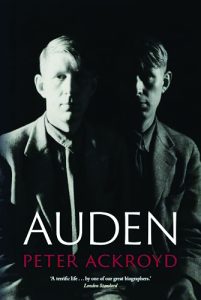
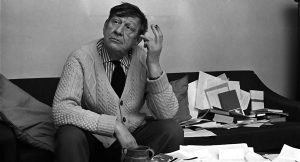
Peter Ackroyd’s latest biography does not greatly add to our knowledge of the life of W.H. (Wystan Hugh) Auden. At least three, perfectly competent and readily-available, biographies (Carpenter, 1983, Osbourne, 1995, and Davenport-Hines, 1996) already exist but this volume provides a valuable, short compendium and, as such, is to be welcomed.
Possibly the most gifted of the twentieth-century Anglophone poets, Auden’s work still possesses resonance and relevance more than fifty years after his death. The evils he rightly forecast loom menacingly once again. To ‘update’ George Santayana: we did not learn from our mistakes and are thus condemned to be repeating them.
Ackroyd keeps the narrative ball moving efficiently enough up the pitch. He is not afraid of potential prurience: Auden’s sexual tastes were, we learn, for fellatio (either as instigator or recipient) rather than for the strictly penetrative. There may, in the early days, have been an element of masochism. The old story of his being interrupted in flagrante delicto with John Betjeman by his college ‘scout’ is rehashed. The scout had, apparently, to be bribed into silence by a five pound not—though Auden reportedly found the actual experience not to have been worth its tariff. Ackroyd fails to append any scholarly annotations (either for this incident—which Betjeman always vehemently denied—or for the book as a whole). It would have been fascinating to know his sources.
This, new, Auden contains a few, relatively minor, revelations. I, for one, had not previously been aware that Wystan (the first syllable is pronounced like the card game) was briefly engaged, circa 1928, to a nurse, Sheilah Richardson, about whom little else is recorded. As he had written to a friend around this same period, ‘I find that I am quite ambidextrous now’. Another discovery was that the famous 1935 film poem Night Mail (‘Past cotton-grass and moorland boulder/ shovelling white steam over its shoulder’) was written in a noisy ‘corridor used by messenger boys’. Wystan was not conventionally precious about his verses: ‘…if the director or producer did not find them useful he would say “That’s quite all right. Just roll it up and throw it away”‘. He had taken a pay cut to work on the project for the GPO Film Unit. His job title was, initially but significantly, ‘Apprentice’.
Surprisingly, Wystan—self-exiled in the (then neutral) USA during the opening phase of the Second World War—is now known to have visited the British Embassy in order to ascertain whether his services were needed for the war effort. He had received much censure from the land of his birth for his perceived dereliction. If the myopic, bunion-plagued, Benzedrine-addicted writer had genuinely been required to take up arms, then Britain could only have been in the direst of perils! Nevertheless, according to his decidedly ‘butch’ wife-of-convenience, Erika Mann (daughter of German novelist Thomas), he ‘jumped for joy’ upon hearing of the 1941 sinking of the Bismarck. Later that same year he was simultaneously undergoing conversion into the Episcopalian Church and despairing of what he thought of as his real ‘marriage’ to the unfaithful, promiscuous Brooklyn playboy, Chester Kallman.
Auden’s personal habits were, well, the word most of his acquaintances seem eventually to have arrived at is ‘slovenly’. As he described to his New York amanuensis, Alan Ansen, (without irony): ‘My negro maid has just left me. She didn’t show up after that day she cursed at me […]. It’s a disgrace I have to live like this. It’s so hard to get servants and accommodation in this country’. This famous champion of the Left was prone to routinely ‘trash’ any premises he inhabited—with uncleared ashtrays and unemptied bins.
Additionally, both his table manners and car-handling skills left much to be desired. Latterly, as an established writer and academic, Auden always reserved First Class seats on airliners. If anyone, in an attempt to make small-talk- asked him his profession, he would reply, “medieval historian” to discourage any further conversational gambits. He achieved notoriety via his prissy obsession with punctuality.
Like William Wordsworth before him, the older Auden became an inveterate reviser of his own earlier work. Again, as with Wordsworth, these revisions were seldom improvements. Perhaps in further imitation of his Lakeland predecessor—and with an enhanced reputation to safeguard- his youthful radicalism somehow got sloughed-off, somewhat in the manner of a snake’s skin. Possibly, lyric poetry (akin to creative physics) is a game best played by younger, more agile minds. Yet, though the ‘good stuff’ was increasingly apt to become obscured amidst copious mediocrity, the prematurely ageing writer could still occasionally ‘up his game’. The Fall of Rome (1947) and The Shield of Achilles (1952) are masterly. Ackroyd generally takes a tolerant, even admiring, view of the later work -which many are inclined to dismiss as ‘slack’ or ‘verbose’. This reviewer remains grateful for Ackroyd’s exegesis of the processes and motivation behind Auden’s Pulitzer-winning The Age of Anxiety (1947)—of which he could previously make neither head nor tail.
One of Auden’s favoured condemnations in later life was “It won’t do!”, uttered in a querulous tone. However, some of the lines he wrote in his late twenties and early thirties (and then fortunately failed to revise!) will be valued for as long as poetry itself finds any honour. The words he crafted for another poet, ‘In Memory of W.B. Yeats’, in February, 1939, encapsulate their author as succinctly as they celebrate their original dedicatee: ‘You were silly like us; your gift survived it all’.
Philip Williams on
The Clear Daylight
by Peter Branson
(Littoral Press, Sudbury, Suffolk, 2021)
Peter Branson describes his third collection as his ‘best yet’. It is hard to disagree. The poet and songwriter riffs on his familiar themes – a Catholic childhood in The Potteries, the natural world, social injustice – with a clarity of craft and diction that makes the whole collection thrum. The rhythm of fiddle and bodhran throbs through his political ballads and tributes to folk musicians, but there is far more here than fol-de-rol and derry derry down. From Peterloo to the murder of Jo Cox MP and the Manchester Arena bombing, the poems vibrate with righteous anger.
Branson is a keen observer of the natural world. A sequence of ten poems about bird species in decline forms the core of the collection. Evocative regional nicknames add depth and colour – ‘Goatsucker’, nightjar, ‘Sky Dancer’, the hen harrier, ‘Mizzly Dick’, the mistle thrush. The sequence combines sharply observed detail with social comment. These are no text-book observations, Branson has clearly watched all these birds, ‘scarecrow-still’, in flight, at rest or feeding:
One moment it’s
the hobby, slicing through dense crowds of swifts
like ticker-tape
(‘Goatsuckers’)
The poet’s father hoisted him ‘waist-high’ to peer into a ‘throstle’s nest’ and he was ‘drawn for life’ (‘The Early Bird’). There are painful reminiscences of boyhood nest raids and capturing newts, ‘Twin pocket dinosaurs, jam jarred’ (‘Newts’). A note of authentic, lived experience chimes through the collection with a strong sense of conviction in the political squibs. Add to that striking imagery and an ear for a musical phrase and what emerges is a body of work that resonates long in the memory – ‘a crow bleeds like a cursor/left to right across the screen’ (‘Taking One for the Team’).
Reader of Branson’s previous collections, Red Hill (2013) and Hawk Rising (2016), both from Lapwing, and those who have heard him sing or read live, will find little new thematically but plenty to admire in terms of craft and conviction. Newcomers to Branson’s verse will encounter verse that is muscular, robust and worthy of repeated reading.
Lila Zokni on
Flesh
by David Szalay
Jonathan Cape / Scribner (2025)
 Attila the Hunk
Flesh, after rave reviews, has reaped one of the highest accolades of literature, the Booker Prize. 2025 proved to be a year in which Hungarian male writers lived up to one Hungarian stereotype: that they’re very good at garnering prizes abroad, given that Krasznahorkai bagged the Nobel in October. Of course, this tally, the basis of the stereotype, includes science as well as involving a slight creative double counting where you include anyone with Hungarian or indeed Martian origins (nickname to a bunch of eminent Jewish scientists active in the US, in the middle of the last century). A rare occasion when the nation embraces those born outside its borders from Hungarian parents, like Szalay, or who had fled its persecution, like the Martians. Being a daughter of the Diaspora myself, it was time for me to see what all the fuss was about, since I had not read any of his books before. Mean-spirited un-Hungarian voices would even say that many of these authors punch well above their weight in the game and the stereotype acts as a self-fulfilling prophecy. I might be one of those voices myself. This Booker certainly baffled me. It says a lot more about the current state of the English reading public, their cognoscenti, editors, reviewers and prize panels than the actual qualities of the book. While reading it, I kept wondering what kind of pulse they might have had their finger on since all I was sensing was a sorry wet squib, intentional or otherwise, no throbbing whatsoever.
Szalay is more English than the English when it comes to being indirect, reticent, and under-understated. I did get that the sparseness and repetition (roughly 40% of the protagonist’s vocabulary consists of the word “OK”) were a device to reflect the taciturn nature of István. But where were we going with that device? Nowhere fast. A version of Voltaire’s eponymous optimist Candide who is desperately seeking “the best world of all worlds” but all can only find “the most OK world of all OK worlds”. Obviously, István is papering over the cracks through which the utter bleakness of this non-OK world seeps in. Reviewers have managed to read tremendous depth into this almost 400-page-long starkness; existential, ontological or even historical depths, à la Samuel Butler’s The Way of All Flesh. All flesh. We are all Istváns, life is about nothing, going nowhere, all there is, is sex, but even that fails to trump that all-pervasive nondescript, un-engaging, intangible emptiness of the universe.
I have to say, rather than identifying with István, I had the occasional sensation of the poor chap talking to me from between the lines, looking to me, his reader, for something to happen to him at last, with the cry, “Where’s the party, mate?”. Except, he lacked the gumption even for that. It is entirely baffling why Szalay felt he needed a Hungarian to portray the lingering, all-pervasive malaise of the world. István is not a credible witness to that message. He’s not a very credible Hungarian, with all that somlói galuska and székelykáposzta in italics for a stamp of authenticity. As an example: somlói galuska is a very typical Hungarian dessert but as such a neologism in the vast vocabulary of puddings, invented by the pastry chef of the most exclusive Budapest restaurant. Not only that, no grandmother had ever had a recipe of it, it remained a treat typically eaten outside the home, in one of the many patisseries dotted all over the country, until ready-made meals came onto the market at least two decades after István’s adolescence. I was not simply baffled and irked by these minor slippages in authenticity, I was pretty appalled too.
The arc of the story begins with sex scenes from István’s youth. He’s fifteen. The woman is over 40, his mother’s age. She’s grooming him. The acts themselves constitute statutory rape. Not only is István not aware of that but no-one is: reviewers seemed to have glossed over it as ‘youthful curiosity’. There could be a reading of the book that István’s numbness, his emotional paralysis, his lack of intellectual curiosity, all stems from this original trauma. The first chapter ends with him committing an almost Oedipal crime, manslaughter by negligence, as he kills the husband of his seductress and serves a few years in youth detention. From that point on, his life is mapped out as a display of brawn and nothing else, the way of the flesh and bodily fluids only. Soldier, bouncer, chauffeur/bodyguard, gigolo: a gender-reversed East European stereotype if there ever was one, a hunk with a repressed temper—again, not a credible Hungarian. Hungarian men are typically not good-looking temperamental hunks, regardless of gender; they tend to be very close to the surface. The ‘and even you, brute’ version of the stereotype was set at a point in history when half of the ‘blonde woman’ jokes were turned into ‘scantily dressed females with an East European accent’ ones. Again, the reliance of this stereotype is unacknowledged—by the protagonist, the narrator, the reviewers. While it’s a stereotype based on a certain statistical kernel of truth (prosecution of sex-industry-related offences involving East Europeans were a low hanging staple of the English justice system starting from the 90s to about 2016, with a 90% conviction rate), it scuppers one of the overarching ambitions of the book: the generalisation to ‘all flesh’ from the labouring flesh. It’s like Lady Chatterley’s Lover without the sexual awakening that might point to any kind of transcendence, even just at the level of the senses, without social commentary, and with the addition of a few chapters of bleak disappointment after Connie’s and Oliver’s marriage. All the reader is left to contend with is a flood of ‘OKs’.
All rights reserved authors © 2008-2025